
 K-Drama

 28
28 57
57 8
8 1
1 2
2 1
1 1
1 1
1 1
1 8
8 2
2 3
3 1
1 1
1 1
1 1
1 9
9 5
5 4
4


This review may contain spoilers
Sect Happens
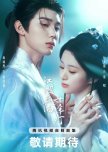
Generation to Generation throws us straight into the deep end of the martial world. Cai Zhao, a spirited girl destined to become a so called witch, is forced to enter the prestigious Qingque Sect. There she meets Chang Ning, a sickly and aloof young man who survived the massacre of his family and carries an air of mystery that practically screams “there’s more to this guy.” As Cai Zhao navigates the rigid hierarchy of the sect and the politics between righteous and demonic factions, the two grow closer while uncovering secrets buried across generations. The deeper they dig, the clearer it becomes that Chang Ning’s true identity might change everything.
From the very first episode, this drama wastes absolutely no time. Conflict, lore, characters, sect politics, generational grudges, everything is thrown into the pot and stirred like a hot pot on maximum heat. It honestly felt like I had to pause and rewind several times just to remember who was who. The first episode flew by at lightning speed, but despite the chaos, one thing immediately stood out to me. Cai Zhao. She is easily one of the most charming female leads I’ve seen in a while. She is skilled in martial arts yet never flaunts it, laidback yet observant, cute yet charismatic. Bao Shang En really sold this duality. Visually she looks soft and girly, but the way she carries herself gives Cai Zhao a confident, grounded charm. Her family dynamic also deserves a shoutout. The Cai family is warm, righteous, and genuinely supportive of each other. In a genre where families are often plotting against each other like it’s Game of Thrones: Wuxia Edition, their sincerity felt refreshing.
Then we have Chang Ning, played by Zhou Yi Ran, who appears sickly, mysterious, and emotionally guarded. The actor is very much in his element here. Zhou Yi Ran has always been good at portraying characters with hidden depths, and Chang Ning fits that perfectly. His deep voice and aloof demeanor really elevate the character, though I must confess I absolutely hated his sickly hairstyle. The dry, messy hair covering his face annoyed me more than it should have.
Aside from our leads, the ensemble cast is huge. And when I say huge, I mean huge. We meet Qi Yun Ke, the Lord of Qingque Sect, who initially presents himself as righteous but gives off suspicious vibes from the start. His wife Yin Su Lian clearly wears the pants in the household, which was a surprise. Their daughter Qi Ling Bo, unfortunately, turns out to be a spoiled brat who seems to enjoy bullying others. Her constant high pitched “Yu Zhi gege” nearly drove me up the wall. Song Yu Zhi, the third disciple and Qi Ling Bo’s fiancé, is a quieter presence but surprisingly charming. He is the kind of calm, reliable guy you would want by your side during a storm. Meanwhile Dai Feng Chi, the second disciple, mostly acts as Qi Ling Bo’s silent bodyguard but quietly leaves the impression that he might have more depth later. Fan Xiang Jia, played by Bian Tian Yang, appears briefly with his casual personality but remains something of a mystery.
While the characters are interesting, the production side unfortunately starts showing cracks early on. The CGI and 3D rendering in the early episodes are not exactly convincing. The bridge scene where Cai Zhao stands looks so thin it feels like it was designed by someone who has never seen gravity before. Scene transitions are also rough. There are obvious cuts where it feels like entire scenes were removed, leaving the story jumping awkwardly from one moment to another.
Episode two doubles down on the information overload. Dialogue heavy exposition pours in nonstop, and again I found myself pausing just to keep up. The story itself is interesting though. Cai Zhao quickly grows suspicious of Chang Ning and calls him out when she notices him subtly stirring conflict between her and Qi Ling Bo. I appreciated that Cai Zhao isn’t written as a naive heroine. Beneath her soft appearance is a sharp and perceptive mind. Unfortunately, the editing once again sabotages the flow. One moment Chang Ning is bedridden, the next he is suddenly in a healing pool dramatically slipping into the water. The camera then gives us a full visual glamour shot of him rising from the water like a Kpop ending fairy. I cringed so hard. Even worse, the scene immediately cuts away without showing Cai Zhao’s reaction.
As the story continues, the drama becomes both more engaging and more chaotic. The plot keeps introducing new subplots and characters at an almost alarming rate. Face swapping plots appear, new factions enter the stage, hidden identities unravel, and by episode six we finally learn Chang Ning’s true identity as Mu Qing Yan, the son of the Demon Sect’s leader. I actually appreciated this reveal happening relatively early. It prevents the usual endless misunderstanding arc.
Mu Qing Yan’s relationship with Cai Zhao is… exhausting. At first it carries the classic star crossed lovers vibe. Think Romeo and Juliet but with more swords and sect politics. Their clans have centuries of hostility between them, yet they are clearly drawn to each other. The problem is that their relationship quickly becomes a rollercoaster of manipulation, guilt, emotional push and pull, and questionable decision making. Mu Qing Yan is the kind of character who would burn the world for the woman he loves. Usually that trope can be very appealing. Here though, it often crosses into red flag territory. He manipulates situations, fakes illness, and even gambles with Cai Zhao’s feelings to achieve his goals. Meanwhile Cai Zhao, despite being strong and intelligent, sometimes feels frustratingly indecisive. She pushes him away one moment and runs back to him the next. Watching them together sometimes felt less like romance and more like emotional cardio.
Still, I cannot deny that the two leads look fantastic together. Both Bao Shang En and Zhou Yi Ran are visually stunning and move gracefully in their action scenes. One highlight for me was Cai Zhao’s rescue of Song Yu Zhi. Her movements were swift and charismatic, though I do wish the camera had focused more on her martial choreography.
The drama continues piling on twists. Generational grudges, hidden identities, family secrets, conspiracies inside Qingque Sect. By episode fifteen the pacing finally slows down slightly, allowing subplots to breathe. That breathing room actually helps the story feel more engaging.
However, the editing issues never fully disappear. There are moments where major events seemingly happen off screen, only for the next episode to jump straight into the aftermath with zero explanation. At one point a villain suddenly appears captured without us ever seeing how it happened. I genuinely wondered if I had accidentally skipped an episode. Cinematography also becomes a bit of a running joke. The director clearly loves dramatic front facing shots where characters deliver dialogue directly toward the camera with wind blowing through their hair like they are filming a shampoo commercial. Used sparingly it might have been effective. Here it happens so often that it becomes unintentionally funny.
Despite all the chaos, I remained oddly invested. The premise of a story that unfolds across generations is genuinely intriguing. The drama tries to show how past grudges, love stories, and betrayals ripple through time and affect the present generation. Unfortunately the execution often feels messy.
By the time we reach the final arc, the drama leans heavily into melodrama. The grand final battles are filled with dramatic speeches, slow motion wind effects, and characters vomiting alarming amounts of blood. Ironically there is often more talking than fighting. The supposed epic showdown sometimes feels less intense than earlier side conflicts. Even so, there are moments that land well. Song Yu Zhi quietly caring for Cai Zhao during her recovery was warm and comforting. In fact, I sometimes felt that Cai Zhao would have lived a calmer and more stable life with him. Their relationship would not have been fiery, but it would have been peaceful.
As for the ending, the drama wraps things up rather quickly. The final episode rushes through the fates of many characters with some awkward transitions. Mu Qing Yan ultimately becomes a matrilocal husband in Cai Zhao’s family, which was unexpected. It does soften his once domineering character, though the idea takes some getting used to. Still, the ending suggests a healthier relationship where he finally allows Cai Zhao the freedom she values. One thing I genuinely appreciated was Bao Shang En’s voice work. Unlike many costume dramas where female characters are dubbed with extremely high pitched voices, Cai Zhao’s voice here sounds deeper and more composed. It adds to her charisma and maturity.
In the end, Generation to Generation is a drama with an interesting premise but messy execution. The story spanning generations, the large cast of visually appealing actors, and the central romance all had strong potential. Unfortunately the overwhelming amount of characters, rushed storytelling, rough editing, and overly dramatic cinematography often make the viewing experience chaotic.
Still, if you enjoy complex wuxia stories filled with sect rivalries, generational grudges, and a romance that screams “we are toxic but we are pretty,” this drama might still entertain you. Just be prepared to pause, rewind, and occasionally laugh at scenes that feel like they escaped from a Kpop music video.
From the very first episode, this drama wastes absolutely no time. Conflict, lore, characters, sect politics, generational grudges, everything is thrown into the pot and stirred like a hot pot on maximum heat. It honestly felt like I had to pause and rewind several times just to remember who was who. The first episode flew by at lightning speed, but despite the chaos, one thing immediately stood out to me. Cai Zhao. She is easily one of the most charming female leads I’ve seen in a while. She is skilled in martial arts yet never flaunts it, laidback yet observant, cute yet charismatic. Bao Shang En really sold this duality. Visually she looks soft and girly, but the way she carries herself gives Cai Zhao a confident, grounded charm. Her family dynamic also deserves a shoutout. The Cai family is warm, righteous, and genuinely supportive of each other. In a genre where families are often plotting against each other like it’s Game of Thrones: Wuxia Edition, their sincerity felt refreshing.
Then we have Chang Ning, played by Zhou Yi Ran, who appears sickly, mysterious, and emotionally guarded. The actor is very much in his element here. Zhou Yi Ran has always been good at portraying characters with hidden depths, and Chang Ning fits that perfectly. His deep voice and aloof demeanor really elevate the character, though I must confess I absolutely hated his sickly hairstyle. The dry, messy hair covering his face annoyed me more than it should have.
Aside from our leads, the ensemble cast is huge. And when I say huge, I mean huge. We meet Qi Yun Ke, the Lord of Qingque Sect, who initially presents himself as righteous but gives off suspicious vibes from the start. His wife Yin Su Lian clearly wears the pants in the household, which was a surprise. Their daughter Qi Ling Bo, unfortunately, turns out to be a spoiled brat who seems to enjoy bullying others. Her constant high pitched “Yu Zhi gege” nearly drove me up the wall. Song Yu Zhi, the third disciple and Qi Ling Bo’s fiancé, is a quieter presence but surprisingly charming. He is the kind of calm, reliable guy you would want by your side during a storm. Meanwhile Dai Feng Chi, the second disciple, mostly acts as Qi Ling Bo’s silent bodyguard but quietly leaves the impression that he might have more depth later. Fan Xiang Jia, played by Bian Tian Yang, appears briefly with his casual personality but remains something of a mystery.
While the characters are interesting, the production side unfortunately starts showing cracks early on. The CGI and 3D rendering in the early episodes are not exactly convincing. The bridge scene where Cai Zhao stands looks so thin it feels like it was designed by someone who has never seen gravity before. Scene transitions are also rough. There are obvious cuts where it feels like entire scenes were removed, leaving the story jumping awkwardly from one moment to another.
Episode two doubles down on the information overload. Dialogue heavy exposition pours in nonstop, and again I found myself pausing just to keep up. The story itself is interesting though. Cai Zhao quickly grows suspicious of Chang Ning and calls him out when she notices him subtly stirring conflict between her and Qi Ling Bo. I appreciated that Cai Zhao isn’t written as a naive heroine. Beneath her soft appearance is a sharp and perceptive mind. Unfortunately, the editing once again sabotages the flow. One moment Chang Ning is bedridden, the next he is suddenly in a healing pool dramatically slipping into the water. The camera then gives us a full visual glamour shot of him rising from the water like a Kpop ending fairy. I cringed so hard. Even worse, the scene immediately cuts away without showing Cai Zhao’s reaction.
As the story continues, the drama becomes both more engaging and more chaotic. The plot keeps introducing new subplots and characters at an almost alarming rate. Face swapping plots appear, new factions enter the stage, hidden identities unravel, and by episode six we finally learn Chang Ning’s true identity as Mu Qing Yan, the son of the Demon Sect’s leader. I actually appreciated this reveal happening relatively early. It prevents the usual endless misunderstanding arc.
Mu Qing Yan’s relationship with Cai Zhao is… exhausting. At first it carries the classic star crossed lovers vibe. Think Romeo and Juliet but with more swords and sect politics. Their clans have centuries of hostility between them, yet they are clearly drawn to each other. The problem is that their relationship quickly becomes a rollercoaster of manipulation, guilt, emotional push and pull, and questionable decision making. Mu Qing Yan is the kind of character who would burn the world for the woman he loves. Usually that trope can be very appealing. Here though, it often crosses into red flag territory. He manipulates situations, fakes illness, and even gambles with Cai Zhao’s feelings to achieve his goals. Meanwhile Cai Zhao, despite being strong and intelligent, sometimes feels frustratingly indecisive. She pushes him away one moment and runs back to him the next. Watching them together sometimes felt less like romance and more like emotional cardio.
Still, I cannot deny that the two leads look fantastic together. Both Bao Shang En and Zhou Yi Ran are visually stunning and move gracefully in their action scenes. One highlight for me was Cai Zhao’s rescue of Song Yu Zhi. Her movements were swift and charismatic, though I do wish the camera had focused more on her martial choreography.
The drama continues piling on twists. Generational grudges, hidden identities, family secrets, conspiracies inside Qingque Sect. By episode fifteen the pacing finally slows down slightly, allowing subplots to breathe. That breathing room actually helps the story feel more engaging.
However, the editing issues never fully disappear. There are moments where major events seemingly happen off screen, only for the next episode to jump straight into the aftermath with zero explanation. At one point a villain suddenly appears captured without us ever seeing how it happened. I genuinely wondered if I had accidentally skipped an episode. Cinematography also becomes a bit of a running joke. The director clearly loves dramatic front facing shots where characters deliver dialogue directly toward the camera with wind blowing through their hair like they are filming a shampoo commercial. Used sparingly it might have been effective. Here it happens so often that it becomes unintentionally funny.
Despite all the chaos, I remained oddly invested. The premise of a story that unfolds across generations is genuinely intriguing. The drama tries to show how past grudges, love stories, and betrayals ripple through time and affect the present generation. Unfortunately the execution often feels messy.
By the time we reach the final arc, the drama leans heavily into melodrama. The grand final battles are filled with dramatic speeches, slow motion wind effects, and characters vomiting alarming amounts of blood. Ironically there is often more talking than fighting. The supposed epic showdown sometimes feels less intense than earlier side conflicts. Even so, there are moments that land well. Song Yu Zhi quietly caring for Cai Zhao during her recovery was warm and comforting. In fact, I sometimes felt that Cai Zhao would have lived a calmer and more stable life with him. Their relationship would not have been fiery, but it would have been peaceful.
As for the ending, the drama wraps things up rather quickly. The final episode rushes through the fates of many characters with some awkward transitions. Mu Qing Yan ultimately becomes a matrilocal husband in Cai Zhao’s family, which was unexpected. It does soften his once domineering character, though the idea takes some getting used to. Still, the ending suggests a healthier relationship where he finally allows Cai Zhao the freedom she values. One thing I genuinely appreciated was Bao Shang En’s voice work. Unlike many costume dramas where female characters are dubbed with extremely high pitched voices, Cai Zhao’s voice here sounds deeper and more composed. It adds to her charisma and maturity.
In the end, Generation to Generation is a drama with an interesting premise but messy execution. The story spanning generations, the large cast of visually appealing actors, and the central romance all had strong potential. Unfortunately the overwhelming amount of characters, rushed storytelling, rough editing, and overly dramatic cinematography often make the viewing experience chaotic.
Still, if you enjoy complex wuxia stories filled with sect rivalries, generational grudges, and a romance that screams “we are toxic but we are pretty,” this drama might still entertain you. Just be prepared to pause, rewind, and occasionally laugh at scenes that feel like they escaped from a Kpop music video.
Was this review helpful to you?


