


 19
19 39
39 8
8 1
1 1
1 1
1 1
1 1
1 6
6 2
2 3
3 1
1 1
1 1
1 3
3 1
1 3
3


When the Bottom Class Teaches the Biggest Lessons
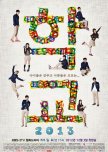
If high school were a pressure cooker, then School 2013 is the whistle that refuses to stay silent. Set in one struggling classroom at Seungri High School, the drama zooms in on the very real issues modern Korean teenagers face: bullying, school violence, academic pressure, private tutoring culture, broken homes, and the ever fragile line between teachers and students. Seungri High ranks near rock bottom among Seoul’s 178 high schools, and Class 2-2 sits at the bottom of the bottom. Jung In Jae, a warm but temporary Korean language teacher, becomes their homeroom teacher. Then there was Kang Se Chan, a star instructor from a famous Gangnam academy who transfers in and becomes her co homeroom teacher. With clashing teaching styles and a classroom full of students carrying emotional baggage heavier than their backpacks, the two teachers must learn to work together if they want their class to survive the year and move on to senior year.
Out of all the School installments, School 2013 owns my heart rent free. I have lost count of how many times I have rewatched it, and somehow it still hits like the first time. What makes it special is the balance. It does not just focus on students or just on teachers. It gives us the messy, complicated ecosystem of a classroom. Teacher and student relationships, friendships that crack and heal, rivalries, quiet crushes, and emotional slow burns all simmer together in a way that feels painfully real.
Let us start with Jung In Jae. Portrayed beautifully by Jang Na Ra, she is not just a teacher. She is a parent, a friend, an older sister, and sometimes the only adult in the room who truly listens. While the school obsesses over grades and rankings, she cares about emotional survival. She sees her students as people first, statistics second. There is something incredibly comforting about the way she stands by them, even when they push her away. On the other hand, Kang Se Chan, played by Choi Daniel, starts off as her complete opposite. He is polished, professional, and emotionally guarded. His strength lies in academics. He teaches well, but he keeps a safe distance. At first, it feels like he is there to do a job and clock out. Over time, though, the walls crack. Small moments, like helping students reconcile with former friends, show that he is learning too. While his character did not leave as strong an impression on me as others, I appreciated his gradual shift from detached instructor to someone who quietly cares.
Now, the real heartbeat of this drama lies in two names: Ko Nam Sun and Park Heung Soo. Portrayed by Lee Jong Suk and Kim Woo Bin, this duo is nothing short of iconic. Years later, they still live in my head like a legendary K-drama folklore.
Ko Nam Sun is a mystery when we first meet him. Quiet. Bullied. Always taking hits without fighting back. Sleeping in class. Working multiple part time jobs. Caring for a drunk, neglectful father. Completely unmotivated. And yet, tiny cracks in the surface tell us there is more to him. When he unexpectedly becomes class president, it feels symbolic. Like the universe gently nudging him and whispering, please start living again. Lee Jong Suk delivers Ko Nam Sun with heartbreaking subtlety. Beneath the silence is a boy drowning in guilt. A former bully who ran away from the consequences of his actions. A self destructive kid who believes he deserves every punch thrown at him. His journey is not loud or dramatic. It is slow. It is painful. It is about learning that running away is not the same as moving on.
Then comes Park Heung Soo, entering at the end of episode three like a plot twist with legs. At first glance, he seems like the typical intimidating transfer student. Tall, strong, aloof, rumored to be a legendary fighter. But as layers peel back, we see the truth. He is not the villain of the story. He is another casualty of it. Once upon a time, Park Heung Soo had a dream and the talent to achieve it. That dream was shattered because of one mistake involving his best friend, Ko Nam Sun. The betrayal cost him everything: his goal, his reputation, and the friend he cherished most. Kim Woo Bin portrays Park Heung Soo with this restrained sadness that lingers in his eyes. He is constantly judged for his cold and distant looks. Blamed for fights he did not start. Feared for things he did not do. The irony is almost poetic. The so called victim of the past was Ko Nam Sun, while the supposed bully was actually the one trying to hold him back from going too far.
What makes their story unforgettable is the growth. Ko Nam Sun learns that he cannot keep running. He has to face Park Heung Soo, face his past, and face himself. Park Heung Soo struggles to forgive, to accept his new reality, and to let go of the bitterness. Their reconciliation is not instant. It is messy, hesitant, and deeply human. By the end, it is clear that no matter what, they are still best friends. Just two boys who got lost and found their way back to each other.
And can we talk about the subtle tension between Ko Nam Sun and Sung Ha Gyeong? Portrayed by Park Se Young, Sung Ha Gyeong is another character weighed down by expectations and family pressure. From the beginning, there is this quiet spark between her and Ko Nam Sun. It is not loud. It is not dramatic. It just exists. Both of them are too busy battling their own demons to fully explore romance, but that is what makes it work. They confide in each other. They share things others do not know. There is comfort in their conversations, like two tired souls taking a break together. When Park Heung Soo becomes slightly cautious around Sung Ha Gyeong when Ko Nam Sun looked at them, I will admit I was internally screaming. It was subtle, but it was there. That tiny hint of teenage jealousy was enough to make me kick the air. I do wish we got more of them, but maybe the restraint is what makes it feel innocent and real.
Beyond this trio, the rest of the class also shines. Each student carries a story. Some deal with family issues. Some with financial struggles. Some with identity and self worth. The friendships in this drama genuinely moved me to tears. Despite the fights, betrayals, and misunderstandings, loyalty runs deep. Even the most broken characters show up for their friends when it truly matters.
Now, about that ending. I am fifty fifty. On one hand, it is realistic. Life does not magically fix itself after one semester. The reconciliation between Ko Nam Sun and Park Heung Soo feels grounded. On the other hand, I am a little bitter. I wanted more. More glimpses into their futures. More closure for the side characters. The ending feels brief, almost like the final school bell rang too soon.
Still, despite the slightly dated production quality, this drama remains timeless for me. The emotions are raw. The characters are layered. The friendships feel earned. School 2013 is not just about grades or rankings. It is about survival, forgiveness, and the quiet courage it takes to grow up.
If nostalgia had a classroom, I would gladly take a seat in Class 2-2 all over again.
Out of all the School installments, School 2013 owns my heart rent free. I have lost count of how many times I have rewatched it, and somehow it still hits like the first time. What makes it special is the balance. It does not just focus on students or just on teachers. It gives us the messy, complicated ecosystem of a classroom. Teacher and student relationships, friendships that crack and heal, rivalries, quiet crushes, and emotional slow burns all simmer together in a way that feels painfully real.
Let us start with Jung In Jae. Portrayed beautifully by Jang Na Ra, she is not just a teacher. She is a parent, a friend, an older sister, and sometimes the only adult in the room who truly listens. While the school obsesses over grades and rankings, she cares about emotional survival. She sees her students as people first, statistics second. There is something incredibly comforting about the way she stands by them, even when they push her away. On the other hand, Kang Se Chan, played by Choi Daniel, starts off as her complete opposite. He is polished, professional, and emotionally guarded. His strength lies in academics. He teaches well, but he keeps a safe distance. At first, it feels like he is there to do a job and clock out. Over time, though, the walls crack. Small moments, like helping students reconcile with former friends, show that he is learning too. While his character did not leave as strong an impression on me as others, I appreciated his gradual shift from detached instructor to someone who quietly cares.
Now, the real heartbeat of this drama lies in two names: Ko Nam Sun and Park Heung Soo. Portrayed by Lee Jong Suk and Kim Woo Bin, this duo is nothing short of iconic. Years later, they still live in my head like a legendary K-drama folklore.
Ko Nam Sun is a mystery when we first meet him. Quiet. Bullied. Always taking hits without fighting back. Sleeping in class. Working multiple part time jobs. Caring for a drunk, neglectful father. Completely unmotivated. And yet, tiny cracks in the surface tell us there is more to him. When he unexpectedly becomes class president, it feels symbolic. Like the universe gently nudging him and whispering, please start living again. Lee Jong Suk delivers Ko Nam Sun with heartbreaking subtlety. Beneath the silence is a boy drowning in guilt. A former bully who ran away from the consequences of his actions. A self destructive kid who believes he deserves every punch thrown at him. His journey is not loud or dramatic. It is slow. It is painful. It is about learning that running away is not the same as moving on.
Then comes Park Heung Soo, entering at the end of episode three like a plot twist with legs. At first glance, he seems like the typical intimidating transfer student. Tall, strong, aloof, rumored to be a legendary fighter. But as layers peel back, we see the truth. He is not the villain of the story. He is another casualty of it. Once upon a time, Park Heung Soo had a dream and the talent to achieve it. That dream was shattered because of one mistake involving his best friend, Ko Nam Sun. The betrayal cost him everything: his goal, his reputation, and the friend he cherished most. Kim Woo Bin portrays Park Heung Soo with this restrained sadness that lingers in his eyes. He is constantly judged for his cold and distant looks. Blamed for fights he did not start. Feared for things he did not do. The irony is almost poetic. The so called victim of the past was Ko Nam Sun, while the supposed bully was actually the one trying to hold him back from going too far.
What makes their story unforgettable is the growth. Ko Nam Sun learns that he cannot keep running. He has to face Park Heung Soo, face his past, and face himself. Park Heung Soo struggles to forgive, to accept his new reality, and to let go of the bitterness. Their reconciliation is not instant. It is messy, hesitant, and deeply human. By the end, it is clear that no matter what, they are still best friends. Just two boys who got lost and found their way back to each other.
And can we talk about the subtle tension between Ko Nam Sun and Sung Ha Gyeong? Portrayed by Park Se Young, Sung Ha Gyeong is another character weighed down by expectations and family pressure. From the beginning, there is this quiet spark between her and Ko Nam Sun. It is not loud. It is not dramatic. It just exists. Both of them are too busy battling their own demons to fully explore romance, but that is what makes it work. They confide in each other. They share things others do not know. There is comfort in their conversations, like two tired souls taking a break together. When Park Heung Soo becomes slightly cautious around Sung Ha Gyeong when Ko Nam Sun looked at them, I will admit I was internally screaming. It was subtle, but it was there. That tiny hint of teenage jealousy was enough to make me kick the air. I do wish we got more of them, but maybe the restraint is what makes it feel innocent and real.
Beyond this trio, the rest of the class also shines. Each student carries a story. Some deal with family issues. Some with financial struggles. Some with identity and self worth. The friendships in this drama genuinely moved me to tears. Despite the fights, betrayals, and misunderstandings, loyalty runs deep. Even the most broken characters show up for their friends when it truly matters.
Now, about that ending. I am fifty fifty. On one hand, it is realistic. Life does not magically fix itself after one semester. The reconciliation between Ko Nam Sun and Park Heung Soo feels grounded. On the other hand, I am a little bitter. I wanted more. More glimpses into their futures. More closure for the side characters. The ending feels brief, almost like the final school bell rang too soon.
Still, despite the slightly dated production quality, this drama remains timeless for me. The emotions are raw. The characters are layered. The friendships feel earned. School 2013 is not just about grades or rankings. It is about survival, forgiveness, and the quiet courage it takes to grow up.
If nostalgia had a classroom, I would gladly take a seat in Class 2-2 all over again.
Was this review helpful to you?


