

 23
23 43
43 8
8 1
1 1
1 1
1 1
1 1
1 1
1 6
6 2
2 3
3 1
1 1
1 1
1 1
1 3
3 1
1 3
3


This review may contain spoilers
The Devil Wears Boudoir
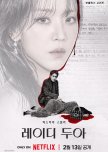
The Art of Sarah follows the glittering yet slippery life of Sarah Kim, a woman who wants to embody luxury even if it means building it on a foundation of lies. Her name echoes through high society as the head of a high end brand’s Asia branch, but no one seems to truly know who she is. When she suddenly becomes the victim in an unidentified murder case, the illusion begins to crack. The person in charge of her case is Park Mu Gyeong, a sharp and persistent detective from the violent crimes unit, who starts tracing the footsteps of a woman who may not even exist. As he digs deeper, Sarah Kim unravels into multiple names, ages, jobs, and backgrounds. The question lingers like an expensive perfume in the air. Who is the real Sarah Kim, and what is she hiding beneath all that silk and satin?
From the very first episode, I could not help but think of Inventing Anna. The premise, the social climbing, the audacity of it all, it gave me that same deliciously scandalous vibe. I kind of knew the general direction the story might take, but I was still curious to see how this version would paint its own portrait of deception. How exactly did Sarah Kim scam her way to the top of the social ladder? What made her tick? That curiosity was enough to keep me seated and sipping my drama tea.
Of course, we need to talk about Shin Hye Sun. She is, without exaggeration, one of the finest actresses in the Korean drama industry. She does not just act, she embodies. Every trembling breath, every flicker in her eyes, every tear that falls feels painfully real. When she cries genuinely, I cry. It is almost Pavlovian at this point. In The Art of Sarah, she plays a woman made of layers. Sarah lies, schemes, climbs, manipulates, feels anxious, frustrated, never satisfied. She is ambition wrapped in couture. Shin Hye Sun handles these layers beautifully. Even her fake crying scenes look convincingly fake, which is a talent on its own. You can see when Sarah is performing and when she is breaking, and that distinction is delicious to watch.
Opposite her is Lee Jun Hyuk as Park Mu Gyeong. Visually, he fits the drama’s glossy, high fashion mood. He looks like he walked straight out of a luxury magazine spread. As a detective, though, he feels a little too polished, too well put together. I kept thinking, do violent crimes detectives really have skin this flawless? But then again, this is not a gritty back alley crime thriller. This is a story about fashionable schemes and curated identities. In that sense, his clean and chic presence oddly works.
The ensemble cast is a mixed bag in a good way. The older, more seasoned actors truly shine. Their facial expressions alone could tell entire backstories. They look like they belong in this world of power lunches and silent rivalries. Some of the younger ensemble characters are fine, though they do not leave as strong an impression.
I will admit, episode one had me slightly confused. There were so many names flying around that I had to pause and mentally sort them out. Who was the dead victim again? Who got scammed? Who reported what? It felt like being invited to an exclusive party where everyone knows each other except you. Thankfully, things settle down as the story progresses.
When the drama reveals Sarah Kim’s past as Mok Ga Hui, the illusion shifts. Unlike the iconic Anna Delvey from Inventing Anna, Sarah is not painted as this endlessly complex social experiment. Mok Ga Hui was simply a woman stuck at the bottom of the social chain. No matter how hard she tried, she could not climb. So she burned her old life, faked her death, and resurrected herself as Sarah Kim. In essence, she is an impostor born from desperation and desire. A regular con artist with a designer handbag and a chip on her shoulder.
That said, she is not entirely average. Driven by poverty and the hunger to rise, she cons her way up while quietly exacting revenge. Her success with Boudoir becomes her masterpiece. It is the one thing she genuinely wants to protect. When she eventually turns herself in, I found her surprisingly smart. She defends herself skillfully, finding loopholes and gray areas in every accusation thrown her way. The moment Park Mu Gyeong threatens Boudoir, you just know everything is about to collapse like a house of luxury cards. And it does. She is willing to give up her identity as Sarah Kim if it means preserving Boudoir’s integrity. That choice says a lot about where her true loyalty lies.
Still, the investigation itself feels somewhat amateur. I was genuinely surprised that it took Park Mu Gyeong so long to figure out that Mok Ga Hui faked her death to start anew. Maybe we as viewers are given more puzzle pieces, or maybe the writing just makes the detectives a little slower than they should be. Either way, it lessens the thrill.
One oddly satisfying detail is the casual name dropping of real luxury brands like Hermès, Dior, and Prada. Usually dramas create fictional brands to avoid trouble, so hearing the real names feels almost rebellious. It adds to the authenticity of the high society fantasy.
However, for a drama that markets itself as a web of schemes, fraud, and shifting identities, it feels a bit surface level. I kept comparing it to Inventing Anna, and in that comparison, The Art of Sarah feels less layered. It hints at depth but does not fully dive in. At its core, Sarah Kim is portrayed as a woman driven by scrutiny and ambition to climb higher. That is a common motivation for crime, not exactly groundbreaking.
The ending left me with a shrug rather than a gasp. Sarah Kim is not a cold blooded killer. She feels guilt over Kim Mi Jeong’s death, and what she did was tied to protecting Boudoir. But what truly frustrated me is that we never get to know her real identity. If you want an open ending, fine. Leave some doors ajar. But withholding her true identity feels like locking the most important room in the house and throwing away the key. That revelation could have added real depth and emotional weight, yet it remains a mystery.
In the end, The Art of Sarah is glossy, stylish, and carried heavily by Shin Hye Sun’s powerhouse performance. It is a drama dressed in haute couture, whispering about ambition and reinvention. Just do not expect it to peel back every layer of the woman at its center. Sometimes, the art is beautiful. Sometimes, it is just well framed.
From the very first episode, I could not help but think of Inventing Anna. The premise, the social climbing, the audacity of it all, it gave me that same deliciously scandalous vibe. I kind of knew the general direction the story might take, but I was still curious to see how this version would paint its own portrait of deception. How exactly did Sarah Kim scam her way to the top of the social ladder? What made her tick? That curiosity was enough to keep me seated and sipping my drama tea.
Of course, we need to talk about Shin Hye Sun. She is, without exaggeration, one of the finest actresses in the Korean drama industry. She does not just act, she embodies. Every trembling breath, every flicker in her eyes, every tear that falls feels painfully real. When she cries genuinely, I cry. It is almost Pavlovian at this point. In The Art of Sarah, she plays a woman made of layers. Sarah lies, schemes, climbs, manipulates, feels anxious, frustrated, never satisfied. She is ambition wrapped in couture. Shin Hye Sun handles these layers beautifully. Even her fake crying scenes look convincingly fake, which is a talent on its own. You can see when Sarah is performing and when she is breaking, and that distinction is delicious to watch.
Opposite her is Lee Jun Hyuk as Park Mu Gyeong. Visually, he fits the drama’s glossy, high fashion mood. He looks like he walked straight out of a luxury magazine spread. As a detective, though, he feels a little too polished, too well put together. I kept thinking, do violent crimes detectives really have skin this flawless? But then again, this is not a gritty back alley crime thriller. This is a story about fashionable schemes and curated identities. In that sense, his clean and chic presence oddly works.
The ensemble cast is a mixed bag in a good way. The older, more seasoned actors truly shine. Their facial expressions alone could tell entire backstories. They look like they belong in this world of power lunches and silent rivalries. Some of the younger ensemble characters are fine, though they do not leave as strong an impression.
I will admit, episode one had me slightly confused. There were so many names flying around that I had to pause and mentally sort them out. Who was the dead victim again? Who got scammed? Who reported what? It felt like being invited to an exclusive party where everyone knows each other except you. Thankfully, things settle down as the story progresses.
When the drama reveals Sarah Kim’s past as Mok Ga Hui, the illusion shifts. Unlike the iconic Anna Delvey from Inventing Anna, Sarah is not painted as this endlessly complex social experiment. Mok Ga Hui was simply a woman stuck at the bottom of the social chain. No matter how hard she tried, she could not climb. So she burned her old life, faked her death, and resurrected herself as Sarah Kim. In essence, she is an impostor born from desperation and desire. A regular con artist with a designer handbag and a chip on her shoulder.
That said, she is not entirely average. Driven by poverty and the hunger to rise, she cons her way up while quietly exacting revenge. Her success with Boudoir becomes her masterpiece. It is the one thing she genuinely wants to protect. When she eventually turns herself in, I found her surprisingly smart. She defends herself skillfully, finding loopholes and gray areas in every accusation thrown her way. The moment Park Mu Gyeong threatens Boudoir, you just know everything is about to collapse like a house of luxury cards. And it does. She is willing to give up her identity as Sarah Kim if it means preserving Boudoir’s integrity. That choice says a lot about where her true loyalty lies.
Still, the investigation itself feels somewhat amateur. I was genuinely surprised that it took Park Mu Gyeong so long to figure out that Mok Ga Hui faked her death to start anew. Maybe we as viewers are given more puzzle pieces, or maybe the writing just makes the detectives a little slower than they should be. Either way, it lessens the thrill.
One oddly satisfying detail is the casual name dropping of real luxury brands like Hermès, Dior, and Prada. Usually dramas create fictional brands to avoid trouble, so hearing the real names feels almost rebellious. It adds to the authenticity of the high society fantasy.
However, for a drama that markets itself as a web of schemes, fraud, and shifting identities, it feels a bit surface level. I kept comparing it to Inventing Anna, and in that comparison, The Art of Sarah feels less layered. It hints at depth but does not fully dive in. At its core, Sarah Kim is portrayed as a woman driven by scrutiny and ambition to climb higher. That is a common motivation for crime, not exactly groundbreaking.
The ending left me with a shrug rather than a gasp. Sarah Kim is not a cold blooded killer. She feels guilt over Kim Mi Jeong’s death, and what she did was tied to protecting Boudoir. But what truly frustrated me is that we never get to know her real identity. If you want an open ending, fine. Leave some doors ajar. But withholding her true identity feels like locking the most important room in the house and throwing away the key. That revelation could have added real depth and emotional weight, yet it remains a mystery.
In the end, The Art of Sarah is glossy, stylish, and carried heavily by Shin Hye Sun’s powerhouse performance. It is a drama dressed in haute couture, whispering about ambition and reinvention. Just do not expect it to peel back every layer of the woman at its center. Sometimes, the art is beautiful. Sometimes, it is just well framed.
Was this review helpful to you?


