


 23
23 43
43 8
8 1
1 1
1 1
1 1
1 1
1 1
1 6
6 2
2 3
3 1
1 1
1 1
1 1
1 3
3 1
1 3
3


This review may contain spoilers
The Man Who Bled Miracles
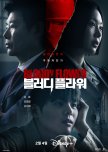
If you think you have seen every flavor of crime thriller, think again. Bloody Flower opens with a bang, or more accurately, a handcuff click. A man named Lee Woo Gyeom is arrested for kidnapping two people with disabilities. Simple enough, right? Wrong. As the investigation unfolds, it turns out he has been conducting human experiments and murdering people in the process. Seventeen victims. All with criminal records. All allegedly used as test subjects in his quest to cure incurable diseases.
Lee Woo Gyeom is a medical school dropout who boldly claims he has developed a technology that can cure everything from common illnesses to cancer. The twist is deliciously dark. Patients step forward to testify that they have indeed been cured. He promises to reveal this miracle to the world, but only if he is exempted from punishment for his human experiments. If not, he threatens to take his own life, and with him, the cure that exists only in his mind. Standing at the crossroads are a desperate lawyer who needs Woo Gyeom alive to save his daughter with a brain tumor, and Prosecutor Cha Yi Yeon, who wants him sentenced to death for the seventeen lives he took. The question lingers like a stubborn echo. Is Lee Woo Gyeom a monster, or is he humanity’s forbidden savior?
What pulled me in from the very beginning was the morally grey battlefield. Seventeen murders are not a small number. But when those seventeen victims all had criminal records and slipped through the cracks of a lenient justice system, the narrative starts playing chess with your conscience. Humanism versus justice becomes the main dish, and we, the viewers, are forced to pick a side whether we like it or not. The dark allure of this premise had me glued to my seat. It felt like watching a philosophical debate disguised as a thriller.
Up until episode four, Lee Woo Gyeom remains an enigma wrapped in a lab coat. Is he a psycho doctor straight out of a horror manual? Perhaps. He does not seem to fully grasp the moral weight of taking lives, referring to his victims more as test subjects than as people. But here is the twist in my own heart. I believe he is good at heart. He does not kill for pleasure. He kills with purpose. Twisted purpose, yes, but purpose nonetheless. His journey into human experimentation did not begin with people. It started with plants, then a goldfish, then a cat, and only then humans. There is a strange, almost scientific progression there. Add to that the revelation that there is a specific pattern among his victims, and suddenly this is less random slaughter and more calculated vengeance or perhaps justice in his own warped dictionary. The mystery only deepens.
Then there is Prosecutor Cha Yi Yeon. As someone who usually champions strong female leads, I cannot believe I am saying this, but she tested my patience. For her, the world is black and white. You kill, you are wrong. End of discussion. She does not care about the lives potentially saved by Woo Gyeom’s research. She sees seventeen corpses and that is enough. I understand her need to prove herself, especially with her father looming in the background, but her inability to listen or empathize makes her feel robotic. Even her investigative arc feels oddly written. She has a whole team, yet she does most of the legwork herself while her subordinates hover in the background holding files that rarely add impact. Her sense of justice is textbook, rigid, and at times frustratingly tone deaf. Geum Sae Rok tries, but the character feels more like a plot device than a fully fleshed out person.
In contrast, Park Han Jun is the emotional anchor of the story. Portrayed by Sung Dong Il with the gravitas of a seasoned actor, he is a father first and a lawyer second. His daughter, Park Min Seo, is dying from a brain tumor. Suddenly, justice is not so simple anymore. This righteous man who once abided strictly by the law finds himself bending the rules to save his child. His partnership with Lee Woo Gyeom is one of the most compelling dynamics in the drama. They begin as reluctant allies. One is a convicted killer, the other a man of the law. Yet slowly, through shared desperation and quiet understanding, they form something resembling trust. Maybe even friendship.
When Lee Woo Gyeom rushes, injured, to save Min Seo and says he has to save her first, I was genuinely moved. For someone accused of being a heartless killer, his concern for his patients feels real. He even appears willing to defy court orders to help her. That mutual gratitude between him and Park Han Jun creates some of the drama’s most touching moments. It is a relationship built not on legality, but on humanity.
The plot thickens further when we learn that Woo Gyeom’s cure lies in his blood. Specifically, his rare RH null blood. But this miracle comes with a cruel limitation. The more blood he donates, the more his body regenerates new blood that lacks the same healing properties. In other words, he is not an infinite potion bottle in a fantasy RPG. He is human. Fragile. Exhaustible. This revelation made me nervous. If his blood is the key, what is stopping the world from turning him into a walking laboratory?
The backstory hits like a truck in the final stretch. Woo Gyeom was once just a brilliant kid with a loving mother. An accident and his rare blood type turned him into a prime target for Chaeum, the shadowy organization behind grotesque experiments. Not only was he experimented on, but his mother was silenced after discovering too much. Chaeum’s body count stands at 223 victims. Suddenly, Woo Gyeom’s seventeen does not look like madness. It looks like retaliation. Pain breeding pain. No wonder he took drastic measures. The real monster may have been hiding in a corporate lab all along.
The final confrontation reveals Chae Jeong Su as the true psychopath, obsessed with medical breakthroughs at the cost of human lives. Watching Woo Gyeom stab his eye felt both shocking and strangely satisfying. Justice, served with a sharp object. The climax escalates quickly. Police arrive. Cha Yi Yeon stands firm. Shots are fired. In one of the most touching moments, Park Han Jun steps in front of Woo Gyeom and takes a bullet for him. A former prosecutor shielding a wanted criminal. If that is not character development, I do not know what is. Woo Gyeom is eventually shot and jumps off a bridge. For a moment, it feels like tragedy has won.
The resolution wraps up corruption cases at lightning speed, almost too quickly, like the drama suddenly remembered it had a time limit. And then, the final twist. Just as Park Han Jun is about to discard the cure, Woo Gyeom calls. He is alive. I knew it. You cannot keep a Bloody Flower from blooming, can you?
Ryeo Un delivers an eerie yet magnetic performance as Lee Woo Gyeom. His large expressive eyes and deep voice make it easy to believe both the cold scientist and the wounded son. He walks a tightrope between psycho and prodigy, and somehow never falls. Sung Dong Il, as expected, brings weight and warmth to Park Han Jun, embodying a father pushed to his limits. The chemistry between these two is the heart of the drama. Their evolution from distrust to solidarity is memorable and deeply affecting.
Bloody Flower is not perfect. Some arcs feel rushed, and Cha Yi Yeon’s character may test your blood pressure. But if you enjoy stories that force you to question your moral compass, this one will keep you hooked. It asks a dangerous question. If a killer can cure the world, do you save him or condemn him? In the end, Bloody Flower does not hand you an easy answer. It simply lets the petals fall and leaves you to decide whether they are stained with blood or sacrifice.
Lee Woo Gyeom is a medical school dropout who boldly claims he has developed a technology that can cure everything from common illnesses to cancer. The twist is deliciously dark. Patients step forward to testify that they have indeed been cured. He promises to reveal this miracle to the world, but only if he is exempted from punishment for his human experiments. If not, he threatens to take his own life, and with him, the cure that exists only in his mind. Standing at the crossroads are a desperate lawyer who needs Woo Gyeom alive to save his daughter with a brain tumor, and Prosecutor Cha Yi Yeon, who wants him sentenced to death for the seventeen lives he took. The question lingers like a stubborn echo. Is Lee Woo Gyeom a monster, or is he humanity’s forbidden savior?
What pulled me in from the very beginning was the morally grey battlefield. Seventeen murders are not a small number. But when those seventeen victims all had criminal records and slipped through the cracks of a lenient justice system, the narrative starts playing chess with your conscience. Humanism versus justice becomes the main dish, and we, the viewers, are forced to pick a side whether we like it or not. The dark allure of this premise had me glued to my seat. It felt like watching a philosophical debate disguised as a thriller.
Up until episode four, Lee Woo Gyeom remains an enigma wrapped in a lab coat. Is he a psycho doctor straight out of a horror manual? Perhaps. He does not seem to fully grasp the moral weight of taking lives, referring to his victims more as test subjects than as people. But here is the twist in my own heart. I believe he is good at heart. He does not kill for pleasure. He kills with purpose. Twisted purpose, yes, but purpose nonetheless. His journey into human experimentation did not begin with people. It started with plants, then a goldfish, then a cat, and only then humans. There is a strange, almost scientific progression there. Add to that the revelation that there is a specific pattern among his victims, and suddenly this is less random slaughter and more calculated vengeance or perhaps justice in his own warped dictionary. The mystery only deepens.
Then there is Prosecutor Cha Yi Yeon. As someone who usually champions strong female leads, I cannot believe I am saying this, but she tested my patience. For her, the world is black and white. You kill, you are wrong. End of discussion. She does not care about the lives potentially saved by Woo Gyeom’s research. She sees seventeen corpses and that is enough. I understand her need to prove herself, especially with her father looming in the background, but her inability to listen or empathize makes her feel robotic. Even her investigative arc feels oddly written. She has a whole team, yet she does most of the legwork herself while her subordinates hover in the background holding files that rarely add impact. Her sense of justice is textbook, rigid, and at times frustratingly tone deaf. Geum Sae Rok tries, but the character feels more like a plot device than a fully fleshed out person.
In contrast, Park Han Jun is the emotional anchor of the story. Portrayed by Sung Dong Il with the gravitas of a seasoned actor, he is a father first and a lawyer second. His daughter, Park Min Seo, is dying from a brain tumor. Suddenly, justice is not so simple anymore. This righteous man who once abided strictly by the law finds himself bending the rules to save his child. His partnership with Lee Woo Gyeom is one of the most compelling dynamics in the drama. They begin as reluctant allies. One is a convicted killer, the other a man of the law. Yet slowly, through shared desperation and quiet understanding, they form something resembling trust. Maybe even friendship.
When Lee Woo Gyeom rushes, injured, to save Min Seo and says he has to save her first, I was genuinely moved. For someone accused of being a heartless killer, his concern for his patients feels real. He even appears willing to defy court orders to help her. That mutual gratitude between him and Park Han Jun creates some of the drama’s most touching moments. It is a relationship built not on legality, but on humanity.
The plot thickens further when we learn that Woo Gyeom’s cure lies in his blood. Specifically, his rare RH null blood. But this miracle comes with a cruel limitation. The more blood he donates, the more his body regenerates new blood that lacks the same healing properties. In other words, he is not an infinite potion bottle in a fantasy RPG. He is human. Fragile. Exhaustible. This revelation made me nervous. If his blood is the key, what is stopping the world from turning him into a walking laboratory?
The backstory hits like a truck in the final stretch. Woo Gyeom was once just a brilliant kid with a loving mother. An accident and his rare blood type turned him into a prime target for Chaeum, the shadowy organization behind grotesque experiments. Not only was he experimented on, but his mother was silenced after discovering too much. Chaeum’s body count stands at 223 victims. Suddenly, Woo Gyeom’s seventeen does not look like madness. It looks like retaliation. Pain breeding pain. No wonder he took drastic measures. The real monster may have been hiding in a corporate lab all along.
The final confrontation reveals Chae Jeong Su as the true psychopath, obsessed with medical breakthroughs at the cost of human lives. Watching Woo Gyeom stab his eye felt both shocking and strangely satisfying. Justice, served with a sharp object. The climax escalates quickly. Police arrive. Cha Yi Yeon stands firm. Shots are fired. In one of the most touching moments, Park Han Jun steps in front of Woo Gyeom and takes a bullet for him. A former prosecutor shielding a wanted criminal. If that is not character development, I do not know what is. Woo Gyeom is eventually shot and jumps off a bridge. For a moment, it feels like tragedy has won.
The resolution wraps up corruption cases at lightning speed, almost too quickly, like the drama suddenly remembered it had a time limit. And then, the final twist. Just as Park Han Jun is about to discard the cure, Woo Gyeom calls. He is alive. I knew it. You cannot keep a Bloody Flower from blooming, can you?
Ryeo Un delivers an eerie yet magnetic performance as Lee Woo Gyeom. His large expressive eyes and deep voice make it easy to believe both the cold scientist and the wounded son. He walks a tightrope between psycho and prodigy, and somehow never falls. Sung Dong Il, as expected, brings weight and warmth to Park Han Jun, embodying a father pushed to his limits. The chemistry between these two is the heart of the drama. Their evolution from distrust to solidarity is memorable and deeply affecting.
Bloody Flower is not perfect. Some arcs feel rushed, and Cha Yi Yeon’s character may test your blood pressure. But if you enjoy stories that force you to question your moral compass, this one will keep you hooked. It asks a dangerous question. If a killer can cure the world, do you save him or condemn him? In the end, Bloody Flower does not hand you an easy answer. It simply lets the petals fall and leaves you to decide whether they are stained with blood or sacrifice.
Was this review helpful to you?


