This review may contain spoilers
"Gossip is a fearful thing"
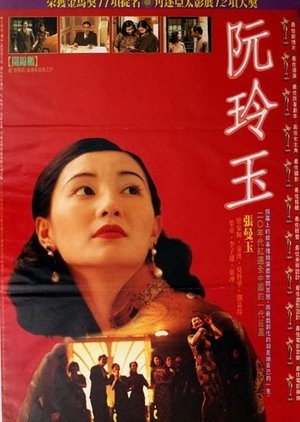
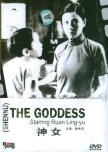
When I watched Ruan Ling Yu in The Goddess I was mesmerized by her performance. It was honestly one of the best performances by an actress I had seen in a long time. Discovering that she had taken her own life at such a young age was crushing. Center Stage was a strange amalgam of documentary and movie about her captivating and tragic life.In one of her best performances, the ethereal Maggie Cheung played Ruan. During an interview she stated she could understand how Ruan must have felt finally going from secondary "wall flower" roles to having serious roles offered to her. Maggie had plenty of ditzy female characters on her resume before this film and afterwards would go on to star in such films as In the Mood for Love and Hero. In much the same way Ruan had suffered from gossip, Maggie also understood the vicious nature of gossip about actors' personal lives
The set-up of the film did not work for me. Ruan was a gifted actress with a sad, yet fascinating life. The back-and-forth between re-enactment and interviews and behind the scenes shots destroyed the rhythm of the story. It was very distracting when the film cut from a disturbing scene straight to an interview with a 90-year-old who knew Ruan. Some of the interviews and speculations did not line up with the timeframe of the story as it was laid out which could make the following scenes confusing. Due to the film's structure, I was always aware that people were acting and it destroyed my emotional connection to what was happening on screen. For me, it would have been far better if they'd shown the interviews after the film along with the behind-the-scenes shots. Having the director yell that he could see Maggie breathing and then show them reshooting the scene and then presenting what was supposed to be a sorrowful funeral felt emotionally false.
When the movie had longer stretches of showing Ruan's story instead of people telling us her story, it was much more meaningful. But just as the joyful or sorrowful moods would crescendo, there would be a startling halt and a cut to the documentary.
Ruan Ling Yu was a stunning actress who lived a tumultuous life, having had three different lovers who contributed to some if not most of her problems. Two of the men were married with multiple mistresses and her first love was an inveterate gambler and womanizer. They cost her dearly financially and personally. Because of the constant tonal shifts in the film there would be no catharsis for the viewer at the end as the gossipy papers and people wrought devastation on her life pushing her into a corner, she saw only one way out of. By the time of the funeral scene, it felt more like a sterile documentary with high-end re-enactments one might find on television.
What kept my attention was Maggie's performance and her insightful interviews. The film also had clips and images from Ruan's films no longer available. I found the business aspects of the film informative, more so when they let the characters show the business dealings instead of the documentary telling about them. There were so many sides of this complicated woman to explore which were not touched on, such as---Why did she always choose cruel, unavailable men? Much of the action took place when Japan had invaded Manchuria causing political and financial upheavals which were barely touched upon.
When Ruan starred in New Women, based on a real actress who had been hounded by the press and committed suicide, it exposed an unflattering and malodorous side of the press. Instead of self-reflection and changing of their ways or going after the men in the film or the studio, they turned on her and hunted her relentlessly, plastering what they wanted to about her private life in their rags. I felt the film let me down with explaining the ex-lover's story and how he was legally tied to her. Born a wealthy man, his family disapproved of Ruan, the reason he gave for not marrying her. He burned through his money gambling, then turned to Ruan to support him. When she tired of dealing with him, she broke it off. They had never been married and yet he sued her for support and later for adultery. The last lawsuit seemed to be the final straw for her along with the cruel gossip.
The film's stuttering style failed to affect me emotionally. Which is a shame because I have been quite curious about this talented woman. Ruan Ling Yu's life was more dramatic and heartbreaking than most of her films. Though Ruan had a couple of female friends, an adopted daughter, and at least one lover at any given time, she seemed utterly alone and vulnerable. She was no match against the power of the poisoned pen and wagging tongues in combination with her devious ex at the young age of 24 or 25, especially during a time of crisis for her country. Dying at the pinnacle of her career caused Ruan Ling Yu to become a screen legend. In her suicide note she wrote that she was not afraid of death. "My only fear is the malicious gossip." Nearly one hundred years later too many young entertainers are still dying because of malicious gossip. Gossip truly is a fearful thing.
5/9/23
Was this review helpful to you?

Was this review helpful to you?

This review may contain spoilers
A Powerful and Respectful Homage to Ruan Lingyu
This film was close to being perfect. Stanley Kwan shows the amount of respect he has for Ruan and her contribution to Chinese cinema in this film by creating a biopic/documentary hybrid. Additionally, with Maggie Cheung playing Ruan so beautifully, it seemed like a match made in heaven. The cinematography is dark and morose, framing not just Ruan's inner struggles, but also the terrible time period she lived in. The music was also stunning. While it certainly was a riveting film, there is one major issue that kept it from being a 'cult classic'.The film's glaring flaw is that it tries to do everything, thereby ensuring that it isn't 'great' at anything. While I appreciate the mix of documentary and biopic, it can be really jarring and confusing at times. Especially at the end where Ruan commits suicide, it almost seems like there was a blooper accidentally left in the movie, because Maggie Cheung is supposed to be 'dead', but she suddenly breaks character, and the film crew starts laughing. I found that to be incredibly bizarre; this is one of the saddest biopics I've ever watched, and yet, the seriousness of it is sucked out of the room with weird moments like this. I don't think it was intentional, I just think that Stanley Kwan made some very poor choices. I heard rumors that when the film was first presented, apparently it was shown out of order and that it was a bit of a mess. There's a reason Stanley Kwan is not talked about as much as someone like Wong Kar Wai, and the choices made in this film prove that sentiment.
The film's length has much to be desired as well, due to the whole issue of combining biopic and documentary. My biggest issue with this format is that I feel I was being told what to feel and know, rather than letting the film explain itself. The documentary portion would have been great as an extra; but, to add it to the film in this manner just doesn't make sense. It completely breaks the flow. This also made the narrative confusing at times, and it took me a good hour or so to finally figure out who's who, as you're not given enough context clues to memorable moments to remember names/characters. Information is just thrown at you. I do not know how much of Ruan's films are left, but I would have appreciated the complete removal of the documentary and replace them with the brilliant cuts from Maggie's acting to Ruan's silent films. Those parts made me tear up, especially at the end when Maggie's crying leads into the actual 'New Woman' film that was considered Ruan's penultimate. Also, from what I've heard, not much is known about Ruan's personal life prior to her joining the Lianhua Film Company, so I do appreciate that Stanley Kwan didn't add anything to the narrative for drama's sake. He kept things to the facts and allowed subjects that are mysteries remain mysteries.
The one thing I will give Stanley Kwan a lot of credit for is how he handled the suicide scene. There are no frills or melodrama. It's really sad, because Ruan at the end is happy, and kisses all the actors and producers at the end of the film, seeming like she's over the scandal that plagued her last days. In reality, much like how many suicide victims are, they will be quite happy during the last few days of their lives, because they've made the decision to remove themselves from this earth. It's not that they're actually happy; they're at peace with themselves finally, knowing that they made a decision to end their live and put an end to their suffering and their 'burden' on others. Kwan handled this immensely tragic scene with such class that I think it's one of cinema's most brilliant moments. It's respectful to the subject-matter while also allowing you to feel the devastation of her decision.
Another aspect I loved about this film was how it portrayed the difference between people who like to preach change versus those who put thought into action. Ruan's private life spills into the public newspapers due to her deadbeat ex-husband putting a megaphone on their divorce, and it's ironic because she is the archetype of the modern 'independent' woman that all the feminists in the film were allegedly fighting for. She stands up to her deadbeat husband, gets a divorce, and gets into a relationship with a man who buys her a new house, promises to take care of her adopted kid, and support her mother. She stands up for herself against a patriarchy in a way that is quite revolutionary for her time, especially for an actress and public figure like herself. Her penultimate film, 'New Woman' was a middle finger to the establishment press and norms of society at that time. Yet, when Ruan had her scandal, no one who purported to support those ideals stood up for her. They stood in the shadows and remained silent, not offering one word of support or comfort for her. They let her get to such a point that she wanted to commit suicide and then have the audacity to show up to her funeral and cry for her. It's disgusting. That part stung the most, as we still see the same cowardice today.
All-in-all, I really enjoyed learning a little more about one of China's most important silent-film-era actresses. While it wasn't a homerun because of bizarre decisions regarding the documentary-portion of the film disrupting the narrative, it still struck an emotional chord in me that I still think about this film a lot. Again, Stanley Kwan kept it professional, and while his efforts were misguided, I can honestly say that he handled this subject with the care and attention it deserved.
Last thing: it's quite hard to emphasize how good Maggie's acting is in this film.
Was this review helpful to you?