
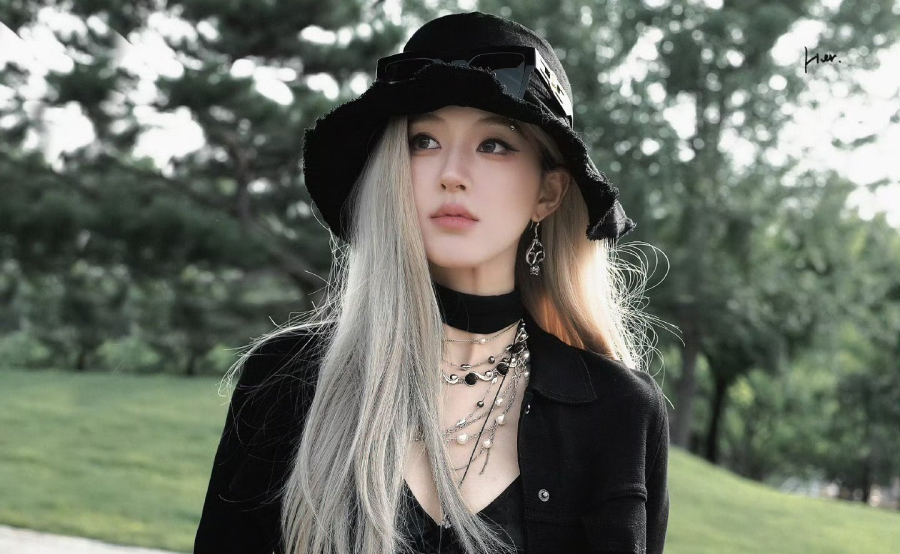
World-famous Chinese actress Zhao Lusi has once again made headlines — not for a new upcoming drama or a concert performance, but for her revelation about her conflict with her management agency YinheKuyu Media (KU/Galaxy Cool Entertainment), and ongoing mental health struggles. On August 2, Zhao took to Weibo to share a personal and distressing post. In it, she not only detailed a prolonged and bitter contract dispute, but also attached an official medical assessment confirming her severe anxiety and depression.
The actress's post sent shockwaves through the Chinese entertainment industry, quickly climbing Weibo's trending charts and prompting a defensive statement from KU, which denied any wrongdoing.
As public concern grows, the Zhao Lusi-KU dispute has sparked a deeper conversation about the lack of mental health support for Chinese actors, artist-agency power dynamics, and the cost of fame.
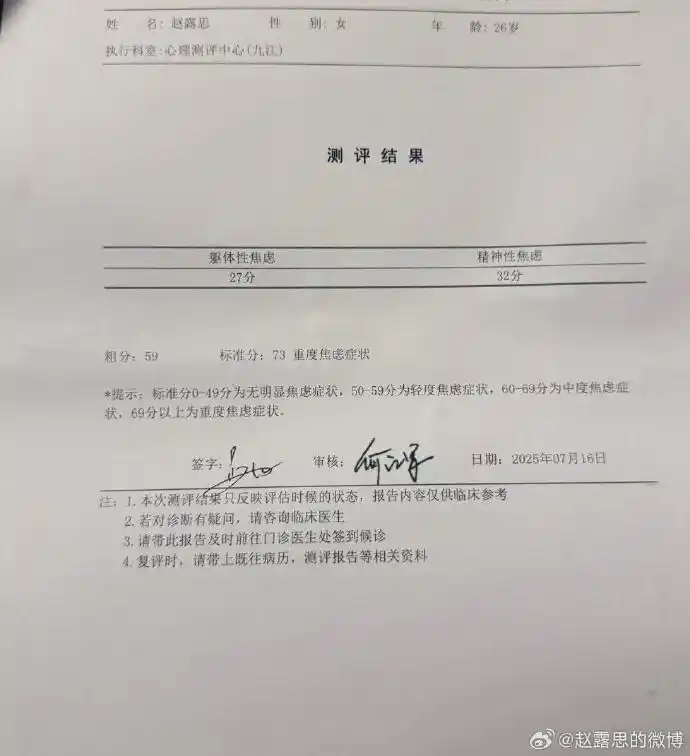
The medical report the actress shared reads:
Somatic Anxiety: 27
Psychic Anxiety: 32
Raw Score: 59
Standard Score: 73 —Severe Anxiety Symptoms
Score Reference
0–49: No obvious anxiety symptoms
50–59: Mild anxiety symptoms
60–69: Moderate anxiety symptoms
Above 69: Severe anxiety symptoms.
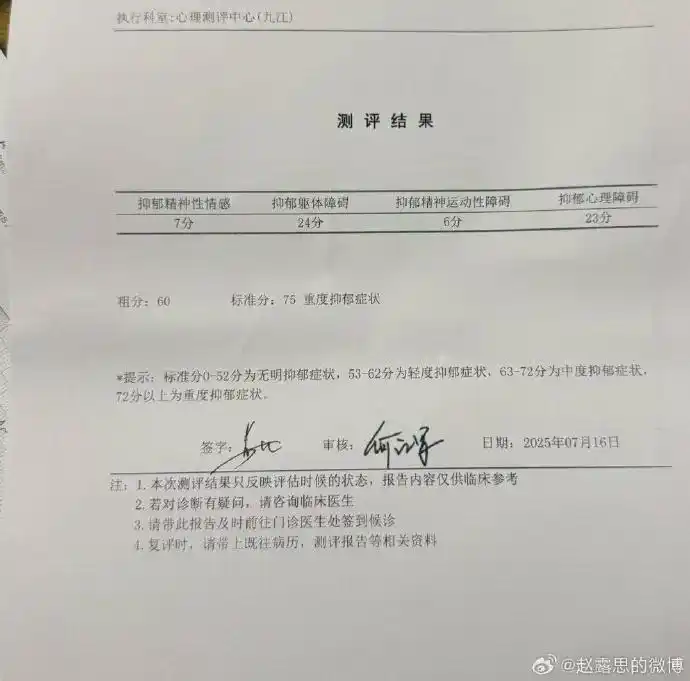
Depressive Disorder: 7
Somatic Symptom Disorder: 24
Psychomotor Disorder (Depression): 6
Psychomotor Disorder (Depression): 23
Raw Score: 60
Standard Score: 75 — Severe Depression Symptoms
Score Reference
0–52: No obvious depression symptoms
53–62: Mild depression symptoms
63–72: Moderate depression symptoms
Above 72: Severe depression symptoms
The revelation may have landed like a jolt for some, but Zhao Lusi's fans had long seen the signs.
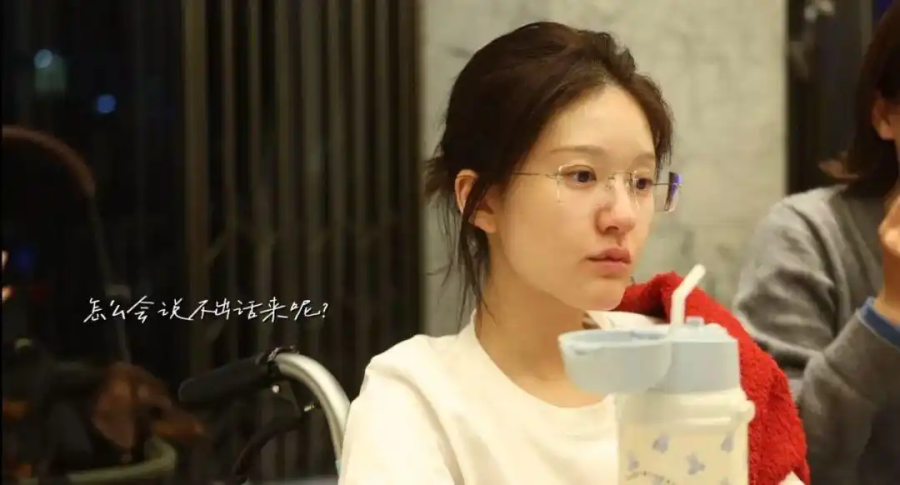
Between late December 2024 and early January 2025, Zhao drew widespread attention after news broke about a sudden deterioration of her health, when she was spotted lifeless in a wheelchair in a hospital. On December 27, her agency released a statement revealing that the actress had experienced a sudden health issue on December 18 and had promptly sought medical care. A close friend of the actress later disclosed that she had been diagnosed with aphasia — a condition that affects language abilities due to brain-related damage. Then, on January 1, Zhao broke her silence with a detailed Weibo post, sharing not just her diagnosis but also a timeline of her physical and emotional decline. In the post, she revealed that her weight had once dropped to just 37 kg and that her struggles with depression dated as far back as 2019.
In 2019, I experienced depression but was told things like, 'Don't make a big deal out of it' and 'Just think positively, and everything will be fine.' I also felt that I was being overly dramatic and sensitive, so I didn't pay attention to my mental health issues.
By 2021, I began feeling sensations like insects crawling on my body and needles pricking on my skin, accompanied by allergies. Even after taking medication and getting injections at the hospital, the symptoms didn't improve. Then, I sought out a psychologist and started treatment to relieve my emotional tension.
In 2023, a series of events happened one after another in a short period of time. I experienced pneumonia, emphysema, pityriasis rosea, urticaria, night sweats that woke me up, sudden deafness due to neurological issues, and also had to deal with [the news of] relatives passing away and [them] being diagnosed with cancer. However, the weight of the events overshadowed my emotions, leading me to continue neglecting myself [and my emotions].
It wasn't until 2024 that I began experiencing frequent dry heaving, dizziness, joint pain, neck pain, and other obvious somatic symptoms, along with worsening allergies. At the time, I thought these were normal side effects of the allergy-related medication I was taking.
On January 26, the actress's agency also released a video of Zhao during her lowest — experiencing emotional meltdown, struggling to eat, unable to speak, and having difficulty walking — offering a look at the physical and psychological toll her condition had taken.
While Zhao's courage sparked support and concern among fans, it also exposed a systemic issue: the Chinese entertainment industry remains not only unequipped to handle or even acknowledge mental health struggles but also remains largely ignorant of the consequences of ignoring such conditions.
Chinese actors, and even Korean and Japanese ones, as a matter of fact, work under immense pressure. With careers that often rise or fall overnight based on public opinion, a single scandal or controversy, the emotional burden they carry can be crushing. A-listers can shoot multiple dramas or films in a single year while juggling brand endorsements, variety show appearances, and constant online scrutiny. Rest is rare; support, even rarer.
As a result, agencies actively discourage their artists from appearing "vulnerable," prioritizing profit and public image over their well-being. Mental illness is frequently dismissed as an "overreaction," a "phase," "attention-seeking," or even — the most shocking of all — "being possessed". During her illness, instead of seeking proper medical treatment, Zhao's agency called in an exorcist.
I was sick, and instead of taking me to see a doctor, you locked me in a hotel and had an exorcist come to perform an exorcism on me? You actually called a master to exorcise me, saying someone put a curse on me.
This leads to actors suffering in silence, afraid of losing work, endorsements, or public favor if they admit they’re struggling — a stark contrast to the way mental health is addressed in the West.
Fortunately, Zhao's courage to break the silence has paved the way for change. Choosing to speak out so candidly about her struggles — despite the risks to her career and reputation — Zhao Lusi is shattering a long-standing silence within the Chinese entertainment industry. Her bravery to express, "I am not okay, and that's okay," has opened the door for deeper public conversations about mental health, especially among youngsters who may be silently facing similar struggles.
While Lusi is on her way to recovery, this whole drama has also highlighted another issue — though certainly not the first of its kind — of the absurdity, fraudulent, and gangsterly tactics often found within Asian management agencies.
The controversy, ultimately, also invites a broader reckoning within the entertainment industry — calling for accountability, reforms that prioritize individual well-being over profits, and upholding basic labor rights.
While Zhao has paved the way for a new path, the question remains: Will others dare to follow? Or will her voice be overshadowed by the darkness that continues to engulf this toxic industry?
Read more about Zhao Lusi's agency responding to fans' concerns about her health (1), the allegations of abuse by her person in charge (2), her revelation about battling depression and physical abuse (3), the actress's return to the spotlight (4), her exposé of mistreatment from her agency (5), and the slave contracts that bound Asian artists to thier management agencies (5).
Source: Weibo


