 Bai Lu wins defamation and reputation rights lawsuits against netizens
Update
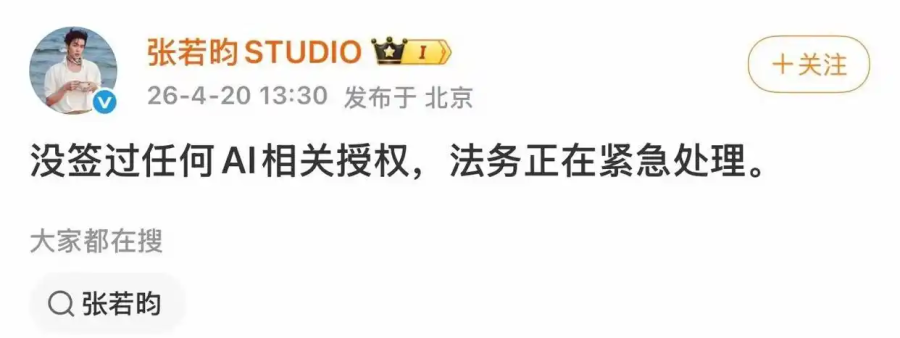
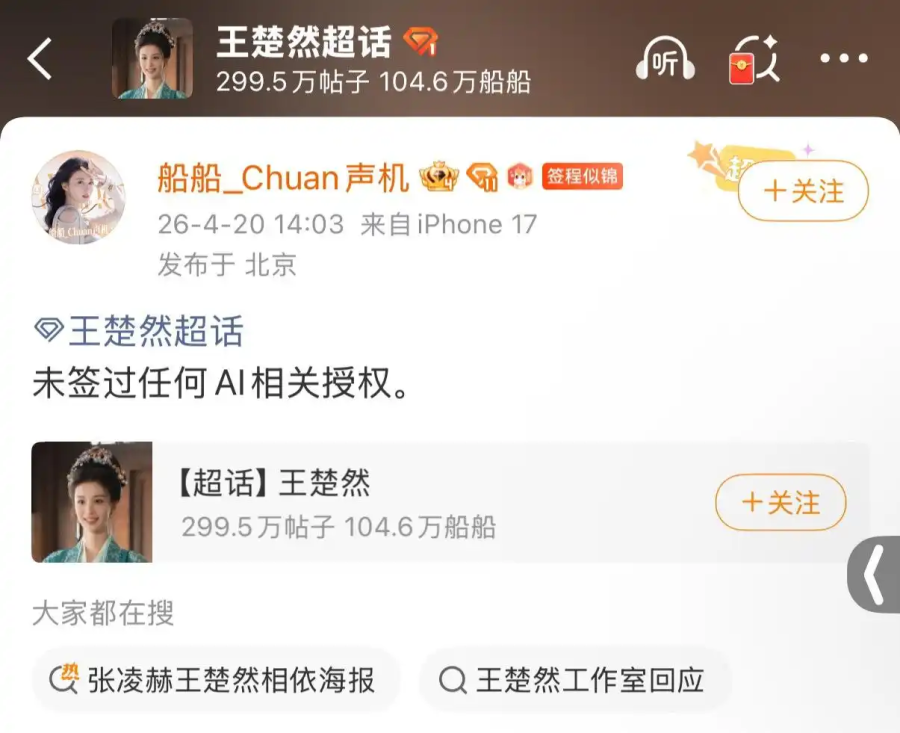
Multiple celebrities — including Zhang Ruo Yun and Wang Chu Ran — have issued statements through their studios and representatives, saying they have not signed any AI-related authorization agreements.
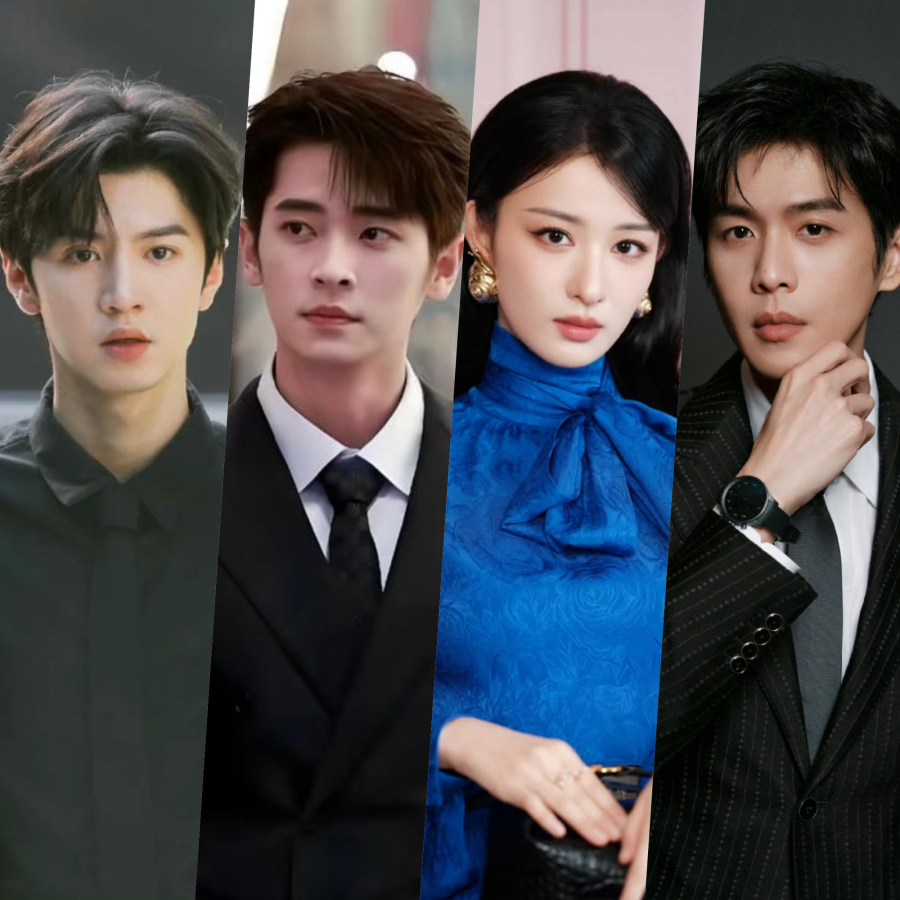
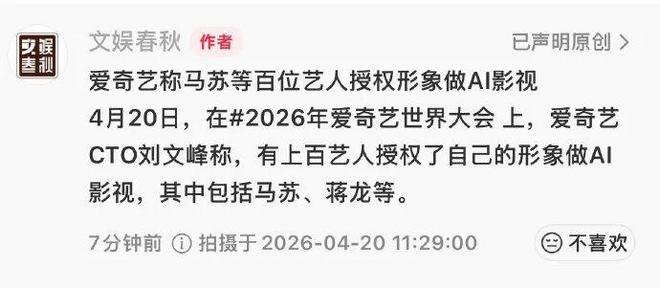
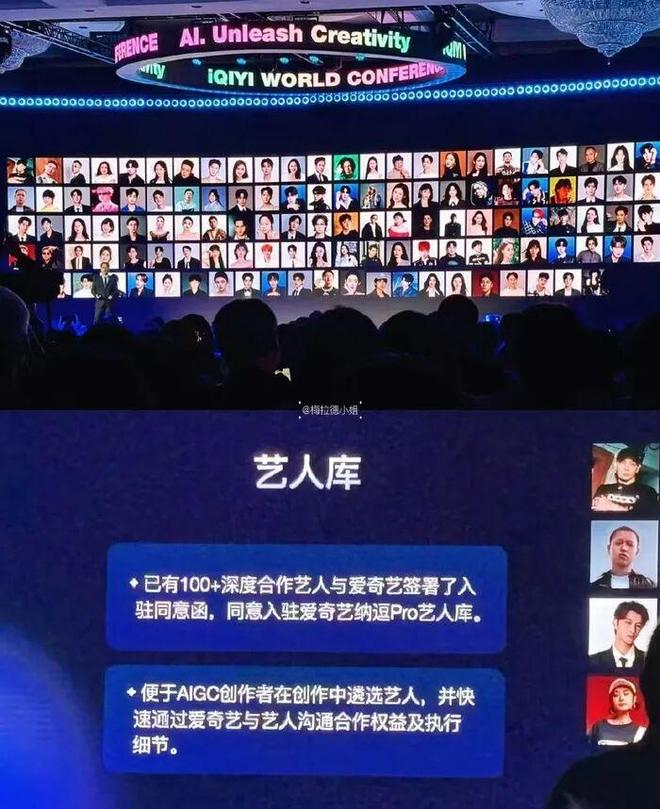
On April 20, according to reports from multiple media outlets, at the 2026 iQIYI World Conference, iQIYI CTO Liu Wen Feng stated that over a hundred artists have authorized the use of their likenesses for AI film and television productions. Following the announcement, news quickly circulated online that numerous household names, including Chen Zhe Yuan, Zeng Shun Xi, Ryan Cheng, Fang Zhu Ren, and Jiang Long, among many others, have joined the AI artist library.
Reports have also linked Yu He Wei, Zhang Ruo Yun, and Wang Chu Ran to similar claims.
According to local media reports, iQIYI is signing agreements with top celebrities that cover the use of their likeness, voice, and performance data. By combining these with motion capture technology, the company is creating "digital doubles" or clones to be used in the production of AI series.
Some netizens have questioned the approach, saying AI actors carry an "artificial feel." A lawyer also warned that this model involves legal risks related to portrait and voice rights, advising artists to exercise caution when signing such agreements.
It is worth noting that on the morning of April 20, a segment of Gong Yu's, founder and CEO of iQIYI, remarks about AI artists at a conference also sparked online controversy. In the video, he said AI could help actors have 'more personal time,' noting that "actors often work very hard, spending three to four months filming without personal time. AI could also enable them to go from acting in four productions a year to 14, giving them more time to rest."
On April 15, Gong Yu said in an exclusive interview with reporters that signing AI authorization agreements with artists is essentially about "performance transfer". In other words, it involves digitizing real people and applying them to AI-generated content, aiming to replicate as many of their real-life characteristics as possible.
However, from a commercial perspective, iQIYI is continuing to follow the existing rules for actors and the industry — meaning that rights to an actor's portrait rights and digital portrait rights are still managed by their agency or agent. In addition, an actor's authorization is limited to a specific role in a specific production; it does not mean that iQIYI, or any organization or production company, can freely use previously authorized content without obtaining further consent.
"So there is no difference from the current rules. Actors still review scripts themselves, choose their projects and roles, and together with their agent or the production company decide whether to take on a project," said Gong Yu.
Speaking about the impact of AI technology on film and television professionals, Gong Yu noted at the industry forum of the Beijing International Film Festival that new technologies will bring significant changes to the existing industry structure.
"AI technology will certainly expand the scale of the industry. In the future, producers may need more creative personnel. At the same time, as production costs decrease, the number of works may increase. Although the proportion of performances using real actors could decline, the absolute number may rise instead. This possibility still remains to be seen," he said.
Source: Yimuwei (Beijing) Cultural Communication Co., Ltd, Jimu Entertainment, Red Star News