
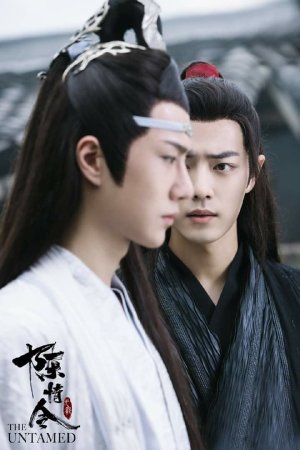
Did the director forget about Jin Hwan conversation on his phone in the episode 1? Why Min Jun didn't confront…
I believe the reason Min Jun didn’t confront Jin Hwan about the phone call in episode 3 was due to the emotional stress he was under at that moment. The situation at the restaurant was already overwhelming for him, and it seemed too much for him to process or bring up then.
However, if you caught the preview at the end of episode 3, you’ll see that this topic will be addressed in episode 4, so it hasn’t been forgotten by the writers or director.
As for the phone call from eight years ago—you’re right, Jin Hwan probably doesn’t remember it clearly. But based on the explanation that follows, back then Jin Hwan was quite popular and admired by both boys and girls. During that phone call, he was referring to another friend who had a crush on him, and he was expressing that he didn’t have any feelings for that person. Unfortunately, Min Jun misheard the conversation and assumed Jin Hwan was talking about him, which led to a major misunderstanding.
It’s shaping up to be one of those storylines built on long-standing miscommunication, so hopefully, the next episode brings some much-needed clarity!
I am quite the opposite of you; I have watched over 200 BL series, yet somehow I missed this particular one. I…
Ooh, I totally get where you’re coming from—but now I’m even more curious! I just finished Until We Meet Again, and despite it being from 2019, I absolutely loved it. Sometimes the older ones really surprise you with how emotional and meaningful they are.
I feel the same about GMMTV—some of their shows are incredible (Bad Buddy, A Tale of Thousand Stars, Not Me were all fantastic!), but others don’t quite click.
Still, I’ve been wanting to try SOTUS because it feels like the series that helped launch BL into what it is today. The main reason I’m interested in watching SOTUS is because of its historical significance in the BL genre. From what I understand, it’s one of the series that truly propelled BL into the mainstream—it feels almost like the “mother” of modern BL dramas, in a way.
That said, you’re right—being 9 years old now, there’s a good chance it may feel outdated compared to today’s standards.
Still, I’m curious to see where it all began and to appreciate how far the genre has come since then.
Do you think it still holds value as a classic, even if it doesn’t quite match up with the more polished storytelling of recent years?
200 BLs later, this one takes me back to where it all started for me- my first BL.
I am quite the opposite of you; I have watched over 200 BL series, yet somehow I missed this particular one. I plan to start it soon, and I hope it’s not too late
Jungyeon passed away due to complications from a surgery. When he parted ways with Ha-Min, he had promised to reach out again, but instead, he disappeared without any contact for over a year. During that time, Ha-Min believed Jungyeon had simply chosen to abandon him, growing resentful and assuming he had been heartlessly ghosted.
It wasn’t until much later that Ha-Min learned the truth from his own mother — that Jungyeon had, in fact, passed away. Overcome with shock and grief, Ha-Min returned to his room and, while going through his things, opened his old notebook. As he flipped through the pages filled with memories, thoughts, and emotions tied to Jungyeon, the weight of the loss hit him fully, and he broke down in tears — overwhelmed by sorrow, regret, and the deep ache of missing him.
I also truly loved the third couple, but I recommend not watching the final two minutes of episode six—unless…
Jungyeon passed away due to complications from a surgery. When he parted ways with Ha-Min, he had promised to reach out again, but instead, he disappeared without any contact for over a year. During that time, Ha-Min believed Jungyeon had simply chosen to abandon him, growing resentful and assuming he had been heartlessly ghosted.
It wasn’t until much later that Ha-Min learned the truth from his own mother — that Jungyeon had, in fact, passed away. Overcome with shock and grief, Ha-Min returned to his room and, while going through his things, opened his old notebook. As he flipped through the pages filled with memories, thoughts, and emotions tied to Jungyeon, the weight of the loss hit him fully, and he broke down in tears — overwhelmed by sorrow, regret, and the deep ache of missing him.
I also truly loved the third couple, but I recommend not watching the final two minutes of episode six—unless…
Jungyeon passed away due to complications from a surgery. When he parted ways with Ha-Min, he had promised to reach out again, but instead, he disappeared without any contact for over a year. During that time, Ha-Min believed Jungyeon had simply chosen to abandon him, growing resentful and assuming he had been heartlessly ghosted.
It wasn’t until much later that Ha-Min learned the truth from his own mother — that Jungyeon had, in fact, passed away. Overcome with shock and grief, Ha-Min returned to his room and, while going through his things, opened his old notebook. As he flipped through the pages filled with memories, thoughts, and emotions tied to Jungyeon, the weight of the loss hit him fully, and he broke down in tears — overwhelmed by sorrow, regret, and the deep ache of missing him.
TBH both the main characters are childish and immatureMinjun really should stop jumping to conclusions whereas…
And yes, many people are saying they should’ve just communicated eight years ago — but if it were really that simple, there wouldn’t be a story to tell. We’d have a one-episode special, not a six-episode series. The miscommunication and emotional struggle are what give the narrative weight. The whole point is that despite all the time and distance, their feelings remained. That’s what makes the reunion meaningful.
It’s easy to label their actions as immature, but there’s more depth to both characters.
Minjun is an introvert, which makes it genuinely difficult for him to express his emotions clearly — especially in emotionally vulnerable situations. His tendency to jump to conclusions isn’t just immaturity; it’s part of how he processes the world around him. He struggles with vulnerability, and that influences how he reacts under pressure.
Jin Hwan, on the other hand, is experiencing his first real relationship. Naturally, he struggles to navigate unfamiliar emotions and hesitates to be direct. He’s so inexperienced that he even turns to his friend for advice and tips, unsure of how to handle his feelings properly. His actions stem more from inexperience and fear of ruining what they had than from intentional avoidance.
Both characters are still quite young during the events of the series, and emotional missteps are part of their journey. Their mistakes feel authentic and reflect how people often act when they’re still learning how to handle love and communication. They may not be perfect, but that’s what makes their story so compelling. Their growth, regrets, and deep-rooted connection are what carry the emotional heart of the series.
After all, imagine watching a superhero series with no villain — there’s no tension, no stakes. Just like that, if these two had communicated perfectly from the start, there’d be no plot, no emotional journey — and certainly no reason for us to keep watching.
these two are stressing me lol all they had to do was talk it out.
And yes, many people are saying they should’ve just communicated eight years ago — but if it were really that simple, there wouldn’t be a story to tell. We’d have a one-episode special, not a six-episode series. The miscommunication and emotional struggle are what give the narrative weight. The whole point is that despite all the time and distance, their feelings remained. That’s what makes the reunion meaningful.
It’s easy to label their actions as immature, but there’s more depth to both characters.
Minjun is an introvert, which makes it genuinely difficult for him to express his emotions clearly — especially in emotionally vulnerable situations. His tendency to jump to conclusions isn’t just immaturity; it’s part of how he processes the world around him. He struggles with vulnerability, and that influences how he reacts under pressure.
Jin Hwan, on the other hand, is experiencing his first real relationship. Naturally, he struggles to navigate unfamiliar emotions and hesitates to be direct. He’s so inexperienced that he even turns to his friend for advice and tips, unsure of how to handle his feelings properly. His actions stem more from inexperience and fear of ruining what they had than from intentional avoidance.
Both characters are still quite young during the events of the series, and emotional missteps are part of their journey. Their mistakes feel authentic and reflect how people often act when they’re still learning how to handle love and communication. They may not be perfect, but that’s what makes their story so compelling. Their growth, regrets, and deep-rooted connection are what carry the emotional heart of the series.
After all, imagine watching a superhero series with no villain — there’s no tension, no stakes. Just like that, if these two had communicated perfectly from the start, there’d be no plot, no emotional journey — and certainly no reason for us to keep watching.
Many viewers have pointed out that the central conflict in the series could have been avoided if the characters had simply communicated eight years ago. While that’s true on the surface, it’s important to remember that if it were truly that simple, there would be no story to tell. We would have a one-episode special instead of a six-episode series. The emotional tension, misunderstandings, and missed opportunities are what give the narrative its depth and resonance. The entire premise hinges on the idea that, despite time, distance, and mistakes, the love between them endures — and that’s what makes their reunion so meaningful.
While it’s easy to dismiss their actions as immature, the characters are more layered than they may initially appear.
Minjun, for instance, is an introvert who finds it genuinely difficult to articulate his emotions, especially in moments of vulnerability. His tendency to jump to conclusions isn’t merely childish behavior; it reflects his discomfort with emotional confrontation and his instinct to protect himself from potential hurt. These are deeply rooted traits, not just flaws for the sake of drama.
Jin Hwan, on the other hand, is navigating his very first serious relationship. His hesitation to speak plainly stems not from indifference, but from uncertainty and fear. His inexperience is so pronounced that he seeks advice and guidance from a friend, clearly unsure of how to process or express what he’s feeling. His actions are shaped by a desire not to jeopardize something precious, rather than by a lack of emotional maturity.
Both characters are still young, and it’s natural for individuals at that stage in life to make emotional missteps. Their behavior — while occasionally frustrating — feels authentic, and it mirrors the real-life complexities of growing up, forming connections, and learning to communicate effectively in relationships.
Ultimately, their imperfections are what make the story engaging. Their growth over time, the enduring nature of their feelings, and the gradual rebuilding of their connection all serve as the emotional core of the narrative.
After all, a superhero story without a villain would lack conflict and suspense. In the same way, if the characters in this series had communicated flawlessly from the beginning, there would be no emotional arc, no tension, and no journey — and certainly no reason for us to be invested in their story.
The intimate scene between the second couple was both beautifully executed and emotionally moving. While Yi Qing initiated the kiss, it was Jing He who passionately took the lead—jumping into Yi Qing's arms as they continued kissing, and being carried to the couch in a moment that was equal parts romantic and intense. The chemistry between them was undeniable, making the scene both heartfelt and captivating.
That said, Episode 11 felt noticeably short, and with so many emotional threads still in play, I’m slightly concerned that the final episode may feel rushed. I truly hope the conclusion gives this story the depth and closure it deserves.
I know I’m about six years late, but I just finished watching Episode 1 and I’m absolutely loving it so far.…
Never mind - I got my answers by watching the entire series in 2 days.
10/10 – A Beautifully Heartfelt Journey Through Love, Fate, and Healing
Until We Meet Again is not just a Thai BL—it’s an emotional masterpiece that stays with you long after the final episode. The story seamlessly blends past and present, weaving a tale of tragic love, reincarnation, and second chances that hits all the right notes.
I’ve watched over 200+ BLs and I cannot believe I missed this one five years ago. I was so hooked that I binge-watched all 17 episodes in just 2 days. I also don’t think I’ve ever cried this much watching a series—ever. What a masterpiece.
What truly sets this series apart is the depth of emotion. Dean and Pharm’s connection feels destined and genuine, while the heartbreaking story of Korn and Intouch adds powerful layers of meaning and sorrow. The acting is phenomenal—especially from Fluke Natouch, whose portrayal of Pharm is so tender and raw that it's impossible not to feel every moment with him.
I also absolutely loved Ohm Thitiwat, who portrayed Dean so beautifully. He was stunning and so captivating to watch—his quiet strength and presence added so much depth to the role. I’m genuinely looking forward to seeing him in his upcoming series!
The cinematography is gorgeous, the soundtrack is hauntingly beautiful, and the pacing gives you time to fully invest in the characters and their journeys. It’s a show that explores grief, healing, family, and the unbreakable bond of love across lifetimes.
Whether you're a long-time BL fan or new to the genre, Until We Meet Again is a must-watch. It’s romantic, emotional, and deeply moving—a show that proves love truly can transcend time
I recently finished watching Heart Stain (Korean) and honestly found it quite dull — the plot was boring, and there was no real chemistry between the actors, despite its 7.4 rating.
Meanwhile, this series Business as Usual is genuinely impressive: great acting, a well-structured plot with perfectly timed flashbacks, beautiful cinematography, and a stunning cast. Yet somehow, it only has a 7.3 rating?
At this point, I’m seriously starting to question how reliable kisskh ratings are.
The misunderstanding is explained slowly and straight to the point, I like this speed, since it's only 6 episodes,…
Absolutely agree with you! The pacing felt just right—clear and to the point. Dragging the misunderstanding all the way to episode 5 or 6 would've left barely any time for meaningful development between them. After 8 years apart, you'd expect real-life people to get to the heart of things right away—"Why did you leave me?" should be one of the first questions. I'm glad they didn’t stretch it out unnecessarily.
I’m really enjoying the first episode so far. Korean BL dramas consistently deliver high quality. I truly hope we’ll see a love triangle in this series, as it’s been quite a while since one appeared in a storyline.
I know I’m about six years late, but I just finished watching Episode 1 and I’m absolutely loving it so far. However, I’m a bit confused and would really appreciate some clarification before I continue to Episode 2.
From what I understand, the series often uses the same actors to portray characters who have been reincarnated. That makes sense narratively, but I’m a little confused by the opening scene of Until We Meet Again. At the beginning, Korn and In take their own lives because their father did not accept their romantic relationship. It was incredibly emotional—this is the first time I’ve cried so much within the first five minutes of a series, even without fully understanding the context.
In the present timeline, Pharm has flashbacks, but the character in those memories doesn’t appear to be him, but rather In. So, I’m wondering—are Pharm and In the same soul, reincarnated? If so, wouldn’t it have been clearer to use the same actor for consistency?
Thank you in advance to anyone who can help clarify this!
where can i watch the special eps ? i watched the series on billibilli but special eps are not available in there
I agree with you. I have subscribed to platforms such as Viki, iQIYI, WeTV, and others because I prefer to watch content legally in order to support the actors who work so hard. I have also subscribed to YouTube Premium. However, there are occasional issues with access in certain countries due to VPN restrictions.
Hi everyone, Just a quick update—there are three additional episodes available. I recently discovered this after the kissing scene in Episode 7. Episode 8 features a charming scene where they go grocery shopping together—it's very sweet and worth watching! I won't spoiled episode 9 and 10.
However, if you caught the preview at the end of episode 3, you’ll see that this topic will be addressed in episode 4, so it hasn’t been forgotten by the writers or director.
As for the phone call from eight years ago—you’re right, Jin Hwan probably doesn’t remember it clearly. But based on the explanation that follows, back then Jin Hwan was quite popular and admired by both boys and girls. During that phone call, he was referring to another friend who had a crush on him, and he was expressing that he didn’t have any feelings for that person. Unfortunately, Min Jun misheard the conversation and assumed Jin Hwan was talking about him, which led to a major misunderstanding.
It’s shaping up to be one of those storylines built on long-standing miscommunication, so hopefully, the next episode brings some much-needed clarity!
I feel the same about GMMTV—some of their shows are incredible (Bad Buddy, A Tale of Thousand Stars, Not Me were all fantastic!), but others don’t quite click.
Still, I’ve been wanting to try SOTUS because it feels like the series that helped launch BL into what it is today. The main reason I’m interested in watching SOTUS is because of its historical significance in the BL genre. From what I understand, it’s one of the series that truly propelled BL into the mainstream—it feels almost like the “mother” of modern BL dramas, in a way.
That said, you’re right—being 9 years old now, there’s a good chance it may feel outdated compared to today’s standards.
Still, I’m curious to see where it all began and to appreciate how far the genre has come since then.
Do you think it still holds value as a classic, even if it doesn’t quite match up with the more polished storytelling of recent years?
It wasn’t until much later that Ha-Min learned the truth from his own mother — that Jungyeon had, in fact, passed away. Overcome with shock and grief, Ha-Min returned to his room and, while going through his things, opened his old notebook. As he flipped through the pages filled with memories, thoughts, and emotions tied to Jungyeon, the weight of the loss hit him fully, and he broke down in tears — overwhelmed by sorrow, regret, and the deep ache of missing him.
It’s easy to label their actions as immature, but there’s more depth to both characters.
Minjun is an introvert, which makes it genuinely difficult for him to express his emotions clearly — especially in emotionally vulnerable situations. His tendency to jump to conclusions isn’t just immaturity; it’s part of how he processes the world around him. He struggles with vulnerability, and that influences how he reacts under pressure.
Jin Hwan, on the other hand, is experiencing his first real relationship. Naturally, he struggles to navigate unfamiliar emotions and hesitates to be direct. He’s so inexperienced that he even turns to his friend for advice and tips, unsure of how to handle his feelings properly. His actions stem more from inexperience and fear of ruining what they had than from intentional avoidance.
Both characters are still quite young during the events of the series, and emotional missteps are part of their journey. Their mistakes feel authentic and reflect how people often act when they’re still learning how to handle love and communication. They may not be perfect, but that’s what makes their story so compelling. Their growth, regrets, and deep-rooted connection are what carry the emotional heart of the series.
After all, imagine watching a superhero series with no villain — there’s no tension, no stakes. Just like that, if these two had communicated perfectly from the start, there’d be no plot, no emotional journey — and certainly no reason for us to keep watching.
It’s easy to label their actions as immature, but there’s more depth to both characters.
Minjun is an introvert, which makes it genuinely difficult for him to express his emotions clearly — especially in emotionally vulnerable situations. His tendency to jump to conclusions isn’t just immaturity; it’s part of how he processes the world around him. He struggles with vulnerability, and that influences how he reacts under pressure.
Jin Hwan, on the other hand, is experiencing his first real relationship. Naturally, he struggles to navigate unfamiliar emotions and hesitates to be direct. He’s so inexperienced that he even turns to his friend for advice and tips, unsure of how to handle his feelings properly. His actions stem more from inexperience and fear of ruining what they had than from intentional avoidance.
Both characters are still quite young during the events of the series, and emotional missteps are part of their journey. Their mistakes feel authentic and reflect how people often act when they’re still learning how to handle love and communication. They may not be perfect, but that’s what makes their story so compelling. Their growth, regrets, and deep-rooted connection are what carry the emotional heart of the series.
After all, imagine watching a superhero series with no villain — there’s no tension, no stakes. Just like that, if these two had communicated perfectly from the start, there’d be no plot, no emotional journey — and certainly no reason for us to keep watching.
While it’s easy to dismiss their actions as immature, the characters are more layered than they may initially appear.
Minjun, for instance, is an introvert who finds it genuinely difficult to articulate his emotions, especially in moments of vulnerability. His tendency to jump to conclusions isn’t merely childish behavior; it reflects his discomfort with emotional confrontation and his instinct to protect himself from potential hurt. These are deeply rooted traits, not just flaws for the sake of drama.
Jin Hwan, on the other hand, is navigating his very first serious relationship. His hesitation to speak plainly stems not from indifference, but from uncertainty and fear. His inexperience is so pronounced that he seeks advice and guidance from a friend, clearly unsure of how to process or express what he’s feeling. His actions are shaped by a desire not to jeopardize something precious, rather than by a lack of emotional maturity.
Both characters are still young, and it’s natural for individuals at that stage in life to make emotional missteps. Their behavior — while occasionally frustrating — feels authentic, and it mirrors the real-life complexities of growing up, forming connections, and learning to communicate effectively in relationships.
Ultimately, their imperfections are what make the story engaging. Their growth over time, the enduring nature of their feelings, and the gradual rebuilding of their connection all serve as the emotional core of the narrative.
After all, a superhero story without a villain would lack conflict and suspense. In the same way, if the characters in this series had communicated flawlessly from the beginning, there would be no emotional arc, no tension, and no journey — and certainly no reason for us to be invested in their story.
That said, Episode 11 felt noticeably short, and with so many emotional threads still in play, I’m slightly concerned that the final episode may feel rushed. I truly hope the conclusion gives this story the depth and closure it deserves.
10/10 – A Beautifully Heartfelt Journey Through Love, Fate, and Healing
Until We Meet Again is not just a Thai BL—it’s an emotional masterpiece that stays with you long after the final episode. The story seamlessly blends past and present, weaving a tale of tragic love, reincarnation, and second chances that hits all the right notes.
I’ve watched over 200+ BLs and I cannot believe I missed this one five years ago. I was so hooked that I binge-watched all 17 episodes in just 2 days. I also don’t think I’ve ever cried this much watching a series—ever. What a masterpiece.
What truly sets this series apart is the depth of emotion. Dean and Pharm’s connection feels destined and genuine, while the heartbreaking story of Korn and Intouch adds powerful layers of meaning and sorrow. The acting is phenomenal—especially from Fluke Natouch, whose portrayal of Pharm is so tender and raw that it's impossible not to feel every moment with him.
I also absolutely loved Ohm Thitiwat, who portrayed Dean so beautifully. He was stunning and so captivating to watch—his quiet strength and presence added so much depth to the role. I’m genuinely looking forward to seeing him in his upcoming series!
The cinematography is gorgeous, the soundtrack is hauntingly beautiful, and the pacing gives you time to fully invest in the characters and their journeys. It’s a show that explores grief, healing, family, and the unbreakable bond of love across lifetimes.
Whether you're a long-time BL fan or new to the genre, Until We Meet Again is a must-watch. It’s romantic, emotional, and deeply moving—a show that proves love truly can transcend time
Meanwhile, this series Business as Usual is genuinely impressive: great acting, a well-structured plot with perfectly timed flashbacks, beautiful cinematography, and a stunning cast. Yet somehow, it only has a 7.3 rating?
At this point, I’m seriously starting to question how reliable kisskh ratings are.
From what I understand, the series often uses the same actors to portray characters who have been reincarnated. That makes sense narratively, but I’m a little confused by the opening scene of Until We Meet Again. At the beginning, Korn and In take their own lives because their father did not accept their romantic relationship. It was incredibly emotional—this is the first time I’ve cried so much within the first five minutes of a series, even without fully understanding the context.
In the present timeline, Pharm has flashbacks, but the character in those memories doesn’t appear to be him, but rather In. So, I’m wondering—are Pharm and In the same soul, reincarnated? If so, wouldn’t it have been clearer to use the same actor for consistency?
Thank you in advance to anyone who can help clarify this!
Just a quick update—there are three additional episodes available. I recently discovered this after the kissing scene in Episode 7. Episode 8 features a charming scene where they go grocery shopping together—it's very sweet and worth watching! I won't spoiled episode 9 and 10.