


 1
1


A beautiful postcard that lacks depth
I had not particularly planned to watch this drama, but Pierrot, with all the sincerity and kindness we know him for when it comes to Korean dramas, made me want to give it a try — whereas usually, I’m the one inviting people on these journeys… or not. (Don’t forget to read his review, even though he wrote it while thinking the drama was already finished.) Doctor On The Edge is not the drama of the year, nor is it the medical drama that will have crowds cheering, but it has something difficult to define: a feeling of warmth and companionship. However, it has as many flaws as it does qualities. At the very beginning, one of Ji-Ui’s army friends gives him a typical piece of advice while warning him about his upcoming assignment as a military doctor:
“There are three things you should avoid in life, otherwise you’re doomed: trouble, people, and love.” A cliché sentence, perhaps, but one that ultimately sums up the hero’s journey quite well, as well as the main theme of the series. Doctor On The Edge is not a story built around a major medical plot or any kind of suspense. It is above all a fleeting moment of life, a pause in an isolated place where wounded people will try to rebuild themselves.
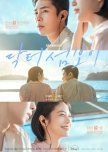
Do Ji-Ui (Lee Jae-Wook) is a plastic surgeon working at a university hospital. He begins his mandatory military service as a doctor (SP doctor) and is waiting for his next assignment. Traumatized by a painful event that he has carried with him for years, he has a fear of the sea and hates archipelagos. Of course, fate decides otherwise: he is sent to a remote island, somewhere in the southern part of the country, a place where nobody wants to go. There, he meets nurse Yuk Ha-Ri (Shin Ye-Eun), who is also running away from her own past and takes this opportunity to reconnect with her grandmother. At the small clinic where they are assigned, besides treating and healing the illnesses of the island residents, they will have to move forward alongside their colleagues and, for some of them, rebuild themselves psychologically. People come to this drama for the postcard scenery: an island, the sea, peaceful landscapes, a quiet village, fireflies… Everything is designed to create a soft and relaxing atmosphere. We follow the daily life of a small medical clinic made up of a few doctors and nurses who care for a population that is often elderly, isolated, and sometimes abandoned by families who have moved to the mainland.
Although the initial premise is a good one, it is true that the drama quickly starts going in circles around the 7th episode. The series is built around a simple idea: following people who must learn to accept help from others and move forward despite their emotional wounds. We are far from a structure based on twists, shocking revelations, or major plot developments. Here, the focus is much more human: repairing what is broken, finding balance again, and understanding that you do not have to carry your burdens alone. Behind this apparent simplicity, the drama tackles a real issue, even if it is handled somewhat awkwardly: access to healthcare in island communities. These areas are not always profitable, but they remain essential for the people who live there. Medical helipads are not just a convenient plot device; they represent a vital connection with the mainland. The drama’s main weakness comes from its narrative choice: there is almost no real storyline. There is no true antagonist, no major threat, and very few significant developments for a large part of the series. This is clearly a feel-good drama, and it fully embraces that identity. But one thing should be remembered: being gentle and comforting does not necessarily mean being boring.
Even though introspection is at the heart of the drama, that is not all it has to offer. The main couple is clearly the show’s greatest success. Lee Jae-Wook and Shin Ye-Eun have a chemistry that goes far beyond the typical romantic storyline. The actress brings a bright energy, a playful and spontaneous personality that perfectly contrasts with Ji-Ui’s closed-off nature. Her character is not simply there to fall in love with the male lead: she becomes the person who gradually helps him return to a normal life. Through her, he understands that accepting happiness does not mean betraying his past. The real subject of the drama is therefore not only love, but also learning to forgive oneself. It is unfortunate that the second couple does not reach the same level as the first one — not because of its writing, but because of the casting choices, which feel completely mismatched. Kim Yoon-Woo, who plays the acupuncturist, and Lee Soo-Kyung, his nurse love interest, are the weak point of the series. While one feels too gentle and immature (too young), the other delivers a performance that clearly lacks subtlety. The serious issue they eventually face later in the story suffers from this lack of immersion and credibility.
Ji-Ui’s character had enormous potential, yet his psychological development is not explored as deeply as it should have been. Sent to the island by the army, he finds himself in an environment that is almost his worst nightmare, since he suffers from fears related to isolation, water, and insects. This assignment forces him to confront exactly what he fears the most. His past explains this vulnerability: several years earlier, he experienced a tragedy involving the death of a friend, and he remains trapped by the guilt he carries because of it. The problem is that the drama keeps this information in the background for far too long. To fill the gaps, we spend time treating patients (yes, it is also a medical drama) and going through the usual, sometimes exaggerated, codes of countryside K-dramas. The intention behind the series is admirable: talking about resilience, rebuilding oneself, and the right to find happiness again after trauma. The drama still manages to avoid becoming overly melodramatic. The series remains restrained, even though it could easily have fallen into excessive sentimentality and emotional manipulation. At least, that is my opinion. The writing may seem simple at times, but there are still some genuinely good ideas. This is truly a drama centered on simple human relationships, one that conveys empathy and sincerity.
It is a real shame that the psychology of the main characters was not developed further, because it deserved much more attention. The lack of twists is not actually a problem. The real weakness of Doctor On The Edge lies in the second couple, whose actors are clearly not convincing enough. Yet the drama had all the ingredients to become a hidden gem: a beautiful setting, a unique atmosphere, a meaningful message, and characters with genuine emotional potential. But it lacks that extra layer of depth that would have allowed it to become more than just a pleasant viewing experience. Nevertheless, the series has a genuine sincerity and a gentleness that can sometimes feel refreshing in a drama landscape that often relies on constant escalation. Here, everything remains simple: the encounters, the wounds of the past, the bonds that are created, and the ability to move forward thanks to others. The series also owes a lot to its atmosphere: the island landscapes, the feeling of being at the edge of the world, the small everyday moments, and above all, a beautiful OST that perfectly accompanies this human interlude. We are not dealing with a masterpiece that will leave a lasting mark on the genre. It is a warm and soothing series, sometimes too restrained, sometimes too predictable, but it remains a beautiful nostalgic impression that deserved a little more depth.
“There are three things you should avoid in life, otherwise you’re doomed: trouble, people, and love.” A cliché sentence, perhaps, but one that ultimately sums up the hero’s journey quite well, as well as the main theme of the series. Doctor On The Edge is not a story built around a major medical plot or any kind of suspense. It is above all a fleeting moment of life, a pause in an isolated place where wounded people will try to rebuild themselves.
Do Ji-Ui (Lee Jae-Wook) is a plastic surgeon working at a university hospital. He begins his mandatory military service as a doctor (SP doctor) and is waiting for his next assignment. Traumatized by a painful event that he has carried with him for years, he has a fear of the sea and hates archipelagos. Of course, fate decides otherwise: he is sent to a remote island, somewhere in the southern part of the country, a place where nobody wants to go. There, he meets nurse Yuk Ha-Ri (Shin Ye-Eun), who is also running away from her own past and takes this opportunity to reconnect with her grandmother. At the small clinic where they are assigned, besides treating and healing the illnesses of the island residents, they will have to move forward alongside their colleagues and, for some of them, rebuild themselves psychologically. People come to this drama for the postcard scenery: an island, the sea, peaceful landscapes, a quiet village, fireflies… Everything is designed to create a soft and relaxing atmosphere. We follow the daily life of a small medical clinic made up of a few doctors and nurses who care for a population that is often elderly, isolated, and sometimes abandoned by families who have moved to the mainland.
Although the initial premise is a good one, it is true that the drama quickly starts going in circles around the 7th episode. The series is built around a simple idea: following people who must learn to accept help from others and move forward despite their emotional wounds. We are far from a structure based on twists, shocking revelations, or major plot developments. Here, the focus is much more human: repairing what is broken, finding balance again, and understanding that you do not have to carry your burdens alone. Behind this apparent simplicity, the drama tackles a real issue, even if it is handled somewhat awkwardly: access to healthcare in island communities. These areas are not always profitable, but they remain essential for the people who live there. Medical helipads are not just a convenient plot device; they represent a vital connection with the mainland. The drama’s main weakness comes from its narrative choice: there is almost no real storyline. There is no true antagonist, no major threat, and very few significant developments for a large part of the series. This is clearly a feel-good drama, and it fully embraces that identity. But one thing should be remembered: being gentle and comforting does not necessarily mean being boring.
Even though introspection is at the heart of the drama, that is not all it has to offer. The main couple is clearly the show’s greatest success. Lee Jae-Wook and Shin Ye-Eun have a chemistry that goes far beyond the typical romantic storyline. The actress brings a bright energy, a playful and spontaneous personality that perfectly contrasts with Ji-Ui’s closed-off nature. Her character is not simply there to fall in love with the male lead: she becomes the person who gradually helps him return to a normal life. Through her, he understands that accepting happiness does not mean betraying his past. The real subject of the drama is therefore not only love, but also learning to forgive oneself. It is unfortunate that the second couple does not reach the same level as the first one — not because of its writing, but because of the casting choices, which feel completely mismatched. Kim Yoon-Woo, who plays the acupuncturist, and Lee Soo-Kyung, his nurse love interest, are the weak point of the series. While one feels too gentle and immature (too young), the other delivers a performance that clearly lacks subtlety. The serious issue they eventually face later in the story suffers from this lack of immersion and credibility.
Ji-Ui’s character had enormous potential, yet his psychological development is not explored as deeply as it should have been. Sent to the island by the army, he finds himself in an environment that is almost his worst nightmare, since he suffers from fears related to isolation, water, and insects. This assignment forces him to confront exactly what he fears the most. His past explains this vulnerability: several years earlier, he experienced a tragedy involving the death of a friend, and he remains trapped by the guilt he carries because of it. The problem is that the drama keeps this information in the background for far too long. To fill the gaps, we spend time treating patients (yes, it is also a medical drama) and going through the usual, sometimes exaggerated, codes of countryside K-dramas. The intention behind the series is admirable: talking about resilience, rebuilding oneself, and the right to find happiness again after trauma. The drama still manages to avoid becoming overly melodramatic. The series remains restrained, even though it could easily have fallen into excessive sentimentality and emotional manipulation. At least, that is my opinion. The writing may seem simple at times, but there are still some genuinely good ideas. This is truly a drama centered on simple human relationships, one that conveys empathy and sincerity.
It is a real shame that the psychology of the main characters was not developed further, because it deserved much more attention. The lack of twists is not actually a problem. The real weakness of Doctor On The Edge lies in the second couple, whose actors are clearly not convincing enough. Yet the drama had all the ingredients to become a hidden gem: a beautiful setting, a unique atmosphere, a meaningful message, and characters with genuine emotional potential. But it lacks that extra layer of depth that would have allowed it to become more than just a pleasant viewing experience. Nevertheless, the series has a genuine sincerity and a gentleness that can sometimes feel refreshing in a drama landscape that often relies on constant escalation. Here, everything remains simple: the encounters, the wounds of the past, the bonds that are created, and the ability to move forward thanks to others. The series also owes a lot to its atmosphere: the island landscapes, the feeling of being at the edge of the world, the small everyday moments, and above all, a beautiful OST that perfectly accompanies this human interlude. We are not dealing with a masterpiece that will leave a lasting mark on the genre. It is a warm and soothing series, sometimes too restrained, sometimes too predictable, but it remains a beautiful nostalgic impression that deserved a little more depth.
Was this review helpful to you?


