


 1
1


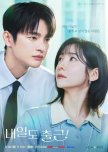
"See You at Work Tomorrow?" Not even in my dreams!
Office dramas are rare, and they are usually adapted from webtoons. The most famous or memorable ones, in my opinion, remain Misaeng: Incomplete Life and Gaus Electronics. Both deal with very different subjects, but they share one important thing: writing that actually has something to say. Whether constructive, funny, dramatic, romantic, or humorous, they always bring something meaningful. Above all, they are built around a group of lovable characters that we quickly identify with and, logically, grow attached to. With See You at Work Tomorrow, it is exactly the opposite. This drama turns out to be completely lifeless, or worse, totally sanitized. The episode length does not help either. The adaptation is certainly poor, but I honestly think the original material itself was already weak. The fact that the project was entrusted to two rookies as writers says a lot about the confidence placed in it. We narrowly avoided an industrial disaster. This drama is a collection of things we have seen countless times before, with absolutely nothing original to offer.The story takes place inside a cutting-edge electronics technology company. We follow the development of the relationship between department head Kang Si-Woo (Seo In-Guk) and his subordinate Cha Ji-Yoon (Park Ji-Hyun), an engineer who has worked at the company for seven years. Competent and respected by her colleagues, she joins Si-Woo’s R&D team when he returns from the United States after several years away. He is a handsome, rather taciturn and secretive man. A loner hiding his own emotional wounds. She has recently gone through a painful breakup. Yet she finds herself intrigued by this charismatic man who appears distant and cold. Her best friend Yoon No-Ah (Kang Mi-Na) is also recovering from a toxic seven-year relationship. Caught between their professional responsibilities and their desire to rebuild their romantic lives, both try to move forward. Around them are colleagues, ex-partners, and other unnecessary distractions (the emotional backup options).
See You at Work Tomorrow mistakes maturity and restraint for a complete lack of personality. Being an adult, calm, or realistic does not mean being cold and flavorless. One word comes to mind to describe this drama: boring. The proof is Misaeng, which is much slower, heavier, and more dramatic, yet I never once felt that it dragged. Behind its office setting, there was a real message: a satire of Korean corporate culture, social criticism, and characters who genuinely evolved. Here, the professional environment is nothing more than decoration. The drama is clean, well-produced, but it has nothing to say beyond its own story. Everything is smooth, predictable, and completely risk-free. It lacks the one thing that turns a decent series into a memorable one: an identity. You watch it without any real involvement, like a cow watching a train go by. There are no real rivalries between teams or colleagues, the stakes are limited, there are no surprises, and the script—which could fit on a single sheet of toilet paper—is completely predictable. The first seven episodes are an absolute nightmare to get through because the story is basically standing still. Once the final credits rolled, I asked myself a simple question: What concrete thing is there left to remember after these twelve endless episodes? Unfortunately, not much.
The problem is not simply that the pacing is bad. The problem is that the drama does not have much to tell. I found the romance forced, predictable, and above all, completely lacking passion. They are together simply because the script tells them they have to be. In a romantic comedy, the couple should be the engine of the series. We should want to see them together, feel their chemistry, and look forward to their important moments. Here, I never felt any of that. This couple gave me nothing. They made me feel nothing. I never imagined myself in their position, and I never had the impression that I was watching a special relationship develop. Their first kiss, which should have been the emotional payoff after several episodes of buildup, left me completely indifferent. The soundtrack can try to convince us that we should be moved, but emotions cannot be forced. The problem also comes from the stoic romantic hero archetype. It can work, but only if the character has something captivating about him. Here, he is so rigid and passive that he becomes the ultimate romance killer. He never laughs, barely shows any spontaneity, and his charm relies almost entirely on his appearance. But a handsome face cannot replace a personality. Seo In-Guk is talented, but he is completely trapped by a role that gives him almost nothing to play. Park Ji-Hyun is present, but she never seems truly invested. Her smile feels forced; she is simply going through the motions.
The actors are not the problem. The issue lies with the scenes, the dialogue, and the direction, which are completely bland. The story is so weak and uninteresting that the supporting characters quickly become nothing more than filler. The second couple perfectly summarizes the writing problems of this drama: two characters with completely opposite views of love. He believes love comes and goes. She believes in a relationship that is built over time after seven years together. That is actually a great foundation for a meaningful conflict of values. Except the drama forgets the most important thing: showing us why they belong together. She does not really like his style, his age, his personality, or his vision of life... but the script has decided they must end up together, so they will end up together. Even if we have to watch them turn into complete sentimental fools. I love Kang Mi-Na, but she is not given the respect she deserves. She deserves much better than this kind of thankless role. She was fantastic in Welcome to Samdal-ri. The drama introduces a fake professional conflict around episode 8, but it quickly disappears. Everything happens not because the story needs it, but because the writers need to fill the remaining episodes. The drama does not create obstacles. It creates artificial situations. We are not watching a romance develop or a workplace environment evolve. We are watching mandatory boxes being checked on a production checklist.
Finally, the story is sold as a romantic comedy, except it forgets to be funny. I did not smile once during the entire viewing. And that perfectly represents the main problem I mentioned: the series simply lacks life. The episodes continue with a constant feeling of padding. This drama only has twelve episodes, but I felt like I had watched twenty. It is endless. And when it comes to killing romance, it is hard to do worse. They look less like lovers and more like two colleagues negotiating a business contract. Before leaving, here are a few unusual remarks because the Sandman completely destroyed me with his magical sleeping powder: The refrigerator: "We follow engineers responsible for developing... a refrigerator that makes spherical ice cubes. Surely humanity had been desperately waiting for this technological revolution." The second couple: "She likes neither his style, his age, his personality, nor his vision of love... but the script decided they had to end up together. Move along, nothing to see here." The coincidence : "They have been going to the same store for years, owned by Ji-Yoon's father, without ever meeting... and then, magically, they run into each other exactly when the script needs them to. What timing!" And as I said earlier, everything is sanitized: "The characters, the romance, the conflicts, the dialogues, the direction... even the French dub, which kills their relationship with all the formal 'vous' and the constant 'sir/madam'." In short, this is not the drama where you will find madness, passionate love, or lighthearted fun.
Rating: 4/10 :But I give it a passing grade because of Kang Mi-Na, who gets her own privileged Joker card: "Meow, meow."
Was this review helpful to you?
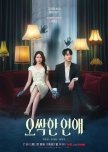
The Supernatural Died Before the Series Did
Your drama is brought to you by Volvo, Volvo, the heroes' vehicle!Spooky in Love takes its inspiration from the 2011 film Spellbound, starring Son Ye-jin and Lee Min-ki. But that's where the similarities end. The trailers, the synopsis, and even the title we were presented with are misleading, because the supernatural aspect involving ghosts completely disappears within the first third of the series, giving way to a run-of-the-mill story that has been seen and done a hundred times before. For old hands who know the formula and the usual storytelling patterns, the problem isn't the accumulation of tropes and clichés, but how intelligently they are used within a well-constructed and engaging screenplay. For someone who doesn't watch many romantic K-dramas, or who is willing to let everything slide because the worse it gets, the more entertaining it becomes, why not. For everyone else, myself included, we came dangerously close to a complete shipwreck, because the writing turns out to be staggeringly poor. At first, it's a mix of Hotel del Luna, From Now On, Showtime! and The Judge from Hell across several themes; but unlike those series, not only will the main couple never reach the required romantic intensity, but worse still, emotion will have packed its bags because the tank will quickly run dry.
Cheon Yeo-Ri (Park Eun-bin) is the granddaughter of a chaebol family specializing in luxury hotels, and she herself runs a prestigious establishment. Competent, she nevertheless lives with a heavy burden following a boating accident she was involved in in the past: she can see ghosts who have not yet managed to move on to the afterlife. She therefore helps them, while also secretly resolving situations where the police have hit a dead end. Unfortunately, she cannot touch anyone without passing this "gift" on to them for a certain period of time. So she is alone. Her path crosses that of prosecutor Ma Gang-Uk (Yang Se-jong), a brilliant and upright man. Through a series of "coincidences" that aren't really coincidences, they are led to meet several times. After uncovering the mystery surrounding Yeo-Ri, and experiencing the consequences himself, their relationship develops and feelings begin to emerge. But between an envious and jealous family and the return of a former relationship, Kang Min-Hwan (Ong Seong-wu), Yeo-Ri will have to fight her way through the demons of her past.
The beginning looked promising because I expected to see an effective duo develop between Yeo-Ri, the wealthy heiress who does good around her, and the fearless and valiant prosecutor Kang-Wook. But the synopsis on most websites (false because they all copy one another like sheep) is misleading and deceptive: it gives the impression that we're going to follow a fantasy romance, with the supernatural at the heart of the story, whereas the drama ultimately uses this element in a much more superficial way, and it quickly disappears. The series seems determined to sell us an original and mysterious story, while a large part of its plot relies on much more conventional and artificial devices. There is therefore a disconnect between the initial promise and the final result, reinforcing the feeling that Spooky in Love never really knows what it wants to be: fantasy romance, family mystery, ghost story, or crime plot. The drama's main problem is its screenplay, which quickly gives the impression that events happen because the script needs them to, rather than because of the characters or their decisions. The writing becomes increasingly artificial, to the point where coincidences eventually replace genuine narrative construction.
The drama nevertheless has some directing qualities and a few good ideas, which makes its flaws all the more visible: there was enough material here to make something considerably better and more substantial. Some episodes feel as though they are circling around the same elements or artificially delaying revelations. The pacing therefore becomes uneven, with moments when the plot barely moves before suddenly accelerating, particularly toward the conclusion, where everything goes completely overboard and ridiculousness takes over from any sense of credibility. Characters are often pushed in a specific direction solely to allow the plot to move forward. This creates a "coincidence falling out of the sky" feeling: the script miraculously finds a solution to every problem, especially toward the end. It's all the more unfortunate because the drama could have made much smarter use of its past and its secrets. A revelation properly prepared with clues scattered throughout the story would have given the viewer the feeling of understanding, in retrospect, what had really happened. So the problem is less the revelation itself than the complete lack of preparation and its absolute convenience.
The romance suffers particularly from this mechanism: some emotional developments lack natural progression and give the impression that the characters evolve simply because the script has decided that it's time for them to do so. Park Eun-bin gives it her all as usual and strongly recalls IU in Hotel Del Luna with her prestigious wardrobe, albeit in a more understated version. But she is at the mercy of a screenplay that does her no favors. I found Yang Se-jong and Ong Seong-wu committed, but somewhat withdrawn. And as you will have understood, where there's romance, there must be a second man, because the story says he has to be there, like some kind of gimmick. Not only is it painfully predictable, but the whole thing is far too caricatural. The story lacks twists, intensity, but above all emotion and sincerity. Everything is pre-calculated, so nothing surprises us; it's far too smooth. The drama asks a lot from the viewer in terms of suspension of disbelief, but doesn't give enough in return for it to really work. Another problem is the lack of a secondary storyline that could have fleshed out the narrative and given it some momentum. The supporting characters are barely used, or used poorly. Overall, it's sweet and harmless, with a strong and interesting basic premise, but one that quickly gets bogged down in tiresome clichés.
The laziness of the writing, especially during the final two episodes, is staggering in its sheer convenience (the "cube syndrome"): the biggest waste is ultimately the supernatural element, which practically disappears just as the drama begins shifting toward its family and corporate storyline. What was supposed to be its distinguishing feature quickly becomes incidental, before almost disappearing entirely from the narrative. There is also a consistency problem in the way certain pieces of information are withheld or revealed. The final stretch should have been the point where all the different elements finally came together and made sense. Instead, it becomes the part where the screenplay exposes its strings most openly. Not everything is bad: there are a few lighthearted moments and some enjoyable comedic elements, but there are so few of them that they get buried in the overall mess. Spooky in Love wants to build a great mystery around the past, but when it comes time to solve it, it doesn't actually solve it: it finds miraculous evidence and providential coincidences that allow everything to be neatly put into place. As for the ghosts, we can simply thank them for stopping by at the beginning to say hello. Come on, I'll be lenient in the end, because even though it lacks surprises, it's still "cute."
Was this review helpful to you?

A Drama You Have to Assemble Like IKEA Furniture
By the time I finished the drama, I was sure of at least one thing: I hadn't been sold a dream, but rather a cheap imitation of a romantic comedy sprinkled with a generous dose of bland melodrama. The paradox of the title in all its glory is right there: rekindled love, passion, ambitions, reunions, cinema, thwarted destinies... plenty of good ideas to develop. Unfortunately, like some tired gimmick, the project was handed to a competent director who had never directed a romantic drama in his life, and even worse, the script was entrusted to a rookie writer who had never written anything before. It's like handing the keys to a Ferrari to someone who has just passed their driving test. So, on a wing and a prayer, why not...? Well, actually, no. Dream to You sells you hot air and puts you through a nightmare of padding from beginning to end. Why did I watch it all the way through? Because by Episode 5, the second couple gave me a glimmer of hope after four absolutely disastrous episodes, both in substance and execution. So let's take a closer look at this drama, whose biggest flaw is ultimately its lack of substance, and therefore its limited appeal.When they were high school students, Woo Su-Bin (Hwang In-Yeop) and Joo Yi-Jae (Hyeri) dreamed of becoming film directors and imagined spending their lives together. But tragic events would separate them for fifteen years: he suddenly leaves the country to study medicine, only to eventually become a promising and successful young director; meanwhile, she becomes a journalist for a local television station, carrying the feeling that she has failed at life. He achieved his dream. She didn't. After the international success of his first film, just as he had promised himself, he returns to Korea to find Yi-Jae, whom he has never forgotten and who was his first love. Fate quickly brings them back together. Su-Bin then tries to revive the ambition she buried long ago, while also rekindling the flame of their former love. Around them are various people connected to their family or professional lives, including Yu-Geon (Baek Sung-Chul), their high school friend who never gave up on his dream of becoming an actor, and Oh Ha-Na (Lee Yul-Eum), a child star shaped by her mother, a former starlet who has since become the CEO of a production company.
Where do I even start? The main problem with Dream to You isn't ultimately its lack of ideas. It's almost the opposite: the drama has plenty of them, but it never really knows what to do with them. Rekindled love, cinema, professional ambitions, thwarted destinies, complicated family relationships, characters still trying to find their place in life: on paper, there was more than enough material to build a mature and interesting romance. But the script constantly feels like it's piling one element on top of another without ever giving them any real coherence. It's the classic IKEA furniture problem: you open the box, find a ton of pieces, follow the instructions... and then, at some point, some pieces no longer seem to fit, others appear to be completely useless, and you're left with a handful of screws you don't even know where they were supposed to go. Above all, the drama lacks a center of gravity, a central pillar around which its themes and characters could actually develop. It tries to show too many things, but the result is that it merely skims the surface instead of digging any deeper. The Su-Bin / Yi-Jae relationship, for example, is rebuilt far too quickly, unlike the second couple. As far as emotional sparks are concerned, better luck next time.
We're dealing with a mature romance here, so I expect a little seduction and chemistry, not a relationship delivered as a ready-made package. Hwang In-Yeop and Hyeri spend three-quarters of the drama standing next to each other, but never really together. I saw the actors, but I never saw the characters they were supposed to be playing. Worse still, during those endless flashback sequences—which are mostly pointless at the beginning—we get to see them dressed as high school students. Except that they're both over 33, so I don't see high school students; I see two adult actors dressed up as teenagers because it simply isn't convincing. The script explains their past, their wounds, their reunion and the reasons they separated, but it doesn't make us experience their relationship enough in the present. We know so much about them before they've even had a real chance to rediscover each other. And for me, the "why" is essential. This becomes obvious in Episode 5, when they practically disappear from the screen to make room for Ha-Na and Yu-Geon, whose storyline I found more interesting because their relationship actually develops in front of us, even if somewhat clumsily. They also have something the main couple desperately lacks: natural chemistry. The real mistake was adding yet another couple that ultimately serves no purpose other than filling the narrative gaps.
The relationships between the characters are rather shaky overall, and the connections between the main cast feel weak. All the melodrama piled on top of more melodrama is basically there to compensate for weak tension and a warm atmosphere that is almost completely absent, except perhaps toward the end. The only real stake in the entire series is: "Will they eventually manage to make the movie whose script Yi-Jae wrote back in high school?" The actual filmmaking process could have been a fantastic tool for developing the relationship between Su-Bin and Yi-Jae: working together, confronting their different visions, bringing old memories back to the surface, blurring the line between acting and real feelings, and revealing their respective ambitions. We do get some of that, but only during the final episode. Talk about a missed opportunity! The boredom sets in quickly because the padding becomes increasingly obvious. That's exactly what creates the feeling of a script stitched together from disconnected pieces rather than built around an actual backbone. Fortunately, the direction is good, despite the excessive use of green screens and AI-generated material, which is rather baffling. There are a few good moments, but overall, it's not enough to create any real sense of authenticity or emotional impact.
Most of the time, there are no surprises whatsoever. Everything is painfully predictable, but one feeling quickly takes over: boredom. It's often downright soporific because the drama is basically a pile-up of issues and emotions slapped next to one another, with no harmony, no transitions and no real flow. There are no meaningful stakes. Where is the passion? Apart from two or three scenes, there's very little. Hyeri is basically "doing Hyeri," just like in Reply 1988 or May I Help You?. I found her more inspired in My Roommate Is a Gumiho and especially in Friendly Rivalry**, where she was working in a darker register. Baek Sung-Chul, on the other hand, seemed more convincing and inspired to me. As for Hwang In-Yeop, I found him rather mediocre once again, because he mostly relies on what he already knows how to do. In the end,** Dream to You is a drama you watch without ever truly experiencing. It tells you a lot, but makes you feel almost nothing. A missed opportunity, and above all, a lot of wasted time. As proof, by Episode 9, I ended up watching on fast-forward—and I'm glad I did. The series wasn't a nightmare, let's not exaggerate: there are a few enjoyable moments, but it certainly wasn't the dream I was promised. What it really lacked was a solid underlying structure.
Was this review helpful to you?
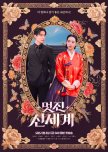
Matrix Joseon 2026
The real title of this drama is “A Wonderful World” or “A Magnificent World.” I prefer Morpheus’ line to Neo: “Welcome to the real world.” SBS clearly has a sense of humor—or at least ambition. Because let’s be serious: with that kind of budget, why entrust directing and writing to two rookies? The drama constantly oscillates between unintended parody and self-seriousness, and this awkward middle ground ends up leaving you puzzled. Result: 14 episodes in total (easily 16 considering how stretched they feel), more than half of which are a spectacular writing catastrophe. The series seems aimed at two audiences: those discovering romantic K-dramas for the first time, and those willing to accept anything without asking too many questions. In reality, the two groups end up merging. It started off well enough. But as the episodes go on, the conclusion becomes unavoidable: it’s a magnificent narrative aquaplaning, a patchwork that ticks absolutely every cliché and worn-out trope of “dad K-drama.” My Royal Nemesis is a recycling machine that, consciously or not, invites you to travel through the Matrix.So, which pill will he choose to take? The blue one (accepting the illusion) or the red one (that makes you see reality)?
Joseon, 1726. Kang Dan-Sim (Lim Ji-Yeon), a royal concubine caught in a conspiracy, is sentenced to be poisoned. To her utter shock, she finds herself in 2026, in the body of Shin Seo-Ri, a minor K-drama actress in a Joseon-themed production. Disoriented at first, she doesn’t know what to do. Her path crosses that of a chaebol heir (how original), Cha Se-Gye (Heo Nam-Jun), who is in conflict with his cousin, Choi Mun-Do (Jang Seung-Jo), a rival for the group’s succession. They have been clashing for years through their respective companies. Seeing them one after another, Dan-Sim experiences another shock: she immediately recognizes their faces, as they were important court figures in her own time. Cha Se-Gye, arrogant and self-important, finds in Kang Dan-Sim a sharp, resourceful woman.
Let’s go through the checklist before takeoff into “old-school K-drama” territory:
Chaebol? Roger. / Fated romance? Roger. / Endless clichés? Roger. / Useless characters occupying screen time? Roger. / Flat protagonist incapable of more than three emotions? Roger. / Sick grandmother? Roger. / Weak couple chemistry? Roger. / Implausible coincidences? Roger. / Body swap? Roger. / Convenient amnesia? Roger. / Truck of Doom? Roger. / Kopiko? Roger. / Mysterious comet? Roger. / Lunar eclipse? Roger. / Random twists pulled out of nowhere? Roger. / All-knowing shaman explaining the inexplicable? Roger. / Story rules rewritten mid-way? Roger. / Overdosed melodrama in the final episode? Roger. / Internal logic of the universe? Negative. > Narrative coherence? Still searching. > Writer’s flight plan? Unknown. > Takeoff clearance granted? Affirmative. > May God protect the passengers. (And America?)
My Royal Nemesis actually started under the best possible auspices. The mix of Joseon, time travel, romance, and succession struggles has real potential. The early episodes set up their stakes properly and even manage to spark curiosity. Unfortunately, this initial promise does not survive the script’s excessive ambitions, which gradually fall apart. One of the most striking issues lies in how Dan-Sim/Seo-Ri adapts to her new environment. She is thrown from Joseon into 2026 and assimilates the codes of this world at an almost unrealistic speed. Understanding modern technology, language, social relations, or chaebol dynamics happens in just a few scenes. This form of “instant assimilation,” almost like a Matrix-style upload, removes any credible learning process and significantly weakens the cultural shock. Instead of showing a gradual evolution (hesitations, mistakes, misunderstandings), the script chooses immediate adaptation, which simplifies the plot but weakens character development.
The main issue remains the writing. As episodes progress, the rules of the universe become blurry, unstable, sometimes contradictory. The script even contradicts itself several times—and for a story like this to lose me, that says a lot. Body swaps, locked and recovered memories, mirrored destinies between Joseon and 2026, comet, eclipse, and especially the recurring intervention of the Great Shaman: each new element feels added to solve an immediate narrative problem. Instead of building a coherent system, the story constantly adjusts its rules. Some explanations come too late, others are abandoned, and several initially important elements simply disappear. Even suspending disbelief, it becomes hard to perceive any stable logic. At this point I started losing interest—and we were only at episode 7 (sic!).
All the characters are caricatures, built on outdated archetypes. Aside from Lim Ji-Yeon’s character, who manages to rise above the surrounding mediocrity, all the others play in a flat, one-dimensional way.
Worse still, Dan-Sim’s personality is completely erratic: she goes from badass to helpless in a snap. She also never truly behaves like a noble court lady—we’re more often closer to a street thug. Our “good” Cha Se-Gye is overly flashy and constantly posturing. We never truly feel the psychological trauma he is supposed to have endured since childhood. He comes across as indestructible in the face of adversity. This lack of subtlety affects the main couple’s dynamic, which struggles to achieve any real dramatic depth. Their chemistry relies more on genre conventions than on solid relational construction. As if that weren’t enough, the tone and pacing, which were fairly solid at the beginning, completely collapse, and filler episodes start appearing. Most of the supporting characters have little depth—or worse, act as wallpaper: what were Kim Min-Suk, Baek Ji-Won, Jeong Jae-Kwang, Jung Young-Joo, and Baek Eun-Hye doing in this mess? Seriously, removing them would change nothing; they have no impact on the story. There are a few funny moments, but they are rare and drowned in overall mediocrity.
The finale fully embraces a syrupy, overly sentimental tone designed to make viewers cry. The final twist is so ridiculous it leaves you speechless. It is saturated with clichés and melodrama, almost to the breaking point. In My Royal Nemesis, emotion does not arise naturally—it is forced onto the viewer. The drama gives the impression of a narrative that has lost control of its own structure. Behind a few interesting ideas lies persistent structural instability, fluctuating internal logic, and an accumulation of concepts that never find balance. What is most surprising is not what the drama tells, but the confidence with which it still believes it is coherent. An experience where logic gradually disappears. Any resemblance to another K-drama character that may have existed is purely coincidental (hello Mr. Queen!). Why still a 5/10? For the premise, for Lim Ji-Yeon, for the OST, and because I swallowed both pills at the same time.
Was this review helpful to you?
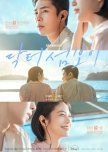
A beautiful postcard that lacks depth
I had not particularly planned to watch this drama, but Pierrot, with all the sincerity and kindness we know him for when it comes to Korean dramas, made me want to give it a try — whereas usually, I’m the one inviting people on these journeys… or not. (Don’t forget to read his review, even though he wrote it while thinking the drama was already finished.) Doctor On The Edge is not the drama of the year, nor is it the medical drama that will have crowds cheering, but it has something difficult to define: a feeling of warmth and companionship. However, it has as many flaws as it does qualities. At the very beginning, one of Ji-Ui’s army friends gives him a typical piece of advice while warning him about his upcoming assignment as a military doctor:“There are three things you should avoid in life, otherwise you’re doomed: trouble, people, and love.” A cliché sentence, perhaps, but one that ultimately sums up the hero’s journey quite well, as well as the main theme of the series. Doctor On The Edge is not a story built around a major medical plot or any kind of suspense. It is above all a fleeting moment of life, a pause in an isolated place where wounded people will try to rebuild themselves.
Do Ji-Ui (Lee Jae-Wook) is a plastic surgeon working at a university hospital. He begins his mandatory military service as a doctor (SP doctor) and is waiting for his next assignment. Traumatized by a painful event that he has carried with him for years, he has a fear of the sea and hates archipelagos. Of course, fate decides otherwise: he is sent to a remote island, somewhere in the southern part of the country, a place where nobody wants to go. There, he meets nurse Yuk Ha-Ri (Shin Ye-Eun), who is also running away from her own past and takes this opportunity to reconnect with her grandmother. At the small clinic where they are assigned, besides treating and healing the illnesses of the island residents, they will have to move forward alongside their colleagues and, for some of them, rebuild themselves psychologically. People come to this drama for the postcard scenery: an island, the sea, peaceful landscapes, a quiet village, fireflies… Everything is designed to create a soft and relaxing atmosphere. We follow the daily life of a small medical clinic made up of a few doctors and nurses who care for a population that is often elderly, isolated, and sometimes abandoned by families who have moved to the mainland.
Although the initial premise is a good one, it is true that the drama quickly starts going in circles around the 7th episode. The series is built around a simple idea: following people who must learn to accept help from others and move forward despite their emotional wounds. We are far from a structure based on twists, shocking revelations, or major plot developments. Here, the focus is much more human: repairing what is broken, finding balance again, and understanding that you do not have to carry your burdens alone. Behind this apparent simplicity, the drama tackles a real issue, even if it is handled somewhat awkwardly: access to healthcare in island communities. These areas are not always profitable, but they remain essential for the people who live there. Medical helipads are not just a convenient plot device; they represent a vital connection with the mainland. The drama’s main weakness comes from its narrative choice: there is almost no real storyline. There is no true antagonist, no major threat, and very few significant developments for a large part of the series. This is clearly a feel-good drama, and it fully embraces that identity. But one thing should be remembered: being gentle and comforting does not necessarily mean being boring.
Even though introspection is at the heart of the drama, that is not all it has to offer. The main couple is clearly the show’s greatest success. Lee Jae-Wook and Shin Ye-Eun have a chemistry that goes far beyond the typical romantic storyline. The actress brings a bright energy, a playful and spontaneous personality that perfectly contrasts with Ji-Ui’s closed-off nature. Her character is not simply there to fall in love with the male lead: she becomes the person who gradually helps him return to a normal life. Through her, he understands that accepting happiness does not mean betraying his past. The real subject of the drama is therefore not only love, but also learning to forgive oneself. It is unfortunate that the second couple does not reach the same level as the first one — not because of its writing, but because of the casting choices, which feel completely mismatched. Kim Yoon-Woo, who plays the acupuncturist, and Lee Soo-Kyung, his nurse love interest, are the weak point of the series. While one feels too gentle and immature (too young), the other delivers a performance that clearly lacks subtlety. The serious issue they eventually face later in the story suffers from this lack of immersion and credibility.
Ji-Ui’s character had enormous potential, yet his psychological development is not explored as deeply as it should have been. Sent to the island by the army, he finds himself in an environment that is almost his worst nightmare, since he suffers from fears related to isolation, water, and insects. This assignment forces him to confront exactly what he fears the most. His past explains this vulnerability: several years earlier, he experienced a tragedy involving the death of a friend, and he remains trapped by the guilt he carries because of it. The problem is that the drama keeps this information in the background for far too long. To fill the gaps, we spend time treating patients (yes, it is also a medical drama) and going through the usual, sometimes exaggerated, codes of countryside K-dramas. The intention behind the series is admirable: talking about resilience, rebuilding oneself, and the right to find happiness again after trauma. The drama still manages to avoid becoming overly melodramatic. The series remains restrained, even though it could easily have fallen into excessive sentimentality and emotional manipulation. At least, that is my opinion. The writing may seem simple at times, but there are still some genuinely good ideas. This is truly a drama centered on simple human relationships, one that conveys empathy and sincerity.
It is a real shame that the psychology of the main characters was not developed further, because it deserved much more attention. The lack of twists is not actually a problem. The real weakness of Doctor On The Edge lies in the second couple, whose actors are clearly not convincing enough. Yet the drama had all the ingredients to become a hidden gem: a beautiful setting, a unique atmosphere, a meaningful message, and characters with genuine emotional potential. But it lacks that extra layer of depth that would have allowed it to become more than just a pleasant viewing experience. Nevertheless, the series has a genuine sincerity and a gentleness that can sometimes feel refreshing in a drama landscape that often relies on constant escalation. Here, everything remains simple: the encounters, the wounds of the past, the bonds that are created, and the ability to move forward thanks to others. The series also owes a lot to its atmosphere: the island landscapes, the feeling of being at the edge of the world, the small everyday moments, and above all, a beautiful OST that perfectly accompanies this human interlude. We are not dealing with a masterpiece that will leave a lasting mark on the genre. It is a warm and soothing series, sometimes too restrained, sometimes too predictable, but it remains a beautiful nostalgic impression that deserved a little more depth.
Was this review helpful to you?
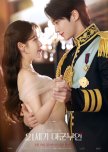
Between Fan Service and Outdated Storytelling
“I expected nothing, and I’m still disappointed.” (Dewey, Malcolm in the Middle)If anyone still wondered whether it was possible to produce a drama without a tangible script, Perfect Crown provides the official proof. Gathering bankable names (actors, idols, models) has never guaranteed quality, and this project is a sad reminder of that fact. To finance its luxury cast and grand sets, MBC pulled every possible lever: omnipresent product placement, a Disney+ partnership, and a premium royal packaging clearly designed for export. Between IU’s loyal fanbase and Byeon Woo-seok’s meteoric rise after Lovely Runner, this drama is above all a luxury marketing product built for return on investment. A veteran director, Park Joon-hwa, was placed at the helm, but he is unfortunately weighed down by a script that feels like it came from an internal network writing contest—often a warning sign for narrative disaster. The result? A porous, bland, and tedious story that feels like a poor remix of a past hit such as The King: Eternal Monarch. To survive Perfect Crown, one must abandon all expectations and choose a side: complete detachment or outright mockery. You can probably guess which one I chose.
Perfect Crown follows the trend of dramas attempting to blend sageuk (historical drama) conventions with modern storytelling sensibilities. We are placed in a uchronian society where Korea has remained a monarchy. Yet, by necessity or modernization, it has evolved. This is not a constitutional monarchy but a neo-feudal one, as Prime Minister Min Jeong-woo (Noh Sang-hyun) belongs to the hereditary elite families that control political power. Seong Hui-ju (IU) is a commoner, but also the daughter of the country’s most powerful chaebol, running an empire comparable to LVMH. Her goal is to marry Prince I-an (Byeon Woo-seok), whose elder brother, the former king, died under mysterious circumstances three years earlier. Due to succession issues, the throne passed to a child king aged eight, under the influence of Queen Dowager Yoon Yi-rang (Gong Seung-yeon). All of them have known each other since childhood, having attended the same royal academy. Finally, another key figure is Yoon Sung-won (Jo Jae-yun), the queen’s father and head of the royal court. If you’ve seen Alchemy of Souls, you can already guess where this is going. It reeks of recycling and imitation.
The strengths are few and mostly visual: sets, both interior and exterior, costumes (modern fashion, hanboks, etc.), all serve the aesthetic ambition. The color grading and Mercedes sponsorship further amplify the glossy, bling-bling atmosphere. At times, it feels like IU simply stepped out of Hotel del Luna and into this role: similar acting style and princess-like wardrobe. Park Joon-hwa, known for hits such as What’s Wrong with Secretary Kim, Because This Is My First Life, and especially Alchemy of Souls, is clearly out of his comfort zone here, as the script is too thin and forces him to fill time during the first six episodes. Both palace intrigue and romance require patience—too much patience. What is sold as a dream quickly turns into a narrative nightmare in the first half of the series. Perfect Crown is not even a love story at first, but a marriage that resembles a corporate merger. As a result, chemistry feels entirely manufactured. Everything relies on the actors’ physical appeal, which is overplayed to the point of narcissism. One of the biggest flaws is the complete lack of suspense, with most key elements revealed within the first three episodes. The only redeeming sequence early on is a nighttime urban rodeo scene—short, but genuinely engaging.
The pacing is nonexistent, with unnecessary scenes piling up endlessly. The goal seems to be constant visual stimulation: everything must shine and dazzle. Around episode seven, the drama finally wakes up with a first twist. Without spoiling anything, the narrative then shifts toward the theme of romantic karma, but it is so poorly handled that it becomes tedious to follow. Everything is predictable, overacted, and feels like an empty shell or a luxury counterfeit. Even halfway through the series, there is still no real suspense, no credible antagonist, and above all, no romantic magic. It feels like a visual scam the viewer is forced to endure. It is far from The King: Eternal Monarch, which, despite its flaws, at least offered a dreamlike quality through its iconic pairing of Lee Min-ho and Kim Go-eun. Byeon Woo-seok shows no evolution since Lovely Runner, and beyond displaying his abs like in a commercial, his acting remains limited. IU, meanwhile, is on autopilot, overacting much like in Hotel del Luna, except this is no longer the same character. Their romance feels fake, forced, and painfully mechanical.
We are also clearly not in the territory of Under the Queen’s Umbrella, where the dowager queen is reduced here to something as threatening as a Yorkshire terrier facing an elephant, and the royal conspiracy feels like a ridiculous operetta-level villain plot. The sense of danger is artificial and becomes laughable. Steven Noh is also wasted in a role that offers far more potential. In a particularly lazy move, we are even served the classic nighttime truck accident explanation for a past death—again. It is time to stop excusing everything under the label of “it’s just a romance drama.” For example, whether one liked Queen of Tears or not, there was at least a real story, a real antagonist, and committed actors. The same applies to The King: Eternal Monarch: imperfect, but at least emotionally engaging. Here, between a constantly crying child king and dialogue worthy of a telenovela, the viewer is not exactly spoiled. Secondary characters are also treated carelessly, despite clearly deserving more depth over twelve episodes. Near the end, the queen undergoes a sudden moral transformation in a surreal scene (with all due respect, excessive soju consumption is harmful). The result is a parade of mediocrity, often pompous and artificial.
Perfect Crown wants to be a prestigious royal romance, but ends up as a catalogue of flashy clichés wrapped in premium aesthetics. A drama obsessed with its own image, incapable of delivering any genuine emotion. Behind the crowns, costumes, palaces, and luxury cars, there is only an enormous narrative void, further weakened by internal contradictions. Apart from two or three episodes, it tells almost nothing meaningful—a dull, self-contained exercise in déjà vu. It is excessively manichean, filled with worn-out tropes, devoid of sincerity, and overall quite disheartening. I didn’t come here to watch a couple relying solely on their looks, but to be told a story that, even if imperfect, would still feel engaging. Instead, it is often sluggish, easily watchable at double speed without missing anything important. Aside from a couple of brief twists that momentarily create doubt, the script is fully transparent. It is clear the target audience is not particularly demanding—more interested in packaging than content. I wanted to be lenient and give it an average score, but the final episode completely sinks it. At least the OST is salvaged—that’s something.
Was this review helpful to you?

Min-Ji, Daddy's here!
Kopiko, the snack of heroes. "Shut up and eat it, or I'll roundhouse kick you."After watching the Japanese drama Viral Hit, adapted from the Korean webtoon of the same name, I had no idea I had only scratched the surface of something much bigger. Agent Kim Reactivated is an adaptation of the webcomic Manager Kim, which, like Viral Hit, belongs to the PTJ Universe. "What's that supposed to mean?" you may ask. If I mention the MCU (Marvel Cinematic Universe), you'll immediately understand the concept. Well, this is basically the same thing, but for Korean webtoons, with Lookism serving as the cornerstone of the shared universe. Behind it all is Park Tae-jun (PTJ), who created several interconnected series such as Viral Hit, Manager Kim, and Questism, where characters can cross over from one story to another. The interesting part is that I didn't discover Manager Kim as a PTJ fan hunting for Easter eggs. I watched it as a complete outsider before gradually realizing how deeply everything was connected. And that's probably the best way to appreciate this universe: slowly discovering that a character you thought was just a side character actually has an entire story of their own. Now the real question is whether Agent Kim Reactivated succeeds as an adaptation of its own source material, beyond simply benefiting from being part of a shared universe.
Mr. Kim (So Ji-sub) is an ordinary employee working at a small bank branch. A widower, he raises his 17-year-old daughter Min-Ji on his own. But he hides a massive secret: for over ten years, he has actually been a dormant agent. A North Korean defector—for reasons that will eventually be revealed—he is considered one of the greatest agents on either side of the Korean peninsula, having carried out countless covert operations. His only two real friends are Park Jin-cheol (Yoon Kyung-ho), an almost indestructible human tank, and Sung Han-soo (Choi Dae-hoon), a taekwondo master who looks like he walked straight out of Fatal Fury. To keep Kim's identity hidden, especially from North Korean intelligence, the three of them agreed on one simple rule: stay under the radar. Unfortunately, Min-Ji becomes the target of relentless bullying at school by the daughter of Ju Gang-chan (Joo Sang-wook), a powerful businessman tied to organized crime and corrupt politicians. What starts as revenge against Min-Ji quickly spirals out of control, forcing Kim to come out of retirement. The unstoppable killing machine is back. And when his daughter—his entire world—is threatened, neither South Korean special forces nor North Korean agents will be able to stop him.
Agent Kim Reactivated is a fairly faithful adaptation of Manager Kim. But make no mistake: this is unapologetically a 100% action series. Nobody is here for philosophical debates or deep existential questions. You're here for fistfights and pure entertainment. Never read the webtoon? Nobody cares. Forget realism. This isn't a Steven Seagal movie. The outrageous action is precisely what made Park Tae-jun's universe so popular. Kim, Han-soo, and Jin-cheol are actually even more brutal in the original comic, but since this is an SBS production, the violence was toned down a little to avoid a stricter age rating and appeal to a broader audience. Agent Kim Reactivated never tries to reinvent the action genre. Its ambitions are much simpler: deliver a badass protagonist, spectacular fights, and a revenge-driven family protection story. And in that regard, it absolutely delivers. The plot itself is straightforward because it doesn't need to be anything more. Kim immediately commands respect. A former elite operative and a father willing to destroy anyone who threatens his daughter, he moves through the story like an unstoppable weapon. The action scenes are frequent, energetic, and incredibly satisfying. The classic "one-man army" formula works perfectly, capturing that unmistakable feeling found in action webtoons where the protagonist keeps facing stronger and larger groups of enemies. There are also plenty of references to classic Japanese fighting games such as Fatal Fury and The King of Fighters. Sung Han-soo constantly reminds you of Kim Kaphwan (and no—not me), thanks to the spotless white dobok he somehow manages to keep perfectly clean regardless of the situation. The same goes for Park Jin-cheol and his camouflage uniform, which somehow always looks freshly ironed. And Kim...Well...He's simply Kim. The legendary trio with sunglasses... that never lose them, by the way.
This isn't a drama aiming for realism. It's adapting a universe where over-the-top insanity is the entire point. Without that unapologetic madness and relentless pacing, it simply wouldn't taste the same. So judge the series for what it's actually trying to accomplish. The villains are never meant to be serious threats. They're walking jokes. Punching bags. Human targets placed there for the audience's enjoyment. There's only one goal here: have fun. If you don't understand the very essence of the original comic—or simply dislike this kind of storytelling—there's little point in watching it or criticizing it for not being something it never wanted to be. You can criticize the technical aspects or the acting if you want. But criticizing the core concept misses the point entirely. The story is as simple as a video game. The hero must rescue the princess. Well... in this case, his daughter. And punch a whole lot of bad guys along the way. Of course, every good steak deserves a spicy sauce. Here, that sauce comes in the form of wonderfully absurd humor. Yes, there's plenty of fighting. But it's constantly balanced with lighthearted comedy. Kim never laughs. He simply rearranges your face. Meanwhile, our fearless duo in their dobok and camouflage uniforms happily alternate between comic relief and lovable idiots. As I've already said, the drama's greatest strength is its magical trio. Like the perfect attacking lineup in football, the chemistry is simply outstanding. So Ji-sub is Kim. There's really no debate about it. Choi Dae-hoon and Yoon Kyung-ho are equally fantastic. Saying so almost feels redundant.
They have this effortless ability to beat people senseless while casually throwing jokes around. Are the heroes ever really in danger? No. And that's completely intentional. If you don't realize that within the first episode, you're simply watching the wrong show. The director also deserves a lot of credit. His staging intelligently recreates the visual language of the original webtoon, and the ridiculously over-the-top scenes are simply a joy to watch. Overall, the casting is excellent. And since I'm only human...I was more than happy to see Son Na-eun playing such an unusual action role.
Now let's talk about the huge surprise that nobody saw coming. By the second episode, word of mouth had exploded, especially within the PTJ Universe community. Agent Kim Reactivated wasn't just successful. It became a genuine phenomenon in South Korea, posting astonishing ratings for an action drama. At its peak, it surpassed 23% nationwide audience share, a figure many believed had become virtually impossible in 2026 after the explosive rise of OTT platforms. Apart from the premiere—which stayed below 10%—the entire series hovered close to the 20% mark, an absolutely massive achievement. Of course, high ratings don't automatically mean a drama is exceptional. Plenty of terrible movies have become massive hits. What these numbers really demonstrate is that audiences are still eager for well-made action dramas capable of appealing to the general public—not just hardcore fans. Like Marvel's MCU, the PTJ Universe still has enormous untapped potential. There are enough stories here to support more than a dozen interconnected series. Maybe one day we'll even get Lookism, the very foundation of the entire universe. Adapting that webcomic into live action would be a monumental undertaking. In short, if you enjoy live-action comic adaptations that fully embrace their source material, Agent Kim Reactivated is absolutely worth watching. Its 10-episode format is just right. And the final scene introduces one of Viral Hit's most iconic characters, who arrives to challenge Kim. A showdown that already promises to be explosive.
Was this review helpful to you?
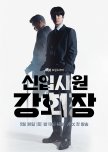
Chaebol Guide for Dummies
Your drama is brought to you by Maserati (long live the rich) and Eggdrop (long live the poor).How should you perceive this drama?
Are you a K-drama expert who’s had enough of increasingly absurd makjangs? Do you dream of a credible storyline, coherent characters, well-built twists, and a hint of romance? Do you hate being treated like an idiot by a drama? Then you’re in the wrong place: run. Run far away! On the other hand, are you just stepping into the world of K-dramas, unfamiliar with its codes and references? Or do logic and consistency simply not matter to you? Are you ready to switch your brain off for twelve hours and accept whatever the script throws at your face? Then yes, this might actually interest you—and even entertain you. Or maybe you’re like me: you know all the mechanisms by heart, but you still take a perverse pleasure in analyzing everything. Deep down, it’s so ridiculous it becomes funny at times. A bit masochistic on the edges, enjoying watching how far a screenwriter can push your tolerance for nonsense? Then sit back comfortably. Here, we don’t just push the envelope—we launch it into orbit. We’re once again aiming for the stars of mediocrity. You start wondering if the script was written by Bozo the Clown.
Kang Yong-ho (Son Hyun-joo) is the powerful chairman and founder of the massive Choiseong conglomerate. He is a ruthless man, obsessed with control and the success of his empire. On the other side, Hwang Jun-hyeon (Lee Jun-young) is a young football prodigy who has just signed his first professional contract with a first-division club owned by the chaebol. Unfortunately, his fate takes a turn the day he is hit by the boss’s Maserati—but he wasn’t the driver. Miraculously surviving, his career is nonetheless over. Seeking justice inside Choiseong’s headquarters, the two men get caught in an improbable accident. When they wake up, the shock is total: Yong-ho’s soul ends up in Jun-hyeon’s body, while Jun-hyeon lies in a coma inside the chairman’s body. Taking advantage of the fact that everyone believes him to be on the brink of death (and unable to rule), and discovering internal conspiracies led by his own twin children to seize his empire, Chairman Kang decides to strike back from the shadows. Armed with his business genius but trapped in a 20-year-old body, he infiltrates his own company by starting from the bottom as a simple intern (rookie).
This story inevitably brings Reborn Rich to mind. Why? Because it’s written by the same author. One might have hoped for a pleasant surprise. The premise—blending corporate thriller with a soul-swap fantasy—offered a compelling dynamic: the forced immersion of a young footballer into the complex, ruthless world of a family conglomerate. The generational clash, financial stakes, and latent succession war formed an ideal launchpad, supported by a fast pace that immediately hooked the viewer. Unfortunately, this well-oiled machine doesn’t last. After the two-thirds mark, the script abandons whatever little rigor it had and collapses into exaggerated twists and heavy-handed makjang devices. My verdict is clear: the story has absolutely no backbone. Another issue is the relationship that develops, reminiscent of a “Marty McFly syndrome” (Back to the Future), since the romance between Jun-hyeon (inhabited by Yong-ho) and the chaebol’s youngest daughter Kang Bang-geul (Lee Joo-myung) is fundamentally impossible—which, of course, makes sense. One last note: the tone constantly swings between light comedy and heavy drama, but without any nuance.
To wrap up its many plotlines, the script chooses the easy way out, relying on artificial shortcuts. The most basic rules of logic—medical, legal, corporate, or even physical—are regularly ignored just to force the story forward. It completely sacrifices credibility for immediate narrative efficiency. Characters are discarded for the sake of twists that pile up in the final third of the drama and make little to no sense. This lack of rigor inevitably affects character psychology, leading to sudden 180-degree turns with no believable transition. Unlike Reborn Rich, which had a structured narrative, Reborn Rookie treats the viewer like an idiot from start to finish. One key point: no one is even remotely shocked that a simple footballer magically possesses the business and financial knowledge of someone with 30 years of experience.
Between forced redemption arcs and constant plot reversals, restraint simply does not exist in this drama—it would almost be considered a sin. I do have to acknowledge that the main actors do their job well, with a special mention to Jeon Hye-jin, a well-established figure who no longer has anything to prove. She is very convincing as the main antagonist (there are several). Son Hyun-joo appears only briefly (at the beginning and end) and mainly serves as moral justification. Lee Jun-young carries the drama with his usual conviction, even though he is not responsible for the nonsense his character is put through. Most situations are neither realistic nor credible. We are constantly dealing with exaggeration and narrative overreach, because in reality, the “rookies” behind this are actually the director/screenwriter duo. The writer has already delivered a string of underwhelming works, despite her reputation boost from The Penthouse, a reference in makjang drama. And you can clearly see the same tricks being reused here, clumsily. There is rhythm, yes, but only because everything is pushed into an escalation of increasingly ridiculous twists. In terms of tropes and clichés, it’s fully maxed out. For newcomers it might work; for me, I’ve had my fill.
So if you also want to learn how to become a chaebol CEO in six months starting from the bottom—and understand why no one will ever question your suddenly acquired “out-of-nowhere” skills—sit down and take notes. I was originally going to give it a 6, since I did enjoy dissecting all the absurd situations you can see coming from a mile away, especially when everything inevitably falls back into place. But the ending is so stupid, lazy, and predictable that I deduct a point. Of course, expect a moral code that pretends to reward resilience, where everyone gets the punishment they deserve… Just kidding. We’re in chaebol land—where conscience is bought like a luxury car. Nothing truly new under the sun of Korean fiction: this drama recycles overused tropes without ever trying to make them coherent. However, it remains a dynamic series that is easy to watch, especially if taken with a sense of irony as a catalogue of narrative absurdities. A flawed work, but one that still fulfills its entertainment purpose… or not.
Was this review helpful to you?
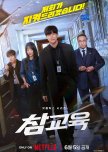
A Bitter-Tasting " Bouillabaisse "
Adapted from the webcomic Chamkyoyook, No. Lesson for Everyone! (or Get Schooled!) sets out with a clear ambition: exposing school violence, bullying, abuse of power, educational pressure, and the failures of a system that is supposed to protect the most vulnerable. On paper, it's hard not to support such a project. Yet as the episodes progress, a growing sense of frustration begins to emerge. Not because the subjects themselves are uninteresting, but because the series constantly seems to favor spectacle over reflection, instant emotional gratification over analysis, and punishment over understanding. The show relies on radical and highly efficient methods that are undeniably satisfying in the moment. But then what? What are the long-term results? What perspective does it offer? In many ways, it's a lot like politics: plenty of smoke and mirrors. The series focuses almost exclusively on the consequences while rarely addressing the root causes. That's the central paradox: I completely agree with the diagnosis, but less and less with the way it is presented. From the very beginning, it reminded me of Gordon Ramsay-style rescue shows: the hero arrives, cleans up the mess, and leaves. Fine—but what happens afterward?The premise itself is strong. Following the alarming observation that teachers' authority has significantly eroded and that school violence continues to rise, South Korea's National Assembly passes a new law. Supported by the President and the Minister of Education, Choi Gang-Seok (Lee Sung-Min)—whose own daughter, a teacher, was murdered by a high school student two years earlier—a Bureau for the Protection of Educational Rights is created. On the ground, it is led by Na Hwa-Jin (Kim Moo-Yul), a former elite soldier who was also the deceased teacher's husband. He is assisted by Im Han-Rim (Jin Ki-Joo), who once served under him in the military, and Bong Geun-Dae (Pyo Ji-Hoon), a computer genius. Their mission is simple: intervene directly in schools and deal with problems at their source, using force when necessary. Like a procedural crime drama, the series tackles bullying, parental pressure, corruption, physical violence, social inequality, juvenile delinquency, and institutional failures. All relevant topics, certainly—but far too many to be handled thoroughly within the show's limited runtime.
To give you an idea, it's as if someone threw a little bit of The Glory, Extracurricular, Weak Hero, Study Group, ONE, and even GTO into a giant wok and stirred everything together. Unfortunately, the "one case per episode" structure weakens the overall narrative, especially in a series consisting of only ten episodes. Sixteen would probably have been necessary to properly explore everything. The formula rarely changes: a problem appears, the Bureau intervenes, the guilty parties are punished, and the story moves on to the next case. As a result, everything feels somewhat superficial because the show almost never takes the time to examine the origins of the conflicts, with only a few exceptions. Yes, it is satisfying to watch bullies and incompetent adults finally get what they deserve. But to what end? The consequences quickly disappear, the situations lack depth, and most importantly, everything becomes predictable. The story simply moves from one school environment to another, checking boxes along the way. It often feels less like a coherent narrative and more like a catalogue of social issues. The repetitive structure quickly becomes tiresome: a victim, a bully, a forceful intervention, punishment, and then on to the next case. At first glance, that sounds entertaining. In reality, not so much. The series never seriously examines the deeper causes of these problems. How did such violence emerge? How did the system allow it to flourish? Why did institutions fail, and more importantly, did they ever genuinely attempt to solve these issues before they reached crisis point? The protagonists act like firefighters: they put out the fire, but the show rarely cares about why the house is burning in the first place. There are simply too many cases and not enough episodes to properly develop the ideas being presented.
Another issue is the complete absence of tension. Na Hwa-Jin, much like prime Steven Seagal, is never truly challenged. He functions more as an archetype than a realistic character—a cross between Superman and Zorro. Somewhere between vigilante fantasy and rough justice, he bulldozes through every obstacle, solving situations either through cleverness or physical force. Twenty opponents at once? No problem. He's essentially an unarmed version of So Ji-Sub, with a smug smile added for good measure. Physical confrontation frequently replaces actual conflict resolution. To keep the story moving, the series constantly escalates situations, but this escalation destroys much of its credibility. Seventeen-year-old students look thirty. Thirteen-year-old middle schoolers look twenty. Adults are passive, absent, or incompetent. Institutions barely seem to function. Where is the police? What are the prosecutors doing? There are never any meaningful investigations beforehand. Everything is exaggerated for dramatic effect. The series embraces pure black-and-white morality: the untouchable hero, the irredeemably evil villain, the fragile victim, the complete absence of accountability, and bystanders who never react. Another weakness is the lack of a true antagonist. It's difficult to determine whether the corrupt politician or the murderer of Na Hwa-Jin's wife is supposed to be the show's central adversary.
That being said, there are some genuinely strong moments. I particularly enjoyed Episode 5, which follows a teacher being relentlessly harassed by a deeply troubled parent, and Episode 8, which echoes the themes explored in SKY Castle, portraying parents willing to sacrifice anything for their children's success. These episodes are more nuanced, more human, and encourage reflection about parenting in a society where children are either treated like royalty or thrown into the arena of relentless competition. Ultimately, the series is more interesting for the questions it raises than for the answers it provides: school violence, juvenile justice, and the limitations of educational and institutional systems. At times, it also reminded me of Taxi Driver. Whenever all hope is lost, the Bureau arrives as a miracle solution capable of fixing everything within days. Another aspect that bothered me is the complete lack of scale. Although the issues presented are supposedly systemic and nationwide, everything feels strangely localized on screen, as if these problems only exist within the boundaries of a single mid-sized city. The broader national dimension is never convincingly portrayed.
And then there's the Bureau itself. A four-person team reporting directly to a government minister simply makes no sense. Everything is simplified to maximize the appearance of efficiency, but it often feels more like a narrative shortcut than a genuine attempt to engage with reality. As a result, much of the show's impact and authenticity is lost. Nearly every development feels telegraphed, leaving little room for surprise. As for the cast, while the direction is effective enough, I wasn't entirely convinced by the performances. Kim Moo-Yul gets the job done but brings little nuance to his character. Lee Sung-Min, on the other hand, fits his role perfectly. However, I'm still struggling to understand the narrative purpose of Jin Ki-Joo and Pyo Ji-Hoon's characters. Were there really no better options available?
The series relies heavily on implausible situations and exaggerated set pieces to keep the audience entertained and move the plot forward. In the end, it doesn't reveal anything particularly new about the issues it discusses. The final episode falls completely into convenience and narrative shortcuts in order to justify the Bureau's existence. This feels very much like a low-budget Netflix production that deserved a far more sophisticated treatment. Adapting a webtoon should have allowed the writers greater freedom, yet the result remains surprisingly constrained. While the original webtoon generated controversy—particularly in the United States, which I find somewhat amusing—the drama adaptation will likely spark debates of its own.
In the end, I fully agree with the show's core premise. The issues it addresses are important, timely, and universal. However, the execution is often counterproductive. By constantly prioritizing spectacle, escalation, and quick resolutions, the series ultimately weakens its own message. The problem isn't the subject matter—it's the way it's handled. A worthy intention. A relevant diagnosis. But an oversimplified demonstration. Despite occasional flashes of insight, the final result remains unsatisfying because there were simply too many ingredients, and none of them were ever given enough time to fully develop their flavor.
Was this review helpful to you?
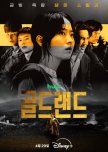
This review may contain spoilers
Gold Fever… Until There’s Nothing Left
As an anecdote, several sequences of the drama were filmed in France in June 2025. And at the very end, I nearly had a shock… we can see the town of Cassis near Marseille (there’s even a casino) and the village of Le Castellet in the Var region (near the Paul Ricard circuit).The title Gold Land takes on its full meaning in its symbolic dimension. Gold is never merely a material stake—it is a corrupting force. While it is first and foremost the name of a casino hotel planted in the middle of nowhere, visible from miles away, it also becomes a territorial imprint everyone wants to possess. The drama leaves a strange and paradoxical impression: that of an imperfect work, sometimes frustrating, yet difficult to dismiss as a simple failure, as it manages to establish a strong atmosphere and emotional trajectory. Initially presented as a conventional crime thriller, Gold Land turns out to be far more hybrid: both noir and psychological, slow at first and then suddenly frantic, where gold functions less as a material objective than as a mental contagion. The writing is conventional, sometimes porous, but it is saved by masterful direction and strong performances that tip the balance in its favor.
Kim Hee-Ju (Park Bo-Young) works in the freight department of a small airport, inspecting incoming cargo from abroad. Her boyfriend, Lee Do-Kyeong (Lee Hyun-Wook), a pilot, contacts her to help transport a rather unusual coffin. What she does not know is that he has long been drowning in debt and is secretly working for a criminal cartel, transporting illegal goods. No spoilers here—it is gold. And not just a little: one ton, divided into 100 ten-kilo bars. When she comes into contact with this fortune due to Do-Kyeong’s troubles, greed begins to override reason. Coming from a very poor background, the sight of all that gold burns her eyes. Soon, she must either confront or ally herself—with various dangerous figures depending on circumstances. Around her gravitate Park Ho-Cheol (Lee Kwang-Soo), the right-hand man managing the Gold Land palace; Jang Wook (Kim Sung-Cheol), a small-time but ambitious loan shark; and Kim Jin-Man (Kim Hee-Won), a corrupt detective drowning in debt. Her only goal: survival while protecting her “treasure.”
One essential point must be made: the story truly centers on a single protagonist—Hee-Ju. Park Bo-Young is almost unrecognizable in her first real dramatic lead role, and she delivers a solid performance. Gold, omnipresent throughout, becomes the true narrative engine and, more importantly, a revealer: it does not make people evil, it exposes how evil they already were. Everyone in Gold Land is, in one way or another, corrupt—but to varying degrees, and sometimes with mitigating circumstances. We move through a world of openly systemic cynicism. The casino itself is barely shown and ultimately has little real impact; it functions more as a symbolic device for power and domination, a focal point of corruption. Gold reshapes all human relationships: trust, judgment, morality, perception. Like Gollum in The Lord of the Rings, possession becomes obsession. Hee-Ju drifts through a twisted initiation journey, haunted by shadows of her past, where danger is constant. We are initially presented with a fragile woman easily manipulated—but is she really? The thriller begins slowly, almost like a psychological drama, before building into a clear escalation toward an explosive finale. What I appreciated most is the constant uncertainty about how it will end.
Gold Land does not reinvent the genre, but it offers interesting variations in structure. It is never monotonous in tone or atmosphere; there is a clear progression in tension and adrenaline. However, the script is sometimes confusing, relying on narrative shortcuts to push the story forward. Certain decisions or sequences feel implausible and struggle to convince, and some fight scenes are not entirely believable, clearly exaggerated for effect. Still, the series delivers intensity, and it effectively provokes either empathy or hatred toward its characters. The final three episodes restore much of the show’s momentum—except for the very ending, which feels overly convenient, almost like a postcard epilogue. One must never lose sight of the fact that the story often lacks consistency and logic. The sudden, near-instant bond between Hee-Ju and Jang Wook, for example, feels like it comes out of nowhere. At times, the narrative relies on strained explanations to justify implausible developments. And when the gold changes hands, it becomes easy to lose track. Violence is omnipresent, both verbal and physical: fans of heavy action and bloodshed will not be disappointed. The writing is fragile, but it knows how to surprise.
Yet Gold Land’s strengths lie elsewhere: the direction is solid and effectively builds a tense atmosphere, as expected from a proper thriller. The series alternates between psychological sequences centered on its characters and extremely violent action scenes that disrupt the rhythm. The cinematography is particularly striking, reminiscent of classic noir films. Many scenes are shot at night to heighten the sense of fear and constant danger. There are frequent narrative ruptures to revisit past events or blur the viewer’s perception. It is often intense, despite a noticeable lack of balance. The deeper the characters sink into gold fever, the more their greed—or resistance to it—and madness erupt. We witness who still retains a shred of humanity. The casting is another major strength, fully meeting the stakes of the story: Kim Hee-Won brings increasing depth to his role; Kim Sung-Cheol remains intriguingly ambivalent until the end; but above all, two actors stand out. Park Bo-Young delivers a surprisingly convincing against-type performance, and her critics might note that one does not win the Best Actress award at the 2026 Baeksang Arts Awards by accident. And finally, Lee Kwang-Soo is simply monstrous—in every sense of the word. He is completely unhinged, in the best possible way.
This drama is far from perfect, but it does manage to convey a tangible story and real emotions. Yes, there are oddities that make you think (the coffin’s weight at the beginning, for instance, or that somewhat forced ending resembling a travel postcard), but at its core, it remains a true thriller. One enjoys analyzing the characters’ behavior in the face of this mountain of gold, watching them make irrational, impulsive, disproportionate decisions they would never make under normal circumstances. At times, gold acts as a mirror of the soul, revealing people’s true nature with brutal clarity, like a poker player going all in. Cheat, yes; lie, no—this could well be the motto of Gold Land. While some show restraint, others show no mercy, with betrayal becoming a recurring theme. It is unfortunate that certain secrets remain in the shadows, preserving a layer of mystery—whether intentional or not. What remains in the end? That gold is a toxic element, the ultimate temptation of human greed. Man becomes his own prey in pursuit of a metal that Midas once rendered meaningless. And above all, seeing Park Bo-Young speak French—albeit phonetically, but so poetically—in the streets of Cassis or Le Castellet is worth more than all the gold in the world, isn’t it?
Was this review helpful to you?

A Caramel-Mushy Village of Morons
When I finished the drama, I honestly thought we'd been handed some kind of webtoon pastiche or parody aimed at teenage girls. Because when it comes to tropes and clichés, this was Champions' League level. And why not, after all, if the writing had been brilliant and those tropes had been used intelligently and effectively. Unfortunately, much to my regret, the keys to the truck were once again handed to an amateur with the writing talent of a hack. The premise itself was simple and cute, but after a first episode that hinted at some interesting themes built around the romance, we quickly switched to "the dumber it is, the more easily it goes down" mode. We went way past the land of marshmallow, soft caramel and cotton candy and stepped headfirst into pure silliness and mawkishness. Thankfully, Heo Sung-Tae is there to bring at least a semblance of credibility to the crime side of the drama, because otherwise there wouldn't have been much left to save. In Hangul, the title basically means "a shitty love" or "a damn crappy love." At least it's explicit, and you're not being lied to about what you're getting. Maybe if this drama had aired at Christmas, I might have given it a passing grade. But in the middle of August, everything melted. My brain included.For more than 14 years, Jang Tae-Ha (Jung Hae-In), a former promising young boxer, has been the right-hand man of a powerful crime boss. He's got blood on his hands. But before returning to his childhood village, called Caramel, and finally putting this disgraceful chapter of his life behind him, his boss Baek Sang-Gil (Heo Sung-Tae) gives him one last assignment: make prosecutor Go Eun-Sae (Ha-Young) disappear. After beating her unconscious, Tae-Ha is ordered to get rid of her. But he recognizes someone from his past in her. In complete secrecy, he manages to smuggle her to a remote rural hospital. When she wakes up 15 days later, she has amnesia and there is no way to identify her. Tae-Ha then pretends to be her fiancé and takes her back home to protect her. His mentor and former boxing coach Hong Do-Yeop (Jeon Bae-Su), his wife, the village's three gossips and his grandmother Go Young-Hong (Kim Young-Ok) will help him with the task. Tae-Ha has always had a crush on her, but is it mutual now that she's lost her memory?
After teasing us with a first episode that wasn't too bad, the drama quickly reveals the limits of its narrative construction. A light rom-com doesn't have to mean a stupid rom-com written for an audience with the intellectual appetite of a kitchen sponge, ready to swallow absolutely anything. Especially since there is a crime storyline that shouldn't be ignored, even though it will disappear for numerous episodes. In short, there was a good idea here, but the writers systematically choose the easiest possible solution, piling up coincidences, contrivances and implausible situations. Credibility has no place in Our Sticky Love: you're simply expected to accept everything and anything. Everything is telegraphed and predictable, whether it's the romantic scenes, the fights or the flashbacks. As I said, it's a festival of tropes and clichés by the dozen; nothing has been left out. But Netflix Original means no PPL, except for Volvo. We're stuck with the usual stereotypes of a backward village, embodied by the trio of gossips who apparently have no lives of their own. The story is so thin that even halfway through the drama, practically nothing has happened. We're just going around in circles. What also stands out is the shameless black-and-white morality: every character is flat, with the villains being very, very evil and the good guys being very, very good. It's utterly boring.
Let's talk about the romance. At first, it's all cute and sweet, but we quickly realize the limitations of the situations. For an amnesiac, Eun-Sae is remarkably trusting and is never really on her guard. The script tells you to accept the situation, so you accept it. Period. To put it bluntly, the drama seems to confuse romance with an accumulation of romantic tropes. And here we go: lingering looks, ultra-aesthetic lighting, piano music, painfully childish dialogue, "Oppa," rain, kisses, etc. The problem isn't that these elements exist. They are part of the classic language of Korean rom-coms. The problem is that they practically replace the writing of the relationship itself. We're constantly shown that these characters are in love, but we rarely feel why they actually love each other. Their chemistry therefore feels manufactured by the direction rather than created by the characters themselves. The drama almost never lets the emotion arise naturally. It's basically a romance starter kit for complete beginners. Everything is explained, underlined, accompanied and repeated. The result is that you feel absolutely nothing for this couple, who, incidentally, are never really in sync, because there's another, more annoying problem: the acting. The two actors are never on the same wavelength, and it's painfully obvious. As for chemistry, forget it.
By now, I know Jung Hae-In well enough to be able to take a critical look at his work. He's a good actor, provided he has an excellent actress opposite him and/or a script worthy of his abilities. But he too often confines himself to easy romances because he has that "straight-A student" kind of face. Here, he turns in an even flatter performance than in Love Next Door. He's better in emotional dramas because he usually has talented actresses opposite him and scripts that give him something to work with. In D.P., in a completely different genre, he was excellent. Here, he brings back that familiar sad-puppy look, even though his character was supposed to have spent years as a gangster. And on top of that, we're apparently supposed to believe he's the biggest virgin of the decade! Opposite him, Ha-Young, in her first lead role, overdoes it, but at least she brings something to the table. Her character is so unintentionally out of sync with the situation that it becomes either hilarious or embarrassing, depending on the scene. This actress isn't just pretty; she has genuine potential. But here, she comes across more like a clueless idiot than a prosecutor. As for the rest, everything is telegraphed, including the bargain-basement "second romance" and the completely cartoonish crime storyline, with some ridiculously dumb fight scenes. Finally, it feels as though everything takes place in a tiny little microcosm designed to make the plot easier to move along, even though the plot is already incredibly simplistic. The rest of the cast is basically there to serve up the necessary lines and tell you when you're supposed to laugh or cry.
This story was obviously destined to end in full-on Care Bears mode, so naturally the fact that Tae-Ha spent nearly 15 years as a violent criminal is conveniently swept under the rug. Not only is he never investigated by the police, he doesn't spend a single day behind bars. The power of love, I suppose... Or maybe the power of stupidity. I honestly can't remember anymore. Yet again, this is another element that turns a light rom-com into a pile of nonsense where you're expected to swallow every last absurdity. For once, that ever-reliable "five years later" would actually have been useful. Instead, we're simply told to accept that yes, Tae-Ha was a violent thug, but apparently the "good guy deep down" rule applies before and after. Structurally, this drama is far too long for the story it has to tell. It could easily have ended around episode 10, and honestly, they could have fit the whole thing into eight episodes. But because they apparently had to fill a quota, we get a completely improbable coincidence at the end masquerading as a twist, straight out of Darth Vader meeting Luke in Cloud City on Bespin. There is also a very violent scene toward the end that could easily have been left out. If it was supposed to convey some message about repentance or resilience, it completely fails. The finale feels like the final banquet scene in Asterix, with the most shameless fan service imaginable. Nothing has been forgotten, and nothing has been spared.
In the end, Our Sticky Love is exactly the kind of drama that might work for a viewer who isn't very familiar with the codes of Korean rom-coms, but quickly becomes unbearable for anyone who has already watched dozens of them. It's the same old stuff we've seen a thousand times. I have no problem with tropes when they're well written. Here, they're simply piled on top of one another, highlighted in neon and used as crutches for the script. At no point does the drama try to surprise us, genuinely develop its characters or give even a minimum of credibility to its situations. Even the few good ideas in the premise are gradually sacrificed on the altar of mawkishness. What we're left with is a succession of predictable situations, caricatured characters, childish dialogue, artificial romance and implausible plot devices that eventually make the whole thing unintentionally funny. Everything is so relentlessly "happily ever after," like a fairy tale. By trying so hard to be cute, comforting and harmless, the drama ultimately ends up being hollow. Between writing that's scraping the bottom of the barrel, zero credibility and a romance that feels more like an illustrated manual of genre clichés than an actual love story, Our Sticky Love ultimately felt like watching an unintentional parody of a K-drama. Occasionally funny without meaning to be, but ultimately just bad.
Was this review helpful to you?
The Masks of the Scarecrow
The Scarecrow is a crime thriller that takes place primarily in 1988 during its first ten episodes, with the final two shifting to 2019. Why 1988? For one, it is a year frequently used in K-dramas (most notably Reply 1988), partly because South Korea hosted the Olympic Games that year. More importantly, it marks the final years of military dictatorship before the country's democratic transition. This historical context is crucial and should never be forgotten while watching the story unfold. It was an era when brutal police methods were commonplace. If investigators failed to catch the real culprit, they often settled for extracting confessions from innocent suspects through violence. The title The Scarecrow refers not only to the serial killer himself but also serves as a metaphor: a scarecrow is, above all, a decoy. Its purpose is to deceive, manipulate perception, and create an illusion. Throughout the drama, the line between truth, accusation, and manipulation becomes increasingly blurred, constantly confronting viewers with morally questionable decisions and difficult dilemmas. Emotionally, this is not a drama one walks away from unscathed.Kang Tae-joo (Park Hae-soo) is a seasoned and fearless detective with little respect for authority. After being demoted and disciplined, he is transferred from Seoul back to the small town where he grew up. There, he soon finds himself investigating a serial killer targeting women at night along a rural road lined with rice fields and scarecrows—the murderer disguises himself as one to lure and deceive his victims. Tae-joo's path crosses once again with prosecutor Cha Si-young (Lee Hee-jun), a man who left deep psychological scars on him during their high school years through relentless bullying. Though Tae-joo still harbors a strong resentment toward him, the two bitter enemies are forced to work together to stop the monster terrorizing the region. However, Si-young comes from a powerful family, and his position as a prosecutor during the dictatorship grants him influence that often extends beyond his official authority. While the serial killer embodies calculated cruelty, the drama also exposes another form of monstrosity: the brutality of police officers serving a ruthless and corrupt system that shows little mercy toward the vulnerable. What follows is a manhunt spanning more than thirty years, leaving irreversible damage in its wake and destroying countless innocent lives.
The drama's structure relies on brief time jumps scattered throughout the narrative. The director carefully plants flash-forwards that either open or close chapters with prison encounters between Tae-joo and the real killer. Their exchanges become psychological duels, made all the more frustrating by the fact that the murderer's crimes are now beyond the statute of limitations, while he is incarcerated for entirely different offenses. This narrative device creates a fascinating dual timeline. As we follow the 1988 investigation—with all its flaws and systemic violence—these glimpses into the future act as a tragic countdown. We already know the hunt will last thirty years and that irreversible mistakes will be made. Yet the mystery remains compelling, as the killer's identity is not officially revealed until the end of Episode 7 (although attentive viewers may figure it out sooner). Knowing the culprit relatively early is not a problem because the story's real strength lies elsewhere. The suspense remains intact until the very end because the audience never truly knows what to expect, even when they think they do. The Scarecrow is, above all, a psychological drama that deliberately presses on painful wounds. It is raw, violent, often disturbing, but firmly rooted in reality.
Beneath its crime-thriller surface lies a much broader reflection on wrongful convictions, coerced confessions, and the institutional abuses that plagued South Korea during decades marked by authoritarian rule and anti-communist paranoia. The brief but remarkably filmed confrontation between students and police perfectly captures this atmosphere. Through characters who are falsely accused, imprisoned, or destroyed by suspicion, the series shines a light on the forgotten victims of rushed investigations, police pressure, and a justice system sometimes more concerned with closing cases than uncovering the truth. In this sense, the investigation itself ceases to be the heart of the story and instead becomes a symbol of a flawed system whose mistakes continue to haunt survivors decades later. That said, some writing choices raise questions. Why are certain characters never seriously considered as suspects? Why does the investigation cling so stubbornly to fragile assumptions, particularly regarding blood types? Viewed strictly as a detective story, the investigation can occasionally feel like a complete disaster. One ultimately accepts these shortcomings by reminding oneself of the historical context and investigative limitations of the period.
There are no simplistic heroes or villains here. Apart from the serial killer, every major character carries deep emotional wounds that cloud their judgment and threaten their mental stability. The line between good and evil is often razor-thin, and some will pay a terrible price for crossing it. What truly elevates the series is the confrontation between Park Hae-soo and Lee Hee-jun. Quite simply, both actors are exceptional in their respective roles. Having reportedly dreamed of acting together for over a decade, they bring remarkable authenticity and emotional intensity to their performances. Park Hae-soo delivers a nuanced portrayal of a man worn down by time, haunted by failure, and consumed by guilt. Opposite him, Lee Hee-jun is equally impressive. His constantly ambiguous performance maintains an atmosphere of tension throughout the entire series, making his character fascinating, unsettling, and profoundly human all at once. In a thriller, credibility is everything, and these two actors make every moment believable. Their conflict, rooted in a dark shared past, follows them throughout their lives. Eventually, one of them must step aside to protect the people he loves, displaying extraordinary resilience and self-sacrifice.
The production itself deserves praise as well. The opening sequence is magnificent, the direction often feels cinematic, and the rural late-1980s atmosphere is recreated with remarkable authenticity. At times, the show even evokes the feeling of an old American crime film, with acoustic guitar melodies adding an extra layer of charm. The supporting cast also deserves recognition for delivering strong performances across the board. As a fun piece of trivia, Lee Min-ki makes a brief appearance toward the end. The reason is simple: the director is also behind the K-drama Crash (Seasons 1 and 2), in which Lee Min-ki stars My only real reservation concerns the conclusion presented in the final episode. Personally, frustration outweighs satisfaction, even though I understand the creative choice the director made. Without revealing spoilers, the reactions of certain characters—particularly Sun-young, Tae-joo's younger sister, and her son—left me puzzled.
Some individuals are eventually exonerated, and the justice system acknowledges its mistakes, but not all cases can be corrected due to statutes of limitation. Curiously, some investigative avenues also appear to have been ignored in 2019, despite South Korea abolishing the statute of limitations for murder in 2015. At times, the suspense can feel predictable, and a few inconsistencies emerge to move the investigation forward. Morally and legally, however, do not expect a neat or universally satisfying ending. What remains is a masterclass in acting, a chilling story, a dark and melancholic atmosphere, and thought-provoking questions about ethics, justice, and morality. The Scarecrow is not a puzzle-box mystery designed to challenge viewers to identify the killer. Instead, it is a story about the suffering of innocent people and the devastating consequences when justice fails—or refuses—to do its job properly. Despite its imperfections, it is both heartbreaking and shocking. In the end, The Scarecrow is a powerful drama with real substance and weight, all the more compelling because it is deeply rooted in history.
Was this review helpful to you?

Despite Its Flaws, “It’s Art” (PSY)
When I started watching We Are All Trying Here, I was reminded of Fabrice Luchini speaking about the sense of uselessness described by Blaise Pascal, one of the greatest French thinkers of the 17th century. In Pascal’s work, there is this deep recognition of existential emptiness that emerges when a person is confronted with their own insignificance. From there comes a constant need for distraction, recognition, and self-expression: because the moment one is no longer occupied, the feeling of being useless returns. Behind this drama, we find screenwriter Park Hae-young, known for Another Miss Oh, but especially for My Mister and My Liberation Notes. I felt this series revisited a familiar pairing she seems particularly fond of: a young, strikingly beautiful woman contrasted with an older man, marked by life’s hardships (after IU and Kim Ji-won, we now have Go Youn-jung’s almost “madonna-like” figure). However, the narrative suffers from certain clumsiness, due to poorly introduced or sometimes simply omitted elements. Once again, this is a psychological and sociological study of characters, all of whom carry—or continue to carry—a burden. That said, this is not a 100% tragedy: the series also allows for lighter, even comedic moments. Because this work is not intended solely for neurotics or pessimists; it also shows that beyond suffering, there is always a small opening toward light and healing.The story revolves around a group of friends gathered in the “Eight Club”: screenwriters, directors, producers—everyone works in the film industry. Some have succeeded, while others have had a much harder path. Hwang Dong-man (Koo Kyo-hwan), in his forties, is the only one who has achieved nothing in twenty years. He is a dreamer, shaped by life’s vicissitudes, often appearing lazy and detached. He frequently comes across as a victim, a role he unconsciously nurtures. To avoid sinking into the feeling of uselessness, he clings to anything available—whether in real life or in the films he watches as a form of escape. He lives in a small apartment he shares with his older brother, Hwang Jin-man (Park Hae-joon), a once-renowned poet now physically and mentally broken, surviving through menial jobs. They are painful to watch, both in deep emotional distress. On the other side, Byeon Eun-a (Go Youn-jung) works at a production company. Her job is to read scripts, revise them, and approve them. Her life is shaped by emotional emptiness, rooted in a complete lack of maternal connection after being abandoned at age nine. She drowns her melancholy in work. Her anxiety manifests physically through frequent nosebleeds whenever she feels threatened. Knowing each other professionally and also through an academic program, Dong-man and Eun-a gradually grow closer, helping each other confront their emotional states and the contempt they face from others.
This drama feels like it closes a trilogy about mental alienation and the paths toward healing. After the extreme poverty and responsibility awakening of My Mister, and the rural monotony, alcoholism, and existential suffocation of My Liberation Notes, We Are All Trying Here explores abandonment and existential emptiness. These are anti-heroes who feel they have missed their lives due to external circumstances, but also because of their own choices. However, this is not about excusing them—the story avoids self-pity. It is once again a slice-of-life narrative from the writer. Yet while I was moved by My Mister and disappointed by My Liberation Notes, here it is more the casting than the writing that holds the series together, despite a sometimes chaotic structure that loses track of its own narrative threads. The story of Jin-man and Mi-ran, in particular, feels underdeveloped. As viewers, we are often left to fill in the gaps ourselves, which creates a frustrating sense of incompleteness. Only toward the very end do we finally receive, almost in thriller fashion, a late explanation of Jin-man’s traumatic past—feeling almost like a patch added after the fact.
So what is We Are All Trying Here to me? It is a mirror of life itself, a gallery of portraits in which each character must face their own demons: they feel they have failed or missed their lives because, while others moved forward, they stagnated—missing what mattered due to professional or personal missteps. External events have amplified this sense of injustice. Dong-man and Byeon Eun-a have both suffered life’s blows. But while the former is partly responsible for his situation due to arrogance and minimal effort, Eun-a carries a melancholy that is not of her own making. She was built alone, without emotional support; the love of a surrogate grandmother is not enough to fill that void. The common point between these two broken beings is that they are constantly humiliated by their respective nemeses: for Dong-man, Park Gyeong-se (Oh Jung-se), a failed director sustained only by his wife Ko Hye-jin (Kang Mal-geum); for Eun-a, her boss Choi Dong-hyeon (Choi Won-young), who reduces her to a convenient scapegoat. Without spoiling anything, Eun-a must eventually confront her mother for the first time since her abandonment—much like Luke confronting his father in Star Wars to break free and become whole. These confrontations between the two women are beautifully written and mark a major turning point in her character. As for Dong-man, he becomes the man he always wanted to be by overcoming his emotional excess and impulsive behavior.
The series’ greatest strengths lie in its finely written dialogue and outstanding cast: nothing is said without purpose. Coming straight from the disappointing Perfect Crown, this felt like a punch in the face—in the best possible way. Koo Kyo-hwan is given full space to showcase his talent in this deeply human and sincere fable. I have nothing against Go Youn-jung, but like Kim Ji-won, her physical presence sometimes overshadows her acting. Once Jang Mi-ran (Han Sun-hwa) enters the story, she partially eclipses her. I also grow tired of the overly pitiful “Calimero-like” expressions and somewhat stereotyped acting style. However, the casting overall is handled very well. The introduction of veteran actors like Bae Jong-ok and Sung Dong-il in the second half adds real energy to the drama. The direction is solid, as is the cinematography, with visual metaphors that are both explicit and effective. Unfortunately, while the series opens many narrative doors, some arcs remain unresolved or underdeveloped, seemingly due to convenience rather than intention. Why does no journalist investigate Oh Jeong-hui’s past? And why introduce Jin-man’s backstory if it ultimately leads nowhere? This sense of incompleteness is frustrating. A few clichés are also easily forgettable.
“Everyone Is Fighting Against Their Own Sense of Worthlessness”: this is the real title of the drama, and it captures its essence perfectly. It reflects the internal struggle we all face simply to continue existing—not merely to avoid being forgotten, two very different things. I agree with Moon Yeong, who notes in her review how misleading Netflix’s chosen title is, as it feels hollow and disconnected from the work’s true meaning. This drama shows that resilience leads to healing—partial or complete—through mutual emotional support that is tangible and lasting. The series is not at all miserabilist; quite the opposite. It is a psychological study of a slice of life that is corrosive, sincere, and deeply moving. It becomes a true emotional rollercoaster, even if it is imperfect. The narrative suffers from uneven pacing and occasionally unnecessary scenes; there was clearly room for refinement. The OST is sublime and poetic, enhancing the visuals and occasionally bringing tears. And Koo Kyo-hwan, like a storm, carries everything in his path. Fortunately, the final four episodes are particularly strong, culminating in a hopeful horizon. The most memorable moment comes in Jin-man’s monologue to Dong-man—a powerful, poetic speech that encapsulates the soul of the story. This earns the drama a bonus point in my view. A deeply humane work, never truly tragic, but rather an ode to reconciliation with oneself and to life itself, expressed with humility.
Was this review helpful to you?
The Secrets of Auditing… and Love
Yet another completely misleading K-drama title translation that ends up confusing viewers rather than helping them. With Filing for Love, you should not expect anything in the vein of What’s Wrong with Secretary Kim, Business Proposal, or even Crazy Love. This drama is worlds apart. In fact, romance only takes up about 30% of the runtime. The main focus is instead on portraying—albeit in a dramatized way—the workings of an audit department within a major chaebol. Such oversight bodies exist in all large corporations, including in France, though under different regulations. The interest of the series lies primarily in exposing misconduct that can harm a company in any form. However, the script sometimes veers into moralizing melodrama, so consider yourself warned. One last important point: avoid viewing certain situations through a Western lens, or you may find yourself somewhat shocked by local cultural norms.Joo In-A (Shin Hae-Sun) is appointed head of the audit department at Haemu Group, the country’s 7th-largest chaebol. Cold, distant, and rigid, she is unwavering in her principles. Noh Ki-Jun (Gong Myung) is part of the elite team handling major corporate disputes. However, the arrival of this new boss disrupts his daily life: In-A demotes him to Team 3, which handles internal scandals. Disillusioned, he struggles to understand this “promotion,” which he interprets as punishment. At the top of the hierarchy, Vice President Jeon Jae-Yeol (Kim Jae-Wook) is going through both a family and professional crisis. A kind man, he was In-A’s lover more than ten years ago but was forced into an arranged marriage. Park A-Jeong (Hong Hwa-Yeon), his secretary, is Ki-Jun’s former girlfriend; she is in love with the vice president, who remains emotionally tied to the past. As investigations unfold, Ki-Jun discovers a different side of In-A and gradually develops feelings for her.
The drama focuses on a small group of main characters, allowing their relationships and personal arcs to be developed solidly without scattering the narrative. Like a crime procedural, there are cases to solve, but the goal is not simply to identify a culprit: it is above all to showcase the work of the Audit Team and reveal the wounds, secrets, and sometimes hidden suffering behind corporate life. I enjoy this kind of drama that sparks curiosity, and it even made me want to learn more about how audit departments actually operate in South Korea and what their role is within large corporations. However, at times I felt the series went a bit too far into people’s private lives. For context, adultery was still a criminal offense in South Korea until 2015, and extramarital relationships within companies remain highly frowned upon. Indeed, a conglomerate’s public image is of paramount importance. The story truly picks up around episode three. Alongside the main plot, we follow investigations involving inappropriate (or allegedly inappropriate) relationships, including sexual and moral harassment, defamation, infidelity, and more. There are genuinely serious and dramatic moments. Office life can be harsh and resemble a real ordeal for some, with constant stress driven by work pressure and expectations.
As this is a dramedy with romantic elements, the narrative lightens the heaviness with humorous and offbeat moments. This comes either through the central couple, who must keep their relationship secret, or through the members of Team 3, all of whom are quite endearing. I also appreciated the absence of a love triangle. The situation is clear-cut, even if romantic conflicts can still arise from elsewhere and cause collateral damage. At times, it genuinely feels like an internal corporate morality police force. However, this should be understood within the South Korean context, where issues of reputation, social image, and personal relationships are perceived differently than in the West. This does not mean everything must be accepted uncritically; one can disagree with certain practices or how they are portrayed. But it is more meaningful to try to understand the cultural context rather than judge it solely through Western standards. The drama also highlights how thin the line can be between legitimate investigation, defamation, slander, and intrusion into privacy. It prompts reflection on working conditions, and is therefore far from the saccharine, simplistic romances often found in the genre.
Some moments are genuinely touching, while others are quite disturbing. Moreover, the drama gives Joo In-A a complex psychological backstory that explains her current behavior. She is a woman shaped by hardship, self-made, a powerful and respected career woman. Ki-Jun, meanwhile, was raised in a matriarchal household consisting of his mother and three older sisters, who still dote on him because he remains single. The pairing of Shin Hae-Sun and Gong Myung works well, especially by placing a slightly older, authoritative woman opposite a younger man with wit and personality. The core of the series is strong and engaging, even if it does not entirely escape familiar tropes. Humanity is at the heart of the story, whether in professional or romantic relationships. The balance between dramatic, romantic, and lighter scenes is generally well handled. The romance is present but never the central focus. This is прежде all a story about wounds, recovery, work, responsibility, and repressed emotions. The love story unfolds slowly, shaped by past emotions. Those looking only for quirky situations, caricatured characters, or shallow romance will likely be disappointed. This series takes a more mature and restrained approach.
It is unfortunate that the final episode, which serves little purpose for about 80% of its runtime, feels somewhat out of place. It acts as a decompression episode, releasing narrative pressure. We even get the obligatory “one year later” segment used to add a few extra scenes. Still, overall, Filing for Love is a work that, while not entirely flawless, offers an interesting dive into corporate mechanisms, reputation, human relationships, and the sometimes heavy consequences of our choices. It is a journey into unfamiliar territory for viewers unacquainted with the internal workings and regulations of large corporations. Beneath the romance lies far more than superficial lightness: the writing is much smarter than the title suggests. And yes, as is often the case in the genre, someone gets a second chance—and perhaps more. Ultimately, the series focuses on the positive. The Audit Team can be ruthless toward those who harm the company, but it is also portrayed as attentive and protective of ordinary employees facing pressure from above. Behind every worker may lie someone emotionally struggling. A worthwhile watch, both educational and entertaining.
Was this review helpful to you?

“Fight for Views!”
Adapted from a manhwa, Viral Hit initially looks like it belongs to the long tradition of Korean high school dramas... but in reality, it doesn't. In fact, Japan has completely embraced the original work and even turned it into an anime. What is most striking about this drama is its ability to tick every single box of the classic shōnen nekketsu formula without ever openly claiming that heritage: a weak protagonist who gradually grows stronger, a succession of increasingly difficult fights, ever more powerful opponents, friendships forged through hardship, and a crystal-clear power progression. One could almost call it the "perfect fake shōnen." Yet beneath that familiar structure lies another influence: the fūryō genre, those stories about delinquent high schoolers where violence becomes a form of social language and an alternative hierarchy. Here, hallway brawls have been replaced by fights recorded and broadcast online. School remains the playground, but the real audience is on the Internet. To truly enjoy Viral Hit, you have to set realism aside: this is essentially a live-action anime, and it should be taken as such.Kota Shimura (Oji Suzuka) is an outcast high school student, the favorite target of the school bullies. Coming from a very modest background, he lives alone while his seriously ill mother has been hospitalized for weeks. He has no real friends, and his classmate Kanegon (Sugou Araki) merely uses him to boost the popularity of his streaming channel. Kota works at a fried chicken restaurant to earn enough money to pay the bills, but he is on the brink of financial collapse. One day, however, his life changes dramatically. He discovers that someone has anonymously sent him a series of training videos and combat tips from a mysterious masked mentor known as Samdak, who hides his identity behind a chicken mask. Summoning all his courage, Kota confronts his tormentor by putting into practice the basic techniques he has just learned. Unbeknownst to him, Kanegon broadcasts the fight live. As ridiculous as it may seem, this passionate little brawl unexpectedly goes viral. Kota quickly realizes that fighting can actually make money. He then teams up with Kanegon—more foolish than malicious—and Aki Yashio (Ai Mikami), a fellow student who also suffers from bullying. She comes up with the perfect name for their combat streaming channel: Viral Hit.
First of all, I usually can't stand seeing 18-year-old high school students portrayed by actors in their mid-twenties or older, but here it works reasonably well... with the exception of Hamaken, whose actor is, after all, 36 years old! But let's move on. The series taps into something deeply rooted in manga culture: the story of young people left to fend for themselves in a world where adult authority barely exists. So don't expect traditional authority figures, whether at school (teachers) or on the streets (the police). The young characters evolve within a self-contained world where the rules are dictated by strength, reputation, or image. It is a grey zone where everything can spiral out of control at any moment. Viral Hit is a 100% action series wrapped in a dark and dramatic atmosphere. Beneath all the fighting, it also touches—albeit briefly—on serious issues such as exploitation, social inequality, the corrupting influence of fame, the darker side of social media, and the commodification of one's image. Against this backdrop stand the timeless values of the genre: friendship, courage, self-sacrifice, resilience, love, and humor. The narrative constantly shifts between light and darkness, and the balance works remarkably well thanks to its natural flow. Because the drama is so short, the pacing is relentless, sharp, and impactful. The visual style is polished and perfectly suited to the situations depicted, while the direction itself is another clear strength of the series.
Since this is neither the original webcomic nor the anime adaptation, everything inevitably moves at breakneck speed, and that is somewhat detrimental. Weeks seem to pass, yet they feel like mere days. Even so, the progression structure is remarkably well handled, despite the fact that the relationships between the four main characters are only lightly explored due to the lack of screen time. The presence of the stunning Kaho Asamiya (Meru Nukumi) also plays an important role. In truth, every actor fits their role perfectly and is instantly recognizable. Each episode functions like a new level in a video game: one opponent, one source of tension, one victory or one defeat, followed by the next challenge. Yet the central objective never changes: earn enough money to save Kota's mother. This formula creates an addictive sense of constant progression, making it feel as though everything is building toward one inevitable final confrontation. But it also raises an interesting question: how far can someone rise before losing control? The importance of the mentor figure—the sensei—becomes a pivotal element. He acts as a virtual father figure. Indeed, he is never just a trainer; he becomes the moral anchor, the one who reminds the protagonist of the rules before his growing strength turns into dangerous excess. And that is where Viral Hit proves to be more interesting than it first appears. Beneath its progression-based formula, it hints at the possibility of downfall—the downfall brought about by fame or by one's own ego.
The cast is excellent, and Oji Suzuka shines precisely because of his apparent ordinariness. The other young actors surrounding him are equally convincing. The drama is skillfully built around a suspenseful narrative that never relies on cheap escalation, and it delivers a well-crafted double twist near the end. In fact, every visual detail matters, and viewers simply need to stay alert, almost as if they were following a treasure hunt. Director Hideki Takeuchi is certainly no newcomer, and he works wonders with the very limited runtime Netflix granted him to tell the story of Viral Hit in such an overly condensed format. Watching the series naturally brings to mind iconic references such as The Karate Kid with Mr. Miyagi, or Dragon Ball with Master Roshi—the wise mentors who guide the hero. That said, here comes my biggest criticism, aimed squarely at Netflix, for showing so little respect for either the original work or the audience: adapting a webtoon spanning ten volumes and an anime running for around 200 episodes into a mere six-episode drama is, quite frankly, treating viewers like fools. How can anyone properly develop the characters' backstories and portray their growth with so little time available? This distribution strategy deserves a zero in my book. On the other hand, full credit goes to the director, who managed to convey the very essence of the original comic to someone like me, a complete newcomer, and above all, made me want to continue the adventure elsewhere.
In the end, this Japanese version of Viral Hit succeeds brilliantly as a live-action anime, but it is also built upon a strange sense of frustration. Following Kota's growth and getting swept up in these unconventional fights is immensely entertaining. The series thrives on excess and exaggeration, but that is entirely intentional, and one should never lose sight of that. Special mention also goes to the makeup department, which honestly outclasses what is usually seen in Korean productions. However, the ultra-compressed format imposed by Netflix severely undermines the emotional and relational depth of the original work. Like the mysterious Samdak himself, the series offers some valuable life lessons, but its far too abrupt ending leaves the viewer wanting more. The fast-paced rhythm leaves behind an unmistakable feeling of incompleteness. The potential is there—tangible and undeniable—and the show remains excellent entertainment, but it also feels as though someone has deliberately put restraints on a Ferrari. Because of that, secrets that should have been carefully preserved are thrown at the audience with unnecessary brutality. It slightly diminishes the overall experience, and for that reason, I feel compelled to lower my final score in response to this regrettable example of industrialized formatting.
Was this review helpful to you?


