


 1
1


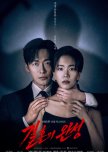
A Good Husband
First of all, I wanted to pay tribute to KBS2, South Korea's historic public broadcaster, specialized in drama broadcasting. For years, it has been losing ground, struggling to compete with other public and private networks, and more recently with OTT platforms. Bound by a public-service mandate, it now has the image of "Dad TV", a bit old-fashioned, with an aging audience. It also took too long to adapt to the new rules of the audiovisual market. But with The Husband, KBS2 gives us a thriller that uses all the codes of a private network drama, even going as far as using AI to enhance certain scenes. So, let's say it: KBS2 broke open the piggy bank! And for that alone, I have to give them credit. But was the effort worth it? Namkoong Min is popular, he works the old-fashioned way (he doesn't do OTT productions, which are more lucrative) and he has plenty of experience. I think it was a great choice to bring him in and see him in a different kind of role, allowing him to bring all that experience to a drama where I wasn't necessarily expecting him. Let's see what it delivers.
Kang Tae-Ju (Namkoong Min) is a talented neurosurgeon who works at his father-in-law's private hospital. His wife, Ko Se-Yun (Lee Seol), is the hospital's administrator. Their marriage has been falling apart for months following a tragedy that devastated them. After one last attempt to save their relationship, Tae-Ju gives up and asks for a divorce. After spending the night drinking, he realizes the next morning that Se-Yun is nowhere to be found. Not particularly worried at first, he goes to work, where a mysterious stranger calls him demanding money over a deal they supposedly made the previous night. Since he remembers nothing, he assumes it's a scam. Except his wife really has been kidnapped, and the ransom has to be paid. As the hours go by, Se-Yun's parents, followed by the police, begin to suspect Tae-Ju. Everything falls apart when a video sent by the kidnapper leads to Tae-Ju being taken into custody, as everything seems to point to him having organized the whole thing himself. Determined to uncover the truth on his own, he escapes with the help of the mysterious Lee Su-Hyeong (Park Byung-Eun), who seems to know the kidnapper, who also happens to be a killer. Tae-Ju is now a fugitive, hunted by both the police and this psychopath.
The drama gets off to a flying start, and there is plenty to like: the thriller is effective, with a constant sense of tension and danger. Tae-Ju finds himself caught up in a kidnapping case and has to figure out what is happening, protect his wife who is being held captive, and escape the authorities at the same time. The drama doesn't simply tell its story: it plays with the viewer's perception. I absolutely loved being made to look like an idiot; that's exactly what I want from a thriller: misdirection and doubt about the protagonist's actions. We are shown a scene, we hear a conversation, we are given a piece of information… but one element is deliberately missing. So we reach a conclusion that seems perfectly logical, only to discover later that we had actually interpreted the information correctly… just not what it really meant. That mechanism works extremely well. We spend a lot of time outdoors, Tae-Ju is the one being hunted, and it is genuinely thrilling. Thanks to AI and relatively inexpensive production techniques, the drama even allows itself car chases through dense urban areas and pedestrian zones; I have rarely seen anything like that in a drama. I'm not particularly fond of Namkoong Min, but I think he's very good in this new register: usually, he is locked into that very distinctive British-style stoicism of his; here, given the role, I'm discovering a completely different actor. Opposite him, Kim Dae-Myung, as the antagonist, gives him an excellent performance to play against in the role of Noh Man-Hui. He is a versatile actor who can play just about anything. As this cold-blooded psychopath, he is extremely convincing. It's a duel between two top-level players, but at a distance. My verdict halfway through was very positive, because the information was being revealed little by little.
But that's where the break comes, abrupt and far too predictable: the drama changes tone and the writing, which had been very good, starts to lose its way. We enter a much more conventional and predictable phase. Once Tae-Ju is no longer the hunted but becomes the hunter, the pace slows down considerably and the atmosphere changes. The police procedural side gradually takes over from the thriller, and I'm much less convinced by the whole conspiracy surrounding medical research. The masterminds and the real people behind the kidnapping, which turns out to be just the tip of the iceberg, gradually reveal themselves and show their cards. The second half relies heavily on flashbacks to explain what was happening behind the scenes. Occasionally that can be a plus, but here it becomes excessive. Instead of moving the story forward, some scenes simply explain something the viewer has already watched. At times, it feels as if the drama is taking its own story apart instead of moving it forward. Episode 11 pushes this principle particularly far: I felt like I was watching the making-of of the story, with the behind-the-scenes version of events we had already seen. It's interesting if you want to understand the whole puzzle, but much less effective when it comes to maintaining tension. The worst part is that more and more inconsistencies start appearing, along with painfully obvious plot conveniences: Noh Man-Hui casually uses his own car as if everything were perfectly fine, while there are several opportunities to capture, neutralize or kill certain characters, but the story prevents it because the writing needs them to survive until the next scene. The script simply does whatever it needs to do to get to the next scene, and that's a real shame. To be honest, I was already starting to lose interest around episode 9. And the biggest problem for me is that the drama doesn't even properly close the storyline involving the key character Lee Su-Hyeong
Overall, The Husband is still a quality production, with excellent direction and cinematography, especially during the first five episodes. The director himself clearly stepped outside his comfort zone if you look at his filmography. The sets and photography are genuinely impressive, and there is no reason for this production to feel inferior to similar dramas. The overall atmosphere is also pleasant. The supporting cast does the job without standing out, but the drama is worth watching for the performances of Namkoong Min and Kim Dae-Myung. Lee Seol is a talented actress, but she is unfortunately underused in the second half. Special mention also goes to the veteran Lee Sang-Hee, who plays Gyeong-Ae, Man-Hui's completely unhinged wife, bringing an extra layer of scheming and menace to the story. As for the ending, it is predictable, admittedly, but it is coherent and avoids yet another standard happy ending.
In the end, The Husband leaves me with rather mixed feelings. I have much more desire to remember what it got right than what it got wrong. There is that first half where I genuinely felt like I was getting exactly what I love about Korean thrillers: a story that catches me off guard, doesn't give me all the answers, and constantly leaves me wondering what is really going on. That's rare enough that I can't simply dismiss the drama because of its weaknesses later on. The second half definitely brought me back down to earth, to the point where I occasionally found myself checking the time, but it doesn't erase the enjoyment I got from the first half. And ultimately, that's probably what I'll remember about The Husband: an imperfect series that could have been much better, but at least tried something. In a landscape where so many dramas end up following well-established formulas, I much prefer one that takes a gamble and partly fails than one that never takes any risks at all. So yes, KBS2, do it again. But next time, just try to keep the same level for all twelve episodes. That's why I'm giving it a score of encouragement.
Kang Tae-Ju (Namkoong Min) is a talented neurosurgeon who works at his father-in-law's private hospital. His wife, Ko Se-Yun (Lee Seol), is the hospital's administrator. Their marriage has been falling apart for months following a tragedy that devastated them. After one last attempt to save their relationship, Tae-Ju gives up and asks for a divorce. After spending the night drinking, he realizes the next morning that Se-Yun is nowhere to be found. Not particularly worried at first, he goes to work, where a mysterious stranger calls him demanding money over a deal they supposedly made the previous night. Since he remembers nothing, he assumes it's a scam. Except his wife really has been kidnapped, and the ransom has to be paid. As the hours go by, Se-Yun's parents, followed by the police, begin to suspect Tae-Ju. Everything falls apart when a video sent by the kidnapper leads to Tae-Ju being taken into custody, as everything seems to point to him having organized the whole thing himself. Determined to uncover the truth on his own, he escapes with the help of the mysterious Lee Su-Hyeong (Park Byung-Eun), who seems to know the kidnapper, who also happens to be a killer. Tae-Ju is now a fugitive, hunted by both the police and this psychopath.
The drama gets off to a flying start, and there is plenty to like: the thriller is effective, with a constant sense of tension and danger. Tae-Ju finds himself caught up in a kidnapping case and has to figure out what is happening, protect his wife who is being held captive, and escape the authorities at the same time. The drama doesn't simply tell its story: it plays with the viewer's perception. I absolutely loved being made to look like an idiot; that's exactly what I want from a thriller: misdirection and doubt about the protagonist's actions. We are shown a scene, we hear a conversation, we are given a piece of information… but one element is deliberately missing. So we reach a conclusion that seems perfectly logical, only to discover later that we had actually interpreted the information correctly… just not what it really meant. That mechanism works extremely well. We spend a lot of time outdoors, Tae-Ju is the one being hunted, and it is genuinely thrilling. Thanks to AI and relatively inexpensive production techniques, the drama even allows itself car chases through dense urban areas and pedestrian zones; I have rarely seen anything like that in a drama. I'm not particularly fond of Namkoong Min, but I think he's very good in this new register: usually, he is locked into that very distinctive British-style stoicism of his; here, given the role, I'm discovering a completely different actor. Opposite him, Kim Dae-Myung, as the antagonist, gives him an excellent performance to play against in the role of Noh Man-Hui. He is a versatile actor who can play just about anything. As this cold-blooded psychopath, he is extremely convincing. It's a duel between two top-level players, but at a distance. My verdict halfway through was very positive, because the information was being revealed little by little.
But that's where the break comes, abrupt and far too predictable: the drama changes tone and the writing, which had been very good, starts to lose its way. We enter a much more conventional and predictable phase. Once Tae-Ju is no longer the hunted but becomes the hunter, the pace slows down considerably and the atmosphere changes. The police procedural side gradually takes over from the thriller, and I'm much less convinced by the whole conspiracy surrounding medical research. The masterminds and the real people behind the kidnapping, which turns out to be just the tip of the iceberg, gradually reveal themselves and show their cards. The second half relies heavily on flashbacks to explain what was happening behind the scenes. Occasionally that can be a plus, but here it becomes excessive. Instead of moving the story forward, some scenes simply explain something the viewer has already watched. At times, it feels as if the drama is taking its own story apart instead of moving it forward. Episode 11 pushes this principle particularly far: I felt like I was watching the making-of of the story, with the behind-the-scenes version of events we had already seen. It's interesting if you want to understand the whole puzzle, but much less effective when it comes to maintaining tension. The worst part is that more and more inconsistencies start appearing, along with painfully obvious plot conveniences: Noh Man-Hui casually uses his own car as if everything were perfectly fine, while there are several opportunities to capture, neutralize or kill certain characters, but the story prevents it because the writing needs them to survive until the next scene. The script simply does whatever it needs to do to get to the next scene, and that's a real shame. To be honest, I was already starting to lose interest around episode 9. And the biggest problem for me is that the drama doesn't even properly close the storyline involving the key character Lee Su-Hyeong
Overall, The Husband is still a quality production, with excellent direction and cinematography, especially during the first five episodes. The director himself clearly stepped outside his comfort zone if you look at his filmography. The sets and photography are genuinely impressive, and there is no reason for this production to feel inferior to similar dramas. The overall atmosphere is also pleasant. The supporting cast does the job without standing out, but the drama is worth watching for the performances of Namkoong Min and Kim Dae-Myung. Lee Seol is a talented actress, but she is unfortunately underused in the second half. Special mention also goes to the veteran Lee Sang-Hee, who plays Gyeong-Ae, Man-Hui's completely unhinged wife, bringing an extra layer of scheming and menace to the story. As for the ending, it is predictable, admittedly, but it is coherent and avoids yet another standard happy ending.
In the end, The Husband leaves me with rather mixed feelings. I have much more desire to remember what it got right than what it got wrong. There is that first half where I genuinely felt like I was getting exactly what I love about Korean thrillers: a story that catches me off guard, doesn't give me all the answers, and constantly leaves me wondering what is really going on. That's rare enough that I can't simply dismiss the drama because of its weaknesses later on. The second half definitely brought me back down to earth, to the point where I occasionally found myself checking the time, but it doesn't erase the enjoyment I got from the first half. And ultimately, that's probably what I'll remember about The Husband: an imperfect series that could have been much better, but at least tried something. In a landscape where so many dramas end up following well-established formulas, I much prefer one that takes a gamble and partly fails than one that never takes any risks at all. So yes, KBS2, do it again. But next time, just try to keep the same level for all twelve episodes. That's why I'm giving it a score of encouragement.
Was this review helpful to you?


