
 Editorials



 1


Chronicle of a Failed Story
In memory of Ahn Pan-Seok (November 27, 1961 – August 12, 2026)
For the director's last posthumous drama, I'm really in a tough spot. I wanted so badly for him to go out on a high note, leaving behind an unforgettable masterpiece. Unfortunately, with such a poorly crafted screenplay, it's genuinely hard to understand what he was trying to convey. And yet, there was so much potential! A huge waste—that was my immediate reaction. Honestly, right from the start, I felt something was off with the tone and narrative pacing, and everything that followed only proved me right. This drama isn't slow, nor is it introspective—it’s just plain boring, because it’s completely neutral. There were several interesting themes ready to be explored: disability, social class divides, family dynamics, societal judgment, and the struggles of a romantic relationship. Instead, all of these avenues are handled with complete carelessness, while utterly useless and trivial subplots are prominently featured. It makes zero sense. The script just piles up themes without ever taking the time to flesh them out. By trying to cover everything, it ends up telling nothing at all. In fact, the word that sums up this series best is: superficial. The routine nature of everyday life doesn't turn into a contemplative narrative here—it does the exact opposite. It has the appearance of reality, but without deep observation, the analysis falls flat, and takes us down with it. (Sorry for the wall of text!)
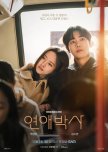
The plot centers around Park Min-Jae (Choo Young-Woo), a robotics PhD student. At a younger age, an illness led to his right leg being amputated above the knee. He meets Lim You-Jin (Kim So-Hyun), who attends the same university. However, following an incident, she is forced to leave the textile research department. She then discovers the world of robotics, develops a passion for the field, and grows closer to Min-Jae. He is quiet and shy; she is straightforward and direct. He comes from a wealthy family on his mother's side, while she comes from an ordinary background, with her parents and older brother running a local garage. Between work, family, friends, illness, and romance, the two navigate a vague, chaotic relationship plagued by unsaid feelings, misunderstandings, and lies. And that's without taking into account a toxic, harmful external element: the character of Kim Se-Jin (Lim Jin-Hyo), a fellow student in their group. He embodies everything you could possibly hate in a person. Plain and simple: I wanted a "truck of doom" to hit him.
The drama gets off to a painfully slow start, runs in circles, and only picks up around the middle of episode 4 when Min-Jae and You-Jin's relationship finally starts to move forward. But how can you tell a love story without ever making the viewer feel the spark of a budding romance? What makes it worse is the severe lack of chemistry. We're told they're in love, but that’s it: no shared glances, no endearing awkwardness, no real progression in their intimacy. Their dynamic feels dysfunctional from the start, between You-Jin constantly getting brushed off and her odd reactions. The script basically presents us with a fait accompli: they fell in love, end of story. The absolute height of bad writing comes with the misunderstanding around Min-Jae leaving for the United States. It highlights all the script's flaws: we have to wait until the final minutes of episode 10 to realize a simple conversation could have avoided months of separation and heartache. They could have fleshed out a reflection on the inability to communicate, but no, they just let it slide. As I mentioned earlier, the show had great topics to dive into: disability, class differences, family dynamics, independence, societal perception, and the hurdles of a new couple. What did the director do with them? Next to nothing. He barely scraped the surface.
The script is just an accumulation of themes it never takes the time to dig into. By trying to address everything, it ends up saying nothing meaningful. We spend endless time in cafés, houses, the robotics lab, or the faculty room listening to bland dialogue that adds nothing to the plot. They eat, talk, stare at each other, and exchange pleasantries. Yet, these slice-of-life scenes reveal almost nothing about who these characters actually are. Showing people going through their daily routines doesn't automatically make a show "contemplative." And let's talk about the characters: You-Jin's family is barely developed, and so is Min-Jae's mother. There was plenty of room for an interesting social commentary comparing their mindsets. Instead, the show prioritizes two professors who bring nothing to the table, and above all, the insufferable Kim Se-Jin, who wins the award for the most punchable character in the drama. The guy looks fragile, has zero presence, yet holds immense power of destruction. Why? Because the story hands it to him on a silver platter. In the real world, Min-Jae, You-Jin, and even their lab mates would have left him knocked out on the pavement in the fetal position; but not here. Worst of all, he gets a resolution worthy of a modern hero—it's completely mind-boggling. I was left speechless (and not in a good way) watching his pathetic confession of love.
This character is a parasite who takes up way too much screen time by constantly intruding into other people's lives. He fabricates stories, spreads rumors, and poisons both the research team and Min-Jae and You-Jin's relationship. He constantly shifts the blame onto others and never reflects on his own toxic behavior. I never understood what he was doing there, other than stirring up trouble. As for Professor Lee Ji-Hoon, that's another issue. The guy feels like he fell off a truck just to play the sidekick for two episodes—yet another half-baked idea that goes up in smoke. In truth, the entire supporting cast has almost no real impact on the story, except for those two. Sure, there's You-Seong, played by the excellent Kim Min-Suk, who brings a bit of fresh air, energy, and humor. But it's far from enough. He was the character that needed more screen time to balance out the surrounding torpor! The supporting cast is just there to serve the main plot's immediate needs, despite being fully available to add depth to the overall narrative.
Between Steps isn't a slow-burn story; it's a story running in slow motion, if you catch the drift. We are miles away from Pan-Seok's finest work. The dialogues circle around nothing, and the characters remain surprisingly opaque. Even the emotions are played on a monochrome register: joy, sadness, anger, or disappointment all seem rendered with the exact same tone. You wait for an emotional range that never comes. As a result, you watch everything from a distance because it feels hollow. The directing and cinematography don't help either. I'm still looking for something to save here, but I'm struggling. The acting direction is a total disaster, failing to give any depth to the characters. Neither Choo Young-Woo nor Kim So-Hyun convinced me in their roles (he in particular felt way too bland), but the responsibility doesn't lie solely on them. The writing and direction never give them the tools to make this relationship feel real. For one of the rare times Pan-Seok casts two actors born just one day apart, the experiment fails. The finale delivers a bittersweet conclusion that didn't convince me at all. It could have been touching if the emotional journey of the two leads had been properly built up. Instead, I felt nothing, except for a massive sigh of relief: finally over! Half the episodes could have been condensed, which only further proves how empty the narrative is. Where are the reflections on relationships, social dynamics, and societal pressures? What is the takeaway message here?
Ultimately, Between Steps is a massive disappointment. There was material here for a great human drama—gentle yet harsh, capable of blending humor, romance, tenderness, melancholy, and reflection. But by trying to tackle too many topics without committing to any, the story loses its identity. It's not a grand drama, nor a melodrama, nor a rom-com, nor a contemplative slice-of-life—it's just a mishmash that leaves you baffled most of the time, when you're not busy wanting to obliterate that idiot Kim Se-Jin. Twelve episodes that could have comfortably fit into a two-hour movie, provided some choices were made to cut the filler and give the characters real substance. I'm all the harsher because Secret Affair (which I haven't seen yet), Something in the Rain, The Midnight Romance in Hagwon, and One Spring Night remain the gold standard of Ahn Pan-Seok’s best work on relationship dynamics in a shifting society. This is just my humble opinion, but the comparison makes the disappointment hit even harder. Between Steps never manages to transform those same ingredients into actual dramatic material. I'll end my review with my own epitaph, which might sound harsh: "Pan-Seok isn't the only one who passed away; his final drama went right down to the grave with him."
I'm no blind fanatic, but let's still salute a truly great director who gave us unforgettable moments through memorable films and dramas: simply thank you, Sir.
Was this review helpful to you?


