

This review may contain spoilers
Mild spoilers ahead:
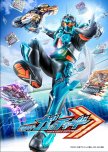
Everything the show did well:-Decent hero cast overall. Everyone in the hero team feels useful to a degree and can fight untransformed, which helps them stay relevant throughout the show.
-Consistently entertaining villains from start to finish.
-Pretty entertaining monsters and characters of the week for most of the show.
-Pretty great action outside of the constant use of CGI; Gotchard Igniter and Kamen Rider Valvarad in particular come to mind.
-Some interesting concepts in the world-building and story here and there.
-Pretty great soundtrack.
Everything the show did bad:
-This is the Kamen Rider season that has the most spin-offs that are essential to the plot, which makes the story feel incomplete and disjointed. Usually one doesn't need to watch specials and movies to understand a show; at most they introduce a movie character for 1 episode and not properly explain the character to make the viewer want to watch the movie, but they usually aren't that essential. Even when specials are essential for a season, there usually aren't many, and one can watch them after the show is over and still get about the same experience.
However, Gotchard has too many cases where these spin-offs matter. One of the recurring villains of the first quarter suddenly stops appearing; this is because his arc gets resolved in the winter crossover movie with Geats. Said movie introduces the powers of Rinne, who's supposed to be the second most important character in the show, and the show doesn't do a proper job at summarizing the movie in order to understand where her powers come from. The second quarter has the protagonist Houtaro getting a mentor, which leads to him getting an upgrade; however said mentor's character arc gets resolved in this show's summer movie and he barely appears for the rest of the show's run past the second quarter. The third quarter has a whole mini-arc dedicated to Kaguya Quartz a character from the Kamen Rider Legend spin-off, said special and mini-arc have several references to past rider shows and the crossover mini-series Kamen Rider Outsiders.
-Despite Toei's kodomo Tokusatsu not really being known for having good acting, the acting of this show's main duo Houtaro and Rinne is way worse than usual. Houtaro's actor Junsei Motojima at least improves enough after the first quarter outside his occasional weird stare, so he's not really that big of an issue. But Rinne's actress Reiyo Matsumoto while she definitely improves, never improves enough to be considered a good actress, so despite her character having the most consistently well-written character out of the main trio, the fact that she gets her main powers in a movie and the actress consistently having poor delivery for the character's emotional scenes, end up making it hard to care for the character.
-The show fails at giving Houtaro a proper motivation besides empathy to care for the chemies which makes his whole character feel cheap most of the time despite him developing a proper friendship with Hopper1 and most chemies of the week. While episode 18 does give a better explanation of why he wants to befriend all chemies it also opens a bunch of other questions that aren't answered in the show, so it doesn't really fix this issue.
-The show fails at making proper use of its setting. They hardly ever do any proper alchemy and instead it just evolves into being used as normal magic or transmutation. The alchemy academy barely feels like an academy and hardly ever shows them practicing to become better alchemists after the first quarter, this really affects Houtaro's character since he's the newest of the team and is almost never shown doing alchemy or trying to get better at it until Rainbow Gotchard, he should have made the connection with cooking way earlier in the show so that his progression feels more natural, because of this, the final episode feels way less engaging. The school setting feels very disconnected from the main plot, which makes a character like Kajiki, while likeable overall, not really accomplish anything and not hang out with the cast that much during the show's middle. The alchemy sages pretty much don't matter for the show, which makes the alchemist organization barely have any background or any interesting traits, most of the important world-building elements and lore end up coming from the villain Giggist.
-Spanner's arc in the first quarter feels unnecessary and makes so that the character doesn't have proper set up or foreshadowing for his later arcs even if they're competently written.
-After the first quarter, Sabimaru and Renge don't get much to do. Sabimaru at least gets a 2 parter near the end to close his character arc and show how much he's grown, but Renge basically gets nothing, even her backstory episode barely focuses on her.
-Despite Minato's backstory being great, his actions in the show's middle are not justified enough. After Houtaro obtains CrossHopper, he doesn't get much to do despite the show setting him to change the alchemist's order.
-Fuga is a severely underutilized character, which makes it hard to care for him despite his cool moments.
-Clotho loses too many battles to be taken seriously. Out of the 3 sisters she's the one who gets treated the worst.
-Despite Lachesis getting a lot of cool developments throughout the show, it also feels like she barely gets to do something in the second half. She also barely fights despite getting new powers in episode 33.
-Germain and Gaelijah are kind of forgettable.
-Despite Geryon's actions making sense due to the kind of character he is and being a very entertaining villain overall, his main goal is still kind of hard to take seriously. It feels that his backstory should have been explored further since we only get a brief dialogue from Giggist explaining his origins.
-Kaguya and his personal villains are extremely disconnected from the show, which makes his mini-arc feel out place even if it does progress the story.
-While the content of the final arc is good for the most part, it still feels really rushed. The villains in the final arc get the short end of the stick, it feels that Rinne and Spanner didn't get the most use of their new powers and due to the Ouroboros Realm existing it doesn't feel like the finale has much emotional weight.
-Some pretty bad/forgettable monsters/cases of the week in the first quarter of the show.
-Due to the chemmies barely having any character besides Hopper1, not being able to talk besides Nijigon and mostly having to stay in their card form throughout most of the show, they end up being just kind of OK mascots, with the exception of Hopper1 which is pretty good despite not being anything stand-out.
Reasons for the show's strengths:
Main writer Keiichi Hasegawa is really great at writing villains. The other main writer Hiroki Uchida did a pretty good job at following the plot-points Hasegawa set up. Secondary writer Akiko Inoue was good at giving Rinne more characterization and also managed to add some good comedic elements.
Reasons for the show's problems:
Chief producer Yousuke Minato, prior to Gotchard was chosen by Omori to be a co-producer for King-Ohger alongside Mochizuki. Omori wanted to stop working for Kamen Rider since he felt he was out of ideas and thus wanted to produce a Super Sentai show, in order to increase the chances for the show to be greenlit, he wanted to work on the pre-production earlier in secret as a trio of producers, Minato would end up developing the countries of Ishabana and Toufu. Ultimately, the show ended up being greenlit under the condition that Omori would work on the show alone from that point onward. The reason for their removal was that Mochizuki had just been demoted due to his work in Revice and that they wanted Minato to produce the next Kamen Rider show.
Toei wanted to make a more lighthearted season of Kamen Rider since the previous season Geats was darker than usual. Then, when King-Ohger ended up being more popular with adults than children, Toei really wanted to emphasize the lighthearted elements even more in order to "bring tokusatsu back to the children", the next Sentai Boonboomger would also fall under this philosophy. Due to this, Toei wanted Minato to be the next producer in order to train the next generation of producers and because he prefers lighthearted shows.
Due to him being a new producer and the fear that this show would also fall into the pitfalls that Revice did, which was made by a relatively new producer, promoted producers Shin-ichiro Shirakura and Hideaki Tsukuda helped with the show pre-production. Shirakura came up with the idea of having cards as a gimmick, that said cards wouldn't be used for an OCG/TCG and for the show to have a school setting. Minato then came up for the cards to feature monsters inspired by Pokémon and Digimon and that there should be 100 or more cards to collect, since they couldn't use that many cards for individual forms. Tsukuda came up with the idea of using 2 cards for each and forms and decided that the show should have an emphasis on alchemy so that the fusion of cards makes sense.
Usually for most Toei tokusatsu the producer comes up with the setting and checks up throughout the show so that the setting is realized properly by the writer, but in this case he barely came up with any of the ideas of the setting, so it's speculated that this is the main reason why alchemy and the school setting are so half-baked in the show. The only idea that we know he came up with was the creation of Rinne and that she should be the secondary rider, so that's probably why writing wise she's the most consistent one in the cast.
Minato would end up choosing Hiroki Uchida as the main writer due to him having worked with him with Kamen Rider Outsiders. Uchida suffers from the same issue as Nobuhiro Mouri, they're good at following ideas from another writer under proper supervision, which is why they most often work as episode writers. However, they don't work well because they're bad at coming up with their own ideas, so when they do they come up with pretty generic stuff. The original plan for Gotchard by Uchida was for Houtaro to be a student with no direction in his life and ultimately finds the chemies imprisoned, due to their state of being trapped in cards he would free them since he sympathized with them due to both being pathetic, this would ultimately create chaos as the chemies become evil in the presence of people with ill-intentions, due to this event being his fault, Houtaro takes responsibility and decides to catch all the chemies while befriending them. It was planned for there to be no main villains besides the demon from the book, instead the show would have consisted on the cast solving cases of the week up to the final arc with barely any plot progression. Ultimately, Toei higher ups thought that this premise was too bland and decided that Keiichi Hasegawa, who had already been chosen to be an episode writer, should be this show's co-writer alongside Uchida. The reason they chose him was because Minato has mostly been an assistant producer for anime up to this point, so since Hasegawa was a writer who had lots of experience with both anime and tokusatsu, they felt that he would be a good fit for the show.
However this decision was made somewhat late into pre-production, so there was some stuff they weren't able to change. Ultimately, Hasegawa would create this show's villains, who ended up being the best aspect of the show and changed how the chemies got released in order for them to make sense with the new villains. However this change made Houtaro's sympathy for the chemies make way less sense which really affected his character for the worse.
Hasegawa prefers writing darker stories but since Minato wanted this show to be more lighthearted, he would suppress most of Hasegawa's ideas in the first quarter and they would have many creative clashes. Ultimately after his ideas and villains ended up being the most well-received aspects of the show, he would end up writing most of the show's story, world-building, and Spanner's character after the first quarter, while Uchida built up on his ideas and focused on writing Houtaro's character (which is probably why Houtaro was the most sloppily written, he also was the one who decided the show's ending). They didn't know on what direction to take Rinne so the producer got Akiko Inoue to be a secondary writer to give Rinne more characterization. After this, from the second quarter onward, the show improves since now it has a proper direction, but the setup is very flawed due to how directionless the first quarter was.
Due to Kamen Rider's main demographic being really young boys and adult otakus, they didn't believe that Majade would sell well, so they wanted her toys to be premium bandai. However the producer thought that in order for her toys to sell better and for her to be more popular she should get her powers in the movie instead of the show, which negatively affected her character.
In order to maximize sales, Minato wanted the movies to relate to the plot, which is why characters like Licht Kugimiya and Daybreak ended up that way.
Prior to the show release, since Majade was going to be premium bandai, Minato had decided that the retail toys that usually go to the secondary should go to Kamen Rider Legend, a mini-series that focused on crossover aspects, and then introduce said Rider into the show proper in order to bring older fans of the franchise into the show. Since these decisions had already been decided prior to Hasegawa taking over for most of the plot, the mini-arc of Legend ended up happening anyway.
The staff had decided that Majade's and Valvarad's final power-ups should happen at the very end so that they feel like they're "the strongest" forms, since they happen too late to lose to a villain. The final power-up Gotchard gets in the final episode was decided at the last minute by Bandai since the transformation item had already opened for pre-orders due to the summer movie.
Some people speculate that the reason for Houtaro's and Rinne's actors being worse than usual is due to Minato having worked mostly on anime, so when doing casting he chose more arbitrarily. Usually casting is done with the main writer and the pilot director, but people speculate due to the phrasing in some interviews that they were both cast when Uchida was the sole writer for the show and he just didn't mind it due to him mostly being an episode writer. Then the villains, and most main characters introduced later had way better actors since they were cast after Hasegawa had joined the project. But these are purely theories since we don't know how early the main duo were cast.
Some leaks indicate that Shirakura was more involved in the show than it initially seemed, but it's unknown what contributions he had aside from the pre-production.
Overall:
The show ranges from average to kinda good. It definitely doesn't do anything too offensive to be considered bad but also doesn't do anything too good to be considered great. Also due to its muddled plot direction, the show comes off bland at times. The show has a lot of cool ideas, but they're not executed that well because of the previously stated problems. The show does improve a lot after the first quarter, but it still feels incomplete overall, has a pretty rushed final arc and has a mixed bag of a finale. Overall, I can only recommend this show if you're really into Kamen Rider or if you're really into the villains of this show after watching the first 3 episodes since they're by far the most consistent aspect of the show. While this show isn't bad or even mediocre, there's just far better Tokusatsu out there, and this show doesn't particularly excel at anything.
Was this review helpful to you?
This review may contain spoilers
Mild Spoilers Ahead:
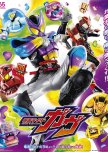
Everything the show did well:>Really likeable hero cast with tons of chemistry that gets properly developed.
>Top-Tier action that makes good use of the food motif, arguably some of the franchise's best.
>Really interesting monster of the week gimmick where they have to make people happy as part of their plan, the show manages to keep them entertaining for the whole run.
>Slightly better acting than usual Rider seasons.
>Amazing OST, although I wish we could have gotten more insert songs.
>Interesting execution of Kamen Rider's usual theme of loneliness with the main Rider trio and the first Bitter Gavvs.
>Villain cast is mostly entertaining whenever they're actually around.
>Useful female lead that serves as one the main driving forces for the growth of the main trio.
>Very unique setting that uses a drug empire villains really differently from other seasons, making the viewer interested in the story right away.
Everything the show did poorly:
>The second quarter of the show starts pretty slow.
>The Bitter Gavv arc comes out of nowhere and feels unreasonable in the world's setting due to Suga's backstory not being explored enough.
>The Stomach Family dissappear for multiple episodes without explanation in Q2. A lot of the Stomach's final fights feel rushed and the overall villain cast feels underdeveloped.
>Liselle and Jeebh were very poorly utilized and ultimately end up being the worst villains of the show, despite their strong introductions Jeebh remains useless throughout most of the show's run and Liselle's lovecraftian nature and love for weak breakable beings leads nowhere in the show itself in order to shill the post-series V-Cinema. Both felt nerfed in their final fight, while one could argue they were like that due their mental instability it still feels like a forced explanation.
>Blizzard's introduction felt very plot-convenient.
>Hanto barely got any meaningful wins.
>Zomb is underutilized.
>The portal system of Stomach inc. goes mostly unexplored to shill the Summer Movie.
>The Granute World wasn't explored enough.
>Sachika feels kind of disconnected to the main conflict.
>Mediocre last episode aside from the action direction.
Reasons for the show's strengths:
Main writer Komura is really particular about casting which led to a better actors than usual. Unlike previous shows that had Komura as a chief writer, Kamen Rider isn't team-based which meshes better with Komura's writing style, resulting the main Rider trio be properly developed. This show had a longer pre-production than usual due to it being the first season that needed to accommodate seasons being filmed earlier than usual, this lead to staff being able to create a creative setting. Vice Producer Takijima's quick thinking led to Lakia's arc being good in spite of the original plan for his arc not being done. Sugihara is an really great director and Fujita is an excellent action director, that and the show mostly getting good episode directors led to most of the fights being well done and really memorable.
Reasons for the show's problems:
Orginally Lakia was meant to be an undercover cop infiltrating Stomach inc. and the second quarter was meant to have the cast explore the Granute world, however this plan had to be abandoned due to a lack of budget, this is why the second quarter starts slow being written by other writers. The Stomach were originally meant to perish in the first half of the show, while a new mafia took over in the second half, however chief producer Takebe really liked the actors so instead the Stomachs were kept alive for most of the show's run and the new mafia became the president of the Granute world and his daughter to compensate not being able to explore the government via Lakia being a cop. However despite their life getting extended, their arcs remained the same due to them not being originally planned to live that long, so the Stomachs just dissappear for multiple episodes rather than better building up their arcs, also the main writer Komura is known for having trouble handling big casts so that's also probably part of the reason for the villains getting shafted, even if the main reason is clearly Takebe's change of plans. Takebe comfirmed that Stomachs weren't originally meant to be in the last episode, meaning the final fight was most likely originally meant to be Amazing Gummy's debut, although we don't know for sure. The suddeness of having to rework the plans for the rest of the show might also be the reason for the Bitter Gavvs arc feeling so out of place, but that seems unlikely. This lack of planning feels irresponsible on Takebe's part because this is one of the Kamen Rider seasons with the longest pre-production ever, so you'd think they would have had a more solid plan as to how things should go.
Overall:
I think the themes, direction, action and character arcs of this show were done amazingly which mostly makes up for the disappointing villain cast. Aside from the final episode, I'd say I found every single episode of this show entertaining despite of its flaws and even the last episode isn't bad, just a really by the numbers finale where the villains are at their most disappointing, but the actual story still closes up well enough. I'm really going to miss this show and I hope this new production schedule that Kamen Rider has means the staff will have to plan things more concretely from now on since they won't be able to make as many decisions based on viewers' reactions anymore, since even though that method worked really well during the Heisei era, it feels like newer staffers had been struggling with such tactics during the Reiwa era.
Was this review helpful to you?
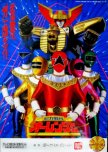
-Good ranger team and commander overall.
-The pink ranger Momo is extremely likeable and almost all of her focus episodes are really great despite mostly consisting on filler.
-Really great villains overall, especially towards the final arc.
-Really great final arc.
-The villains feel like a force to be reckoned with due to them having already conquered most of the planet prior to the show's start, helps ups the stakes in a unique way compared to other seasons.
-The dynamic of the team being a military corp is done differently enough from other military seasons to stand out.
-Really good action both in mecha and outside.
-Most monsters of the week are entertaining.
Everything the show did bad:
-The transition of the show being one of the darkest Sentai ever made to becoming really goofy isn't smooth and hurts the characters of the main team with the exception of pink. They still manage to be pretty likable overall but the show's tone ends up feeling all over the place due to this change.
-The extra ranger Riki and Dorin aren't that entertaining due to being absent for good chunks of the show and their personalities not being that interesting. That said Riki feels consistently strong throughout the show and at least one can kinda buy his absence from the episodes due him working for Dorin first and being a hero second.
-The side characters that the show introduces later, the wacky scientist Kotaro and the Shida family aren't really that likeable nor that funny.
-The civilization of Pangaea feels underexplored.
Reasons for the show's strengths:
This was the first Super Sentai season to acknowledge Goranger and JAKQ as part of the franchise. Due to this this season was treated as the 20th anniversary of Sentai and the producer Takeyuki Suzuki wanted the team to be soldiers like Goranger. This season just like the previous one Kakuranger brought back Susumu Yoshikawa to co-produce to realize the ambitions they sought out to do.
Some people speculate that the pink ranger Momo was always supposed to have filler episodes prior the show's change of tone, so she was the character least affected by the change. But this is just a rumor.
Reasons for the show's problems:
The staff wanted to realize a hard dark setting to differentiate from previous seasons. But due to the Hanshin Earthquake that occurred prior the show's airing and even more due to the Tokyo subway sarin gas attack that occurred after the airing of the third episode, from episode 9 onward the show adopted a more comedic approach to its tone in order to cheer up the audience.
The high contrast of the show having one of the darkest starts to any Sentai season, the darkest beginning at the time it was airing to becoming whacky and comedic from episode 9 up to the start of the final arc feels really jarring. The new side characters introduced in the middle to light up the tone ultimately weren't that funny due to not being planned. However in spite of these changes the main characters and villains managed to stay likeable from beginning to end.
Overall:
The show's tone is all over the place and there's a few characters introduced later that drag this show down. But overall the show manages to still be great overall with a likeable team of Rangers and villains plus a really cool setting. I recommend this show if you're a Super Sentai fan.
Was this review helpful to you?
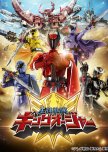
-Every character from the heroes, to the villains, to the side-characters and even characters of the week are really well written and useful throughout the entire show.
-Great acting from the cast and arguably the best acting in the franchise so far. Barely any character of the show feels like they're bad at acting, at worst they're decent. The only noticeable one is a character introduced in the second half, Prince and even then he's not bad by tokusatsu standards, just worse than the rest of the main cast so the gap in acting feels noticeable but it really isn't a deal breaker.
-Amazing serialized story from start to finish, barely any episode feels like filler.
-It being the most serialized Sentai show so far, even managing to be more serialized than Dairanger, Gekiranger and Kyoryuger makes the show feel distinct from the other seasons from the franchise.
-Fantastic soundtrack.
-Tons of subtle foreshadowing makes the show really rewatchable.
-Fantastic world-building, ambitious fantasy setting where every country feels unique.
-Both the hero team and the main villains are filled with charisma.
-The show never has a considerable drop on writing quality.
-Ambitious high-stakes finale.
-Jeramie is arguably the franchise best extra ranger, due to how well his dynamics are with the rest fo the cast, it never feels like it fractured their dynamic or that he takes too much screen-time
-The mech fights are consistently amazing and among the franchise's best.
-The monsters of the week in the first half are really great consistently.
Everything the show did bad:
-The show's fights have a severe overuse of slow-motion, resulting in the opposite effect and removing most of the weight of the fights while also making the good choreography hard to appreciate.
-Despite the mecha battles being amazing, the they barely use them in the second half.
-While the crossover mini-arc with Kyoryuger is really great, Kyoryuger's lore actually intertwines with this show's plot and it has heavy spoilers for that show so it means that a portion of the show would be hard to appreciate if you haven't seen Kyoryuger prior.
-While the CGI backgrounds are mostly good, especially for tokusatsu standards it still can be really distracting at times, specially during some fights.
-While Rita is a really likeable character overall she gets considerably shafted compared to the rest of the rangers and her backstory isn't properly explained.
-While the main antagonist is extremely charismatic, most of his decisions being mostly dependant on what's fun for him isn't really a thing for everyone and might come off as cheap writing for some.
-The people of Shugodom can come off as too trusting and kinda dumb at times.
Reasons for the show strenghts:
This show was a massive passion project by producer Omori and main writer Minato Takano. He was out of ideas for Rider shows and really wanted to go back to doing Sentai, so in order to secure his position as the next producer in spite of producer Shirakura 5-year plan for Sentai, he started pre-production in secret alongside producers Mochizuki and Yousuke Minato. Having the manpower of 3 producers with barely any restrictions and more time than your usual mainline Toei tokusatsu production made it so that the show could have more high-quality CGI and a better thought out setting. While Toei's condition for greenliting the project was the removal of producers Mochizuki and Minato, their set-up was already done and main writer Takano knew how to develop their ideas + Omori who was the main creative source remained.
The staff opted for actor hiring strategy that the franchise has had since Kiramager of hiring more slightly more experienced actors than usual.
The show's main director Kazuya Kamihoriuchi is among Toei's best and made the emotional scenes and the Mecha fights really stand out + also he helped with a lot of the creative output after the show's timeskip.
The show made use of Toei's new led room which also led it into it being greenlit. This made it so that could properly create their ambitious fantasy setting.
Main writer is really good at character writing and really cares about lore.
Reasons for the show flaws:
Producer Kazuya Kamihoriuchi tried too hard with the action resulting in a severe use of slowmo and cycling back to being kinda bad.
Despite the CGI being better than most Toei tokusatsu shows due to having more time, it still isn't that much more time, so the CGI is still very flawed.
Overall:
Easily one of the best Sentai shows, it just barely has any big flaws besides being better enjoyed if you've watched Kyoryuger prior. Arguably has the best characters, acting and world-building in the franchise. High recommend, specially if you're into the storytelling style of Shounen anime/manga. I could only see someone not liking the show if they find the CGI too distracting to enjoy the plot or if the characters don't really jive with you in the first few episodes of the show.
Was this review helpful to you?
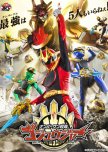
Mild spoilers ahead:
Everything the show did well:>Likeable characters all around, especially from the villain faction Bridan.
>A lot of concepts and ideas that seem unrelated end up meshing surprisingly well thematically, which makes the setting feel creative.
>It's pretty consistently funny but also has several dark moments that are done really well.
>Consistently good action, especially for the mecha battles.
>Blue's character arc is pretty well done.
>The Universe Warriors are consistently really entertaining characters of the week whenever they're the focus of an episode.
>Both the Gozyugers and Bridan are among the most creative Sentai and villain factions in the franchise.
Everything the show did badly:
>The Red and Blue Rangers get significantly more focus than the rest of the cast, while everyone else gets shafted with a noticeable lack of focus episodes.
>Yellow's character arc is rushed.
>The monsters of the week feel extremely disconnected from the story and like an afterthought in the episodes, despite being funny for most episodes written by the show's head writers.
>The show doesn't use the Universe Warriors enough.
>The Calamity is underexplored.
>A lot of worldview ideas are only explored for a single episode and not dwelt upon.
>The mecha characters are underexplored, particularly TegaSword and the war he resolved at the start of the show starts.
>Bridan, the Calamity, and the Universe Tournament don't connect with each other in a satisfying manner.
>The arc of the first Universe Warrior is resolved off-screen.
^Black's actress had to get abruptly recast, resulting in a second recap episode and a lot of awkward editing, especially in the final episode, undermining multiple emotional moments.
>Red's actor, while not bad, is noticeably worse than the rest of the cast, which is made even more noticeable due to him getting more focus than anyone else, even by usual Red Ranger standards.
Reasons for the show's strengths:
The producer is a hardcore tokusatsu and mecha fan, so he put a lot of attention to detail into the way the mecha work in the show, resulting in more mecha suit variety when compared to other Reiwa Sentai, he's also pretty creative coming up with characters such as Kinjiro and Kuon. The head writer is really creative and has a lot of good ideas that mesh well for the most part, she's also a veteran surreal comedy novelist, so her writing is pretty funny most of the time. The secondary episode writers for the show are all exceptional industry veterans. Veteran action director and head director resulted in the show being consistently visually striking. The actor for the most recurring main villain in the show, FireCandle, is a hardcore Super Sentai fan and brings a lot of energy to his scenes.
Reasons for the show's problems:
Toei executives didn't tell the show's producer, Daigo Matsuura, that this would be the last Sentai season until halfway through production, despite being aware that this would be the last Sentai for years, thus the staff never made the show as if it was going to be a farewell to Sentai. While this could be justified as not putting pressure on Matsuura, this is also his first show ever, picking a newbie to make the franchise's 50th anniversary and last season, which makes it feel like they should have picked someone more experienced. The writer Matsuura wanted to head the show rejected the offer, he predicted this however, he met Akiko Inoue at a wrap-up party for movie production when he was a vice producer that she was invited to and enjoyed her novels after giving them a read. Since her only experience was as a novelist and episode writer for a single show, he decided to hire her as a co-writer for Gotchard despite only being a vice producer for that show to get her used to working on television so that he could hire her as a backup plan for the first show he would head. While the producer's quick thinking is commendable, Akiko's novels were known to focus way too much on the protagonist while side characters wouldn't get much to do, making her a bad fit for Sentai, which focuses on teamwork, on top of that, she had only seen 3 Sentai seasons before working on the show. When coming up with concepts for the show, despite having decided that the show would be about a tournament between Red Rangers, Matsuura also wanted to have monsters of the week like usual. All of this resulted in the show having a focus problem and her not knowing how to properly implement the monsters in Gozyuger into the story. On top of all that, Akiko wanted the show to feel like a late-night drama, so she wanted most episodes to end on cliffhangers, this resulted in the show's pacing being really awkward.
The writer/producer duo also decided to not plan things ahead of time despite coming up with a really dense setup, this was in order to emulate the way Matsuura's mentor Shirakura would work with the writer's father Toshiki to make the shows Kamen Rider 555 and Donbrothers, but because of the issues laid out previously, this way of doing things just didn't work, and they hadn't even considered what the final arc would be until after finishing production of episode 34.
The actress of the Black Ranger, Maya Imamori, got fired from her agency Seju due to underage drinking, it's believed that this is a front for a bigger controversy since underage drinking is a minor offense that wasn't even public, so they could have just waited until the projects Maya was working on had finished airing to fire her. The most common assumption as to what this controversy is an affair with the suit actor of the Red Ranger Asai, because the alleged controversy was brought up saying he'd leave shortly before Asai actually left the show; however, there's no proof for this, and there are multiple reasons why this doesn't make sense:
>the staff seemingly kept working with Maya after his departure without any issue or foresight of her leaving
>the episodes were filmed way in advance meaning that the actor had already left the show before this controversy was brought up
>the official reason for his departure was health problems which are true as he has been suffering from epilepsy since 2019 and he had been planning to retire for a while—originally intending for Gotchard to be his last show as a suit actor but ultimately deciding to work in Gozyuger as a favor to Matsuura who really wanted him to work on the show, but he made a public statement before the show started that this would be his last show
It's also important to note that the tabloid that reported the controversy, Bunshun, while they've revealed heinous crimes that actors have committed in the past like the case of Ren Ozawa in Gaim, most of the time they're grifters trying to stir up controversies in order to gain more money; an example of the latter is how for Kamen Rider Revice they stalked the actress Yui Asakura and similarly caused her agency to fire her despite her doing nothing wrong. This is a similar case where this is the franchise's 50th anniversary, so it means that if they manage to target someone they'll be able to gain more money. Regardless of all of this, it at least seems that Maya is guilty of at least something, but we don't know exactly what, and the contract she signed with Seju specified that if she's fired she should be removed from any project that hasn't aired or is airing. So due to contractual obligation, Toei had no choice but to remove her from the show against their wishes and not be allowed to rehire her, this was extremely tricky due to them only having 2 episodes left to film when she was fired, and due to the way toku production works they still had to film the last 2 episodes on the date they had already decided without a replacement, and they had to very hastily re-edit the episodes that were already done to remove her, resulting in a whole episode getting deleted then replaced with a recap instead and the character getting recast with the actress of the Donbrothers' Yellow Ranger, Kohaku Shida, who's Matsuura's friend, however, because all of her scenes were filmed after the show was done and not every actor was available to come back (a movie Blue's actor was working on had to get delayed in order for him to help shoot these new scenes), her scenes are very hastily put together and feel really awkward despite her being a more experienced actress than Maya and makes several moments of the show's late game awkward and almost off-putting. It also should be noted that both Seju's actors and staff have had controversies before and during Gozyuger, and that they've been noted to not train or teach their actors properly.
The actor of the first Universe Warrior to show up in the show, Haruhi Iuchi, was too occupied with other shows, so his schedule never opened up again for him to return, so his arc had to get resolved off-screen.
Because the staff originally worked on the show without knowing this would be the last Sentai, they decided to still make the finale feel like an ending for Gozyuger rather than the franchise as a whole; Matsuura stated that the true finale for Sentai to kickstart this hiatus is supposed to be the VS movie with Boonboomger instead.
Overall:
The show is continuously fun and nearly every character in the show is likable; the setting is ambitious and creative, and both the action and direction are solid. Yet despite all of this, it doesn't feel like any of the show's ideas were done satisfyingly. They're good ideas, but due to the show trying to do way too much, without planning, at a weird pace in order to continuously end with cliffhangers, all while shafting most of the cast in favor of the Red and Blue Rangers, they just end up feeling half-baked; couple that with the recast issues resulting in a lot of awkward editing for the show's final arc, and these problems get accentuated even further. Still, I found the show entertaining from beginning to end since most of the staff and cast clearly had passion, and most of their ideas are good despite being unfocused; I feel like most people can have fun with the show as long as they don't expect anything top-tier or judge the show on it rather than as the temporary end of a 50-year-long franchise, but it's really hard to disassociate the show because it's still the 50th anniversary.
Was this review helpful to you?
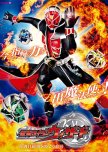
-The two main riders, Haruto and Nitou are constantly charismatic and pretty funny.
-Gremlin is a really memorable villain.
-Phoenix was a pretty entertaining villain.
-Action is consistently amazing.
-Some episodes can be really funny and endearing.
-Final arc cam be kind of interesting due to the reasoning behind the antagonist actions and the arc of the mages.
-The rings add very varied moveset of abilities for Wizard.
-Pretty good finale.
-The crossover epilogue is entertaining.
-The acting is overall pretty good.
Everything the show did bad:
-Nobody in the hero sidecast is compelling. Rinko and Shunpei while initially likeable, they barely get to actually do anything and their character arcs stay at a stalemate. Shigeru is never given enough of character or barely any semblance of a backstory. The 3 mages are an interesting concept, particularly Mayu backstory but all of this happens so late in the show that it feels really rushed and poorly executed. The donut shop are just gags characters. The only character that was given something was Koyomi, and even then she's mostly a plot device than an actual character.
-The Phantom are among the most boring villains in the franchise. They barely have anything interesting going on which makes the episodes feel pretty boring. This wouldn't be much of an issue if the sidecast had strong personalities to compensate but they really don't. And since most of the show is filler, them being boring monsters make the show generally feel like a drag.
-When the show finally moves the plot forward in the final arc, it's extremely rushed and tries to do too much at once making it feel really messy.
-Wiseman plan to achieve his goal is too conveluted.
-Medusa's reasoning for following Wiseman is kind of dumb.
-Despite Haruto and Nitou being likeable they barely get any proper backstory or character arc. They are just interesting enough to bring life into the show and have a great dynamic but they aren't a particularly amazing set of characters.
-Comedy can be very hit or miss.
Reasons for the show strenghts:
Director Nakazawa wanted to go all out in order cheer people up due to the earthquake and make you want to watch the show continously. The characters that secondary writer Komura focused were really entertaining.
Reasons for the show flaws:
Main writer Tsuyoshi Kida had scheduling issues which resulted in him barely writing or supervising the script. Producer Utsunomiya had secondary writer Junko Komura run the show on automatic without actually progressing the plot since he expected Kida to be back on time. On top of this Komura without supervision tends to only focus on a few characters, thus she only really focused on Haruto, Nitou and Gremlin. While this caused Gremlin to be a fantastic villain, everyone else got sidelined (It's unclear how many of Gremlin's ideas were made by Komura or were part of Kida's story draft but seemingly it was the latter?). Ultimately Komura ended up writing so much of the show that she's occasionally credited as Wizard main writer. Ultimately since Kido wasn't supervising we couldn't get that supposed "lovecraftian nature" he wanted to portray in the phantoms. The show would ultimately get extended but this happened so late the already rushed final arc was already in motion, which is why the finale ended up being a crossover.
Overall:
This is the most consistently boring show in the Kamen Rider franchise. And one cannot give it the benefit of being average due to even the story being rushed and conveluted in the final arc. I can only recommend this show if you REALLY like Haruto and Nitou, and if you REALLY like the action. If you like both enough, you can probably tank through the show while having a good time, but otherwise it will be an average watch at best and a bad one at worst for most people.
Was this review helpful to you?
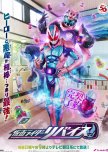
This review may contain spoilers
Mild spoilers ahead:
Everything the show did well:-The show first half is really great overall. Most characters are likable during that period, and the general tone and atmosphere feels great.
-Episode 42 was amazing.
-Pretty good finale.
-Daiji's actor is great and has excellent delivery for his scenes.
-Lovekov is a pretty loveable mascot.
-The action in the first half, excluding the CGI forms, is really well done and different from other shows as it feels like controlled chaos.
-The music in the first half is among the franchise's most unique.
-The first quarter of the show has more budget than usual.
Everything the show did bad:
-The mysteries and character arcs setup in the show's first half get resolved either boringly or just straight up bad.
-By the end of the show barely any character remains likeable and the ones that do aren't really anything impressive, just 'good'.
-The main protagonist Ikki is a very boring character overall, and his partner Vice doesn't really feel like a co-protagonist and just feels like a mascot. Their character arc is only interesting in the finale. Ikki in the beginning is busybody type character and has good detective skills but by the second half he stops doing any of this for the most part, while letting his siblings resolve their own problems is unique it barely gives him a chance to develop character.
-Daiji is the worst part of the first arc because his rivalry with Ikki feels repetitive, that isn't much of an issue and he remains pretty likeable during the first half but after he obtains his upgrade Holy Live his character just keeps getting worse. Most of his actions in the second half stem from fear of the main antagonist but said antagonist doesn't come off powerful enough which makes most of his decisions feel nonsensical. Also the rest of the cast are jerks to him for seemingly no reason.
-Sakura is really likeable before becoming a rider, but once she does she becomes a brat. This would be fine since they're clearly setting up her developming maturity after being smug and in the first arc they manage to make some interesting things with this. However the show despite her barely winning any battles and being a smug brat who has yet to know her place, almost every character sucks her off as if she's somehow amazing. When it's time to resolve her arc it happens mostly off-screen which feels like a cop-out.
-The main antagonist Giff is only likeable when he was a statue. Once he becomes a proper monster he loses all of his personality and his actual plan is really dumb.
-Julio and Aguilera become joke characters with barely any direction after episode 18.
-Most of George character arc in the second half feels forced and contradictory to his personality in the first half.
-Hiromi, Genta, Bu-san, Kagero and Olteca remain the most likeable characters because they remain mostly absent in the second half where the show went bad and you bet that when they appear later in the second half the show tries its best to ruin them.
-The action degrades heavily in the second half for several reasons. There's barely any new enemies and they mostly spend fighting Veil and Giffdemos, the new riders introduced barely have any character at all so they don't have an interesting moveset and the powers the main cast get from their upgrades feel detached from the initial themes.
-For the second half of the show they mostly use more generic sounding action music or old tracks from the first half. All new tracks that are actually unique get barely used.
-The eviction plot-line gets forgotten.
-The shot in the opening of the main protagonist in a flaming school never happens in the show, it's the only time that I can think of in the franchise were the show opening seeminly hinting at a plot point goes nowhere.
-One of the worst final arcs in the franchise.
-The show is worse on a re-watch since now you know that the mysteries and set up aren't actually building up to anything.
-Weird anti-vaccine message episode.
-The show does a poor job at making the main antagonist Giff feel powerful or even menacing.
Reasons for the show strenghts:
Producer Mochizuki has ton of interesting ideas, good set of directors.
Reasons for the show flaws:
Producer Mochizuki puts all of his good ideas in the first quarter which makes it feel kinda cluttered and also makes him go overbudget. After the first quarter he pretty much gives the main writer complete freedom. Keep in mind this is the same strategy he used in his previous show Kyuranger which resulted in him being demoted, he was promoted again and given a second chance since it have been a long time since that show, but this shows he pretty much didn't learn anything, which resulted in him getting demoted again inmediately after the show ended.
The writer who gave complete freedom, Hanta Kinoshita, didn't really care for any of Mochizuki's ideas nor actually likes Kamen Rider, he's more of marvel comic fans. After the first quarter he pretty much retconned everything Mochizuki and director Shibasaki had set up without any actual planning. He publicly admitted that he didn't have anything planned for the main protagonist duo nor the deadmans past episode 18 and had nothing planned for Daiji past episode 27. His only focus pretty much was Sakura and Weekend. All of these decisions made him ruin the show's second half with the exception of episode 42. It legimetely seems that he was angry that his idea of a female protagonist was rejected and that Hiromi, a character that was supposed to die in the first episode before the script being changed because the staff liked the actor, ended up being more popular than Sakura and Vice. Kinoshita also inserted his own political views into the show. The writer just generally comes off as petty.
Besides that, the character Hikaru who had barely done anything suddenly changing and becoming prominent in the second half despite having no personality, is heavily speculated to have happened due to him being from a profilic agency and that the staff was forced to give him more screen time.
Due to Sakura being so poorly written and her arc being resolved off-screen despite the writer's insistance that she's his favorite character one has to assume that something that we're not aware of happened in production.
Overall:
If you care about consistency this will most likely be an average show due to the first half being really great and the second being really bad. If you care about writing quality this is easily one of the franchise's worst. One cannot really get a feel for the characters and story by watching the first 3 episodes due to how much the show changes. I honestly cannot really recommend this show when the tokusatsu genre has other much better titles.
Personally since my biggest draw to shows are characters, this is the worst Rider show I've seen so far. In Wizard Haruto, Nitou and Gremlin at least were really likeable. In Ghost Alain was amazing, only the 2 dudes from the temple were boring, and Chikara and Adel were really bad, but otherwise the cast was enjoyable. Zi-O had Woz being really fun, and while the character writing was heavily inconsistent they at least were entertaining and had some interesting concepts done well. Revice really has none of that going for it.
Was this review helpful to you?
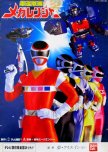
-Really likeable cast overall in both the heroes and villains.
-The twist with the main villains is pretty good.
-The high-school setting is done differently from the previous 2 attempts, this and the nasacore elements that the show has makes it stand out form other Sentai.
-Most monsters of the week are entertaining.
-Consistently good action, especially on the mecha. The team also has a pretty unique powerset for the on ground fights.
Everything the show did bad:
-Not the most unique plot.
-After the extra ranger MegaSilver is able to overcome his time-limit issue there's barely any reason for him to not appear to help the rangers, luckily this happens so late that it only feels off for a few episodes.
Reasons for the show's strengths:
With the rise of the internet and digital devices in 1995, main producer Shigenori Takatera wanted to push this theme as the center piece of the show in order to teach kids about these technogical advancements. However this theme was a bit too abstract and the staff struggled a bit during the pre-production.
Due to Super Sentai now being adapted into Power Rangers, Takatera decided to add space elements into the show which helped with the mecha production, although they had to make the first mecha a 3-piece combiner in order to release a cheaper toy due to problems with the economy.
TV Asahi producer Taro Iwamoto came up with the show having a high-school setting in order to increase viewership. This help the show to have a concrete setting. Main producer Shigenori Takatera decided to make this the main focus of the show in order deferentiate from the previous high-school Sentai Turboranger, who were heroic highschoolers but said show didn't emphasize the highschool as the main setting.
Due to insistance of assistant producer Naomi Takebe and side writer Yasuko Kobayashi, the show emphasized on giving proper focus and character arcs on all members of the team, and decided on the team having a different dynamic where the black ranger Kouichirou is the leader and yellow ranger Chisato serves as the second in command in spite of the red ranger Kenta being the main protagonist.
Reasons for the show's problems:
While main writer Junki Takegami is really great at writing characters, he tends to take a safe direction for the plot of his stories.
At the time the Super Sentai franchise had this quota where the extra ranger couldn't have that much screen time in order to not disrupt the team dynamic of the main team. While this show handled it in a more organic way than Dairanger and Ohranger, it still wasn't optimal.
Overall:
While a safe show overall, it's still a really great show and would highly recommend to any Super Sentai fan or if you're into highschool settings in dramas.
Was this review helpful to you?

This review may contain spoilers
Mild spoilers ahead:
Everything the show did well:-One of the best hero cast in the Kamen Rider franchise, personally my favorite.
-Really charismatic main villains.
-Really great world-building, some of the franchise best.
-None of the episodes feel pointless to the story and most monsters and characters of the week end mattering on some way.
-Cool action overall.
-Really good story for the most part.
-The show has a natural progression of stakes.
-Cool plot revelations/plot-twists.
-Really great directing for most of the show.
-The riders in this show have great dynamics.
-Amazing final battle (aside from some awkward CGI).
Everything the show did bad:
-The Shinobu Katsuragi mini-arc that last from episode 40 to 45 is kinda bad at times and is the only considerable drop in writing quality in the show, but even then it's not that bad because the main cast and antagonist continue to be likeable and there's some really great plot revelations during this arc.
-The main protagonist plan to defeat the main antagonist is really extreme, it doesn't help that it's similar to the plan of main villain of the winter Build's crossover with Ex-aid. It isn't that big of an issue since it's properly foreshadowed, the main antagonist does feel powerful enough to warrant such a plan and it leads to a great bittersweet ending.
-Kamen Rider Rogue's origin and backstory is left to a Blu-ray mini-series rather than happening in the show.
-Kyoka not reappearing feels weird once Katsuragi starts being more important.
-Vernage temporally disappearing from the show makes it almost impossible to care for her character and also negatively affects Misora's character' arc.
-The Hokuto Crows and especially the Hell Brothers feel shafted compared to other characters which removes a lot of the emotional weight of their scenes.
-Sawa at times feel like a plot device that conviniently has or knows where to get what the heroes need.
-Some of the plot developments related to Utsumi are hit or miss.
Reasons for the show's strengths:
This season was originally going to be the last Heisei Kamen Rider show prior to the enthronement for the Reiwa era getting delayed. Due to this main producer Omori wanted this show to be more mature so that older fans that hadn't been keeping with the franchise would be interested. Also due to this, the show had many inspirations of the original season such as focusing on darker topics like war and the rapid economic growth, having a bigger focus on mystery, human experimentation and main rider duo.
The original plan that main writer Shogo Muto had was for Banjo to be the protagonist and for him to take over as Kamen Rider Build after the previous Build entrusted him with the powers prior dissappearing as an homage to the original season where Ichimonji takes over the Kamen Rider title in order to protect Japan while the first rider Hongo leaves to fight another branch of the evil organization Shocker in another country. However Omori wanted the main protagonist to be a physicist which led to the creation of Sento and for Banjo to become the secondary rider instead, but due to wanted to implement both ideas, Sento and Banjo ended up being deuteragonists. Muto is also really great at writing characters which is why the cast is so likeable.
It originally being planned as the last Heisei show allowed the show to have slightly more budget than usual in its first quarter which allowed the show to realize its ambitious setting.
Due to Omori aiming to also reach an older audience with this show, he got slightly older actor than an usual rider show, which allowed the show to have better actors than usual.
Reasons for the show's problems:
Vernage's voice actress Sora Amamiya was with chorditis during the show's run which resulted in her appearing less in the show, which also affected Misora's character due to how connected they are.
Kyoka Katsuragi's actress Hiro Komura had been fighting cancer since 2012. She wasn't able to reappear in the show because in January of 2018 she had to take treatment because the cancer had spread to her lungs and lymph nodes.
Zi-O wasn't originally supposed to exist since Build was going to be the last Heisei show. Due to this Muto had decided the show's ending from the very beginning in order to make crossovers easier (which didn't matter in the end since Zi-O didn't care for this and just straight up contradicts Build's ending).
Some people speculate that the Shinobu Katsuragi plot line was inserted into the show by producer Omori late into the show due to him liking the tropes of evil dads, but this pure speculation and doesnt have enough evidence.
Overall:
Despite the show's quality dropping in the second half, it doesn't drop hard enough to be considered bad and still manages to have a really cool plot and introduces a bunch of interesting plot points throughout the show's entire run. The majority of the cast and this show's world-building is consistently amazing too. So while whether you love the show or not will depend on how lenient you're with the show's problems in the latter half, it still manages to be a great show overall in spite of them. Highly recommend this show to any Tokusatsu fan or if you're into modern shounen anime/manga.
Was this review helpful to you?
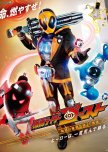
This review may contain spoilers
Mild spoilers ahead:
Everything the show did well:-Alain is an amazing character. Other than him the majority of the hero cast or redeemed villains in this show range from fine to likeable overall.
-Some cool world-building concepts here and there.
-Adonis is and his motivations make sense.
-The monster of the week in the first half are pretty entertaining.
-Fantastic soundtrack.
-Cool action for the most part.
-The show does the human drama/slice of life scenes really well.
Everything the show did bad:
-The villains Chikara and Adonis get removed from the show in the dumbest way possible.
-The main antagonist Adel is among the worst antagonists that this franchise ever had.
-The other 2 dudes form the temple, Narita and Shibuya could be removed from the show and it would hardly affect the plot.
-Most of the cool world-building elements that help explain what's going on in the Ganma world happen in movies, novels and specials, not in the actual show which makes it near impossible to care for the show's main conflict.
-After the first quarter the show's writing quality takes a nosedive outside the Alain focused episodes and the eyecon collecting episodes, the latter of which are very few since they collect most in the first quarter. Basically the show introduces the Deep Connect organization which ends up making the story unnecessarily conveluted and then the show's quality drops even harder when the show starts focusing on Adel.
-After the first quarter Makoto's character feels aimless. For a while his character goes nowhere and when they finally put focus on him his backstory and development become unnecessarily conveluted.
-Ghost's main form, Ore Damashii has a pretty boring fighting style initially and it's only later that it improves as it starts having a monk-like fighting style.
-Most of the stuff with the Great Eye is poorly explained, since again, it's explained properly in content outside the show.
Reasons for the show's strengths:
Main producer Kazuhiro Takahashi wanted to return to the bizarre editing and direction of the Showa seasons so he came up with the unconventional and unheroic motif of ghosts. He wanted to portray the importance of life which led to the creation of characters Adonis and Grandma Fumi.
Main writer Takuro Fukuda excels at writing slice of life and human aspects to his stories, so the Alain episodes and his slice of life scenes are really greatly done.
Reasons for the show's problems:
Main writer Takuro Fukuda had scheduling issues which led to him being absent during the show's pre-production which resulted in some poor planning when it came to the show's setting and him being absent during the show's middle with the exclusion of the Alain focused episodes. Due to not being able to write the episodes in time he dedicated himself to write the movies and specials of the show since he wouldn't have such restrictions which is why the spin-offs of this show have so many important plot-points when in comes to the setting and better character writing for the most part.
Due to the response of parents and kids who watched Kamen Rider Ghost's cameo in Kamen Rider Drive's summer movie being that he was 'too scary', main producer Kazuhiro Takahashi decided to reshoot the first 2 episodes of the show in order to edit some of the scary scenes and ended up changing the show's directing style for the rest of the show. This resulted in the show not being able to adopt the Showa/creepy directing style the staff wanted for the show and for the directors to not know what of fighting style to give to Ghost's main form 'Ore Damashii' for a while since he wasn't able to use the spectral fighting style they had planned for him. This reshoot of episodes also resulted in the show having more budged constraints and scheduling issues, these combined with Fukuda's affected the show's pacing. Takahashi also ended up changing the show's setting 3 times during the show's run, which led to the writing feeling more conveluted and caused most of the problems with the show's writing as spite of the Fukuda being absent the show still had competent side writer Keiichi Hasegawa but with Takahashi making so many changes midway to the show and the time constraints with the scripts, there just wasn't much him and even Fukuda could do once he returned for the final arc.
Overall:
Despite the majority of the characters being likeable, this show has so many things dragging it down that the show ends up being bad overall. I can only see people enjoying this show if they consume all of the outside the show's content, but even then that only elevates it to a 6 since those specials don't fix Adel who's a prominent aspect of the show. I can only recommend this show if you're a Kamen Rider completionist or if the setting and motif seem cool enough to you to watch its movies and specials alongside it even knowing that the main antagonist in this show is disappointing.
Was this review helpful to you?
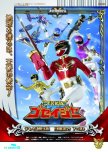
This review may contain spoilers
Mild spoilers ahead:
Everything the show did well:-Overall likeable cast of characters from both the rangers and side characters by the end of the show.
-One of the most interesting final main antagonist in the franchise.
-The show switching evil factions with each arc helps the setting feel more variate and it's a good change of pace from other seasons.
-Great finale.
-With the exception of the Warstar villains from the first arc, the villains in this show are pretty enjoyable.
-Pretty enjoyable mecha fights overall.
Everything the show did bad:
-Some of the worst battle choreography in the franchise. The rangers don't have anything interesting going on in terms of fighting styles, their unique powers devolve mostly to CGI elemental abilities, swapping headers from their guns which sounds like an interesting concepts is wasted since they devolve to a stock finisher, the extra hero Gosei Knight has the best fighting style out of the rangers and he's just a worse version of the usual robocop-esque fighting style that a lot of metal heroes had, the rangers floaty fighting style is done pretty boringly throughout most of the show and the show kept some mistakes in the fighting choreography which makes the fights feel cheaper in quality. The fights in this show are hard carried by the monsters from the second arc onward, since the villains in the first arc also have really generic fighting styles and rely pretty hard on CGI abilities. Also the mecha fights while not amazing are pretty decent which helps.
-Easily on of the worst first arcs in the franchise for several reasons. The red ranger Alata and the pink ranger Eri personalities overlap too much, the black ranger Agri has a really boring personality, it feels like the staff doesn't know what to do with the yellow ranger Moune which results in her character being really inconsistent and the blue ranger Hyde who's the best one during this period is not that entertaining and also very melodramatic at times. The first villain organization, the Warstars are really generic for the most part. Aside from Datas, the show's sidecast is basically non-existent for this arc. Episode 7 is the only good episode in this arc because it was really funny and memorable. But the majority of this problems get fixed from the second arc onward.
-The black ranger Agri has a considerable worse actor than every else which can be distracting at times. Also even after the second arc starts he still remains the least interesting member of the team and he only really starts to improve as a character from episode 27 onward.
-Datas is underutilized in the second arc, but he at least gets to of screen time in the third arc to compensate.
Reasons for the show's strengths:
Producers Jun Hikasa and Go Wakamatsu came up with the idea of having multiple villain factions since angels aren't suppose to only fight demons but to protect earth from all evil, which allowed for are more interesting way of storytelling.
Main writer Michiko Yokote is good writing characters.
Reasons for the show's problems:
Main writer Michiko Yokote and producer Jun Hisaka had conflicting ideas. She wanted for the team to have infighting due to their different tribes and learn how to overcome said rivalries to become a proper team but the producer opposed. This resulted in the tribe concept being underutilized and the team getting over their disagreements feel rushed.
The main producer Jun Hisaka was occupied with a management shift within Toei, this resulted in him not being able to supervise properly at times and having to leave the show on Go Wakamatsu's and Takahito Omori's hands after episode 32.
Some rumors state that main director Takao Nagaishi was beginning to have health issues which affected the show's action.
Overall:
I feel that most people would give the show a 6 due to the first 16 episodes of the show are pretty bad. While the show improves a lot after that it's still hard to sell a show with a weak start since aside the amazing antagonist, it's not like the show suddenly becomes top-tier after the first arc. But still the show is enjoyable overall despite its flaws and would recommend it to a Super Sentai fan if they don't mind having to sit to a pretty bad first arc.
Was this review helpful to you?
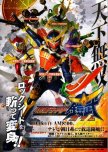
This review may contain spoilers
Mild spoilers ahead:
Everything the show did well:-Really interesting setting that the show uses the its upmost potential for the most part.
-The majority of the cast is really likeable.
-The rivalries between Kouta and Kaito is entertaining and both develop in interesting ways.
-The show manages to create really interesting thing with the fruit theme and connect it to the world-building in a significant manner.
-Cool action overall.
-The story develops in really interesting ways.
-Natural progression of stakes, which makes the threats in the second half feel legitimate.
-The final fight in episode 46 is amazing.
-Great finale.
Everything the show did bad:
-The show doesn't tell us Kaito's backstory despite him being the second most important character in the show. It's instead left to the Kamen Rider Baron Gaiden. This really hurts some of the show's emotional weight.
-The crossover specials hurt the show's pacing, but this is barely an issue if you're binge watching the show.
-While overall likeable, it felt that the show could have done more interesting things with Sid, Yoko and the side characters from the dance teams.
-Takatora is unable to fight for a big chunk of the show.
-I don't know how true this is since I've haven't seen the anime in question, but I've seen a lot of people say that this show's main writer is ripping his previous work Madoka Magica off, which makes the show feels less original. But I've seen the same people say that Gaim's better due to having 40+ episodes to develop its characters rather than 12 episodes + a movie.
Reasons for the show's strengths:
Main producer Naomi Takebe wanted to make a show that felt more similar to the dark atmosphere of early Heisei seasons of Kamen Rider. She chose Gen Urobochi as main writer after being recommend by voice actor Tomokazu Sugita who she had previously worked with during Kiva. It had been decided that the show would take the Kuuga approach of making the threat something that kids at time were scared of, during Kuuga it was serial killers, during Gaim it was the 2011 earthquake, due to the threat being decided to be a force of nature since the beginning, Bandai came up with the fruit motif to make it standout.
Takebe gave mostly complete creative freedom to Urobochi which lead to the story being planned out from the very beginning rather than just having a roadmap and build the story as the show goes on. This allowed the show to have better foreshadowing and barely change anything during its run.
Reasons for the show's problems:
There were very few changes to the script and not all of these were bad. Among the "good/neutral" changes are: Sigurd and Knuckle as both characters were originally not planned to transform, Baron obtaining lemon energy as originally wasn't supposed to have any other forms past mango, the teams were originally supposed to be delinquents but was changed into dance teams in order to contrast the dark tone. Among the "negative" chnages were: the removal of Kaito's backstory so that the show has better pacing which resulted into it being moved to the V-Cinema, the filler crossover episodes and the epilogue finale which wasn't planned as the staff wasn't sure of the show would have 46 or 47 episodes so Urobochi ended up only planning for 46 which resulted in the last episode feeling weirder. There's also some unspecified changes to Kaito's and Mitsuzane's characters but its unknown what these were and if they were for the better or for worse.
The reason why Ryugen, Zangetsu and Gridon appear in the beginning narration of the fight of Baron and Gaim despite not making that much sense is because the scene was added by the director Ryuta Tasaki despite not being in the script.
Overall:
The show's amazing overall, outside of not properly explaining Kaito's backstory, the show doesn't have any big notable issues and manages to be one of the most entertaining and interesting seasons in the franchise. Highly recommend to any tokusatsu fan, if you're into other works by Gen Urobochi or into survival shows.
Was this review helpful to you?
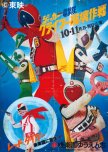
-Big One/Banba is a really likeable character.
-Some cool spy action here and there.
-A few cool monster of the week.
-Really cool aesthetics.
Everything the show did bad:
-The team just comes off as generic most of the time, the initial commander too.
-The lack of proper main villain generals is disappointing due to the main antagonist duo being pretty boring.
-The majority of monsters of the week are pretty forgettable.
-As likeable Banba is, he is not likeable enough to make the show enjoyable and alongside him comes Tamasaburou who I never was able to find funny, but this might be a personal issue.
-The show overexploits the "film-reversal" technique of the original Kamen Rider show, which removes most of the impacts from the fights.
Reasons for the show's strengths:
Due to the show's low rating they brought veteran actor Hiroshi Miyauchi who had played previously played Aoranger Kamen Rider V3 to increase the ratings, and ultimately ended up being the best character of the show.
Reasons for the show's problems:
In order to differentiate as much as possible from the previous work Goranger, they tried to make the show have a much darker tone, however the staff didn't know how to properly do that and ultimately ended up with both the heroes and villains feeling boring and hardly ever entertaining. There was supposed to be a time travel plotline but ended up being scrapped due to feeling too detached from the setting, this resulted in the villains not having any direction. The show then was cancelled due to bad reception and had a whole quarter removed.
Overall:
This show just doesn't have enough going for it. Having one likeable character doesn't really fix all the other issues or suddenly makes the rest of the cast suddenly entertaining. The show's just very bland overall and I can only recommend it if you REALLY like Big One and even then he gets introduced on episode 23. This is the worst Super Sentai out of the ones I've seen so far.
Was this review helpful to you?
-Really unique team dynamic where the whole team are jerks, which makes the build up to them becoming a proper team feel great and natural.
-All team members stand out and are constantly entertaining, the commander is also really fun.
-Extremely entertaining and likeable villains.
-Really entertaining and memorable monsters of the week.
-Cool and creative fights both in mecha and outside of mecha.
-Great final arc.
-Cool rivalries with the villains.
-Unique atmosphere mixing romance J-dramas with military kodomo shows and a dash of insanity.
-Some of the most memorable episodes in the entire franchise.
Everything the show did bad:
-The team tends to get their upgrades in really convoluted asspulls (but I found them entertaining so I didn't mind it as much). This makes the writing feel cheap at times.
-The Neo Jetman two-parter sucks for the most part despite the cool concept.
-Blue ranger Ako, yellow ranger Raita and Commander Aya get considerably less screen time than the other 3 members. But they still manage to be extremely likeable so it's not that big of a problem.
-The main antagonists being extremely powerful but not fully using their powers to compete with themselves is not a premise for everybody and can make the writing feel cheap. Personally the villains' charisma made them super likeable throughout and never minded this but felt like pointing it out.
-The ending is controversial and not for everybody, personally I didn't mind it.
-At times it feels like the white ranger Kaori doesn't get reprimanded enough for her actions, but this is mostly a nitpick.
Reasons for the show's strengths:
After having 9 shows in a row done mostly by the same staff Super Sentai was struggling to stay afloat and considerations for the franchise to be canceled were rising. Due to this chief producer Takeyuki Suzuki chose a young staff that didn't have much experience because he wanted this season to be fresh and also a team that understood that this could be the very last Sentai after promising the sponsors that the sales would go up this season. He got Keita Amemiya to direct who at the time had only directed a non-toku movie and few episodes of previous Sentai and Toshiki Inoue to write who was the son of veteran writer Masaru Igami but had only served as an episode writer for Sentai up to this point.
Despite the decision of choosing this staff was deemed controversial at the time, they made the most unique Sentai that had been made up to that point, one that's considered to be one of the best still today and it's also considered to be one of the most influential Tokusatsu of all time.
The production team tried a bunch of experimental tactics and didn't care much for the sponsors' suggestions since they thought this could be the last one and wanted to do unique stuff just in case.
The producer chose to have a female commander and introduced the concept of "Boy" mechas that served as helpers to the team.
The director came up with ideas for cool props to use in the earlier episodes and for more creative ways of doing the mecha battles.
The main writer came up with the idea for the show to adopt tropes from trendy dramas, which the producer supported him due to having previously worked on Toushou Daimos which also had romance tropes. He also wanted episodes where te team didn't transform and while Toei and the sponsors didn't allow them to realize this idea, the director supported Inoue and made it so that not every ranger had to transform every episode with the exclusion of Yellow Owl and for the cool Black Condor broken helmet scene. So this back and forth arguably gave even better results.
Other experiments by the staff was the villains not having a proper leader, the team calling themselves by their real names after transformation and the team not getting along for the first half of the show which lead to really interesting dynamics.
Reasons for the show's problems:
The main writer Toshiki Inoue didn't really for promoting toys so Jetman's upgrades would often either come out of nowhere or be obtained in a really conveluted manner. He also was really interested in the romance subplot of the show so Raita and Ako got slightly shafted. His writing is pretty insane so the story at times feels not that concise.
Overall:
Amazing show that redefined tokusatsu when it released. The writing is not the most concise but the show manages to be extremely entertaining from beginning to end (with the exception of the Neo-Jetman 2-parter). This was the show that got me into the Super Sentai franchise and highly recommend it to tokusatsu fans or people that are searching for a weirder romance drama.
Was this review helpful to you?
This review may contain spoilers
Mild spoilers ahead:
Everything the show did well:-Really likeable cast from both the hero and villain side.
-The red ranger Yamato is among the best protagonists in the Sentai franchise.
-The red ranger Yamato and the extra hero Misao are better actors and voice actors than your usual Sentai. Naoki Kunishima and especially Masaki Nakao did a fantastic job. Heck, Yamato is easily a top 3 red ranger in terms of acting ability.
-Kubar had a great character arc.
-Yamato's character arc is really well done and makes one feel emotional.
-The show does a proper job at making the main antagonist Genis feel menacing and allmighty.
-The extra hero Misao is among the most unique rangers this franchise's ever had. He manages to be hilarious, menacing, cool and pathetic really well somehow. The actor does great job at making you buy that he's a schizophreniac with PTSD. (Personally he also has some of the best catchphrases in the franchise)
-Most of the monsters of the weeks are entertaining.
-Yamato, Misao and Bard have cool fighting styles.
-Really great final arc and finale for the most part.
-Really great soundtrack.
Everything the show did bad:
-Yamato and Misao definetly get more focus than the rest. It also feels like the team dotes a bit too much on Yamato which at times makes their dynamic feel more like Yamato and his pets rather than a proper team. But at least the don't get super sidelined like the other Junko Komura shows and manage to be properly developed for the most part.
-The villains in the show feel too disconnected from the show's world and the team's goal despite it attempts to reconcile both in the final arc, which makes the world-building feel cheap for most of the show.
-The villain Banglay especially feels too disconnected despite being really entertaining overall. He's also doesn't get any backstory which make his powers being so overpowered feel like cheap writing.
-Kubar is the only villain to get a really great character arc, the rest while great overall feel kinda sidelined. Naria not getting any backstory feels disappointing.
-Bard's actions don't feel justified enough.
-The action from the zyuman members of the teams is usually lacking due to them having a pretty boring utilization of their animal powers. Their instincts awakening powers are especially disappointing since they basically devolve to CGI blast effects rather than using their powers in an interesting way.
-The mechs Doubutsu Gattai ZyuohKing and Doubutsu Dai Gattai Wild ZyuohKing have pretty boring fighting styles.
-Mario feels kind of underutilized.
-The Gokaiger crossover mini-arc is just kind of allright.
-Zyuland feels largely unexplored, which wouldn't be much of an issue if Bard's backstory didn't make you question so much about them.
-It kind of feels like they Zyuman members of the team could have gotten a few more flashbacks.
-The green ranger Tusk has a considerably worse actor than everybody else, however this is really only an issue for the first arc, after that he improves enough to not be distracting. That said, as likeable the character is, he's still the worst member of the team due to the main writer being kinda bad at writing straight-man characters.
-After Misao joins it feels like team uncharacteristically forget their goal. Granted Sentai shows becoming more fillery/comedic during summer break which usually coincides with the extra hero introduction is a somewhat common trope in the franchise but since saving the world from evil monsters is secondary to them finding a way home, this issue is especially noticeable.
-The red ranger knowing how to fight despite being a zoologist. Granted a lot of tokusatsu shows have the characters suddenly knowing how to fight when they transform and it's mostly a nitpick in those shows. However when the other zyumans are trained guards yet they treat Yamato as their strongest member even before he gets his upgrade or even his form changes and have him fight alone a lot of times in the show, this kind of becomes an issue.
-The show overplays Misao's depression/insecurity jokes and since the middle mostly focuses on him and its the portion of the show with the most filler, it could make the show's middle feel really draggy for some people. I personally didn't mind this because I found Misao's jokes hilarious like 95% of the time but I know that not everybody will feel that way.
-While aesthetics are a really subjective thing, I feel there's really no excuse for the rangers suits being this simple in this season since only the red and the extra hero get form changes and instinct awakening doesn't change the suits much. ToQger at least had the excuse that all members had 5 suits.
Reasons for the show's strengths:
Main writer Junko Komura is really great at handpicking great actors. She exceeds at absurdist comedy which is why a character like Misao worked so well.
Reasons for the show's problems:
Junko Komura is kind of bad at handling multiple characters at once (which makes it ironic that she was chosen as main writer for Super Sentai 3 times) so she gave more focus to Yamato and Misao than the rest of the cast. Having said that, out of the show's I've seen written by her, this is the best she has handled characters, as the rest did get development and focus, it's just that the 2 before mentioned characters got more. She's laso kinda bad at connecting the main villains to the heroes which resulted in them feeling really disconnected from the plot.
Producer Utsunomiya requested for the plot to move slower in the show's middle which could have affected some plot points like Zyuland. There's also a rumor(?) that he requested the villains and monsters to be done safe to attract viewers since the previous Sentai season, Ninninger was received so poorly.
Overall:
A big chunk of your enjoyment will depend on how much you like this show's extra ranger which is why I feel most people would rank this show with a 7. But it's still a great time overall still and would recommend if you're a Sentai fan, just be prepared for the plot to kind of go in a standstill during the middle.
Was this review helpful to you?


