
 Editorials
 1
1 1
1


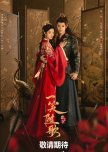
Loved the first half, second half lost its warmth
What stands out to me most about this show is the lack of clearly evil villains. They all have complicated emotions and reasons for what they did. I think enjoyment of this show depends on how much you empathize with these villains, and how you handle situations when you do.
I’ll start with the protagonists. The FL, Fu Yixiao, is definitely badass. She paid for her skills with a traumatic past, which makes her more relatable than just a random genius. She’s in a really difficult situation at the beginning, and I found her attitude and actions to be exactly appropriate for a smart and strong person. She also has compassion and empathy. She is definitely a FL I root for and like.
The ML, Feng Suige, is also likeable. He isn’t sugarcoated- he really is ruthless sometimes- but deep down he also has some softness, and in the end he’ll do what’s right. I especially like his difficult relationship with his father, whom he both loves and resents. It is surprisingly relatable for a modern audience, though somewhat odd for a historical imperial context.
The relationship between the leads grows in a most delightful way- this is enemies to lovers done well. It’s a constant power struggle between them as they learn to cooperate. Normally I complain about overly dramatic moments and set-up cutsey scenes, but here I really liked them, probably because I enjoyed their dynamic so much. After they get together, I continued to enjoy watching their relationship because it’s supportive but not over-the-top protective. It felt genuine to me.
As for the antagonists? I wouldn’t say they’re all sane, but I found them much less hateable than the typical show. They are not purely evil- they’re capable of love, kindness, hurt, and regret, which makes them relatable. They also mostly have reasonable motivations that I could understand and empathize with.
I do enjoy multidimensional and complex characters, which add depth to a show. But I also tend to want a good outcome for the characters I empathize with, so empathizing with characters on both sides of a conflict is troublesome. More detailed examples are in the spoilers section below.
Plot-wise, the first 14 episodes or so are about Fu Yixiao untangling what happened to her while building a relationship with the ML. I solidly enjoyed this section. It is equal parts heartbreaking and heartwarming, which offset each other perfectly. I definitely cried a lot, but at the end of the day I still felt warm and fuzzy.
Given my empathy for so many characters, I was also relieved that the leads seemed to feel as torn as I did. For example, there are quite a few betrayals, but they don’t lead to an immediate new enemy; the characters seem to still value the bonds they once had. Not only did I enjoy this exploration of complicated emotions, but I was also hopeful that the leads would handle things with mercy and compassion, and things would turn out ok.
As the story moves on, it becomes more about classic power struggles and revenges. I enjoyed the show less and less. I honestly found it a bit stressful to watch, and I lost hope that things would work out for everyone. By the end, on the Susha side I could not hate the villains, and on the Jinxiu side I didn’t even know who I was rooting for.
Not only that, but the scriptwriters apparently decided that they’re done with Fu Yixiao, because they sort of just drop her story. They even leave some plot points dangling in the wind (eg I don’t think she ever got full closure on the death camps). By the end, aside from providing battle support and emotional support, her main role seems to be delivering thoughtful, moving speeches as needed- always just the right thing at the right time.
We are instead treated to a deep dive on Princess Xiyang’s adventures in Jinxiu. Xiyang is at first a bit cringe to watch, and nobody- not even the audience- can take her seriously. But at some point she ponies up, gives herself a talking to, and makes herself a player in the game. It’s a bit much on the character yo-yoing, just barely believable; I found some of her decisions and reactions relatable, and others not. Overall I just did not see how things could ever go well in Jinxiu, and the entire arc filled me with dread.
There is some decent humor in the first part of the show. Small things here and there had me laughing out loud, like: clever dialogue between the two leads; the ML’s deep voice and authoritative tone saying really petty things; those adorably bewildered subordinates; the irreverent doctor; the waggly-headed official; etc. Unfortunately, the humor doesn’t stick around long, mostly fading away as things get more serious.
There is also a lovely theme of home, family, and belonging. Yixiao delivers many a moving monologue about it. It’s a nice, warm theme that mitigates some of the more heartwrenching aspects of the show. Unfortunately again, it also sort of gets dropped by the end; the show at that point is more business than heart, missing what I liked so much about the first half.
Acting-wise, Li Qin as FL does an outstanding job. Of the four (!!) female generals I’ve watched in the past few months, she is my favorite. Her expressions are subtle but she captures just the right aura- confident, capable, and mature, even when teasing the ML. Chen Zheyuan as the ML also does a pretty good job. His expressions are less subtle, but I was so convinced by his authoritative, strong Feng Suige (those slow blinks, lol) that I was almost surprised to see him laughing in other scenes. The supporting cast also give strong performances.
The fighting is ok, both choreography and execution. I got the idea of what’s going on, but it’s nothing special. Fu Yixiao’s mastery of archery is central to the story, so I’m sure they did their research... maybe it’s just cultural differences that she’s constantly shooting arrows from her chest/chin and sometimes with her bow almost horizontal.
For music, I absolutely love the ending song and was glad that it and its instrumental got played a lot. However, the music selection is a little odd. They’d frequently play short snippets of one song and then cut to a different song, which is kind of annoying.
Overall, I’d give this a 9.5 for the first half and 6 for the second. I rounded it down to 7.5 because the ending impression is lasting.
ENDING – READ AHEAD ONLY IF YOU WANT TO KNOW, CONTAINS SPOILERS
It’s a happy ending for our leads- pretty much everyone in their party survives the last 10 episodes, and they defeat all enemies. Happily, the ML’s little brother stays a sweetie pie to the end.
However, if you were rooting for Princess Xiyang and the emperor of Jinxiu, you would be sad about that.
The last episode is mostly fighting. Happy cavorting afterwards lasts about 5 minutes, and the fates of selected individuals are told through dialogue. It’s not that satisfying, but honestly, I no longer cared. Xiyang takes the Susha throne... erm, I’m not sure she’s qualified, but ok.
MORE MAJOR SPOILER AHEAD
I’ll go through some examples of possibly-could-be-considered villains that I could not hate. I could go on and on, but I’ll limit it since this is a review and not a critical analysis.
Xia Jingyan, emperor of Jinshui: at first he is framed as a good-for-nothing scumbag, and I was relieved to find a character I can simply hate. But then later, seeing how he dotes on Xiyang, how hurt he gets, how much he wants to be needed... he’s still a big red flag, but I was secretly rooting for him. My only consolation is that many other viewers seem to feel the same way.
Xia Jingshi, the SML: it’s hard to hate him too much when he seems so sincere towards Yixiao (delusional as it is). The death camp thing is pretty bad, but somehow the show dropped this idea. Later, the total disregard with which he treats Princess Xiyang hit really close to home for me. I took it personally and felt really bitter, but in the end, it’s a minor insult compared to the fate of nations. Considering everything he suffered and how he became this way just trying to survive... I did hate him by the end, but it was a long journey to get there.
Murong Yao, the traitor friend: I thought his motivation was valid. He and his father really were treated unfairly, and I can understand how a child would let that deep resentment fester until it stood no chance of healing. Add to this that he seems to not actually want to harm the ML, and I just couldn’t wish him a bad ending.
Papa Murong: he makes such a crafty villain that it’s almost character assassination. But honestly, he’s trying to save his son’s life, and he’s already tried begging desperately. I couldn’t blame him. If people along the way had extended more kindness, this wouldn’t have happened.
Emperor of Susha: I don’t know if he’s considered a villain, but he did cause a lot of the problems. Yet he loves his children, and the late empress as well- though that seems to be a more complicated mix of feelings, which is relatable in its own way. In the end I decided he’s insane. I got chills when I realized that he was just silently sitting on his hatred for all those years, acting like nothing was wrong. A normal person could not do that.
Empress of Susha: I believe she was not at fault for the late empress’s death, just a beneficiary. I also believe she cared for the emperor and was genuinely hurt that he never cared for her. For awhile she also tries begging, wanting to resolve things through talking. To a lesser degree than Papa Murong, I felt she was also pushed into villainhood.
I’ll start with the protagonists. The FL, Fu Yixiao, is definitely badass. She paid for her skills with a traumatic past, which makes her more relatable than just a random genius. She’s in a really difficult situation at the beginning, and I found her attitude and actions to be exactly appropriate for a smart and strong person. She also has compassion and empathy. She is definitely a FL I root for and like.
The ML, Feng Suige, is also likeable. He isn’t sugarcoated- he really is ruthless sometimes- but deep down he also has some softness, and in the end he’ll do what’s right. I especially like his difficult relationship with his father, whom he both loves and resents. It is surprisingly relatable for a modern audience, though somewhat odd for a historical imperial context.
The relationship between the leads grows in a most delightful way- this is enemies to lovers done well. It’s a constant power struggle between them as they learn to cooperate. Normally I complain about overly dramatic moments and set-up cutsey scenes, but here I really liked them, probably because I enjoyed their dynamic so much. After they get together, I continued to enjoy watching their relationship because it’s supportive but not over-the-top protective. It felt genuine to me.
As for the antagonists? I wouldn’t say they’re all sane, but I found them much less hateable than the typical show. They are not purely evil- they’re capable of love, kindness, hurt, and regret, which makes them relatable. They also mostly have reasonable motivations that I could understand and empathize with.
I do enjoy multidimensional and complex characters, which add depth to a show. But I also tend to want a good outcome for the characters I empathize with, so empathizing with characters on both sides of a conflict is troublesome. More detailed examples are in the spoilers section below.
Plot-wise, the first 14 episodes or so are about Fu Yixiao untangling what happened to her while building a relationship with the ML. I solidly enjoyed this section. It is equal parts heartbreaking and heartwarming, which offset each other perfectly. I definitely cried a lot, but at the end of the day I still felt warm and fuzzy.
Given my empathy for so many characters, I was also relieved that the leads seemed to feel as torn as I did. For example, there are quite a few betrayals, but they don’t lead to an immediate new enemy; the characters seem to still value the bonds they once had. Not only did I enjoy this exploration of complicated emotions, but I was also hopeful that the leads would handle things with mercy and compassion, and things would turn out ok.
As the story moves on, it becomes more about classic power struggles and revenges. I enjoyed the show less and less. I honestly found it a bit stressful to watch, and I lost hope that things would work out for everyone. By the end, on the Susha side I could not hate the villains, and on the Jinxiu side I didn’t even know who I was rooting for.
Not only that, but the scriptwriters apparently decided that they’re done with Fu Yixiao, because they sort of just drop her story. They even leave some plot points dangling in the wind (eg I don’t think she ever got full closure on the death camps). By the end, aside from providing battle support and emotional support, her main role seems to be delivering thoughtful, moving speeches as needed- always just the right thing at the right time.
We are instead treated to a deep dive on Princess Xiyang’s adventures in Jinxiu. Xiyang is at first a bit cringe to watch, and nobody- not even the audience- can take her seriously. But at some point she ponies up, gives herself a talking to, and makes herself a player in the game. It’s a bit much on the character yo-yoing, just barely believable; I found some of her decisions and reactions relatable, and others not. Overall I just did not see how things could ever go well in Jinxiu, and the entire arc filled me with dread.
There is some decent humor in the first part of the show. Small things here and there had me laughing out loud, like: clever dialogue between the two leads; the ML’s deep voice and authoritative tone saying really petty things; those adorably bewildered subordinates; the irreverent doctor; the waggly-headed official; etc. Unfortunately, the humor doesn’t stick around long, mostly fading away as things get more serious.
There is also a lovely theme of home, family, and belonging. Yixiao delivers many a moving monologue about it. It’s a nice, warm theme that mitigates some of the more heartwrenching aspects of the show. Unfortunately again, it also sort of gets dropped by the end; the show at that point is more business than heart, missing what I liked so much about the first half.
Acting-wise, Li Qin as FL does an outstanding job. Of the four (!!) female generals I’ve watched in the past few months, she is my favorite. Her expressions are subtle but she captures just the right aura- confident, capable, and mature, even when teasing the ML. Chen Zheyuan as the ML also does a pretty good job. His expressions are less subtle, but I was so convinced by his authoritative, strong Feng Suige (those slow blinks, lol) that I was almost surprised to see him laughing in other scenes. The supporting cast also give strong performances.
The fighting is ok, both choreography and execution. I got the idea of what’s going on, but it’s nothing special. Fu Yixiao’s mastery of archery is central to the story, so I’m sure they did their research... maybe it’s just cultural differences that she’s constantly shooting arrows from her chest/chin and sometimes with her bow almost horizontal.
For music, I absolutely love the ending song and was glad that it and its instrumental got played a lot. However, the music selection is a little odd. They’d frequently play short snippets of one song and then cut to a different song, which is kind of annoying.
Overall, I’d give this a 9.5 for the first half and 6 for the second. I rounded it down to 7.5 because the ending impression is lasting.
ENDING – READ AHEAD ONLY IF YOU WANT TO KNOW, CONTAINS SPOILERS
It’s a happy ending for our leads- pretty much everyone in their party survives the last 10 episodes, and they defeat all enemies. Happily, the ML’s little brother stays a sweetie pie to the end.
However, if you were rooting for Princess Xiyang and the emperor of Jinxiu, you would be sad about that.
The last episode is mostly fighting. Happy cavorting afterwards lasts about 5 minutes, and the fates of selected individuals are told through dialogue. It’s not that satisfying, but honestly, I no longer cared. Xiyang takes the Susha throne... erm, I’m not sure she’s qualified, but ok.
MORE MAJOR SPOILER AHEAD
I’ll go through some examples of possibly-could-be-considered villains that I could not hate. I could go on and on, but I’ll limit it since this is a review and not a critical analysis.
Xia Jingyan, emperor of Jinshui: at first he is framed as a good-for-nothing scumbag, and I was relieved to find a character I can simply hate. But then later, seeing how he dotes on Xiyang, how hurt he gets, how much he wants to be needed... he’s still a big red flag, but I was secretly rooting for him. My only consolation is that many other viewers seem to feel the same way.
Xia Jingshi, the SML: it’s hard to hate him too much when he seems so sincere towards Yixiao (delusional as it is). The death camp thing is pretty bad, but somehow the show dropped this idea. Later, the total disregard with which he treats Princess Xiyang hit really close to home for me. I took it personally and felt really bitter, but in the end, it’s a minor insult compared to the fate of nations. Considering everything he suffered and how he became this way just trying to survive... I did hate him by the end, but it was a long journey to get there.
Murong Yao, the traitor friend: I thought his motivation was valid. He and his father really were treated unfairly, and I can understand how a child would let that deep resentment fester until it stood no chance of healing. Add to this that he seems to not actually want to harm the ML, and I just couldn’t wish him a bad ending.
Papa Murong: he makes such a crafty villain that it’s almost character assassination. But honestly, he’s trying to save his son’s life, and he’s already tried begging desperately. I couldn’t blame him. If people along the way had extended more kindness, this wouldn’t have happened.
Emperor of Susha: I don’t know if he’s considered a villain, but he did cause a lot of the problems. Yet he loves his children, and the late empress as well- though that seems to be a more complicated mix of feelings, which is relatable in its own way. In the end I decided he’s insane. I got chills when I realized that he was just silently sitting on his hatred for all those years, acting like nothing was wrong. A normal person could not do that.
Empress of Susha: I believe she was not at fault for the late empress’s death, just a beneficiary. I also believe she cared for the emperor and was genuinely hurt that he never cared for her. For awhile she also tries begging, wanting to resolve things through talking. To a lesser degree than Papa Murong, I felt she was also pushed into villainhood.
Was this review helpful to you?


