

 1
1 4
4 1
1


Great psychological thriller that messes up with your mind
It's been a week since I watched Memoir of a Murderer and I still feel dizzy just from thinking about it. I knew what I was signing up for when I decided to watch it but I did not expect that this movie would play with my mind as much as it did.Memoir of a murderer is what the title implies: it's basically the biography of a former serial killer, Kim Byung Soo, who faces problems with his memory after he got diagnosed with Alzheimer disease. One day, Kim Byung Soo come across another potential serial killer, Min Tae Joo, who works as a police officer. Byung Soo tries to prove that Tae Joo is a serial killer while protecting his daughter from being a potential victim.
As one would expect from such an ambiguous premise, the film completely messes up with the viewers' mind. It had me constantly rethinking about what could be real and what could be false. Whom can I trust? Who tells the truth? I couldn't tell what was reality and what was a fragment of Byung Hoo's troubled imagination. The cinematography and the acting added to the distortion of the events, at one point I began wondering if I could be the culprit all along. There was not a single moment where I could settle for a final answer, every time I believed I had sorted everything out, the movie would prove me wrong. If it was a person, it would laugh at my confusion. During the last half hour, I felt like I was losing brain cells with all of the twists that occurred but it was so so worth it.
The production of the film was excellent. The dark and grey colours highlighted the bleak and mysterious atmosphere. The camera work was really effective, especially when it came to the characters. The editing and the combination of the scenes in general added extra layers to the ambiguous nature of the story. I couldn't tell what was truly happening and what was not.
One of the strongest aspects of the movie was the psychological exploration of the characters. When you have such a rich plot, you ought to explore the psychology of the characters and this is precisely what happened. Byung Hoo was a very complex person. You do not necessarily condemn his actions but you can excuse them to some extent. Even his murders were done with good intentions (or at least, that's what he believes). He is a troubled man who wants to protect his daughter and who is willing to go to great lengths in order to do so.
Tae Joo, on the other hand, appears to be the polare opposite. The film frames him to be a cold, manipulative psychopath who kills for the sake of killing. Although the film doesn't delve deeper into his past, his character still has so many layers to explore. I was constantly trying to figure out whether he was truly the culprit or not and I couldn't help but feel threatened every time he appeared. He was cocky, confident and despite the fact his cockiness got on my nerves at times, I was fascinated by him.
The cat-mouse game between these two men was thrilling to say the least. Byung Soo wanted to frame Tae Joo for his current crimes while Tae Joo wanted to frame Byung Soo for his past crimes. Both men tried to gain the trust of Byung Soo's daughter and both wouldn't hesitate to harm each other in order to reach their goal. It was mildly amusing to watch Tae Joo sabotage Byung Soo's attempts to find more evidence against him, I started feeling sorry for Byung Soo and the humiliation he had to go through.
Of course the successful portrayal of the characters must be attributed to Sul Kyung Gu and Kim Nam Gil's stellar performances. They did not just play their characters. They became the characters.
Sul Kyung Gu delivered an excellent performance, one that gave more depth to Byung Soo. I could feel his emotions through the screen. His frustration, his desperation, his love, his confusion. Everything was so transparent. I especially liked the way he used his facial expressions and his mouth, the little details in his acting captured Byung Soo's personality perfectly and proved how meticulous he is an actor.
Kim Nam Gil was one of the major reasons why I decided to watch the movie. Ever since I've watched him in Through The Darkness and Trigger, he has become one of my favourite actors. It goes without saying that once again, he did not disappoint. His role was very different compared to his other projects. Gone is the traumatized but kind profiler or police officer. Now he transformed into a serial killer who hid his true colors under his disguise of a good servant of justice. If any casting directors are reading this, I want them to know that I desperately need more evil roles for Nam Gil. He was phenomenal. The way he talked, the way he used his face, the way he acted...He commanded the screen and gave me the chills.
If I could pinpoint a small drawback that would be the pacing during the middle. The story never lost its spark of course, it's just that I found my attention drifting away at times after all of the chase between Byung Soo and Tae Joo. Nevertheless, the final act was a certificated banger. I do not want to delve into spoilers but be prepared: you will not be ready.
Do I recommend Memoir of a Murderer? Without a doubt! Those who love psychological thrillers will definitely appreciate it but even if you're not a huge fan of the genre, the acting alone and all of these guessing shenanigans will be enough. I am very curious to watch the director's cut version too and I cannot wait to dive deeper into this story.
Was this review helpful to you?
This review may contain spoilers
Intense and surprisingly emotional
I came across Hijack 1971 while I was scrolling through Yeo Jin Goo's filmography because ever since I watched him in Beyond Evil, I've been meaning to watch more of his films and series. The plot caught my interest, I like action thrillers and movies based on real events so I decided to give it a try, expecting a nail biting film.What I got however was much more.
From the very first scene, the movie impressed me with its sound design and editing. The flying scenes felt too real and I almost felt dizzy at times. Throughout the whole film, the sounds of the airplane enhanced the intensity of the events. If I had closed my eyes, it might have been as if I were in this plane myself. The camera angles were steady and sharp and the usage of CGI effects was clever and practical.
The production was very good. I really liked the settings and the different costumes, they captured the essence of '70s very accurately. It was also very interesting to learn more about how airlines used to be back in 1970. I had no idea that the passengers weren't able to book their tickets beforehand, therefore it was a "first come, first serve" situation. Watching the passengers run towards the airplane in order to secure a seat was...peculiar to say the least and I laughed harder than I should. It's always great to learn something new!
I especially liked the color grading. The warm, yellow tones provided a sense of safety at first and danger after. I got some vintage vibes and the movie somehow gave me a feeling of those action films from 2010s. During some more serious scenes, the tones were more solemn and darker, establishing a grim atmosphere that accompanied the whole story.
Hijack 1971 is by far one of the most intense movies I've watched. There were so many scenes that gave me huge amounts of anxiety. I feared for the passengers lives and I was always on alert mode. When Yong-Dae threatened the people inside the plane, my heart jumped. I swear to God, every time some of them attempted to stop him, I almost wanted to scream at them. My brothers and sisters in Christ, I understand you are in a crisis but what made you think you could take down someone who threatened you with bombs and a gun? The worst part is when they succeeded at taking him down, they were still unable to stop him! I was ready to enter inside my screen in order to disarm him myself!
An aspect that was handled very well (much better than I thought, if I want to be honest with myself) was the characterisation. I didn't expect a lot since I wasn't interested in the characters themselves but the story and yet as the movie went on, I found myself worrying about them. I liked the montage of them before and after they entered the plane. The film provided us with some context in order to understand their backgrounds and relations which helped me to connect more with them. Once the plane got hijacked, their teamwork and attempts at providing comfort to each other highlighted their dynamic even more. It was interesting and yet so sad to see these strangers combine their power in order to survive, always at risk of death. Although I expected to be indifferent towards them, I quickly found myself rooting for the passengers' survival.
Of course the characters that stole the spotlight were Tae-In, the pilot portrayed by Hang Jung-Woo and Yong-Dae, the hijacker portrayed by Yeo Jin-Goo. It was my first time seeing Jung-Woo and I couldn't have chosen a better movie. He portrayed Tae-In concern and fear perfectly. You could see from his expressions and body language how frightened he was and yet how determined he was to do anything in order to ensure the passengers' safety. Calm, collected and stern, he brought a peculiar kind of comfort. Of course the story did not leave much room for these luxuries, when I watched him, I felt safe, as if I knew I shouldn't be afraid. I am aware of the fact that the events on the film are portrayed in an over dramatized way for the sake of fiction but Jung-Woo did justice to the real pilot and conveyed his sense of duty towards the people he had to protect.
As for Jin-Goo, all I want to say is that he needs to play the villain more often. He delivered a terrific performance. I wasn't able to predict what he would do next and he constantly made me feel uneasy. The tone of his voice and his body language indicated attention and expressed the hijacker's frustration and desperation. He was a bomb that no one could know when it would blow and the people on the plane had to walk on eggshells in order to not trigger it.
I expected from the movie to make me feel anxious and thrilled and it succeeded. What I didn't foresee was that I'd end up bawling my eyes out. I am not exaggerating when I'm saying that I cried throughout the whole final act. 20 minutes of crying! I know that it sounds too dramatic but I couldn't help but feel moved watching Tae-In help with the plane's landing, even though he was severely injured by the bomb. I hoped and hoped for a different outcome, even though I knew my hopes were futile but of course miracles do not happen - at least, in real life. Tae-In's sacrifice and loyalty made me sob very hard and my grief intensified once the ending montage showed photage from the real co-pilot who had sacrificed his life while protecting the passengers.
Although I greatly enjoyed the movie, I must say that the first half was less engaging than the second one. Of course the film needed to establish its setting and characters and I still found them intriguing, it's just that I wasn't as focused. Another aspect that could have been handled better was the character of Yong-Dae. I appreciate that they tried to humanize him by portraying the complex politics between North and South Korea but it all came across as kinda shallow. It was a kinda poor attempt and it felt like the writers threw it in without giving him more depth.
All in all, I had a total blast watching Hijack 1971 and I don't complain about turning into a crying mess once I was done. It deserved its success in the Korean box office. It's definitely one of the best movies out there about a hijack and if you enjoy action paced thrillers, I strongly recommend it.
Was this review helpful to you?
Entertaining and heartwarming
A Shop For Killers is a kdrama I've seen being constantly praised on social media. The plot captured my attention and since Lee Dong Wook was part of it, I decided to give it a try. It's safe to say that I do not regret it one bit!For a short kdrama (8 episodes), the plot was fleshed out very well. The pacing was perfect, neither too slow nor too fast and it made the series bingeworthy. For the majority of it, the drama had my full attention, I was so curious to see how Jian would manage to survive and my excitement was always high. The structure of the storytelling was also very good. I liked the way it incorporated the flashbacks and the jump between the past and present helped in elucidating some matters that needed more explanation.
One of the strengths of A Shop For Killers was its action scenes. I myself decided to watch the drama because many people shared positive things about the action sequences and since I am big fan of action series, I was sold. And you people were right. The series did not disappoint. The fights were well choreographed and added so much tension. I especially appreciated the sound design and the variety of weapons. Finally we saw something different instead of the typical sword or gun fights. The villains used drones, robots which made the game for Jian's survival even more lethal.
Of course what made me enjoy A Shop For Killers the most was its characters and the way they were written. Apart from the fact that every actor owned their role and transformed into it, the characterisation in general was very good. It was so exciting to see all of these people gathering together in order to either destroy or help Jian and both sides (good and bad) were interesting to look at. I admit that the bad guys had some good moments too, they had some nice comedic moments which I personally did not expect (the gimmick with Seong Jo said "Attain enlightenment" every time someone died had no reason to be as funny as it was).
The secondary characters really shined, each one in their own way. I loved Min Hye, she was so fierce and cool and her fighting style was so fun to look at. Pasin became a favourite of mine, I adored his dynamic with Jian and how he became her master. I was rooting for him to survive throughout the series. And "Brother" was so funny and sweet, with such an emotinal backstory!
But the characters that completely won me over were Jeong Jian and Jeong Jin Man. A niece and an uncle who tried to navigate life after experiencing great tragedies. Both actors did a magnificent job, they really became the people they portrayed and their dynamic felt so natural.
Lee Dong Wook was captivating as Jin Man. Even though Jin Man appeared to be cold and nonchalant, Dong Wook managed to bring up his soft side. The soft looks towards his family (especially Jian) captured his love towards them and made him more humane. Jin Man was a very interesting character, he wanted to be righteous but he constantly had his back against the wall because of Babylon and Bale. He made some questionable choices but all he did was to ensure that Jian would be safe. Lee Dong Wook's cold yet calm demeanor demanded attention throughout the series. I liked the way he portrayed Jin Man, even though he wasn't very expressive since the character didn't demand it, it was the little details in his expressions and body language that gave a glimpse to Jin Man's emotions.
As for Jian, I found her to be a very complex character, one of the most complex female characters I've encountered so far. Before I had watched the drama, I expected her to be the typical young protagonist who is able to solo all of her enemies, who appears to be cold and serious and yet has a soft side and who is constantly strong. But Jian was nothing like that. To put is simply: she was a very vulnerable person. And not because she was unable to protect herself but because she had endured so much from a young age. I really appreciated the way the series handled her trauma, the scenes where she would have panic attacks and hallucinations because of her PTSD gave me so much anxiety and made my heart break.
I really liked how Jian was portrayed when she faced her enemies. Jian was never meant to be a soldier who had been trained to face dangerous enemies in the battlefield. She was a regular girl who had lost her uncle, the last member from her family and who wanted to survive. It was honestly so refreshing to finally see a protagonist who struggled to take down her enemies and who needed help from the more experienced adults. It was realistic that Jian wouldn't know what to do at first and it was also realistic that she wouldn't be able to just shoot at people. She might have trained with Jin Man but she hadn't shot a real person before. Moreover, I liked how she utilised her environment and her surroundings to take down Babylon's people. She was clever and creative, truly Jin Man's niece.
Both actresses did an excellent job portraying Jian. The child actress' performance was AMAZING, kudos to this young girl! Her eyes and the tone of her voice alone conveyed Jian's distress and fear so convincingly. During the scene when she had been locked in the basement and called for Jin Man, my heart almost broke while hearing her call for her uncle so desperately. Kim Hye Jun nailed her role as well, she was great as the older Jian and she added so may layers to her character. When Jian finally broke down, Hye Jun was absolutely terrific, you could sense how tired and sad Jian was after all the things she had to go through. Her portrayal was raw and pierced my heart.
I expected that A Shop For Killers would be thrilling to watch. What I could not foresee, however, was how heart warming and emotional it would be. Jin Man and Jian's relationship is one of my most favourite depictions of love between family members. I did not expect to be so moved. In the first half, there were some moments that made me tear up, specifically the ones between young Jian and her uncle.
I am a sucker for the "grumpy man adopts a child" trope but in that case, it goes deeper than that. Jin Man is not just grumpy. He had been exposed to many traumatic experiences and ultimately, he lost his family because of his choices (which wasn't his fault). Jian was the only thing that made him continue living. Everything he did, he did to protect her and ensure her safety. He didn't show his love in the same way her parents did but he did so through his actions and advices.
It was so heartwarming to see Jin Man and Jian grow closer after Jian's parents death. Jin Man's influence was poignant in order for Jian to cope with her trauma, while Jian herself added light to Jin Man's life. Despite his annoying shenanigans, Jian still cared for her uncle which is why she felt her world crumble when she learned about the secrets he had kept. At one point, I also started questioning myself about Jin Man's actions and feelings but thanks to the flashbacks, everything started to make more sense.
With all things considered, as much as I enjoyed A Shop For Killers, there were some aspects that prevented me from loving it as a whole. I found the second half to be less engaging than the first one. It was good that during the last episodes we got Jin Man's backstory and that we saw the events unfold from his point of view but all of these flashbacks felt so repetitive because they showed scenes we had already seen. It would have been better if there was more balance, I think it was a little bit unnecessary to dedicate two whole episodes to Jin Man and then go back to present time in the last episode.
Additionally, I would have wanted to see more scenes between Jin Man and Jian during the second half. The first episodes did an excellent job depicting their developing relationship through the flashbacks but I think we should have gotten some more interactions between them. Of course it was important to focus on Jin Man himself, since we needed more answers regarding his past but the series could have given us more scenes between him and Jian. To tell you the truth, I didn't particularly find the way the drama presented his advices very convincing. Yes, some of his words helped Jian and gave her strength but it wasn't as much impactful as I had expected. Jian didn't rely on Jin Man's advices as the description and blurb indicated, she took them into consideration but ultimately, it was she who helped herself.
All in all, I am extremely happy for finally watching this drama. It deserves all its hype and more and I cannot wait for season 2!
Was this review helpful to you?
Gripping but without substance
Mercy For None was a series that caught my eye due to its premise that promised to deliver epic fight scenes and violence. I love myself a good action series with intense fights and a setting that involves gangsters is always tempting, so it's no wonder I decided to give Mercy For None a try.From the very first episode, Mercy For None goes straight into the point without any delay. The series makes itself more than clear: this is a story about revenge and violence. Nothing more, nothing less. I was immediately immersed in the world of crime and I was looking forward to see Gi-Jun's revenge for the death of his brother.
Despite its short length, I would say that Mercy For None handled its story decently. It was cohesive enough and while it was nothing groundbreaking, it managed to be entertaining. The episodes' length was ideal, time flew by rather quickly and it was easy for me to binge the series in two days. For the most part, the pacing was serviceable, it was fast enough but not in a way that made the story seem too rushed.
The acting was pretty good and I found myself enjoying the performances of the actors much more than I anticipated. So Ji-Sub nailed Gi-Jun's stoic and ruthless character. He didn't get to showcase a variety of emotions but just from his eyes and expressions, you could sense his fury and thirst for vengeance. His gaze was cold, dead even and it perfectly captured the character. Even the stern and collected tone of his voice was enough to command my attention and make me feel uneasy, for I couldn't predict the lengths his plan for revenge would reach. Aside from this aspect of his character, there were some small moments where he was allowed to break Gi-Jun's cold facade. The scenes between Gi-Jun and his brother had a calm, domestic vibe and you could see from Gi-Jun's soft look how much he cared about him. Although this type of scenes weren't a lot, Ji-Sub's micro expressions and body language were enough to convey Gi-Jun's grief and tiredness.
Huh Joon-Ho and Ahn Kil-Kang delivered two good performances as Lee Ju-Woon and Koo Bong-San respectively. Their dynamic was very interesting to observe and so were the differences between them. While Lee Ju-Woon was calmer and could keep his cool, Koo Bong-San was more fierce and expressive. Both delivered decent performances as one would expect from veteran actors like them.
I was especially amazed by Gong Myung's performance as Koo Jun-Mo, Bong-San's son. I had watched him for the first time in Extreme Job, where he played the role of the rookie and kinda naive Detective Jae-Hoon. Well, in Mercy For None his character couldn't have been more different. A bratty and arrogant son of a gang leader, who thought too highly of himself and who believed he could come on top by commanding others the way he wanted. He was a scene stealer, I was both annoyed and intrigued by him. I wanted to punch him and see more of him at the same time. I really hope he'll get to play the villain again, I seriously wish we had gotten more of him.
As someone would expect, one of the strongest aspects of the series (if not the strongest) was the fighting scenes. From the moment I started watching the first episode, I knew I was in for an intense experience. And I was right. The direction and choreography were very impressive, my eyes were glued on the screen and I was so excited to the point I would move even closer to my screen in order to not miss anything. I really liked Gi-Jun's fighting style. Raw, bloody and fierce, it hold my attention and I couldn't help but root for him. Yes, I admit that at times the way he won against all these thugs was kinda unrealistic, but the series made it work. I also appreciate how it was shown that he was getting hurt and needed medical help to continue with his revenge, at least the writers didn't make him come off unarmed after facing all of these people.
Mercy For None delivered exactly what it promised to. It never attempted to hide behind its finger and pretend to be a deep drama. It promises you action and you get exactly that.
But was this enough? Hmmm, well, not so much.
While I certainly had an overall good time, once I was finished watching the series, I couldn't help but feel empty. Throughout the seven episodes, I was never able to feel any type of connection with the characters or the story. Of course I was curious to see the lengths Gi-Jun would go to in order to avenge his brother but I didn't hold any strong feelings about him. Which is not necessarily bad. Sometimes you just need something thrilling to watch while sitting back and enjoying yourself. But me, personally, I prefer my dramas with more substance.
I would put Mercy for None in the same category with dramas like Vigilante and Trigger: action packed with interesting premise, yet lackluster execution. While Mercy For None does not offer an extraordinary script, there were more opportunities to make the story and the characters more engaging. First and foremost, Gi-Jun's character could have been explored more. I totally understand the purpose his dark and stern attitude served, but the writers could have invested more in his character. It would have been nice to see him being more expressive. His actions obviously spoke louder than words but I wanted to see more of his emotions. He came across as too bland at times, which again, it fits his character but it didn't leave any room for development.
Another aspect that should have been explored more was the dynamics between the characters. The series tried to highlight the relationship between Lee Ju-Won, Koo Bong-San and their sons but it was done poorly. I would have particularly preferred to see more of Koo Bong-San and Jun-Mo's dynamic. Jun-Mo was obviously a brat who wanted to have his way but based on the few interactions he had with his father, it was clear that the writers tried to build the basis of a complex father-son relationship, that went nowhere. Jun-Mo was desperate to gain his father's approval and be taken more seriously. Bong-San on the other hand, cared for his son, even though he treated him harshly. It would have been nice to see more of them and observe how Bong-San's treatment towards Jun-Mo shaped up his character.
As for Ju-Won and Geum-Son, their relationship was even more underdeveloped. Geum-Son as a character lacked depth and his motivations were too bland. His actions and ambition steamed from his father's treatment but the writers didn't bother to highlight their dynamic more. Geum-Son was interesting to look at in the last episodes since the first ones focused on Jun-Mo but apart from that, he didn't offer anything special.
But my biggest disappointment was the relationship between the two brothers, Gi-Jun and Gi-Seok. What did the writers think in order to sideline their dynamic so much? I can barely recall any meaningful moments between them. When you're writing a story about revenge for the death of an important character, you are supposed to show the relationship between them and the main hero. I do not deny Gi-Jun's grief and I could understand how much he cared for Gi-Seok. But the series should have done a much better job to establish their relationship. We should have seen more of them caring and protecting each other. Some flashbacks would have added more layers in their characters and enhance the emotional depth of the tragedy that came with Gi-Seok's death. It is such a pity that they were so overlooked by the script, especially since both Ji-Sub and Jun-Hyuk are very good actors and had good chemistry in the few scenes we got.
It's more than clear that the team behind Mercy For None put more effort in the visuals and technical elements than the story. While the result was not bad, good action sequences are not enough to make up for a poor story that could have offered more. That being said, this is just my mere opinion. While I do not consider Mercy For None as a masterpiece, it did its job to entertain me. I strongly recommend it for those who are in need of a fast-paced, action heavy drama but if you want more than that, I'm afraid you might get disappointed.
Was this review helpful to you?
One of the funniest movies I've watched
I love comedies. Comedies is the genre I grew up with. In my country (Greece) we have many popular comedy series so I grew up watching them. As I grew older, I watched more movies and series and I can confidently say that Extreme Job is one of the funniest comedies I've watched so far.The plot is not groundbreaking but it was so entertaining. A bunch of incompetent detectives who want to catch a criminal and prove their worth? Sign me in! I always find myself enjoying these type of stories of people who are desperate to prove their worth so I was obviously rooting for the team, no matter how many mistakes they would make. I went into this film pretty blindly so imagine my surprise when I saw that they bought a chicken restaurant in order to keep track on the criminal, Lee Moo bae.
The first half was mostly focused on the squad's attempts to open the restaurant and keep their cover as chicken restaurant owners. There were so many funny scenes and I admit that watching them cook these chickens made me salivate and crave some. They did a great job at making them look so delicious. The second half focused more on the criminals and how the squad tried to arrest them and it was equally exciting and funny to watch. Although the pacing became a little bit slower in the middle, the movie never lost my attention and I enjoyed it from beginning to end.
As someone who is immersed in the world of kdramas, I must say that sometimes, korean jokes do not land, at least to me. I might chuckle a little but usually, I do not find myself enjoying them that much. However, that wasn't the case with Extreme Job. I laughed so hard while watching this movie to the point my abs got hurt. If you do not feel like doing cardio, this is a great exercise. Of course there were some bits that weren't as funny as other but overal the humor was pretty clever and the jokes were well-thought. The actors did a great job elevating the comedic parts. This is a big pet peeve of mine when it comes to comedies: many actors came across as awkward because their actions and the way they act does not seem natural and convincing. In Extreme Job, every actor did a great job with their roles. Each one of the squad members had their distinquish traits and running gags and the actors owned them. On top of that, their chemistry was excellent and the timing of the humor was to-the-point.
I was familiar with Ryu Seung-Ryong from Low Life, Lee Honey from Aema, Jin Sun-Kyu from Through The Darkness and Aema and Shin Ha-Kyun from Beyond Evil and Evilive. I admit that the actors I looked forward to see the most were Shin Ha-Kyun, whom I loved in Beyond Evil and Sun-Kyu who delivered some excellent performancies in Through the Darkness and Aema, in which he portrayed two very different characters. But all actors did an excellent job as I already mentioned. Seung-Ryong matched perfectly with the tired yet fierce of Chief Go, Lee Honey was captivating yet hilarious as Detective Jang, Lee Dong-Hwi as Detective Young-Ho made me pity him so much for being the voice of reason and Gong-Myung was charming and yet so funny playing the rookie detective Jae-Hoon.
And as for Ha-Kyun, oh my God, I have no words. Aside from the fact I was always at risk of having a cardiac arrest because of his styling and aura, he was amazing as the villain. it's my first time watching him in this type of role and if any casting directors are reading this review by any chance, I beg you, cast him in more roles where he's unapologetically evil! He was charming yet dangerous, funny yet mischievous. He carried the character with confidence and charm and despite his limited screen time, he stole the show.
I really enjoyed the characterisation in this movie. I connected with the team very quickly and at times, I wished I could be part of their little family - for this is what they were. I appreciate that the writers showed their bond through various scenes, although they would bicker and disagree with each other about the methods they should use in order to catch Moo Bae, they clearly cared about each other and did their best to work as a whole. I especially adored how exasperated Chief Go was while he was trying to guide the members, he gave off the vibes of a tired dad (I mean, he was already a dad of a teenage girl but he had to watch over four overgrown children). The chemistry between Detective Jang and Detective Ma was also really funny, their love-hate dynamic did not feel forced at all and despite them fighting or arguing, they clearly matched each other freak, as was shown in some occasions.
Aside from the good humor, the movie also had great action scenes. The fight choreographies were thrilling to watch (Twelve, take some notes how to direct proper fight scenes), they weren't many of them at the first half but the final climax was more than a satisfying pay-off. I keep rewatching them, I can't get tired of them. I also appreciate that they made made the fighting sequences believable by having the main characters getting injured instead of being these almighty superheroes who cannot receive a single scratch.
The soundrack matched perfectly with the comedic yet intense tone of the film. It had many humorous tones yet it added more tension when the film required it. A nice detail i noticed was the parts that resembled chicken noises, kudos to the people involved!
My only complaint (which still doesn't undermine my experience) is that I would have liked it if the writers had explored more the feelings of the team regarding their treatment from their supperiors. Once they got the taste of money and success after the restaurant flourished, they seemed to finally feel content with being good at something and receiving appreciation for that. We especially saw that with the Chief who was finally able to provide for his family. I think the writers could have utilised this aspect some more, it would be a good opportunity to add more depth in the characters and the story. There was an attempt to create a more serious tone but we quickly went back to the comedy.
Nevertheless, I had such a great time watching Extreme Job, it's one of the films I'll go back to when I'm in need of a good laugh. I strongly recommend it to those who seek something light-hearted to watch and if you love comedies, you might love this one too!
Was this review helpful to you?
A devastating and beautiful anti-war film about friendship
Ever since I watched Squid Game and Beyond Evil, I've become a big fan of Lee Byung-Hun and Shin Hakyun respectively and I've been digging up their filmographies. Imagine my surprise when I saw that not only they played in the same movie but Song Kang-Ho, another actor whom I came to respect after Parasite, was one of the main leads too. And guess what, the film was directed by none other than Park Chan-Wook!Just to clarify some things: apart from my general knowledge of the conflict between North and South Korea, I am not very educated on this subject. If any parts of my review are worded controversially or do not reflect reality, please inform me.
I went into this movie pretty blindy. The only thing I knew from the blurb was that it was about an on-going investigation about the death of two North Korean soldiers by a South Korean. I initially expected to watch a political crime thriller which would play with my mind, making me guess whether Lee Soo-Hyeok had done the murder or not. But I got much more than that. For this movie was not a simple a political crime thriller. It was about a forbidden friendship and how war ruined it.
What initially started as a mystery thriller, quickly changed into a completely different route. The moment the story focused on the flashbacks, my attention shifted immediately. I applaud this choice for the direction of the film. Jumping from the present to the past and then going back to the present not only made me connect with the characters even more but added more salt to the wound once the final conflict took place.
Four soldiers, two nations. Kyeong-Pil and Woo-Jin from North Korea, Soo-Hyeok and Sung-Shik from South Korea. Four men divided by war. Four men divided by borders, politics or something more simple, like a line. And yet, among these soldiers, a friendship managed to bloom. Despite their differences, they helped each other, laughed with each other, joked with each other - and even saved each other. The middle section of the movie was devoted to them and their bond and I am being very serious when I say that they could have added three more hours about their interactions and meet-ups and I still would want more.
When the story went back in time and I saw how Kyeong-Pil and Woo-Jin had saved the life of Soo-Hyeok, I felt numb because I realised that what I was going to witness would be the downfall of a doomed friendship. It was so bittersweet for me to watch the friendship among these four men unfold before my eyes. Distrust and pity made way for respect, respect made way for trust and trust made way for fondness. It was so bizarre to watch these adults who had been training to kill and serve their country act like younglings and make immature jokes with people whom they considered as enemies until very recently. I laughed and on the inside I cried. At one point, I was delusional enough to hope that the outcome would be different. But alas, that was never the case.
This was the first Park Chan-Wook movie I watched and it was a grand introduction to his filmography. The cinematography and direction of the movie elevated the atmosphere and highlighted the bond between the four men. One of the most painful things in the movie was the amount of parallels and foreshadowings. Soo-Hyeok's quote about bravery that he learned from Kyeong-Pil. Woojin's drawings. Kyeong-Pil's last whistle. Park Chan-Wook pulled at my heartstrings and I was unable to do anything else besides watching the beauty and tragedy unfold before my eyes.
If I had to think of any "faults", I would say that the scenes with the investigation team were my least favourites. They didn't add much and they toned down the emotional atmosphere. There was an important historical piece of information that added more context and depth into the conflict between South and North Korea but it was delivered with poor English and the actor did not put the required amount of emotions in his performance to highlight how significant this information was. Thankfully, the movie didn't have many scenes with the investigation team so my overall experience was not affected.
The last shot is by far one of the most heartbreaking moments I've ever witnessed in a movie. Throughout the last half hour, I had been crying my eyes out but the last shot was my final straw for I became a mess. The ending was powerful, emotional and with it arose a big " what if".
Joint Security Area is a desperate plea for unity between North and South Korea. An emotional anti-war film that everyone should watch. A painful reminder that whole borders and politics can seperate us, people can still find form close bonds with each other, defying those differences. Beauty mingled with tragedy and the result was this palpable political thriller that will continue to haunt me for a very long time. I kid you not when I say that I am a different person after watching this movie. I can't stop thinking about it and every time I bring back in my mind the friendship between the characters, tears gather in my eyes.
"What's important in battle isn't speed. It's carrying yourself with composure and bravery. That's everything"
Was this review helpful to you?
Underwhelming thriller mostly saved by Siwan's acting
Very interesting thriller with an interesting, albeit common prose. In our times, when access to someone else's information can be achieved easily, it's terrifying to imagine what would happen if one monitored my whole life through my phone.The first half was very interesting, I was very curious to learn about the stalker's identity and purpose and it was so scary to watch him monitoring Na-mi's steps. But after the first half, the movie became kinda boring to me. Although I still wanted to see how he would be caught and how Na-mi would solve her problem, the plot became predictable and lost its spark. Some of the characters' actions were so silly, it was clear that their purpose was to pace the way for the story's development but couldn't it been done more conveniently? The third act wasn't that dramatic and the ending was kinda anticlimactic.
There were many themes that could have been explored more but the movie didn't delve into them. I expected more commentary regarding the loss of human connections and the way people rely on their phones. It was brought up sometimes in a subtle way but it wasn't enough to highlight this message, which the movie intended to. Yes, it's clear how dangerous online activity can be but I wanted something more. Instead of telling and not showing, it was little telling and little showing.
Si-Wan's performance was the best, he was absolutely captivating as Oh Jun-yeong. His body language, the tone of his voice, his gaze, his demeanor. He knew how to embody his character and he made me feel sick yet unable to take my eyes off my screen when he appeared. It was a pity that the movie didn't do more with his character. I know that some villains do bad actions for the sake of it and that I shouldn't expect every villain to have a sob story but I still wanted to see more of him. He felt one-dimensional which is a pity because there were many layers to explore.
The rest of the characters were decent but not spectacular. Na-mi was good, I really liked Chun Woo-Hee's performance, but oh God, some of her decisions just pissed me off so bad. For example, how could she seriously trust a guy she met a few times over her best friend whom she has known for years!?
All in all, Unlocked was a gripping yet lackluster thriller. It hold my attention for the most part but it's not the best out there. I do not regret watching it and if you're new to korean cinema, it could be a decent option.
Was this review helpful to you?
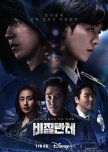
Started of strong but fell flat
I am hooked by korean thrillers ever since I watched Beyond Evil and one day, I came across Vigilante. Since I am a huge fan of stories that explore the matter of justice vs self-appointed law enforce, I decided to watch it, especially since I had seen some people calling it underrated.While I overall enjoyed the series, I think that there was room for more developement. I am aware of the fact that it's based on a webtoon and since I haven't read it, I will assume that it was overal a faithful adaptation.
The plot was interesting, I liked the exploration of corruption, abuse of power and the fight for justice. It's just that even though it was quite short, it dragged, especially towards the end. The first episodes were the best imo and I think the series should have focused more in the moral battle of law vs taking the matters in your own hands. I would have loved to see more psychological battles between the characters, especially between Jiyong and Heon. The first episodes focused more on the psychological and ethical aspects while the rest focused more on the action. Which was not bad but it didn't allow the series to go more into depth about its themes. Plus, the fights in the last episodes were kinda funny, the plot armor was going crazy for the main characters. So many thugs and no one could beat them?
The characters were interesting but I believe that some of them could have been explored more. Jiyong was definitely the most fleshed out character and I would have loved to see more of his battle between bad vs evil. Jo heon was fun and cool and I liked his dialogues with Jiyong. However, I felt like I desired more once I finished the series, yes, we got to see him reconsider his own believes which was good but I think he came across as a little bit one dimensional at times and the series relied a lot on the gimmick about his size and power. Still a very cool character though. As for the rest, I really liked Choi Mi Ryeo, she was such a badass and I found her to be quite complex in terms of actions and believes. Gang-ok was actually quite fun, he was such a fanboy for Vigilante and his obsesion with Jiyong was just so hilarious, one sided toxic yaoi at its finest.
The acting was really good, especially Nam Joo-hyuk's and the ending, albeit frustating, was pretty much realistic. Overall, I liked the series, it's just that I think it had potential to become something more. As I mentioned above, if it followed the plot of the webtoon, I will understand the lack of exploration on some of the themes but they could have done something more to fully flesh them out. I also believe but for a series that tackled many interesting topics, it should have been longer, say 10+ episodes.
Was this review helpful to you?
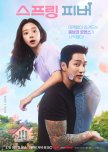
Charming, entertaining and yet so heartfelt
Before I'll start with the actual review, I'd like to give some context about me: I've never been a huge fan of romance-focused stories. Romance is not a genre I dislike but I wasn't the biggest fan either. Before I got into kdramas, I was aware of the popularity of their romance stories.I'm gonna be very direct. For years, I had developed a dislike for the tropes and the way they were presented. Slow motion sequences, "under the umbrella" scenes, miscommunication, awkward flirting...Every time I would stumble across clips like these, I would cringe and wonder how could people enjoy that. I couldn't imagine myself indulging in a story with this structure. I thought that the kdrama style wasn't for me and for years, I kept avoiding them.
Well, here I am now, in the year of 2026 to report that I am a changed person.
Spring Fever is the first romcom I've watched. I have watched other romantic stories like Yuri On Ice, Heartstopper, Pride and Prejudice and Emma but none of them had this slapstick, romcom style. It was a spontaneous decision to pick up this drama. I had seen the posters and the teasers and since it seemed lighthearted, I thought that it wouldn't harm me if I gave it a try. I debated about it since it was very out of my league but in the end, I gave in. And oh boy, did it pay off!
Spring Fever is exactly what its name indicates. It was a very cozy drama and with every single episode, the story kept blooming. Even though I prefer dramas which delve deeper in terms of themes and characterisation, I was very relieved to see that Spring Fever didn't lose its identity throughout its run. It obviously included some emotional heavier scenes of course and it tackled some important issues but not at the expense of its initial style.
The writers did a great job handling the different plot points together. While the main couple, Yoon Bom and Seon Jae Gyu were undoubtedly the heart of the story, it was nice to see them shine on their own or have the opportunity to observe other characters, too. For the most past, the pacing of the drama was very good and it contributed to the overall development of the story and the characters.
The majority of the subplots were entertaining to watch. I became invested in the teachers' drama and the relationship between I Jun and Jae Gyu. I was rooting very hard for Bom to prove her innocence and I was eager to learn more about Jae Gyu's past. The various subplots enhanced the slice-of-life aspect and by making other characters the center of attention, we saw more of their community and emotions as individuals. The romance was always the main point but it was nice to see that there were other significant moments, too.
While the comedy was never absent, I appreciated the more laid-back and emotional moments, especially during the last episodes. Spring Fever tackled some serious themes and it was nice to see that the writers treated them with respect instead of forcing a joke in inappropriate moments. During episode 11, there were some scenes which unexpectedly made me shed some tears and I liked how the writers let their characters be vulnerable when needed instead of minimizing their pain.
One thing I must praise Spring Fever for is the cinematography and editing. There were various breathtaking and relaxing shots from the countryside, the director did a fantastic job capturing the beauty of Sinsu. The color grading was absolutely perfect. The vibrant hues enhanced the positive tone of the story, making the story even more "colorful". Even during the night scenes, the colours were so vivid!
Spring Fever was the perfect type of story to accompany me during my university exams period. After long studying sessions, I was always looking forward to relax and watch the new episodes in peace. I was giggling like a lovesick teenager while watching Bom and Jae Gyu's shenanigans and many scenes made me burst out laughing. The comedic elements were incorporated very well and they didn't feel forced, as I initially feared. There are some scenes which I'm thinking about and still make me laugh.
Bom and Jae Gyu were so interesting as individuals and later as a couple. Their relationship developed organically and their interactions were so fun to watch. Their personalities were so different and yet they complimented each other so much. There were many moments which made me squeal from happiness and throughout the drama, I couldn't get enough of them.
Both Bom and Jae Gyu had to fight their own demons which they tried to hide under their masks. Both of them tried to find shelter by bottling up their feelings. Bom, after experiencing injustice and betrayal from her parents, became colder and less enthusiastic while Jae Gyu, haunted by his past, put up the facade of an energetic citizen, who had nothing to worry about. It was so beautiful to see that the closer they got to each other, the more the walls that they had built around themselves started to shatter.
I'm very thankful that the writers put no unnecessary misunderstandings between Bom and Jae Gyu! Even though there were some minor problems here and there, they always solved them very quickly and once they became an official couple, they communicated with each other and opened up more. Trust and communication are vital for a healthy relationship and Spring Fever made sure to make its message clear. In addition, it was so refreshing to see both Bom and Jae Gyu be there for each other. The first half focused more on Jae Gyu helping Bom around while the latter half showed Bom supporting Jae Gyu more, which was so important for their growth as a couple. They understood each other and they gave each other space when necessary while still being close. I already miss them as I'm typing this!
Both actors did an excellent job bringing their characters to life, not to mention the amazing chemistry they had. Lee Joo Bin was so engaging to watch, I loved the way she used her facial expressions to express Bom's emotions, particularly when she was surprised. She really shined in this role and she highlighted Bom's complexity. The same applies to Ahn Bo Hyun, he nailed both the comedic and emotional aspects of Jae Gyu's character, unveiling his characters' layers. Furthermore, he was effortlessly funny while portraying Jae Gyu's shenanigans and he never came across as cringe.
Although I had an amazing time watching Spring Fever, there were some parts that could have been better in order to improve the story even more. It would have been nice if the psychological aspect of the characters had been written in even more depth throughout the episodes. Not something very bleak but not very superficial either. The last episodes did a great job with this subject, particularly when it came to Jae Gyu's feelings, so I think that this could have happened in the earlier episodes too.
The story as a whole remained charming and very engaging but there were times where I felt my attention wandered. There were some scenes that felt more filler and while they were by no means bad, I think that they could have been reduced in order to highlight other aspects of the plot.
Even though I warmed up to Han Gyul and Se Jin's subplot, I must admit that I wasn't fully invested in it. I totally understand that it's a classic teenage love story but their initial relationship of Han Gyul acting like a lovesick puppy while Se Jin mistreated him wasn't that fun to watch. Se Jin's character had potential for more given the pressure she experienced from her parents to do great at school. I really appreciated her development but her character could have been handled better and her change of attitude could have been more natural.
Overall, Spring Fever was a very charming and cozy series, one I definitely do not regret watching. I'm so happy for this being my introduction to the romcom genre and I feel so proud of myself after expanding my taste. Bom and Jae Gyu will continue to accompany me and I can totally see myself rewatching the drama in the future if I'm in need for something sweet and comforting. I strongly recommend it to people who want a nice romcom. It might not be a masterpiece but it will definitely make you bloom.
Was this review helpful to you?
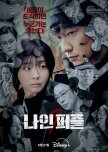
This review may contain spoilers
An underrated mystery series with a dynamic duo
I decided to give Nine Puzzles a try because I was intrigued by the premise. A woman who was the suspect of her uncle's murder wants to solve the case while the detective who suspects her starts working with her. Welcome back Beyond Evil, Black Out and Justice in the Dark. After watching Nine Puzzles, it's safe to say that it is very underrated and deserves more recognition.The drama made me hooked from the get-go. Ena's uncle's murder had taken place under strange circumstances and from the very first episode, I started making a list of the potential suspects. With every episode, the story began to unfold more and more and soon it was made clear that this case was not that simple. Every episode left me with questions that required answers and I was so excited to see what would happen next. I must also give credit to the usage of flashbacks. Instead of relying on telling and now showing, the drama utilized the flashbacks in a clever way and I never felt like they were disturbing the pacing or the actual story.
The pacing of the series was ideal and pretty much consistent. I wouldn't describe it as very slow, nor very fast - more like something in the middle. Most episodes took their time to build the mystery and the prosecution behind the investigations while some others had more fast-paced sequences and moments that flew by pretty quickly. I rarely felt my attention drifting away, my eyes were glued on the screen while trying to put the puzzle pieces (metaphorically and literally) together.
One of my favourite aspects in crime series in showing what is happening behind-the-scenes of a crime investigation. I enjoyed observing the work of the police and Ena and it really helped that the police officers were competent and not just dumsels in distress. Every case required different ways to be solved and each case contributed to the resolution of the whole mystery behind the nine puzzles.
I can't find enough words to express how much I loved the soundrack. The intro gave me chills every time and I loved how they incorporated classical pieces in some scenes. It was as if I was watching a classic crime series and gave a nice old-fashioned vibe, especially during Ena's scenes.
The main leads were by far my most favourite characters. I adored Yoon Ena from the very first episode and she has become one of my most favourite characters already. I understand those who complained about her behavior but I personally never found her annoying. She clearly showed signs of regression which is very common among people who experienced some sort of trauma at a young age, therefore her childish demeanor was understandable. Personally, I tend to become attached to quirky characters quite easily so it's no wonder I'd love someone like Ena. Kim Da Mi did a great job portraying her, her body language, her expressions, she captured Ena's outgoing character perfectly while giving her depth when it was required. I had a blast watching her helping the police to solve the murders and prove them wrong when they would doubt her. She always had the last word and I applaud her for that. Plus, her nails and outfits made her even more iconic.
Ena was much more than just a quirky profiler. On the outside, she appeared care-free, absent-minded, air-headed but that couldn't be further from the truth. It was highlighted quite often in the drama how much guilt she carried for her uncle's death and his murder continued to haunt her even after all of these years. Since she didn't have the chance to live a normal childhood due to the loss of her parents at a young age and the death of her uncle, she wasn't the best at socializing with other people. She treated her colleagues with sweets, presents etc but she still tried to figure out how to form proper human connections. I really liked how hesitant she was to comfort Han Saem after the death of Yang Jung-ho and yet she still did her best. These small glimpses of her behavior showed that deep down, she was a very troubled person who still tried to deal with the loss of her uncle and (later) the revelation about his potential crimes.
Han Saem was also a character whom I looked forward to see. Son Sukku was great in this role, he nailed Han Saem's grumpy character. I liked that even though he wasn't able to tone down his cop persona and his personal "instinct", he was still willing to listen to Ena, despite his initial reaction towards her. His character was handled really well and him and Ena worked perfectly as a duo. Watching them getting closer and help each other was so refreshing, the scenes in his home had a calm and domestic vibe, both of them could let their guard down and the other's presence gave them comfort. When Ena admitted to her therapist that she was able to get some sleep at Hansaem's home because she felt safe, my heart almost melted. Their chemistry (whether you want to interpret it platonically or not doesn't matter) was really good and I'm glad we didn't spend a big amount of episodes with them trying to gain each other's trust.
Regarding their characters, I like how they complimented each other, despite their differences. Ena is more outgoing and she is close to her team while treating police officers with coffees, hats etc. Hansaem is more professional and closeted but as he spend more time with Ena, he started to warm up more to her and other people. Hansaem is a fan of classic crime novels written by Agatha Cristie and Edgar Alan Poe while Ena didn't view them with much respect and she didn't rely on them to explain the cases like Hansaem. Their viewpoints and characters were different but they were willing to listen to each other, especially Hansaem who stopped having prejudices against Ena.
The rest of the characters were equally engaging and intriguing. I liked how the drama gave one hint or two about who could be the real culprit and I admit that my list of suspects didn't seem to be narrowed down that quickly. I wish I was more aware of the amount of cameos by popular actors in Nine Puzzles because based on the reactions I've seen, many avid kdrama watchers were surprised to see so many veterans make an appearance on the series. Although I must admit I didn't expect to see Park Mi-hyun (Squid Game, Black Out) and Jeong Man-Sik (Through The Darkness), these are two actors whom I was familiar with yet didn't expect to see in this drama.
Another character who caught my interest was Ena's therapist, Lee Seung-Joo. I know Park Gyu-young from Squid Game and I knew beforehand that she was an actress in this series too, alongside Roh Jae-won. Her character was suspicious to me but the reveal of her being the serial killer was still so interesting to see. I was genuinely impressed by Park Gyu-Young's acting. Going from a calm and professional therapist to a wronged woman who sought revenge in the amount of a few episodes seemed so natural thanks to her performance. Seung-Joo was not just a sadistic killer. She didn't kill for her own pleasure. She killed because she wanted justice for her mother's death and the corruption that was done by her "victims". She didn't want to continue living a normal life once she learned the truth and even though she knew that she could have avoided this path, she went on to kill.
Even though the mystery aspect is the core of the series, Nine Puzzles tackled other topics regarding trust, human connections, trauma and corruption. Learning about the real events that occurred behind One City's development and watching the victims work together in order to demolish Shindonga market made my blood boil from anger. All of these people were willing to go to great lengths just to increase their power, without feeling any remorse. Taking that into consideration really made me question Seung-Joo's actions and motives.
The drama put great emphasis on the importance of trust between people. Ena constantly asked Hansaem to trust her. She was a person who didn't seem to trust that easily and yet once she learned the truth, her world crumbled because she regarded Seung-Joo as someone who was close to her. Hansaem's trust in his chief and the rest of the members of the police was also questioned multiple times and of course we see how he learned to trust Ena.
That being said, as much as I liked this drama and as much as I loved the characters, there are some parts that prevented me from connecting more with it. As others have pointed out, it would have been nice to see how each murder took place. Yes, someone could argue that through Ena's reimaginations of the crimes we can get a sense of how the murder happened but I still wanted to see it from the killer's point of view. What were her thoughts? How did she escape each time without leaving a single trace? How was she able to constantly monitor Ena's steps? And as of Seung-Joo, couldn't a 7 years old remember the name of her mother or the name of her restaurant in order to tell it to the police? How did she end up on the orphanage and why didn't her mother look for her? I think that the story has some plot-holes here and there and although they do not ruin the series, the writers could have thought more to avoid them.
I also think that the structure of the episodes became too formulaic and predictable. A murder occurred, puzzle gets sent, Ena put the pieces together, case solved for now, moving on. While the murders themselves were different, the way they were presented was kinda monotonous. Thankfully that quickly changed but I still think the structure could have been a little bit better for some episodes.
All in all, I'm so happy for watching Nine Puzzles! I genuinely did not expect to like it as much as I did! I'll make sure to check out other projects with Kim Da Mi and Son Sokku. I would definitely recommend this one for crime enjoyers. It's not groundbreaking but it was pleasant to watch!
Was this review helpful to you?
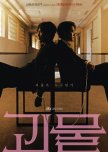
The characterisation is one of the best aspects and ultimately, the one that sold the series for me. I became attached to many people of Manyang (Jaeyi, Namsabae, Jiwa and Park Jeongje own my heart) but the ones whom I loved the most were Dongsik and Joowon. What more can I say about them? Their dynamic was one of the main reasons why (if not THE reason why) I loved this series. They didn't start in the best terms and yet as the story went on, they started to respect each other more and care about the other. Joowon's development was so well-written and I loved seeing him bickering with Dongsik. AND THEIR CHEMISTRY WAS SO STRONG, OH MY GOD, THEY REALLY MADE ME GIGGLE LIKE A TEENAGER (I mean, I am 18 years old BUT STILL).
Was this review helpful to you?


