

 1
1 4
4 1
1


This review may contain spoilers
Hui Su, Eun Su and us
Before I'll start this review, I'd like to present some facts regarding violence against women in South Korea, in order to understand how important it is to have a drama that addresses this topic.
According to this article (https://koreajoongangdaily.joins.com/news/2025-04-24/national/socialAffairs/1-in-3-women-a-victim-of-relationship-abuse-Gender-Ministry-survey-finds/2293311) , more than one in three Korean women has experienced violence at least once in their lifetime at the hands of a current or former ppartner. The types of abuse are various and the most common ones are physical and emotional violence. Violence rates in South Korea have surged up, making society dangerous for women. When asked about whether they believed if korean society was safe or not, a total of 51,6% answered that Korean society is not safe from violence - a clear indicator of how common violence against women is in South Korea.
While most people watch kdramas in order to relax and ease up their mind, it's not possible to escape the hard cold reality. Many kdramas tend to glamorize korean society and sugar coat the hardships women have to endure. While it's by no means bad to present something light to your audience, we cannot (and we mustn't) hide behind our fingers. No matter how triggering the topic of domestic abuse might be, more people need to be aware of this problem in order to take more measures.
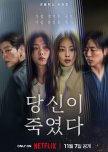
As You Stood By is a drama that deals with the ongoing issue of domestic violence against women. Through Eun Su and Hui Su's story, we observe the horrors that take place behind the closed doors and the trauma that's caused to the victims. The powerful message is presented on the first episodes and the writer's intention to illustrate the cruel reality are crystal clear.
On an interview the director, Lee Jung Min, stated how disturbing it would be to visually depict violent scenes and thus, the team decided to focus on the before and after rather the physical contact. Having watched the series, I could tell how much care and caution had been put in the making of these scenes. I dislike media which exploit violent scenes for shock value, especially if the victims are females. It gets to a point where the emotional impact is lost. When creators overuse violent scenes or present them too graphically, the message is not delivered efficiently.
That wasn't the case with As You Stood By. Obviously there were scenes that portrayed violence. But they were handled very well and instead of relying on the on-screen abuse, they highlighted the psychological distress of thewomen. Instead of showing the beating itself, we see Hui Su's face before and after the damage. Instead of showing Eun Su's father beating their mom, we see a montage of her and her brother hiding in the closet. The editing and sound design during these scenes was phenomenal, it added more tension and made the story even more impactful.
A particular scene that has stayed with me, days after finishing the drama, is the one from the second episode when Jin Pyo beats Hui Su with his shoe. While he kept hitting her on her head, we never see the beating but as he continues, the surrounding noises started to fade. It was as if we, the viewers, were the ones who were getting beaten. The scene felt so realistic and raw, I almost held my breath in fear while I was watching it.
When women like Eun Su and Hui Su are abused by men, what can they do? When society keeps protecting men with power in order not to tarnish their reputation, how can the victims find the courage to expose the truth? When the law fails to do its job and deliver justice, how can women trust it? The repeated cycle of abuse drives the victims to great lengths. In Eun Su and Hui Su's case, the solution is one: murder. Although murder itself is a crime, the drama makes us question the choice of the two women, raising interesting questions regarding morality.
The drama doesn't necessarily try to frame the murder of Jin Pyo as entirely good or bad. What it tries to do instead is showcase that when everyone fail to protect abused women, they will take matters into their own hands. Hui Su did everything in her power to put an end to her torture. She tried to be an obedient wife. She tried to report her husband to the police. She tried to leave. But nothing was achieved. So who are we to moralize her decision?
As You Stood By does an excellent job portraying ignorance towards violence as a serious crime itself. Knowing that a woman is getting abused and doing nothing about it makes us accomplices to the violence. Turning a blind eye only enables the abusers to keep doing what they do. When they are aware of the fact that no one is going to report them and that they cannot be punished, they feel more powerful and confident. This is why bystanders must take actions into their own hands and help the victims however they can. Otherwise, they contribute to the cycle of abuse.
All the actors did an excellent job portraying their characters and their emotions. Jeon So Nee was great as Eun Su. I could see how conflicted she was and how guilty she felt over the fact she hadn't had the courage to report her father or the abusive husband of her client. Eun Su was a very complex character, whose motives were shaped by her abusive household. As a kid, she saw her father hitting her mother and she take it upon herself to become her younger brother's guardian by keeping him oblivious to the violence that surrounded her. As an adult, she learned martial arts in order to find some type of protection against men. She tried to ignore the violence around her and she pretended that her father didn't hit her mom but deep down, she knew that she just wanted to find a way to escape.
Eun Su's fear is not portrayed in a bad light. The drama doesn't try to accuse Eun Su nor put the blame on herself. But Eun Su herself comes to the realization that ignorance is equally lethal. She refuses to remain a bystander who does nothing and the moment she realises that Hui Su is in great danger, she immediately takes action. Her development was powerful and it reminded us that we can always find the strength to help the victims.
Lee Yu Mi delivered an award worthy performance. Hui Su's fear became my own. Her expressions, her body language, the wavering in her voice when she faced her husband. Her portrayal was painfully realistic and it pained me to watch her. I couldn't fathom how many women like Hui Su have to endure this kind of treatment every day, in all places of the world. Hui Su was a prisoner in her own marriage. She wasn't able to meet her friends or perform any activities that brought her joy. She wasn't able to wear different clothes, in fear of exposing her bruises. She was belittled and she was physically, mentally and sexually abused on a daily basis. Just by watching the fear in her eyes every time her behavior wasn't appropriate, according to Jin Pyo, I feared for her life. Lee Yu Mi was spectacular in this role and her performance was extremely powerful and moving.
The relationship between the two women felt like a breath of fresh air. Many kdramas have pitied women against each other for the sake of a man but As You Stood By breaks the norms by having its female leads teaming up against the man. Eun Su and Hui Su's unconditional support and love towards each other was so heartwarming to see. Both of them felt responsible for each other, especially Eun Su who wanted to save her friend from her abusive husband. The scenes between them put a smile on my face, particularly the brief moments of peace. Albeit, short, the moments of happiness and bliss brought a smile to my face. Hui Su felt so secure and happy around Eun Su. She could leave her guard down and enjoy her time, indulging in activities like an excited child. The few flashbacks we got highlighted their bond and the actresses had great chemistry which added to the characters' friendship.
Of course I couldn't forget to praise Jang Seung Jo's double performance as Jin Pyo, Hui Su's husband and Jang Gang, his look-alike. He was terrifying in both roles and he knew how to switch his character. Jin Pyo ignited great fear in me with his sadistic and unpredictable behavior. During the first episodes, there were times when I flinched just from seeing him on the screen. I could feel my survival instincts wake up and I was constantly alert. Seung Jo transformed into the character, although the character was cruel and scary, his performance was so captivating to the point I couldn't take my eyes off the screen, despite my discomfort.
His portrayal of Jang Bang was equally engaging. The contrast between the two characters was so bizarre and yet he switched his roles effortlessly. When Jang Bang revealed his true colours, I was once again terrified by his psychotic actions and outbursts. It felt like I was watching two different actors.
Aside from Jin Pyo, the series presents two other major villains: his mother and his sister. Both of these characters worked as a sad reminder of how some people not only remain ignorant of the abuse on purpose but they side with the abusers too. Both women were aware of Jin Pyo's actions and Hui Su's mistreatment and yet, they did absolutely nothing. Not only did they not hold Jin Pyo accountable for his behavior, but they shifted the blame on Hui Su. "If only people avoided provoking violence and both sides did their part" was one of the things Jin Pyo's mother said to Hui Su and I was shocked when I heard it. What do you mean "provoking violence"? How could the victims provoke it? And how could they do " their part"? It was as if she was implying that the abuse was deserved and that victims asked to be abused. As for the sister, she was only worried about her reputation getting tarnished rather the fact her brother was an abuser. Jin Pyo was sick but his family's behavior was equally bad. All of them were egoistic people, who only cared about themselves and who treated Hui Su as something disposable. Not a moment passed when I didn't wish for their downfall and thankfully, I wasn't disappointed.
As much as I acknowledge the importance of adapting a story like this and even though I have already praises the drama, I must say that while the first episodes were near perfect, the story went downhill during the second half. The first half was focused more on Eun Su and Hui Su. We saw their backstory, the violence they were exposed to and the trauma they had to deal with. The first episodes were emotional depth while the story was very engaging. But once the plot twist with Jang Bang occurred, I found my interest decreasing. If the drama followed the novel's story by the book, I could excuse this shift. Still, the execution could have been better.
After the fifth episode, the message got kinda lost in translation. Instead of focusing on the women and their emotional journey, the focus was put on their attempt to stop Jang Bang. At the same time, Jin Pyo's sister got involved more but instead of feeling worried about our leads, I felt bored. There were times when I was tempted to skip some scenes that didn't involve Hui Su and Eun Su. I understand the purpose of the plot twist and the sister's involvement but it kinda ruined the story for me. I really wish the writers had explored the girls' feelings more or that we had seen more interactions with their families. It would have been nice if we had gotten more moments between Eun Su, her mother and her brother, especially once the brother acknowledged Eun Su's protection when he was little. It would have added more layers to their trauma and bond and it would have been a nice opportunity to showcase how domestic violence affects familial relationships.
Additionally, there weretimes when the script didn't feel that tight. I can still think of some plot holes that didn't get cleared away. How come neither JinPyo's mother nor the sister recognise Eun Su, since she was at Hui Su's wedding? I get that this implies how little they cared about Hui Su and the people she associated herself with but at the same time, I still cannot understand how come they didn't remember her. And what about Jang Bang's family? The CCTV showed him hugging his son once he landed at the airport but we never learned more of his background or if he faked it. Jang Bang's shift in general felt confusing since I really doubt that someone with psychotic tendencies like him would have been able to keep a modest facade for such a long time, let alone years. I really wish the writers had given answers to some of the questions instead of assuming the audience would just fill the gaps.
All in all, As You Stood By remains a vital kdrama. Its message is painfully relevant and it needs to be heard by more people. We cannot keep ignoring what is going on around us and we cannot keep turning a blind eye on those who need help. Let's not allow ourselves to be accomplices in violence. We can and we must put an end to it, if possible. This was not just Eun Su and Hui Su's story. It was about Eun Su, Hui Su and us.
According to this article (https://koreajoongangdaily.joins.com/news/2025-04-24/national/socialAffairs/1-in-3-women-a-victim-of-relationship-abuse-Gender-Ministry-survey-finds/2293311) , more than one in three Korean women has experienced violence at least once in their lifetime at the hands of a current or former ppartner. The types of abuse are various and the most common ones are physical and emotional violence. Violence rates in South Korea have surged up, making society dangerous for women. When asked about whether they believed if korean society was safe or not, a total of 51,6% answered that Korean society is not safe from violence - a clear indicator of how common violence against women is in South Korea.
While most people watch kdramas in order to relax and ease up their mind, it's not possible to escape the hard cold reality. Many kdramas tend to glamorize korean society and sugar coat the hardships women have to endure. While it's by no means bad to present something light to your audience, we cannot (and we mustn't) hide behind our fingers. No matter how triggering the topic of domestic abuse might be, more people need to be aware of this problem in order to take more measures.
As You Stood By is a drama that deals with the ongoing issue of domestic violence against women. Through Eun Su and Hui Su's story, we observe the horrors that take place behind the closed doors and the trauma that's caused to the victims. The powerful message is presented on the first episodes and the writer's intention to illustrate the cruel reality are crystal clear.
On an interview the director, Lee Jung Min, stated how disturbing it would be to visually depict violent scenes and thus, the team decided to focus on the before and after rather the physical contact. Having watched the series, I could tell how much care and caution had been put in the making of these scenes. I dislike media which exploit violent scenes for shock value, especially if the victims are females. It gets to a point where the emotional impact is lost. When creators overuse violent scenes or present them too graphically, the message is not delivered efficiently.
That wasn't the case with As You Stood By. Obviously there were scenes that portrayed violence. But they were handled very well and instead of relying on the on-screen abuse, they highlighted the psychological distress of thewomen. Instead of showing the beating itself, we see Hui Su's face before and after the damage. Instead of showing Eun Su's father beating their mom, we see a montage of her and her brother hiding in the closet. The editing and sound design during these scenes was phenomenal, it added more tension and made the story even more impactful.
A particular scene that has stayed with me, days after finishing the drama, is the one from the second episode when Jin Pyo beats Hui Su with his shoe. While he kept hitting her on her head, we never see the beating but as he continues, the surrounding noises started to fade. It was as if we, the viewers, were the ones who were getting beaten. The scene felt so realistic and raw, I almost held my breath in fear while I was watching it.
When women like Eun Su and Hui Su are abused by men, what can they do? When society keeps protecting men with power in order not to tarnish their reputation, how can the victims find the courage to expose the truth? When the law fails to do its job and deliver justice, how can women trust it? The repeated cycle of abuse drives the victims to great lengths. In Eun Su and Hui Su's case, the solution is one: murder. Although murder itself is a crime, the drama makes us question the choice of the two women, raising interesting questions regarding morality.
The drama doesn't necessarily try to frame the murder of Jin Pyo as entirely good or bad. What it tries to do instead is showcase that when everyone fail to protect abused women, they will take matters into their own hands. Hui Su did everything in her power to put an end to her torture. She tried to be an obedient wife. She tried to report her husband to the police. She tried to leave. But nothing was achieved. So who are we to moralize her decision?
As You Stood By does an excellent job portraying ignorance towards violence as a serious crime itself. Knowing that a woman is getting abused and doing nothing about it makes us accomplices to the violence. Turning a blind eye only enables the abusers to keep doing what they do. When they are aware of the fact that no one is going to report them and that they cannot be punished, they feel more powerful and confident. This is why bystanders must take actions into their own hands and help the victims however they can. Otherwise, they contribute to the cycle of abuse.
All the actors did an excellent job portraying their characters and their emotions. Jeon So Nee was great as Eun Su. I could see how conflicted she was and how guilty she felt over the fact she hadn't had the courage to report her father or the abusive husband of her client. Eun Su was a very complex character, whose motives were shaped by her abusive household. As a kid, she saw her father hitting her mother and she take it upon herself to become her younger brother's guardian by keeping him oblivious to the violence that surrounded her. As an adult, she learned martial arts in order to find some type of protection against men. She tried to ignore the violence around her and she pretended that her father didn't hit her mom but deep down, she knew that she just wanted to find a way to escape.
Eun Su's fear is not portrayed in a bad light. The drama doesn't try to accuse Eun Su nor put the blame on herself. But Eun Su herself comes to the realization that ignorance is equally lethal. She refuses to remain a bystander who does nothing and the moment she realises that Hui Su is in great danger, she immediately takes action. Her development was powerful and it reminded us that we can always find the strength to help the victims.
Lee Yu Mi delivered an award worthy performance. Hui Su's fear became my own. Her expressions, her body language, the wavering in her voice when she faced her husband. Her portrayal was painfully realistic and it pained me to watch her. I couldn't fathom how many women like Hui Su have to endure this kind of treatment every day, in all places of the world. Hui Su was a prisoner in her own marriage. She wasn't able to meet her friends or perform any activities that brought her joy. She wasn't able to wear different clothes, in fear of exposing her bruises. She was belittled and she was physically, mentally and sexually abused on a daily basis. Just by watching the fear in her eyes every time her behavior wasn't appropriate, according to Jin Pyo, I feared for her life. Lee Yu Mi was spectacular in this role and her performance was extremely powerful and moving.
The relationship between the two women felt like a breath of fresh air. Many kdramas have pitied women against each other for the sake of a man but As You Stood By breaks the norms by having its female leads teaming up against the man. Eun Su and Hui Su's unconditional support and love towards each other was so heartwarming to see. Both of them felt responsible for each other, especially Eun Su who wanted to save her friend from her abusive husband. The scenes between them put a smile on my face, particularly the brief moments of peace. Albeit, short, the moments of happiness and bliss brought a smile to my face. Hui Su felt so secure and happy around Eun Su. She could leave her guard down and enjoy her time, indulging in activities like an excited child. The few flashbacks we got highlighted their bond and the actresses had great chemistry which added to the characters' friendship.
Of course I couldn't forget to praise Jang Seung Jo's double performance as Jin Pyo, Hui Su's husband and Jang Gang, his look-alike. He was terrifying in both roles and he knew how to switch his character. Jin Pyo ignited great fear in me with his sadistic and unpredictable behavior. During the first episodes, there were times when I flinched just from seeing him on the screen. I could feel my survival instincts wake up and I was constantly alert. Seung Jo transformed into the character, although the character was cruel and scary, his performance was so captivating to the point I couldn't take my eyes off the screen, despite my discomfort.
His portrayal of Jang Bang was equally engaging. The contrast between the two characters was so bizarre and yet he switched his roles effortlessly. When Jang Bang revealed his true colours, I was once again terrified by his psychotic actions and outbursts. It felt like I was watching two different actors.
Aside from Jin Pyo, the series presents two other major villains: his mother and his sister. Both of these characters worked as a sad reminder of how some people not only remain ignorant of the abuse on purpose but they side with the abusers too. Both women were aware of Jin Pyo's actions and Hui Su's mistreatment and yet, they did absolutely nothing. Not only did they not hold Jin Pyo accountable for his behavior, but they shifted the blame on Hui Su. "If only people avoided provoking violence and both sides did their part" was one of the things Jin Pyo's mother said to Hui Su and I was shocked when I heard it. What do you mean "provoking violence"? How could the victims provoke it? And how could they do " their part"? It was as if she was implying that the abuse was deserved and that victims asked to be abused. As for the sister, she was only worried about her reputation getting tarnished rather the fact her brother was an abuser. Jin Pyo was sick but his family's behavior was equally bad. All of them were egoistic people, who only cared about themselves and who treated Hui Su as something disposable. Not a moment passed when I didn't wish for their downfall and thankfully, I wasn't disappointed.
As much as I acknowledge the importance of adapting a story like this and even though I have already praises the drama, I must say that while the first episodes were near perfect, the story went downhill during the second half. The first half was focused more on Eun Su and Hui Su. We saw their backstory, the violence they were exposed to and the trauma they had to deal with. The first episodes were emotional depth while the story was very engaging. But once the plot twist with Jang Bang occurred, I found my interest decreasing. If the drama followed the novel's story by the book, I could excuse this shift. Still, the execution could have been better.
After the fifth episode, the message got kinda lost in translation. Instead of focusing on the women and their emotional journey, the focus was put on their attempt to stop Jang Bang. At the same time, Jin Pyo's sister got involved more but instead of feeling worried about our leads, I felt bored. There were times when I was tempted to skip some scenes that didn't involve Hui Su and Eun Su. I understand the purpose of the plot twist and the sister's involvement but it kinda ruined the story for me. I really wish the writers had explored the girls' feelings more or that we had seen more interactions with their families. It would have been nice if we had gotten more moments between Eun Su, her mother and her brother, especially once the brother acknowledged Eun Su's protection when he was little. It would have added more layers to their trauma and bond and it would have been a nice opportunity to showcase how domestic violence affects familial relationships.
Additionally, there weretimes when the script didn't feel that tight. I can still think of some plot holes that didn't get cleared away. How come neither JinPyo's mother nor the sister recognise Eun Su, since she was at Hui Su's wedding? I get that this implies how little they cared about Hui Su and the people she associated herself with but at the same time, I still cannot understand how come they didn't remember her. And what about Jang Bang's family? The CCTV showed him hugging his son once he landed at the airport but we never learned more of his background or if he faked it. Jang Bang's shift in general felt confusing since I really doubt that someone with psychotic tendencies like him would have been able to keep a modest facade for such a long time, let alone years. I really wish the writers had given answers to some of the questions instead of assuming the audience would just fill the gaps.
All in all, As You Stood By remains a vital kdrama. Its message is painfully relevant and it needs to be heard by more people. We cannot keep ignoring what is going on around us and we cannot keep turning a blind eye on those who need help. Let's not allow ourselves to be accomplices in violence. We can and we must put an end to it, if possible. This was not just Eun Su and Hui Su's story. It was about Eun Su, Hui Su and us.
Was this review helpful to you?


