No wonder I was so confused with the dubbing for ZLH, In all of the trailers released its his own voice then for…
He sounds really nice in this. I would never know! Sometimes is frustratingly obvious when they're dubbed by someone else, but not with this voice actor.
am i the only one laughing whenever his bangs are moving but theres no wind? he looks good but he's literally…
Oh yes! Or the way there's always snow falling outside in like 75% of the shots?
And why do they have ALL the windows open in what is obviously the dead of winter? Someone who'd never seen snow who watched this might get the idea that it's merely a fine, white sand-like substance that drops from the sky and is not accompanied by freezing temperatures. 😅
I know it's soon to say this for an airing drama, but so far this is really fun! They're not rushing the first few episodes like Prisoner of Beauty and Legend Of A Female General did with their slipshod editing and crazy fast pace that felt like important scenes were skipped or not included. I already think the leads have great chemistry, too, and their friendship and closeness is developing very steadily and organically. Both are rocking their parts so far.
It's also really fun knowing Yan Zheng's identity while everyone else has no idea; I'm excited for the reveal of his real name (and obviously we have the FL shrouded in more mystery as regards her identity, too).
does it compare to Vincenzo? I mean is it on same lines?
It's not a revenge story in quite the same way, and it is less comedic. I thought Vincenzo had some very gruesome, dark stuff, and while Devil Judge has a lot of dark stuff, too, it felt like it fit better because the society/world it's set in is mildly dystopian and therefore the justice system has essentially failed (it was definitely not my favorite drama). I don't think I'm a big of this screenwriter even though I usually love law dramas (he tends to write around law themes).
Sorry to rain on your parade guys, but...When was the last time a K drama stayed consistently good from the first…
Watching an airing drama certainly comes with its risks. 😅 For some reason Kdrama writers don't seem to care much about the second halves of dramas. I have no idea why. 🤷♀️ The best and most beloved dramas obviously stick the landing better than most, so I don't know why that portion of dramas ends up so poorly crafted so consistently. Beats me!
Iconic, toxic, cozy, playful, with a major growth arc for our lead and complete with a slightly dim, clumsy and ditzy FL like many from this era--all encapsulated in Goong.
I'm admittedly a sucker for Korean modern monarchy dramas (I also loved The King 2 Hearts which has another problematic ML with a major growth arc, but also played with aplomb by the ever amazing Lee Seung Gi), but this one just has that old-timey cozy old Kdrama quality (it's also the music--it's dated but GREAT) that is highly fantastical/unrealistic, problematic, cozy and heartwarming like BOFs. I rewatch scenes from it a fair amount, but on rewatches skip quite a bit, too (I tend to watch more of BOFs without skipping).
I think part of the old-timeyness is these old dramas didn't shy away from showing us some pretty flawed charscters who need significant growth. And they don't make the growth a quick thing or an easy thing. It goes slowly, slowly and it's one of my favorite things about dramas. Growth arcs. And this drama's got a very good one, but it doesn't happen right away, be prepared!
The actress playing the FL is not my favorite, and her character is pretty dorky/ditzy/doormat-y at times, but somehow, once the leads get going--and he starts to treat her better--they have really good chemistry. REALLY good chemistry. I just love watching their scenes for some reason (after she runs away and he chases her down and does the 2006 ML version of an "apology"). That's when the drama starts taking off, but sparks begin a bit earlier in the drawn out scene when they're stuck in the same room for a night so they can "consummate" their political marriage (that obviously doesn't happen, but the chemistry starts chemistrying. In that scene the ML is nowhere near boyfriend (husband? 😅) material yet,, but his growth is seen on the horizon starting with this scene). 😅
If you want to see why it was such a hit (it was a hit when it aired, and is now one of those legendary dramas), give it a shot. No judgment if you have your fast forward ready to engage for some parts--some scenes in this warrant a skip, especially on a second watch once you know the plot. 😉
In SoCal, the hairstyle for young guys is what I call hair that looks like it got stuck in a light socket. Sticking straight out in all directions like a bush. 😅 Still see some curly perms, too, but mostly the light socket hair now. I'm sure there's a name for it.
why do the male characters in Korean dramas all have the same haircuts?
They have those same haircuts in Korea and elsewhere, too. That's the most common way I can determine Korean guys (from Korea, not necessarily Korean Americans) is by their hair. In Osaka, where a lot of Koreans go on holiday, I could instantly differentiate Japanese men from Korean men. How? The hair. 😉
he had a scandal, he’s lucky he gets to still have main roles like all other males who get scandals, but his…
I think the male actors tend to bounce back from their scandals better than the female actors. I'm sure we could deduce some of the possible reasons.
And agencies know that the public/internet has short memories (most are into trends, not truth). Give them a break from the limelight, then sneak them back in once people cool down and forget. 😉
he had a scandal, he’s lucky he gets to still have main roles like all other males who get scandals, but his…
Kim Seon Ho came back pretty well. I think his "in" back into the industry was WLGYL.
It is interesting how scandals cause so much more of an upset for Korean actors than American actors. I guess because Korea still tries to give their viewers/audience the illusion that their actors are perfect humans (why anyone believes that illusion is beyond me)? So when the facade is ripped off to expose the real person, people get disappointed and shocked? America gave that up years ago. 😅 And I think it's honestly a good thing. It doesn't do anyone any good to hold up celebrities or idols on a pedestal. They will inevitably disappoint us.
So, that said, I'm never very surprised when scandals surface. By watching entertainment like this I just assume actors are most likely shady (cause power, money and fame will do that to you, as it does with politicians), and those that aren't doing questionable things are actually the exception to the rule.
The only enjoyment left from this show now is collectively shitting on it
I always start airing dramas knowing they could tank at any time. I don't usually bother to stick around when it does, but apparently a lot of people approach it differently (and that's fine, of course). 😅
Maybe because users have been saying the 16 episode or more format always has filler episodes? If it has less, viewers say it's underdeveloped. To be fair to viewers, though, writers seem to struggle with whatever format they work with. Only the stellar dramas manage it.
I saw one user say that only the first few episodes are written when a drama starts (if it's not a post-production drama). This is what gets the actors and audience on board, but the rest gets written as the drama airs and that studios don't actually care about the endings, which is why they're usually poorer quality than the rest of the episodes. I'm not sure how that logic works (and I haven't researched it myself), but it does seem like many Kdrama writers "give up" at the end and get far less creative and just reach randomly into their trope and cliche bag for whatever can be used.
It seems most commenters on this page now are people determined to witness the results of the (loudly proclaimed) inevitable train wreck. Too invested to drop, I guess?
It's certainly a perilous endeavor to start a currently airing drama. 😉
ML gets to be happy for 1 episode… and the kid is gone These writers definitely gets off on male lead misery…
Nah, this is nothing compared to the suffering of MLs in xianxia Cdramas. I haven't even seen that many, but I've figured out that xianxia screenwriters delight in sending MLs to Hell and back (though sometimes they don't come back). 😅

 K-Drama

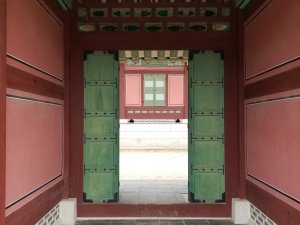


And why do they have ALL the windows open in what is obviously the dead of winter? Someone who'd never seen snow who watched this might get the idea that it's merely a fine, white sand-like substance that drops from the sky and is not accompanied by freezing temperatures. 😅
It's also really fun knowing Yan Zheng's identity while everyone else has no idea; I'm excited for the reveal of his real name (and obviously we have the FL shrouded in more mystery as regards her identity, too).
I'm admittedly a sucker for Korean modern monarchy dramas (I also loved The King 2 Hearts which has another problematic ML with a major growth arc, but also played with aplomb by the ever amazing Lee Seung Gi), but this one just has that old-timey cozy old Kdrama quality (it's also the music--it's dated but GREAT) that is highly fantastical/unrealistic, problematic, cozy and heartwarming like BOFs. I rewatch scenes from it a fair amount, but on rewatches skip quite a bit, too (I tend to watch more of BOFs without skipping).
I think part of the old-timeyness is these old dramas didn't shy away from showing us some pretty flawed charscters who need significant growth. And they don't make the growth a quick thing or an easy thing. It goes slowly, slowly and it's one of my favorite things about dramas. Growth arcs. And this drama's got a very good one, but it doesn't happen right away, be prepared!
The actress playing the FL is not my favorite, and her character is pretty dorky/ditzy/doormat-y at times, but somehow, once the leads get going--and he starts to treat her better--they have really good chemistry. REALLY good chemistry. I just love watching their scenes for some reason (after she runs away and he chases her down and does the 2006 ML version of an "apology"). That's when the drama starts taking off, but sparks begin a bit earlier in the drawn out scene when they're stuck in the same room for a night so they can "consummate" their political marriage (that obviously doesn't happen, but the chemistry starts chemistrying. In that scene the ML is nowhere near boyfriend (husband? 😅) material yet,, but his growth is seen on the horizon starting with this scene). 😅
If you want to see why it was such a hit (it was a hit when it aired, and is now one of those legendary dramas), give it a shot. No judgment if you have your fast forward ready to engage for some parts--some scenes in this warrant a skip, especially on a second watch once you know the plot. 😉
And agencies know that the public/internet has short memories (most are into trends, not truth). Give them a break from the limelight, then sneak them back in once people cool down and forget. 😉
It is interesting how scandals cause so much more of an upset for Korean actors than American actors. I guess because Korea still tries to give their viewers/audience the illusion that their actors are perfect humans (why anyone believes that illusion is beyond me)? So when the facade is ripped off to expose the real person, people get disappointed and shocked? America gave that up years ago. 😅 And I think it's honestly a good thing. It doesn't do anyone any good to hold up celebrities or idols on a pedestal. They will inevitably disappoint us.
So, that said, I'm never very surprised when scandals surface. By watching entertainment like this I just assume actors are most likely shady (cause power, money and fame will do that to you, as it does with politicians), and those that aren't doing questionable things are actually the exception to the rule.
I guess I'm a celebrity cynic. 😂
I saw one user say that only the first few episodes are written when a drama starts (if it's not a post-production drama). This is what gets the actors and audience on board, but the rest gets written as the drama airs and that studios don't actually care about the endings, which is why they're usually poorer quality than the rest of the episodes. I'm not sure how that logic works (and I haven't researched it myself), but it does seem like many Kdrama writers "give up" at the end and get far less creative and just reach randomly into their trope and cliche bag for whatever can be used.
It's certainly a perilous endeavor to start a currently airing drama. 😉