
 K-Drama


 19
 66
 3
 1
 1
 4
 2
 11
 10
 1


This review may contain spoilers
Toxic codependency and domestic abuse
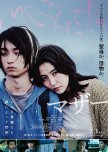
“Mother” was based on a true story, and I believe it was worse in real life. I think this is an important movie to raise awareness about domestic abuse. Toxic parenting can destroy a person's life. I have no sympathy for the mother in this movie. Please don't give birth or raise a kid if you are not ready to be a responsible parent. A child doesn’t ask to be born into this world.
This review is to comfort myself after watching this disturbing and depressing movie. Besides sexual and violent content, it is full of psychological abusive, controlling and manipulative behaviors towards children.
The real-life Kawaguchi, Saitama case happened in 2014 when a seventeen-year-old boy stabbed his maternal grandparents to death and stole their money after being isolated, neglected, abused and manipulated by his biographical mother. So this story was set from the 1990s to 2010s. As we have seen from the movie, the mother had been isolating her son from other people who were trying to help him, ordering her son around to buy stuff for her, to steal stuff, and to lie to others to ask for their money, and in the end she solicited him to murder her own parents for their money. She didn’t allow him to go to school or make any friends. As for the mother, she never worked to support her children and was even addicted to sex and gambling, and casually had sex with different men in front of her children. No child who grew up in such an environment would have a healthy mental state.
I don’t think this movie is about a son’s unconditional love towards his mother. He protected his mother till the end because he had no one else to rely on in his life, because his mother had been isolating him from the whole world, so that she could easily control her son’s life and order him around since he was very young. The mother did everything to keep her son co-dependent on her, just like how she was co-dependent on other people around her. It’s so heartbreaking to hear what the son said at the last moment that his mother could never make it on her own. Toxic codependency is harmful.
From what I have researched, the law in Japan was much different back in the days. Parents had a lot of rights as legal guardians of their children. Social workers did not have the right to call the police or separate a child from their mother even if they wanted to rescue them, because it was considered a 'domestic matter'. They have changed the law a lot up to now. I'm not sure if the 2014 incident had any influence in this matter. I think the female social worker, who was played by Kaho, really cared about the boy. I could see her efforts in trying to help the children in every way she could at that time, but she had no actual power to totally rescue them in that situation. As for other people, I believe it’s realistic and fair to say that they didn’t truly care about the child as he wasn’t their own son. Even his real-life father didn’t give a damn about his son either, after he became too fed up with his ex-wife.
Even nowadays, I think these kinds of toxic parents still exist, in a lot of Asian countries. I’m not sure if it has also been happening anywhere else outside Asia. A lot of parents give birth to their children expecting them to grow up on their own and later to provide and take care of them when they get older. Their children are considered their assets and their life insurance. They can neglect, beat and abuse their children on a regular basis, and their children are not allowed to feel bad about it, but have to be grateful to them for bringing them into this life instead. To be more specific, Asian culture has the concept of filial piety as one of the key moral values for the people. This concept is a significant cultural and ethical principle primarily rooted in traditional Confucianism and other religions in Asia, emphasizing the duties and respect that children owe to their parents and ancestors. In a lot of Asian societies including mine, many old-fashioned people still believe that our bodies and our lives don't belong to ourselves but to our parents, so our parents have the rights to do everything on our bodies and control our lives. That’s why they tell us what haircut or clothes we must wear and even try to control our lives when we are adults. One would be socially considered an unfilial child if they disobey their parents, even as an adult. If one doesn’t get married and give birth, they would also be considered an unfilial child to their parents. Even if one commit suicide, whatever the reason might be, not only they would lose their own life, they would also be criticized as an unfilial child. Suicide is considered one of the biggest sins that a child commit towards their parents, as people believe children’s bodies belong to their parents. Parents give birth to their children, so children owe them their whole life. It is believed that children owe everything to their parents and even if a child spends their whole life paying them back, that would not be considered enough. If you watch enough Asian historical dramas, you will understand this concept more deeply. I think it can be a toxic excuse for parents to control and manipulate their children in different ways.
In my opinion, due to this concept of filial piety which has been socially accepted in a lot of Asian societies, other people would not interfere too much, even the police, because it’s considered a domestic matter and it’s ‘my children, my way of discipline’. As someone who grew up with Asian parents, I feel deeply painful to witness these situations and sometimes I also feel so useless when I cannot help them. In these societies, parents are given a lot of rights. They can beat and insult their children regularly as a way of ‘disciplining’ them, and other people tend to ignore it, or have to ignore it. I think that’s also what happened in this movie. Hopefully things will be changed for the better for our future generations.
Anyway, the real-life son is still in prison now. As far I know, after he went to jail, he was finally able to learn and acknowledge a lot of things that he had never experienced before when living with his mom. He also started to care a lot about children's rights and he often writes letters to encourage other children. Some of his letters were turned into songs. The real-life female social worker, who was played by Kaho in this movie, also cares a lot about the boy’s life. As for the little sister, she was later adopted by a good family and has changed her identity. I’m praying for the boy and his sister’s happiness. I think he’s already become a grown up man in prison now.
Was this review helpful to you?


