



This review may contain spoilers
‘So...if I believe in ghosts, then they exist...’
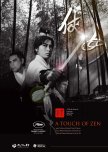
*Released in the early 1970s and regarded as the masterpiece of Hong Kong master King Hu, ‘A Touch of Zen’ had the great merit of updating a genre, the ‘classic’ wuxia, condensing within it, thanks also to its majestic but never really ‘heavy’ duration (180'), some of the most beautiful aspects of Chinese cinematography, today clearly re-proposed by contemporary filmmakers from the immense Asian territory, and by all those directors (Quentin Tarantino among the most devoted fans, for instance) faithful descendants of the great oriental film tradition.It is indeed difficult to speak of a simple adventure movie, because of the mixture of genres that runs through the picture, the repeated jumps from farcical to extremely dramatic tones, the astonishing action sequences alternating with more ‘reflective’ moments (‘definitely Zen’) make ‘A Touch of Zen’ a polyhedral work, multifaceted and therefore truly unforgettable.
Rich in symbols, allegories, even ‘arcane’ elements, always and in any case fascinating, immersed in an environmental setting rich in natural beauty, with an elegant and ingenious use of the camera and a picture capable of emphasising the contrasts, the numerous chromatic nuances (red, black and white, mainly) and alternating day/night sequences, the movie is a real feast for the eyes.
King Hu drew inspiration from a short story by the novelist Pu Songling, whose works have provided material for numerous Asian filmmakers, but it is clear that Hu, with his innovative stylistic choices, decisively marked the modernisation of the Wuxia genre, influencing generations to come (consider that the film's genesis dates back to around 1969...).
And thanks to the director's exemplary ability to synthesise, to the singularity of many sequences, even long ones, which are extremely descriptive and often dialogue-free, the observer is led almost to a kind of identification that puts him completely in the spirit of the work...
The beginning, in an almost western style (à la Leone, to be clear) immediately introduces us to one of the main characters in the story, the painter Gu; a curious observer at first, and then gradually more and more interested in the ‘strange’ pursuits that seem to enliven the sleepy town in which he carries out his occupation...It is very interesting to note how precisely the characterisation of this figure (extremely ‘modern’ in his conception of life) gradually takes on ever deeper nuances.
Also impressive is the Ghost Town (an old military fortress...) where all the characters live, which serves as the main theatre of the story: The painter in the company of his elderly mother, who continually ‘’vexes‘’ him, eager to see him settled:
‘You are 30 years old...You have to get married...get a career...I want to have grandchildren’!...
The mother-son duets willingly break the tension, bringing the film to more comic tones, even if they actually anticipate a development that is by no means banal in the evolution of the plot.
The beautiful Yang Hui-Chen, mysterious and silent, who, helped by the atmosphere of the place, is initially even mistaken by the painter for a ghost, as well as the blind peasant, whose real nature we later discover
Both figures can be considered classic, as they sum up many aspects found in numerous ‘genre’ movies, not only Chinese, but also Japanese...And if at the base of the story there is always the ‘old and healthy’ sense of revenge, it is skilfully melded with certain aspects of Zen ethics that accentuate its chivalrous nature; Precision and efficiency, discipline (which goes as far as asceticism), the noble spirit of loyalty, for example, are all at the core of the main characters' souls and determine their actions...
The Ghost Town, it was said:
During daytime, this former fortification looks like a simple assemblage of crumbling buildings, a refuge for the poor and outcast, At night, it truly appears as a place haunted by ghosts, where noises, shadows and creaks can create suspense and even fright...
Magistral from this point of view, the long sequence of the night battle, shot with an almost natural effect, where the sounds and lamentations, the screams of the fight imply a situation that will only be revealed to us at dawn, with an outcome that is both suggestive and highly dramatic...Cunning and strategy, supported by the ancestral fear of ghosts (‘Sir! the houses are haunted by spirits! ...’), against the numerical superiority of the enemy. It is evident, in this respect, how much ‘A Touch of Zen’ influenced a more recent Hong Kong classic such as “A Chinese Ghost Story”.
And over the three hours you can admire:
- Ironclad duels with jumps and evolutions that defy the laws of gravity...
- Swords with extremely strong blades that can, if necessary, act as trampolines to scale the highest walls...
- Others so flexible (yet lethal) that they can be fastened around the waist, like a belt
- A fight to the death in the middle of the forest that makes you realise how much movies like “Crouching Tiger, Hidden Dragon”, “Hero” and “House of Flying Daggers” owe to A Touch of Zen
- Bows capable of shooting numerous arrows at once
- A villainous commander-in-chief, capable of thwarting our heroes, skilled swordsmen, with only the strength of his hands
- A group of Zen monks armed only with faith (and strong ropes...), led by a master capable of taming the fiercest of enemies with a simple whisper
And so on…
So many amazing elements that constantly relaunch the story, with the aforementioned alternation of rhythm and atmosphere.
The closing, which I have no hesitation in describing as mystical, visionary, with almost psychedelic stylistic overtones, has in itself a truly majestic strength and suggestion...It may leave one doubtful, perplexed, because it does not provide a clear explanation, but there is no doubt that it is visually astounding and that, even from an iconographic point of view, it can open up to the most ‘extensive’ meanings
Majestic, sophisticated, breathtaking but also contemplative, adventurous and captivating, ‘A Touch of Zen’ is a masterpiece that leaves no one indifferent, and is therefore recommended to everyone.
10/10
--------------------------------------------------------------------------------------------------------------------------------------
*I took the liberty of reproposingt an ‘old’ review of mine that appeared many years ago on a forum that no long exists...
Was this review helpful to you?
This review may contain spoilers
Birth Mistery!?
I, sadly, found it quite poorly developed and even unresolved, e.g. the amnesia escamotage serves as an engine to move the story forward, but at the end of the day there is not even a really plausible explanation of the triggers of the memory loss, with its 'trauma' that should then activate the relative feelings of guilt, sin, redemption and all the corollary underlying the drama itself...I'm not saying certain 'motorist clichés' like “Winter Sonata”, 'I Have A Lover' or 'Stairway To Heaven', but something more determinant and concrete than 'psychogenic amnesia' yes, but...
Then let's talk about the pedagogical disaster perpetrated on the poor child, treated worse than a postal parcel!
Abandoned by the mother, then taken back with proterrity and arrogance, then almost gifted to the aunt and uncle, then taken back again by the mother, with the relative runaway and the poor father who, between a child-exchange with the companies' shares as if we were at the local fish market, because he is a poor idiot, finds himself having to tolerate all this, perhaps without even complaining...
Quite a bunch of relatives, they should all be jailed and social services called in....
The male lead character who at least improves his posture during the episodes, stopping walking like a complete idiot, something that cannot be said of the tedious father-in-law/father/grandfather (which for an Italian like me, is quite funny, because it reminds of the journalist Beppe Severgnini, A/N). It's really a pain for 18 episodes, this Rain Man/Kaiser Soze style pacing with relative hand scratching (enough!) that even makes our amnesiac Yu-ri explode, in one of the best liberating moments of the story...
...Now a digression has to be made: 'But what did the mother of the female character find so extraordinary about this phenomenon who is always bent over, mumbles two words in 18 episodes and stares at the floor or books she has read a million times that she would even have a daughter with her?
Mystery of the plot, she leaves the drama almost immediately so we will never know....
Rather than "Birth Secret/The Secret of Birth" the drama should be titled "Birth Mystery/The Mystery of Birth"
The other cult-moment is the incredible argument between the two friends-colleagues who accuse each other of stealing their boiled-fish boyfriend (who laughs out loud!) as well as the theft of the thesis (and who knows what else must have happened in the USA, eh, you naughty girls!?) ...
There is something interesting in the secondary characters, such as the youngest son of the eccentric family, with musical ambitions, as well as his mother, a fervent Catholic with a chapel in the house ('we rich people don't miss a thing, do we'!?), but also among the lead character's friends, especially the hopeless lovers who intersect their repressed desires with the lead couple, who would have deserved a little more space in the story...
The 40-year-old son's contrition for his wife comes too late... sorry but your beautiful bride is already on the plane
Awesome the CEO who goes from the board of directors to robots-transformer in two episodes, almost a record;
by the way, is it the soju drunk in buckets that ruins the brains as well as the rest, of the poor Koreans!?
The 6.5/10 is for the entertainment, even if 18 episodes are sincerely too many, and for the cast, really great overall with Yu-ri who is always fabulous and the formidable child actress a cut above the rest, even if making her cry so often is really blackmailing, anyone would be touched by a crying child (except for that monster of a mother-genius, of course!)
but it's still very difficult for me to want to see it again
Last personal note: The music in certain bridging scenes, curiously enough, has resemblance to some sound passages from 'My Love From The Star'.
Was this review helpful to you?
This review may contain spoilers
You should never play with the emotions
I watched this movie with extreme curiosity, almost like entering a sort of tunnel/time machine that takes you to a space-time dimension that is truly touching for how far it is from current cinematic logic;It is undoubtedly a solid melodrama, with all the components of the case (starting with the usual dynamics and problems of social class) that finds, in my opinion, a winning choice in the superb locations of San Francisco
(I had to smile remembering that even alternative musicians such as Makoto Kubota of the psychedelic band
Les Rallizes Denudes lived and played in California in the early 70s, just to say...)
and in Obayashi's never banal film direction choices, which finds a capacity for synthesis, as well as some sudden directional changes (see the 'accident' that is the cause of the meeting between the protagonist and her future husband).
Everything is undoubtedly overloaded and pushed to the extreme, the protagonist couple, extraordinarily famous at the time and also a couple in life, (I later discovered) love each other and break up in a sort of flamboyant amour-fou comings and goings with repeated plane flights ( beautifully synthesised by directorial solutions that are as simple as they are absolutely effective) or by efficient narrative re-propositions (the alternative club, but also the beginning and the end along the Golden Gate)
and the story would be all here, undoubtedly not dissimilar from many others but certainly not banal, thanks to an excellent direction by a master who is never ordinary, even on a theme as simple as Take Me Away!
The music is also beautiful
7,5/10
Was this review helpful to you?
Long and overcomplicate
Too, too long and exaggeratedly complicated (but why, what was the point!?)The initial cue is really excellent in addition to the criticism about a country that is at the very first places for plastic surgery, but then everything begins to crumble and disperse into heavy delays, unnecessary subplots and all those moments between the couple at home with him that keeps repeating ahjumma ahjumma (but enough!).
It almost seems that they wanted to take all the possible clichés of Korean drama -the ridiculous family of him, gigantic offices where the protagonists do nothing except sit in an armchair for revenge and conspiracies, restaurants open without a why, a surgeon who doesn’t work and doesn’t even recognize his patient, just to say - and they pushed them to the paroxysm, with a sense of the ridiculous that peeps around the corner.
The Count of Monte Cristo, quoted and badly served, is in itself the most glaring example of construction of melodrama - machination, revenge, shame, class relations, final twist - but, thanks God, there is really better around...
Han Ye-seul is a really brilliant actress, excellent dowry for such a beautiful woman, but it must be said, here, apart from the very first episodes with the spy-story situation to hook the ex, has never been particularly valued
6,5/10 ...
Was this review helpful to you?
Abandoned after 10 very long and tedious episodes that go round in circles on truly implausible situations devoid of even the slightest interest, moreover with a cast of side characters to be completely censured, starting with the most ridiculous police precinct imaginable, with a band of inept people who seem to have been assembled just to extend the length of episodes and with absurd lengths of time and tired and repetitive re-propositions of themes already dealt with in the very pleasant first season;
The heroine increasingly reduced to a sort of Jessica Fletcher, not even very likeable but decidedly petulant and even bearer of misfortune (where she passes, murders are plentiful...) and without even an apparent chemistry with co-star Kwon Sang Woo who, more often than not, appears bewildered if not frankly bored in his part, for a truly forgettable and definitely not recoverable experience even in the near future...
4½ / 10
Was this review helpful to you?
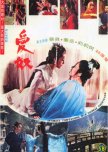
Intimate Confessions of a Chinese Courtesan
0 people found this review helpful
This review may contain spoilers
She Hit Me (And It Felt Like a Kiss)
*Kidnapped by bandits, the young Ai Nu (He Lili) is sold to Chun Yi (Bei Di), the ruthless and violent mistress of the “Four Seasons” brothel, a woman with a strong repulsion towards the male gender; Chun Yi, decidedly attracted not only by the rebellious character, but above all by the beauty of the indomitable Ai Nu, bends her to his will, leading her into prostitution; On the other hand, taking advantage of his high influence with Chun Yi, Ai Nu has the madam teach her the martial arts in order to be able to exploit them at the right moment; She aims to take revenge on the brothel's mistress and her wealthy dignitaries, seducing and eliminating them one by one...A misunderstood gem from the incredible dreams factory of the Shaw Bros. studios, ‘Intimate Confessions’, directed by the blissful hand of Chu Yuan, has rightly earned cult movie status over the years thanks to its mix of genres, which go beyond simple wuxia, and its components of tension, sadism, explicit eros, revenge and unusual violence, which sparklingly determine its stylistic traits.
Chu Yuan had ultimately come to the Shaw Bros team after a career spent filming predominantly Cantonese-language pictures, with mixed production fortunes, some of which were also shot on behalf of his own company, the “Rose Film Company”; but with the ensuing crisis in Cantonese cinema in the late 1960s, the director moved on to other companies, working on predominantly Mandarin-language films; Following the bankruptcy of Cathay, his arrival at Shaw Bros could be considered an unexpected stroke of luck.
His acknowledged sophisticated and innovative style, coupled with the excellent direction of the cast and the studios careful attitude towards higher budget productions, put him a step above his colleagues who may have been more concerned with quantity rather than quality of filmmaking.
The first Hong Kong film with lesbian themes, at least as prominent (it must be remembered, this is 1972), and part of the ‘Brothel Movies’ (movies set in brothels, houses of ill repute, etc.), ‘Intimate Confessions’ is a melodrama with decidedly dark overtones. where the ambivalent dualism Love/Hate and the tragic fatalism that leads us to the beautiful conclusion, go hand in hand with the relationship of sadistic and masochistic submission that is reflected, ironically, even in the names of the main female characters, who are, moreover, decidedly charming.
Where “Ai” (Love) “Nu” (Slave) can in fact be rendered as “Love Slave” or “Subservient”. in contrast, and somewhat ironically, given the nature of the woman, Chun (“Spring”) Yi (“Happiness”) can be interpreted as “Plesant Spring” (or “Spring Happiness”); In addition, if ‘Four Seasons’ is the name of the brothel (which makes one smile, since it recalls wealthy hotel franchises...), four are also the main dignitaries who will have to reckon with Ai Nu's spirit of vengeance…
Ai Nu, who, from being the obscure object of desire (of both genders), in reality reveals herself to be totally unattached to any sentimentalism, aiming exclusively at a very personal revenge against men and towards the one who has de facto enslaved her, in order to overturn her own condition of submission.
In this contest, it is precisely the male element that does not make a good impression on any level, given that all the male characters in the story come out totally diminished, not to say reduced to impotence, both physically and emotionally; if the clients go so far as to physically possess the prostitute, but receive nothing in return, the poor official Confucian Ji De, hopelessly in love with Ai Nu, will find himself relegated to the unhappy role of platonic voyeur.
As previously mentioned, Chu Yuan's filmmaking skill lies in the accumulation of recurring motifs or clichés considered typical in wuxia: From the theme of revenge, to love and deception, to the use of martial arts, all the way to the grand finale with the merciless duel, but all with great attention to detail, starting with the truly remarkable scenographic decor, including veils, curtains and the beautiful clothes of the characters; the chromatic attention to the colours of the costumes that change according to the situation and the degree of drama also returns here.
Emblematic is the grand finale, very well-choreographed, all swords, blood and various dismemberments, where the two female opponents find themselves side by side, fighting with no holds barred, dressed practically the same and, in some parts, indistinguishable from one another: John Woo and the usual Quentin Tarantino (with a penchant for revenge movies), they will certainly have appreciated, considering the particular killing technique used by Chun Yi, as well as the solutions employed by Ai Nu to eliminate the four dignitaries: Striking, for example, the erotic stratagem of prolonged and repeated sexual intercourse to literally ‘ exhaust ’ the target.
Blood and violence, fights, but also irony, passion, with notable sapphic love scenes (see also the finale) that, in those years, returned a little in all cinematic latitudes, from Italian gothic (Mario Caiano above all) to the cinema of Jess Franco (the extraordinary ‘Vampyros Lesbos’ is from 1971), up to the beautiful vamps of Hammer Film Production in the UK.
In addition to all these aspects, some ‘secondary’ nudity, also justified by the location of the story (which, it should always be specified, takes place entirely inside the brothel) will have helped to broaden the audience, but ‘Intimate Confessions of A Chinese Courtesan’ is undoubtedly an absolutely excellent movie that deserves its international cult status and is still very much appreciated today, making it a must-see for every lover of Hong Kong cinema.
*A heartfelt thank you to Riccardo Esposito who, in his beautiful book ‘Fant’Asia’, has treated Chu Yuan's film in an exemplary manner, giving it due credit long before the usual, and often belated, festival recoveries; All the main themes, annotations and references on morphology and articulate Chinese composed words come from there
8 ½
Was this review helpful to you?
This review may contain spoilers
I Led Two Lives
Surrounded by a media hype worthy of the best previous series, 'Queen of Tears' certainly passes the test of success, but it doesn't reach the qualitative heights envisaged by its authors, due to a somewhat too schematic and rather predictable development, which doesn't integrate perfectly with the amount of material available, leaving us with the impression of a possible missed masterpiece...Yes, because this supremely romantic and poignant love story is supported by the usual exaggerated set of narrative stylistic traits, bordering on makjang, with which we are all familiar and which provide the necessary boost for the development and the need to keep the attention threshold high throughout the 16 long episodes; narrative stylistic traits which, however, do not seem to be able to decisively innovate the plot's contents...
The feeling is that of being faced with a very costly author's “centone” *, a patchwork of other dramas capable of advancing more by twists and disruptive emotional jolts than by a consequentiality of narrative logic.
The heart before the mind, one might say... which, let's be clear, is a beautiful way of developing a truly redundant story, of sublime love and certainly moving (prepare your handkerchiefs because it is very emotional...), at least for me, an incurable romantic, but which fails to dare to use a more innovative language, not even experimental, but perhaps less mechanical and accommodating, made more to please the audience, who are evidently already well predisposed...
Personally, and this is not a very good sign, I found myself, quite surprisingly, mentally anticipating several plot twists which then punctually occurred, such as:
- The Hong family's hurried escape, with their arrival in the village of Yongdu-ri, which introduces a great narrative twist for one of my favourite moments of the drama, with very funny situations almost in the style of "Family Outing"
- The press conference with Hae-in's confession, absolutely inevitable at that point in the story
- The predictable and dare I say "announced" sequence with the encounter at the traffic lights and the related “traffic accident”.
Here and there one has the suspicion of a fabricated cult classic, perhaps capable of repeating the enthusiastic success of "Crash Landing On You" (even mentioned in a fleeting appearance in a scene on the TV) without, however, having the same narrative force as its predecessor, which, unlike "Queen of Tears", is capable of escaping a schematic manicheism bordering on sketchiness, and can also count on a decidedly more interesting backstory... It is precisely in the pursuit of a familiar, self-indulgent and quite quotable scheme that 'Queen of Tears' reveals perhaps the least convincing side of its construction, as well as in some not entirely successful acting passages...
The pattern is quite common in the portrayal of the Hong family, with rather classic family characters and dynamics, accompanied, however, by some very good performances, especially by the always excellent Na Young Hee and, of course, Lee Mi Sook who, with those beady eyes, makes us realise immediately where this is going...
The Baek family, with the usual array of villagers to temper the narrative tension, is just the right amount of fun, although I didn't find the group of friends from the hairdresser's salon particularly entertaining.
Even the "company" part in the department store doesn't exactly shine with originality, with the usual set of classic assistants/employees, but a special mention for Yoon Bo Mi who is really cute and funny; Hyun Woo's group of friends/lawyers is of a good standard, capable of giving us some funny moments (the advice on divorce!), as well as the inevitable decisive actions to help our hero.
In the brilliant performance of a stunning Kim Ji Won we must recognise the true strength of the drama, with a staggering characterisation, of great artistic maturation, capable of penetrating into the essence of the scenes, alternating moments of frenzy, often irresistibly comic, with others of pure emotion where the simple facial expressions communicate more than a thousand words, for what is truly the perfect interpretation of a woman who lived two times; while it is perhaps in Kim Soo Hyun's work that one remains a little less convinced, finding almost a sort of mechanicity, bordering on self-citationism for example of her extraordinary role in that masterpiece that is "My Love From The Star", (certainly more than in the equally marvellous work done in "Its OK") including the monologue in front of the camera;
Let's be clear, we are talking about one of the best actors in the drama world and not only, but here he seems to play it safe, without pushing the pedal of style in a fully convincing way... However, it must be specified that the chemistry between the two main characters is very much present, especially in the levity episodes where there is often an amused and funny air as in certain old-school screwball comedies (see for example the jealousy scenes, often relying more on looks than words)
As for Park Sung Hoon, I often tell myself that when a character in the story comes to be particularly well hated, it means that his performer has done his job perfectly, and he has; he is an excellent villain, admittedly not particularly original, but the dramatic crescendo is certainly adequate and effective.
Pure gold the cameo of our lawyer Song Joong Ki/Vincenzo Cassano, a real hilarious one as always (Vincenzo! We miss you!), but also the appearance of the unlikely trio of 'Hong Gil-dong Detective Agency' ex-cartoonists, straight from 'My Love From The Star' almost made me cry ('My Love' also quoted with the pen-recorder element...)
The choice of locations is absolutely stunning, starting with Potsdam and the beautiful Sanssouci Palace which, we can bet, will soon see an exponential increase in its tourist flow; it must be said that given the use of specific car brands, a joint venture with Germany seems obvious. There is no need to repeat that Korean landscapes are always extraordinary, thanks also to a dreamlike photographic setting, of great impact, able to glorify sequences such as, for example, the moment of the proposal at sunset with the related ring, pure magic!
The nocturnal pre-finale on the snow-covered landscape is impressive, reminding me of certain asian noir movies of the 1960s (the closing of Truffaut's 'La Sirene du Mississippi' also came to mind), but absolutely stunning and extraordinarily moving the epilogue, truly an unforgettable example of film poem; in that beautiful epigraph there is the whole sense of the tale.
At the end of the voyage, a bit like in a theatre performance, some of the characters wonder what they have witnessed, mentioning different cinematographic genres... I wondered about this myself, reflecting on whether the structure and unfolding of the story could really have been adapted to the most classic of Sageuk, for example... One of the best film noirs of the 1950s, Fritz Lang's 'The Big Heat', would undoubtedly have been a beautiful western, just as Samuel Fuller's '40 Guns' could have been a great female-driven gangster-movie (thanks to the magnificent Barbara Stanwick)...
Heart and mind always at odds make me say that yes, it's true, "Queen Of Tears" is a drama that is not completely focused, quite conventional, with many narrative clichés, several contradictions and the usual unlikely things, perhaps with an eye towards the international and western television markets, but bearing in mind that suspension of disbelief has always been a basic element in following and loving dramas, it is important to be guided by the heart and to be overwhelmed by the extraordinary romanticism of the story, which makes me give it a positive rating of 8/10, probably reviewable on a second view...
*I preferred to keep the term Centone in Italian because it is quite hard to translate; let's say that -helping us with the Internet- a centone is a text composed of a collage of quotes from different authors or operas, joined together to form an original composition. It is often used in a somewhat disrespectful way in the film industry, while from my side it is a simplification to indicate a work full of multiple quotations, references etc....
Was this review helpful to you?
This review may contain spoilers
A walk in a Summer Evening
Always beautiful and exciting, this gem of a romance that has not lost its lustre over time, I find it refreshing and pleasant, like certain late summer evenings of yesteryear (nowadays perhaps with the climate warming it is a bit more difficult...)It may be due to the relatively short duration of the episodes, to the flowing of the situations without lengthy or overly complicated situations, but it is certainly in the extraordinary chemistry of the couple that the key to its innumerable merits is to be found (from a male perspective, it is impossible not to love a creature like Jeon So-Min.).
The minimalism often achieves the best possible result without overdoing it, but with that emotional crescendo that is demanded of a romantic comedy in which everything flows in the right way, even the silences and meditative pauses. But there is one aspect that I would like to highlight, and that is the great sensuality that pervades the whole drama. It is hard to believe that the classic 'spark' has never been ignited between the couple, thanks also to the very warm effusions exchanged, a far distant from certain cold kisses in other similar productions... Perhaps the last episode claims to settle every last detail, or various couple concatenations, but it is just a trifle, and it remains an 8.5/10 drama recommended to everyone
Was this review helpful to you?
This review may contain spoilers
I'm wondering who put a spell on me and you / How did I find myself here?
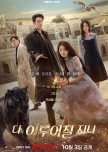
I couldn't find a real linear interpretation for “Genie, Make A Wish”; the drama seems to belong to that typical category of fantasy series that, on paper, seem familiar: an immortal genie tired of humanity, an incredibly twisted and emotionally inscrutable woman, a bet with God, wishes that end up backfiring on those who express them. Those references to 'Goblin' (and why not, considering the writer) the irony, the previous lives, the intertwined destinies, the impossible loves, the curses and the “condemnation” of eternal life...But episode after episode – skillfully spread out over time – it became increasingly clear to me that my attempt at “natural interpretation” was not a limitation as a viewer, but rather a structural feature of the work itself. Behind the fantasy apparatus and the seemingly simple mechanics of desires, the drama constructs a system that only works as long as the viewer agrees not to reduce everything to an immediate moral or a single explanation.
If the narrative system of “Genie, Make A Wish” rejects such a univocal explanation, it is because its characters, too, probably do not function as moral demonstrations. Iblis, in particular, does not act to create conflict, but to confirm an already given idea of humanity. He is not a driving force of the story: he is an embodied thesis.
From the outset, he seems less interested in tempting than in confirming a belief. He does not offer seduction, but rather proves that humans will fall anyway. In this sense, I thought – perhaps conceptually boldly – of Satan in Milton's ‘Paradise Lost’: a figure who does not need to win, because he is already convinced that he is right.
The Iblis portrayed by the talented Kim Woo-bin – with a truly comprehensive, all-round performance, never mannered or hammy, magnetic even in his gaze and always up to the difficult task assigned to him – is in fact a “satanic” genius more in function than in actual inclination towards evil. He is arrogant, brazen, convinced that he knows human beings better than anyone else, including God. Centuries of observation, of granting wishes, of confirmation have instilled in him an unshakeable certainty: humans are corrupt, selfish, predictable. His challenge is not driven by curiosity, but by the presumption that he has already seen everything. And when you are convinced that you already understand everything about someone, you stop listening to them.
Ka-young, played by the stunning and self-deprecating Bae Suzy—with an incredibly intense and dedicated performance, that crescendo and that deep pathos of sincere emotion in the finale—enters the scene as a disconcerting, almost repulsive figure. Sociopathic, unemotional, incapable of empathy—at least according to clinical categories. Psychopathic, perhaps.
A young woman who grew up under the sign of expulsion: abandoned as a child, she is raised by her grandmother Pan-geum – played by Kim Mi-kyung, who is so talented and devoted to her role that it is difficult to distinguish between acting and real life – who, rather than teaching her how to “feel”, explains to her how to “be in the world”. She does not heal her, but provides her with rules of restraint, discipline and responsibility. The rules of conduct are not a sign of coldness, but strategies of control. Ka-young learns an ethic of behaviour even before she learns emotional grammar. Above all, she learns not to “cross the line”.
This apprenticeship shaped every aspect of her adult life. Her work as a car mechanic perfectly embodied this attitude towards life itself: cause → immediate effect; do the job well = the engine works, do it badly = it doesn't work: no ambiguity, no emotional interpretation, absolute certainty and guarantees. At the same time, she devotes herself to woodworking, building furniture and even coffins. Not out of a morbid fascination with death, but to take away the panic, to bring it back to a manipulable, measurable, concrete realm. It is the opposite of the destructive impulse: an attempt to exercise rational control over the inevitable.
On this journey, only two people truly see her for who she is. Her grandmother, who does not ask her to change, and her chosen friend — not an imposed one — who accepts her quirks without wanting to correct them. Both embody a form of relationship free of pretension: they do not ask Ka-young to be “someone else” in order to be acceptable.
And it is precisely this form of self-restraint that throws Iblis's system into crisis. When the opportunity for desire arises, Ka-young does not react as expected: she does not desire out of greed, she does not use power to fill a personal void, she does not even seem particularly seduced by the idea of being able to have “everything”. This does not make her morally superior, but narratively incompatible with Iblis' thesis. Her presence does not defeat him: it defuses him. Faced with an individual who asks for neither excess nor need, the system of human classification on which Iblis has based his certainty ceases to function.
The central conflict of the drama then seems to shift: no longer between good and evil, but between a device that claims to explain humanity and a subject that stubbornly continues to escape categorisation. Ka-young and Iblis challenge each other with five wishes: four human beings and a dog, chosen at random. No one is totally guilty, no one is completely innocent. Selfishness arises from fear, altruism comes late or with detachment.
The inclusion of a radical moral anomaly (with the extemporaneous ‘crime’ variation) interrupts any consolatory reading: evil exists, but destiny can be rewritten. In the end, a fragile and reversible majority of altruism shows that humanity cannot be either absolved or condemned. The parable is clear: human beings remain unpredictable, and the certainty of the system collapses.
In this millennial intertwining, predestination is not total: Iblis and Ka-young remain bound by a past in which a third wish has already marked love, suffering and mutual protection. Ka-young carries echoes of that experience with her, while Iblis retains only fragments erased from his memory. Yet it is precisely Ka-young's radical choice in Goryeo—to use the three wishes purely altruistically—that demonstrates that humans can escape all certainty. Predestination and free will meet in tension, transforming every decision into an unpredictable moment.
In this context, the role of Ejllael (Noh Sang-hyun, well-suited to the role and subtly ironic) becomes even more significant. He is neither good nor evil: he is neutral, the administrator of the inevitable. He doesn't judge human desires, he records them; he doesn't punish, he executes. God's messenger and Iblis's age-old rival, he observes the bet between the genius and Ka-young with silent attention. He does not intervene, but everything that happens passes through his eyes: every choice Ka-young makes, every prediction Iblis makes, becomes a mirror of what is at stake. Ejllael is not an indifferent spectator; he is an interested witness to a dualism that shakes millennial certainties, making what seemed immutable fragile and every decision more intense.
The finale of "Genie, Make A Wish", therefore, does not simply conclude the story: it completes its arc, highlighting everything the series has explored from the beginning. After Pan-geum's death, Ka-young is confronted with a pain that exceeds her capacity for understanding: a woman incapable of emotion experiences such intense grief that it disrupts the rules of her orderly life.
The encounter with Iblis thus becomes the decisive turning point: the genius fears that the third wish will confirm his view of humanity as corrupt. Ka-young, on the other hand, chooses to live human emotions to the full for just one day, even at the cost of her own demise. The paradox is clear: the act appears selfish, but it is the most authentically human gesture possible: it stems from the desire to feel, understand and confront life itself. Faced with this radical sincerity, Iblis loses the bet and bows down, giving up his pride.
In this way, the parallel destinies of the main characters become the symbolic fulfilment of the Goryeo girl's third wish: to protect each other until the end, even through pain. Their rebirth as immortal beings, Ka-young as Jinniya and Iblis as a genie, marks the conclusion of a millennial cycle of observation, bets and mistakes, transforming the test of human goodness into something different: a lesson in responsibility, freedom and a form of true love.
And this is where the ultimate meaning of the ending lies.. What remains is not only the story of two immortal beings united forever, but the parable of the drama itself: a journey through desires, limitations, moral codes and conditional freedom, which shows us how human beings are neither predictable nor reducible to patterns, but live amid chaos, choice and the possibility of redemption. The bet is over, but the reflection continues: in “Genie, Make A Wish”, true immortality lies not in power, but in the ability to choose and feel, even when this means accepting the burden until the end.
7 ½
Was this review helpful to you?


