
 News
News 

 3
3 1
1



This review may contain spoilers
Story Built on Bad Decisions
Personally, not a fan of the “cheat on your current partner to find your soulmate” genre. Unfortunately, this drama turned out to be exactly that and that’s my biggest issue with it.The best thing for me was definitely the countryside visuals. I’m a complete sucker for countryside dramas regardless of genre, I almost always end up watching them. That’s the main reason this drama was on my watchlist in the first place.
What I didn’t like were the characters and the core story. Honestly, not a single character won me over. The entire drama is just people making one stupid life decision after another.
The male lead, Hae-ju, might be one of the most infuriating characters I’ve ever watched in a Kdrama. He dumps the female lead but the moment she’s about to get married, he finds out about his illness and suddenly kidnaps her to accompany him on a journey before his death without even informing her properly. He gives zero thought to what she would go through or the emotional state she’d be left in once he abandoned her again. Every tragedy in his life except the illness is self-created. He does the same to his birth mother, never allowing his adoptive father to process the fact that the child he raised isn’t biologically his. His mother eventually commits suicide and he leaves home and becomes a street kid. His entire arc is chaos driven by selfish choices.
The female lead, Jae-mi, is a pushover. This time, I could at least understand why she’s content with less than the bare minimum given her background. But let’s be honest many people in the real world accept the bare minimum only because it comes from a handsome face, no matter what others might have to offer.
Eo heung—the cuck. I felt sympathy for him at first but as the story progressed, that sympathy turned into pure irritation.
Despite hating the characters, I managed to finish the drama because I disliked all of them equally. I hate it when genuinely good people end up with irritating partners. I firmly believe that people with the same level of emotional mess deserve each other. And in that sense, the ending at least made the story feel more meaningful.
Was this review helpful to you?
IS IT REALLY DIFFERENT?
Queen Woo is a glaring example of a show that substitutes substantive narrative depth with gratuitous and ill-conceived sensationalism. The drama lacks a cohesive plot, meandering aimlessly without any clear direction or thematic focus. The story, which should have been a rich exploration of character dynamics or historical intrigue, is instead an exercise in narrative inertia, offering little more than a disjointed collection of scenes that fail to engage or captivate the viewer.Compounding this deficiency is the show’s perplexing reliance on superfluous nudity and explicit sexual content. Rather than enhancing the narrative or contributing to character development, these scenes feel entirely gratuitous, serving no purpose other than to distract from the otherwise vacuous storytelling. The overuse of such elements not only undermines the drama's credibility but also signals a creative desperation, as if the creators believed that shock value could compensate for the absence of compelling plot or emotional complexity.
Those who aren’t very creative or lack confidence in their own work, try to insert nudity and sex as much as possible in their project. They usually don’t possess enough talent to create different situations or showcase different range of emotions. They depend heavily on nudity and call it art to make their stories work. This also attracts a certain section of audiences or maybe they wanted to have an international hit? There wasn’t a single nude scene which was inevitable or important to the story.
But was it actually "different" like everyone is raving about? They started with the infamous childhood trope.
Ultimately, Queen Woo fails to deliver on any meaningful front, squandering its potential by indulging in unnecessary provocations while neglecting the fundamental aspects of storytelling. The end result is a show devoid of depth, lacking both narrative purpose and any semblance of artistic integrity, leaving the audience unfulfilled and disillusioned.
Was this review helpful to you?
Way More Entertaining Than It Sounds
First of all, if anyone is like me and the synopsis isn’t really pulling them in, just ignore it like I did. The synopsis was giving strong reverse harem vibes and that’s a genre I’m personally not interested in at all. Thankfully, the drama itself doesn’t actually lean into that vibeAbout the story, it's probably not something people will remember for years but it’s very entertaining. It does its job well, which is simply keeping you hooked. There were no filler episodes and no dull moments in between. The screenplay stayed consistently engaging.
The comedy was genuinely there, not just some lame, forced, outdated jokes trying too hard to make viewers laugh. It felt very timely and well placed. After a long time, I found myself genuinely anticipating when the couple would finally get together or when the romance would properly kick in. They handled the romantic progression quite nicely too.
It had an enemies-to-lovers vibe but not the overly dramatic grudges that fictional stories often fabricate. And thankfully it wasn’t one of those silly Kdrama grudges like “he stole my eraser in kindergarten.” It felt much more grounded, like how sometimes you simply don’t like or don’t click with a classmate or coworker. I’m sure most people have experienced that at some point. I appreciated how the reason behind their initial hostility felt natural rather than contrived.
Jisoo did exactly what was required for the type of drama this was. Honestly, she seems like another victim of people being overly critical of conventionally pretty actors. For the role she was given, she delivered it quite well and she felt especially natural in the comedic moments.
I was also a bit surprised by Seo In Guk in this drama because in the beginning there were barely any scenes of him the way you’d expect from a lead. But that absence gets compensated in the second half. His chemistry with Jisoo was also more entertaining than I initially anticipated
Overall, it’s just a very enjoyable watch. Definitely an entertaining ride that keeps you invested and gives you a couple you’ll find yourself rooting for
Was this review helpful to you?
This review may contain spoilers
A Bunch of Nothing Wrapped in Beautiful Visuals
✧✦ This is just my personal view on the drama. We can all agree to disagree✦✧I usually finish Netflix originals in a single day but this one took me three days and that alone says a lot.
✦Let me start with the good, because there are good things. The cinematography is easily the biggest highlight of the drama. It’s consistently beautiful. Cha Muhee’s outfits were another win and Dorami completely stole the show for me. I think I liked Dorami so much partly because I wasn’t invested in the main love story at all and Go Youn Jung absolutely nailed the role.
✦Now, the things that didn’t work for me.
This drama suffers a lot from mis-genre issues.
The drama is labeled as a rom-com but the comedy is almost non existent and I’m not even sure the constant push and pull between rejection and pursuit qualifies as romance.
In the first half, It felt like the same thing happened in every episode: the main leads having the exact same conversation, the female lead trying to court the male lead, the male lead rejecting her and then a goodbye at the end of the episode. As irritating as that was, at least the male lead still felt somewhat relevant to the story during this phase.
The second half is where the male lead completely faded for me. He wasn’t doing anything remarkable or even necessary for the plot. He felt like background noise, so much so that I probably wouldn’t have noticed if he’d barely appeared. Ironically, I enjoyed the second half more simply because Dorami had more presence. Go Youn Jung once again proved her range by slaying the dual role.
If you strip away the cinematography and the pretty actors, I honestly don’t know what’s left of the story. It feels like many things are happening, yet nothing is actually happening. The main love angle was repetitive and painfully boring.
Personally, found the second male lead–female lead dynamic far more engaging. Hiro wasn’t perfect but if his character had been properly developed as the main lead, the drama could have been much more entertaining.
A story about a Japanese actor and a Korean actress, carrying childhood trauma, unable to understand each other’s language, starting off as enemies and slowly falling in love sounds far more aligned with the rom-com genre they were supposedly aiming for. Dorami being dynamic and Hiro matching her energy would’ve made so much more sense. Hiro wasn’t some flawless green flag character either.He had his own issues and I don’t mind imperfect characters at all. My problem with the male lead is simply that he felt repetitive and stagnant.
✦I rated the drama 6/10 and here’s why:
2 points for the cinematography
1 point for Go Youn Jung
1 point for Go Youn Jung slaying a double role
1 point for Go Youn Jung’s outfits
I’m not blaming the actors. They did what they could with what they were given. Visually, the drama was engaging and easy to watch but when it comes to storytelling, it ultimately fell apart.
Was this review helpful to you?
Hit show (Read with an "S" in the beginning)
Love Next Door attempted to blend several genres like romantic comedy, slice-of-life and even elements of drama but ended up feeling disjointed. The shifts in tone from light hearted moments to more serious themes often felt jarring.Additionally, with each episode running for 1 hour and 30 minutes, the extended runtime felt excessive for the plot being told. The pacing dragged, leading to drawn out scenes that could have been condensed. As a result, what could have been a fun, engaging story turned into a tedious watch.
First of all, the good point about this drama is its lead actors. Jung Somin and Jung Haein are the only reasons people even fw this drama.
Love Next Door unabashedly positions itself as a romcom, yet the supposed "comedy" is conspicuously absent. For a drama that claims to reside within the romantic-comedy genre, it displays an alarming deficiency in humor, delivering not even a modicum of wit or levity. The comedic elements if they can even be called that are stale and unimaginative, often falling flat or feeling forced.
As for the romantic dimension, it was equally unconvincing. The connection between the protagonists lacked the effervescence and warmth typically seen in successful romcoms. The romance felt stilted, as though the writers were merely ticking off the requisite boxes without any genuine emotional depth or progression. What was meant to be a charming exploration of love unfolded as a mechanical, uninspired portrayal, devoid of the chemistry and playful banter that is the hallmark of the genre.
The writers tried to mix a slice of life and healing theme into the romcom but they didn’t create smart or deep characters to make it work. Slice of life stories usually focus on real life moments and personal growth but the characters in this show felt simple and shallow. They didn’t have the kind of thoughts or emotions that would make these themes feel real.
The brother in Love Next Door was probably the only realistic character in the whole show. He reminds me of my own baby brother–super irritating.
The writers of Love Next Door completely squandered the undeniable chemistry between Jung Somin and Jung Haein. Their natural connection was one of the show’s greatest strengths but the way the romance was handled left no room for it to fully bloom. By the time the female lead confesses her feelings, there was no anticipation or emotional tension left for the viewers to savor.
Love Next Door - somehow managed to ruin the best friends-to-lovers trope, despite the fact that it’s a genre that’s practically impossible to mess up. This storyline typically succeeds because of the natural, long standing bond between the characters, filled with history and emotional weight. But the show turned what should have been a compelling transition into romance into a bland and overly sweet narrative that stripped the couple of any real depth.
The second couple had a lot of potential but the writers seemed to focus too much on making them overly cute. This forced attempt at charm, unfortunately, drained their storyline of depth and left their relationship feeling bland. Their chemistry could have been explored in a more natural and compelling way instead of relying on repetitive cuteness, which, while endearing at first, lost its spark over time.
The mother of FL really does become insufferable as the show goes on. Initially, it felt like her strictness came from a place of tough love when she whooped the FL in the first episode. But as the series progresses, her behavior crosses into petty, jealous territory. She reacts negatively to almost everything, especially when it comes to her daughter’s happiness or independence.
The arrival of both exes, creating a love pentagon, significantly diminished the overall experience, even though the exes themselves were well written characters. Instead of enhancing the storyline, their presence muddied the romantic focus and detracted from the chemistry between the main couple.
The sole indelible moment in Love Next Door was the poignant flashback of childhood, portrayed with remarkable authenticity by the child actors. Their nuanced performances elicited a sense of nostalgia and depth.
I thought this would be a drama where I would love the main couple but hate the story. However, it was so bad that I don’t even like the on-screen romance now.
Despite securing a prime time slot on tvN, Love Next Door underperformed compared to other dramas in that slot. While it maintained respectable ratings and often ranked first in its time slot, it didn’t reach the high ratings that many prime slot dramas typically achieve.This can largely be attributed to its underwhelming storyline and frustrating character arcs, which failed to engage viewers on a deeper level. The script lacked the dynamism and complexity needed to sustain a prime slot drama, leading to a disconnect with its potential audience.
It wasn’t the worst drama I’ve watched but it’s definitely the most disappointing. The hype was high, especially with Jung Somin and Jung Haein.
It was profoundly disheartening to witness actors of Haein and Somin's caliber acquiescing to a script as lackluster as Love Next Door when they undoubtedly had more discerning options at their disposal. Their remarkable aptitude was regrettably squandered on a project that failed to exploit their full artistic potential.Ultimately, the writers must bear the brunt of the responsibility for failing to realize the potential of this ostensibly promising premise.
Was this review helpful to you?

AN HONEST TAKE: Almost Perfect, Almost Problematic
༆ Genie, Make a Wish—Don’t be fooled by its calm beginning . The opening episodes feel like another typical Netflix drop, something you watch out of convenience rather than genuine interest. But somewhere around episode three, the story begins to find its rhythm and before I realized it, I was genuinely invested. The pacing tightens, the emotional beats start landing and the fantasy element blends naturally into the romance.༄ The highlight of the drama for me was definitely the chemistry between the leads. Even as someone who’s watched countless Kdramas, I rarely find couples who genuinely feel romantically connected. Too often, they come across as overly vanilla or sibling like just to seem wholesome. And don’t even get me started on those awkward, boring kisses that I usually skip! But here, despite the playful banter, the romance felt real. The kissing scenes were beautifully directed and the chemistry between Kim Woo-bin and Suzy was undeniable,maybe because they’ve worked together before, their comfort showed on screen.
༄ When it comes to performance, Kim Woo-bin does exactly what he does best. Grounded, nuanced acting with a touch of charm. He transitions smoothly between intensity and softness, making even the lighter moments feel sincere.
༄ As for Suzy, this was my first time watching her, and honestly, the criticism she often receives feels unfair. There’s a bias against idol turned actors, especially those who fit a conventional beauty standard but she proves herself here. Her portrayal of a woman numb to emotion, someone learning how to feel and navigate moral boundaries, was subtle yet powerful. And yes, her styling deserves a mention.Even in simple mechanic outfits, she radiated confidence and allure.
༄ However, the one major flaw I can’t overlook is the decision to name the genie “Iblis.” It was unnecessary and culturally insensitive. They could have easily made him a traditional djinn or an original mythical being without touching something so sacred and controversial. The backlash was completely justified. I only continued watching because the name was barely mentioned after a few times but still, the creators should have known better.Honestly, I didn’t expect much because it was from Netflix but it’s disappointing all the same.
What disappoints me most is that after months of feeling burnt out on Kdramas, this was the first one I watched without skipping a single scene. It finally pulled me out of my slump. And yet, just when it had me fully invested, the show made such an avoidable blunder.
So despite the chemistry, visuals, and performances pulling me in, I can’t ignore the choice to name the genie “Iblis.” It was careless and disrespectful and that decision took away from what could’ve been an almost perfect drama. The show had the heart and spark to be a 9.5 but because of that one tone deaf choice, it’s not for me —a story that shines bright, yet stumbles where it should’ve shown sensitivity.
.............. ✶✶✶
Was this review helpful to you?
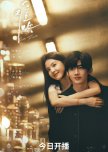
This review may contain spoilers
One sided love story
When I first started watching it, I thought I liked it. But looking back, I realize that impression came almost entirely from the cinematography, the atmosphere, and the overall aesthetic.At its core, the narrative is clearly centered around the female lead, with the male lead functioning primarily as her love interest.
The female lead is portrayed with very realistic human emotions and emotional baggage, while the male lead is treated almost like an idealized fantasy character.Because of that, their dynamic feels unbalanced, too heavy on one side and too light on the other, like an uneven scale.
When the first ghosting happens, I barely react. It feels like obvious plot convenience and at that point, I assume they’re only loosely connected. But as the flashbacks unfold, it becomes clear how emotionally close they actually were, which shifts the context.
Apparently, there’s a second ghosting. I’m not sure if that’s confirmed but I have no interest in continuing if that’s the direction it takes especially after a confession.
At that point, any remaining patience I have for the female lead would probably run out. And it’s not that I can’t appreciate flawed or emotionally complex characters. I’ve liked many problematic male or female characters before. Here she's not even problematic,just troubled. But this one just doesn’t engage me at all.
As someone who enjoys romance, I don’t mind when the man takes the lead or puts in more effort. But here, it’s not imbalance, it’s absence. There’s virtually nothing from the woman’s side. Even the slightest indication of effort, literally 1% would have changed how I feel about this story. Instead, by the end, the relationship feels entirely one-sided.
San Yang is idealized as a love interest to the point of being almost unreal, while her side is only developed as an independent character , her feelings for him remains underdeveloped.
As a character, I don’t have an issue with her. she has her own emotional weight. But in a story marketed as a romance, I couldn’t really see her as part of the romantic equation. I was willing to wait for her romantic growth but if she ends up leaving him hanging again, then the growth doesn’t really mean much. It just feels like the same cycle repeating. She passively receives his love rather than actively participating in it
Beyond the main storyline, the side plots only make things worse. They feel disconnected at best and irritating at worst. I couldn’t care less about the second couple. The grandfather’s storyline adds nothing to the central narrative. It comes across as unnecessary filler rather than meaningful expansion and the uncle and the female lead’s mother are consistently grating, adding more frustration
In the end, this is a drama that leans heavily on mood and visual appeal but aesthetics alone can’t sustain a romance. Without emotional reciprocity or narrative balance, the story feels hollow.
Was this review helpful to you?

This review may contain spoilers
FROM AN UNBIASED POV
《逐玉》 Zhu YuWhat captivated me the most about this drama has to be the screenplay and cinematography. I firmly believe that an engaging screenplay can carry a story even through slower mid-sections and here, the story itself was compelling as well. The director is absolutely talented.Aside from one scene, I was satisfied with every sequence of the drama.
I also have to credit the comedy, which consistently managed to make me laugh. The director’s talent was evident not only in the storytelling but also in the visuals.Somehow, even already handsome and beautiful actors looked even more good looking on screen , which I didn’t think was possible.
When enjoying a drama, we can’t just like the leads while ignoring the supporting cast. A story only works if the entire ensemble is engaging, not just the romance. I found myself invested in the supporting characters too. Even some antagonists had arcs we could follow. There were no irritating negative characters forced into the story without purpose.
THE PARALLELS :
I appreciated how the author highlighted the parallels between the protagonist and the antagonist.Xie Zheng and Qimin share eerily similar pasts: both lost their fathers, witnessed their mothers’ ultimate sacrifices, endured childhoods marked by hardship, were rescued by women and eventually fell in love with their saviors. Their paths mirror each other closely, yet the outcomes are shaped by fate and the choices they make.
In a way, it could be said:
Don’t save just any man. If you’re lucky, you get a Xie Zheng, if unlucky, a Qimin.
Or consider it another way: don’t fall for your savior. Love may be returned, giving you a Changyu. If not, even your death won’t earn you a single tear.
MAJOR CHARACTERS:
《Changyu》
was a refreshing character in the beginning. She was neither cold nor emotionally distant nor did she adopt the overly boyish aura often imposed on strong female leads.
There is a recurring tendency in storytelling to equate strength with the loss of softness, as though a woman must become hardened to be taken seriously. This feels like praising a man’s qualities under the guise of celebrating a woman.
Another aspect worth noting is her love for the male lead. Unlike many modern romances where emotional effort feels one sided, Changyu’s affection was consistently visible, expressed through her care and attentiveness, making their relationship feel mutual
《Xie Zheng》
I initially began this drama because of Zhang Linghe and his portrayal of Xie Zheng was consistently pleasing to watch. From the very beginning to the end, his character maintained a sense of steadiness and composure that made him easy to admire. He was presented as an exceptionally capable general and later an equally dependable husband, embodying an almost ideal figure.
While this made him likable, I couldn’t help but feel that retaining some of his imperfections from the novel would have made him more layered and ultimately more memorable. Even so, I genuinely enjoyed his character and he was the only character consistently likable throughout.
《Qianqian》
can easily be perceived as a weak woman. However, I never saw her that way. Physical strength is not the only form of strength worth admiring, and her true resilience lay in her intellect and independence. Despite being completely alone in the world, coming from a poor background and showing strong hints of being transmigrated, she managed to survive through wit rather than force.
But she became the only major character who did not receive a happy ending in my opinion. What she valued most was her freedom. She did not hate Qimin himself, but the way he kept her captive.
While even the Princess Royal, who was raised under strict noble expectations, used to run away from home, Qianqian, who was far more free-spirited, ended up confined within the palace walls. Author was too cruel to her, denying her both a return home and a life of companionship, leaving her in a quiet and permanent isolation.
《Qimin 》
stood out as one of the most tragic and conflicted figures in the drama. While a handsome actor playing a tragic antagonist can naturally heighten audience sympathy, it was ultimately the performance itself that made him so compelling. Despite the recent trend of attractive actors portraying villains, I had rarely felt this conflicted or sympathetic toward one before.
He lived under an immense burden from a young age, with the desire for revenge constantly instilled in him by those around him. Everyone—his subordinates, servants, and even his nanny—either feared him, revered him or expected something from him.
Hints from both the drama and the novel suggest a traumatic upbringing: he was used, forced into fathering a child and later discarded.
The people who raised him were loyal to the bloodline rather than to him as a person. Baoer was born without Qimin’s consent and it’s understandable that he would feel a deep sense of resentment.
The timeline makes it even more disturbing. The fire happened 17 years ago when Qimin was four, so he’s about 21 now. Since Baoer is seven, that means Qimin was only around 14 when he was drugged.
His jump into the river felt less like an accident and more like surrender. Despite knowing how to swim, he made no attempt to save himself. In that darkness, Qianqian became a rare ray of light,someone who did not immediately despise him, yet he ultimately drove that light away himself.
Qimin was undeniably a tragic figure but he also became the source of further tragedy for others. He was hateable yet deeply pitiful.
I sympathize with Qimin for his past but I also sympathize with Qianqian. I love watching a story where a man changes for a woman, rather than a woman changing a man.
That might be why I got into this ship. The author never showed that it was Qianqian’s responsibility to change a man.They were doomed from the start, a tragedy I loved watching unfold, yet never wished to end happily in this life.
The visual storytelling mirrored this dynamic beautifully: Qimin’s grey hair and black mink shawl contrasted with Qianqian’s red ribbon, making them resemble a wolf and a rabbit,evoking a clear hunter and prey dynamic.
On top of that, the actors had top-notch chemistry, which made every scene between them feel emotionally heightened
WEAK POINTS:
The last ten episodes were where the drama began to lose its grip on me. The female lead’s character seemed to lack a fully authentic development during this phase.
Sure, some of it could be blamed on limited screen time but during her growth phase, I felt oddly detached from the main couple. If that part had been given more space, I’m not sure whether I would have felt more connected or more frustrated.
The female lead’s development began to feel unintentionally comical. It was already unrealistic to see a petite woman taking down a man of such a large build but the drama justified it by claiming she possessed unusual strength, so I accepted it as fictional exaggeration. In fact, it was satisfying to see a woman win in a fight, even if it stretched realism.
I totally feel it was wrong of them to keep main couple apart during the phase where so many changes were happening to her character. I understand that both characters were meant to be independent, the writers should have used the limited runtime more wisely. When the reunion kiss I had waited so long for failed to move me, I knew something was wrong.
Even if things got slightly better between them later. I can’t exactly pinpoint what changed but I miss the vibes they had in Lian and even in the war camp.
Again, the last ten episodes felt both rushed yet dragging. The editing was choppy and some scenes ended up looking lame. I was set on giving this drama a 10/10 before these episodes.
At the end of the day, it all depends on how you view the story. At first, it felt like a full blown romcom to me. I only cared about the main leads and was wary of new characters appearing.
But when the political and war elements unfolded, I realized that in this world, few rise to power or win wars without innocent blood being spilled. Take, for instance, the scene where Xie Zheng opens the dam, flooding Baxia and killing thousands of soldiers and civilians alike.
From a political standpoint, it’s far easier to influence a young emperor and his inexperienced mother with no background than to control a bloodthirsty and unstable ruler. So I get it
Yet, if I frame it as the love story of a general and a butcher rising to power, it becomes a happy ending in the larger sense. Both in this life and in every imagined life that could follow.
Was this review helpful to you?


