

 19
19 28
28 2
2 3
3 1
1 1
1 3
3 1
1 2
2 4
4 1
1 1
1 1
1 3
3 8
8 5
5 1
1


This review may contain spoilers
A what if dream of someone taking his last breaths...The sweetest and most fragrant dream
"To me, justice is equity and common sense everyone knows in their heads" - Judge Lee Han Young. But what if that common sense ... and the majority's idea of equity is flawed?
Throughout the drama, I couldn’t stop thinking about the recent flood of leaked files shaking the internet. The truth lies right in front of us—documented, proven, undeniable. And yet, even after seeing it with our own eyes, we feel powerless. It almost feels like satire, like a story mocking us.
What happens when the system we trusted, the men we praised, and even the ground we stand on are exposed as corrupt and rotten?
It’s easy to prosecute one man, easy to fight a single crime—but what are we supposed to do when the criminal, the law judging him, the people enforcing it, and the very foundations of the system all seem rotten? Can we even respond?
If justice becomes whatever the majority believes—and the majority itself is corrupt—does that redefine justice? Are we expected to stay silent and follow along?
For centuries, the majority’s idea of “justice” for women was suppression. Being treated as property was normal; being treated as “precious property” was considered a privilege. That version of justice survived not because it was right, but because those in power declared it so. Power shaped morality. Wealth decided what was acceptable. And society followed—because the powerful said so.
I don’t have clear answers for the crises we face today. Every era needs reform, and sometimes curing one evil gives rise to another. Still, it’s terrifying to realise that the people we idolised—the ones we believed were shaping our future—may be devils wearing human skin.
Do we have the courage to question the beliefs we’ve lived by, to face the truth instead of ignoring it, to resist something that feels too big and too frightening to fight?
Or will it simply become the trend?
The way drinking and smoking become “cool” when a favourite actor does it, and clothes we’d never touch become fashion once luxury brands endorse them.
Will crimes once seen as shameless and inhuman become acceptable—fashionable—simply because the rich and powerful benefit from them?
⚖️THE REVIEW⚖️
Lights. Camera. Action.
Bang Bang Bang
First of all—that OST???
“I GOT IT~~~” is literally etched into my soul.
The moment it kicked in, you knew the scene was about to win.
Instant adrenaline rush.
Goosebumps every time.
Absolute hype fuel.
Is it just Ji Sung’s sheer on-screen charisma?
Is the entire cast radiating so hard that the screen itself feels like it’s glowing?
Watching this genuinely felt like sitting in a theatre, witnessing one relentless, action-packed sequence unfold without pause.
For me, action isn’t just violence or flashy, over-the-top stunts. Action is intelligence—planning, plotting, strategy—and that one perfectly timed, straight punch that makes your heart go boom boom. The kind of moments that keep you holding your breath in anticipation, waiting for the next move.
You stop caring about physics or logic entirely. You’re too absorbed in predicting what comes next, your senses on full alert, ready to take the hit alongside the characters. That’s exactly how every single episode felt.
🧑⚖️🧑⚖️
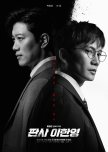
Ji Sung is the drama.
And the drama is Ji Sung.
🧑⚖️🧑⚖️
Bro had superb chemistry with literally every character on screen—from allies to villains to side characters… ig even the trees and bricks
⚖️⚖️Won Jin-ah / Prosecutor Jin-ah:⚖️⚖️
Up until episode 8, I’ll admit I was a little disappointed. Considering her powerful entrance in episode 1—an entrance that instantly grabbed my attention—her role didn’t leave much impact initially.Her storyline and screen presence initially struggled to stand beside Ji Sung’s manic energy and adrenaline-fueled dominance…Maybe
That said, her first episode was unforgettable. The sharp styling, the spontaneous genius of her move, overwhelming her enemies and securing evidence—and yes, that blood-clot-eating scene. Wow. Yesul-ida. That was art.
From episode 8 onward, though?
She becomes The Walking Menace. 💃 💃
As a prosecutor, Jin-ah is terrifying in the best way. She’s physically small, but the moment she walks toward her target, she bites—and she doesn’t let go. A relentless, feral kind of determination. She proves that intimidation isn’t about height or size or gender; it’s about attitude, grit, and sheer willingness to push forward no matter what. Won Jin-ah absolutely nailed this shift.
⚖️⚖️Ji Sung’s Best Friend: The Cheat Code⚖️⚖️
Ji Sung’s best friend feels like the ultimate cheat code—straight out of an isekai story. And honestly? Without him and the team, Ji Sung alone wouldn’t have even scratched his enemies.
If I’m being optimistic, maybe he could have survived. But realistically, without solid intel and backing, he would have failed badly. Being “isekai-ed” might grant foresight, but raw power and money still dominate the battlefield.
His best friend bridges that brutal gap. He’s the “Superman aid,” the backbone that turns Ji Sung’s charisma into something outstanding—and lethal.
He is like Doraemon~~
His scenes helping the part-time student and her grandmother! We all loved him!
⚖️⚖️The Grey Protagonist & the Second Chance⚖️⚖️
Ji Sung’s original character's first life is exactly the type that sparks endless debate online:
Should he be forgiven?
Did he deserve what happened to him?
What if he had chosen differently?
Some fans defend him as a tragic man who fell, repented, and paid the price. Others reject forgiveness altogether. The drama doesn’t offer easy answers—but it makes a bold choice: it gives him a second chance.
The difference between his first and second life is striking. It’s not inconsistency—it feels like hope and confidence were breathed back into his soul. After dying, losing everything, and suddenly being given it all back, change feels inevitable.
The rewind-for-the-villain trope isn’t new, especially in isekai stories. In his first life, he had only just begun to reform when it abruptly ended—right when he was starting to understand who he was and what truly mattered. That unfairness lingers.
This time, he rewrites his life not as a blank slate, but as someone carrying memory, regret, and consequence. And that’s why his change feels earned: he tries to do better not simply because he can—but because he knows the cost of failing to do so.
What Han Young did—and dared to do—was only possible because he had faced death and understood what truly matters. Unlike others who chase power, he chose something simple: reading case files, sharpening his pencil, and writing fair verdicts. Even when he could have gained everything by handing over the X-files, he refused. That quiet choice reveals his truth.
When others justify “necessary sacrifices” for the greater good—building empires on the bodies of the weak—Han Young asks the simplest, sharpest question: “And who agreed to those sacrifices? Nobody.”
What I admire most is his resolve. It’s hard to stand by your version of justice when the world debates and pressures you otherwise. But he does—and that certainty makes him powerful.
⚖️⚖️The Ensemble: Second Half Supremacy⚖️⚖️
The drama becomes twice as fun in the second half as the team slowly comes together.
Baek Yi-seok—uff.
The duo moments for Lee Han Young and the bald mentor? Ridiculously funny.
Park Chul-woo? Absolutely hilarious.
I also loved how multiple characters were given second chances, not just the lead. Initially, I suspected a forced love angle between Jin-ah and Han-young, but I’m so glad the drama stayed true to itself. The pairings felt organic, subtle, and respectful—letting married characters resolve their own issues rather than forcing romance between Jin Ah and Han Young only because they are the leads~~.
Jin Ah and Chul Woo were so cute ~~ i had an inkling from the start... and I was right!
See-he, especially, surprised me. I didn’t like her much in her first life, but her second-life version slowly grows on you—quietly, persistently—until she earns her place. An oddly adorable Little Red Riding Hood.
Judge Baek and the mentor uncle?
Cuties. Absolute cuties.
And Judge Baek’s actor once again proves he’s an all-rounder—you just trust him instantly when he plays good characters.
⚖️⚖️The Villains:⚖️⚖️
Kang Si-jin.
Uff. What a villain.
That food scene alone—every time he ate, it felt like we needed to run for our lives. Chilling, unforgettable, masterfully acted. I genuinely don’t think I’ll ever forget this character. His slurps and big mouth eating were messing with my OCD. I seriously considered watching his scenes on mute~~
We get to see his reasons, his past, his version of justice—what he believed in. I initially thought he was just plain evil. But he truly believed he was fighting for justice, which surprised me. Even Han Young used a few “cheat codes” (I prefer that over unfair means), but Si Jin openly admits he dirtied his hands to enter the system and reform it… and somewhere in between, he lost his way.
And his subordinate—the killer—felt less like a human and more like death itself. Overpowering, almost mythic. Pure fear. That hospital scene… uff… bang bang bang. No rage, no hesitation. Just cold indifference. Killing as casually as cutting veggies for lunch.
⚖️⚖️The Plot:⚖️⚖️
It’s fantasy, after all—a judge who returns from death and keeps winning, rarely failing. Is it realistic? Not really. But I honestly prefer it that way. Let heroes win for once—at least in dramas. Let them triumph. Let it be smooth, fun, and unapologetically thrilling, like a wild ride~~
The plot never gets boring. I watched some episodes at 2x, some at 1x, and enjoyed it either way. There’s no dull moment, and nothing feels overly complicated or hard to follow.
The portrayal of corruption hits hard because it feels uncomfortably real. Power, money, and influence operate above the law, while institutions meant to protect justice are hollowed out from within. What makes it chilling is how casually this corruption exists—normalised, protected, and hidden behind authority.
The weight of the corruption reaches us through the characters—their shock, fear, and disbelief—so the audience realises the depth of the rot alongside them, instead of brushing it off as normal. Because it’s not.
⚖️⚖️The conclusion:⚖️⚖️
For me, it was like a paradise experience, a dreamlike journey, a bed of roses. The heroes risking their life for it all, surviving and putting those cuffs on everyone..
The drama is great and, for the most part, a lot of fun—but it is a fantasy. And honestly, it has to be. If it weren’t, it wouldn’t be enjoyable at all. Real life is far messier, far sadder, and its struggles stretch not just over years, but across generations.
This is a drama where, as the audience, we are allowed to enjoy a victory. That in itself feels rare.
I don’t know how the real war unfolding in front of us will end, or how long it will take—whether for us, or for the “heroes” within the story. Reality doesn’t wrap things up neatly, and justice doesn’t arrive on cue. But at least here, in this one battle, in this first fight for independence, they have won. The fight and
And that matters.
Because the truth coming out—being exposed, documented, and visible for everyone to see—is already a step forward. Naming the truth is not the end of the war, but it is a battle won. It breaks silence. It cracks the illusion. One can forget.. One can forgive.. But once something is seen, it can never be completely unseen again.
⚖️⚖️An Alternate POV:⚖️⚖️
Since he is isekai’d back ten years after dying, I can’t help but wonder—what if it isn’t real time travel at all?
What if it’s the last gift of his mind… or a quiet mercy from God?
Perhaps, in his final moments, as his breath faded and regret closed in, his consciousness created a “what if” world—a softer ending. A second chance he never had in reality. Not a literal return to the past, but a final dream meant to comfort him as he lets go, allowing him to relive his life with awareness, courage, and the power to choose differently.
A peaceful illusion before everything goes dark.
Because sometimes, the cruelest part of death isn’t dying—it’s the weight of unfinished choices. And maybe this second life is his final comfort: a fragrant dream where justice wins, wrongs are righted, and he walks away redeemed.
Not reality.
But peace.
⚖️⚖️BIG TIME ENDING SPOILERRRRRRRRRRRR⚖️⚖️
In the middle u start to wonder if all the evil men of the past will get their karma or not..
Anyway, they wrapped it up beautifully—not a single loose screw, not a shred of unfinished karma left hanging. Every crime answered. Every thread tied.
Uff. The emotional punches and kicks this gave me—I’m still feeling them. Pure catharsis. Pure release. I’m genuinely floating on cloud nine right now.
However, though they seem to have won the battle, there is a bigger war waiting ahead.
Because like cancer, because like weeds, like rust ... corruption is not about the people or individuals involved alone.
You can polish the metal, but if the environment stays the same, decay resumes...
Tbh i felt so hopeless... and broken when i saw one face among the seats in the new suojae...but ig thats what u call reality of life..because even with luck, and tricks in our hands... with how much ever effort you remove the infected area or part of body ..cut it off.. the poison is already spread to the whole existence, cell, and blood.
But the drama doesn't end at this miserable truth scene. It ends with Han Young enjoying and feasting with his friends, family, and neighbours over the connections and experiences they have had over the past few episodes..
Life isn’t only about curing the illness.
Evil exists — it always will.
But so does good.
And sometimes, surviving, protecting your people, and finding moments of warmth despite the rot in the world… is its own quiet victory.
Throughout the drama, I couldn’t stop thinking about the recent flood of leaked files shaking the internet. The truth lies right in front of us—documented, proven, undeniable. And yet, even after seeing it with our own eyes, we feel powerless. It almost feels like satire, like a story mocking us.
What happens when the system we trusted, the men we praised, and even the ground we stand on are exposed as corrupt and rotten?
It’s easy to prosecute one man, easy to fight a single crime—but what are we supposed to do when the criminal, the law judging him, the people enforcing it, and the very foundations of the system all seem rotten? Can we even respond?
If justice becomes whatever the majority believes—and the majority itself is corrupt—does that redefine justice? Are we expected to stay silent and follow along?
For centuries, the majority’s idea of “justice” for women was suppression. Being treated as property was normal; being treated as “precious property” was considered a privilege. That version of justice survived not because it was right, but because those in power declared it so. Power shaped morality. Wealth decided what was acceptable. And society followed—because the powerful said so.
I don’t have clear answers for the crises we face today. Every era needs reform, and sometimes curing one evil gives rise to another. Still, it’s terrifying to realise that the people we idolised—the ones we believed were shaping our future—may be devils wearing human skin.
Do we have the courage to question the beliefs we’ve lived by, to face the truth instead of ignoring it, to resist something that feels too big and too frightening to fight?
Or will it simply become the trend?
The way drinking and smoking become “cool” when a favourite actor does it, and clothes we’d never touch become fashion once luxury brands endorse them.
Will crimes once seen as shameless and inhuman become acceptable—fashionable—simply because the rich and powerful benefit from them?
⚖️THE REVIEW⚖️
Lights. Camera. Action.
Bang Bang Bang
First of all—that OST???
“I GOT IT~~~” is literally etched into my soul.
The moment it kicked in, you knew the scene was about to win.
Instant adrenaline rush.
Goosebumps every time.
Absolute hype fuel.
Is it just Ji Sung’s sheer on-screen charisma?
Is the entire cast radiating so hard that the screen itself feels like it’s glowing?
Watching this genuinely felt like sitting in a theatre, witnessing one relentless, action-packed sequence unfold without pause.
For me, action isn’t just violence or flashy, over-the-top stunts. Action is intelligence—planning, plotting, strategy—and that one perfectly timed, straight punch that makes your heart go boom boom. The kind of moments that keep you holding your breath in anticipation, waiting for the next move.
You stop caring about physics or logic entirely. You’re too absorbed in predicting what comes next, your senses on full alert, ready to take the hit alongside the characters. That’s exactly how every single episode felt.
🧑⚖️🧑⚖️
Ji Sung is the drama.
And the drama is Ji Sung.
🧑⚖️🧑⚖️
Bro had superb chemistry with literally every character on screen—from allies to villains to side characters… ig even the trees and bricks
⚖️⚖️Won Jin-ah / Prosecutor Jin-ah:⚖️⚖️
Up until episode 8, I’ll admit I was a little disappointed. Considering her powerful entrance in episode 1—an entrance that instantly grabbed my attention—her role didn’t leave much impact initially.Her storyline and screen presence initially struggled to stand beside Ji Sung’s manic energy and adrenaline-fueled dominance…Maybe
That said, her first episode was unforgettable. The sharp styling, the spontaneous genius of her move, overwhelming her enemies and securing evidence—and yes, that blood-clot-eating scene. Wow. Yesul-ida. That was art.
From episode 8 onward, though?
She becomes The Walking Menace. 💃 💃
As a prosecutor, Jin-ah is terrifying in the best way. She’s physically small, but the moment she walks toward her target, she bites—and she doesn’t let go. A relentless, feral kind of determination. She proves that intimidation isn’t about height or size or gender; it’s about attitude, grit, and sheer willingness to push forward no matter what. Won Jin-ah absolutely nailed this shift.
⚖️⚖️Ji Sung’s Best Friend: The Cheat Code⚖️⚖️
Ji Sung’s best friend feels like the ultimate cheat code—straight out of an isekai story. And honestly? Without him and the team, Ji Sung alone wouldn’t have even scratched his enemies.
If I’m being optimistic, maybe he could have survived. But realistically, without solid intel and backing, he would have failed badly. Being “isekai-ed” might grant foresight, but raw power and money still dominate the battlefield.
His best friend bridges that brutal gap. He’s the “Superman aid,” the backbone that turns Ji Sung’s charisma into something outstanding—and lethal.
He is like Doraemon~~
His scenes helping the part-time student and her grandmother! We all loved him!
⚖️⚖️The Grey Protagonist & the Second Chance⚖️⚖️
Ji Sung’s original character's first life is exactly the type that sparks endless debate online:
Should he be forgiven?
Did he deserve what happened to him?
What if he had chosen differently?
Some fans defend him as a tragic man who fell, repented, and paid the price. Others reject forgiveness altogether. The drama doesn’t offer easy answers—but it makes a bold choice: it gives him a second chance.
The difference between his first and second life is striking. It’s not inconsistency—it feels like hope and confidence were breathed back into his soul. After dying, losing everything, and suddenly being given it all back, change feels inevitable.
The rewind-for-the-villain trope isn’t new, especially in isekai stories. In his first life, he had only just begun to reform when it abruptly ended—right when he was starting to understand who he was and what truly mattered. That unfairness lingers.
This time, he rewrites his life not as a blank slate, but as someone carrying memory, regret, and consequence. And that’s why his change feels earned: he tries to do better not simply because he can—but because he knows the cost of failing to do so.
What Han Young did—and dared to do—was only possible because he had faced death and understood what truly matters. Unlike others who chase power, he chose something simple: reading case files, sharpening his pencil, and writing fair verdicts. Even when he could have gained everything by handing over the X-files, he refused. That quiet choice reveals his truth.
When others justify “necessary sacrifices” for the greater good—building empires on the bodies of the weak—Han Young asks the simplest, sharpest question: “And who agreed to those sacrifices? Nobody.”
What I admire most is his resolve. It’s hard to stand by your version of justice when the world debates and pressures you otherwise. But he does—and that certainty makes him powerful.
⚖️⚖️The Ensemble: Second Half Supremacy⚖️⚖️
The drama becomes twice as fun in the second half as the team slowly comes together.
Baek Yi-seok—uff.
The duo moments for Lee Han Young and the bald mentor? Ridiculously funny.
Park Chul-woo? Absolutely hilarious.
I also loved how multiple characters were given second chances, not just the lead. Initially, I suspected a forced love angle between Jin-ah and Han-young, but I’m so glad the drama stayed true to itself. The pairings felt organic, subtle, and respectful—letting married characters resolve their own issues rather than forcing romance between Jin Ah and Han Young only because they are the leads~~.
Jin Ah and Chul Woo were so cute ~~ i had an inkling from the start... and I was right!
See-he, especially, surprised me. I didn’t like her much in her first life, but her second-life version slowly grows on you—quietly, persistently—until she earns her place. An oddly adorable Little Red Riding Hood.
Judge Baek and the mentor uncle?
Cuties. Absolute cuties.
And Judge Baek’s actor once again proves he’s an all-rounder—you just trust him instantly when he plays good characters.
⚖️⚖️The Villains:⚖️⚖️
Kang Si-jin.
Uff. What a villain.
That food scene alone—every time he ate, it felt like we needed to run for our lives. Chilling, unforgettable, masterfully acted. I genuinely don’t think I’ll ever forget this character. His slurps and big mouth eating were messing with my OCD. I seriously considered watching his scenes on mute~~
We get to see his reasons, his past, his version of justice—what he believed in. I initially thought he was just plain evil. But he truly believed he was fighting for justice, which surprised me. Even Han Young used a few “cheat codes” (I prefer that over unfair means), but Si Jin openly admits he dirtied his hands to enter the system and reform it… and somewhere in between, he lost his way.
And his subordinate—the killer—felt less like a human and more like death itself. Overpowering, almost mythic. Pure fear. That hospital scene… uff… bang bang bang. No rage, no hesitation. Just cold indifference. Killing as casually as cutting veggies for lunch.
⚖️⚖️The Plot:⚖️⚖️
It’s fantasy, after all—a judge who returns from death and keeps winning, rarely failing. Is it realistic? Not really. But I honestly prefer it that way. Let heroes win for once—at least in dramas. Let them triumph. Let it be smooth, fun, and unapologetically thrilling, like a wild ride~~
The plot never gets boring. I watched some episodes at 2x, some at 1x, and enjoyed it either way. There’s no dull moment, and nothing feels overly complicated or hard to follow.
The portrayal of corruption hits hard because it feels uncomfortably real. Power, money, and influence operate above the law, while institutions meant to protect justice are hollowed out from within. What makes it chilling is how casually this corruption exists—normalised, protected, and hidden behind authority.
The weight of the corruption reaches us through the characters—their shock, fear, and disbelief—so the audience realises the depth of the rot alongside them, instead of brushing it off as normal. Because it’s not.
⚖️⚖️The conclusion:⚖️⚖️
For me, it was like a paradise experience, a dreamlike journey, a bed of roses. The heroes risking their life for it all, surviving and putting those cuffs on everyone..
The drama is great and, for the most part, a lot of fun—but it is a fantasy. And honestly, it has to be. If it weren’t, it wouldn’t be enjoyable at all. Real life is far messier, far sadder, and its struggles stretch not just over years, but across generations.
This is a drama where, as the audience, we are allowed to enjoy a victory. That in itself feels rare.
I don’t know how the real war unfolding in front of us will end, or how long it will take—whether for us, or for the “heroes” within the story. Reality doesn’t wrap things up neatly, and justice doesn’t arrive on cue. But at least here, in this one battle, in this first fight for independence, they have won. The fight and
And that matters.
Because the truth coming out—being exposed, documented, and visible for everyone to see—is already a step forward. Naming the truth is not the end of the war, but it is a battle won. It breaks silence. It cracks the illusion. One can forget.. One can forgive.. But once something is seen, it can never be completely unseen again.
⚖️⚖️An Alternate POV:⚖️⚖️
Since he is isekai’d back ten years after dying, I can’t help but wonder—what if it isn’t real time travel at all?
What if it’s the last gift of his mind… or a quiet mercy from God?
Perhaps, in his final moments, as his breath faded and regret closed in, his consciousness created a “what if” world—a softer ending. A second chance he never had in reality. Not a literal return to the past, but a final dream meant to comfort him as he lets go, allowing him to relive his life with awareness, courage, and the power to choose differently.
A peaceful illusion before everything goes dark.
Because sometimes, the cruelest part of death isn’t dying—it’s the weight of unfinished choices. And maybe this second life is his final comfort: a fragrant dream where justice wins, wrongs are righted, and he walks away redeemed.
Not reality.
But peace.
⚖️⚖️BIG TIME ENDING SPOILERRRRRRRRRRRR⚖️⚖️
In the middle u start to wonder if all the evil men of the past will get their karma or not..
Anyway, they wrapped it up beautifully—not a single loose screw, not a shred of unfinished karma left hanging. Every crime answered. Every thread tied.
Uff. The emotional punches and kicks this gave me—I’m still feeling them. Pure catharsis. Pure release. I’m genuinely floating on cloud nine right now.
However, though they seem to have won the battle, there is a bigger war waiting ahead.
Because like cancer, because like weeds, like rust ... corruption is not about the people or individuals involved alone.
You can polish the metal, but if the environment stays the same, decay resumes...
Tbh i felt so hopeless... and broken when i saw one face among the seats in the new suojae...but ig thats what u call reality of life..because even with luck, and tricks in our hands... with how much ever effort you remove the infected area or part of body ..cut it off.. the poison is already spread to the whole existence, cell, and blood.
But the drama doesn't end at this miserable truth scene. It ends with Han Young enjoying and feasting with his friends, family, and neighbours over the connections and experiences they have had over the past few episodes..
Life isn’t only about curing the illness.
Evil exists — it always will.
But so does good.
And sometimes, surviving, protecting your people, and finding moments of warmth despite the rot in the world… is its own quiet victory.
Was this review helpful to you?


