
 News
News 

 1
1 1
1 1
1 1
1


Why Chinese Wuxia Outclasses Modern Action Films
Western action often asks, “How can we keep you excited?” Chinese wuxia often asks, “How can movement itself carry meaning?”
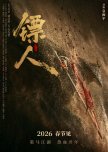
Watching Blades of the Guardians is not just another wuxia film, it feels like a full-scale revival of martial arts cinema at its highest level. Exceptional fight choreography that Western films will never match: long, fluid sword fights with real weight and timing, emphasis on physical skill, rhythm, and spatial clarity. Large-scale battles (desert ambushes, duels in storms) feel organic, not like CGI-heavy spectacle. Here, every hit is readable and meaningful, almost like dance choreography with lethal consequences. The desert combat feels grounded and creates a level of tension many Hollywood blockbusters no longer achieve; you can feel the danger instead of just seeing effects. The film’s landscapes, deserts, ancient cities, war-torn borders are not just backgrounds; they function like characters. Sandstorms become battle arenas. Fire and dust shape the rhythm of combat. The cinematography leans into mythic, almost legendary imagery, which paradoxically feels like art rather than violence for the sake of it.
Blades of the Guardians offers visible technique and training, clear fight geography, real impact in every strike, emotion tied directly to combat, and a respect for martial arts as an art form, not just spectacle. It feels “more real,” “more intense,” and even “more cinematic” than most Hollywood action films today. It leans fully into what wuxia does best: honour, betrayal, survival across impossible landscapes, and combat that feels like storytelling itself. It is not just an action movie, it is a reminder that cinema action can still be handcrafted, elegant, and emotionally charged at the same time. If Western action represents controlled spectacle, Blades of the Guardians represents chaotic poetry with blades.
I loved it because the wuxia approach stays intimate even when the scale is large. It feels like watching internal codes of life and death being tested in real time. In contrast with the peak of modern Western action design, fast, engineered, and globally oriented, Blades of the Guardians represents a more traditional, almost philosophical approach to action, where movement itself carries meaning beyond plot function. That is why they feel so different to watch, and I loved it. One is built like a high-speed machine; the other feels more like a crafted ritual.
The Chinese wuxia approach won me over because it treats action as expression rather than logistics. In wuxia, and in Blades of the Guardians, a fight is not just a way to move the plot forward, it is the emotional and narrative moment. You feel character, history, and philosophy inside the choreography itself. The pacing is slower, but that slowdown is intentional: it allows tension, body language, and spatial awareness to become part of the storytelling. Instead of cutting away from complexity, it leans into it. The rhythm is carefully balanced, with moments of wit and humour that lighten the intensity without breaking immersion.
There is also a stronger sense of visual clarity and craftsmanship. The choreography is designed so you can actually read what is happening: footwork, distance, weapon control, rhythm. That creates a different kind of engagement. You are not just reacting to explosions or edits; you are following a physical conversation between characters.
Western blockbusters often build tension through external stakes: preventing a global disaster, stopping a bomb, outrunning time. It’s exciting, but it’s structural. Chinese martial arts cinema often builds tension through internal codes, honour, loyalty, betrayal, destiny, sacrifice. That makes even smaller moments feel heavy, because the conflict is not just physical but moral and personal.
There is also a philosophical layer that I find richer. Wuxia traditions often come from ideas about discipline, balance, fate, and the meaning of violence itself. The action is not just spectacle; it is connected to identity and worldview. That gives the film a kind of depth that feels less common in many Western action franchises, which are often more focused on momentum and entertainment efficiency, and for which is the reason I don’t go to the cinema anymore. Blades of the Guardians has artistic depth, visual readability, emotional weight inside action, and choreography as storytelling. I highly enjoyed it.
Watching Blades of the Guardians is not just another wuxia film, it feels like a full-scale revival of martial arts cinema at its highest level. Exceptional fight choreography that Western films will never match: long, fluid sword fights with real weight and timing, emphasis on physical skill, rhythm, and spatial clarity. Large-scale battles (desert ambushes, duels in storms) feel organic, not like CGI-heavy spectacle. Here, every hit is readable and meaningful, almost like dance choreography with lethal consequences. The desert combat feels grounded and creates a level of tension many Hollywood blockbusters no longer achieve; you can feel the danger instead of just seeing effects. The film’s landscapes, deserts, ancient cities, war-torn borders are not just backgrounds; they function like characters. Sandstorms become battle arenas. Fire and dust shape the rhythm of combat. The cinematography leans into mythic, almost legendary imagery, which paradoxically feels like art rather than violence for the sake of it.
Blades of the Guardians offers visible technique and training, clear fight geography, real impact in every strike, emotion tied directly to combat, and a respect for martial arts as an art form, not just spectacle. It feels “more real,” “more intense,” and even “more cinematic” than most Hollywood action films today. It leans fully into what wuxia does best: honour, betrayal, survival across impossible landscapes, and combat that feels like storytelling itself. It is not just an action movie, it is a reminder that cinema action can still be handcrafted, elegant, and emotionally charged at the same time. If Western action represents controlled spectacle, Blades of the Guardians represents chaotic poetry with blades.
I loved it because the wuxia approach stays intimate even when the scale is large. It feels like watching internal codes of life and death being tested in real time. In contrast with the peak of modern Western action design, fast, engineered, and globally oriented, Blades of the Guardians represents a more traditional, almost philosophical approach to action, where movement itself carries meaning beyond plot function. That is why they feel so different to watch, and I loved it. One is built like a high-speed machine; the other feels more like a crafted ritual.
The Chinese wuxia approach won me over because it treats action as expression rather than logistics. In wuxia, and in Blades of the Guardians, a fight is not just a way to move the plot forward, it is the emotional and narrative moment. You feel character, history, and philosophy inside the choreography itself. The pacing is slower, but that slowdown is intentional: it allows tension, body language, and spatial awareness to become part of the storytelling. Instead of cutting away from complexity, it leans into it. The rhythm is carefully balanced, with moments of wit and humour that lighten the intensity without breaking immersion.
There is also a stronger sense of visual clarity and craftsmanship. The choreography is designed so you can actually read what is happening: footwork, distance, weapon control, rhythm. That creates a different kind of engagement. You are not just reacting to explosions or edits; you are following a physical conversation between characters.
Western blockbusters often build tension through external stakes: preventing a global disaster, stopping a bomb, outrunning time. It’s exciting, but it’s structural. Chinese martial arts cinema often builds tension through internal codes, honour, loyalty, betrayal, destiny, sacrifice. That makes even smaller moments feel heavy, because the conflict is not just physical but moral and personal.
There is also a philosophical layer that I find richer. Wuxia traditions often come from ideas about discipline, balance, fate, and the meaning of violence itself. The action is not just spectacle; it is connected to identity and worldview. That gives the film a kind of depth that feels less common in many Western action franchises, which are often more focused on momentum and entertainment efficiency, and for which is the reason I don’t go to the cinema anymore. Blades of the Guardians has artistic depth, visual readability, emotional weight inside action, and choreography as storytelling. I highly enjoyed it.
Was this review helpful to you?


