

 1
1 1
1


The Price of Absolutes
"In this world some are obsessed with justice and evil, some with life and death, some with right and wrong, some with love and hatred."
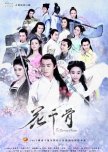
That single quote captures the entire philosophy of The Journey of Flower.
At its heart, this is not simply a romance, nor is it a story about forbidden love. It is a tragedy about what happens when people become prisoners of a single idea. The drama repeatedly shows that the opposites we create, good and evil, love and hatred, right and wrong, immortals and demons, are far less absolute than people believe.
The Philosophy
The story argues that justice, love, duty, and righteousness are not the problem. They are all noble values. The tragedy begins when any one of them becomes so absolute that it blinds people to compassion, wisdom, and understanding.
The immortal sects call themselves righteous, yet often commit acts of cruelty. Meanwhile, characters labelled as demons repeatedly display loyalty, kindness, and self-sacrifice. The drama constantly asks:
If someone commits cruelty in the name of justice, are they truly righteous?
If someone called a demon acts with compassion, are they truly evil?
Its answer is clear: labels are unreliable. Character is revealed through choices, not titles.
The Characters
Every major character becomes consumed by something different.
Bai Zihua by duty.
Hua Qiangu by love.
Mo Yan by justice and reputation.
Sha Qianmo by love and loyalty.
Dongfang Yuqing by revenge.
None of them is entirely right or entirely wrong. Their downfall is not what they value, but their inability to let go when those values become absolute.
Love without wisdom becomes attachment.
Duty without compassion becomes cruelty.
Justice without understanding becomes prejudice.
This is what makes the tragedy so devastating.
One of the drama's most interesting aspects is that Hua Qiangu almost functions as a mirror. She does not create the virtues or flaws in those around her, she reveals them. Around her, compassion grows stronger, fear turns into paranoia, and attachment becomes self-destruction. Hua Qiangu becomes the catalyst through which everyone else's absolute beliefs, fears, and attachments are exposed. In that sense, many characters blame her for tragedies that ultimately grow out of their own choices and unresolved conflicts.
The Themes
Beyond its fantasy setting, The Journey of Flower explores remarkably rich themes:
love and sacrifice
duty versus compassion
prejudice and rigid labels
redemption
responsibility and consequences
fate versus free will
the loss of innocence
forgiveness over revenge
Storytelling
The plot develops organically. Early events and prophecies gain meaning much later, major twists arise naturally from character decisions, and every arc builds upon the previous one. The story evolves constantly, from disciple and master, to sect conflicts, the Savage Wasteland, and finally the Demon Deity arc, without ever feeling repetitive.
Most importantly, every emotional turning point feels earned.
Final Thoughts
The Journey of Flower is not merely a fantasy romance. It is a philosophical tragedy about compassion, responsibility, and the danger of turning any noble value into an absolute.
Its greatest lesson is perhaps this:
The greatest tragedies do not arise from love, duty, justice, or hatred themselves, but from clinging to any one of them so absolutely that compassion, wisdom, and truth are lost.
I stumbled upon The Journey of Flower by chance and couldn't stop watching. More than a decade after its release, I found it to be one of the most philosophically rich xianxia dramas I've seen. It genuinely surprised me that, even in 2026, a drama made in 2015 offers stronger storytelling than many recent productions. It proves that memorable dramas are built not on visual spectacle alone, but on compelling characters and meaningful themes.
That single quote captures the entire philosophy of The Journey of Flower.
At its heart, this is not simply a romance, nor is it a story about forbidden love. It is a tragedy about what happens when people become prisoners of a single idea. The drama repeatedly shows that the opposites we create, good and evil, love and hatred, right and wrong, immortals and demons, are far less absolute than people believe.
The Philosophy
The story argues that justice, love, duty, and righteousness are not the problem. They are all noble values. The tragedy begins when any one of them becomes so absolute that it blinds people to compassion, wisdom, and understanding.
The immortal sects call themselves righteous, yet often commit acts of cruelty. Meanwhile, characters labelled as demons repeatedly display loyalty, kindness, and self-sacrifice. The drama constantly asks:
If someone commits cruelty in the name of justice, are they truly righteous?
If someone called a demon acts with compassion, are they truly evil?
Its answer is clear: labels are unreliable. Character is revealed through choices, not titles.
The Characters
Every major character becomes consumed by something different.
Bai Zihua by duty.
Hua Qiangu by love.
Mo Yan by justice and reputation.
Sha Qianmo by love and loyalty.
Dongfang Yuqing by revenge.
None of them is entirely right or entirely wrong. Their downfall is not what they value, but their inability to let go when those values become absolute.
Love without wisdom becomes attachment.
Duty without compassion becomes cruelty.
Justice without understanding becomes prejudice.
This is what makes the tragedy so devastating.
One of the drama's most interesting aspects is that Hua Qiangu almost functions as a mirror. She does not create the virtues or flaws in those around her, she reveals them. Around her, compassion grows stronger, fear turns into paranoia, and attachment becomes self-destruction. Hua Qiangu becomes the catalyst through which everyone else's absolute beliefs, fears, and attachments are exposed. In that sense, many characters blame her for tragedies that ultimately grow out of their own choices and unresolved conflicts.
The Themes
Beyond its fantasy setting, The Journey of Flower explores remarkably rich themes:
love and sacrifice
duty versus compassion
prejudice and rigid labels
redemption
responsibility and consequences
fate versus free will
the loss of innocence
forgiveness over revenge
Storytelling
The plot develops organically. Early events and prophecies gain meaning much later, major twists arise naturally from character decisions, and every arc builds upon the previous one. The story evolves constantly, from disciple and master, to sect conflicts, the Savage Wasteland, and finally the Demon Deity arc, without ever feeling repetitive.
Most importantly, every emotional turning point feels earned.
Final Thoughts
The Journey of Flower is not merely a fantasy romance. It is a philosophical tragedy about compassion, responsibility, and the danger of turning any noble value into an absolute.
Its greatest lesson is perhaps this:
The greatest tragedies do not arise from love, duty, justice, or hatred themselves, but from clinging to any one of them so absolutely that compassion, wisdom, and truth are lost.
I stumbled upon The Journey of Flower by chance and couldn't stop watching. More than a decade after its release, I found it to be one of the most philosophically rich xianxia dramas I've seen. It genuinely surprised me that, even in 2026, a drama made in 2015 offers stronger storytelling than many recent productions. It proves that memorable dramas are built not on visual spectacle alone, but on compelling characters and meaningful themes.
Was this review helpful to you?


