
 News


 77
 338
 10
 1
 5
 1
 13
 1
 2
 3
 1
 2
 1
 1
 6
 12
 2
 1
 2
 1
 2
 1
 1
 3
 2
 1
 2
 2
 1
 2
 1
 9


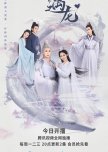
Which asshole wrote this script?
That was the best line in Miss the Dragon, a xianxia that just misses the boat. It is a thought that jumps to mind at various points of the drama. The writer must be someone with both self awareness and a sense of humor. Which you must have plenty of if you choose to watch this because it can be so ridiculous and silly that you almost have to just laugh at it.The story opens with the injured dragon king Yuchi Longyan rescued by a maid Liu Ying who mistakes him for a common snake. Liu Ying rescues injured animals, including the bird elf Qingqing while she daydreams about the mythical dragon king. The first arc is largely an amalgamation of the best moments of other hit xianxias, notably TMOPB. When it comes to recycling other drama's memorable moments, it best be either a really clever parody or a vastly superior moment. In this case it is neither. Some of the writer's own original humor is fresh and funny enough they should have just gone with that and focused on fleshing out the main couple and getting us invested in their relationship. Instead, after being vividly reminded of some old favorites, I am left with the impression of two rather blank characters whose shallow infatuation with each other was unlikely to last until supper time, forget several lifetimes.
While Liu Ying does get a tad more interesting with each subsequent lifetime, there is little of substance that survives each incarnation. So it is not clear what Yuchi Longyan is fighting for, what is innately so special about Liu Ying that the dragon king loves so much. Zhu Xudan did a good job essentially playing four different characters but she is wasted in these sappy rather simple roles that any newbie actress can play. As for Wang Hedi, after a delectable opening scene of him emerging scantily clad from the dragon pool, I was left with an indelible impression of an overdressed plank. His portrayal of the dragon king is an impressive study of the art of being bizarrely still and plank like while everything else is moving. At first, I thought he was accidentally sent the script from a botox commercial. Then I started to feel insecure about accidentally hitting pause on my remote. Bottom line, I didn't feel any spark between the leads. Oddly, his interactions with all of the other characters are so much more natural and enjoyable. I rarely comment on the OST and the BGM but in this case I must point out it was good enough to make me tear up much more than was induced by the acting or story during the sad moments.
The idea of a love that transcends lifetimes is very powerful and moving but that concept is much more originally and engagingly explored in the second couple's story. Indeed the love story between the block of burning ice that is Xue Qianxun the master of Luofeng Pavilion and his flighty chirpy little bird elf Qingqing is why I didn't drop this drama. Both characters are better developed and they have understandable motives and goals. Their relationship is so humorous and their chemistry builds so organically that I had to root for them and was intrigued by and impatient to discover their past. I won't spoil it by saying more than that is a wonderful and memorable mini fairytale in and of itself and that is what the focus of this drama could and should have been.
The way the drama ends goes a long way to redeem itself. I really ate up the epic magical battles and even though the villain is quite lame and was obvious to me from the beginning, I like how all the pieces of their scheming is revealed and how it all ties in quite neatly with the plot and the many lives of Liu Ying. I am solidly in the camp of really liking the ending; anyone who knows the legend of Nuwa would not be that surprised by it. Overall its not a bad watch, it has quite some entertaining moments beyond just laughing at the production. My rating gets a bump up to a 7.0/7.5 due to the wonderful second couple and ending at the climax.
Was this review helpful to you?
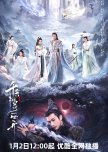
Do you really want to live forever?
I was surprised by how completely The Blossoming Love (千朵桃花一世开) managed to hook me in the opening episode. Expecting yet another run-of-the-mill xianxia, I ate up newbie Sun Zhenni's provocative portrayal of Mu Xuanling, the Saintess of the Dark Realm and seductress nonpareil. For once, a morally ambiguous lead female character who knows what she wants and will break all the rules to get it. While there is no question that she saves Xie Xuechen, the leader of the Immortal Alliance, we don't know why and what her real motives are.What stands out the most about this drama is the undeniable chemistry between the leads Vin Zhang and Sun Zhenni, which really is a "must- have" for me to want to watch this genre. Sun Zhenni knows how to look at a man like she really wants him. She could give a master class not only in flirting but her irresistible expressions; the way her eyes sparkle, her deep searching gazes, the way she conveys passion, joy, distress and anger. This was so refreshing coming right off of Blossom where Meng Ziyi's uninspired wide-eyed dead duck stare made me want to write-off romance dramas for good.
This is a intricate story with complex characters and multiple timelines that come to a full circle over four arcs. It opens in the third arc in terms of time sequence, where Xie Xuechen, Mu Xuanling and the mysterious Nan Xuyue seem to be bound by a past affinity that will shape not only their futures, but that of the universe. While it is predictable that they have other identities, the drama opens with the most interesting version of each of them. Xuanling's flirtatious teasing of Xuechen thrilled and delighted me as much as her her ambivalent affection for Sang Qi moved but worried me. Xuechen is also not your typical righteous hero, he is capable of subterfuge and is disarmingly candid about his growing affection for Xuanling. I enjoyed his bromance with the enigmatic Xuyue and hoped Xuanling would not complicate the friendship and trust between them. It is a fantastic arc where no one is that powerful so in every conflict, the stakes feel heavy and real. Unfortunately, the subsequent arcs pale by comparison.
The backstories are told in extended flashbacks about characters that are not as interesting. I could not get invested in either Zhao Ming or A'chu, who are boring and two dimensional. Despite the dark and sexy vibe of the Demon Lord and the leads' charisma and screen presence, I never came to really care for their other personas. I found myself more moved by the side stories of the master and mistress of Bixiao Palace and that of Lord Qianguang and his forgetful lover. While the later arcs are where Wang Duo's laudable talent for complexity is on full on display, Tian Ming's single-minded obsession with fate and his efforts to force the Chaos Pearl to yield to his will goes on for a bit too long. Nonetheless I was pleased to see that in the end, he finally finds his answer to the two questions that plagued him endlessly; "What is love?" and "Do you really want to live forever?"
The biggest problem with this narrative is that the plot is overly ambitious, it literally tries to take on the universe! While it opens strongly in the best, most addictive arc, the non-linear telling of the story is confusing and the multiple time loops of cause and effect are difficult to keep track of. That said, apart from some inevitable logic bugs, the story largely hangs together if you don't look overly hard at it. And while the ending is somewhat anti-climatic, I enjoyed the message that we should not just accept fate. I rate it 7.5/10.0 overall but I think the first ~25+ episodes are worth between 8.0 and 8.5.
Was this review helpful to you?
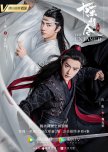
You give me the sweetest taboo.
This drama flirts dangerously with the forbidden: dark cultivation, zombies, black and white magic, transmigration and boy love. The lead character Wei Wuxian (Xiao Zhan) is a free spirit who refuses to be tamed by social conventions; he lives by his own rules, is not averse to exploring dark powers and appears romantically open to both genders. The delicious exploration of such a slightly wicked character and taboo themes under the watchful eye of Chinese censorship put this high on my watchlist. I started watching with high expectations shortly after it aired.The story is based on a hit novel and is indisputably a very good one but the way it was told in the drama was really not good. While broadly true to the book, the production lazily assumes the viewer actually read it. The plot is centered around the attempt to restore a powerful magical artifact that the various cultivation sects vie to alternately control or suppress. The story opens with the mysterious reappearance of Wei Wuxian, the infamous Yiling patriach after a sixteen years hiatus. The fact that this is achieved by the sacrifice of Mo Xuanyu whose identity he assumes is one of several plot holes that never gets fully flushed out. Thus he conceals himself behind a (hideous) mask. The viewer is dropped right into in the middle of unfolding events and a wide array of characters without any backstory. Then we go into a prolonged flashback all the way back to the very beginning and up to the conspiracy that led to Wei Wuxian's fall from grace and long disappearance. This takes well over half the drama, which peaks around episode 34 with Wei Wuxian's apparent demise. We are then back to the present where we go into several shorter flashbacks intended to shed more light on the conspiracy. That made it messy and was less interesting because by then the two main villains are known. While the story regains some momentum towards the end, it doesn't come close to the mid-drama peak and the final denouement where the ultimate mastermind is revealed comes almost as an afterthought. That character was one of several insipidly acted roles and the final reveal tied up a few loose threads that wouldn't have been missed. This story would have been much better paced and less confusing had it just been shot chronologically.
The cast is inexperienced and even the main actors struggled to get into character for a long time. Some actors were just plain bad throughout. The first 15+ episodes were painful and the acting didn't get noticeably better until the mid-20s. I dropped it after episode 7 and many more times after that. Although there were some great parts, it just never hooked me. It took me 5 months to finish watching and I wouldn't have if I weren't so damn bored during the c-drama ban. What kept drawing me back was Xiao Zhan's infectious grin - he must have the best smile ever. He really did bring the marvelously controversial Wei Wuxian to life in a way that compels us to indulge the character's many obvious flaws. I was less impressed with Wang Yibo's Lanzhan; it is a stretch to describe his initial pissed off or constipated expression as statue-like or unemotional. He slightly relaxed his face muscles and improved markedly much later on and I really liked his Lanzhan at the end so kudos to him for that. I was also surprised by his grace and athleticism in the fight scenes. The two leads had good chemistry but where I saw sparks fly was between Jiang Cheng and Wei Wuxian. That confused me as I sensed from the start there was an emotional connection, that Jiang Cheng's feelings for Wei Wuxian were complex and went beyond sibling rivalry and envy. I don't think this was intended.
In genres like this, the heroes are only as good as the villains and therein lies the problem - the villains were not that hateful nor were they empathetic. Both actors were similarly styled and portrayed such similar mannerisms their roles could have been interchanged. They both overacted, had the same intense face lowered evil glare, mad eyed expression and crazy gloating smile. The directors were so lazy they pretty much gave them the same cliche traits and may as well have just used one actor for both roles. Surprise surprise, we are supposed to be sympathetic because they both also had serious daddy issues. Indeed this is the default excuse that explains the flaws of many characters including Jiang Cheng. Key takeaway: don't be a bad dad it really messes up the kids. No wonder I was bored! As for the ultimate mastermind, he was so well concealed he went unnoticed and no one would have cared if he remained that way. The ending was a bit of a crowd pleaser with a bit of something for everyone. I was just relieved it was over.
At this point it goes without saying that the production team for this show pretty much sucked. It would be a shame if the success of this drama despite terrible execution elevates them into a position to destroy other fantastic story-lines with poor editing, storytelling and shoddy camerawork. The only thing they got very right was walking the line perfectly between bro-mance and romance in terms of Wei Wuxian and Lanzhan's relationship.
So what made this such a huge hit? Well, the forbidden fruit nature of this drama can be highly addictive and is bound to resonate deeply with certain demographics and at some life stages though not for everyone. All the hidden meaning in certain interactions, the imperceptible flicker of an eyelash, the barest hint of a smile and the slight double entendre in the dialogue can be tantalizing for those looking for signs of a secret taboo romance. That kind of fun speculation only amused me for short spates. Ultimately a good, well acted story is all that I look for- whether or not it is about boy love would not make any difference to me. I was touched by the bro-mance between the two soul mates (which was all that I saw) as well as the relate-able and moving relationships between both sets of siblings - these were the high points for me. Sadly it was not enough to keep me engaged for long. I almost wish I had read the book. Maybe I would have enjoyed the drama more but even if I eventually get round to it, I am unlikely to re-watch this.
I almost gave this an 8.0 - but I felt I had to knock another 0.5 points off for the fact that it had a certain je ne sais quoi that just bored me silly when I wanted to love it. That and that simply god awful mask that would top the Don't list in any c-drama edition of Glamour magazine's defining list of fashion Dos and Don'ts.
Was this review helpful to you?
Heaven has no rage like love to hatred turned.
Let me come clean from the get go - this kind of drama is not my cup of tea. I watch dramas to escape, not to get embroiled in messy social themes around the aftermath of the disintegration of marriage and terminally sick children, But Left Right is written and shot by Hu Jin of The Bad Kids Fame, one of my favorite suspense dramas. I just love his visual composition style and how mercilessly his camera eye lays bare the multitude complexity of human emotions. And in that aspect, Left Right hits the ball out of the park and that is without doubt this drama's best feature.The drama opens well with Fang Yinuo and Xiao Lu compatibly anticipating their first child with a mixture of happiness and small trepidation. They companionably joke about giving up spicy noodles, which Yinuo especially loves, for the duration of "their" pregnancy. Except Xiao Lu already wolfed down a bowl of spicy noodles before going home. Such a simple scene so brilliantly illustrates the manifold cracks in their relationship. She is overly controlling and demands that they suffer together. He is passive aggressive and rather than confront her, he goes around her. This dynamic is prevalent throughout their interactions. The dissolution of their marriage is inevitable and they both move on to become better partners in their next relationships. The drama peaks at that point and once the child gets sick, the narrative succumbs to melodramatic and increasingly unrealistic subplots with improbable twists and digresses into uninteresting and dislikable side characters. This would have been a much better drama with half the episodes. Towards the end all the excessive gouxue狗血(dog's blood) turned into goupi 狗屁(crap) to the point that I even stopped caring about the kid's fate.
This intense character drama with a melodramatic plot takes on too many heavy themes - the pressure of a newborn child, extended family conflicts, postpartum depression, the stigma of divorce, archaic child custody laws, inadequacies of the healthcare system, financial struggles, deadbeat dads and last but not least, women stripped down to their worst, meanest selves.
Ren Suxi's portrayal of Fang Yinuo is so evocative it pulls me into the scenes where I wrestle with the sweet temptation of punching her in the face. This woman is a nutcracker; there is no other way to put it. This cold fish with impossible standards is judgmental, selfish and unforgiving. She wallows in postpartum depression while enslaving her own mother and mother-in-law with her high standards and demands. But I have no sympathy when Yinuo lashes out at them because they are not likeable characters either. In fact, not likeable is the nicest way to describe practically all of the characters in this drama (besides the kid). Even though Yinuo meets her match in her new sister-in-law, I feel no sense of cosmic justice. By then my head hurt from the cacophony of high pitched, shrill and nasty bitching. Unyielding to the bitter end, Yinuo experiences very little growth and never quite owns up to her part in her failed marriage.
As for the men, beginning with Xiao Lu, they are all weak and useless characters. Xiao Lu is a people pleaser that lies to avoid conflict, which often exacerbates conflict. He enables his brother's weaknesses and his mother's vices because it is just too hard to fix them. Xiao Lu is as selfish as Yinuo in his own way and it is manifestly obvious that two such self absorbed people would never work out. They both become almost likeable when they are with other people but all too quickly it becomes obvious that Xie Tianhua and Dong Fan are so unrealistically written they'd be booted out of a Disney fairytale script. Nobody is that nice or understanding or tolerant. Tianhua in particular must be the doormat character of the century. Nie Yuan's acting in particular is clearly not on par with the rest of the main cast but I think the problem is poor character design more than anything else. Although Qin Hao's character is not as intense or as central as Ren Suxi's, I find his portrayal more believable and nuanced enough to make his Xiao Lu empathetic whereas Ren Suxi's portrayal is not empathetic to the bitter end. A small bit of humor could have humanised these characters and made them much more relatable. As for Su Jinwei and Lei Wen, their boring characterizations, uninspired portrayals and long winded filler sub-plots are the drama's weakest link.
This drama's message of atonement and redemption is drowned out by the deafening impression that heaven has no rage like love turned to hatred. In fact, just never piss off a woman. Whether she is your wife, your mother, your sister or your child, she will for sure make you suffer. Up to the point of Xiao Lu's mae culpa, the poor guy gets figuratively castrated by a vindictive, unforgiving woman that hates him to the bone even more than she loves her child. It made me so angry at Yinuo and angry at the drama for making me feel that way. Because in these matters, I am always, always biased towards the women. So how did I end up sympathizing with the men and not even caring about the child? I feel like I was tricked into watching a scorching indictment of women's worst traits. Despite this being such a technically and visually stunning and immersive production, this drama made me more angry than sad. I can only rate this 7.5/8.0
Was this review helpful to you?
Junk food with no calories: highly addictive and binge-worthy.
This is THE drama that revived my love for Chinese costume drama. I was hopelessly addicted and inconsolable after it ended. I hungered for the next Ten Miles of Peach Blossoms and was crushed and then frustrated when I realized there is nothing else like it. I still have to restrain myself from binge re-watching my favorite parts. My conscience always struggles with inflicting this on someone else so be warned: TMOPB will connect with you and compel you to fall in love with it but it will also ruin everything else you for a long time.At its heart, this drama very simply an intense, fantasy love fairy tale that spans three lives and three worlds. The plot is not complex, the CGI and some of the fight scenes are not the best and there are small holes and loose threads but nothing diminishes the utterly spell-blinding love story between Bai Qian (Yang Mi) and Ye Hua (Mark Chao).
In the first part of the story, Bai Qian is disguised as a boy Si Yin, the best loved disciple of Mo Yuan (also Mark Chao), the God of War. The young Bai Qian/Si Yin is a carefree, mischievous and indifferent student. A terrible betrayal by her first love that leads to a devastating war and the sacrifice of her beloved sifu Mo Yuan’s soul leaves Si Yin inconsolable with grief and remorse. If Bai Qian occasionally comes across as dislike-able, it is because Yang Mi did not successfully convey how deeply and utterly wounded Si Yin/Bai Qian was by these events. This transformed her into an aloof, cynical and outwardly cold goddess who closely guards her innately warm and loyal heart.
As for the Ye Hua character, part of his magic is there is no such thing as a Ye Hua - he is the brilliant, invincible and handsome Crown Prince of the powerful Celestial Tribe. He is also a great cook, a wonderful father and he loves only once and unconditionally. But underneath that too good to be true surface, he has his own glaring flaws. His first hopeless love is Susu, a lonely, kind heart-ed, docile mortal woman he meets on a chance encounter. It is an unequal relationship that was doomed to end in tears. As a result of his inexperience and hubris, he makes many miscalculations and ultimately betrays her in a way that tragically ends their relationship. He mourns her and waits for her return for hundreds of years and against all logic and odds. When he discovers Susu and Bai Qian are one and the same, he is elated and goes to extreme lengths to crack the ice around her heart and win her love and forgiveness. But Bai Qian is a much older and complicated woman who is initially dismissive of his puppy love. She is a high goddess and a queen and thus more than his equal. While he was thrilled by this spicier version of Susu, he finds to his frustration and fear that she has a past and her heart is not as easily won.
Mark Chao’s Ye Hua will forever be the defining Ye Hua. It doesn’t hurt that this dude has the best eye ogling motion and is capable of the most unbelievable micro facial expressions. He is not afraid to look ugly when he is terrified or devastated with grief. As Susu’s Ye Hua, he is the austere young prince who discovers love and happiness for the first time. As Bai Qian’s Ye Hua he is darker, more passionate, more aggressive and much wiser. Chao's Ye Hua literally gets better looking as the drama advances. Its an illusion that arises as he compels you with the many faces of Ye Hua; the serious and dutiful prince, the valiant warrior, the besotted bridegroom,the grieving widower, the protective father, the frustrated lover... He is equally persuasive as the stoic Mo Yuan who silently mourns the love he lost while he was recovering from saving the world.
Yang Mi and Mark Chao together are a heady, addictive combination. They are both so gorgeous that it is just a gigantic eye candy feast. This drama unabashedly spams you with steamy scenes of the two of them kissing and rolling around in bed. I suspect Mark Chao was cast as Ye Hua based solely on how shockingly good he looks lying down and his terrific acting skills were just an accidental happy bonus. Their chemistry gets noticeably more intense and you to fall in love with them falling in love. In lighter moments, the dialogue is both hilarious and touching. As a couple they subtly mock many cliche costume drama stereotypes – Ye Hua is the cook, he is Mr Mom, he cross dresses and he turns on the waterworks more easily. She is a much older woman who can drink him under the table, proposes to him and likes to lecture him. While the drama is sloppy elsewhere, Ye Hua and Bai Qian’s scenes are shot with meticulous, loving attention to detail. In each life, they hold each other the same but slightly different way when they sleep, she combs his hair the same but slightly less loving way, and when Bai Qian hugs Ye Hua the way Susu hugged him you just KNOW he has almost wormed his way back into her heart.
All of the emotionally moving scenes are accompanied by one of the four haunting love songs from the OST. The production team had a cheeky sense of humor when it came to Ye Hua’s costumes - they sneaked in a number of really sidesplitting outfits. In the memorable episode when he meets Bai Qian for the first time, he looks like Big Bird in a black feather outfit that highlights his beaky side profile in not the best way. By then, I was so smitten that the thinking part of my brain barely processes this. And then there is the cross dressing.… In most of the love scenes, Ye Hua borrowed my pajamas and copied my hairstyle. I can't explain how I am not bothered that he had the audacity to look so delicious in my nightgown. At the end he even pulls off this black with pink peach blossom flower print dress that I have aptly named Su Jin’s Revenge. None of it matters - he can speak the cheesiest lines, cry, cross dress and still come across as this crazily sexy, hot man beast. Love is blind indeed.
The strong cast of supporting characters brings this story to life - the uncle confidante, the brother and his "friend", the deranged evil concubine and the usual love rivals. There is also Dijun (Vengo Gao) and Feng Jiu's (Dilraba Dilmurat) love story which has charming and heartbreaking moments but the main couple is a tough act to follow.
I will leave to your own imagination the many hidden undertones to this show - from the somewhat taboo to the very naughty. There are many better, more well-rounded shows with more substantive and complex plots out there. This one still wins on the strength of its simple, brilliantly accomplished mission: it forces you to relive all of the joy, passion and pain of an intense love. Like junk food, it appeals to all of your most basic instincts and can result in binge-ing. Don’t ask why - just enjoy it. Over and over and over again if you must.
There are about 60 episodes of very funny bloopers on Youtube on the Croton Mega Hit channel but most of them are not translated.
Footnote: Forget the rubbish Netflix title Eternal Love, this drama is Ten Miles of Peach Blossoms.
Was this review helpful to you?
It was a dark and starry night.
This movie opens with Hitchcockian flair as a man frantically begs indifferent local authorities on an exotic island getaway to find his missing wife. It was a dark and starry night the last time He Fei saw his wife Li Muzi. And his recollections seem fragmented, distorted by drugs and alcohol. The plot thickens as a seductive lady in red charmingly asserts she is his wife Li Muzi and can prove it. He Fei enlists Chen Mai, a high powered lawyer in a race against time to expose the imposter and find his wife. It is quite clear there is an elaborate grift at play but it is not clear who is pulling the strings.Despite the strong and intriguing start, the plot reveals itself too early. The sense of mystery collapses abruptly as too many too obvious clues are dropped that point to a very predictable and done before whodunit plot. The drama's tone swiftly switches into dark comedy that ventures too far into the realm of the outlandish and absurd as the perpetrator is trapped into telling all. At that point it becomes a tragicomic story of addiction, deceit, greed, and revenge.
Zhu Yilong steals the show with his riveting portrayal of the many facets of He Fei. He made me feel scared, angry and sad. The high point in terms of tension, chemistry and suspense is the cat and mouse between He Fei and Janice Man's imposter. I could feel the air sizzle with between them as they taunt each other. Unfortunately even though Ni Ni's portrayal is on par with Zhu Yilong's in terms of charisma and nuance, there is simply no chemistry or tension of any sort between them. Their moments of confrontation and conflict are flawlessly executed on both parts but somehow there is no feeling of intense connection or conflict between them. This is not incompatible with their respective characters and what they are about but with no shade on either actor, I think this is just not a great pairing. I also find the supporting cast a bit lacking and think they should have minimized the use of English in the movie.
Despite its flaws, this is a highly entertaining movie. As a big suspense watcher, it falls short of my expectations in the latter half but I still enjoyed it well enough overall. This is China's 2023 summer hit that makes for a very fun watch. My rating 7/10.
Was this review helpful to you?
Heaven Is a Place on Earth
Remnants of Gold is a heavily reimagined adaptation of Da Di Fei Ying (大地飞鹰), one of Gu Long's later and lesser-known wuxias. Beyond the broad outline of a treasure hunt for 300,000 taels of mythical gold stashed somewhere in the middle of a desert, the drama bears limited resemblance to Gu Long's novel. Main characters have been rearranged into supporting roles around new characters, anchored by industry heavyweights Xin Zhilei (Zhang Luyao) and Chen Kun (Yu Hou). Despite the extensive changes, the scorchingly hot noir desert setting unerringly captures Gu Long's signature cold, cynical, and morally ambiguous world.Perhaps director Xu Bing's most audacious innovation is that the protagonist, Zhang Luyao, is a woman. And what a woman! Only an actor of Xin Zhilei's caliber could bring this character to life so compellingly. Unlike Jin Yong, Gu Long never created any iconic female characters; his women were always merely plot devices for his men. So Zhang Luyao is the heroine Gu Long never dared to imagine, much less write. At first, it seems she is set to avenge her family, but later it seems as if she simply wants freedom. She doesn't have grand ambitions to save the world—just herself and one or two lost souls that are, or once were, righteous. Her quietly spoken truths and simple, pointed questions ring with the same clarity as her bell that has the ability to recall a lost soul. This kind of slow, profound, and deep soul-searching is ultimately fatalistic and nihilistic, and explains why Gu Long never enjoyed the same broad, popular appeal as Jin Yong did.
But it is Yu Hou—the Liangzhou Deputy Envoy with a penchant for fine Jiangnan silk pajamas—and Luyao's chance affinity and mutual understanding with him that moved me most. It is the quintessential Gu Long: profound connections formed during transitory encounters that can reshape a person's understanding of themselves and their destiny. Once again, Chen Kun delivers a memorable portrayal of a wretched character yielding to his worst instincts. The pitiless candor in his eyes when he unhesitatingly admits to Luyao—"I was always like this"—and the flash of surprised understanding and acceptance in Luyao's expression. I also liked the gentle giant Ban Cha; I feel this is Gao Weiguang's best role to date.
Neither Xiao Fang nor Pu Ying, who are the main protagonists in the original novel, made a lasting impression on me. In fact, I found Pu Ying to be an annoying version of Cervantes' Don Quixote. Xu Bing has a tendency to irritate the viewer with a super annoying lead character that is hard to root for. It is the main reason why I don't run around telling everyone to go watch Fearless Blood, which is otherwise a fantastic Republican-era wuxia.
For a wuxia, the action scenes here are good enough, but I have seen better. This is forgivable because it is more of a character-driven wuxia. I won't lie—I didn't like the penultimate episode, where the story largely ends. Luyao, who entered with such a quiet force, seems to fade away; even her intelligence seems to dim along with her reason for existence. The morally ambiguous characters and that overarching sense of impermanence and the meaninglessness and suddenness of fate make it difficult to care for anyone in this story. Long before George R.R. Martin, Gu Long was killing off characters suddenly and before their story arcs seemed complete. GOT just took it to another level of gore that Gu Long didn't indulge in. That actually makes the abruptness and finality of it even more stark. What saves the drama is the finale, which seems to unfold on another plane of existence. It wrapped with a sense of humor, and some tears of happiness and sadness. It can be taken literally or metaphorically, depending on whether you think Wusuhai—or heaven—is a place on earth.
This kind of profound, reflective and heavily fatalistic story will not appeal to everyone, but I really enjoyed it. I rate it 8.5/10 overall.
ENDING SPOILER COMMENTS
The final episode can be taken literally or metaphorically. The final battle unfolds next to Minghai (冥海/Nether Sea)—in Chinese fantasy, a nebulous realm between the living and the dead. Wusuhai, described by Ban Cha as close to heaven, lies across Minghai. Even Tang Zheng hesitated to cross Minghai, and after he dies, both he and the Qin Demoness don't get to cross over; they travel toward an opposite, possibly hotter destination. This leaves open the possibility that the Luyao who woke up to go on to Wusuhai has crossed over to another realm. After Pu Ying slides down the sand, we see the gold bars are a mirage, and all that lies ahead is the desert stretching on endlessly. The oasis that is Wusuhai disappears. It was all a mirage. This kind of ending—one that can be interpreted both ways—is very hard to do well. But Xu Bing pulled it off.
X
Was this review helpful to you?
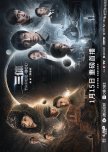
The bugs will inherit the earth.
Three-Body is Tencent's adaptation of the first book of Liu Cixin's award winning sci-fi trilogy Remembrance of Earth's Past. It is an immense, mind-bending and terrifying book that explores the dark corners of humanity and our place in the universe. The narrative is concept-driven and lacking in terms of both characters and plot. This drama adaptation fleshes out the characters and plot while staying largely true to the original works.An alarming number of leading scientists around the world die mysteriously. One of them, Yang Dong is a friend of nano-scientist Wang Miao. This seems oddly linked to an ominous countdown that only he can see and a virtual reality Three-Body game developed by ETO, a secret organisation. He gets roped into the murder investigation by an irreverent cop Shi Qiang. With the help of Yang Dong's mother Ye Wenjie, they start to pull at the threads that go back to the Cultural Revolution to reveal a conspiracy with existential implications. Rather abruptly, Shi Qiang gloatingly blurts out what is coming before we are are even half-way through the drama! This monumental conclusion is so matter-of-factly accepted without debate that it adds to a sense of anti-climax. Then we get an extended flashback to a brutal, frank and scathing depiction of the Cultural Revolution that unflinchingly exposes the loss of common humanity, the utter despair and loneliness of the period and the rage that must lurk beneath the surface.
The drama does a fantastic job bringing Wang Miao, Shi Qiang and Ye Wenjie to life. They are far better fleshed out in the drama than the book and all three anchor roles are deftly articulated by veteran actors who can convincingly navigate difficult transitions over time periods and into virtual reality. Yu Hewei's sarcastic and badass Shi Qiang is by far the most engaging and hilarious character. I didn't love Zhang Luyi's Wang Miao at first but he grew on me as his rapport with Shi Qiang grew. Unfortunately the other roles are not well written and made worst by vapid (Shen Yufei, Pan Han) or annoying (Mu Xing) performances by mediocre actors whose shortcomings are glaring up against the seasoned main cast. I wouldn't have minded if they got little screen time but unfortunately they featured prominently in extended largely drama-invented sub-plots that were barely touched upon in the book. I had to grit my teeth through the coma inducing preaching with the nationalistic subtext on monotheistic religion and environmental extremism.
High concept hard science fiction stories like this are difficult to adapt because the plot is driven by exposition and there is a lot of that in this drama. These concepts are conveyed creatively in a visually engaging manner to be easily accessible to layman. I enjoyed many of the analogies such as the Turkey/Farmer and the Shooter. However, the production tends to over-explain and tediously repeat the sci-fi aspects. Some judicious editing and higher confidence in audience intelligence would have gone a long way toward making this drama less draggy.
Even though this is shot in movie aspect ratio and a lot of care went into the props and the staging and lighting very artistically captures the bleak and portentous tone of the story, the production values overall are only of average quality. The background music is simply dreadful - jarringly loud and tries too hard to conjure a sense of dread or suspense that is at odds with the dry sci-fi plot points. The use of a difficult to understand and cliched artificial voice over an entire episode made my head throb. But what I was most dismayed by was the virtual world of the Three-Body game. While there is quite a bit of cool stuff like the dehydration and rehydration process, the overall effect is like stepping into a cartoon-like animation. It is just not at all scary. There is no sense of chaos or the searing intensity of the huge atmospheric variations and that gripping fear of what comes next that is described in the book.
The penultimate episode if you can make it that far is the best and only truly thrilling and epic episode in the entire drama. The wrap up is good in the sense that it is faithful to the novel even though the main antagonist is a bit whitewashed and not remorseless enough. This narrative takes over twenty hours to tell you something you already know; that the bugs will inherit the earth! The book covers it in about five hours and there is hope that the movie will be able to do it in under three. This is a good watch if you are in a contemplative mood and wish to indulge in a bit of history, philosophy, math, physics, speculative hard sci-fi and ponder the future of humanity. And if you have time and patience. I only rate this 7.5 because I feel the story could have been much more compellingly told in about half the episodes and not in a way that was a chore to watch.
Was this review helpful to you?

Growing Pains.
The Young Ones is an unexpectedly addictive crime thriller. After missteps in a case, Lei Xu gets appointed as the Director of the Juvenile Prosecution Department, a new department responsible for prosecuting juvenile cases. It is an effective demotion that sees him back in his hometown, leading an all-female team. It is an awkward transition for Lei Xu, who is more accustomed to dealing with hard core criminals than with sensitive, angsty, hormonal and mendacious teenagers. He also finds himself stepping on all kinds of toes dealing with some of the more prickly members of his team. Fortunately for him he has an interesting history with his high school classmate Du Ziyu, who smooths the way for him.The plot is not special and the villains are not smart and are known early on. By pulling together threads of a few seemingly unrelated juvenile cases, Lei Xu stumbles onto an old nemesis that enables them to bring down a much larger criminal network. What makes this drama riveting, horrifying and addictive are the teen stories. Their growing pains, their vulnerability and the way they respond to trauma is scary and moving at the same time. I am not a binger but I couldn't stop watching just one more episode well past my bedtime. The teen actors absolutely stole the show, notably Jia Xiaohan's portrayal of the layer upon layer that peels away to reveal what happened to Jiang Xiaojie. The way Jiang Xiaojie, Zhang Yunyun and Zhou Qiao, lie over and over again so convincingly and ingeniously to protect each other moved me more than anything else. These kids only have and trust each other; they really don't have any faith in adults and they are too smart; they ran circles around the prosecutors! Bravo to all the child actors, they were truly phenomenal!
The rest of the cast is solid overall. It is anchored by Zhang Yi, who is in his element in this kind of slightly flawed but dedicated good guy, slightly awkward around women cop. I enjoyed the hint of romance and how the team comes to work together seamlessly. The only thing that surprised me is Qin Lan's lines; they were simply dreadful and she seemed uncomfortable in her role. Overall this is just another one of many decent police procedurals that is elevated by outstanding teen related sub-plots and performances. Its a good watch to pass time during a drama drought. I rate it 7/10.
Was this review helpful to you?
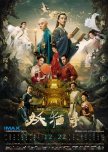
Are there limits to an emperor's power or simply limits to an emperor's love?
A black cat slithers sinisterly through the households of Changán's elite seeking out its favorite meal of fish eyeballs; a series of eerie inexplicable events in its wake. When it dares torment Emperor Xuanzong, palace official and aspiring poet Bai Letian (Bai Juyi) and visiting Japanese monk Kukai pair up to track down and exorcise the demon cat. These two historical figures must uncover the cause of the cat's resentment in this wildly speculative account of the inspiration behind the most renown Tang poem in history 長恨歌/Chang Hen Ge/The Song of Everlasting Regret or Sorrow.Yang Yuhuan (Yang Guifei or Precious Consort Yang) is a cultural legend that stirred the imaginations of artists, poets and writers for centuries. One of the Four Beauties of Ancient China, she was the femme fatale that distracted a great Tang emperor from affairs of state and sent the empire into decline. In this opulent blockbuster, Chen Kaige conjures the fantastical sensuous decadence of the Tang empire at its zenith and the subtle decay of its decline. While Sandrine Pinna hardly leaps to mind, she passes muster as this famous, captivating beauty that toppled an empire. I cannot rave enough about how masterfully this production evokes the famous poem, with its vivid, erotic imagery of an incomparable beauty, an intoxicating and toxic love story and the haunting intensity of eternal regret and sorrow. Are there limits to an emperor's power or simply limits to an emperor's love?
Where the movie falters is in the narration. Both the role of Bai Letian and that of Kukai are miscast and not well written. The movie dwells too much on Kukai's backstory, which is not interesting and peripheral to the plot. There is zero chemistry between Huang Xuan and Sometani Shota and neither actor conveys why their character is compelled to solve the mystery of this enigmatic and very spooky cat. In fact it is Liu Haoran and to a lesser extent Ou Hao's White Crane and Red Crane that resonate and absolutely steal the show. Liu Haoran's portrayal of youthful infatuation, betrayal, the terrible burden of holding a lasting grudge and the release of letting go leaves the strongest impression among all the performances. If the two lead roles were better written and articulated, I would easily rate this better than 9,0 instead of 8.5. Nonetheless this is one of the best ancient fantasy thriller mysteries I have watched in a long time.
Was this review helpful to you?
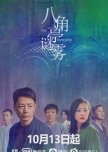
Homecoming.
Billed as a suspense drama, 2021's highly anticipated Mist Theatre debut is really a family drama about how guilt and regret fractures a family after their youngest, best loved child Xuan Zhen is murdered nineteen years ago. Xuan Liang, who neglected to pick up his sister that fatal day is a stifling, over protective and paranoid father who is slowly but surely alienating his eighteen year old daughter Nianmei, who bears an uncanny resemblance to her long dead aunt. Another seemingly related murder finally presents a potential break in this cold case for long suffering detective Yuan Fei, whose wife Xuan Min also cannot let go of her sister's murder. The homecoming of Xuan Zhu, Xuan Zhen's fraternal twin sister is the catalyst that finally connects disparate threads between the past and present.The best part of this drama is the exceptional veteran cast who deliver performances that exceed the quality of the dialogue and the logic of the storytelling. Their compelling acting reinforces how they, the survivors are the true victims of this crime as they are each tormented by the knowledge that Xuan Zhen would still be alive if only they had done something differently. The problem is that amongst such nuanced and immersive portrayals, the young actress playing both Xuan Zhen and Nianmei is completely out-classed and her portrayal by comparison seems a lot less compelling than it really is. It does not help that neither character is written to be that empathetic.
Where this drama fails spectacularly is on the suspense thriller aspects. Despite decent camera work and a very dark and mysterious ambience, there is no sense of imminent danger or looming evil. As always Duan Yihong is so enjoyable to watch and between his Yuan Fei and his rookie sidekick Liu Xinli, the investigative aspects are logical and well presented. However, all of the credible suspects are eliminated very early and by the 6th episode, the who and the why is quite obvious. To meander through another 6 episodes of digressions into family drama to get to the how takes too long; what little suspense is built up fizzles out. The antagonist is also not interesting or sympathetic and their motive is not well fleshed out. It ends on a strong note as we are made to see and feel how important closure is for the Xuan family.
Even though this is a pretty forgettable suspense thriller, it is difficult to rate it too badly considering its strength as a family drama and the strong performances of the all-star cast. I give it a 7.0 overall as a decent watch if you need to pass time.
Was this review helpful to you?
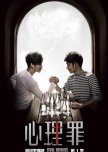
The Devil Inside.
This is an excellent psychological thriller that can give any of the recent hits in the crime/thriller genre a run for their money. This drama grippingly explores criminal profilers - those who get into the minds of monsters - those who gaze long into an abyss the abyss also gazes into you. It is a dark story about how we all struggle with our inner demons and how the devil inside can be unleashed and insidiously take over. It is another excellent thriller with an unreliable narrator that sneaks up upon you.Fang Mu is a graduate student in criminal psychology who consults with the local police department to solve difficult and gruesome serial cases. He is considered a gifted profiler who is able to build an identifiable profile of the murderer from seemingly random and opaque clues. I am quite surprised at how some graphic and gruesome details of the rape/murder cases made it through the Chinese censors. That said, the introductory or peripheral cases fail to convincingly establish Fang Mu's credentials as some kind of profiling wunderkind although the shock or gore value is quite high. The two "real" cases however are meticulously mapped out and articulated.
After a traumatic case, Fang Mu struggles to matriculate and his police collaborators exhort his professor, another gifted profiler salvage their protégé by helping him battle his inner demons and complete his thesis. Another series of baffling murders compels Fang Mu to work together with the police department again. This awakens memories of the shattering case from three years ago that destroyed his confidence and left him a shadow of his former self. The story brilliantly weaves the destruction and subsequent salvation of Fang Mu's character into the two defining cases, one in the past and one in the present. Unlike some of the overrated the 2020 vintage that morph into character dramas (Horizon Tower, The Long Night), Fang Mu's character evolution an integral part of the plot and is not a digression from the plot.
There are enough clues throughout that it is possible (but not easy) to partly solve both of the main cases before the big reveals. At the very least, a very shadowy outline of the truth is visible in a way that made me want to keep watching; to find out if my suspicions were correct. This achieves that perfect balance between the element of surprise and anticipation or validation of the viewer's working thesis and I can't be more impressed. The acting and chemistry between the cast is excellent with the villains in particular being very subtle but still planting the smallest seed of suspicion. This really hit my mystery, psychological thriller, dark gore sweet spot. At the same time, in so many ways it is also a very human, very sad story. You will feel a ton of empathy for many characters and how the vagaries of fate and chance conspire to steal their dreams without completely killing them. Chen Xi and Fang Mu's story broke my heart - even though I was on to them from the second episode, I never wanted more badly to be wrong.
While there are some flaws and maybe some holes, this is an excellent watch - I rate it 8.5. It is very under appreciated but dark and complex.
If you are going to watch it on iQiyi be warned that the last two episodes are incomplete. Episode 23 seems edited to end the show with some of the most important threads left open. And Episode 24 is missing. iQiyi has ignored my many messages to complete the season so like me, you will have to watch the last two episodes somewhere else (Dramacool).
Was this review helpful to you?
The Adventures of Shanghai Holmes
This drama unabashedly sets out to create a Chinese Sherlock Holmes that is an upgrade from the original. I wish they had not done that but that changes nothing about how awesome this drama is. Set in the lavish sophisticated glitter of 1930s Shanghai, the glamorous surface visuals stand in sharp contrast to the darker and more ominous undertone of its citizens' dark side. The production borrows heavily from recent popular Sherlock Holmes movies and dramas. This is most notable with the OST which sounds uncannily like parts of the OST from both the movie and the BBC hit drama but has the audacity of being well... just better!This fun and engaging drama follows gifted police consultant Luo Fei (Bai Yu) and his sidekick rookie female detective Qin Xiaoman's crime solving adventures. They are aided by forensic doctor Ben Jieming and criminal psychologist Dr. Huo Wensi under the eagle eye of Detective Supt. Shawei. Despite the overt allusions to Sherlock Holmes, this is really a crime solving team that is a bit of Elementary in the two leads combined with a bit of CSI and a bit of Criminal Minds. Despite the requisite sharp intellect and deductive talent, Bai Yu's Luo Fei is far too sociable, too stylish, too charismatic and way too relate-able to qualify as an iconic Chinese Sherlock Holmes. His interpretation lacks a defining obsessive eccentricity and that dispassionate deductive logic that is the quintessential Sherlock Holmes.
Nonetheless, the humorous antics of the all too human Detective Luo as he falls for his gamin and plucky young sidekick are simply delightful. Xiaomin is a strong, smart and tenacious female character who can kick ass but is also not afraid on occasion to just be a girl. I really like that about her. What I like less is how condescending Luo Fei is when explaining certain deductions to Xiaomin - all that "Elementary my dear Watson" crap is such an overused and passe preamble to a "this is how it went down" walk-through in this genre. In general, all of the lead roles are colorful characters that were well written, well developed and well acted.
What impresses me most about this drama are how well written the cases are and how they come together in an overarching larger plot. I devoured the Complete Sherlock Holmes when I was twelve and have probably read every critically acclaimed detective out there since. I am not that easily wowed by just any old whodunit. These cases are intriguing, cleverly crafted, largely original with cheeky allusions to many of Holmes cases, both famous and lesser well known. They were mostly crimes of passion, where we end up feeling rather sorry for the perpetrators following the great reveal. In this sense, the cases are much more Agatha Christie than Arthur Conan Doyle.
The approximate three-episode per case format is just the right length to properly develop the backstory to each crime and the potential suspects. However, the production rushes through some key interactions, as if they don't really want the viewer to have enough time register what happened and think things through carefully. A really good whodunit lingers to the point of actually rubbing it in your face. The casting is also a bit off in the cases. For example, if there is to be a femme fatale in a case, she has to look the part. It is like saying Mrs Peacock seduced Professor Plum in the Conservatory - all you get is a big fat eye roll and yeah, right. Replace that with Miss Scarlet and then its oh yes, of course she did, that tramp! I suspect that the producers just don't understand that part of the big hook in this genre is the audience really does want to have a fair shot at more or less figuring it out. And between the rushing (every episode is really only about 30 mins) and the misleading casting, they are kind of cheating a little bit. But its not a big issue, just don't hesitate to rewind if you think you missed something.
[MILD SPOILER - PROCEED WITH CAUTION]
The way the cases converge towards the end is marvelous (and original) and builds towards a Reichenbach Falls like moment as a final homage towards Sherlock Holmes. Arthur Conan Doyle was bored with his creation and had intended to kill off Sherlock Holmes. I don't think that is the intent here - I think it this is clearly angling for a second season but even if that doesn't happen, I think the ending is excellent and can stand as it is.
Was this review helpful to you?
The truth will make them free.
This is a review of The Blue Whisper in its entirety - I will not review Part 1 and Part 2 separately.The Blue Whisper is an enthralling fairytale about how love can be both imprisoning and liberating. Set in a fantasy world where sky immortals or fairies instill order and earth immortals or demons are prone to chaos, romantic entanglements between these two clans are forbidden. This kind of inter-species ban pretty much ensures that sky immortals and earth immortals fall for each other with reckless impunity.
Ji Yunhe is the most consummate spirit master among Wanhua Valley's elite cadre of demon tamers. She longs desperately to escape from the Valley; to see the world and be free. Chang Yi, a magnificent and powerful merman is captured by the wicked, conceited Shunde fairy, who tasks the Valley to tame and enslave him. Seeing it as her ticket to freedom, Yunhe vies with her sect brother, the Valley Master's son Lin Haoqing, to complete the task. Where Haoqing attempts to torture Chang Yi into submission, Yunhe beguiles him with kindness, friendship and love. Yunhe successfully manipulates and entices the naïve Chang Yi's heart for her own selfish ends. Along the way, the player gets played as Yunhe falls for his sincerity and sees that it is wrong to enslave such a pure hearted and innocent being. But even though she sacrifices to free him, her well intended lies set in motion a cycle of half truths, sacrifices. betrayals and captivity that ensnares them both. After a long and difficult quest for freedom with many trials, they understand that it is the truth that makes them free.
The story is set in a stunning, enchanted fantasy world with a vivid magical color palette, mystical sets and the best costumes and styling I have seen in a long time. The CGI is well done but errs on the side of being heavy handed at times. The storytelling however, leaves quite a bit to be desired. There are way too many artifacts, especially pearls with endless magical properties to conveniently save the day. And when dead characters keep being revived, both the element of surprise and the emotional impact is diminished. In addition to unnecessary side characters, there are altogether five well developed CPs that explore repetitive tortured themes of taboo relationships, deception, betrayal and how love can both be both confining and liberating. A few of these side stories are not interesting and too long winded and the frequent alternating between too many CPs and plot threads breaks the momentum of Yunhe and Chang Yi's story and makes the main plot stagnate as well. Thus I did not feel Yunhe and Chang Yi's chemistry or get invested in their storyline until Part 2 where many threads converge and the storytelling improves markedly.
I am really happy to see Dilraba take on the role of such a complex and conflicted character as Yunhe; one that undergoes so much anguish and such profound change. Though she made me feel her love and pain many times, I still like her portrayal of the cunning, manipulative and self serving Yunhe in the beginning best. As for Ren Jialun, he is a master of the unspoken and of intense suffering in silence. I can't fault his performance and am simply tickled that he is willing to do so many kiss scenes with the exquisite Dilraba. They look so incredible together in this production that they must be the most gorgeous costume drama couple by a wide margin. That said, while Chang Yi is intensely single minded when it comes to love, loyalty and righteousness, this is not innately a complex character and thus the role doesn't quite do Ren Jialun justice in terms of broadening his acting repertoire.
The character that compells me to the point of stealing the show is Lin Haoqing; brilliantly and sublimely articulated by Xiao Shunyao. From the get go, I was more drawn to Haoqing's chemistry with Yunhe - they are on the same wavelength, bound by history and layered and complex emotions. Like Chang Yi, Haoqing is torn between duty and Yunhe but unlike Chang Yi who is more reactive, he proactively schemes ahead, takes bold risks and tries for win win outcomes. Lin Haoqing and Yunhe get to do all kinds of interesting and important things that advance the plot while poor Chang Yi is relegated to safeguarding Beiyuan and dealing with the petty, boring issues of the fox clan. Chang Yi only comes in useful in mighty showdowns and even then, his power ups are marred by unflattering camerawork that catch him scowling angrily as if he is trying to take a dump. I can't help but feel that the plot short changes my beloved sour faced Ren Jialun, an actor I am super fond of. That said, I only have praise Xiao Shunyao's ability to make me feel Lin Haoqing's suffering no less than Chang Yi and Yun He's. I hope good things happen to this handsome and compelling actor.
Though I don't consider Xian Shi or Shunde's motives as villains that convincing, both roles are very well acted. In fact, Guo Xiaoting's Shunde can give one of my all time favorite villains, Angelina Jolie's Maleficent a run for the money. Guo thrusts herself into the role with mesmerising relish and wicked abandon. A dash of dark humor would have rendered the portrayal incomparable. As for the rest of the (too) extensive cast, even though a few characters got screen time that was disproportionate to the substance of their storylines, the roles are well performed enough to win a place in my heart. The friendship, support and sacrifice from Fan Zhen and Lishu as well as the hilarious Kong Ming and Luo Luo is clearly what gets Yunhe and Chang Yi through the loneliness of their many trials and tribulations. And I just simply love the idea of such a youthfully adorable Tian Jun.
This drama finishes strongly with an exciting and well chareographed final confrontation. But I won't lie, the ending is a bit of a blue whimper. There are simply too many reversals that make me roll my eyes. As for the final 5 minutes, it succumbs to c-drama's nasty habit of wanting to be all things to all people. Nonetheless, it is still an acceptable finale that from a certain point of view can be seen as quite fitting. The storytelling in Part 1 tried my patience and is at best an 8.0 but I really enjoyed Part 2, which I can happily rate a 9.0. Since I don't think it makes sense to rate both parts separately, this is an 8.5 overall. As of end April, this is my personal top ranked drama for 2022.
Was this review helpful to you?
To be or not to be.
This is a short, gripping and dark crime drama that revolves around a grisly series of murders that are mysteriously linked to Aspergic forensic analyst Fang Yiren's estranged teenage daughter. In a desperate bid to find her, he teams up with Xu Haiyin, a resourceful but rather unscrupulous and ambitious young journalist to unravel the cases. They are an odd but effective team as his meticulous forensic work reveals the how while her intuition and ability to understand and manipulate people uncovers the why.Joseph Chang's portrayal of Asperger's alone makes this drama worth watching. I would tear up at his portrayal of Yiren's frustration and inexpressible pain at his inability to emote and connect with people. Far from being oblivious (which would actually be merciful) Fang Yiren is well aware of this handicap that devastates his family and alienates his colleagues but yet helpless to do anything about it. Although I didn't like Tiffany Hsu's Haiyin in the beginning, I think her depiction of how Haiyin schemed to manipulate Yiren initially and ultimately came to understand and empathize with him was nuanced and layered. The essence of their chemistry is in the very lack of chemistry between them. The acting is so brilliant it pulls you into rooting for an unrelatable character and a dislikable one (initially). This is an almost unnecessarily dark drama; literally every character is dysfunctional, has family problems and/or smokes like a chimney.
For me, the murder mysteries were a side show and not the main meal. The plot is overly ambitious and weaves together too many complicated themes from mental illness, various social injustices, transgender issues, terminal illness, corporate greed, vengeance and, atonement in addition to the ultimate and super heavy question - "to be or not to be". While the first few cases were clearly linked, the intertwining of subsequent cases and relationships became more tenuous and were arguably unnecessary as Yiren's daughter was implicated in the very first case. The ultimate reveal was a surprise mainly because both motive and means were unconvincing and the acting by the main antagonist was very weak in sharp contrast with impeccable performances by the rest of the cast. It is a pity because what is missing is a deeper exploration of the father daughter relationship, something I suspect this production could have pulled off compellingly.
The production values are very high; it revels in impressively shocking and gruesome crime scene detail and unflinchingly exposes the mundane and exhausting clutter of ordinary lives. One of the things I really enjoyed about the drama is the proliferation of several dialects from the very expressive cussing unique to Taiwanese Hokkien to of course Mandarin and even Cantonese. But for all the high production values and effort, the last episode was really the weakest and the ending had an unfinished feeling. For some reason, this reminds me of Netflix's controversial but higher impact 13 Reasons Why, which is a much more focused and terrifying exploration of a few hard core subjects rather than a scratch on the surface tour of too many that is this drama. Nonetheless, the acting is superb and the story will put you in a thoughtful mood for some time.
Was this review helpful to you?


