

 75
75 9
9 1
1 4
4 12
12 2
2 3
3 2
2 1
1 4
4 10
10 1
1 1
1 2
2 2
2 3
3 2
2 2
2 2
2 1
1 1
1 8
8


Did you ever dance with the devil in the pale moonlight?
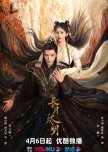
Did you ever dance with the devil in the pale moonlight? What was it like? Did you leap into the abyss with wild abandon? Lose your heart, body and soul? Was it worth indulging in every lucious, forbidden moment? Find out all about it in Till the End of the Moon, a heart-stopping account of Li Susu and devil incarnate Tantai Jin's scorching entanglement of love, hate and misunderstanding that spans 500 years and multiple realms.In a desperate attempt to stave off the resurrection of the the devil god, a bunch of grey haired cultivators send an intrepid young cultivator Li Susu back 500 years in time to stop Tantai Jin from turning into the devil god. Yeah, you really have to hand it to these crusty old cultivators - when all else fails, they sacrifice a virgin and hope for the best! Susu assumes the identity of Ye Xiwu and is tasked to kill Tantai Jin after tempting him out of his... uhm... evil bone! I almost choked with laughter at the sheer audacity of such a naughty plot setup!
This angsty xianxia's unique premise is that the main protagonist Tantai Jin is a fiendishly compelling and tragically misunderstood character; literally a prince of darkness. Luo Yunxi is mesmerising in this role - his diabolical crooked smirk, the maleficent glare, the taunting cock of an eyebrow, the elegant devil-may-care gestures and the imperious snap of a finger. But it is his shatteringly wounded expression and how with a moment of stillness he screams silently with pain oozing from every pore that makes me root for the devil and to hell with the realms. My favorite part of this drama is how kindness and love gradually changes the dark, lonely and twisted Tantai Jin into a best yet still flawed version of himself. Bai Lu on the other hand could have delivered a more nuanced performance as Li Susu. Her Susu is so unwavering in her duty to the realms that I could not tell when she fell in love with Tantai Jin or if she ever really did. That said, there is an exceptional spark between the leads that results in both hilarious and smoking hot moments. I could see sparks fly in every direction during Ye Xiwu's seductive dance that tempts the devil in his liar. This drama's greatest hook is Luo Yunxi's portrayal that dimensions his character beyond the screenplay and his searing onscreen chemistry with Bai Lu.
There are four distinct arcs in this drama, the first of which is the strongest and most enthralling mortal arc. I loved everything about this arc and if this drama had held that level, I could have easily rated this over 9.0. By design, the second visually stunning dream arc also shines in many aspects but sags as a result of lazy writing and overuse of tired xianxia tropes. The third and fourth arcs recover somewhat but never quite hit the addictiveness of the first arc. Part of the problem is the second couple is poorly written, has no chemistry and is not empathetic. Their insipid story is overshadowed by that of foxy Pian Ran and unswerving Ye Qingyu's passionate and addictive love story, which ends way too soon. While all of the arcs have good moments, the plot is moved along almost solely by misunderstandings. This is the hallmark of indifferent screenwriting and it undermines the intelligence and agency of the main characters. With a little bit of effort, they could have gotten to the same place without undermining the characters and disengaging the audience.
In terms of production values, this is a big budget drama and it shows but not in the best ways. The make up was often over the top and not flattering. I am visually scarred by the excessive blood spitting that took it to the next level in terms of bloody teeth and the excessively bright contact lenses absolutely ruined many emotional moments for me. I did not at all enjoy the pantasmagorical CGI orgy game world that hijacked all of the clashes between good or evil including the beginning and ending scenes. The over-lit glare distracted from the emotion and the intensity of Tantai Jin and Li Susu's most pivotal scenes.
The way this drama ends is both fitting and inevitable in that both Tantai Jin and Li Susu fulfill their destiny. My problem is with how they get there. It could have been a lot more palatable if it were better written. But my biggest gripe with it is that the drama never convinces me that humanity or the realms are worth saving. Or that there is cosmic justice. After all, Tantai Jin was just jinxed from birth but he was hardly the worst, most evil character. What I resent most is that the hypocrisy of the moral sects is never exposed and that the truly evil characters get outcomes they don't deserve. The original works this drama was based on may have been very good but the adaptation is not. The screenwriters should all hide in shame and do all they can to try to erase their names from this adaptation. Nonetheless I rate this 8.5 because anything less would be an injustice to Luo Yunxi's devilish, simply irresistible and unforgettable portrayal of Tantai Jin.
Was this review helpful to you?
Beware of false prophets.
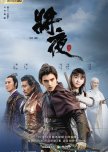
Ever Night is an epic fantasy adventure hit set in a mystical, ancient world where the balance of power between rival kingdoms is maintained with the aid of powerful warlords and cultivator sects. The vivid stunning palette is infused with an ominous sense of dark prophecy. The soothsayers warn that the child of darkness will bring an ice age or ever night and chaos to the world.The main protagonist Ning Que makes an thrilling debut as a lethal, almost ferally vicious warrior in a ferocious, spectacular desert ambush. This opening sets the tone for some of the most exhilarating and well choreographed fight scenes that Chinese drama has to offer. The drama is visually spectacular and delivers on the hype on many fronts, especially in terms of its movie quality production values. The sweeping breadth of the story can be overwhelming in the sheer number of characters representing different kingdoms and sects that makes the story appear more complicated than it really is. This is really the story of Ning Que (and by extension Sang Sang's) quest for revenge that sets him on an epic journey to become one of the strongest cultivators in Haotian.
Ning Que is an anti-hero. He is ruthless, cunning, manipulative and can be quite dishonourable. While at at times Chen Feiyu's acting could do with some polishing, he is superbly cast as Ning Que. He emanates that simmering resentment and burning thirst for vengeance that propels Ning Que to prevail against overwhelming odds and superior foes. With his lithe powerful build, his combat scenes are bloodthirsty and violent and his facial expressions are vicious, almost feral. Ning Que's arch-rival the glorious Prince Longqing is an interesting mirror character on a parallel path that makes different choices at important milestones along the way. What is quite remarkable about this story is there are no outright villains. The world they exist in is cruel and fraught with peril and conflict among competing interests. Thus both the antagonists and protagonists have to do ruthless, even terrible things to survive.
Unlike others, I am not troubled by the relationship between Sang Sang and Ning Que. They have no blood ties, they are simply found family and have a complex and multi-layered relationship that is likely predestined. In fact, I think it is inevitable where the relationship must go. As much as I enjoy their undeniable chemistry and clear bond immensely, to me the real issue is that Chen Feiyu and Song Yiren should never be cast together in a romantic capacity. Chen Feiyu is exceptionally tall and Song Yiren is exceptionally petite. Her youthful features and small size makes her look like a child next to him. This visual imprint is so strong it is practically impossible to imagine them as a couple. Their relationship in Season 1 remains platonic and is not troubling but it is a good thing that Wang Hedi replaces Chen Feiyu as Ning Que for Season 2.
In terms of storytelling, there are issues with pacing and the breadth and depth of the character and world building is perhaps overly ambitious in scale. Even though I love how there are different schools of cultivation and cultivators are able to gain immense power via different theologies and practices, I find the excessive pontification and philosophical discourses mind numbingly boring. That said, I appreciate the ultimate irony of how many powerful cultivators are ruled by superstition and fear of ever night or the child of darkness. While the worthy ruler and the true wise men know to beware of false prophets. The political arcs are not that interesting and Princess Li Yu and her brother don't add to the plot. They just take up space and despite all the screen time, this and several other sub plots like the inner politics of the West Shrine and Yan State go absolutely nowhere. Obviously this lays the back story for multiple (?) seasons but unfortunately none of these sub plots and characters are interesting enough to make me want know what happens to them.
Despite the digressions and morass in the middle, the drama builds towards a very strong ending. I was truly moved by Ning Que's speech when he finally confronts his family's killer and I was really impressed by Chen Yufei's acting in that moment. "Why does it always have to be a prince?" is one of the best, most memorable lines from this show. The build up in tension, that sense of dread and hope into the ending confrontation is superb. The final fight scene is epic, full of surprises, utterly savage, desperate, exhilarating. It was everything I didn't even know I was craving for. Even the CGI is amazing.
I thoroughly enjoyed many aspects of this heroic saga and I am happy to recommend this as a not to be missed drama for action and adventure buffs. But unfortunately there are many parts of it that I did not enjoy and I feel strongly that the production over indulged in laying the backstory for many subplots that only play out in subsequent seasons. I am going to go with an 8.5 because the production values and fight scenes are exceptional. Going purely on storytelling alone however, this is at best an 8.0.
Was this review helpful to you?
Rebel Without a Cause.
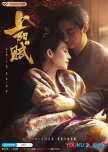
This is one of those magnificent, high budget productions that starts so strongly that I kept shushing that inner voice that whispered "masterpiece" for fear of jinxing it too early. Sixty-eight episodes later, I am sad to say that despite some excellent arcs and moments, this drama falls far short of its breathtaking early promise.*** Be warned that there are mild spoilers in my review - I will avoid major spoilers. ***
Wang Xuan or A'wu, the titular character is a fictional only daughter of Prime Minister Wang Lin, head of the Langya Wang clan whose formidable political influence straddled several early dynasties since Eastern Jin. Their hold onto power is secured via an incestuous (and icky) pact with the imperial Ma family whereby for twelve successive generations, the Wang clan heiress is chosen as empress. Wang Xuan's legacy 王氏之女 母仪天下 literally means the Wang clan daughter is the "mother of the world" or the empress. Thus he who attains Wang Xuan, attains the world. This is not just a prophecy; she comes with the power and influence of the Wang clan who are kingmakers. The drama dumbs this down to be just about lovesick men after her ravishing and incomparable beauty. That is just icing on the cake and not the only aspect of her appeal to ambitious men who cannot otherwise legitimately claim the throne. This is with the exception of the the weak and foolish Zidan, a character who exist only to love A'wu. In this context, A'wu's expectation of a love match is unrealistic and not possible for any of the noble elite; marriages are political alliances where the best one can hope for is some affection that may or may not quite be love.
A'wu's first and most significant act of rebellion is against her destiny as empress and in doing so, she goes against her father and by extension her clan. This upsets the balance of power between the imperial Ma family and the Wang and Xie clans and sets an intense power struggle in motion. While her motives are naive, this is the first of many decisions she makes that undermines her clan's extraordinary grip on power. In fact, she protects the imperial family's birthright without questioning their worthiness. In this matter, she is indeed a rebel but one that lacks a just cause because excessive in-breeding has made each of the Ma heirs some combination of stupid, unfit and unworthy. That said, I saw character growth and could understand and largely empathize with her decisions until the arc that sees her return to the capital with Xiao Qi just past mid-way through the drama. Until then, the plot was well paced, suspenseful and the motives of the main antagonists layered and interesting enough to make this worthy of a 9.5/10.0. Unfortunately the drama peaks there and after that, the plot falls flat and becomes overwhelmed by tropey two dimensional villains with repetitive and boring motives. Wang Xuan's character regresses and she makes very questionable decisions, the worst of which culminates in a very shady mating dance that I cannot un-see no matter how many times I rinse out my eyeballs.
Xiao Qi and Wang Xuan's relationship is the best thing about this drama. Even though he didn't get enough screen time to do his character justice, Zhou Yi Wei 's Xiao Qi stole the show. It is so nice to see an actor looks and fits the part of a battle scarred, undefeated general in the role rather than some scrawny idol actor with baby smooth skin. Much more so than Wang Xuan, Xiao Qi is thecharacter that I really root for in this drama. He has riveting chemistry with Zhang Ziyi that compels me to keep re-watching the way their romance unfolds and progresses. It is freshly written and their natural and intimate interactions manage to avoid common drama relationship cliches. Both actors communicate deep and complex emotions with few words and tiny, nuanced changes in expression. Their relationship is not perfect - they have their share of challenges and conflicts. It is disappointing we don't get to see how they navigate their greatest relationship challenge as Wang Xuan is caught between protecting her first love and Xiao Qi's quest for justice.
What is super annoying is that Zidan could have been written to be a much more interesting character rather than one that is frankly a complete waste of screen time. He got such an absurd amount of time he was constantly popping up like a bad tart when all I wanted to see was Xiao Qi. It is understandable for Wang Xuan to have some lingering regret and affection for him but that is not well flushed out. The fact is she married Xiao Qi to save Zidan and at the end, she still rescues him while turning a blind eye to his crimes. It makes me wonder if he was indeed her one true love after all.
The crux of the problem is that Zhang Ziyi's portrayal of Wang Xuan lacks complexity. Her A'wu stopped becoming interesting the moment she grew up to be the more politically astute Wang Xuan. She becomes a suffocating paragon of virtue and forgiveness 母仪天下; the mother of her country and and inexplicably staunch defender of the (worthless) imperial family's absolute right to rule. She wears a perpetually aloof and haughty expression and does not let anyone forget that she belongs to nobility; that she has familial obligations and ties that a commoner and an orphan such as Xiao Qi could not possibly understand or relate to. While she is entitled to forgive her enemies for wrongs they committed against her personally, it is absolutely not her place to broadly dispense justice as she sees fit. She casually makes decisions of great weight and consequence as without any appearance of inner conflict or overarching ideology or sense of justice. If this makes her a rebel, she is one without a cause. I like Zhang Ziyi but this is not a role that she shines in. Despite not looking the part, I had no issue with her portrayal of the young A'wu. It is her Wang Xuan that ultimately fails me. I abandoned the novel because I disliked how narcissistic the character was written to be there. But in the novel ,at least she is very conscious of her beauty and charisma and wields it ruthlessly to accomplish her goals. I never imagined disliking her hypocrisy and sense of entitlement even more in the drama. It does not help that Zhang Ziyi's portrayal is so humorless she even takes the joy out of getting drunk off her ass. At least Wang Su is a fun and uninhibited lush, the kind of drunkard anyone can relate to.
My favorite character and the one that shores up the drama is Yu He Wei's Wang Lin. He is the only truly complex character that is smart without being infallible, unabashedly ambitious, cynical and unrepentant. I love how he gleefully, insightfully analyses situations and peels away the layers of righteousness and hypocrisy around him. There were many times I could empathize with and even support his cause.His plotting against emperor Ma is the drama's best arc. Wang Xuan is actually remarkably like him in terms of her innate arrogance and sense of entitlement as well as her ability to make bold decisions on important affairs of state. As he exits, she steps into his role as the silent force behind the throne with Xiao Qi as the military power that anchors her influence. She is truly her father's daughter in more ways than would make her comfortable if she could see herself. This does not come across clearly because Zhang Ziyi whitewashes Wang Xuan's character and does not dare to embrace her dark side. Everything comes to a full circle when father and daughter discuss love and marriage and she more or less admits that her relationship with Xiao Qi is not too dissimilar to that of Wang Lin's with her mother. It is convenient that she loves him but their marriage serves a purpose that is far grander and more encompassing than love.
While the ending is acceptable, it is in too many important aspects disappointing. Given that regime change is not a viable way to end this kind of drama, it should not have been written to make such a compelling case for it. ZIdan did not have to have been written to be such a jidan (鸡蛋) or a zero. It is obvious many important parts of the ending episodes were edited out which is such a sloppy thing to do when they could have substantially edited down the most insipid Wang Qian/Helan Zhen arc instead. As a result, there is no justice for the Neem Yu Shan massacre and we don't even get to see how this atrocious outcome was negotiated between Xiao Qi and Wang Xuan. Both characters but especially Xiao Qi, disappoint me greatly in this. Thus at the end of the day it does not look like anything substantive has changed or that the kingdom is in a better place or in the hands of more competent rulers. I really want to give this a 9.0 but with that ending, it is at best an 8.0. That said, it is still a very entertaining drama with a distinctly memorable OTP that you should watch. Just don't get fooled by the strong start into expecting a masterpiece.
Was this review helpful to you?
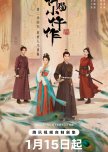
Just watch Young Blood 2 instead.
Imperial Coroner 2 is a sequel that should not have been made. It is missing the charm and narrative focus of Season 1, which was a cool, largely plot-driven "how-did-it" kind of ancient crime-solving story. Season 2 attempts to better flesh out the beloved investigative team but fails to do so in a way that resonates. This character-driven digression comes at the cost of the cases, which lack tension and suspense and skimp on Season 1's stylish, visually impactful illustrations of forensic clues. The sloppy and juvenile writing is a rude shock after Season 1's narrative consistency and meticulous attention to detail.This season picks up three years later, with Chu Chu now married to Xiao Jinyu—an unconventional commandery princess in name and a hardworking imperial coroner in fact. While I appreciate the attempt to flesh out and age the titular character, it is not done well. Chu Chu's mature styling is nice, but her lips turn down in a discontented expression that suggests she did not find marital bliss. She whines bafflingly about her unfulfilled aspirations to be a coroner—when that is actually what she does, with the full understanding and support of her husband. Her petty grievances ("oh poor me, I have to be a commandery princess when all I want to do is prod corpses and bask in the odor of rotting flesh all day") and pity party are not just boring; they are tone-deaf and at odds with the genuine suffering of the truly powerless women of low societal status featured in the early female-themed cases.
After three years of marriage, the romance is still stuck in the tiresome courtship and repeated misunderstanding phase. Just divorce already, please! As for Jing Yi and Leng Yue, if their henpecked husband/abusive wife routine is supposed to be funny, the misguided attempt at humor comes off as banal, and borderline offensive. While the full cast from Season 1 reunites, their dynamic and rapport are just not the same.
As for the cases, there is one overarching plot that ties together all the subplots. Of these, the only case that really stuck with me was the young monk's story. That child actor, Shi Hengyi, moved me to tears. The main Nanzhou arc is the biggest disappointment—it is much more spy vs spy than ancient CSI. There is no real mystery, as the identity of the allegedly hidden master spy is not hidden. And anyone who watched Young Blood 2 would immediately recognize this as a dumbed-down knockoff of that drama's main plot—down to the styling, culture and internal and external political conflict of the enemy kingdom. Minus the exciting action scenes, humorous dialogue, and top-notch ensemble rapport, of course. The finale is anti-climatic and unsatisfying.
So do yourself a favor and just watch Young Blood 2 instead. You can thank me for watching this so that you don't have to.
I rate this 6/10 for daring to so blatantly knock off something pretty good only to make it a lot worse.
Was this review helpful to you?
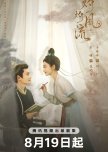
Women should not rule the world.
The Legend of Zhuohua is another in a string of recent female empowerment themed historical romantic dramas. The production is upfront that this drama is a work of pure fiction. It is impossible for women to exercise the kind of influence and authority portrayed in this story in ancient Chinese patriachical society. The attitudes and values articulated are also incredibly modern and unsurprisingly, resonate with current audiences. It should be enjoyed at face value accepting that many aspects of it are sheer fantasy.Titular character Ma Zhuohua flees an arranged marriage to the capital; where she must pass the imperial exams to fulfill her ambition to be a female official. Quick witted and resourceful, she saves Lord Ding, a decorated war hero, when he is wouded in the middle of a clandestine operation. Their fates intertwine as he is the strongest advocate of opening up scholarship and official positions to women. As they collaborate on official assignments and work toward their shared vision of the country, they fall in love. Can their relationship navigate a feudal system that requires women officials to choose between marriage and their career?
The most enjoyable arcs of this drama are the early courtship ones. This is the first time I have enjoyed Jing Tian's playing such a clever, demurely mischevious and independent character. Despite a ghastly white color filter and not the best dubbing, the strong chemistry between Jing Tian and Feng Shaofeng is unmistakable. It is so refreshing and very hot to see such a candid, lively and purely adult relationship dynanic laced with flirtatiously racey dialogue. The humor is very well written and so cheekily portrayed that I laughed uproariously many times, and especially at the dirty jokes. The political commentary and philosophical debates are surprisingly well written, with a sophistication beyond what I would expect of a light romantic comedy like this.
Outside the empowerment theme, the sub-plots are not special but this top notch veteran cast is very charismatic and executes so well it makes up for some of the lack of originality. Both Shi Yueling and Wang Likun in particular deliver formidable, almost terrifying performances as Empress Dowager Zhou and Princess Roujia. I also found Roujia's complicated relationship with Shen Jinghong very interesting. Unfortunately just after the mid-way point, the narrative rehashes tired plotlines including noble idiocy, murder most foul and high treason. In quite a similar vein to Destined, it nose dives into a poorly designed political melodrama and predictible twists. Even incredible acting cannot paper over that this is yet another delusional ends justifies the means antagonist with an unconvincing villain origin backstory.
This would have made a much better 20 episode drama that ended on the intended message that women should seize their dreams. The writers took it one step further into women can also seize the world. And then left us with an unambiguous message that women should not rule the world. The first few arcs of this are worth about an 8.0 but the latter arcs are just 6.0/6.5. I can only give this a 7.0. Its still a quality production with some good laughs to pass some time but it won't rock your world.
Was this review helpful to you?
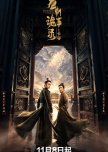
Strange Tales of Tang Dynasty 3: To Changan
11 people found this review helpful
by PeachBlossomGoddess  1
1
1 Friends in Low Places
To Chang'an, Season 3 of Strange Tales of Tang Dynasty, opens with Lu Lingfeng and Su Wuming's perilous return to the capital, transporting golden peaches for the emperor from the Kang kingdom. The ensemble team brims with lively, familiar chemistry amid even bigger stakes as they arrive at the peak of the power struggle between Princess Taiping and Emperor Xuanzong. The tension in the air is palpable, and Lu Lingfeng finds himself once again caught between being the Princess's son and a loyal subject of the throne. Su Wuming shamelessly lies and grovels as his survival instincts kick in, helping Lu Lingfeng and his team walk a precarious tightrope as they find themselves in the crosshairs of both sides of the political divide.This franchise continues to fire the imagination with exotic mythical creatures, vivid visuals, eerie illusions, and strange anomalies. Superstition and folklore surround eight eerie cases driven by ultimately human factors: political intrigue, greed and corruption, distorted love and hate, social injustice, and revenge. The "drop-bys" of popular characters from past seasons adds to the sense of continuity and nostalgia. This season's cases are intriguing, well-written, and tightly plotted with rigorous detail, featuring enough reversals to keep viewers on their toes—albeit dialed down a notch or two in intricacy. This shift widens the narrative focus onto the complex social and power dynamics of Chang'an during a time of transition.
Where Season 2 held the team's personal developments in abeyance, Season 3 explores them fully. This is Strange Tales' most romantic season to date, with romance featuring heavily in many cases. But it is Lu Lingfeng and Pei Xijun's meltingly romantic courtship that steals the show. It is high time they take their relationship to the next level and the frank passion in the way they express their feelings by via famous Tang love poems made my toes curl! Master Fei also seems to hilariously discover a new calling as ice cream/sushan (酥山) proprietor by day and spymaster by night!
In a departure from its travelogue format, this season immerses itself in the diversity and divisiveness of Chang'an—an ancient melting pot of cultures, ethnicities, social classes, and political factions. As if being embroiled in the power struggle weren't enough, Lu Lingfeng also finds himself at the center of the class conflict between merchants and nobility. The tension boils over in a case that threatens to rip apart the social fabric of the city. In a fiery ideological debate, Su Wuming compellingly articulates the grievances of the "everybody-nobody" against Lu Lingfeng's proud and impassioned defense of the aristocratic "somebody." Yang Xuwen impresses with his layered portrayal of a deeply conflicted Lu Lingfeng—torn between loyalty and affection for his friends in low places and his ingrained belief in the social order and the cultural and moral superiority of the educated elite.
While I thoroughly enjoyed their showdown, the stakes become very real for the battling sheriffs: Sheriff Wei of Chang'an County and Sheriff Du of Wannian County. For me, the sixth case, with its deeper messages and social commentary, was the most moving and memorable. The final case, focused on diplomatic affairs, is also superb—high-octane and action-packed. It brings the season to a close on a high, more positive note, though it lacks the emotional resonance of the sixth.
I am both relieved and impressed that this wonderful series continues to deliver. The production continues to invest in high-quality writing and visuals that stay true to authentic Tang aesthetics. The only hint that this season was helmed by a different director is the subtlest shift in camera language and visual storytelling. I won't lie: Season 3 is not as good as Season 2. But the richer fleshing out of the team puts it on par with Season 1.
I enthusiastically rate this 9.0/10.
(This season was followed by a "mini" Season 4 comprising two cases, which I will review separately.)
Was this review helpful to you?
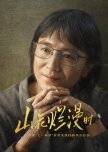
A Force of Nature
She and Her Girls is a biographical account of Zhang Guimei’s tireless quest to educate impoverished young women in Huaping County. It opens with a gut-wrenching portrayal of how Teacher Guimei rescues her fourteen-year-old student, Gu Yu (yes, that is still the age of consent in China), from being sold into marriage to fund her father’s drinking habits. Guimei is a force of nature, sweeping through Huaping County to save one girl at a time—even before she has the means to support their continued education. Through sheer stubbornness, tenacity, and desperate resourcefulness, she secures land for her school, strong-arms provincial authorities, recruits promising teachers, and badgers private entrepreneurs to get her girls’ school off the ground.I was pleasantly surprised by the humor that lightens what could have been an overwhelmingly heavy story about rural China’s marginalized girls. The narrative doesn’t shy away from mocking Guimei’s more grating traits—from her deafening early-morning bullhorn to her judgmental, unforgiving demeanor. This humanizes her, preventing her from becoming a one-dimensional saint. Beyond Guimei, there’s no shortage of personal sacrifice: Chen Sihai and the teachers put their lives on hold to build the school. The sheer volume of altruism is almost suffocating, but given the obstacles, perhaps that’s what it took to succeed.
While most praise has gone to Song Jia’s award-winning, unflinching portrayal of Guimei, Gu Yu’s story moved me the most and anchored the drama. Though overlooked by awards, I found Lan Xiya (Gu Yu) and Zhang Tianyang (Chen Sihai) even more compelling than Song Jia and Nie Yuan.
The narrative peaks with Gu Yu’s academic journey. Unfortunately, none of the other girls stand out—their stories are neither well-written nor distinct from countless other coming-of-age tales. There were several natural stopping points, but like Guimei herself, the story soldiers on doggedly, trudging through forgettable generations and trite subplots. I enjoyed the drama up until the midpoint; afterward, it became a slog, further weighed down by heavy-handed propaganda.
Despite the strong script, fantastic cast, and standout moments, this is an overrated drama—nowhere near a masterpiece. There’s no segment I’d feel compelled to rewatch. The first half earns an 8.5/10, but overall, 8.0/10 is more than fair.
(To my knowledge, Gu Yu is a fictional character.)
Was this review helpful to you?
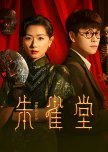
Being bad never looked so good.
Rose Finch unfolds like a dark, chilling, and morbidly sensational penny dreadful set in Republican-era Shanghai. The story opens with a bizarre and graphic double murder involving an elite showgirl at Rose Finch (Zhuque Pavillion/朱雀堂), the hottest nightclub in town. Detective Tang Zhenyun is hot on the case, enlisting the aid of talented forensic scientist Xia Mo. Their paths cross with Gao Ying, the enigmatic and deadly boss of Rose Finch, who alternately aids or obstructs their investigation as suits her agenda. She seems intent on uncovering who is murdering her "songbirds" while protecting her family's interests. Is Gao Ying friend or foe?This is a fast-paced, gripping crime thriller that, with its 20-minute episodes, has no time to waste on romance or typical drama digressions. The plot remains tightly focused on one major case, delivering relentless momentum. It’s more violent than expected, unflinchingly portraying the lawlessness and rot festering beneath the era’s decadence.
Wan Qian anchors the narrative with her awe-inspiring portrayal of an inscrutable, powerful, and ruthless mobster’s daughter who lives by her own code. Being bad never looked so good! Zhang Cheng also impresses as the pugnacious, hot-blooded Detective Tang, always ready for a brawl. I was surprised to see Qin Junjie in such a haunted, nerdy, and low-key role, but as a team, this unlikely crime-solving trio clicks perfectly. My only gripe is the dead spouse trope, which feels a bit maudlin and out of place.
The ending has some mildly unsatisfying aspects—it’s dark, cynical, yet oddly fitting for the era. A fantastic short watch. 7.5/10.
Was this review helpful to you?
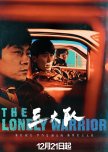
To the ends of the earth.
The Lonely Warrior is a crime thriller about one man's obstinate, obsessive thirteen year quest for justice. It is a highly dramatized account of a real life case. The movie version Endless Journey is led by Zhang Yi whereas this drama version is led by Qin Hao.In the middle of a tense, emotional criminal case, an interrogation accident ends the careers of the elite Third Brigade investigative unit led by Cheng Bing. After a ten year stint in prison that costs Cheng Bing everything, he emerges hell bent on hunting down the violent killer Wang Dayong who eluded them all those years ago. He reunites with his squad, all of whom have at surface moved on with their lives but are still haunted by this cold case. They initially go to great lengths to help Cheng Bing but as a result of life commitments end up dropping out. Cheng Bing soldiers on deliberately, methodically pursing the vicious Wang Dayong seemingly till the ends of the earth, leaving no stone unturned.
The strongest aspect of this drama are the chase scenes and the way tension builds in a gripping and chillingly suspenseful way. What I didn't like was how Wang Dayong barely appears in the latter episodes. It was done to raise doubt over whether Cheng Bing was doggedly on the right track but it also made me quite frustrated with his obduracy. They failed to capitalise on Chen Minghao who delivers an incredibly menacing, ruthless and unpredictable Wang Dayong, a hardened criminal with exceptional survival instincts. I was also dismayed with what they did to his appearance; effectively obscuring all the nuances of his expressions. This would have been a lot better if they focused more in the cat-and-mouse chase between Cheng Bing and Wang Dayong with heart stopping near misses instead of pushing Wang Dayong off-screen for such long stretches.
My biggest issue with the narrative is that it delves too deeply into Cheng Bing's and the Third Brigade's personal stories. Qin Hao never fails to impresses in how he conveys deep emotions and he really out did himself in making us feel the weight of everything he loss. But I was not convinced at all by his relationship with Miao Miao. This is not a necessary character even though Ren Min does a good job with it. Add Tong Tong to the mix and I was just rolling my eyes. Even though I enjoyed the Third Brigade's camaraderie, they should either have had them see the case through all the way with Cheng Bing or not at all. It is very annoying to watch the narrative build up all of their personal stories only to see them drop out half way through. The most relevant and interesting relationship is the contentious one between Pan Dahai and Cheng Bing. These many digressions come at the cost of losing the momentum of the chase. This would be a much tighter and better drama with fewer episodes. As such, I am not surprised that the movie version has been better received than the drama even though I personally think the drama has a better lead cast.
Despite some pacing issues, this is overall a very enjoyable suspense thriller anchored by a stellar cast. Happy to rate it 7.5/10.0.
Was this review helpful to you?
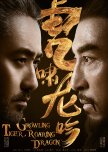
Only the good die young.
The second instalment of Sima Yi's story opens with his uncomfortable return to the capital to serve under the most unworthy Cao Rui, the ingrate he saved as a boy and put on the throne. Cao Rui grew up to be a monster and what he did to Empress Gao was a great historical injustice. The symbolism of Cao Rui being carried by Sima Yi is strong, suggesting their dynasty was held up by Sima Yi and most of this drama makes the case that the treacherous Cao family was unworthy and deserved to be toppled. I usually like Liu Han but did not enjoy how he portrayed Cao Rui. I was unmoved by his childhood trauma over being the product of an indifferent father who executed his mother and just drummed my fingers impatiently through his theatrics and unseemly antics with his vile eunuch. I did appreciate some aspects of his acting - he seemed cunning and slightly unhinged in the most dangerous of ways that made me feel fear for the Sima family.The highlight of the second season is without doubt Sima Yi's rivalry with Zhuge Liang, the greatest strategist of Three Kingdoms lore. It was heart wrenching to see two soulmates with such profound mutual understanding, respect and admiration locked in a ferocious life and death battle. Both bound by oathes they swore to dead emperors, one is handicapped by a strong master and the other by a weak one. It was just war brutal and simple; there was no right, or wrong, or good or evil; just opposite sides. The writer does a commendable job making the sophisticated military strategies exciting and accessible to viewers. This version of Zhuge Liang's famous Empty City Ruse/Kōngchéngjì/ 空城计 suggests Sima Yi was not really fooled, he just had a very strong sense of self preservation. Their encounters capture the essence of a resting dragon/wò lóng/ 卧龙 reclaiming the central plains from a hidden tiger 冢虎 (zhǒng hǔ), a rising talent. Alas, time was not on Zhuge Liang's side or history may have been different. Nonetheless, his trick from the grave on Wuzhang Plains left no doubt in peoples minds that " a dead Zhuge scares away a living Zhongda". It is remarkable that till this day, Zhuge Liang is the most revered strategist of Three Kingdoms lore and it remains almost a footnote in history that Sima Yi actually "won" Three Kingdoms. This arc broke my heart; I couldn't bear how Sima Yi exhausted Zhuge Liang and how unworthy both their emperors were.
The narrative inevitably peaks at the Zhuge Liang arc; their battles were the pinnacle of Sima Yi's accomplishments. After that, the drama really dragged. It wasn't necessary to dive into so much detail into the Cao Shuang arc. We really didn't need another long and boring example of what imbeciles Cao Cao's descendants turned out to be. The arc was incredibly predictable with repetitive ploys to try to indict the much older Sima Yi only to see him deftly turn the tables on his enemies yet again. The only highlight of that arc was the wild speculation around Sima Zhao's role in the death of Sima Shi's wife's death but that sub-plot didn't get wrapped up in a satisfying way. The only thing that kept me watching was Tan Jianci and Xiao Shunyao's excellent portrayals of the Sima brothers. I also found it quite cool that they cast an actress to play the treacherous and effeminate He Yan.
After the Zhuge Liang arc, it struck me that even though I was fascinated by Sima Yi and often empathised with him, I just didn't liked him. I was not surprised that he became darker in his later years; this is foreshadowed from the beginning and was an insidious process throughout. The second half of this drama seemed to go on for an eternity. That ruthless, cowardly, cunning, wicked old tortoise Sima Yi just would not die! It offends my sense of justice that he lived to such a ripe old age. I guess it must be true that only the good die young.
This drama had at least 10-12 episodes too many. We really didn't need such a detailed the blow by blow of Sima Yi's much less interesting later years. Up to the Zhuge Liang arc, I rate this 8.0/8.5 but after that it's a 6.0/7.0 so overall this a 7.5 for me.
Was this review helpful to you?
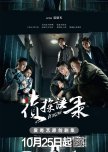
Dead men walking.
This year 2020 must be the year of detective stories, there are so many that we are spoiled for choice. This one set in the Republican era (1911) hooked me with its dark, eerie prologue that immediately invokes a hint of the supernatural and the presence of evil. Twenty years ago in Fuyuan County, twelve beheaded escorts are brought back to life via an ancient ritual. But the mystery of these dead men walking's murder and the whereabouts of their missing cargo is never solved. Fuyuan County remains a remote suburb of Tianjin that is steeped in dark magic and witchcraft.Tan Bodun is a rising young detective in with the Tianjin Police with a secret - he has a dark side that he struggles to suppress. Accompanied by his side kick Da Pan and his Westernized fiancée Luo Jiazhen, he is sent to the ominous Fuyuan County to solve another spooky and inexplicable murder that takes place in plain sight of the town's elite. On the way they stumble upon another case and encounter Song Chengmin, one of the scions of the affluent Song family. Aided by the local police inspector Zheng Jiewu, they pull at what appear to be disparate threads, more sinister murders occur and threads end up being linked and lead eventually to the unraveling of the twenty year old cold case.
What I really like about this drama is that the overarching mystery is well written and there are enough clues and suggestions along the way that when all is revealed, everything fits together and intuitively makes sense. Unfortunately I cannot say the same about the many sub-mysteries. As often is the problem with this genre, the writers tend to give in to the urge to write twists upon twists upon twists. After one or two times, this becomes confusing, tiresome and in some cases, the final solution is not the best, most convincing one. All of the main characters appear to have their own agendas and behave suspiciously enough to make viable suspects in the crimes. The problem is if they are not guilty these hidden motives are never fully explained, it is really done to create an illusion of probable cause.
Gao Zhiting is a really talented and likable young actor. I really enjoy his portrayal of Tan Bodun and his wickedly brilliant alter ego. In fact I much better like his alter ego but I don't really like that they went down the Dr Jekyll and Mr Hyde route with the character. It would have been cleaner and more interesting if they just wrote him as a truth seeker with unconventional or occasionally morally ambiguous methods. The rapport and team work between the main characters is very enjoyable and feels very natural; I find Da Pan in particular to be hilarious. However, I am not convinced by any of the romances and I really dislike how Jiazhen turns into a spoiled, willful and immature brat somewhere in the middle to just create some romantic angst.
Although the ending clearly paves the way for another season, as far as the overall conspiracy is concerned it is very satisfyingly resolved so I won't call it an open ending. I wouldn't mind watching this team work together again, in particular if the overall case is as well written as this one was. The only thing I don't like about the ending is that one of the key villains for Season 2 is already revealed as a hook. That was unnecessary and will take a bit of fun out of Season 2 but not so much so that to dissuade me from watching.
Overall, this is a very entertaining watch even though not all of the sub-mysteries are interesting. I really love the spooky, supernatural undertones and rate this an 7.5 for that.
Was this review helpful to you?
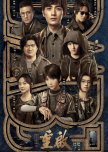
The thunder rolls: a work in progress
This is the first of this series that I managed to get this far through. Despite the appeal of supernatural mysteries and tomb raiding adventures, I was never able to get into any of the other ones. That said, while there are flashes of brilliance, the overall effort so far is at best mediocre with much hanging on how the various plot threads end up resolved.A cryptic message from Wuxie's uncle that sends the Iron Triangle - Wuxie, Pangzi and Zhang Qiling on a quest to decipher the message of the Thunder god and find Wu Sansheng. The story is off to an awesome start with heart stopping action and phenomenal world building. The scenes in the tomb have just the right balance of mystery, suspense, supernatural forces, hordes of foul and undead creatures and death defying moments. My eyes bugged out at Qiling (Huang Jun Jie)'s raw athleticism, fierce speed and fluid grace. Like most viewers, I love the Iron Triangle - their chemistry, hilarious banter and complimentary skills make them seem invincible together. So it is super disappointing to see the three amigos separate and off on their own.
The pacing is jarring - it alternates abruptly between gripping, life threatening action and mind numbingly boring and unnecessary filler episodes and characters. The entire Hei Yanjing/mute girl arc could have been cut by at least 75pct - there is little plot advancement and the romance is pedestrian. It could only have been worse if the girl can actually speak so thank the small mercies. That painful arc ends only to descend further into purgatory with the introduction of (drum roll) Piao Piao. While allegedly due to the heavy hand of censorship, at best she had three brain cells instead of two. Poor Panzi, he deserves so much better. It is offensive to see women written to be so dumb just to facillitate certain plot developments. By comparison, Xiao Bai is an adorable genius; even her lovesick eye batting at Wuxie is totally forgiveable considering how devastating and charismatic Zhu Yilong's Wuxie is. I am sure I will be unable to watch any other actor take on this role after this.
Although I quite like Warehouse 11, the Sea King's tomb is hard to beat and sequencing leaves Season 1 ending with an anti-climatic and unfinished feel to it. The reveals are somewhat predictable and too many plot threads are left open. If too much time passes before Season 2 airs, I will forget many of the important clues and open issues unless I invest in some rewatching. In hindsight, I should have started this after there is an airing date for Season 2 and that would be my advice for those planning to watch this.
Was this review helpful to you?
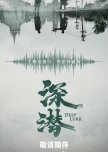
To see all without being seen.
Deep Lurk 深潜 is an intriguing and immersive Republican era spy thriller; one of the few that pulled me in from start to finish. It is set in 1939, at the prelude to the first Battle of Changsha. Changsha was a strategic city that the Japanese tried and failed to take four times from 1939-1944. As a result, they were never able to consolidate their territories in Southern China. At the time, the Republic of China's Nationalist Army had seriously considered abandoning the city but Xue Yue, the commander in charge of Changsha's defense refused to budge. As a result of terrain, Changsha could only be flanked from the east or the west, making it a difficult city to both attack and defend. In this kind of set up, intelligence and counter-intelligence can make a win-or-lose situation difference for both sides.After a botched assassination attempt on Xue Yue, a traitor escapes to Shanghai with strategic Changsha defense intelligence. Multiple parties converge upon him in Shanghai to intercept the intelligence. The players include both the Changsha and Shanghai station of the KMT Military Intelligence (NBIS), the Wang Puppet Regime, the Japanese Military and hidden CPC operatives. Yun Hongshen, the idealistic young second master of the illustrious Yun family is sent by his father Yun Muzhi to observe. Predictably, this sharp but impetuous young man raring to make a difference does more than that and his path tangles with that off brave young NBIS agent Wen Yeming tasked to hunt down the traitor. An auction for stolen intelligence relating to the Japanese army's plan of attack for Changsha results in a deadly scramble to obtain or retrieve the intelligence. This coincides with the re-emergence of Kunwu, a long dormant Japanese spy and Muzhi's nemesis. Hongshen is lured back to Changsha, where he must crack the code to the intelligence and smoke out Kunwu in order to save his city from the encircling Japanese army. He reunites with Yeming at NBIS where they pit their wits against this master spy who seems to be able to see all without being seen.
The first three episodes are fast paced, exciting and littered with clues and character introductions and needs to be watched (and re-watched) carefully. But the setup and the storytelling is so intriguing I was compelled to re-watch; to make sure I didn't miss anything. It's been a long time since a drama pulled me in so deeply that I was literally unable to watch anything else at the same time. Even though there are some logic holes, the overall plot is tight and riveting. All the important characters are introduced early on and they are multi-faceted and grey with different loyalties and motives that reflect the clash of culture and ideology and the rival factions within the KMT during that pivotal era of change. The narrative brilliantly builds a credible case around several key characters with motive, means and opportunity to be Kunwu and maintains the suspense into the final episodes.
This drama has an all-round stellar cast anchored which by veteran actors including Wang Jingsong and Liu Huan and brilliant character acting by Hou Mengyao's disingenuous Milan, Han Chengyu's ruthless and competitive Ling Han and Zhang Tianyang's well-meaning Yun Hongqi. I really enjoyed watching Hongshen meticulously narrow down the suspect list and try to out-scheme the hidden master spy who eluded his father for years. The young Cheng Yi brilliantly captures how this character's intelligence and survival instinct makes up for his lack of experience and the shattering consequential mistakes he makes along the way. It is a shame that this drama has not enjoyed wider viewership. For this genre however, I don't need romance and I didn't enjoy Ying'er's acting or the couple's chemistry. I was far more invested in the Yun family's close bond and amused by how Hongqi and Hongshen are so different and resourceful in their own unique ways. Zhang Tianyang is a subtly hilarious actor and his brotherly scenes with Cheng Yi are among the drama's best moments for me.
Despite many cut scenes, the pacing, suspense and excitement holds up into a strong finale that delivers a good ending twist that deftly avoids one reversal too many. My only disappointment is that I had hoped for a more complex villain origin story. I won't say more to avoid spoiling the reveal. This is by far the best Republican spy drama I have watched since The Rebel (2021). I am happy to rate it the same at 8.5/10.0 despite its lower budget. It is a good watch if you are in the mood for some mental gymnastics but it can also be enjoyed simply as a fast paced spy thriller.
Was this review helpful to you?
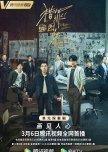
The mind's eye.
Under the Skin is a police procedural that is built around the use of forensic art to solve cases. This fresh pitch within a well established genre is what makes this an interesting and fairly enjoyable watch.The drama opens with a classroom analysis of Jean-Louis David's "The Death of Marat", one of the most political and epochal masterpieces of the French Revolution. This beautiful lie of a painting that rearranges the crime scene and depicts the unsightly and radical Marat as a matyr makes the point that appearances can be deceiving. The assassin, feminist activist Charlotte Corday who in her own words, "killed one man to save a hundred thousand" is regarded as a heroine by many. It is clear inspiration for the drama's social commentary that highlights women's issues and the often empathetic portrayal of the perpetrators of the crimes. It is truly wonderful how carefully these recurring themes are woven into the cases and how deftly art is used to portray the distinction between first impressions, perception and different realities for different people.
This is all embodied in the mind's eye of genius artist Shen Yi, who is able to marry deductive observations from the scene and the nature of the crime with intuition to uncannily recreate images of the culprit, at times the victim and how it all went down. Tan Jianci is an actor I have kept an eye on for quite some time and I am excited to see him land lead roles. While he delivers a charming and nuanced articulation of this very reserved "still waters run deep" kind of character, it is not a role that best showcases the range and depth of his abilities as an actor. The real issue lies with the character blueprint itself, which is sad to say rather two dimensional. Shen Yi is simply too good to be true; beyond his artistic genius, he is also a master interrogator, chess player, indeed he is a jack of all skills required to solve the case. I am not quite sure what this elite Beijing Interpol team did without him. He is a loner with no real friends or family, has no vices or other flaws other than nodding off in cars either because he himself or Du Cheng is a snooze fest. Even though justice is blind in so many of the cases, he remains too unquestioningly a truth seeker and enforcer of the law. This is at odds with the many cases that conclude with a sense that the perpetrators were the true victims and it bothered me that it didn't bother Shen Yi.
Where Shen Yi is clearly the brains, Du Cheng is the muscle archetype; the man of action that takes stray bullets and runs into windows as and when needed. Yet like Shen Yi, Du Cheng is a likeable but ultimately hollow character with limited definition and development that comes very late in the game. The relationship between the two protagonist is so tentatively explored and inhibited that they barely make eye contact until we are in the final innings of the story. This is a shame because Tan Jianci and Jin Shijia share a very comfortable chemistry that the production did not fully take advantage of. I am left with a dissatisfied feeling of having been told rather than shown how the unbreakable bond of friendship and trust builds between them. The main antagonist is another shallow and uninteresting character who becomes pretty obvious well before the reveal even though their motive is unfathomable to the point of making no sense. It is fair to say that the characters in this drama are very much like Shen Yi's sketches; they are just nice outlines that lack dimension, colour, weight and substance.
It can be argued that two dimensional characters are par for the course in good, meaty plot driven dramas but unfortunately the plot is where this drama disappoints the most. Even though I appreciate the empathetic spotlight on current social issues, the cases or sub-plots are hit or miss and they don't deepen the main plot. There are only two solid, tightly wrapped up cases that I found very enjoyable. The other cases are rather predictable, had logic flaws and often don't wrap up the issues raised in a satisfactory manner. As for the main plot, the best part of it is how ingeniously the villain is trapped. The mastermind's involvement in the 7-year cold case that brings Shen Yi and Du Cheng together is frankly ridiculous. They were too successful very early on in a very lucrative field to need to engage in such a risky, difficult and time consuming business. There are at least two other potential masterminds, each of which would have made for much more convincing villains in terms of motive, means and opportunity. I feel the finale's message simply panders to the Chinese government's recent data privacy paranoia and crackdown on a big industry.
I can tell that a lot of research and meticulous attention to detail went into the procedural aspects of this drama and setting and artistic aesthetics are phenomenal. Even though the stage is set with amazing props and really nice camerawork, the overall impression is bland. There are no larger than life characters or relationships that will rock your world. There is no tension, no conflict, no suspense build up, the drama doesn't really peak it is just monotone throughout. That said it has some unique aspects and it is well made enough to be a good way to pass some time. I rate it a solid but ultimately forgettable 8/10.
Was this review helpful to you?
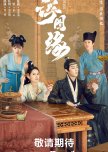
Missing parts.
Let me preface this review with a warning - this is a well-loved drama that I simply fail to appreciate. If my criticism of it will offend you or ruin the joy you found in it, best give this a skip.The soundbites are tantalizing: a taboo romance between a eunuch and a concubine; a ruthless and scheming male lead; a spirited and clever female lead; and palace conspiracies and mysteries aplenty. Not to mention Wang Hedi's Xiao Duo exudes that intense tall, dark, and dangerous kind of sex appeal that screams he is no Lord Varys. So I jumped in despite my reservations over Chen Yuqi's acting. As it turns out, that is one of the drama's lesser problems.
This drama is an inane attempt at dark satire aimed at the obscene privilege of emperors. It opens with the shockingly cruel practice of sending off childless concubines, known as tribute ladies to accompany the emperor in the afterlife. After high powered eunuch Xiao Duo rescues Bu Yinlou from this dastardly fate, an alliance of sorts forms between the two as they navigate treacherous palace politics in a time of power transition. I like how it was just a mutually beneficial relationship initially and how they disliked and were wary of each other; that the romance did not blossom instantly. Where it falters is in showing me why the two most powerful men in the palace connect with and fall so utterly for a woman afflicted by bizarre facial paroxysms.
Xiao Duo's wicked ruthlessness is gleefully conveyed with wit, panache, and flawless comedic timing by Wang Hedi. This is well matched by Peter Ho's slightly over-the-top portrayal of the deceptively simplistic, cartoonish-ly obsessive, and delusional emperor. Both portrayals convey each character's underlying ethos; a past sadness and secret loneliness. Unfortunately, Chen Yuqi’s jarring and tacky comedic interpretation is far more typical of a slapstick comedy than dark satire. Her exaggerated rapid eye movement and outlandish facial expressions had me triple-checking the synopsis to see if the character is supposed to be epileptic, schizophrenic, or simply possessed. While a huge upgrade from her usual vacuous sleepwalking, for the first 14 episodes, there is little beyond brazen tasteless humor in Chen Yuqi's Bu Yinlou. After that, she gets into character and delivers some really good scenes. She has good romantic chemistry with Wang Hedi that elevates her performance and the more serious tone the story takes also helps. But her acting is not consistent and wobbles again at the ending episodes. It highlights her limited range and is quite inexcusable for someone who is an acting school graduate with a long list of drama lead role credits. This is the best I have seen from her in years but that says nothing at all.
This drama's biggest issue is that it is missing a good plot. The storyline is contrived, naive and so ridiculous it is disdainful of audience intelligence. The writer's ignorance and superficial understanding of feudal imperial inner palace workings are embarrassing. It is impossible for someone like Bu Yinlou to waltz in and out of the inner palace like it is a hotel, live at a brothel and gallivant all over the kingdom with Xiao Duo. The production leaked "cut" romantic scenes like a sieve, trying to blame the abysmal failure in storytelling on censorship. The truth is all the kiss scenes in the world cannot salvage the messy plot and inconsistent characterizations. We are told both leads are smart characters but they are actually the architects of their own troubles. The allegedly Machiavelli Xiao Duo wrests the crown prince from the custody of the one person with the highest incentive to keep him alive and healthy and puts him in the hands of the person with the strongest incentive to kill him dead! As a couple, they have repeated opportunities to escape, but choose not to. Xiao Duo's revenge is anti-climatic and hastily swept under the rug once the killer is uncovered. They flaunt their affair with such reckless impunity they so deserved to get busted. I stopped caring if they ended up together and sat on the meh ending episode for weeks. I finally finished watching this so you don't have to. To my dismay, they got an ending they didn't earn or deserve.
The bottom line is Wang Hedi is the only reason to watch this drama. He is sexy even when he glowers and scowls and his costuming and visuals in this drama are swoon-worthy. In fact, save yourself some time and just watch all the fan-made videos of the romantic scenes hard-core fans have stitched together. You can skip all the rest because as foreshadowed by the eunuch theme, this drama has critical missing parts. I can only rate it 6.5/10.0 to finish at the rock bottom of my completed list for 2022.
Was this review helpful to you?


