

 75
75 326
326 9
9 1
1 4
4 12
12 2
2 3
3 2
2 1
1 4
4 10
10 1
1 1
1 2
2 2
2 3
3 2
2 2
2 2
2 1
1 1
1 8
8


It was a dark and starry night.
This movie opens with Hitchcockian flair as a man frantically begs indifferent local authorities on an exotic island getaway to find his missing wife. It was a dark and starry night the last time He Fei saw his wife Li Muzi. And his recollections seem fragmented, distorted by drugs and alcohol. The plot thickens as a seductive lady in red charmingly asserts she is his wife Li Muzi and can prove it. He Fei enlists Chen Mai, a high powered lawyer in a race against time to expose the imposter and find his wife. It is quite clear there is an elaborate grift at play but it is not clear who is pulling the strings.Despite the strong and intriguing start, the plot reveals itself too early. The sense of mystery collapses abruptly as too many too obvious clues are dropped that point to a very predictable and done before whodunit plot. The drama's tone swiftly switches into dark comedy that ventures too far into the realm of the outlandish and absurd as the perpetrator is trapped into telling all. At that point it becomes a tragicomic story of addiction, deceit, greed, and revenge.
Zhu Yilong steals the show with his riveting portrayal of the many facets of He Fei. He made me feel scared, angry and sad. The high point in terms of tension, chemistry and suspense is the cat and mouse between He Fei and Janice Man's imposter. I could feel the air sizzle with between them as they taunt each other. Unfortunately even though Ni Ni's portrayal is on par with Zhu Yilong's in terms of charisma and nuance, there is simply no chemistry or tension of any sort between them. Their moments of confrontation and conflict are flawlessly executed on both parts but somehow there is no feeling of intense connection or conflict between them. This is not incompatible with their respective characters and what they are about but with no shade on either actor, I think this is just not a great pairing. I also find the supporting cast a bit lacking and think they should have minimized the use of English in the movie.
Despite its flaws, this is a highly entertaining movie. As a big suspense watcher, it falls short of my expectations in the latter half but I still enjoyed it well enough overall. This is China's 2023 summer hit that makes for a very fun watch. My rating 7/10.
Was this review helpful to you?
A few good men.
I always love all kinds of female empowerment, dark revenge thrillers along the lines of Kill Bill, Why Women Kill, Gone Girl etc. Like many similar themed stories, this one explores how when pushed too far, women can be a little bit dangerous. The success of these kinds of plots always depends on how ingeniously the "revenge" is set up and a few good twists along the way. This hidden gem of a short drama definitely achieves that and is worth watching for that alone.At surface, the main protagonist Qiao Wei has it all - she is a beautiful socialite with a handsome, successful and adoring husband (Lu Zicong) and a young son. Her facade of a perfect life starts unraveling after a wild school reunion at a hotel reconnects her with her old flame Qi Kai and an old frenemy struggling journalist Su Yao. The hotel chef An Xin's friend Nicole saves the inebriated Qiao Wei and shields her from her Zicong's unreasonable jealousy and possessiveness. As it turns out, all three women have had unhappy experiences or axes to grind with Zicong or Qi Kai. Brought together on that fateful night, they come up with some gripping, badass schemes to free Qiao Wei from her unhappy marriage and serve up a Michelin star-worthy dish of revenge on these nasty men.
The only issue I have with this drama is that the tone and writing style of the first half of it is markedly different from the much better second half. I found the backstories of these women to err on the melodramatic side and it took me a long time to empathize with Qiao Wei. I just kept shaking my head at her appalling taste in men. But I found the friendship and rapport between the women to be very enjoyable and even though she is a bit annoying in the beginning, Su Yao is my favorite of the four. The writing in the second half of the drama really hit all the right tones for me - between darkly humorous yet psychologically thrilling, witty and subtle with a a nice dose of silent communication. It is like another writer took over and I really wish the backstories and some of the difficult issues in the first half were written in the same language.
The other thing I really like about this drama is that while they are not rescued by men, they certainly got a lot of help from men friends. As much as I love girl power, it is important to be reminded that there are a few good men out there. The ending is also realistic in that it shows us that nobody has everything and its ok. The plotting is diabolical and the twist at the end that leaves a lingering shiver of fear is the perfect final touch.
This is a very enjoyable 8.0 for me. Also a shout out to @Skibbies for the recommendation.
Was this review helpful to you?
Time after time.
Zhang Haifeng is a cop that will not rest even after he is caught in a deadly explosion with his daughter's alleged murderer. In a bizzare twist, time after time he has a close shave with death, he wakes up in the past but while each time the events, the people and their actions rhyme, they are not exactly the same. Yet gradually shadowy outlines of the truth emerge as he pulls at the different threads and uncovers hidden relationships and causality. The first ten episodes are full of suspense and the cat and mouse encounters between Haifeng and the antagonists brim with powerful undercurrents and inuendo. I was really hooked and this was the show I looked forward to and watched first. The encounters between Wang Qianyuan and Lu Han were superb - both actors really got it just right. Qiao Xin's subtly suggestive portrayal of Sun Xiaomeng also deserves special mention.And then I watched a murder take place right in front of my eyes. It is unambiguous. The censors did it. They massacred the last two episodes of what could have been an awesome thriller. It is really hard to tell what really happened with this. In any whodunit, we need to know who, when, how and why. It is quite clear who and even why but the full motive is not revealed or is not convincing. The when and the how really depends on which version of three different accounts of the events as they played out actually took place. It doesn't really qualify as an interpretation ending because there are too many open questions no matter what you think actually happened. I have an idea of what I think most likely happened but I am left with a deeply dissatisfying and unfinished feeling. So watch this at your own risk. I rate the first 10 episodes 8.5/9.0 and the last 2 a 4.5/5.0 for a 7.0 overall.
There is a brief spoiler in the comment section of this review with what I think happened.
Was this review helpful to you?
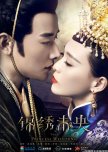
Princess Weiyoung is like comfort food - tried and true but pushes all the right buttons.
This was truly a very enjoyable drama from start to finish - I was pleasantly surprised by how it managed to captivate me. The underlying plot itself is not special - it is a revenge drama about a Liang princess whose family was executed after being framed for rebellion against the Wei kingdom by the Prime Minister's wife's powerful Chiyun family. She assumes another identity (Weiyoung) and infiltrates the Prime Minister's household as his second daughter of lower birth to a common mother. It has some clear parallels to Nirvana in Fire but the main protagonist is a clever young woman and her "revenge" is more reactive as opposed to proactive and calculated. Another difference is there is a big romantic element, it is more light hearted, fast moving and less complex. However, this is nowhere near on the same level and maybe it captivated me because my expectations were not high.The casting in this show was superb - literally all of the characters good and evil did a remarkable job with their roles. The two main leads are a real life couple and the chemistry between them is undeniable and heart warming. The male lead plays a powerful young Wei prince who is so enamored with Weiyoung that he is willing to give up his kingdom and his life for her. I think of the two, Luo Jin (Taoba Jun) is the better, more charismatic and versatile actor. Tiffany Tang's Weiyoung was clever, resilient and completely adorable but her performance was undeniably aided by the overall strength of the supporting cast. There were quite a few villains in the show - ones that you will love to hate (Prime Minister's wife and her nephew); ones that were so ineptly evil you had to laugh at them (Prime Minister's eldest son and daughter); and the more complex, ultimately pitiful ones that had some good in them (the Nan-an Prince and his lover). The Prime Minister's wife has the most evil villain eyebrow movement I have ever seen outside of a cartoon. And you will learn how evil and hate can take the form of such a lovely and innocent face. I found myself moved to pity for some of the villains even thought they satisfyingly got their just deserts, which speaks to the layered complexity of the characters. There are two charming supporting couples whose story lines did not deviate much from the main plot and did not go on excessively. Finally the show kept to a bare minimum the childish, petulant and immature female role stereotype that ruins many otherwise good shows.
Without giving anything away, there were some good twists in the story that sees friends turn into foes. I did think that there was excessive plotting against Weiyoung and maybe one or two of those plots could have been eliminated. Nonetheless due to the strength of the cast, any repetitiveness it was barely noticeable because everyone was such a pleasure to watch. Objectively speaking the plot isn't that original but it has all the elements of a true crowd pleaser: it moves fast, it will make you laugh it will make you cry; it will make you love, it will make you hate and it will surprise you a few times.
[KIND OF SPOILER BUT NOT REALLY A SPOILER ALERT]
One of the best things about Chinese drama is that a happy ending is not a foregone conclusion. Hollywood still doesn't get it - when its a foregone conclusion that it ends happily ever after everything becomes predictable and forgettable. This one will keep you guessing and hoping to the bittersweet end and maybe that is one of the reasons why it lingers with you.
Was this review helpful to you?
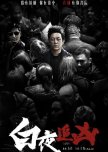
The curious case of Bambi in the headlights.
The short mini-series format is fantastic for mystery and intrigue. I have been meaning to explore this promising genre for while. I chose Day and Night due to its strong international reception. Although it delivered in terms of an intriguing plot and decent script, the overall execution was poor. It starts out as a mystery/suspense but ends up like just another cop drama.The plot is built around former lead investigator Guan Hongfeng's secret mission to clear his fugitive twin brother Guan Hongyu, who was wrongly accused of brutally murdering an entire family. Hongfeng conceals Hongyu, who covers for him at night while he wrestles with his fear of the dark. That they are identical twins gives wide scope for multiple fun plot twists, something the writers took advantage of. Back at the crime investigation department, the twins alternate as Hongfeng to secretly try to solve Hongyu's case while assisting with ongoing investigations. There is only one conspiracy to uncover; all the other cases are presented as police procedurals so we only have to keep track of one set of clues for the one big whodunit. There were too many side cases - the drama ended up morphing into an action oriented police thriller with great high speed chases and fist slugging action. The one good, meaty suspenseful, whodunit conspiracy I was so looking forward to ended up taking a back seat. The many other excellent cop thrillers out there sets a high bar, relative to which this is at best a mediocre effort.
Where this drama crashed was with the uninspired acting by a B-list cast. The lead actor (Pan Yue Ming) only did a decent job playing twins - this is hard to do but it can be a fun, challenging role for a more versatile actor to shine in. He was good at conveying a barely discernible difference in mannerisms between each twin. But while his Hongyu was engaging as the more outgoing and charismatic twin, his portrayal of the introverted, cerebral Hongfeng fell far short. This character should have more intensity and quiet gravitas; an intellectually intimidating veteran detective with a giant secret instead of a lethargic, sleep deprived, monotonic and mostly expressionless character. Zhouxun (Wang Long Zheng), Hongfeng's ex-partner and successor as head of the department was well acted. He came across as a politically savvy, mercurial, cunning and suspicious friendemy of Hongfeng but tended to over-act, notably the temper tantrums. The critical casting error was Liang Yuan as Zhou Shutong, Hongfeng's rookie newbie mentee. This actress thinks rookie is synonymous with vacuous and that best describers both her performance and her favorite facial expression. This destroyed the chemistry of the entire cast - they couldn't interact with her nauseating deer in the headlights Bambi routine. Consequently, there was no convincing team dynamic between the cast. This rapport did eventually emerge and feel natural in the last 10 episodes, notably in scenes with no Shutong. Unfortunately Shutong got a lot of airtime as her role closely touched all of the lead characters. They should have just cut their losses by turning her into the victim of a serial killer.
The final episode was excellent, ending the show on a high note although only part of the conspiracy is revealed. There is no hard air date for the sequel and few details. Given the mediocre execution, I would not be surprised if it never eventuates. I am only mildly curious to find out what really happened so I won't be crying if it never happens. Overall this is an ok watch, it didn't live up to the hype for me although I will watch a few more in this genre.
Was this review helpful to you?
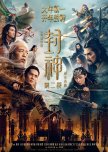
The Beauty Saves the Hero 美女救英雄
Demon Force is the long-awaited second chapter in the Creation of the Gods trilogy. Compared to the first film, it’s a massive letdown. The heart of the disappointment? It strays wildly from the classic novel. The whole “Demon Force” (魔道争锋) arc is a made-up conflict that stuffs the screen with Hollywood-style cosmic battles at the expense of the original’s political scheming and philosophical depth.The story resumes with Ji Fa defending Xiqi against the Shang king’s demonic hordes. He’s thrown head-to-head against Deng Chanyu, a rising Shang general leading the siege. Mongolian actress Nashi brings her to life with exotic, whip-thin athleticism—she owns every frame, radiating lethal power and feminine fragility in the same breath. I actually cheered this update to the old tale: slipping a fierce, layered woman into the mix. No question, she’s the beauty who saves the hero 美女救英雄 and runs away with the movie.
Too bad director Wuershan seems so smitten with Deng Chanyu that everyone else—from Jiang Ziya to Yang Jian—gets shoved to the margins and practically forgotten. The real crime, though, is what they do to Ji Fa: dumbed down into a lovesick, reluctant hero drowning in self-doubt just to prop her up. Then, to rub salt in the wound, Yin Jiao gets turned into the genie from Aladdin. I swung between fury and helpless laughter at the sheer ridiculousness—and at the total waste of Chen Hailiang’s stunning good looks.
There are enough jaw-dropping (if slightly overcooked) battle set-pieces to keep it from being the worst fantasy flick out there. But it never touches Kingdom of Storms in storytelling. I did love Deng Chanyu’s arc—even if it has no business in the Fengshen trilogy. For me, that lands it at 7.5/10.
Was this review helpful to you?
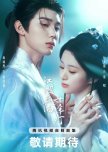
History rhymes but does not have to repeat itself.
Generation to Generation (or A Decade of Lanterns on Stormy Jiānghú Nights/江湖夜雨十年灯) is a classic mystery wuxia. The jiāng hú intrigue plot itself is not particularly unique or special—it explores tried-and-true themes around the hypocrisy of righteous sects, multi-generational conflicts, and the true meaning of chivalry. Where it shines is in its character stories. The main characters are refreshingly complex and manage to remain realistic while rejecting tired stereotypes. Cai Zhao and Chang Ning are like a breath of fresh air across tired jiāng hú archetypes—a grounded couple that dares to stand up to societal norms and redefine jiāng hú with their own brand of morality and chivalry.Cai Zhao is a free spirit who just wants to live well and be happy. Her lack of ambition is a deliberate, determined life philosophy. For she adored her paternal aunt, her Gūgū (姑姑), the heroine Cai Pingshu, who killed Nie Chengheng, thus saving jiāng hú from the demon sect. Heartbroken, Cai Zhao fails to see the point of such sacrifice and vows to mind her own business and live a full and decidedly unheroic life instead. But as the young lady of Luoying Valley, she must train at the prestigious Qingque sect under sect master Qi Yunke. On their way to Qingque, her family stumbles upon a massacre in progress at Chang Fort. They arrive just in the nick of time to save the grievously injured Chang Ning, the young master of Chang Fort.
At Qingque, the orphaned Chang Ning is received with suspicion and finds himself bullied and ostracized. His plight outrages Cai Zhao's innate sense of justice and wins her empathy, even though she senses he lies and may have hidden motives. Chang Ning is one of the most morally ambivalent protagonists I have come across. While his cause is just, he is so ruthless and duplicitous—shamelessly manipulating Cai Zhao to further his ends—that he almost deserves to be called an antagonist. They are well matched in both wits and cunning, because Cai Zhao is onto him but intrigued and drawn to him nonetheless. She senses he was deeply traumatized and may have a legitimate grudge, so she goes along with his schemes, testing and evaluating him along the way.
Both characters are complex and well written, and their classic push-and-pull, love-hate relationship evolves in a riveting and believable way—from mistrust, misunderstandings, and heart-wrenching betrayals to trust, to a deep and abiding bond underpinned by shared values. Through their many adventures and ups and downs, they change each other for the better and manage to overcome the deep burden of generational feuds and inherited grudges. Along the way, they uncover the false propaganda behind jiāng hú's legendary heroes and the hypocrisy of the righteous sects.
A core message of this drama is that history rhymes but does not have to repeat itself. The next generation has free will and can choose to resolve inherited grudges and rivalries differently rather than repeat the mistakes of their forefathers. As Cai Zhao and Chang Ning dig into Cai Pingshu's life story and her entanglements with Chang Ning's family, they discover that the past is a mystery that unlocks the future as a gift. While the storytelling approach—revealing the past concurrently with the present and contrasting how each generation resolves dilemmas—is good, the execution is not. The editing is choppy and doesn't manage the transitions between timelines well.
Nonetheless, I empathized with Cai Pingshu, a tragic heroine (女侠) in every sense of the word, and her ill-fated entanglements with the Li sect and the righteous sects. Even though we know their fates from the start, I was as riveted by the cautionary stories of the previous generation—Cai Pingshu, the Mu brothers, Lei Xiuming, Qiu Renjie, Yin Sulian, and Qi Yunke.
Audiences familiar with classic wuxias will have no trouble following the jiāng hú plot themes, but to newbies, the sheer number of characters and sects can seem overwhelming. This is made worse by the narrative alternating between the present generation and their predecessors. While all the secrets are ultimately revealed, the biggest letdown in the plot is the predictable villain, whose motive is quite shallow relative to the untold grief they caused.
For all its narrative rough edges, compelling acting by the lead cast elevates the character portrayals and made me root for them, flaws and all. Zhou Yiran in particular delivers a fascinatingly layered and irresistibly empathetic portrayal of a very dark protagonist. Bao Shang'en's Cai Zhao is the light that both exposes and redeems the darkest, most cruel aspects of his character. But it is Wen Pang's Cai Pingshu, Cai Zhao's beloved gūgū, who steals the show as the true hero of this story. Qiu Renjie's story made me look at the hoity-toity Lady Yin of Qingque Sect in a different way. I was also moved by Song Yuzhi who manages to stays true to himself through all his difficulties and disappointments.
Despite the messy storytelling, Cai Zhao and Chang Ning shine brightly with their own brand of chivalry. They won me over with conflicts that feel real and personal growth that is hard-won. This drama will reward fans of the genre who are willing to invest in getting to know its many characters. I am happy to rate it 8.0/10.0.
Was this review helpful to you?
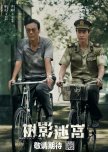
Justice takes a detour down a blind alley.
Dead End is a solid iQiyi Light On crime drama. It explores themes similar to Tencent’s critically acclaimed The Long Season (2023) but fails to achieve the same narrative impact. In 2012, records officer Gan E comes across a case that uncannily reminds him of the "Alley Killer"—a cold serial case from 1994 that has haunted him for eighteen years. He reconnects with his mentor, Ran Xi, who has long since aged into a role training police dogs. Together, they try to get the case reopened, hoping that immense technological advances will finally help crack a mystery that is personal to them both.The narrative alternates between past and present, but the mystery plot takes a long time to reveal itself. The focus is instead on how the changing times of the 1990s affected life in Beijing’s hutongs, where everyone seemed to know everything and yet nothing about each other. Leaking roof and all, Ran Xi loved the hutong way of life and his connection with its residents, resisting his wife’s efforts to relocate to more impersonal modern lodgings. The drama incisively explores the social issues of the day: burgeoning sexual openness, increasing opportunities for women, the stigma of mental illness, suffocating familial pressure from authoritarian parents, and the gradual breakdown of the traditional family unit.
Although this exploration of social themes digresses from the main plot, the character vignettes are portrayed with such a terrific sense of poignant humor and irony that I didn’t mind. I really love how Liao Fan conveys dark comedy, and I came—and stayed—for that. Liu Lin surprised me; she always plays the tough nut so well that I didn’t expect her to be this funny. This was my first time seeing Yin Fang, and I enjoyed his chemistry with Liao Fan. The drama boasts an impressive cast that elevates the storytelling.
Yet, caught in the labyrinthine network of alleyways where the killer stalked his prey, justice takes a detour down a blind alley. By the time the narrative shifts back to the murder plot, I had long forgotten most of the details. Despite a chilling soliloquy from the killer, who hid in plain sight, the crime and its solution felt like an afterthought.
While I appreciated the social commentary, the resolution left a bad taste in my mouth. So much suffering could have been avoided if one selfish, ungrateful, and cowardly person—incapable of empathy or reciprocating affection—had spoken up and given everyone closure years earlier. I loathed this character so much I wished the killer had shoved them down a well instead.
Even though Ran Xi and Gan E got their closure, the unnecessary collateral damage ruined the story for me. As such, I can only rate this a 7.5/10.
Was this review helpful to you?
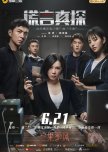
Lie like a dog.
This is a very solid police procedural about a female-led investigative team that employs polygraph technology to solve crimes. Haunted by a 12-year old and very personal cold case, Ling Ran is a workaholic truth seeker who is after justice for both the victims and the survivors of violent crimes. This is a very driven character that fuses her own instincts and observations with signals from the lie detector to sniff out and drill down on suspects who lie like a dog.The cases are based on real life cases that occur when common human fallings collide with social pressure and a spate of bad luck. They are quite simple with straightforward with often predictable solutions and some plot holes. But they are curiously addictive nonetheless and this is what sets this otherwise unexceptional police procedural apart. While at surface it looks like Lie to Me, it is actually a lot more like CBS's Cold Case, one of my all time favorite crime series. The stories are dark and sad and they feel very real. The magic of the narrative is that it brings the victims back to life - they have secrets, hopes, dreams, strengths, weaknesses; they all love and are loved. Regardless of how ordinary and humble their existence is, they are missed and their loss is a devastating blow to someone. All but the last case moved me to tears.
.
The team dynamics are well written, well portrayed and enjoyable but overshadowed by the victims' and their survivors' haunting stories. I think Mo Xiaojie and his connection with the homeless orphan stole the show and gave this character the kind of growth and dimension that is missing in team leader and titular truth seeker Ling Ran's characterization.
Ling Ran is scarred by a 12 year old cold serial case that makes her the way she is but unfortunately this is not explored until the final case. As such, I find aspects of Ling Ran perplexing and never quite connected with her. This ends the drama on a final case that just doesn't resonate as hard as the earlier cases. I would prefer they opened with the final case and ended with the first case. This would have better established Ling Ran's backstory and made her more understandable and relatable. The first case is also one of the best cases and the one with the least dark ending that asks the question whether one ought to lie to protect the innocent, which would be a fitting note to end this drama on.
I only rate this a 7.0 because it really isn't the best, most intriguing and thrilling crime series out there. But it is quite well made and there is a lot of heart in the cases that will touch you in a lingering way so it is definitely worth watching.
Was this review helpful to you?
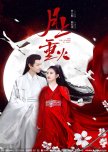
A song of fire and ice.
This drama feels like an angsty adolescent modern romance that was dressed up in historical costume and wrapped up in a few wuxia tropes. Some of the ideas and characters are quite fresh but ultimately it is weighed down by cliches and an insipid plot.Chong Xuezhi (Chen Yuqi), the young mistress of the Flame Hall seeks to restore the reputation of her sect and atone for her father's atrocities after going berserk from improper cultivation of the Lotus God Nine Stance Technique. Behind vocal condemnation, the other sects covet this technique and scheme to acquire the manuscripts by fair means or foul. They are manipulated by a mysterious antagonist who aims to bring the sects under their control or eliminate them. The playboy master of Moon Valley Shangguan Tou (Luo Yunxi) is tasked to protect the naive young Xuezhi and along the way, they fall in love. Perhaps not the most original plot but decent enough that with proper execution could have be an entertaining wuxia romance.
I have a soft spot for flawed rakish characters like Shangguan Tou, who is not your typical c-drama male lead. I had to turn up the air-con at the intensely flirtatious, almost seductive way he heatedly eyes and teases Xuezhi in the beginning. But this is one complicated dude - he blows hot and cold as he has commitment issues due to an unhappy childhood and unresolved issues with his father. He loves to engage in long winded and repetitive introspective conversations but doesn't communicate or listen to good advice. That just leads to endless rounds of pointless talking. Sigh! In the end, I found this character frustrating - just too high maintenance, emotional, headstrong and uncompromising. That said, Luo Yunxi's breathtaking ability to wear his heart on his face kept me going through the draggy parts.
Although naive in the beginning, Xuezhi is a stronger, more straightforward character - she is proud and dignified when Tou rejects her, she gets on with her life and is generally a good decision maker. She seems weak in the end because Tou is so adamant that everything has to be his way. It is actually Tou who is too distracted to stay one step ahead of the enemy and makes emotional and cliche noble idiot decisions. It cracks me up when even the loyal Wuming questions his judgement. While clearly Yunxi is the stronger and more nuanced actor (and so devastatingly handsome), both roles were well acted and the OTP has good chemistry. It is not their fault that their interactions are so frustratingly written. Their characters are also very young and written to be extremely immature and inexperienced with relationships despite their authoritative positions. This is a challenge because visually both leads are well past their teen/young adult years.
The drama starts strongly but quickly loses momentum. The main problem is the romance between Tou and Xuexi advances too quickly and is so consuming that the rest of the external plot is repeatedly tossed into limbo while the OTP (internal plot) jumps through a bunch of romance cliches - he's dying, he's not ready, love triangles galore, silly misunderstandings, she's dying... to the point I kept wishing one or better yet, both of them would jump off a cliff. Their fated affinity or yuan fen (缘分) must not be that good because every time they get together, one ends up at death's door! Their moods are also out of sync - one blows hot while the other blows cold. It is a real question whether this is a couple that lasts.
The relationship arcs are such big digressions that by the time we get on with the conspiracy, the story picks up but never regains the lost momentum. The rest unfolds rather hastily and deals with interesting characters including Muyuan and Qingmei more cursorily than they deserve. It is a shame because there were many good characters in this drama but once they serve their purpose, they are killed off with impunity. Along the way, the plot morphs into a political conspiracy rather than a wuxia and the only bombastic thing about the so called legendary martial art technique is its name. The main antagonist's motivators are not compelling and that actor shamelessly knocks off Chen Kun's Ning Yi mannerisms. The actor does not have the right face for some of the more dramatic expressions and just ends up looking like a bizarre and creepy clown. The external arc ending is not satisfactory and in my opinion, justice is not served.
All things considered, if you fast forward through the middle bits, this wasn't that bad - there are some moving scenes, generally good acting and a fabulous looking OTP. But in hindsight, the fire and ice theme of the drama is a dead giveaway; when you add ice to fire all you get is a bunch of hot air that evaporates into nothing of substance.
Was this review helpful to you?
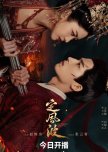
Yesha can be anyone and everyone.
The winds of ill omen sweep through the Qi kingdom as hallowed statues weep blood tears. Within days, three of the realm's highest officials meet violent ends, all hinting at supernatural forces at play. A shadowy figure, Yesha or Night Fury, claims credit for the murders and threatens the empire itself. The No. 1 detective of Qi, Xiao Beiming, cockily assures the emperor that his Elite Constables will apprehend Yesha in three days. On his wedding day, Beiming sets a bold trap. But Yesha turns the tables on him with devastating consequences. Framed and injured, he disappears—estranged from his friends and his young bride.Three years later, he returns to the capital, chasing signs that Yesha may have resurfaced. Older and wiser, he understands that to deal with this nemesis, he needs all the help he can get from friends, lovers, and competitors alike. He reunites with his childhood sweetheart, Xueman; humbled, contrite, and determined to clear his name. Beiming's new team—Xueman, coroner Feng Qingzhou, constable Tong Shuang, and disguise artist Hua Dairong—tackle seven eerie, linked cases, with the unwitting aid of the flamboyant No. 2 detective, Zhuge Kongyun. They quickly find all roads lead to a hidden seaside village, Haiya, and a terrifying secret that could rock the foundations of the empire.
Even though this is largely a plot-driven mystery, the characters are authentically written, and their development is fantastic. Reputations aside, there are no super-sleuths; Beiming and Kongyun are neck-and-neck the whole way. If anything, it is Yesha who stays a few steps ahead, only caught when they choose to be. This is a team effort where everyone contributes unique skills and insights. Each character has their own mini-arc that highlights what makes them tick—their strengths, flaws, past troubles, and personal struggles. They are bound by a shared sense of morality and justice born from their own trauma, loss, and grievances.
No one is perfect, and they all make mistakes, so don't be too quick to judge. Xueman loses her two life anchors on what should have been the happiest day of her life. She needs answers and closure but is left alone and in limbo for three long years. Of course she lashes out; what's important is that she ultimately chooses restraint. Tong Shuang also experiences loss and seeks justice, but when he acts out, he wins audience sympathy and understanding. Similarly, Beiming is rarely called out for his over-protective stifling of Xueman's desire to be part of the team or for his over-confidence and missteps at Fengbo Lake. This kind of persistent misogyny, where female characters are held to unfair and unrealistic standards of perfection, is deeply disappointing. Beyond the terrific banter and camaraderie, it is the team's imperfections and their good and less-good decisions that made me invested in their shared journey of self-discovery and growth.
The mild fantasy elements add an eerie thrill to the seven mysteries, which unfold in a case-within-a-case format that pieces together the main conspiracy. Each case brings a growing dread and a horrifying glimpse of the unspeakable event that happened in Haiya. I was hooked—what went down there? Who was Yesha, and what was their grand master plan? Although there is some deliberate misdirection, an attentive viewer has a fair chance of solving the case ahead of the reveal. All the clues are hidden in plain sight, down to several disparate and fleeting moments where the villain gives themselves away. At some point, everyone seems suspect, which is the point: Yesha can be anyone and everyone who is so tormented and radicalized by injustice that they go full scorched-earth. All characters are tested, and their moment of truth is whether they decide to give in to their worst instincts. It is Zhong Yunchi's last lesson to Beiming—that the greater good cannot be rationalized by a lesser injustice; that two wrongs don't make a right. While they share moments of perspective, Yesha is Beiming's antithesis, a person who chooses to fight darkness with darkness instead of light. They are a complex and almost tragic antagonist whose darkening is understandable but not inevitable.
This is an ensemble cast of promising young actors whose vibrant, cohesive energy conveys a shared purpose and infectious enthusiasm that smooths over some less-polished individual performances. Wang Xingyue's lines are fantastic, and he delivers a few fiery, moving speeches that gave me goosebumps. Deng Kai is another fabulous character actor who tries to steal his greatest rival's limelight with his bombastic braids, showy outfits, and side-splitting braggadocio. He Luoluo delivers a charismatic and empathetic portrayal of Tong Shuang's bromance with Beiming and his character's inner conflicts. While Xiang Hanzi's acting is still a work in progress, her "angry bird" Xueman is quite adorable, and she overall captures her character's anger, hurt, and confusion at Beiming's betrayal well. Unlike most actresses whose idea of fighting is posing and flailing at air, she moves with lethal speed and packs a powerful punch. I enjoy Zhang Nan's acting, but her character, Huo Dairong, didn't have room to shine. While Chen Youwei delivers a credible performance as Feng Qingzhuo, he didn't interpret his character in a particularly impactful way.
There is limited room for romance in a plot and character-heavy story like this, and arguably, too much would be a distraction. Beiming and Xueman's romance is established from the start, but it's clear neither was ready for marriage. I like how she grows up and he learns to make room for her to have the agency she always wanted. The second romance seemed to be there because why not? It isn't well-developed or grounded in substance, and I didn't sense genuine chemistry between either couple.
The narrative builds to a strong finish. The reveal makes sense, and everything more or less falls into place without a long-winded, boring walk-through. There are no unnecessary tropes; everything happens for a reason and comes full circle. The Haiya case raises profound questions—is national security and the greater good an end that justifies any means? Are there some acts so heinous that an eye for an eye is the only way to appease the victims? There are no easy answers; we can only hope we never have to make such choices.
The only thing I didn't like about the ending is Yesha's second identity. It creates unnecessary melodrama and makes their motive too personal when the final message should be on Haiya and "never again." That said, even though I would have preferred a slightly different ending, it is not a fatal flaw. This is still a suspenseful and riveting mystery from start to finish, and one I am pleased to highly recommend.
Final rating: 8.5/10.0
Major Ending Spoilers:
I don't think it was necessary for Yesha and Beikun to be the same person. It would have been more in-character for Zhong to have given his friend's child to the poison master, Bei Hai's sect brother, rather than to someone with no relationship to the child. I believe the writers originally intended for Beikun to be Feng Qingzhou, as Bei Hai's mutant pill is the 疾风丸 (Jífēng Wán) or Swift WIND Pill, while Coroner Feng's name, 风清浊 (Fēng Qīng Zhuó), can be translated as "WIND Purge" or "Cleansing WIND." I suspect they changed course and went with the actor who resembles Wang Xingyue enough to be his sibling. This choice dilutes Yesha's motive and makes it seem hypocritical, considering his father made the pill and urged the late emperor to use it. If Yesha were just an ordinary Haiya orphan, his hatred would have been more understandable. It's not a fatal flaw, but it makes Zhong's decision questionable and weakens the impact of Yesha's motive and message. It would also have been more satisfying to see Bei Hai's sons work together to atone for his mistakes.
X
Was this review helpful to you?
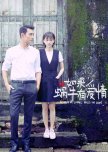
At a snail's pace.
Sometimes all you need to know about a drama is in the name - this one is aptly titled because it unfolds at a snail's pace. This is about a talented young criminal profiler Xuxu's quest to gain the approval and acceptance of her boss Ji Fai; who wants to boot her out of the department for flunking the physical fitness test.The cases in this crime thriller drama are linked and have a personal connection to Ji Fai. While quite well written, the clues and conclusions are either obvious or they are not at all and unfold like a police procedural. A very slow paced police procedural. That simply doesn't work - if its gonna unfold slowly then it must be littered with enough clues that the viewer gets hooked into playing armchair detective. If its gonna be a police procedural, then its got to be fast paced and action oriented. This was the worst combination of both. I lost interest in the case after about 13 episodes but kept watching hoping (wrongly) for some romance.
It goes without saying that Wang Kai looked yummy in this drama and his acting was very good. I really enjoyed all of the fast moving action scenes he was in. But I just couldn't see the chemistry or romance. First of all, Wang Xiwen's Xuxu did not come across as a criminal profiling genius; just a rookie cop who thinks VERY SLOWLY. Watching someone think very slowly is VERY BORING. The character is also inconsistently written: someone supposedly so perceptive she can draw inferences from human nature not obvious to others but yet lacking in social skills and EQ??? Both characters wore such solemn expressions I started to hope they would just glower each other to death.
There are some good things about this drama that actually starts out quite well. The second ML and FL are quite adorable and really lift the mood and team dynamic. But it simply just wasn't enough. If you really want to watch Wang Kai, then you can consider this a 7.0 but if not, it really is a 6.5. Bottom line, if you are looking to be intrigued and thrilled, look elsewhere. If you need a sleeping aid, this is a total snooze fest.
Was this review helpful to you?
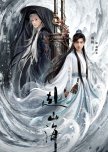
A bot could have done a lot better!
The Journey of Legend (赴山海/Fù Shānhǎi) ambitiously reimagines Wen Ruian’s mid-1970s wuxia classic, The Heroes of China (神州奇侠/Shénzhōu Qí Xiá). Novelist Xiao Mingming, transmigrated into the novel’s world by a vengeful AI for daring to rewrite it with cheat codes, becomes the protagonist Xiao Qiushui. To return home, he must complete the hero’s journey in this sprawling martial world.Wen Ruian’s novel is a revered masterpiece among wuxia fans, celebrated for its epic scope, literary depth, and genre-defining influence. Layering an AI-driven isekai conspiracy arc over its already rich plot and character-driven narrative is a daunting task. Screenwriter Liu Fang, however, is woefully unequal to it. Her juvenile writing and shallow dialogue clash jarringly with Wen’s sophisticated, poetic prose. The first five or six episodes stumble through Mingming’s integration into the novel’s world, hampered by cringeworthy attempts at humor. The pace improves as the story aligns with the original novel, but periodic AI-driven digressions disrupt the otherwise stellar plot and character arcs. Ironically in terms of screenplay, a bot could have done a lot better! This drama is watchable if you ignore the AI subplots—they’re unworthy of attention.
Set in the fictional kingdom of Daxi, loosely based on the Southern Song Dynasty post-Jingkang humiliation, the story reinterprets the shameful betrayal of patriot Yue Fei through an alternate lens. The Beihuang invaders, likely inspired by the Jurchens, loom large, while a disillusioned jianghu (the martial world) fractures under the rivalry between the ambitious Li Chenzhou’s Power League (权力帮) and the enigmatic King Zhu’s River Sect. As the empire faces a controversial decision, young idealist Xiao Mingming/Qiushui navigates a family conspiracy that spirals into national stakes.
Cheng Yi plays both Xiao Qiushui and Li Chenzhou, narrative parallels designed to look uncannily alike yet embody opposing ideologies. Qiushui champions righteousness and chivalry (义, yì), while the cynical Chenzhou wields power and control (权力, quánlì). Cheng Yi struggles early to settle into these roles, but his portrayal of Chenzhou—a once-idealistic figure hardened by betrayal—outshines the vanilla, righteous Qiushui. Chenzhou’s complexity ultimately steals the spotlight.
The sprawling cast, however, is a mixed bag. Few characters beyond Li Chenzhou are fully developed. Lui Suifeng’s arc starts strong but fizzles, though it’s the best-acted role. Cheung Chi-Lam’s Crazy Yan is another standout, criminally underused. Newbie actors, overshadowed by veterans, expose the uneven casting. The main villain, a dumbed-down Qin Hui—history’s most infamous traitor—reduces a legendary antagonist to a trite middle-child syndrome caricature.
The saving grace? The martial arts. The action sequences are electrifying, ingeniously staged to deliver edge-of-your-seat thrills and imminent peril absent from recent wuxia dramas. Unlike the overly stylized twirling of Mysterious Lotus Casebook, these fights are intense, muscular, and flinch-worthy. If only the budget had stretched to a competent screenwriter! A straight adaptation of Wen’s novel, paired with these action scenes, could’ve been a masterpiece, dated genre or not.
I held off on weighing in on the rating controversy surrounding this production until I’d finished and reflected. Everything I loved—the profound, lingering ending included—stems from the original novel. Despite some clumsy moments, the finale respects Wen’s work. Yet, evaluated holistically, this adaptation desecrates a classic. I’m giving it a generous 8/10, almost entirely for the re-watchable martial arts. The storytelling scrapes by with a 7/10.
Was this review helpful to you?
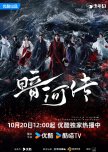
Unfinished Business.
Blood River/暗河传 ushers in a new era for Beili’s mysterious and powerful assassin's guild Anhe/暗河 or Dark River. A spin-off in Zhuo Munan’s shared universe, it peels back the curtain on the legendary shadow force that lurks behind Dashing Youth (少年白马醉春风) and The Blood of Youth (少年歌行). The tale ignites when Anhe’s long-reigning Patriarch is grievously injured and poisoned, unleashing a vicious succession struggle. Two prodigies, Su Muyu and Su Changhe, are thrust into leadership. As they seize the reins and wrestle free of their shadow masters, they discover that “going legit” is a blood-soaked tightrope.What hooks me hardest is the drumbeat insistence that Anhe must forge its own fate, not remain someone else’s concealed sharpest blade. That single theme slices straight to what I dislike most about Zhuo Munan—and the whole crop of self-styled “new wuxia” authors—stamping their seal on the genre. Real jianghu, the martial world at its molten core, is anti-establishment: outlaws and exiles who swear by their own code, patriotic yet allergic to any throne. In Zhuo’s realm, however, these legendary warriors morph into palace guard dogs for a dynasty that’s rotten, amoral, and utterly undeserving of their spilled blood. Blood River is the lone exception where the author finally gets it; it’s the only one of his works I’ll crown true wuxia in the classic sense.
The opening succession arc is pure lightning. Su Muyu clings to his oath to shield the fading Patriarch, pitting him against sworn brother Su Changhe’s hunger for a quick, clean coup. Changhe’s ambition burns naked; Muyu’s conscience is the thin leash. The script keeps spotlighting their clashing creeds yet repeatedly yanks the rug before the inevitable clash, letting plot contrivances dodge the showdown. Still, every sidestep plants seeds that bloom in The Blood of Youth, leaving a ghost of unfinished business between them. They’re magnetic characters shackled by a writer who chose to avoid conflict to tell the safe, crowd-pleasing story. That is all well and good but as a result, their character stories are not fully realised; the tension and conflict in their values never comes to a head.
I adore the pitch-black premise, but the drama starves its leads of the crackling personality and bromance that turned The Blood of Youth into legend. Writing Su Muyu as a stoic and boring slab is a fatal misstep; it’s a role that doesn't leave much for anyone to work with, let alone Gong Jun, whose acting is still a work in progress. He does not share a natural rapport with Chang Huasen and their bromance never establishes solid footing because of Muyu's vapid, and forced romance with Bai Hehuai. Romance is already not this writer's forte and it is made worse by the casting of an actress with the screen presence of Muyu's limp, overcooked noodles. Gong Jun’s voice work is serviceable whereas Chang Huasen is elevated by a stellar dubber and gains a depth and menace that Gong Jun's flat delivery can’t match. The saving grace? Supporting firecrackers—Li Daikun’s diabolical yet weirdly sympathetic Mu Ciling (my ride-or-die), plus the grizzled Patriarch, cunning Su Zhe, steadfast Lord Langya, and Spiderwoman Mu Yumu.
The drama could have told a much tighter story had it bowed out after the power struggle or the Swordless City arc. At that point, it is a natural parting of ways as it is clear that Muyu and Changhe are on different paths. Stretching further turns Muyu into a rudderless ghost; his dream to reclaim his name and rebuild Swordless City evaporates without a whisper. He becomes everyone else’s errand boy—doctor's assistant, failed chef, Changhe’s glorified wingman to ferry Anhe to the “Other Shore.” In a gut-punch twist, Changhe goes solo with his own hidden agenda and is never held accountable by Muyu for abandoning Anhe at its darkest hour. It mirrors Lord Langya surrendering the throne to an unworthy heir, then looking over his shoulder to keep catastrophe at bay instead of living the life of adventure in jianghu with the love of his life that he gave up the throne for. In a similar vein, Muyu is tied to Changhe and his vision and ambitions for Anhe.
The finale lands realistic, bittersweet, hopeful—yet screams that the villains quietly won. Like the story itself, the jaw-dropping fight choreography peaks in the first half and the sequences feel repetitive in the latter arcs. The writer’s boast that Muyu and Changhe wield true agency is as laughable as the handy twelve-year antidote to puppet poison.
Verdict: A damn fine wuxia that still feels half-told. 8.5/10.
Was this review helpful to you?
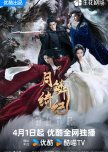
Pinocchio and the Sorcerer's Stone
Veil of Shadows is a continuation of Guo Jingming's heavily stylized and obsessive exploration of what lies beneath the painted skin. All of the characters in this fantasy mystery romance have multiple identities and layers of hidden darkness and compulsions beneath the veneer of their distractingly gorgeous and alluring personas. Two nine-tailed foxes and a few demon hunters converge on Wei Manor, closing in on the elusive nine-tailed fox demon Xiao Wei—an icon of Guo Jingming's Painted Skin universe.The first Wei Manor arc brings together the four main characters: the two fox demons, Lu Wuyi and Wu Wangyan, and the demon hunters, Li Jing and Wu Shiguang. This was my favorite arc—a murder mystery in a manor shrouded in secrets, where everyone has hidden motives, fixated on a fox demon, a debt, and an entanglement that should have been extinguished lifetimes ago. I was deeply moved by the Dragon Deity's story and his immense loneliness and profound sacrifice.
The mind-bending second arc, the Starstone Illusion Realm, is a fantastical reimagination of Pangu's myths of creation. It is the arc where I was most invested in all four main characters. I know that Li Jing and Wuyi are supposed to be the main CP of this story, but I found it difficult to buy into this wildly unreal romance between Pinocchio and the sorcerer's (oracle) stone. In both arcs, they fall in love too suddenly. By contrast, I far more enjoyed how initial conflict and distrust blossomed into so much more between Wu Shiguang and Wu Wangyan. I was surprised by Zeng Shunxi and Chen Duling's chemistry—it is the first time I have truly felt him "click" with any of his costars. I have never been a fan of either of their acting, but their portrayals here are convincing and memorable.
Despite her stunning looks and commanding screen presence, Ju Jingyi lost me with her contrived and affected line delivery and that oddly robotic "seductive" tone. That said, this is her best showing in recent years, and I did see many glimpses of the Ju Jingyi I used to like quite a bit. Tan Jiarui had so many roles to play that he had the hardest job. I think he pulled off the two that mattered really well and moved me with the depth of his longing and profound isolation. None of his many other roles, however, were fleshed out enough in the writing to make more than a cursory impression.
As often with Guo Jingming's productions, this is overambitious, tries too hard to be sad and profound, is inspired by too many complex ideas, and is littered with too many plot twists that don't marinate well. I was not amused at how the narrative built up anticipation—"only a dragon can slay a dragon"—only to have it end in a single unwilling stab. The fabulous Wang Duo was completely wasted as Chiwen.
The narrative really nosedives when it decides to indulge in time loops, something the writer and editors clearly do not have the attention to detail or patience for. Killing off characters only to revive them over and over only works the first time. After that, it is a predictable snooze-fest that made me want to drown myself in all the gorgeously contrived crocodile tears. The drama does live up to its genre—in that it is so fantastically incoherent that it is clear even the writers gave up. The final epic "save the world" confrontation couldn't even save the drama.
In a final act of vain preening, the director treats us to a cosplay orgy clearly meant to remind us of how cool and distinct each character he crafted is. Thus, everyone is magically and inexplicably revived in the finale for a final fashion parade cum showdown across time and dimensions, and all logic collapses bombastically. In all the melee, they forgot to give us closure between the four main characters. Like us, they are either left clueless or wondering what the hell happened. This drama starts so promisingly only to conflate spectacularly into something so grandiose that the writers didn't know how to end it. The ending is either everything you imagined it to be or nothing at all.
While I am squarely in the nothing at all camp, I am still willing to rate this an 8.0/10.0 even though 7.5 is probably more fair because I am really tickled by the idea of Pinocchio romancing the stone. Only a Guo Jingming would have the audacity to come up with something like that. It's just too bad he really wasn't able to deliver well on the idea.
Was this review helpful to you?


