

 1
1 1
1
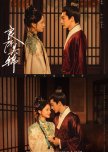
Silk Knives
A Splendid Match unexpectedly became one of those dramas where I kept waiting to be annoyed…and somehow ended up finishing.
This is a family drama wrapped in romance, household politics, complicated loyalties, unfortunate timing, and people repeatedly making painfully understandable mistakes. Less political chess, more emotional consequences.
Think family grievances, household loyalties, emotional debts, and people repeatedly trapped between duty and feeling.
This is also the kind of drama where soft words frequently hide sharp consequences.
The politics are not exactly:
“everyone gather around while I execute a 14-dimensional chess move.”
The writing frequently wanders into melodrama territory.
And there are frequent moments where the plot politely asks you to suspend disbelief and simply continue moving.
But somehow?
I minded it less here.
Because even when people behave dramatically, and occasionally irrationally, I could usually understand why.
Messy?
Absolutely.
Emotionally recognizable?
More often than not.
And perhaps most importantly:
these people occasionally look like they have lived through mild inconvenience before.
I know.
The standards are in hell.
But seeing actual skin texture, shadows, and lighting that occasionally remembered human faces are supposed to have dimension felt oddly refreshing. Nobody looks permanently trapped inside soft-focus perfection.
Thank you.
Beneath the drama, there is something slightly more mature than expected. Less interested in exaggerated romantic fantasy, more invested in complicated loyalties, family tensions, political obligations, and people making painful decisions for reasons that feel emotionally believable.
The Jinzhao / Chen Yanyun / Ye Xian situation worked better for me than expected too. Not because this becomes some dramatic “choose your favorite man” competition, but because each relationship quietly represents something different emotionally: longing, timing, emotional dependency, partnership, loss.
The romance itself works less through dramatic intensity and more through the quiet accumulation of trust, consistency, and emotional safety.
Meanwhile, the Fu Huailian political situation slowly collapsing into tragedy gave the later episodes more emotional weight. Watching loyalty gradually turn into collateral damage ended up more compelling than the drama gets credit for.
Does everything work?
No.
The scheming is far from brilliant.
The pacing stumbles.
And parts of the drama absolutely could have been stronger, especially toward the end.
But truthfully?
I still ended up enjoying it more than expected.
At this point, a costume idol romance where people mostly behave according to recognizable emotional logic rather than whatever the plot urgently requires already deserves partial credit. Add an atmosphere that feels appropriately grounded for the world these characters inhabit, without constantly exaggerating itself for dramatic effect, and I found myself appreciating the restraint.
Recommended for: viewers who enjoy slow-burn romance, complicated loyalties, emotionally messy relationships, unfortunate timing, and watching emotionally complicated people make painfully understandable mistakes.
Not recommended for: viewers expecting flawless plotting, high-level scheming, or enough emotional maturity to prevent half the problems in this drama.
Was this review helpful to you?
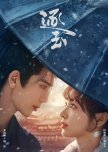
This Drama Was One AI Filter Away From Becoming a Luxury Skincare Commercial
I truly think Pursuit of Jade should be studied as a social experiment on how far cinematography can carry a script before viewers collectively start hallucinating depth into it.Because for a while? It works.
The drama arrives looking absolutely gorgeous. Everyone is stunning. The lighting glows softly like the entire empire discovered moisturizer and emotional repression simultaneously. Every frame is composed like it expects to be screenshotted, edited, color graded again, and uploaded to TikTok with dramatic piano music.
And I understand the hype.
I truly do.
This drama knows exactly who it was made for.
If you are:
a younger viewer looking for intense romantic fantasy,
someone primarily invested in the leads,
or simply emotionally vulnerable to attractive people staring at each other while snow falls dramatically around them,
then Pursuit of Jade probably feels like a spiritual experience.
Now before people panic: I am not above this either. If Jing Boran plays an emotionally constipated man in layered robes looking at me like he has not slept properly since the Ming Dynasty, I too suddenly become more forgiving than logic would normally permit. I have absolutely rated dramas higher than they deserved because the atmosphere seduced me into temporary intellectual collapse.
The difference is that those dramas at least entertained me emotionally.
Pursuit of Jade somehow managed the incredible achievement of being both absurd and boring.
That is difficult. Respectfully.
The problem is not that it is an idol drama. I do not judge idol dramas by the same standards as serious prestige historicals. Logic in idol dramas is often more of a polite suggestion than a governing principle. I accepted that before even pressing play.
But this drama’s writing eventually stops functioning even on idol drama logic.
The female lead especially feels less like an actual human being and more like a fantasy of “the perfect strong woman” assembled from endlessly marketable traits. She is endlessly competent, endlessly righteous, endlessly adored, endlessly capable of surviving situations that would destroy normal people — and the script bends itself into pretzels to constantly reassure us how capable she is.
At some point I stopped watching a character and started watching the screenplay aggressively defend its favorite child against the consequences of reality.
Nothing around the characters feels emotionally grounded. Reactions feel manufactured. Conflicts exist because the plot needs another dramatic montage, not because the characters behave like believable people shaped by their environment.
And the political storyline? Good lord.
This drama starts throwing around revenge plots, military conspiracies, assassinations, hidden identities, massacres, power struggles, dramatic reveals, and emotional speeches with the boldest confidence, while possessing approximately 4% of the narrative discipline required to pull any of that off.
Half the time it feels like the script itself only vaguely remembers what is happening.
And then we arrive at the visual processing.
Now listen carefully because some people online hear criticism of AI/post-production and immediately act like you personally declared war on technology.
That is not the issue.
Technology can absolutely enhance a historical drama. But Pursuit of Jade increasingly crosses into that strange modern-drama aesthetic where everyone looks softly rendered by software instead of lit by actual sunlight. Faces are polished into porcelain. Skin texture disappears. Backgrounds glow suspiciously. Entire scenes look so digitally perfected that the physical atmosphere evaporates.
Historical dramas feel most immersive when they look lived in. Dirt. Shadows. Cold rooms. Heavy fabrics. Uneven lighting. Human faces that still resemble human biology.
Instead, parts of this drama look like ancient China was filtered through three beauty apps and a graphics card.
Which is frustrating because Zeng Qingjie clearly does have visual talent. Some quieter scenes actually breathe. Some compositions work. But the production becomes so obsessed with visual perfection that eventually the atmosphere starts feeling synthetic instead of emotional.
At some point I realized I was no longer watching a coherent story.
I was watching beautiful people emotionally wandering through a very expensive AI-assisted skincare advertisement while the script slowly dissolved into decorative mist behind them.
I dropped this at episode 33 after finally accepting that the drama was not building toward complexity, coherence, or depth. It was simply becoming more aesthetically polished while the writing quietly disintegrated in the background.
Perhaps the most fascinating thing about Pursuit of Jade is what it accidentally reveals:
if the actors are attractive enough and the cinematography glows hard enough, audiences will forgive almost anything short of the writers being rendered in CGI too.
Was this review helpful to you?
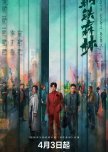
The Slow Violence of Terrible Timing
Finally found some time to review a few dramas I finished recently and somehow almost forgot about Sunsets Secrets Regrets.Shame on me.
Because this drama slowly turned into one of those:
“Structurally? We are negotiating. Emotionally? Unfortunately, I care.”
situations.
This is part crime thriller, part emotional slow burn romance: old cases, buried truths, unresolved history, and three people trying (rather unsuccessfully) to outrun versions of themselves they probably should have confronted years ago.
But let us be honest here.
The real plot?
Emotional avoidance.
Crime happens.
Investigations happen.
But mostly? People quietly standing one honest conversation away from peace and somehow choosing suffering instead.
Repeatedly.
And against my better judgment? I got invested.
Now, if you are here expecting perfectly engineered thriller logic, we may need to negotiate expectations together.
The timeline occasionally behaves like memory itself edited the story after an emotional breakdown. Some scenes arrive carrying promise and leave before fully unpacking. At times, atmosphere quietly starts doing overtime while crime-solving logic takes a brief personal break.
And yet.
I stayed.
Mostly because the acting absolutely understood the assignment.
Jing Boran plays Han Sheng like someone permanently standing one honest sentence away from emotional clarity and somehow never crossing the finish line.
Han Sheng is also, admittedly, not always easy to like. At times, insecurity turns possessive, longing becomes manipulative, and emotional attachment occasionally starts looking suspiciously clingy. This is very much a man capable of making emotionally questionable decisions while simultaneously looking deeply unwell about them. And yet, frustratingly enough, the drama slowly gives those flaws context rather than excuses. Beneath the mess sits fear, loneliness, and someone quietly terrified of losing the few things that still matter to him.
This is a man who repeatedly stands near peace, looks directly at it, and then emotionally takes the scenic route.
Deeply inconvenient for my objectivity.
And then there is Jiang Cheng, quietly contributing his own emotional complications to an already overcrowded situation. Lesser dramas would have turned him into decorative heartbreak. Here, however, he feels devastatingly human instead.
My biggest frustration, however, was Zhou Jin.
Not because Wen Jing Cai’s performance was weak — far from it — but because the writing occasionally feels strangely hesitant around her inner world. For someone carrying this much emotional weight, parts of her turmoil feel more implied than fully explored.
There were moments where I wanted the drama to trust her unraveling a little more instead of standing politely near it.
The pieces are there.
I just wanted the emotional fall to land harder.
The chemistry also works because it behaves like chemistry between adults who have already collected emotional scars.
Not:
destiny after eye contact
but:
history, hesitation, unfinished conversations, bad timing, and people quietly ruining their own peace because saying one honest sentence apparently felt too ambitious.
Messy?
Absolutely.
Emotionally persuasive?
Deeply annoying, actually.
A small expectation check before anyone starts this:
If you primarily watch dramas for romance, chemistry, emotional tension, and adults quietly making emotionally questionable decisions, there is a very good chance this works for you.
If you are here mainly for sharp thriller logic, expectations may need slight adjustment. The mystery side still gives you enough to chew on, but emotionally complicated people and their unfinished business are very much competing for main-character status.
8.5/10 — some narrative detours, several emotional bruises, no real regrets.
Was this review helpful to you?
The Unexpectedly Dangerous Power of Mystery and Good Chemistry
Parallel World is one of those dramas that sounds suspiciously chaotic when summarized: mysterious disappearances, hidden worlds, strange creatures, desert folklore, survival, unresolved grief, and a group of emotionally exhausted people wandering through enough sand to personally challenge their hydration levels.And yet, unlike many dramas with fantasy elements that immediately throw twelve systems of magical politics at you and hope confusion somehow transforms into emotional investment, Parallel World earns your trust slowly.
The fantasy element never feels pasted onto reality.
It feels buried inside it.
A large part of that comes down to the setting — an actual desert. A real one. With real wind, real dust, real sunlight, and people who look appropriately inconvenienced by survival. Turns out physical environments still matter. Nobody mysteriously survives danger looking softly moisturized and emotionally untouched. The exhaustion feels real because much of it probably was.
Apparently actual locations still work. Revolutionary concept.
Because once the physical world feels believable, the impossible becomes easier to accept.
A hidden realm beyond Yumen Pass? Supernatural rules? Desert mythology operating like forgotten folklore no one fully understands?
Under normal circumstances, I would have questions. Several — including why a rooster named ‘Valley Guardian’ somehow carried himself like local management during a supernatural desert crisis.
Instead, Parallel World quietly hands you atmosphere and says:
“Trust me for a minute.”
And you do.
Not because the mythology is perfectly explained — it definitely is not — but because the mood stays stronger than the confusion. There were moments where I understood every sentence individually while remaining only moderately informed about the overall situation. Some explanations arrive suspiciously late, the pacing occasionally wanders into scenic contemplation, and yes, there were moments where I quietly suspected the plot itself had briefly wandered into the desert to think about things.
A few subplots wobble a little, if you inspect every mechanism too closely, there are moments where the storytelling feels slightly more confident than coherent.
Fortunately, the emotional core keeps things grounded.
Ni Ni carries Ye Liuxi with the kind of effortless confidence that makes overexplaining unnecessary. The character could have easily turned into another market-tested “strong female lead,” but instead she feels human: sharp, capable, emotionally guarded, occasionally reckless, and charismatic enough that the script never has to repeatedly remind you she matters.
You simply believe her.
Bai Yu spends most of the drama looking like grief accidentally learned how to drive. Chang Dong’s sadness never feels performative. He carries it quietly, heavily, like someone emotionally running on fumes and unresolved grief.
The chemistry between them also benefits from restraint. Not dramatic soulmate intensity after three emotionally charged glances, but trust built through survival, emotional hesitation, and two damaged adults slowly realizing they no longer want to walk through difficult things alone.
Messy.
Quietly moving.
Unexpectedly persuasive.
Which, unfortunately for my emotional boundaries, worked rather well.
Now, is the drama flawless? No. But if you enjoy mystery, atmosphere, restrained romance, emotionally wounded people, and stories willing to linger in silence rather than constantly explaining themselves, Parallel World has a strange way of pulling you in.
Unlike technically cleaner dramas that disappear from memory two weeks later, this one leaves behind texture.
The wind.
The loneliness.
The feeling that impossible things almost make sense if the desert is large enough.
8.5/10 — uneven in places, a few subplots wobble, but atmospheric enough that I stopped questioning the mythology and simply followed it into the sand.
Was this review helpful to you?
Beautiful Lighting, Emotional Damage, and a Small Town That Needed Therapy
Tender Light is one of those dramas that quietly tricks you.You arrive expecting a thriller.
What you actually get is a melancholy character study disguised as a mystery, wrapped in summer heat, whispers, loneliness, and the kind of sadness that seems permanently trapped inside small towns.
At the center of the story are Nan Ya, a woman surrounded by rumors, judgment, and invisible cruelty, and Zhou Luo, a younger man drawn into both her sadness and the unsettling circumstances surrounding a murder case. But if you are expecting fast-paced suspense or endless twists, recalibrate immediately.
This drama moves slowly.
Deliberately.
Like it fully understands how uncomfortable silence can become.
And surprisingly, the emotional connection between Nan Ya and Zhou Luo worked for me more than I expected.
Not because this is some grand sweeping romance.
It isn’t.
The connection feels quiet, awkward, and painfully human. There is longing here, tenderness, protection, misunderstanding, and that particular kind of closeness that grows between two people who recognize sadness in each other. Zhou Luo’s feelings never felt purely idealized; more like someone trying to understand and protect a person already carrying too much hurt.
Now, let us discuss the real co-star here:
the cinematography.
Because Tender Light is gorgeous.
The lighting department deserved overtime pay.
Warm street lamps, humid summer nights, fading sunlight, dim interiors, shadows sitting quietly in corners like they also know family secrets; everything feels unusually intimate and emotionally heavy. The camera constantly creates the feeling that people are trapped inside spaces too small for reinvention.
You can practically feel the heat.
The gossip.
The exhaustion.
This is one of those dramas where the visuals are not just pretty, they actively deepen the mood. The world feels melancholic, bruised, and quietly suffocating, and for once, the beauty actually serves the story instead of distracting from it.
And Tong Yao? She understood the assignment.
Her performance as Nan Ya is restrained in the best possible way. No dramatic speeches every five minutes. No emotional over-performance. Just exhaustion, loneliness, vulnerability, and quiet resilience sitting permanently behind her eyes.
Which is partly why I found myself wanting more from Nan Ya’s perspective.
For a story so shaped by Nan Ya’s suffering, the drama occasionally felt strangely more interested in everyone orbiting her than fully staying with her. The town, the gossip, the people judging her, even the people claiming to help while quietly enabling harm.
Because when Tender Light actually slows down and stays with Nan Ya?
That is when it feels strongest.
Messy people.
Realistic emotions.
Realistic story.
My hesitation comes from the thriller side.
The mystery itself occasionally feels weaker than the emotional atmosphere surrounding it. There were moments where I found myself more invested in the emotional sadness, social judgment, and slow tragedy of these characters than the actual suspense.
Which is not necessarily bad.
It just means this drama works best when you stop expecting:
“high-stakes thriller chaos”
and accept:
“emotionally wounded people quietly unraveling in aesthetically devastating lighting.”
It feels literary.
Sad in a quiet, lingering way.
The kind of drama that sneaks back into your mind later, not through plot twists, but through mood.
Not something that emotionally kidnapped me.
But definitely something I’m glad I watched.
Recommended for: people who enjoy atmospheric slow-burns, restrained acting, beautiful cinematography, emotional melancholy, and stories where social cruelty feels more frightening than the crime itself.
Not recommended for: viewers expecting nonstop suspense or thriller mechanics powerful enough to raise your blood pressure.
Was this review helpful to you?
Weaponized Chemistry and Revenge-Fantasy Physics
Forty episodes of emotionally unstable aristocrats conducting psychological warfare under aggressively cinematic lighting while the actors fought for their lives to keep the script from collapsing into decorative rubble.And against all available logic, they nearly succeeded.
The Double understands something fundamentally important about melodrama: if the emotional payoff hits hard enough, viewers will temporarily enter a legally questionable relationship with coherence.
This show does not aim for realism. Realism was found dead somewhere around episode three and respectfully buried beneath ten layers of silk robes, vengeance, and unresolved trauma.
The opening alone arrives with the energy of a writer slamming their fists onto the table and yelling:
“What if revenge, but make it operatic?”
A woman is betrayed, buried alive, resurrected by narrative destiny itself, and immediately re-enters society looking emotionally exhausted but aesthetically magnificent. Subtlety never stood a chance. And strangely enough, this is exactly why the drama became so addictive.
Because when The Double locks into its emotional rhythm, it becomes absurdly entertaining. Not in a carefully restrained prestige-drama sense. More in the sense that every character behaves like they are two personal betrayals away from delivering monologues directly into a thunderstorm.
The directing contributes heavily to this collective emotional overreaction. At times it borders on visual overkill. At other times? The atmosphere truly impacts.
Wu Jinyan especially deserves enormous credit because she understands exactly what kind of drama she is acting in. She never underplays Xue Fangfei to force realism into the material, but she also never lets the character devolve into pure revenge-fantasy cardboard. There is calculation beneath the grief. Exhaustion beneath the elegance. You constantly feel that this is a woman surviving through performance, intelligence, and sheer refusal to emotionally disintegrate in public. Which is important because the plot itself occasionally behaves like it consumed several stimulants and stopped consulting cause-and-effect relationships entirely.
Schemes succeed through destiny-level convenience. Characters appear precisely where the emotional tension requires them. Information travels through the empire at the speed of dramatic necessity.
And then there is Duke Su.
Or rather:
the national emergency that occurred after Wang Xingyue unfolded one fan and started smirking at people like he already knew their worst decisions in advance. This character should not work nearly as well as he does.
On paper Duke Su is basically constructed from every dangerously competent male-lead trope known to historical drama humanity:
politically untouchable,
psychologically unreadable,
suspiciously omnipresent,
and permanently standing one step away from softly threatening someone’s bloodline.
But Wang Xingyue plays him with enough amusement, restraint, charisma, and underlying menace that the performance starts generating its own gravitational field. Eventually you stop questioning why he keeps materializing exactly where the plot needs him. You simply accept that the man apparently travels through narrative tension itself.
And that is the central truth of this drama: the acting performs emergency structural reinforcement every time the screenplay starts cracking under pressure.Because the logic absolutely cracks. Not occasionally. Repeatedly.
Some political developments feel less like strategy and more like emotionally committed improvisation. Several villains fluctuate wildly between terrifying masterminds and deeply unstable theater figures depending on what the next confrontation scene requires.
Princess Wanning in particular operates on such spectacular emotional instability that every entrance feels one rejected conversation away from ceremonial arson. Meanwhile Shen Yurong slowly transforms into the physical manifestation of guilt, repression, bad decisions, and untreated psychological decay.
By the second half, the drama increasingly abandons grounded political storytelling altogether and embraces full emotional spectacle. But unlike many prettier idol dramas, The Double possesses one major advantage:
its cast understands how to weaponize emotional conviction against narrative nonsense. That changes everything. Because viewers can forgive impossible schemes. They can forgive revenge plots fueled entirely by coincidence and rage. They can forgive historical worlds operating on dream logic.
What viewers do not forgive easily is emotional emptiness. And for all its chaos, The Double rarely feels emotionally empty.
Messy? Frequently. Overwritten? Absolutely. Subtle? Not even remotely. But empty? Never.
By the final stretch, I felt like the writers were sprinting through the production carrying armfuls of plot twists while the actors desperately transformed all remaining confusion into emotional intensity before the audience noticed.
A less committed cast would have sunk this drama completely. Instead, the performances drag it across the finish line through sheer force of charisma, chemistry, and collective refusal to let the emotional momentum die.
7.5/10. An aesthetically extravagant revenge melodrama held together by acting performances strong enough to temporarily suspend the laws of narrative physics.
Was this review helpful to you?


