
 Editorials

 155
155 453
453 17
17 1
1 2
2 6
6 3
3 8
8 10
10 3
3 14
14 1
1 1
1 1
1 2
2 1
1 2
2 7
7 14
14 9
9 10
10


"Its true value lies in its meaning"
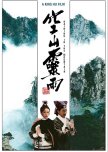
Raining in the Mountain was another gorgeous King Hu film starring Hsu Feng. I didn’t find it as compelling as Touch of Zen, but you would be hard pressed to find a lovelier cinematic experience from the 1970s than this film.
Merchant Wen An is traveling to a remote temple with his concubine and servant. The abbot is in ill health and ready to name a successor. He has asked Wen, General Wang Chi (accompanied by the vile Lt. Chang Cheng) and the illustrious Buddhist scholar Master Wu Wai (accompanied by numerous beautiful women) to the temple to help him make his decision. Unknown to the abbot, Wen and Wang Chi are there to steal the Mahayana Sutra written by Tripitaka himself. Wen’s “concubine” is actually the notorious thief, “White Fox”, along with her cohort, “Gold Lock.” Aside from the thieves lurking behind every corner, at least two monks are vying for the top position by throwing their lot in with the powerful men. Into this volatile mix enters a thief who was falsely accused and sentenced to the military. Chiu Ming has the potential to upend everyone’s plans.
First, it’s important to acknowledge the true star of the show, the 8th century Bulguksa Buddhist temple in South Korea that has been designated a UNESCO World Heritage Site. The temple sits on a mountain, surrounded by forest, and was architecturally a thing to behold. Most of the scenes were shot on site. The film had also been restored which I am always grateful for.
While ostensibly a martial arts film, there weren’t many fights, the longest occurred near the end of the film. Much of the film involved people lurking around corners, running to hide, and generally slinking about searching for the sacred scroll and attempting to avoid detection. If people weren’t skulking in the shadows, they were making deals to be chosen abbot or deals that involved access to the scroll. The irony was not lost that these devout Buddhists coveted the scroll and were willing to lie, commit theft, and/or murder to obtain it. As the abbot said regarding the tattered paper, “Its true value lies in its meaning.” The monks competing for the abbot position were more interested in power than enlightenment. After complaining about the food, the monks were told they’d have to start farming and working harder at alms. Wait, we don’t actually want to work! The new abbot was going to have his hands full if he could manage to stay alive!
King Hu’s cinematography was stunning. I have watched many films from this era and it would be difficult to find one more aesthetically pleasing. The music perfectly enhanced the story and scenery. The actors all gave fine performances though some performances were more captivating. Other than the long length of the film and repetitive prowling scenes, I enjoyed Raining in the Mountain. The final fight and flight scenes were actually quite humorous, even as characters died. I’m not sure King intended them to, but they were reminiscent of a Looney Tunes cartoon. Raining in the Mountain contained no rain and was more philosophical than physical, at least until the epic game of keep away. If you enjoy 1970s historicals that are light on kung fu and heavier on Buddhist ideology, shot on an amazing location, this might be one to try.
22 March 2026
Merchant Wen An is traveling to a remote temple with his concubine and servant. The abbot is in ill health and ready to name a successor. He has asked Wen, General Wang Chi (accompanied by the vile Lt. Chang Cheng) and the illustrious Buddhist scholar Master Wu Wai (accompanied by numerous beautiful women) to the temple to help him make his decision. Unknown to the abbot, Wen and Wang Chi are there to steal the Mahayana Sutra written by Tripitaka himself. Wen’s “concubine” is actually the notorious thief, “White Fox”, along with her cohort, “Gold Lock.” Aside from the thieves lurking behind every corner, at least two monks are vying for the top position by throwing their lot in with the powerful men. Into this volatile mix enters a thief who was falsely accused and sentenced to the military. Chiu Ming has the potential to upend everyone’s plans.
First, it’s important to acknowledge the true star of the show, the 8th century Bulguksa Buddhist temple in South Korea that has been designated a UNESCO World Heritage Site. The temple sits on a mountain, surrounded by forest, and was architecturally a thing to behold. Most of the scenes were shot on site. The film had also been restored which I am always grateful for.
While ostensibly a martial arts film, there weren’t many fights, the longest occurred near the end of the film. Much of the film involved people lurking around corners, running to hide, and generally slinking about searching for the sacred scroll and attempting to avoid detection. If people weren’t skulking in the shadows, they were making deals to be chosen abbot or deals that involved access to the scroll. The irony was not lost that these devout Buddhists coveted the scroll and were willing to lie, commit theft, and/or murder to obtain it. As the abbot said regarding the tattered paper, “Its true value lies in its meaning.” The monks competing for the abbot position were more interested in power than enlightenment. After complaining about the food, the monks were told they’d have to start farming and working harder at alms. Wait, we don’t actually want to work! The new abbot was going to have his hands full if he could manage to stay alive!
King Hu’s cinematography was stunning. I have watched many films from this era and it would be difficult to find one more aesthetically pleasing. The music perfectly enhanced the story and scenery. The actors all gave fine performances though some performances were more captivating. Other than the long length of the film and repetitive prowling scenes, I enjoyed Raining in the Mountain. The final fight and flight scenes were actually quite humorous, even as characters died. I’m not sure King intended them to, but they were reminiscent of a Looney Tunes cartoon. Raining in the Mountain contained no rain and was more philosophical than physical, at least until the epic game of keep away. If you enjoy 1970s historicals that are light on kung fu and heavier on Buddhist ideology, shot on an amazing location, this might be one to try.
22 March 2026
Was this review helpful to you?


