

 135
135 431
431 16
16 2
2 6
6 3
3 8
8 10
10 3
3 13
13 1
1 1
1 1
1 1
1 2
2 6
6 8
8 5
5 9
9


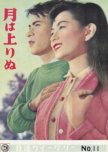
"Try what you can, then you'll find what you like"
The Moon Has Risen was a charming, sweetly funny film written by Ozu Yasujiro and directed by prolific actress Tanaka Kinuyo. A father living with his three daughters, all of marriage age, would have to brace himself as the matchmaking and romancing were about to escalate with the full moons.Asai Mokichi lives in Nara with his three daughters. He has a hands-off approach with their love lives, letting his daughters do as they will. Chizu is the eldest daughter and a widow. She is traditional and loves caring for the family and her father. Ayako, the second daughter, is quietly shy, and falls somewhere between modern and traditional. Much to her consternation, her aunt is always trying to set her up with marriages she has no interest in. Setsuko, the youngest at 21, is effusive and effervescent. She is close friends with Shoji, a man who is currently living on the premises and unemployed. Shoji’s friend, Amamiya, visits for a while during a business trip. Setsuko and Shoji join forces to matchmake for Ayako and Amamiya when they see how much the two care for each other. The course of true love never runs smoothly, and that goes for Setsuko and Shoji as well!
Many Ozu story elements were to be found. A widowed father, played by Ozu regular Ryu Chishu, had daughters of marriage age. This time though, no one was overly worried about the father being left alone. Chizu enjoyed caring for her father, but even she may have had a love match. No older male friends were called in to help find potential mates, the sisters took care of their own futures. And each other. I loved the sisters’ relationships with each other. I worried that I might find Setsuko annoying as she attempted to bring Ayako and Amamiya together, but after the first few scenes, I found her to be a fun character and appealing. Watching the relationship grow between Setsuko and the aimless Shoji was compelling as well.
This was Tanaka Kinuyo’s second directorial effort and I thoroughly enjoyed how she framed shots. It might have been an Ozu script but she didn’t stay cemented to shooting from the mat as he did. Nor were there the head on conversations directly to the camera and overly controlled acting. Her characters moved fluidly and gracefully. She used beautiful outdoor scenes, tranquil temple locations, and gorgeously composed rooms to great effect. The characters were more tactile and looser than in an Ozu film. The family even had a pet dog! The humor was gentle and felt authentic to the story. I found Tanaka’s style of directing very relaxing.
The Moon Has Risen was an endearing film about three sisters as they carved out futures for themselves and when they faltered there was always a sister around to give destiny a little push in the right direction. Tanaka Kinuyo tied everything together with her own method of directing and extracted excellent performances from the actors. Only the second Japanese woman at the time to direct a feature film, she proved herself well. Oh, and Mizoguchi Kenji, you were wrong, she had plenty of brains to direct.
16 June 2024
*Mizoguchi was against Tanaka directing, stating, she “does not have enough brains to be a film director.”
Was this review helpful to you?
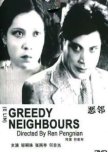
"Better to be broken jade than cheap tile intact"
This forty-one minute film fragment managed to fit in lots of Greedy Neighbors. This was one of director Ren Peng Nian’s early films which also starred his wife, Wu Li Zhu. Originally, the film was around 100 hundred minutes, but enough frames survived to get the gist of the story.Hua Ren inherited his considerable wealth which includes prosperous farmlands. His wife, Guo Fen, is the daughter of a famous fighter, which will come into play later in the movie. She and his sister Si Wen try to keep things running smoothly as Hua tends to spend money frivolously. The local warlord, Wild Dog, decides it’s time to bully his neighbor into giving him his farmlands. Another scoundrel, Smiling Tiger, also has his sights set on fleecing the wealthy fool. Smiling Tiger convinces Hua Ren to take his sister, Zhi Hua, as his second wife. Zhi Hua quickly mesmerizes Hua Ren and drives a wedge between him and his sensible first wife and sister. Having fallen into the clutches of Wild Dog and Smiling Tiger, the clueless Hua Ren is in for some challenging times.
Hua Ren was not a sympathetic character. I was far more invested in Guo Fen and Si Wen, who coincidentally, were excellent martial artists and protected their own. Perhaps in the longer version of this film they had more time allotted, they certainly deserved it. I’m not sure if Zhi Hua and Smiling Tiger were actually related or if she was a plant because they had a very, uh, tactile relationship.
Once Hua Ren was about to lose everything, his sister and male servant helped to turn things around and galvanize him into action. “Today’s world is run by might…Better to be a broken jade than cheap tile intact.” The events that followed in the last part of the film were confusing as Wild Dog had to be confronted twice with no explanation. Given the mood of the film, it did seem to have a proper ending which is always a concern with film fragments.
If you have an interest in silent films from this era, Greedy Neighbors did give a little insight into the political happenings of the time and the vulnerability of the people. Ren Peng Nian and Wu Li Zhu would go on to make numerous martial arts and wuxia films together, with Wu often cast as a heroine. I’d be interested in seeing some of those. This film was a struggle watching the pampered and easily manipulated Hua Ren letting the important people in his life suffer while he partied. He was lucky enough to have two strong women who had his back or at least tried to. More than he probably deserved.
14 June 2024
Was this review helpful to you?
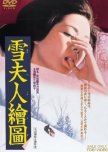
"Am I a coward?"
Portrait of Madame Yuki was a strange and twisted tale from Mizoguchi Kenji. Ostensibly about male domination, it felt more like a toxic relationship based on S & M.Yuki and her husband live apart most of the time, but have reunited over the death of the family patriarch. All that they have left is the estate she owns. Her husband has a mistress and is a wastrel with money. Yuki and her friend, Professor Kikunaka, decide to open her house as an inn in order for her to make money and become independent. The servants all believe she’s in love with the professor but their relationship always comes across as platonic, though his feelings may run deeper. Her husband isn’t afraid to bring his mistress home or even to force himself on Yuki. Regardless of how badly he humiliates her, Yuki can never tell him no. The professor tries to convince Yuki to divorce her husband, but the “demon” inside her won’t let him go even when he attempts to steal her home out from under her.
The version I watched of this film was difficult to follow at first as whoever/whatever did the translations completely messed up the English pronouns. Yuki was often referred to as him, her, or it. Plural pronouns were also used for singular people interspersed with singular ones in the wrong tense. It took a while to figure out if it was Yuki’s father or her husband’s father who died and whether it was the husband, Yuki, or himself the professor was talking about in a conversation. Other than that annoyance, the story itself was not a pleasant one. Despite the professor encouraging Yuki to be strong and stand up for herself and do the things that would make her life better, Yuki usually collapsed into a heap blubbering about how she was a coward, defeated, and not strong. Ultimately, no matter how badly her husband treated her, she could not resist whatever he did in the bedroom. Instead of embracing this part of herself or cutting ties with her husband, she chose to suffer. She always seemed to be slumped over, most likely because she was lacking a backbone.
This film was beautifully shot both indoors and outdoors. Mizoguchi certainly had an excellent eye for framing scenes. The acting was all very good, Kogure played Yuki as a pathetic creature ruled by her demons, Yanagi gave the husband a twisted sense of resentment toward his wife, and Hamada with her gum snapping duplicitous Ayako rounded out the reluctant ménage à trois. Based on the synopsis, I thought that Hamako would have a bigger role, but she was mostly relegated to the background after Yuki was introduced.
Portrait of Madame Yuki ended up being a depressing look at a woman who felt trapped by societal constraints and her own despised appetites. If you are looking for a tragic film with an open attitude toward sex (1950’s style) and are a fan of Mizoguchi’s work, this might be one to try.
*If suicide is a trigger for you, please do not watch this film. There is a lot of talk about suicide, a suicide attempt, and completion.*
13 June 2024
Was this review helpful to you?
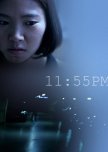
A young woman is heading home late at night. When she arrives at the parking garage at her apartment complex her boss calls. She needs to redo her work and have it done by midnight. Put out at the late night order, she accidentally leaves her phone in the car. That’s when things go from bad to worse.
Director Oh In Chun showed how isolated a person can be and feel when threatened. And also how the brain and body can freeze from fear. I don’t know the name of the actress but she accurately portrayed the initial irritation a person would feel at an annoying person disturbing her work and quiet late at night. As the realization of her predicament slowly sank in her face and actions grew more frightened.
If you’ve ever been face to face with a fight or flight scenario when neither response is a viable option, you’ll recognize the terror inherent in the situation. For long time horror fans this will likely feel tame. As for me, I’ll double-check my locks tonight and make sure my phone is charged.
9 June 2024
Spoiler hint for the urban legend below
*
*
*
*
*
*
*
*
*
*
*
*
*
*
*
*
From what I read (@cocomila on YT), the symbol drawn on the door means Beta---
Alpha: empty home
Beta: female home
X= saw the inhabitant (usually female) alone or about to rob
And people from my country know the punchline from the story kids tell each other to scare themselves,
“The call is coming from inside the house!”
Definitely going to re-check those locks now!
Was this review helpful to you?
"When we feel bad, we cast a shadow over our children"
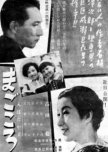
Sincerity was a film by Naruse Mikio adapted from a short story. The film had great potential but was marred by wartime censors. I would love to have seen what he would have done free from their interference. The film had lovely elements, two schoolgirls were friends despite coming from different economic classes. And their friendship wasn’t harmed by one girl being ranked higher than the other in their class, no competition or ugly jealousy. The young actresses were particularly engaging in their roles which helped enormously. I would have been happy if Naruse had created a slice of life with just their delightful story. But underneath the surface of their sunny friendship, lay a darker tale between the parents which threatened to upend their joyful existence and friendship.Tomiko and Nobuko both bring home report cards. Tomiko who lives with her mother, Tsuta, and grandmother is ranked first in her class. Her mother works as a seamstress to support them. Nobuko is reluctant to show her mom her report card as she has dropped to 10th in the class. Her father, Keikichi, isn’t concerned but her mom blames the new teacher. Keikichi says education is the mother’s job and maybe she is spending too much time away from the house. Late one night Nobuko’s mom brings up Tsuta and her past relationship with Kei. Nobuko overhears the conversation and shares it with Tomiko the next day. The girls’ reaction to the news and their parents’ reactions once they realize the secret is out leads to uncomfortable confrontations and conversations. And to add a bit more drama, Keikichi receives his draft notice.
Naruse managed to pack a lot of story into an hour though the ending was emotionally and narratively abrupt. The censors may have had a hand in that as everyone came together to send off the soldiers waving flags and cheering. Draft notices were met with happy congratulations. The film also began with the Greater Japan’s Patriotic Women’s Association meetings. I found it strange that Mrs. Asada, she was never given a name like everyone else, was scolded by her husband for spending too much time with these patriotic groups. In fact, he gave her a dressing down at one point that was particularly harsh, one of the harshest comments to a wife I’ve seen in a movie. Future soldier Keikichi was immune from criticism regardless of what he did.
The stars of the show were the child actresses, Kato Teruko and Etchan. They brought a wealth of emotions to their characters. Regardless of what was going on with the adults, Tomiko and Nobuko, showed great care for one and other. They were unable to be as close as they would have liked because they weren’t allowed to visit each other’s houses. Ostensibly this was because of their different economic classes, but the hidden feelings of the parents’ may have also had something to do with it. The parents wore their masks until the truth came out and then slipped them back on again, teaching the girls how to mask their feelings and pain as well.
There was a wonderful movie hidden inside Sincerity that was unable to fully blossom. Like a too early frost, it was nipped in the bud just as the depths of the secrets and story were about to be fully revealed and dealt with. If you are a Naruse fan, this is definitely one to try in order to watch as the young friendship was shaken by the adults’ deeply buried emotions and how the children fought to keep their friendship. All while the specter of war lingered in the background. I just wish the resolution had been fully explored instead of chopped off suddenly.
25 May 2024
Was this review helpful to you?

"Don't criticize other people's customs and don't criticize their kimchi!"
Heo Young Man, Ryu Soo Young, and Mimi traveled the country trying and discovering new takes on kimchi and relishing the traditional ways of making it on A Nation of Kimchi.Like the other K Food Shows, our adventurous hosts embraced their roles as food guides whole-heartedly. They demonstrated how “Kimchi shows Korea’s history, culture, and lifestyle.” Nothing else embodies Korea quite as much. Archaeologists have discovered the making of kimchi dating back as far as the Three Kingdom Era (220-280 C.E.). The oldest mention in writing goes back to a poem in 918 C.E. Since that time Koreans have experimented using different plants, seafoods, and spices. The introduction of chili peppers during the Joseon era caused an explosion of new taste sensations and the familiar red color known today.
Seasonal and regional ingredients and differences were examined. “Don’t criticize other people’s customs and don’t criticize their kimchi.” The crew visited restaurants, food stalls, and two temples. At the first temple the head monk used lotus flowers to make kimchi dishes into stunning artwork. At the second temple, the community gathered yearly to pick the vegetables and make the kimchi to be served there.
If kimchi is the heart of Korea, women make that heart pulse. In all the scenes of kimchi being made throughout the country, it was the women working together to lovingly produce it. When Ryu helped out, he was the only man among tables of women massaging the red filling into the cabbage leaves. Heo made the statement, “There are as many kinds of kimchi as there are mothers in the world.” These women might adhere to family traditions, but many of them pushed the boundaries, willing to experiment with new ingredients and combinations. “Gimjang”, the community making of kimchi, has been recognized as a UNESCO Intangible Cultural Heritage.
Whether served with wine or makgeolli, used as a side dish or main dish, in traditional combinations or new imaginative ways, the hosts enthusiastically tried them all. I enjoyed learning more about the history and making of kimchi as well as the nearly endless ways of serving it by people who demonstrated a deep love and appreciation for the national culinary treasure.
20 May 2024
Was this review helpful to you?
Be careful of men who tell you what you want to hear
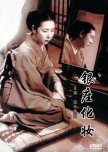
Ginza Cosmetics was a bittersweet slice of life about a middle-aged single mother who worked as a bar hostess. Tanaka Kinuyo imbued the working mom with a quiet resilience as she faced whatever challenges and opportunities came her way.Yukiko looks at the world through clear eyes. She works hard to maintain her dignity and reputation while also acknowledging that being a hostess can’t last forever. Yukiko works with women her age and ones much younger. She takes Kyoko under her wing and steers her away from the post-work behavior of some of the other hostesses. Her son, Haruo, is a free-range child, though Yukiko’s landlords and neighbors keep an eye on the boy. Problems arise at the bar-a customer doesn’t pay which comes out of the hostess’ pocket and the bar itself is in financial trouble. Yukiko makes an effort to resolve the problems though she doesn’t always meet with success. She’s offered the chance to have a patron and through an act of fate also meets an available man. For the first time in a long time, she’s able to have an intelligent conversation and feels the pull of possible affection. Perhaps even a way out of the life she’s living.
Yukiko was an interesting character. She was well educated and well mannered. No mention was made of how she ended up in the bar. While others said she should find employment elsewhere, the employment reality for women may have precluded such an opportunity, especially during and right after the war. In contrast to the younger women who wore western dresses and heels at the bar, Yukiko dressed in a traditional kimono. She bore no shame for Haruo who was born out of wedlock, instead knowing it was the man who abandoned her when she became pregnant who had earned that shame. No matter what others did, she refused to supplement her income in after hours trysts with customers. The clock of time was ticking louder and she heard it, knowing she wouldn’t be able to remain a hostess forever. For the moment, she focused on earning a living in order to raise her son. When negative situations occurred, she kept her head and worked around them. No histrionics, no blame game, she just dug down a little deeper and held on. Though she believed most men were animals, she still never became so jaded that she wouldn’t reach out to help those in need.
Ginza Cosmetics had a similar theme as Naruse Mikio’s When a Woman Ascends the Stairs (1960). The latter was a deeper exploration of an aging hostess while the former was lighter look at the same subject. Ginza Cosmetics dealt with a woman who could have been more than a hostess listening to men as they drank, but the war and a patriarchal society left her with few options and she did what she had to do to survive and provide for her son. Her future was unknown but Tanaka’s Yukiko left no doubt she was more than prepared to face it with grace and dignity.
17 May 2024
Was this review helpful to you?
"A man is not a human being without mercy"
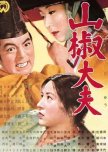
Sansho the Bailiff had little to do with the title character and everything to do with two noble children sold into slavery to him. A family torn apart never let the dream die of being reunited one day. They would all have to decide if they should continue doing the right thing when good things happened to bad people and bad things happened to good people.A governor who refuses to let the military conscript and further tax his people who have experienced famine for 13 years is stripped of his title and exiled. Before he leaves, he tells his son to remember that “A man is not a human being without mercy…Everyone is entitled to their happiness.” He gives Zushio the treasured family statuette of Kannon, the Goddess of Mercy to keep with him. His wife Tamaki and the two young children stay for a time with her brother and then determine to make the long trek in search of the father. Along the way they are betrayed in an area rife with bandits and slave dealers. Tamaki is sold into prostitution on a distant island and the children are sold into slavery to Sansho the Bailiff. Sansho is a cruel slave owner who keeps his slaves in a walled compound. Any attempt at escape results in a branding on the forehead. Sansho’s son, Taro, is kind to the children and tells them to endure until they are old enough to escape and make the difficult journey to their father. He then leaves the compound, never to return. As the children age, Anju adheres to her father’s words of wisdom while Zushio abandons them and in a twist of fate becomes the cruel "son" Taro could never be.
Calling out injustice was a familiar theme for Mizoguchi. In this film, the barbarism of forced labor camps was brought forth. More than once, the suffering of the common people was dismissed as unimportant by the affluent leaders. Much as his sister in real life had been, Tamaki was sold into prostitution. Despite the longing and despair of the characters, the scenery was amazing. Cinematographer Miyagawa Kazuo brought great beauty to the black and white film with stunning outdoor shots. Mizoguchi used water in several scenes—a lake and the ocean providing two of the more powerful moments in the film. Sansho’s slave encampment was claustrophobic and filthy, dark with hopelessness hanging over the weary people.
Sansho the Bailiff was based on a 1915 short story which was based on an old folk tale. What is curious about the title of the film was that Sansho was the villain and appeared far less than Zushio and Anju who were sold into slavery to him. Instead of Sansho’s story this was the boy Zushio’s as he grew into manhood. The mother and children were given different names along their journeys of suffering and as they sought to hold onto and rediscover their identities. Zushio’s growth and quest to reunite his family was the narrative backbone to the film. And if his growth was the backbone, Anju’s and Tamaki’s loving persistence was the life-giving blood of the film. Both women had deeply poignant scenes that will linger in my mind. Anju had a devastating scene that far from being melodramatic was like ripples through time that would affect other characters’ lives. And like those ripples the good done by the family members spread ever outward even when the family paid the cost. Sansho the Bailiff juxtaposed man’s cruelty and ability to be merciful, an ongoing battle even now as humankind decides who they want to be when they grow up.
15 April 2024
Was this review helpful to you?
"What comes after?"
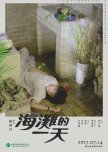
That Day on the Beach opens with two women connecting after thirteen years. This film is not about their friendship for the most part, it primarily focuses on Jia Li’s choices and desire for her elusive happiness. The story is decidedly not linear, more circular, as director Edward Yang examined dysfunctional families, work places, and marriages.Tan Wei Ching, a celebrated pianist, made her first trip home to Taiwan after 13 years. She received a message from an old classmate and at the last minute decided to meet her for coffee. The classmate, Jia Li, is the sister of the boy she loved long ago. When Jia Sen was forced to marry someone else, Wei Ching cut ties with Jia Li and took a scholarship to study abroad. After the loss of her friend, Jia Li began dating Cheng De Wei. She discovered her father made a marriage pact for her, too. Watching the silent, sullen dinners with Jia Sen and his new wife convinced her she did not want that fate. She packed up and left that night. She and De Wei married soon after. De Wei’s old friend was shoring up his position at the company he worked for by hiring old friends and recruited De Wei. Soon the young couple bore the strain of the long days and nights De Wei was required to work and party.
I began this film thinking it was about two friends reconnecting. Around the 20-minute mark of this 165 minute film, Tan Wei Ching was all but forgotten. She’s the friend that got roped into someone’s life story when she asked, “Are you married?” That Day on the Beach also tries to lure the viewer in with police searching a beach during the movie’s introduction, making it seem this element would be ultimately pertinent to the story. Everything was window dressing and red herrings until the story of the excruciatingly slow and painful dissolution of Jia Li’s marriage began. With all of the flashbacks and flashbacks within flashbacks, I’m not entirely sure how long the agony went on for her, somewhere around 7 years. Honestly, it seemed longer. During this time, it was a constant back and forth of two people unable to communicate or come up with a better plan who kept thinking if they both said, “You don’t understand me,” enough, it would make a difference.
Jia Li was looking for love and happiness, thinking that marriage would bring it. It was not what she expected. De Wei was working at a job that required him to drink and socialize which he hated. Jia Li was naïve and De Wei was cowardly and both were completely disillusioned with their marriage. Li’s brother was miserable. Her mother had come to terms with her own flawed husband. Tan Wei Ching still missed the boy she’d loved. Everyone was unhappy and unfulfilled except for possibly the two most cynical characters. A predatory businesswoman and De Wei’s playboy boss seemed to be doing fine using the people around them for financial gain and pleasure. “The world I grew up in taught me that it’s a world without love. Perhaps you will find a moment or two of passion, but that’s not much.” The big mystery, regardless of outcome, was the result of a man willing to chew off his own arm to escape, but not the courage to confront the problem.
That Day on the Beach was a creative approach at displaying the costs of complex relationships, traditions, and toxic work environments. I was grateful that Jia Sen gave Li a piece of advice that helped her finally, after 13 years and 160 minutes, have some substantial character growth. If you are a fan of Edward Yang and long family dramas that tend to be caught up in a cycle of pain and dysfunction, this is one to try.
9 April 2024
Was this review helpful to you?
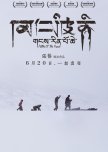
"What matters is your heart"
While Lao Tzu may have stated that the journey of a thousand miles/km begins with one step, he never imagined how the pilgrims in this film would experience that 1200 km journey. Prostrating themselves every 8 steps, the men, women, and child, traversed mountains in the bitter cold and blasting heat as they traveled for months to the holy mountain. Paths of the Soul was a deeply meditative experience in people acting out their faith in an arduous manner, never complaining and never faltering in their spiritual quest.In a remote Tibetan village five men and four women decide to make the physically demanding pilgrimage to the holy mountain at Lhasa. The idea came from an old man who had never left the village. His brother died before performing the pilgrimage and he is determined to go. A pregnant woman wants her baby to be blessed by being born on the pilgrimage. An alcoholic butcher desires to pay for his sins by going. Two brothers want to honor the two laborers who died while building their house. And a little girl who will have no one to provide for her at home joins the group. One volunteer drives the tractor that pulls their tents and supplies as a priest leads the way. The pilgrims wear heavy animal skin aprons to protect their bodies and clothes when they slide forward on the ground and wooden planks on their hands. They chant, clap, and prostrate themselves, forehead to ground, get up and do it all over again in 8 steps or so for approximately 1,574,400 steps.
The film was shot documentary style and felt very much like one. Instead of focusing on the different sojourners as individuals, they remained a coherent group for the most part. Tsring had the spotlight for a moment when she went into labor but it was shot somewhat dispassionately and she was soon back on the road with the others, her baby swaddled among the tents. Regardless of the challenges the villagers faced, they never whined and rarely complained. If someone was injured or had a baby they waited. Shoes wore out and were replaced by inexpensive ones. When the tractor had mechanical trouble, they dealt with it. The miracle was not completing the arduous journey, it was a dozen people staying focused on their prayers and goals and not dissolving into petty squabbles when they faced exhaustion and challenges. They truly displayed a holy persistence and willingness to overcome obstacles.
Hospitality and generosity flowed on the road both from locals and the devotees. When a farmer offered them shelter and food, they returned his kindness. A cup of tea gifted on the side of the road was enough to bolster bodies and spirits. When they ran out of money, they simply found whatever job was available without grumbling. Back home people cared for their homes, families, and herds for the months they were gone. Watching the villagers walk and prostrate themselves never became old. At times they appeared as only specks of dust on the horizon. The scenery and seasons changed as they traveled from snow covered mountains to verdant valleys, showcasing the beauty of Tibet with excellent cinematography work. There was no musical score except for the chants and singing of the fellowship. One evening they sang and danced on lush green grass next to a river, another time they sang as they pushed the broken carriage up the mountain. And every night in the tent they would talk, sometimes laughingly about the bumps on their foreheads, and finish the day with prayers. Then in the morning they would face the seemingly endless winding road before them and begin their chants and bows all over.
The pilgrims dealt with rockslides, water covered roads, mud, and extreme weather on their sacred journey as they prayed for the safety and happiness for all. They were a determined band of people who were a deeply committed community. More than that, they were family. While the journey of 1200 km was grueling physically and mentally the overwhelming feeling of watching these people was one of peace.
8 April 2024
Was this review helpful to you?
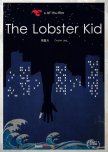
"They do nothing. Like you"
The Lobster Kid is a short film that punched above its weight. Short on time and budget, director Jsf Hsu made the most of each scene and supplied a lovely soft jazz score to fit the mood.A thirteen-year-old girl is trapped in a street gang. She uses lobster analogies when her mind needs to hide from the violence of her surroundings. She desires to escape far away to Taitung and be closer to the lobsters’ surf. Suffering from the punishment of trying to leave, she inadvertently winds up with a begging priest. As the priest has taken a vow of silence, she makes herself at home traveling the city with him, using him to sell her wares and make money for him, too.
The performances were natural with only the gang mistress sliding over the top. The rapport between the girl and monk flowed easily accompanied by a delicate humor. At one point she met up with a friend and played with the young woman’s small daughter. The monk saw that the con artist was little more than a child herself, generous and kind in spirit. The gentle jazz score never intruded but buoyed the action subtly.
My rating might be a tad high given the sometimes amateur performances. The ending won me over and warmed my heart, putting a smile on my face. Like the silent monk who could appear and disappear, I wanted to do whatever was necessary to make this homeless child happy.
7 April 2024
Was this review helpful to you?
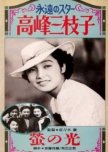
"We'll take a cup of kindness yet, for auld lang syne"
The title Hotaru no Hikari referred to the Japanese version of the song Auld Lang Syne. The film focused on two school girls in a tight group of friends just before and after graduation. Love, friendship, and broken hearts flowed freely as the young women tried to navigate their feelings and world outside.Sanae and Omie are close friends readying for graduation. Their lives have very different paths before them. Omie is a gifted pianist and going to Europe for further studies. Sanae is to be married to the bedridden son of the man who paid for her schooling and saved her father’s shop after an earthquake. Sanae is in love with Ariga, “The Prince”. When he asks her to marry him, she refuses without explaining. Distraught at a future without any brightness she goes to her friend Omie for help. Although Omie supports her, she excitedly mentions that Ariga is going to be accompanying her to Vienna. Broken at the news Sanae leaves but doesn’t return home. She makes her way to her “retired” teacher’s house where she helps with the farm work. Sanae may have stepped aside for her friend, but Ariga has other ideas. As the center of the friend group’s attention, Omie does not offer Sanae the same generosity in love.
This film took some effort to recognize the main characters. Initially, many of the students were introduced only to be sent to the sidelines. It did not help that Sanae and Omie/Ishii went by several names. The realities for women were stressed by parents and school authorities. Being a wife and mother was the only path to happiness for women. And women were to marry whoever their parents chose for them even if that person was an invalid. Director Sasaki dared to question some of those presumptions. Omie told Sanae, “Before being a daughter, we must think we are women first.” She also counseled her friend to not be afraid to leave her family and make a life for herself. Sanae boldly chose to do just that. The betrothed Sanae recognized her father’s actions for exactly what they were, “I was sold.”
Early in Japan's talkie era, HnH utilized sound with numerous sing-a-longs with the girls on their outings and in school. Omie demonstrated her ability on the piano several times as well. In the 1938 version of pop-ups, silent film intertitles and clips from Sanae’s diary often appeared to explain things to the audience. The diary pages revealed her innermost feelings and thoughts which I liked but some of the other written explanations would have been better acted out. The film was beautifully shot for the time with creative shots of scenery and buildings interspersed. Despite those appealing frames, time has not been kind to Sasaki's work with many scenes left quite blurry, often obscuring faces.
Also known as Auld Lang Syne or The Light of the Fireflies, Hotaru no Hikari was an interesting watch of young women breaking with tradition. My biggest complaint arose from the final act’s melodramatic noble idiocy. I had become invested in Sanae’s decisions and was quite aggrieved by the ending. This 1938 melodramatic story of friendship and love could have used a cup of kindness to ease the bitterness of the drink.
4/4/24
Was this review helpful to you?

Be careful what you wish for...
Fu Xiao Xiao makes a wish on her 15th birthday little knowing it would come true and how it would change her life forever. A.I. on the surface is a standard wish fulfillment story with the consequences that arise, but dig a little deeper and it might cause you to ask uncomfortable questions.Xiao Xiao lives with her divorced father who specializes in A.I. research. She leads a lonely life and is bullied at school. After her 15th birthday a new student arrives in her class and every day he follows her. At first she finds it annoying, but the desire for companionship drives her to accept the quietly adoring Su Xing Chen. By accident she discovers his secret and despite his difference accepts the boy who promises to be with her forever.
As I said, this is wish fulfillment-a boyfriend who will never betray her, never lie, never leave, never hurt her. As he slowly learns what it means to love, their relationship evolves, but never sexually. He also never ages which causes people to question their relationship. Eventually, Xiao Xiao wants more, wants to be normal, to be happy. She finds that normal and happy don’t always coincide, especially for a woman who has never had to learn to compromise and understand the work and wisdom a romantic relationship involves. *
The actors had a nice chemistry. What I enjoyed the most about this short film was the music. I don’t normally pay attention to the background tunes, but in this short film that almost played like a music video it was hard to ignore and easy on the ears.
If you can watch this bittersweet tale of love and acceptance on a superficial level, it is touching and sorrowful. If you choose to look deeper, you may discover questions that are troubling and go unanswered.
2 April 2024
*
*
*
*
*****************Spoilery Talk Below**************
Xiao Xiao’s emotional growth seemed stunted in regards to relationships. Her picker was definitely off as evidenced by the man she chose as a husband. With Xing Chen she could be selfish and only think of her own needs. She didn’t have to be kind because he was just a machine. And therein lies the problem I had with this short film. Xing Chen was a victim of his programming-to be with Xiao Xiao forever. He had no other purpose, no dreams, no desires of his own. Everything in his world revolved around her and her happiness, even as he began to evolve emotionally. The machine learned to love before she did and also learned a harsh lesson about heartbreak. Despite his growth, there was no freedom, no independence, which I found disturbing. This perfect boyfriend would never argue about taking out the trash or where to have dinner. Vacation in the mountains or at the beach? “Whatever you want dear.” Never even complain about being hidden away in a closet. This was tantamount to slavery more than love. Which also brings up the thorny question of the rights for sentient beings regardless of their form. I know, I know, I think too much. It’s a short film about how a human woman and an A.I. prototype develop a friendship and learn to love too late, and I should accept it at the surface value. Which I did, until I couldn’t.
Was this review helpful to you?
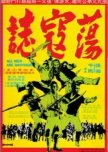
Along the lines of “I heard there was a secret chord that David played and it pleased the Lord,” David Chiang’s character plays a tune for the Emperor of Song. The emperor is so taken with his music that he declares he will pardon the Heroes of Liangshan if they can destroy the rebel Emperor Fang La. The heroes begin their quest with great success but also at a great cost. Finally, all that is left is to breach Fang’s fortress walls and bring him down. After a failed attempt, a Fellowship of the Sword is assembled with Yan Qing, Black Whirlwind, Tattooed Dragon, Fearless One, White Stripe, Sun Er Niang, and Zhang Qing. The seven heroes enter the fortress in order to spy on their enemy and determine how to help the Liangshan army get through the gates. Black Whirlwind, whose heart is bigger than his brain, starts a domino effect that results in tragedy.
As short as The Water Margin was on action and death, All Men Are Brothers was long. The film kept the swordplay coming though it began to follow a repetitive and predictable pattern. The same four fight choreographers worked on this film-Tang Chia, Lau Kar Leung, Lau Kar Wing, and Chan Chuen. The fights were much better in this film, at least most of them. David Chiang’s wrestling moves still made very little sense to me. Chen Kuan Tai’s fight used a variety of weapons and moves and as usual, he knew how to sell them. Bolo made an appearance as an evil general decked out in a leopard caveman shirt. Poor Black Whirlwind learned the lesson, “never play another man’s game” too late during their fight. There was also a fight in deep water with swimmers against warriors with spears in boats that appeared inherently dangerous for those involved.
Fan Mei Sheng dominated every scene he was in with his enthusiasm. He all but said, “Hulk smash!” as he gleefully swung his axes in battle. Chen Kuan Tai was able to join the fun in this film after being sidelined in the last, just like Danny Lee. Ti Lung still had very little to do until the end and was still in that awful wig. Though they kept trying to focus on David Chiang’s character, I found his performance uninteresting. The last two of the seven were bland and barely registered though I was happy a woman made the team. Ku Feng once again played Welcome Rain, a leader who felt the loss of each warrior serving under him.
The sets were enormous for the keep, though not as intricately designed as The Water Margin’s sets, it was above and beyond normal SB fare. Shaw Tower, the famous pagoda, made a cameo appearance in this film for an early battle. Once again, the cast of extras was quite numerous. Thankfully, the awful contemporary music from the first film was replaced with a more organic sound. The ‘chicka-chicka-chow’ Shaft effect was still used around David Chiang’s character though.
All Men Are Brothers lacked the subtlety of its predecessor with bodies covered in #2 red finger paint and dropping like flies. Perhaps it was more realistic to paint the cost of war in blood. Or it could have just been Chang Cheh being Chang Cheh. As always, I grade these older niche films on a curve.
28 March 2024
Was this review helpful to you?
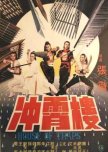
"Fame and fortune bring disasters to many"
House of Traps was a Chang Cheh movie featuring most of the Venoms though my favorite, Lo Meng, was missing. Phillip Kwok, Sun Chien, Chiang Sheng, and Lu Feng were all featured in this convoluted tale of rebellion and double crosses. And of course there was a secret list with rebel names on it!The film opened with the lineage of the current emperor and a tale of how the first one was murdered as well as his son.
Prince Zhao Jue is the son of the prince who was killed and is planning a rebellion. Normally, he might have the moral high ground but in the House of Traps, he’s the villain. A villain with a house of traps where he stores treasures stolen from the Imperial Palace and hides the secret rebel list. Scholar Yan Chun Min is chosen from the imperial side to investigate the prince and stop his rebellion. He’s aided by two unorthodox swordsmen. Not everyone will make it out of the House of Traps alive.
This story was hard to feel invested in as the motivations weren’t particularly clear. For a movie with four of the Venoms, it was also short on action. The fights were faster than kung fu posing but not lightning quick either. Phillip Kwok (Lizard Venom) choreographed numerous movies, including this one. His moves were lively and nimble though he wore what looked like a roadkill scarf on his head with matching boot cuffs-a major fashion “don’t”. Ricky Cheng and Chiang Sheng (Venom apprentice) provided levity as kung fu masters disguised as magician street performers. Lu Feng (Centipede Venom), as he often did, played the bare-chested baddie with killer moves. Sun Chien (Scorpion Venom) played against type as a scholar with no martial arts skills. The house of traps provided several lethal traps that permanently prevented some of the characters from leaving. What it didn’t provide were any female characters, another one of those strange worlds where only men inhabit.
House of Traps would have benefited from a better story, like telling us why we should root against the prince whose birthright was stolen instead of for the usurpers. At best it was an average early kung fu flick. I enjoyed seeing the majority of Venoms together for one of their last collaborations, but didn’t particularly care who walked off into the sunset.
19 March 2024
Was this review helpful to you?


