

 135
135 431
431 16
16 2
2 6
6 3
3 8
8 10
10 3
3 13
13 1
1 1
1 1
1 1
1 2
2 6
6 8
8 5
5 9
9


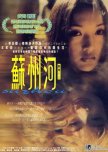
"There's a century worth of stories here and rubbish which makes it the filthiest river"
Suzhou River was a breakout role for Zhou Xun. She won the Paris Film Fest and Chinese Film Media awards for Best Actress. For her co-star Jia Hong Sheng it was a comeback film after a long battle with drug addiction and mental illness. I had mixed reactions to the blurring of reality and fantasy in this story set along the Suzhou River.A narrator voices his story of struggling to find work as a videographer in the rundown area around the Suzhou River. One night in a seamy bar he’s asked to video the mermaid swimming on display. The mermaid, Mei Mei, and the narrator begin a relationship marred by her moments of sadness and random disappearances. She mentions the tragic love story of Mardar and Mu Dan and would he search for her forever as Mardar did for the missing Mu Dan. Thus begins the story of the doomed lovers.
I enjoyed the first half of the film more than the second half. In the first half it was distracting that the narrator continually inserted into the story comments that it was only a story and he was making it up as he went along. It was very hard for me to connect with characters when I was narratively jostled about. But at least the lovers’ story held some interest as two disaffected people finding a connection. The second half when the narrator became so enamored with his creations that he inserted himself into the story dragged it down for me, especially the enigmatic ending. By that point I didn’t care about any of them and their heartbreak and sense of loss became meaningless.
Zhou Xun did a splendid job playing two different characters. My biggest problem was that Mu Dan was supposed to be a teenager which made her relationship with Mardar on the icky side as Jia had a hardened adult face and Mardar had an adult criminal job. The narrator knew nothing about his girlfriend, Mei Mei, which meant the audience didn’t either. We never see the narrator. He and his camera are the observers. Scenes through the camera’s POV were very shaky, a style that makes me rather nauseated.
Aside from the shaky camera issues, the color scheme was often gray and even blurred as if watching through too much smog. Or like an old scratchy film never lovingly restored. The music at least effectively matched the scenes and emotions.
As I watched this film repeatedly being pulled out of the characters’ world by the narrator, I couldn’t help but wonder if the story would have felt more cohesive and compelling if the director had told the story straight instead of bouncing around in time and between reality and fantasy. It was hard to care about people who were constantly described through the lens of urban legend and then blended with a lonely storyteller’s life.
20 July 2025
Was this review helpful to you?
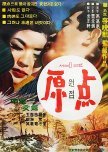
"I've lived my entire life looking up"
The Starting Point is a Korean snowy crime drama directed by Lee Man Hee. Crime, murder, prostitution, and dancing by a campfire, this film covered all the noir bases. Lol. If you watch any Korean dramas or films you know better than to be suckered into those happy moments for too long.Seok Gu (though never actually called by name in the film) breaks into a building to steal files from a safe. Hunted by a determined security man, the two fight to the death with Seok losing the briefcase of files. Boss Choi is none too happy and feels that somehow Seok is a threat to the gang’s Seven Year Secret. Choi sends Seok off to Mt Sorak with a prostitute named Seon (whose name is never mentioned in the film) to act as newlyweds. The newlyweds are in a group with other singles and couples, one of whom is a shady gynecologist who treats prostitutes and recognizes Seon.
We never know why Seok thinks he’s been sent to the mountain. Seon was supposed to be sexually available to Seok, but was their a more sinister order at play? We also never learn what the Seven Year Secret plan is. An assassin was sent to the mountain to partake in the fireside festivities as well. And later more bad guys showed up. It seemed like there could have been a much simpler, less convoluted plan to kill Seok. Watching the characters climb, scramble, and fall off the mountain did make use of the gorgeous scenery even if it was shot in black and white. The middle section of the film gave the two main characters a chance to fall in love as they participated in the lodge activities and for some humor to be injected, but as a whole it left that section flabby compared to the thrilling opening and ending segments.
The opening espionage scene was exciting and disconcertingly quiet. Ten minutes passed before a brief word was spoken. The final act with chases up and down the snowy mountain had to have been rigorous and exhausting for the actors. Shin Sung Il and Moon Hee had strong chemistry as two withdrawn people who trusted no one and with good reason. They were also stunningly beautiful to gaze upon. Seon talked Seok into making the difficult climb to the mountaintop. Her whole life she had been looked down upon, just once she wanted to be able to look down instead of up.
Despite concerns I had with the script, The Starting Point was entertaining and only a couple of steps from being very good. If nothing else it was quite aesthetically pleasing and benefited from being restored in 2023. Seon wanted someone to see her and get to know her, “He didn’t hate me,” was as close as she got to true love. In a life filled with pain and shame, maybe it was enough.
7 June 2025
Note: YouTube issues all sorts of warnings about age appropriateness and not for all audiences. There was no nudity. No sexual scenes. No gratuitous violence or gore. There was a notice about the birth control pill being available. People did seem to be concerned about a population boom, but other than that, I’m not sure what the warning was for. The women all clutched their pearls upon finding out Seon was a prostitute, so maybe whoever posted the film was concerned about a prostitute being a main character. I honestly I have no idea what the problem was.
Was this review helpful to you?
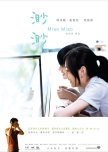
"Fish get depressed if you put them in square tanks"
Miao Miao is a 2008 Taiwanese coming of age film about two school girls who experienced both the rush of joy and the pain of first love. Not nearly as deep or devastating as it could have been Miao Miao splashed along the surface of life and relationships.Ai ignores her father and the breakfast he cooked for her like she does every morning. Once again late for school, she brings a cake she made to share with her friends. Her love for baking hasn’t transformed her very limited skills and her friends don’t exactly dig into her creation. A new foreign exchange student catches Ai’s eye. Miao Miao is studying in Taiwan for the year before returning to Japan. The two hit it off, their bond deepened by Miao Miao’s advanced baking techniques. The two girls visit the site of the bakery where Miao Miao’s grandmother met her first love, only now it’s a used CD store owned by a moody musician. Chen Fei religiously wears headphones and ignores people as much as he can. Miao Miao falls head over heels for the reclusive musician who scarcely acknowledges her existence. He is nursing his grief and broken heart over the loss of his love. Ai is discovering her own burgeoning feelings for Miao Miao. The three young people attempt to navigate the precarious path to and from love.
This film had potential as the girls’ friendship developed and then had the obstacle of Miao Miao’s crush. Not all people know how to maintain and nurture a friendship when one person’s attention becomes focused on a love interest. The stress on the friendship was increased as Ai wasn’t just jealous of the time Miao Miao spent attempting to catch Chen Fei’s attention but jealous that her friend was romantically interested in the brooding store owner. Sandrine Penna and Ko Chia Yen gave their best given the limitations of the script. The source of Chen Fei’s angst was shown in flashback with a strong performance by Chris Wu Kang Ren as the lover. Fan Chih Wei’s performance was not nearly as inspired.
The course of first love is rarely smooth or a straight line. Sometimes even admitting to feelings that might be rejected not only by another but also society can make the journey downright rocky. Though dealing with heartache and unrequited love, Miao Miao didn’t stumble by becoming melodramatic. It would have been nice if it had taken a more scenic route off of the well-trod path it insisted on keeping to. Neither groundbreaking nor overly deep, Miao Miao showed that the best remedy for a broken heart was friendship, even when that relationship caused the pain in the first place.
24 May 2025
Trigger warning: If real life scumbags are a deterrent for you, I discovered after watching this film that Fan Chih Wei has not been good to women, including assault.
Was this review helpful to you?
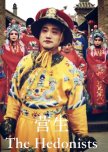
"Socialism is not about you making money while you sleep"
The Hedonists is a short film by Jia Zhang Ke following a group of three miners after their mine is closed. The little guys once again take it on the chin when forces bigger than themselves are at work.San Ming, Liang Zi, and Wen Qian begin their day like any other at the mine. Unfortunately, for them and everyone else at the mine they are told it is their last day. It’s become cheaper to import coal than to produce it at home. Their boss tells them there are lot of opportunities out there, “Go fight for yourself!” Problem is, the same economic forces causing the mine to close are also depressing the job markets elsewhere. The three middle-aged men with limited education and skills begin their job search. No job is off the table for these three, including bodyguard work for a big boss or acting at a new Shangxi Folkland as a royal court.
While the subject matter was dreary, Jia kept the mood light. Unemployment in mid-life is never something to look forward to, especially when the people involved are barely making it as it is. These three were willing to try anything except farming. Wen Qian’s “mental boxing” skills and a wrestling tryout set to the Blue Danube waltz were funny. Liang Zi’s smiling Qing emperor and San Ming’s smoking Ming guard showed the men may not have taken their jobs and lives too seriously.
Jia had been known to run afoul of the censors with his critiques, he even mentioned a historian who’d had his own run ins. This film managed to be critical and hopeful at the same time. The tone of the film suggested that these three lovely losers all stacked on the same motorcycle would find a way to survive and have a good time while they were at it.
23 May 2025
Was this review helpful to you?
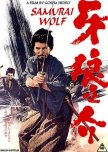
"Go the other way"
Samurai Wolf was directed by Gosha Hideo and starred Natsuyagi Isao in his first major film role as the titular character. Reminiscent of Kurosawa’s Yojimbo, a down on his luck ronin stumbles into a town populated by people willing to do anything to reach their nefarious goals.While paying off his dinner by doing manual labor for the owner, from a distance Kiba the Furious Wolf sees two escorts killed by three bandits. He brings the bodies to a small dusty village looking for the law and finding none. The employees at the relay post immediately recognize their deceased co-workers. Nizaemon, the official messenger for the shogunate is a corrupt official who wants to force Chise, the blind owner of the relay post, to have to close down so that he can take over. Kiba takes an immediate liking to Chise and agrees to help her men transport the next big shipment. Nizaemon sends his men to kill Kiba, but the inconspicuous ronin proves to be “the devil.” The evil messenger calls in a ringer by the name of Sanai Akizuki, the only man who can kill Kiba. Other than the deadly Sanai, Kiba had his hands full with the deceptive and greedy residents as they double and triple crossed each other to steal a shipment of gold.
Gosha used a similar Spaghetti Western setup and music, the town even had a tower much like in Yojimbo. He also judiciously used sound. Several fight scenes began silently to increase the suspense and then implemented sound and music to drive the action on.
Gosha kept the action coming in this tight film clocking in around 75 minutes. Kiba was a poor, but clever ronin who was highly skilled with a sword and a pair of scissors. Much like Yojimbo he knew how to play people off of each other and had a good heart. Despite the short run time, most of the main characters were fairly well fleshed out. Nearly everyone in town wanted Kiba or Sanai dead or both, making it difficult for the accomplished swordsmen to have their epic battle. Unusual for a film from this era there was a fair amount of spurting and spraying blood.
I found Natsuyagi Isao utterly charming as the down on his luck, but never down on himself ronin. It’s hard to believe this was his first role. Handsome, flirty, and fierce, he made this film entertaining, even when the story hit a few rough spots near the end. The body count was high yet the film didn’t take itself too seriously and injected moments of levity. If you like old samurai films, Samurai Wolf is one to try.
16 May 2025
Trigger warning: Spurting blood. There was also a monkey that hopefully was not injured or killed during the making of this film.
Was this review helpful to you?
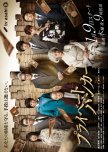
"Break away from the norm and carve your own path"
Private Banker was a cute drama about a super hero banker who always had an umbrella on hand, not in a Kingsman way, but he was effective enough without drawing blood. Anno was less concerned with the law than he was in creating leverage and connections as he protected his clients' assets.Tenguuji Takehiro who is president of his family company that sells hamburgs, hires private banker Anno Koichi to help him protect his assets. Anno’s motto is, “I’ll take care of everything.” First on his list is helping Lida Kumiko, owner of a dango shop, who unwisely borrowed money to invest and is now in deep debt. She will come to apprentice with Anno alongside Anno’s right-hand man, Mikoshiba. The Tenguuji family is a hotbed of rivalry, pride, entitlement, and very few positive attributes. Estranged wife Mikoto runs the company with a ruthless hand while Takehiro recuperates from an unspecified illness and old age. Anno, Lida, and Mikoshiba will have to deal with hostile takeovers, coups, loan defaults, and a host of other problems while trying to save the family from the worst of its impulses.
Anno was a male version of Mary Poppins who worked with adults instead of children. He didn’t have a magic bag, but he did have a rolodex of wealthy and connected individuals to assist him when necessary. Mikoshiba helped research the clients and their adversaries as well as do undercover work. Lida was impulsive, made bad decisions, often didn’t listen to the advice of people who knew more than her, and was relentlessly clumsy. One of the dumbest decisions made, but certainly not THE dumbest, was when she was sent undercover into an art gallery. This type of character is one of my least favorite, the enthusiastic, bumbling female with a heart of gold, whose ineptitude is overlooked in favor of her personality.
The Tenguuji family was a bundle of dysfunction. It was fun watching how high mama Tenguuji could tease and spray her hair. Haven’t seen big hair like that since the 1980s. Anno had his own distinctive do and was not afraid of opening his umbrella indoors, considered bad luck in my neck of the woods.
Though Anno handled everything that came his way with aplomb, it was disappointing that the moral was saving his clients’ assets and not justice. Attempted murder, embezzlement, tax fraud and evasion, forged documents, illegal business practices, scams perpetrated by banks and businesses, nothing was ever brought to the attention of the law. Watching Anno do his money magic for a rich, entitled family began to wear thin. I was ready for handcuff accessories. While there were consequences for some characters, others walked away unscathed.
Private Banker had an entertaining surface level appeal and gave an insight into Japanese inheritance laws, adoption customs for the wealthy, as well as banking and investing practices. There were legal schemes and those that came with the disclaimer of “don’t try this at home” or maybe Anno was just talking about opening an umbrella in the house.
6 May 2025
Was this review helpful to you?
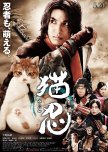
"People can change"
As a fan of 2013’s Neko Zamurai (Samurai Cat), I was curious as to what the ninjas had to offer in the way of feline entertainment. Madarame and his beautiful white kitty had nothing to fear from this movie. If I had rated it as a Saturday morning kids’ television program, it would be around a 7/10.Kagerota’s fearsome ninja father left him in a puff of smoke when the boy was only 10 years old. The child was convinced his father had turned into a ginger colored cat with a red nose just like his dad’s. Fifteen years later, Kagerota comes across what he believes is the same cat, and this time will not be parted from his father. The clan doesn’t allow cats so he leaves which is a ninja no-no. An inept group of ninja hunters led by Blue Eyes stays hot on his tail. At a small guesthouse, Momiji, one of the women who works there, ingratiates herself to Kagerota. What Kagerota may or may not know is that Momiji works for the ninja clans.
Ohno Takuro was easy on the eyes as the ninja on the loose with a ginger tabby under his arm. If you are a feline fan there were two beautiful cats, the aforementioned and a playful calico. Much like a Saturday morning show or an After School Special, there was plenty of cheesy humor and the requisite moral lessons to be learned. Loyalty, friendship, and the right to be who you choose to be messages were all wrapped up in a cuddly, furry package. Also, some fathers are better fathers as a cat.
“Cats pick who they like and live as they like.” True.
2 May 2025
Was this review helpful to you?
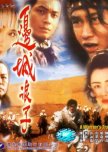
"Hate only brings people pain and disaster"
A Warrior’s Tragedy aka The Invincible Power of Kindness starring Ti Lung and Frankie Chan was a remake of Shaw Brothers’ Pursuit of Vengeance (also starring Ti) and was based on a novel by Gu Long. Frankie wrote, directed, produced and starred in this film. Originally, it was supposed to be two films at a total of 170ish minutes and then was edited into one. There are a variety of lengths out there. This review is based on the 110 minutes format.Several swordsmen are invited to Ma Hung Kwan’s Pegasus fortress. Among those invited are Fa Hung Suet and Yip Hoi. Fa walks with a pronounced limp and is a revenge fueled swordsman, trained by his mother to take down the people who killed their family. Yip is happy go lucky, more of a kung fu artist than swordsman. The glass half empty and glass half full men will find themselves in a “where the heck did the glass go?” confrontation.
This film had numerous characters with some popping up out of nowhere and others who disappeared without a simple good-bye. A few of the character connections were never explained. Editing two films down into one played havoc with the narrative. I have no idea why certain characters did what they did. Everyone seemed to have it in for either Ma or Fu. Or were hiring Hoi to kill either Ma or Fu. Ti and Frankie's characters were supposed to be the same age, but Ti was nearly 10 years Frankie’s senior. The two characters were also supposed to be in their mid to late 20’s. Ti was pushing 50 when this film was made! Frankie seemed to be having a good time playing the frisky and positive Hoi. Ti honestly looked tired or maybe he was just confused by the convoluted story.
Fung Hak On was the martial arts director and also played the legless character armed with a deadly whip. The wire work and synchronized moves he designed were wild. There was no shortage of wacky kung fu weapons---expanding and exploding dresses, golden hands, an invisibility cloak, hand held explosive launchers, and pink chariots! The movie was filmed somewhere in northern China which meant new scenery for the fights to take place in instead of the old reliable Hong Kong and Taiwanese sites.
For the main part, Fu and Hoi’s stories were simple, the extraneous characters who sliced their way in and then tumbled silently down story holes made the film confusing. The emphasis on letting go of vengeance because it begets another cycle vengeance was a pleasant surprise. Only for fans of the genre and probably more specifically fans of the actors involved with it. Rated on a curve as always for old kung fu flicks.
“Hate only brings people pain and disaster. Only love is everlasting…Learning to love is more important than learning how to kill.” Well said Hoi, well said.
25 April 2025
Trigger warnings: Multiple dismemberments
Was this review helpful to you?
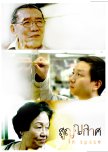
Life is but a dream sweetheart
In Space was a short film written and directed by Visra Vichit-Vadakan. Pai lives with his grandparents. His grandmother wants him to become a Buddhist monk, but Pai isn’t sure what he wants to do with his life. When tragedy strikes, Pai takes up the cloth and beads at least for a time while he tries to meet up with his loved one in space, the in-between space between dreams and reality, a meditation of connection.This was a beautiful love letter to grandparents who cherish and raise their grandchildren when called upon. And also the connection between loving spouses. I’m hoping I interpreted the film in the way Visra intended, otherwise, the ending would have been a bit disturbing.
8 April 2025
Was this review helpful to you?
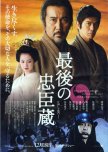
"Be happy"
The Last Ronin was inspired by the story of the 47 Ronin, featuring the 47th ronin, Terasaka Kiechimon and the loyal retainer Seno Magozaemon. The story picked up 16 years after the 47 ronin avenged their lord and subsequently committed seppuku. Both men had carried out orders from the 47’s leader, Oishi, which caused many to think of them as deserters and cowards. This samurai film had almost no fights, but rather delved into the emotional makeup of what it meant to be one of the surviving ronin and their ideals of duty and honor.Terasaka visits an old woman, the last on his list of Asano retainers, to tell her the story of the 47 and to give her monetary assistance. As a messenger, Terasaka had seen most of the battle and had been tasked with sharing the story and rendering any help he could give to the now scattered Asano clan. As the 17th year ceremony commemorating the loyal samurai approaches, Terasaka heads to Kyoto to wait. Along the way he catches a glimpse of his dearest friend, Magoza, who was thought to be a deserter. What Terasaka and the rest of the world don’t know is that Magozaemon changed his name and appearance and has been raising Oishi’s surviving child, Kane. The 16-year-old girl has caught the attention of a wealthy merchant’s son meaning her days as Magoza’s ward may soon be coming to an end.
This film was on the long side for a slice of life samurai film. Thanks to Yakusho Koji’s stellar performance as Magozaemon, it didn’t feel too long. The story was a feel good ending for the survivors and retainers of the doomed house. But keep in mind, a samurai happy ending may not be the same as a viewer’s happy ending.
While the story was solid, if predictable, the primary reward for sitting through this film was watching Yakusho at his best. He put on a master class of how to convey a wealth of human emotions without overacting and without words. There were times his facial expressions broke me. I rarely cry watching movies, but tears welled up halfway through this film and continued for twenty minutes afterwards. Yakusho reached into my heart and expertly persuaded me to care about Magoza. Miyauchi Hitomi’s gentle manner conveyed how attached Kane was to the old servant. “Will I love anything as much again?” The rest of the actors were all top tier as well, though poor Sato Koichi was stuck with a truly awful and distracting wig.
If you are looking for a samurai film filled with sword fights, this isn’t it. Most of the film revolved around Magoza and the girl he’d tenderly raised for 16 years. Letting go is never easy, for the “parent” or the child. His mission had been to see that Kane was happy and well taken care of and in that, he completed the assignment beyond what any parent could have hoped. I can’t say that I agree with or fully understand the unwavering loyalty to a lord, even beyond death, but if there ever was an excellent example of the samurai spirit, Seno Magozaemon was it.
“Footsteps that vanish one by one
A dream within a dream, alas”
16 April 2025
Was this review helpful to you?
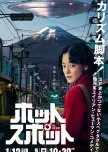
"I'm not sci-fi, I'm non-fiction!"
Who knew the base of Mount Fuji was a Hot Spot for alien and paranormal activity? In a seemingly quiet town, four middle-aged school friends had their boring lives given a tiny shot of excitement when they made the acquaintance of an unassuming alien working at the local hotel.Kiyomi works at the Lake Hotel and one night discovers there’s more to her co-worker than meets the eye. Unable to keep a secret she fills her friends in on Takahashi’s alter ego. Before long the 54-year-old alien is being asked to do trivial and even illegal tasks for the women. Somehow, he always manages to thwart crimes and do good regardless of the random requests. When the hotel and the town itself are in danger, it will take not only Takahashi, but nearly a village of women to right the wrongs being committed.
I enjoyed the laid-back alien tale with some of the other interesting reveals. Takahashi showed that aliens could be heroic and kind, stubborn, grumpy, and prideful---just like humans. While I liked the small town vibes and inane excitement related to specimen cups and volleyballs, there were times the women’s behavior troubled me. Kiyomi catered to an older guest at the hotel hoping to be put into his will. She also promised to keep Takahashi’s secret but took every opportunity to share it. She was unwilling to switch shifts with him so that he could rejuvenate after doing a good deed because it would have mildly inconvenienced her. The women could be terribly self-absorbed when Takahashi shared his hidden pain or when he risked being exposed or arrested for them. On the positive side, the women eased the alien’s loneliness even if he had to call them on their rude behavior at times.
The drama had an episodic feel to it as each episode had a problem to be solved with the overarching theme of the importance of the hotel and friendship regardless of family heredity. The humor was gentle and subtle. As they grew more accustomed to each other, the women became less oblivious and more in tuned to not only Takahashi but the world around them. They also discovered that their small town might be home to more than one unusual resident.
9 April 2025
Was this review helpful to you?
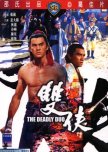
Honey, these guys don't use doors!
The Deadly Duo featured the successful trifecta of director Chang Cheh and actors Ti Lung and David Chiang. This time around the deadly duo’s mission was to rescue the hostage Song Prince. The cast of characters was bulging at the seams. The Shaw Brothers tower and bridge even had supporting roles!Song rebels discover a dilapidated bridge leading to the tower where their prince is being held hostage by the Jin conquerors. Vastly outnumbered the rebels are finally able to find a fighter who has the best chance of leading them across it. The duo may be deadly but their opponents are as well. It will take sacrifice and fast swords for them to succeed.
This was around the 8th film that Ti Lung and David Chiang made together. Ti was the loyal rebel who recruited the featherweight fighter David Chiang to join his dwindling band. While I’m not a huge fan of Chiang, Ti spent the last third of the film shirtless, making up for my disappointment. Tang Chia has never been my favorite martial arts director but this time he was joined by Lau Kar Leung, a choreographer whose work I do enjoy. Most of the fights involved swords and the usual bizarre weaponry like a sword with projectile exploding balls or lethal giant golden cymbals. Villains hid underground and in trees. Bolo as the River Dragon, had a crew that could hold their breath for a very long time and leap out of the water. He was nearly always a baddie but I like the big guy. Chen Sing played the invading emperor with no kung fu skills which was a bit of a shock. Ku Feng was a dastardly leader who enjoyed the execution field and sported comically villainous eyebrows. With Chang Cheh at the helm there would be no women in the cast, most certainly buckets of blood, and bodies stacked high.
The plot supposedly based on a real life rescue was as simple as they come yet the movie held my attention. Because it was a Shaw Brothers film there was the money for fake forests and to burn sets. Most of the characters didn’t use doors, instead crashing through them or the walls. Although they still saved money with bit actor Tung Choi Bo who played an assassin who was killed and five minutes later the head of the guard with a whole new wig and wardrobe! There was nearly constant action which meant you didn’t have a chance to become acquainted with many of the characters as the body count was high. Ti and Chiang would go on to make over 20 movies together, so far, they’ve all been watchable but I have a long way to go. As always, I grade on a curve for these niche movies, and could only recommend for fans of the genre.
17 March 2025
Was this review helpful to you?
"Power is terrifying"
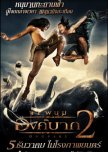
Tony Jaa directed the production plagued Ong Bak 2 as well as starred in and choreographed the fights. The plot was the standard Hong Kong kung fu plot only with more knees, elbows…and elephants. Ong Bak 2 & 3 were not related to Ong Bak the original except as loose prequels set in the 15th century.Tien’s noble family and retainers are all murdered by the treacherous Lord Rajasena. Though he is saved by a loyal bodyguard, he ends up in the hands of slave dealers. Luck cast a glance his way and he was saved by Chernang, the Outlaw King of Garuda Wing Cliff. Tien learns different styles of fighting and uses of weaponry as he grows up, eventually becoming the second most powerful man in the clan. When he decides he is ready to avenge his family, before he could say “My name is Tien, you killed my father, prepare to die,” Tien hit the road to eliminate Rajasena.
This is one of my favorite Tony Jaa films. The revenge story was a standard which actually served the film well. It was a tried-and-true structure to showcase numerous fights and the requisite training montage. Those fights were insanely well-choreographed with Tony showing off different styles, high flying gymnastics, and a proficiency with weapons. With most strikes going after knees, elbows, and necks, his opponents did not last long. Until he was vastly outnumbered that is.
Tony used Thailand’s stunning scenery as a backdrop for human beings’ ugliness and cruelty. The acting was better than in most of his movies which might be one of the reasons I liked this film more. The biggest complaint I have was the overuse of long flashbacks which tended to halt the pacing.
Tony Jaa in action is a pleasure to watch. What his body can do is astonishing. I always feel like I gush too much over his martial arts and stunts abilities, but they were amazing. And in this film the story didn’t get in the way of his high flying. The ending was abrupt and a cliffhanger, here’s hoping Ong Bak 3 capitalizes on this film.
13 March 2025
Spoiler: 3 failed miserably unfortunately
Was this review helpful to you?
"Being warriors...what a misfortune"
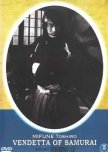
Vendetta of a Samurai was written by Kurosawa Akira and directed by Mori Kazuo. It starred many of Kurosawa’s usuals-Mifune Toshiro, Shimura Takashi, and Kato Daisuke. Kurosawa wrote his take on the Igagoe vendetta of 1634. Far from glamorizing violence and the samurai code, it called into question the necessity of the vendetta.The film opens with the usual legend of the vendetta with Araki Mataemon cutting down 36 samurai at the famous clash. The narrator then informs the audience that the number of killed was certainly inflated and gives a tour of the then present day in Ueno. The story restarts a few hours before the battle with numerous flashbacks from the characters waiting for their target to arrive. Young Watanabe Kazuma is duty bound to kill the samurai who murdered his brother. Matagoro has fled and is being protected by a powerful vassal. Kazuma’s brother-in-law, a famous swordsman joins the vendetta to help him out. Araki Mataemon understands the ways of the samurai and knows all too well he will have to fight his best friend who is charged with protecting the murderer. Kazuma, Araki, and two retainers wait in a teahouse having to confront their own fears and mortality before facing their sworn enemy.
“They haven’t killed you, but you look dead already.”
Kurosawa was no stranger to criticizing the samurai system. In Vendetta, I could almost hear the characters saying, “Is all this really necessary?” Mifune and Shimura were brilliant as the two friends who due to loyalties and tradition realized they would have to draw swords against each other. A scene as they politely talked and shared a cup of sake was heartbreaking. “This may be the last time we enjoy sake together.” As Araki and his crew waited in the tea house to ambush Jinza and Matagoro, panic nearly drove three of the men to their knees. When the opposing side rode into town and were confronted by them, terror filled their eyes, too. Most of these men had never drawn swords in battle before and being faced by people they had no real argument with for the most part nearly paralyzed them. The final battle was not fiercely and eloquently fought, it was purposefully awkward as the combatants processed the high stakes involved.
“Waiting is hard, isn’t it?”
The first half of the film was slow. During flashbacks, characters rattled off names and places not necessary for the crux of the story. An elderly man’s song in a flashback seemed interminable. Much of the story was told as characters reminisced while waiting. What the movie got right were the scenes between Mifune and Shimura. Also, once the opposing sides closed in on each other, the tension was excruciating. Araki’s men fought their own fear, shaking and sweating. Araki dealt with his feelings for his friend that he would have to kill in order to fulfill his duty. Mifune and Shimura were excellent, the story and side characters were good, but not great. As long as you don’t expect an action-packed samurai flick, and are willing to be patient with the back-and-forth nature of the storytelling, Vendetta of a Samurai had moments to be enjoyed.
5 March 2025
Was this review helpful to you?
"I am damn satisfied to be killed this way!"
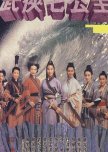
Holy Weapon boasted an amazing cast-Michelle Yeoh, Maggie Cheung, Ng Man Tat, Simon Yam, and Sangra Ng to name just a few. If you love Hong Kong martial arts comedy you will most likely enjoy this film more than I did. Very little made sense and often bordered on the bizarre-walking flowers, a green-haired vampire, and a woman who could turn into a spider were just the tip of the proverbial iceberg. I don’t mind martial arts madness, but the rape, poop, and penis jokes wore thin quickly for me.The Japanese Super Sword has come to China to take over the martial world. After cutting down thousands of men, Mo Kake aka Heaven Sword, juiced up on the “greatest drugs,” is able to temporarily defeat Super Sword. SS vows to return in three years. The drugs cause Mo’s personality to change and he goes on a killing spree seeing Super Sword everywhere. Not everyone was disappointed to be killed, "I am damn satisfied to be killed this way!" By the time the Ghost Doctor (“late again!”) arrives, Mo collapses after having driven his fiancée away. Ching Sze changes her appearance and name and becomes the Heartless Man Killer. In order to kill Super Sword when he returns, the good guys will need a secret book and seven female virgins in order to become their own super weapon. Fortunately, there are plenty of oddball and horny maidens to fill just that order.
Michelle Yeoh played the grownup in the room, Ching Sze aka To Col. She was, of course, wonderful as always, even with this material. Maggie Cheung played a dippy Princess protected by Sandra Ng as her bodyguard. Carol Cheng and Damian Lau were betrothed as children but he wanted out badly enough to kill her. He fell in love with the princess and her guard fell in love with him and then the guard later fell for his fiancé, Doll. Along the way, the characters met Sharla Cheung’s Spider, who ended up falling in love with To Col. Ng Man Tat played the Ghost Doctor with Einstein hair. Simon Yam was the deadly enemy who could turn into a sword who also needed to sleep with virgins to maintain his youthful skin care routine. Everyone was looking for love and not terribly hung up on gender (which I liked) or often consent (which I didn’t).
There were numerous rape jokes and attempts which I found horribly offensive. Poop jokes and penis jokes dropped every few minutes. The film was badly faded which made reading the white subtitles difficult at times. There were also frames where the subtitles were cut off at the bottom of the screen.
At first, I was thrilled to see so many accomplished actresses in this film, however, the material did not do them justice and wasted their talents for the most part. Holy Weapon had a few entertaining scenes, but I only finished it for Michelle Yeoh. Comedy is in the eye of the beholder so I wouldn’t want to discourage anyone who is a fan of the actors or genre from watching this film, it just wasn’t my jam.
2 March 2025
Trigger warnings: Snakes, horse parts flying, penis/poop/rape jokes, and several attempted rapes and an accomplished rape
Was this review helpful to you?


