

 135
135 431
431 16
16 2
2 6
6 3
3 8
8 10
10 3
3 13
13 1
1 1
1 1
1 1
1 2
2 6
6 8
8 5
5 9
9


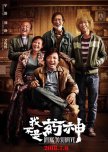
"Life is money"
Dying to Survive seemed like a film written for me. Small time heroes clandestinely go up against a large pharmaceutical company bleeding terminal patients dry and by extension, the government. Goodness knows I’m nearly always up for a story socking it to the greedy companies who only care about the people who can pay for their products. But somehow, I never quite connected to the characters in this film, try as I might.People suffering from Chronic Myelogenous Leukemia (CML) are suffering and dying because the treatment is cost prohibitive. The international pharmaceutical company jealously guards its medications and profit margins. When a patient, Lu Shou Yi, approaches a small-time erotic supplement shop owner about smuggling a generic version of the cancer drug pirated in India, his and other patients’ fortunes change…for a while. Cheng Yong’s dad is ill and needs a surgery, but Cheng is broke. He takes Lu up on his offer and begins smuggling the drug in. The problems begin to mount along with his profits. The police and a counterfeit drug con artist both are on his tail.
I think part of the problem I had with this film was that Cheng Yong wasn’t very likeable. His recently ex-wife was not unaccustomed to being hit by him. He was brash and often self-centered. That he worried about getting caught by the police didn’t bother me. I can’t imagine anyone not being deterred by the thought of spending up to a lifetime in jail, something his customers didn’t have to worry about. Their concern was dying without the life-giving medication. When Cheng had his 180-degree personal transformation, it was dizzying. I could have also used more character development for the leukemia patients I was supposed to care about.
Xu Zheng gave a solid performance as the morally conflicted Cheng Yong. I might have had problems with how he went from a selfish capitalist to completely selfless savior, but Cheng sold it as best he could. If you are a Zhou Yi Wei fan, you might be disappointed as he doesn’t have much screen time as the detective in charge of hunting down the source of the “counterfeit” drugs. Cao Bin had no problem going after the actual drug scammers but began to feel his conscience prick him when he discovered the drugs Cheng’s customers were using were legit, just not on the national drug list. And at a fraction of the cost. Even people not suffering from poverty can be financially devastated when having to pay exorbitant prices for medications.
Large corporations and insurance companies should not have the power of life and death, so I was pleased that Cheng Yong and his crew bucked the system instigating changes to the health care system in China. I couldn’t read the explanatory credits at the end of the film, but I’m sure it said that policies were enacted to make cancer drugs much more affordable and available or I doubt this film would have been made. But I will always celebrate any win that bloodies the nose of those who prey upon the sick and the weak.
30 January 2026
Was this review helpful to you?
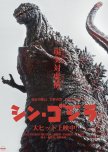
"What's the real threat to us, man or Gojira?"
I had watched Shin Godzilla five ago and was underwhelmed. I’ve wanted to rewatch it in order to write a review and see if my opinion would change but the film has been unavailable for years. HBO Max recently added it to their content. I donned one of my Godzilla T-shirts in order to set the mood for a rewatch. SG still had the elements I didn’t care for on my initial viewing but I did bump my score up this time around.When a giant googly-eyed creature arises from the harbor and inexplicably crawls out onto land, Japan’s government has to act quickly in order to deal with the destructive beast. Best SpongeBob voice~~Two days later~~ Bureaucrats argue over who needs to take responsibility and who has the proper rank to make decisions and can be listened to. The Prime Minister refuses to use military force if even one civilian will be harmed. Um, dude, did you not notice the giant mutating monster crushing buildings, cars, and mass transit systems with hundreds, possibly thousands of people in them? A rogue government official puts together a team to find alternate ways to deal with Gojira, but the wheels of government move s-l-o-w-l-y.
The first time I watched this film I was bored out of my mind. It was described as a political thriller. Suffice it to say I found the endless meetings of stuffed shirts sitting at long tables with microphones less than scintillating. Same feeling this time around. Every time the rigid hierarchy blathered on and on and on and on I completely lost interest. I get that it was supposed to be a scathing commentary on the slow-moving ineffectual decision making processes of the government but it felt like watching it in real time. Yaguchi’s team which included Takahashi Issei was much more entertaining.
The PM’s decision-making process was mind boggling. "Evacuate the people!” “Where?” “Come again?” Later, evacuation was bad. “We can’t evacuate the people because it will cause them to be fearful.” You mean, a giant monster that has destroyed most of Tokyo didn’t instill any fear or panic in the people? Nearly two hours of bureaucrats fearful of making the wrong decisions and hurting their reputations dragged interminably. Even the international “intrigue” was bland.
What did work? While I was no fan of the initial googly-eyed bleeding carpet that crawled on shore, the rapid evolution of Godzilla was interesting. When he reached his “final” powerful form he was a destroyer to behold. Whenever the film shifted focus to Big G my score went up and then came crashing down as the government officials went back to their meetings. “We would have to convene a meeting to stop having meetings!”
The pointed commentary on the weaknesses of the government and international issues would have worked better for me if they’d tightened the story, reduced the length of the long ineffectual meetings (we get it, these guys are bad at making decisions!), focused on Yaguchi’s team and of course the star of the show. When the spotlight was on Gojira he was a terrifying sight even if the government was too busy deciding what to order for lunch to notice.
9 December 2025
Pet peeves: The one team wore their respirators wrong, unless they wanted the gaping spaces which defeated the purpose of wearing them. The bombers were B-2s, not B-1s. When on a limited evacuation schedule, instead of using helicopters to evacuate handfuls of people at a time, bring in the C-5s that could evacuate the city quickly. Eventually, as film producers and drama/tv show producers realize there is an international audience, perhaps they will work harder to find people who can believably speak what is supposed to be their native language.
Spoilerish comments: The final scene was a little on the nose regarding Japan always having to live in the shadow of its past and the atomic age. While the image was imposing, the climax was decidedly anti-climactic.
Was this review helpful to you?
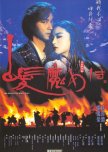
Think twice before breaking your promise
1993’s The Bride with White Hair is a classic Hong Kong kung fu movie I’ve wanted to see for some time now. It finally became available on a site I use. I wasted no time making the popcorn and sitting down to watch this star-crossed love story encased in a bonkers package. Director Ronny Yu spared no weirdness in the making of this film.Cho Yi Hang is an orphan brought up in the 8th Clan, groomed to be his master’s heir. As he grows it becomes clear to everyone but his master that Cho’s heart is too gentle to take on a job where “Conscience is a hindrance.” When Cho was a child, a “wolf girl” saved his life, a deed he never forgot. Lien was also an orphan but raised by a psychotic conjoined sister and brother who lead the dark magic Supreme Clan. They trained her to be obedient and a ruthless killer. Both clans hate each other and have terrible plans to eliminate their enemy. As fate would have it during a battle, Lien spares Cho’s life and Cho in return saves her. Love blossoms and trust is promised, but those promises can be hard to keep with so much hatred surrounding them.
This film started out gradually with the development of Cho and Lien. It was hard to tell who the good guys were as betrayals and cruelty were practiced on nearly all sides. The twins were clearly overly the line, but the government and clans had blood on their hands, too. Once it got cranking, the action, romance, and violence never slowed. The lovers were the focus of the film as they danced around each other, fell in love, and ultimately succumbed to betrayal. Leslie Cheung and Brigitte Lin were gorgeous and completely believable as two lonely people having found their soul mate. Despite their suffering they could almost taste the happiness and freedom within their grasp. Unlike the more believable lovers, the twins often went OTT in every scene they were in.
I would put the violence and gore in this film more in the campy than gruesome category. Bodies were cleaved in half and heads were removed but in that early 1990s unrealistic style. There was other violence that was more realistic and two brief sexual assaults. One scene with the White Witch was so pinball crazy as to be funny. I did not care for the martial arts choreography and filming. Everything was either undercranked or sloooowed down with jerky, blurred filming techniques. Kudos to the stuntmen who sold the overly stylized action.
The Bride with White Hair is dated in both storytelling and appearance, but for fans of these old films it’s worth seeking out for Leslie Cheung and Brigitte Lin. I’ve seen Brigitte in several films but never has she looked more beautiful or fierce than she did here. In comparing films from this time frame, Bride was above average. Filmed too late to be rated on my kung fu curve, I still gave it a little extra love for Brig.
6 November 2025
Trigger warnings: Cleaving, beheadings, dismemberment, blood spewing. Sexual assault. Nudity. Sexual content. Snake.
Was this review helpful to you?
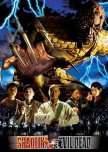
This hopper tripped
I am both a fan of Gordon Liu and Jiangshi/hopping vampires so this seemed like a film created just for me. Sadly, Shaolin vs the Evil Dead which appeared to be an homage to the golden era of kung fu movies was not even as good as movies made 20 years prior.Master Pak and his two sidekicks Sun and Fire are herding corpses (jiangshi/hopping vampires) to their hometowns to be properly buried. Along the way they run into a haunted inn and his old clan brother, Hak the Black Wizard. The two are at odds because Black tortures the dearly departed and destroys them while Pak works to help them find their way to a better place. Black and his minion, the comely Moon scam villagers using his abilities. Little Fire creates problems for Pak when he eats an enchanted egg and has a spirit growing inside him. One of Black's scams goes horribly wrong. It’s all fun and games until someone lets a malevolent vampire loose.
Gordon has this Shaolin, competent, reserved character down. He might have been pushing 50 but he still had some moves. Unfortunately, the fight choreography wasn’t great and there was an over use of wires and poor CGI. Louis Fan was okay as the scamming brother. Jacky Woo, not to be confused with the excellent martial artist Jing Wu who also went by Jacky Wu, played the largely incompetent disciple. Shannon Yiu King had some spark as Black’s sidekick Moon.
This film obviously had a higher budget than old Mr. Vampire flicks but came across looking cheaper with worse editing. To say the story was uneven would be like calling the Tilt O’ Whirl at the amusement park a calm and steady ride. What drove my score down dramatically was the ending because before that I would have graded it higher for nostalgia's sake.
SPOILER ALERT BUT IMPORTANT TO KNOW BEFORE DECIDING TO VIEW There wasn't a proper ending. It ended mid-fight with a creature and another character in jeopardy. Oh, but Butterfly, don't worry there is a sequel. Don’t hold your breath on that one, as the sequel goes in a completely different direction, never addressing the events of this film. A hopping vampire unable to stick the landing? Unacceptable. Check the triggers below if you have any. Not filmed before 1990 so no curve for this kung fu horror comedy.
5 November 2025
Trigger warnings: A very long, gross scene with maggots. *shudder*. There were zombie-like creatures with rotting skin. Lots of rats. A child’s bare buttocks.
Was this review helpful to you?

Alien spaceships destroy a space station orbiting the Earth and then move on to creating havoc on terrestrial targets. RIP Venice. A covert alien base is discovered on the moon. Fortunately, the clever Earthlings have created a heat ray that can combat the invading force. Katsumiya, his girl Etsuko, and Professor Adachi lead one SPIP spaceship headed to stop the invaders. An international force commanded by Dr. Richardson mans the second spaceship. Unbeknownst to either crew, navigator Iwomura’s brain has been commandeered by the Natals. With their mind control, lasers, and anti-gravity machines, is there any way the people of Earth will survive?
The first hump in watching this movie is the “science”. The Natals froze objects in order to release them from gravity. Mmm…kay. The astronauts were constantly checking the barometric pressure in their moon vehicles. Uh, what? Three different times, a crew member was warned about there being no gravity on the ship and little on the moon when they floated about while everyone else’s feet were on the ground. Were they able to will themselves to not float?
I’m a Godzilla and Mothra girl so I just roll with the miniatures. Tsuburaya did an excellent job with the Earth cities, alien ships (the smaller ones looked like Manta Rays), and especially the moon’s surface. I did giggle at the moon vehicles because they strongly resembled the Oscar Mayer Weinermobiles from my country. In all, the special effects and miniatures and sets were better than average for the time. The acting was pretty good though Etsuko was not the brightest bulb.
This was supposed to be a follow-up to The Mysterians (1957). Apparently, the only thing from the original script that survived were the characters having some of the same names as the predecessor. Mount Fuji survived this flick, but other cities were not so lucky. An alien kaiju or giant robot would have been nice to have, but that’s nitpicking. Overall, the film was quite watchable largely due to Tsuburaya’s efforts. If you like Honda’s early films in this genre, Battle from Outer Space is one to try.
27 October 2025
Was this review helpful to you?
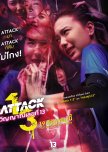
Jin transfers to a new school where a queen bee rules the other girls with an iron fist or more aptly a volleyball spike to the head. Jin has her own dark secrets and doesn’t take anything off of Bussaba. The volleyball captain extorts money and water boards anyone she is displeased with. Jin refuses to be bullied and the two girls clash often until one morning Bussaba is found hanging from the basketball goal. Things begin going wrong at the funeral and escalate minute by minute placing team members and Bussaba’s boyfriend in grave danger. A shaman tells them they have three days to break the spell or everyone will die.
This felt like a low budget horror flick that featured numerous gruesome deaths. The ghost wasn’t super scary because you could tell it was a makeup job. As there were several teens involved, there was almost no character development for any of them which in turn didn’t trigger any emotional loss when people were killed. In the same way movie teens go into the spooky house or cemetery, these teens did similar stupid things. Not that it mattered, this ghost was practically omnipresent. There were scenes that were funnier than scary because they were so absurd.
What I learned:
1) When a malevolent ghost is out for blood, do not hire a bargain basement shaman. Ask for references and do a background check.
2) If offered legit talismans for protection against malevolent ghosts---take them
3) Girls need to be taught it is okay to say no and to obey their gut instinct.
4) Being able to count to 3 is important
5) It’s also okay to call in the authorities instead of cleaning up one’s own mess.
6) While not being too nosy, it might prove useful to know if any of your friends have any kinky proclivities
If you are looking for a spooky Halloween flick, Attack 13 might be one to try. It may have appeared low budget, but there were still enough deaths and creepy crawlies if you are wanting a few jump scares. And a few laughs.
21 October 2025
Triggers: Gruesome deaths-impalements of various body parts, including the head and eye. Creepy multi-legged insects and snakes. Decapitation. Lots of spurty CGI blood and the KY Jelly colored gooey kind. A bare bottom scene. Discussions of abortion, sexual abuse, and physical abuse. Numerous scenes displaying a “suicide”.
Was this review helpful to you?
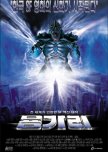
"Heed my warning or we're all doomed!"
South Korea brought back their 1967 kaiju in Yonggary 1998. This time Yonggary is a fossil discovered by an unscrupulous professor. His mentor tries to warn him and the government that a global disaster is at hand. Per usual, the dire warnings go unheeded until an alien spaceship arrives and reanimates Yonggary!Professor Campbell discovers a fossilized dinosaur fifty times bigger than a T-Rex. As it is excavated crew members beginning dying horrific deaths. His assistant, Helen, quits over the cover-ups. She is approached my Professor Hughes, Campbell’s ex-mentor. Hughes tells Helen that with Yongarry being disturbed, aliens will soon arrive and bring Yonggary back to life. She is skeptical, but almost immediately his prophecies come true. The government calls them in to help find a way to defeat not only the massive kaiju but the aliens in orbit controlling him.
The first thing that has to be said is that this may have been a Korean production, but there weren’t any Korean actors in it. The cast was predominantly white. I had to stop the film and make sure I was watching the correct movie.
This film was made for 7 million USD/10 billion won and I have no idea where the money went. The CGI was laughably bad. It truly would have been better if they had guys in rubber suits stomping through town. The acting wasn’t much better and the dialogue was awful. There were lines lifted from other films such as Independence Day. I laughed all the way through it, especially every time Capt. Cue Card had trouble reading his lines! I took off a ½ point for one guy calling Godzilla a p*ssy. Seriously, we do not denigrate Big G. The military war room was hysterically funny. There were tall living room lamps for lighting and posters on the wall, even a stuffed animal displayed. One general smoked a cigar through all the hand-wringing and planning causing everyone else to have to hotbox his stinky smoke. Definitely, not a designated smoking area.
Despite the extremely low quality, Yonggary aka Reptilian had one thing going for it—there was a lot of kaiju action. It might not have been good CGI but planes, helicopters, and people in jet packs battled Yonggary and later another kaiju, Cycor, appeared to throw down as well. I laughed in all the wrong places which was its own kind of entertainment. Even for fans of kaiju flicks, this one might be a giant footprint too far. Best to watch the original from 1967 rather than this terrible effort.
17 October 2025
Was this review helpful to you?
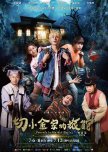
Hsiao Chin/Xiao Gin/Xiao Jin is on his third high school in five years. His parents died when he was nine and he’s lived with an aunt and uncle on and off since. At his new school he inadvertently saves two boys from being bullied and they latch on to him for dear life. When he’s called home due to his grandfather being ill, Little Princess and Lu Qun follow him to his family’s hotel. Unlike the website’s pictures of a luxurious spa, the hotel is run down and his grandparents nickel and dime guests at every turn. The trio end up bonding as they encounter spooky apparitions. In the face of their fears, Hsiao Chin will have to decide whether he is going to continue in the family business or not.
I am a fraidy cat when it comes to spooky stories and this was about as tame as a “ghost” story can get. The main thrust of this film was Hsiao Chin’s healing and coming to terms with his parents’ deaths and also developing friendships with an unusual duo. I found some scenes humorous, but admit this film wasn’t exactly my cup of silly tea. Everyone’s sense of humor is different and I’m quite sure others will find it more to their liking. My biggest complaint was that not much happened for the first 40 minutes of the film and the direction of the film was highly foreshadowed. The friendships were cute if overly stereotyped and everyone was able to grow and have problems resolved in a playful manner. Not likely a film for horror fans, but perhaps more for comedy friendship fans.
13 October 2025
Was this review helpful to you?
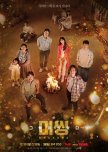
"There are no coincidences in this world"
Missing: The Other Side S2 picked up two years after the last story ended. Kim Wook and Jang Pan Seok can once again see the dearly departed as well as one of the villages where those whose bodies have never been found are trapped. Enemies from the past re-emerge as well as new nefarious opponents.Lee Jong A busts Wook and Jang’s chops over not being able pay their rent. Hero work, it turns out, doesn’t pay very well. Just as the ex-ghost busters decide to attain traditional paying jobs, Wook saves a woman from a scammer with the help of a wandering ghost. Despite not being able to see the old village, with Oh Il Yong’s guidance, they discover a new village filled with children and a few adults. Captain Kang, who has been there for 30 years is the de facto director. Various mysteries are in need of solving. Jang discovers he has a connection to the village. Wook is faced with a blast from the past that shows up on his doorstep. Il Yong has ties to a vicious criminal syndicate and can travel in between worlds and villages unlike the rest of the undead inhabitants. After their first trip to the Industrial Complex Three, Wook and Jang needed no coaxing to aid the village children so that they could move on. They’ll have the assistance of Jong A and trusty Detective Shin to hunt down the lost bodies and people responsible for the disappearances.
S2 had a nice mix of heartbreaking and heartwarming stories. The resolutions usually came easily with the characters even commenting how quickly the Scooby Gang found the missing bodies. This was mostly comfort food that held no surprises. Even the more sinister criminal characters and actions weren't scary. There were elements that dragged on too long for me. Jang’s obsession with staying in the village due to his daughter’s connection to it began to wear thin as well as the focus on entertaining the children. I found it baffling and sad that children who had been living in the village for years were never able to mature mentally though if they were stuck in their small bodies forever it made some sense. Lee Jung Eun as Capt. Kang truly made the village compelling through the force of her screen presence.
Go Soo and Huh Joon Ho still had chemistry but it was Wook’s bickering bromance with Il Yong that stole the show. I have to say I enjoyed Go’s Farrah Fawcett 1970s hairdo. He started out dressing like a surfer dude and transitioned to more stylish clothes after the halfway mark. For a guy who couldn’t pay his rent he had an extensive selection of expensive jackets. Il Yong’s look also transformed substantially as revelations were made about his character.
Missing: The Other Side S2 may not have had any jump scares and could strain its own world building at times, but I enjoyed the camaraderie between the characters. At its heart it was grand wish fulfillment that those denied justice would finally have it. The drama ended leaving room for a third season. I have to admit, I’ll be back for another round of mystery solving with a side dish of emotional healing for the living and the dead.
4 October 2025
Was this review helpful to you?
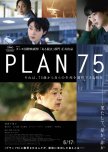
"We're all alone in life"
Plan 75 took a calculated approach to culling the herd so to speak. As Japan faced a shrinking younger population and growing older population, Plan 75 was implemented. Anyone 75 or older could chose to be euthanized and receive $1000 and funeral expenses. But is it really voluntary if the poor elderly are financially ostracized leaving them with few choices?Michi is 78-years-old and working as a cleaning maid with other elderly women. She has no family and her apartment is scheduled to be demolished. When she loses her job, she is left with few options. No one will hire her, no one will rent an apartment to her without a substantial deposit, and the welfare office is “closed.” Michi meets with Plan 75 agent Hiromu and signs up. Hiromu’s estranged uncle also signs up causing him to look into the program more closely.
My first thought was that this felt like a re-working of Kinoshita’s The Ballad of Narayama (1958). In TBoN when a person reached 70 in an impoverished village a family member carried them up the mountain where they were left to die of starvation and exposure. The opening sequence of Plan 75 featured a mass killing of people in an assisted living facility reminiscent of a real-life mass murder in Japan in 2016. The film killing and other hate crimes against older folks spurred the creation of Plan 75.
The first thing that hits you is that all of these people were near the poverty line if not below it. They either had no family or their families had largely abandoned them. None of the people who agreed to be euthanized as good citizens were wealthy. Shocking, I know. It’s briefly implied that businesses were profiting off the human loss of life driving the application age downward. However, there was no real discussion of the glaring pitfalls of such a program and the de-humanization of the elderly. Who has the right to decide if a life is of value and when that life should end? Were the wealthy and powerful held to such a standard? Who will be called on next to make sacrifices? Homeless people or the poor? The handicapped, the sick, the infertile? The LGBTQ+ community? People who aren’t living up to society’s expectations? And when does it stop being encouraged and start being enforced? The lack of a deep dive into the potential for corruption was disappointing.
Plan 75 showed the sad truth that many elderly live alone and on limited funds. When they die, they often die alone. In this film, Hiromu discovered that his uncle had helped build Japan’s transportation infrastructure. Michi had worked her whole life---Basho Chieko gave a quietly inspired performance in this role. Now they were considered a drain on society. Instead of cherishing them, providing for them, and recognizing the value of their lives and contributions they had become disposable. When one group of people is dehumanized, it’s not long before another one will be. Only the poor and powerless were called upon to make the ultimate sacrifice. Characters came to realize that life is precious and death should be handled with dignity. Not everyone is ready to leave this mortal coil at 75, there might be one more glorious sunset to bathe in.
“In the shade of the old apple tree,
Tomorrow let’s meet once again
When the red setting sun sinks in the west.”
18 September 2025
Was this review helpful to you?
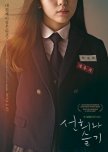
"I see me in them"
What happens when a high school girl tries desperately to fit in with the cool girls and everything goes awry? Second Life gives Seon Hee a second chance, but will she learn to accept herself and take responsibility for her actions?Seon Hee’s parents are either arguing or so involved in their own lives that she is merely a second thought. Shy, and lacking confidence she looks on with envy when Jeong Mi’s friends celebrate her birthday at school. Seon Hee goes to great lengths to find a way into their group. Her constant lying to fit in is obvious to the girls who decide to reject her. When Seon Hee takes revenge, tragedy strikes. She runs away and starts a second life in a rural village orphanage. Life seems to be taking a turn for the better, if only her past could stay hidden.
The beautiful scenery, cinematography, and score were all well done. The acting, however, was very hit and miss. I thought the story’s concept was interesting yet it ultimately left me unfulfilled. High school is a tough place for shy students, especially ones desperate for attention and acceptance. One lie can lead to another, until those lies are inevitably revealed. Even worse are the lies we tell ourselves. Actions born out of revenge can also have unexpected consequences. Seon Hee found that there are people who will accept you for yourself. But growing up and learning to take responsibility for your actions isn’t easy and doesn’t happen overnight…or maybe ever.
11 September 2025
Was this review helpful to you?
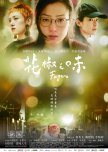
"We're all waiting for that someone to forgive us"
Heiward Mak directed Fagara, a story about three half-sisters who meet at their father’s funeral. The three women have different mothers from Hong Kong, Taiwan, and China. Having dealt with a largely absentee father, the three have wounds to heal as they get to know each other.In Hong Kong, Acacia receives a call saying that her estranged father is in the hospital. He dies before she arrives. When she charges his phone, she discovers a secret, actually two, she has a sister in Taiwan and one in China. She invites both of them to the funeral where they awkwardly meet. Branch is a professional pool player while Cherry is a wannabe influencer in China. Acacia has to decide what to do with her father’s hot pot restaurant as there is another year on the lease. She discovers that her father did most of the work and is exhausted attempting to keep it open. The staff call in her sisters to help. The three grow closer as they search for the hot pot broth’s secret recipe, which might turn out to be a bit of a family scrapbook.
I enjoyed the sisters learning about each other and supporting each other. They all shared unfulfilling relationships with their parents, especially their dad. Through taking over the hot pot restaurant they worked through their feelings about him and others in their lives. I liked that none of the three relied on men to tell them what to do or to support them. They were independent, making choices that best served them in their lives. And they made a loving sisterly family where none had existed before. All three actresses created three very different characters that felt real---Sammi Cheng as the sullen, hurt Hong Kong daughter, Megan Lai as the pool player with a secret love life, and Li Xiao Feng as the effervescent influencer who adored her grandmother. It was fun to see Wu Yan Shu (Meet Yourself) play Cherry’s feisty grandmother. Liu Shui Chi looked like she could have been Branch’s mother in real life. The women's stories and relationships were heartfelt without plunging headfirst into melodrama.
What didn’t work for me---The dad was portrayed as a great guy, misunderstood, but always willing to give people a chance and helpful advice. He was still a man who created three children with three different women and wasn’t a real father to any of them. He withheld the words and time his daughters needed. Acacia and Branch felt rejected and tended to emotionally isolate themselves. Cherry quipped she had never been anyone’s choice. Her mother had moved with her to Canada, calling her a niece and not a daughter. Eventually, she ended up with her grandmother in China. All three dealt with resentments and feelings of rejection that were too often smoothed over or seen as overreaction. The film kept circling around trying to make the dad out to not have been a deadbeat and worthy of great respect, but I never made it to that point. That all three needed to come to terms with him and make peace with a flawed parent was understandable. Painting him to be better than he was caused me to drop my score. While I’m ranting, Andy Lau’s character mansplaining men to Acacia was grating. No Andy, “want to be with you” and “can be with you” don’t mean the same thing. Get a dictionary and a clue.
Aside from the writers trying to make the father out to be better than he was and expecting the women to accept the crumbs he gave them as better than they were, I really enjoyed this film about sisters coming together and healing through love and food. And I loved that Acacia not only learned how to drive, but learned when to drive away and when to drive toward something she wanted.
9 September 2025
I used the names given in the movie version I watched: Acacia Ha=Hsia Ru Shu; Branch/Blanche Ha=Hsia Ru Zhi; Cherry Ha=Hsia Ru Guo
Was this review helpful to you?
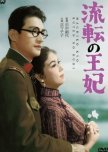
The army decides that Ryuko (Saga) is to be married to Pujie, the younger brother of Puyi, the last emperor of China and the current puppet ruler of Manchukuo. Pujie is a lieutenant in the Japanese army. Ryuko and Pujie make a surprisingly good fit and are happy together in their small house in Manchukuo even with Pujie's spendthrift ways. Despite the Kwangtung Army’s disrespect of them, the two refuse to let anything get them down. They have a daughter, Eisei, whom Pujie dotes on. But this is war and war is hell. When the Japanese are defeated, Puyi abdicates, and soon the extended royal family is on the run from the Chinese and the Soviets.
I had three complaints about this film. Perhaps because Saga and other people involved in the story were still alive, Tanaka showed too much deference. They didn't say what the empress' illness was until late in the film when they finally revealed she was dealing with opium withdrawal. In the prison Ryuko had an almost obsessive need to protect her when her daughter was completely dependent on her. Saga had also written in her book that she felt Puyi's cruel behavior had contributed to the opium use so she had been well aware of it. The death the film began with was whitewashed*, which was egregious as apparently it was a rather well-known scandal at the time. A few abuses committed by the Japanese military were listed which wasn’t the same thing as showing, a far more powerful technique.
In real life, there was no one to root for in this story. Puyi enjoyed torturing his servants and could be sadistic to his wives, which wasn't shown in this film. The Manchurians were literally being used as slave labor, something Puyi supported. The Kwangtung Army ruled everyone with a vicious hand. In the film, that same military was considered a monolith, much like Star Trek’s Borg. Orders weren’t given by any individual, “the army said,” was all the reason given throughout the film. "The army said" Ryuko would marry Pujie, "the army said" the Manchurians would receive no coal during the winter, etc. Ryuko and Pujie may have fallen in love, but it doesn't negate the fact the only reason they were there was because Japan occupied Manchukuo. Ryuko might be given a bit of a pass as she and her family had been encouraged to agree to the marriage by "the army."
This leads to my third complaint which is more artistic in nature. Many of the more poignant moments took place off screen. The Manchurians' suffering was mentioned and yet was all but invisible, heartbreaking final goodbyes and tearful reunions weren’t shown yet there was time for at least three long scenes of people singing. Ryuko was shown to be almost saintly in all of her interactions. It felt like there were missed opportunities for real human moments instead of ones that felt distanced by telling us what happened and sanitizing the story.
What did work? Kyo Machiko gave a strong performance as Ryuko showing how she sought to fit in with her new country and husband. After a life of being pampered, she was faced with hardship and death she'd never known. I also liked that this telling of the story was from a woman’s point of view, instead of the deposed emperor's. The cinematography was stunning and highlighted the hardships of the refugees as they traversed difficult mountainous terrain. It was nice for a change that a royal arranged marriage worked out, both Ryuko and Pujie were quite enamored with each other. Even after both having spent time in prison they longed to reunite. The OST fit the film like a musical glove. And finally, the few action scenes were well choreographed and filmed for the time. Despite not diving too deeply into the Kwangtung Army’s faults, Tanaka never really let them off the hook either.
The Wandering Princess wandered too much and Ryuko was too optimistic and unable to accept the cruelty all around her. It was interesting to see this story play out through this woman’s idealistic, if not realistic eyes, eyes that hoped to see Japanese and Chinese children playing together in Manchukuo. What she didn’t grasp about the Manchukuo she and Pujie dreamed about was that people are more willing to work toward harmonious relationships if no one brings an army and forces their way in and enslaves much of the indigenous population.
1 September 2025
Real life spoilers:
Not long after this movie came out, Pujie was released from prison and Saga Hiro was allowed to go to him in Beijing.
*Film Eisei was a composite of Pujie and Saga's two daughters. Eisei was 19 and in love with a young man that her mother did not approve of. The two were found dead together, a murder-suicide/lovers’ suicide. Eisei didn’t commit suicide due to the pressure of being a Qing heir as alluded to in the film. She also didn’t have to make the arduous trip and spend time in prison like her mother and younger sister. She had moved to Japan earlier to study and was not caught up in the expulsion and termination of the Japanese after the end of WWII.
Was this review helpful to you?
"Dignity is important, but winning is way more important"
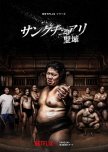
If you are squeamish around a lot of bare skin, best to skip Sanctuary. This sumo drama abounded in nearly nekkid men as the sport requires. Big, bountiful butt cheeks and bellies everywhere. I knew very little about the sport so was interested in peering into their world. My review will show I still know next to nothing but it is up a step up from nothing.Oze Kiyoshi had a troubled family life after his father lost their sushi restaurant. His mother ran off with other men and racked up enormous debt. His father who had physical limitations (maybe from a stroke?) was relegated to working on a road crew as the flag man. The Ensho stable master, Ensho Oyakata, recruits Oze after he quits judo telling Oze he can make a lot of money in sumo. Oze refuses to learn the sumo way, preferring his own bag of mostly useless tricks, he is pounded repeatedly in every practice. His unconventional approach to sumo will be sorely tested when he goes head-to-head with Shizuuchi, a mountain of a man with a more painful background than his own. In a similar vein, reporter Kunishima Asuka has been demoted from the news desk and reassigned to covering sumo. Sullen and sulky, disrespectful of sumo, she is a petulant thorn in her boss’ side. Can the two people on either side of the ring come to appreciate and respect the ancient sport?
The most difficult aspect of this drama for me was Oze. He was thoroughly unlikable. Rude, cocky, and violent, disrespectful to everyone, and on top of that, he often behaved stupidly. It helps to pick an unlikable trait-unrelentingly rude or stupid, Oze managed to be both. I was not rooting for him, in fact, was hoping someone would knock his block off. Boy, did I get my wish. Oze was not alone--devious stable heads, other wrestlers, parents (dear goodness his mother was cartoonishly awful)—all behaved badly. The hazing could be violent and there was also college frat boy childish hazing behavior that I didn’t find funny. Kunishima’s growth could at least be seen episode by episode, Oze became embarrassingly worse with each episode until his world view was shattered and he was forced to make a life decision the audience had been waiting six-and-a-half episodes for.
Sanctuary did give insights into the secretive sport with brutal hazing and masculine spaces that had invisible yet strongly enforced “no girls allowed” signs. Any criticisms were quickly swept under the rug, even Kunishima abandoned them as she became enamored with the sport and Enno. Side stories and characters were unceremoniously shoved under the same rug. The last couple of episodes were more entertaining and what I wouldn’t pay to see a gaggle of nearly nekkid sumos running through the streets Rocky style. However, the journey to redemption was just so slow and awful, perhaps more realistic, but not much fun to watch. The ending was also a bitter letdown after a huge emotional buildup. While I enjoyed learning more about the ancient sport with its intricate traditions, Oze/Enno was an irritating guide for much of the drama. I’m still glad I watched it for sumo educational purposes, but the drama itself was a challenge to wade through.
30 August 2025 7.25 could go either way on a coin flip, 7.0 or 7.5
Trigger warnings: bare derrieres, sexual content, lots of boob grabbing, numerous vomiting scenes, a suicide, and a very violent bloody scene.
SPOILER TRIGGER: Ended on a Cliffhanger with lots of dangling stories.
Was this review helpful to you?
"When you're stuck, try another thing"
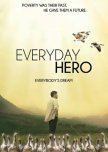
Everyday Hero was based on the efforts of Guo Jian Nan aka Brother Nan, an engineer who worked for the Poverty Alleviation committee. All but deified in the film, Brother Nan travels to the village of Li Tan that has been damaged by a typhoon. He dedicates his life to lifting the villagers out of poverty.When Guo Jian Nan is called into his boss’ office and offered the job of surveying Li Tan for a factory, he jumps at the chance. A factory would offer 500 jobs to the local villages and help raise the people out of poverty. He and his sidekick Da Zhi discover there is no place for the factory but instead of giving up they remain and work to find other projects that will benefit the people.
The film was an idealized vision of people and offered little conflict. The villagers largely accepted Guo with open arms and were willing to do whatever he asked of them. Liu Bao, the local who benefited from the Pioneer of Prosperity hadn’t shared his wealth from oyster farming. Yet with the arrival of Guo his behavior became overtly generous. The primary beneficiary of Guo’s plans was Aunt Ya/Aunt Mute and her geese. There were few obstacles that Guo could not find a solution for. Though the heartbreaking dilemma of parents having to leave children behind so that they could work in the city was highlighted through the child Papaya and students at the small school. At one point Guo was reprimanded for telling the truth regarding the issues of building a factory to his bosses but that seemed ludicrous. One way or another they would discover why it would be impossible. Another criticism from on high blew over quickly as well. Family troubles were forgiven and support was shored up for him. Everyone understood he had a higher calling of establishing new sources of income for the village and eliminating privation.
The editing could be choppy and situations weren’t always explained well. Maybe they were but were lost in translation. While the characters and events could have been developed better, overall, I enjoyed this film. Watching people work together harmoniously for the most part is a nice break from the real world. The PRC has dedicated significant resources to reducing poverty with Brother Nan and Li Tan being one of the success stories. Everyday Hero (Everybody’s Dream) was an homage to Guo Jian Nan who gave everything he had to improve the lives of one village. The film stated that poverty is a worldwide problem, which is absolutely correct, a problem that would benefit from more enlightened solutions, cooperation, and resolve from the global village.
27 August 2025
Was this review helpful to you?


