

 135
135 431
431 16
16 2
2 6
6 3
3 8
8 10
10 3
3 13
13 1
1 1
1 1
1 1
1 2
2 6
6 8
8 5
5 9
9


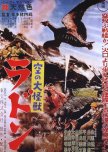
The movie starts with miners being violently killed in a dark, flooded cave. It is creepy and claustrophobic. Up out of the ground come giant killer dragonfly larvae. Much of the first part of the film is people hunting them down and attempting to kill them. Little did they know that what eats the giant insects was going to be more problematic-like letting a tiger in the back door to chase the wolves away at the front door.
Rodan was much more impressive in this movie than subsequent ones. He was huge, mobile, and destructive. Yes, you can see the wires at times if you look closely, but this old movie did quite a bit with the special effects and budget they had available to them. The miniatures were exquisite. Honda Ishiro and Ifukube Akira did a good job of bringing a giant flying dinosaur to life and making us care about him when by all rights we shouldn't.
Many times the human aspect of these movies fails. This time there was a sense of urgency and pathos from the beginning to the end. It also helped that this movie came before subsequent campy monster romps. As with Godzilla, by the end of the movie, even the human characters begin to feel sympathy for the great beasts.
Though around 65 years old I thought Rodan held up pretty well. He's now in my top three early Toho movies.
Was this review helpful to you?
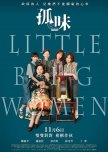
For me there were too many characters and too many conflicts to fully connect with many of the characters. I enjoyed it but I didn't love it and likely would not visit this group of dysfunctional people again. Bittersweet and heart-warming at the same time, Big Little Women at least gave us a largely female cast and shined a light on the complicated female relationships and strengths within a family.
Was this review helpful to you?
This review may contain spoilers
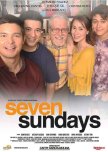
This is my first Filipino movie and I really enjoyed it. It's the story of a family that drifted apart after the mother died years ago.The story begins with the father of four grown children spending his birthday alone because his children are too focused on their own lives and problems to visit. On the day of his unattended party his receives news that he has cancer and only 7 weeks to live. He sends a text to his children to inform them of the news.
The eldest son took over the family store and is on the verge of bankruptcy. The second son became wealthy and successful but believes his family only likes him for his money. The daughter has three children with a philandering husband. The youngest child felt abandoned after the mother died and his siblings moved away and is now in legal trouble.
The children decide to come together on a Sunday and throw him a surprise birthday party, but old wounds flare up and arguments explode. After learning of their father's distress over their squabbles, the children agree to get along for his sake and to meet every Sunday at his house. Each Sunday the family comes together on various adventures and learn about each other in the process.
There are ups and downs in the story as wounds and secrets are revealed and healed.
I don't want to spoil the secrets, but I will say that this is not a downer or tragedy. This movie is the definition of heart-warming.
I can recommend this movie with a happy heart.
Was this review helpful to you?

This review may contain spoilers
I just finished this emotional T-drama about two young people shaped by tragedy and whether it was possible for them to overcome their tragic pasts. Story:
In this story two kids faced whatever life threw at them and most of the time it was boulders-mental illness, sexual assault, physical assault, PTSD, suicide, parental neglect, and evil outside forces. Somehow these two broken people found in each other the love and support they needed.
Both the ML and FL had to face their own individual traumas by peeling back the layers of lies and pain to heal and grow. And they had to do this while dealing with ongoing stressors and danger.
They fought for the right to walk hand-in-hand through the healing to the fulfillment of their dreams and no one was going to make it easy on them. Danger and disaster waited around every corner. Internal and external conflicts filled nearly the entire 21 episodes with little breathing room. It was a hard drama to let go of for something like sleep. It wasn’t a perfect story but it was compelling.
If you are triggered by any of the traumas listed above I would recommend not watching MARS. I don’t know that I would label this a dark drama but it does deal with very dark issues.
Acting:
I almost didn’t watch MARS because of Vic Chou. I’d only seen him in The Flame’s Daughter and was completely underwhelmed. I liked him in this drama. Maybe it was because he was rocking the David Cassidy/Uncle Jessie hairdo, but more likely it was the relaxed, natural performance he gave.
Barbie Hsu had the more difficult job of portraying a young woman in so much pain she walked and sat in self-protective postures. As the character grew and healed she portrayed believable fear and outrage. She did an amazing job.
OST:
I enjoyed it, didn’t love it.
On a somewhat related note-the production values were surprisingly high. Too often T-dramas look and sound like someone filmed them on a cell phone. I was pleasantly surprised, especially for an older drama.
Rewatch value:
I will likely go back to MARS for another visit.
Was this review helpful to you?
"It takes a village to keep a person alive"
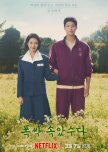
When Life Gives You Tangerines was a lovely bittersweet story of three generations of women, each desiring to do better than the previous generation. While the male characters were important, it was Ae Sun, her mother and her daughter that were the core of the story.Much of the drama took place on Jeju Island centered around the haenyeo and fishermen. Most of the people struggled to live day to day, relying on each other when things became dire. The sea is a harsh mistress and not only sustained life but took it as well. Yet there was laughter amongst the tears. And most importantly, there was the great love story between Ae Sun and Gwan Sik.
The different generations demonstrated the sacrifices that parents make for their children as well as their mistakes. Children learned that regret was a bitter pill to swallow once a parent was gone. The village relied on each other giving with compassion often accompanied by biting humor. Sometimes love was enough to sustain a relationship and sometimes it wasn’t. Life wasn’t easy about handing out answers regardless of the season people were in.
“It takes a village to keep a person alive.” The people of Jeju Island were generous, reconciliation often came after many tears, and the people showed great resiliency in the face of a collapsing economy. “Go together with others. If you do, 100 miles will feel like 10.” When Life Gives You Tangerines also reminded us that growing up is a lifelong process.
3 April 2025
Was this review helpful to you?
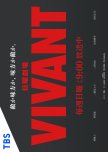
"Penetrate the paper with your gaze"
I was perusing Netflix’s offerings and saw an image of Yakusho Koji for Vivant’s advertisement. That was honestly enough for me to jump into the drama without knowing what it was about. Full disclosure for his other 12 fans, Koji doesn’t really show up until episode 8. Until then I had to rely on Abe Hiroshi and Mongolian actor, Barslkhagva Batbold, to keep me entertained. Sakai Masato’s performance as Nogi Yusuke was hit and miss with me.Nogi Yusuke is in deep doggy doo doo at his company when $100,000,000 is “accidentally” transferred to a business in Balka instead of the agreed upon payment of $10,000,000. Nogi heads to Balka in an attempt to retrieve the 90 million. From there he becomes entangled with a Japanese policeman, a Japanese doctor, a mute Balkan child with a heart condition, a mute Balkan agent, a relentless Balkan policeman, a whole heap of spy trouble, a terrorist organization, and a personified inner critic he talks aloud with. Throw in a few daddy issues and that about rounded the drama out.
Sakai Masato initially played Nogi for laughs as the businessman stumbled cluelessly about. This kind of wide-eyed childish character is the type I rarely connect with. Ham-fisted clues were not hard to pick up on as the innocent Nogi bumbled through Balka. Nikaido Fumi had the thankless role of the often annoying and selfless doctor, Kaoru. As her character calmed down and was thrust into the love interest role, she became less important to the story. I could detect no romantic chemistry and the 20-year age gap seemed wider in this drama. Despite his naïve persona, Sakai looked every bit of 50 or older which proved problematic with another age gap he was involved in. Abe Hiroshi swaggered his way through as the extremely confident policemen/agent with a 100 watt smile. I enjoyed Matsuzaka Tori’s turn as Nogi’s work buddy Kurosu. As I mentioned, Yakusho Koji is one of my favorite actors. He did what he could with his pivotal role even when his character was reduced to monologuing or giving ridiculous reasons for his actions. Was there a problem with two of the actors’ speaking abilities which caused the producers to make them both mute?
The Mongolian scenery, especially the desert, was stunning and often a backdrop for characters behaving inexplicably. The music was mostly pleasing relying heavily on classical tunes and a version of The Incredibles theme song. When you hear Wagner, you know they are going with the overly dramatic music. I may not have bought the romance but I really liked one of the enemies to friends relationships. The twists and cliffhangers were somehow predictable and at the same time fun.
The episodes were long and the first ep dragged almost causing me to drop it. I’m glad I stuck with the drama because even with ridiculous plot armor, unbelievable spy and political intrigue, family drama, and fantastical chase scenes I enjoyed Vivant right up until the last episode when they zapped all the pleasure out of it with long moralizing and nationalistic speeches. I feel like this review is too negative because I actually binged the heck out of Vivant. Cheese and small doses of implausibility don't bother me, and if not for the eye-rolling final episode I would have rated it an 8.0. If you are looking for a realistic spy drama or a self-acknowledged spoof of one, this isn't it. Vivant did try to step out of the usual comfort zone of office and home which I was quite pleased with.
24 June 2025
A few spoilery thoughts below:
****Spoiler talk****
Nogi’s mental illness was never properly addressed and was left untreated. He quite obviously talked to and argued with himself even in public spaces which made me wonder how he became a spy in the first place. Also, a petty observation, Nogi was supposed to be gifted with languages and I understood maybe a third of his English. Yusuke looked more like a brother to Beki than a son which did jostle my immersion into the story fairly often. I was thrilled when it was finally revealed that he was Vivant so that Nogi could back off of the clumsy routine. But that ending with Beki made no sense to me whatsoever.
Was this review helpful to you?
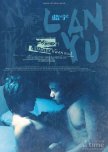
"A wise man never endangers himself"
Stanley Kwan’s Lan Yu told the story of a decade long up and down love story of two men in Beijing starting in the late 1980s. Based on an internet book by an anonymous author, Lan Yu won Golden Horse awards for Best Leading Actor, Best Director, Best Adapted Screenplay, Film Editing, and Audience Choice Award.Chen Han Dong intercepts a college student, Lan Yu, who was intended as a paid date for someone else. The night ends up being kismet for the two men. The older Han Dong may want to keep everything transactional, but Lan Yu has lost his heart. As always, the road to true love never runs smoothly. Through the years, Han Dong makes decisions based on fear of commitment and a desire for a life that is more normal in appearance, all to protect his heart which always ends up breaking Lan Yu’s.
Kwan resisted using outside influences as impediments to the men’s relationship. Family, co-workers, and friends seemed to have no problem with Han Dong and Lan Yu being together. While the two didn’t flaunt their relationship, neither did they carry it on in the dark. Han Dong’s own insecurities and selfishness caused the crises between them.
The film was beautifully shot and framed. You do have to make note of the small comments and changing seasons to determine when the story has shifted forward in time. Kwan kept the script spare, focusing on the high and low points. I wouldn’t have minded more development of the characters, but the director preferred the relationship lean and mean. Liu Ye and Hu Jun had a lovely chemistry with the characters often doing what couples do---talking, eating, or hanging out with friends and family. There was sex as well, but nothing gratuitous, with the exception of early in the movie casually showing full frontal nudity as the two talked. The ending was disappointingly common for the time.
The older and more financially established Han Dong ended up being the character needing the most growth. He could be maddeningly obtuse and unaware of his own feelings frequently expressing himself with his check book. The film wasn’t perfect and the title character could have used more depth, but overall, I enjoyed Lan Yu. Not all relationships work out perfectly, nor are all lovers perfect, even when destiny calls.
20 April 2025
Trigger warnings: Full frontal nudity (only in an early scene) as well as derrieres
Was this review helpful to you?
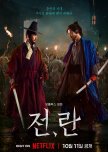
"You think you can attain real power through ideas alone?"
Uprising explored the plight of slaves and peasants around 1589 during a tumultuous time in Joseon history. It was also action packed with revolts and a Japanese invasion. All while the king waxed on about the insignificance of his tax and work base.Cheon Yeong has been a slave due to a legal and moral loophole ever since he was a child. He has reluctantly served the underachieving young master, Yi Jong Ryeo. Through the years they became fast friends until a broken promise and a misunderstanding set them on divergent paths as the Japanese began marching across the country.
The first thing I had to do was age the two main characters upward. When a flashback was labeled “Twelve years ago,” all I could think was that the two young boys did not look 30 years old. This trope of brothers or sworn brothers turned mortal enemies due to a misunderstanding has been done many times before. Poor Cheon didn’t even know there was a problem for seven years. He had his hands full fighting the Japanese with a ragtag assortment of peasants and slaves abandoned by the nobility. Yi served the king who had fled during the crisis. No one really cared what happened to the little people who were often killed or left homeless. Even when the king learned of the small band’s heroic results, he was more interested in how he was going to get a strong enough workforce and money to build a more splendid palace. Apparently, nobility had nothing to do with nobleness and keeping one’s word or administering true justice.
While the story was nothing new, the fights were well choreographed and gruesomely realistic. Swords are sharp and used with great force which meant body parts tended to go flying. Cheon was very disarming with a sword. Though it was the corrupt officials who caused righteous people to lose their heads. The director might have taken a little too much delight in mangled bodies. Kang Dong Won gave a strong performance as the dangerous and shrewd slave, though Cheon naively believed the duplicitous nobility too many times. I didn’t find Yi Jong Ryeo a very sympathetic or interesting character nor very nuanced. I enjoyed Kim Shin Rok’s Beom Dong who had a better insight into the ways of the nobility and a lot of moxie. She also wielded a mean staff.
Uprising kept a good pace throughout though it ran a bit long for me. The historical backdrop was far too complex to wedge into 120 minutes which made it feel like the story fast-forwarded over numerous subplots. The tragic showdown between Cheon and Yi was inevitable but a letdown. Honestly, I was more invested in the confrontations between Cheon “The Blue Robed God” and the “Nose Snatcher” Japanese commander Genshin Kikkawa. The animosity and fighting respect between the two warriors was compelling and thrilling. Going into the movie and knowing slavery continued for 300 more years after the events portrayed here only led to the feeling of pathos for many of the lives sacrificed. Despite some of my reservations, Uprising was an entertaining film and worth trying if you enjoy this genre.
22 October 2024
Trigger warnings: Numerous decapitations and dismemberments-many, many body parts flung around
Was this review helpful to you?
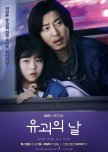
Flawed but emotionally engaging drama
The Kidnapping Day is one of those dramas where the main relationship was greater than the sum of its parts but not quite enough to overcome their shortcomings. And that math makes about as much sense as some of the plot holes in this drama about a loving father figure kidnapper and substitute daughter kidnappee.The strength of this drama was the relationship between Myung Joon and Ro Hee. The actors had great chemistry as the bumbling, good-hearted, desperate dad and genius 11-year-old who had never had the chance to form loving human attachments or simply play like the child she was. Once you left their nucleus, the characters and story began to break down with parts becoming repetitive and others lacking in logic. The plot trotted out the well-trod issues of police incompetence (with the exception of the lead detective) along with the requisite corruption issues although they waffled back and forth on the corruption. While I know women make up a small percentage of police officers in Korea it would have been nice to see one of the minor characters be a female officer in this overwhelmingly masculine drama. The bad guy pecking order and allegiances also shifted with similar incompetence issues. The overly dramatic villain left no furniture without his teeth marks as he chewed through the scenery. Class distinctions as they often do played a role in the story. And how far are people willing to go and who has to suffer for the good of all mankind or at least for those who have enough money? The role on which most of the drama ended up hinging was all over the place with motivations and reactions that often made little sense and the final confrontation missed the mark for me.
Despite its narrative flaws, I enjoyed this drama. Yoon Kye Sang gave a captivating performance as the father who would do anything to save his hospitalized biological daughter and the stranger in his care. His fists made up for what he lacked in strategical thinking, leaving the scheming up to the brilliant girl in his charge. Yuna demonstrated why Korea has the best child actors from any country. She portrayed not only the coldly, methodical experiment her character had been trained to be, but also the vulnerable child that needed an adult to protect her. Moments of the two playing, perhaps for the first time in her life, squealing in delight and getting her designer clothes dirty were heartwarming.
The Kidnapping Day may have had plot holes big enough to swallow The White Truck of Doom, but Myung’s devotion to the two little girls who depended on him covered those pitfalls enough to provide for an emotionally compelling drama. Roo Hee’s intellectual dominance might even leave you questioning who had really been kidnapped in this relationship.
10/31/23
Was this review helpful to you?
This review may contain spoilers
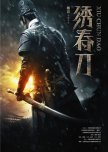
It's not very often a martial arts movie comes out with strong fight scenes and even stronger acting. Brotherhood of the Blades boasted a quietly competent cast who elevated this movie above standard wuxia fare. Three Imperial Assassins and sworn brothers, though skilled with their swords had to face down death and deception from various factions. The always troublesome eunuch (this time after he was deposed) who shows up in numerous martial arts movies, once again instigated double-crossing schemes, this time imperiling the three loyal assassins.
Chang Chen led the three sworn brothers. His character, Shen Lian, though loyal to his brothers and emperor, was morally ambiguous. Willing to do whatever the situation called for, he set into motion a sword that would hang over all three of the assassins' heads.
The three hearty friends all harbored a need for money. Shen Lian wished to free a courtesan but lacked the power and money to do so. Wang Qian Yuan, as Lu Jian Xing, longed for promotion, only lacking the amount of money needed for bribing officials. Li Dong Xue as Jin Yi Chuan, the third assassin and the youngest, loved a doctor's daughter and had secrets of his own. The eunuch's waning power and wealth still proved perilous and tempting. The loyal allies had no safe quarter with the emperor and his officials. Blades aimed at them from nearly every quarter, even longtime allies proved treacherous.
The fight choreography was quite good, less reliant on wires and Olympic level gymnastics. The fights were fast, brutal, and bloody. They stretched reality in a few scenes, but so do most action movies. If I have one quibble, it's that the action scenes went on too long and were overused. As the story felt thin, perhaps it distracted from the lack of a more complex plot and character development.
The cinematography though dark and dreary fit the mood of the film. Often monochromatic, the shots worked perfectly for the bloody fight scenes. The costumes and sets were well done, befitting the time period. Brotherhood of Blades was stunning to watch without being overdone.
Chang Chen gave a mesmerizing performance, filling in gaps the script lacked. The supporting actors were all strong even though many of their characters were thinly drawn.
Brotherhood of the Blades battered away at the characters through intrigue and loss. Dark and intense, this film balanced its three main characters on the edge of a knife in the midst of hungry wolves. And set this viewer on the edge of her seat wondering who, if any, of the Brotherhood would survive.
Was this review helpful to you?

Music is terrifying and beautiful
Glass Heart boasted one of the more beautiful casts that I’ve seen recently. Satoh Takeru, Machida Keita, and Shison Jun were three-fourths of the band Tenblank. Miyazaki Yu rounded out the band as the lone female member. High on music and low on plot, Glass Heart was more mood than narrative. Fortunately, the music was pretty good for a drama making it a fast, upbeat watch.Musical genius Fujitani Naoki has gathered a guitarist, an on-line music sensation, and finally an amateur drummer who opened his heart back up to music three years ago at an impromptu concert in the rain. The group is an awkward fit at the beginning with the men’s egos and Akane’s lack of confidence. Guitarist Sho takes care of Naoki when he wears himself out. Kazushi’s own writing skills expand Naoki’s mind when it hits a wall. And Akane’s unique drumming style calls him. The band doesn’t realize that Naoki is working against the clock to release the music inside him.
The plot was paper thin and barely a scaffolding for the music videos. Few things happen in the 10 episodes. An estranged brother is reconciled with, a singer with a crush on Naoki as well as a jealous manager have to be dealt with, and the bandmates struggle to keep up with Naoki’s musical madness. Naoki’s old traitorous music partner is the lone source of conflict and doesn’t really cause many ripples in the band’s trajectory.
The performances were all solid, though Sho and Kazushi could have used more airtime. Right now, Miyazaki Yu is listed as a supporting cast member, but I would argue she was the lead. A non-threateningly cute, eager, every-girl, Akane stood in for the female audience and was usually the focus of the story when it wasn’t on Naoki’s genius. As per usual, a big chunk of the male drama population fell in love with her. I saw no chemistry between her and Satoh, though chemistry is often in the eye of the beholder. From the moment Sho princess carried Naoki, that was my ship, right until the moment when Sho asked Naoki, “Is this a proposal?”
I enjoyed the music, the found/made family, the reconciliations, and the karmic blow back for the cheaters. It was a quick, enthusiastic binge. Lucky Me ended up being my favorite of the songs and Suda Masaki’s voice my favorite of the singers. For the nice music, beautiful men, call to love through music, Glass Heart was worth the watch for me.
“Music isn’t concerned with who wins or loses. It just plays. That’s why it’s terrifying and beautiful.”
31 July 2025
Was this review helpful to you?
"Keep your enemies closer"
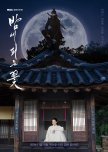
Knight Flower was a funny, entertaining cross between a female Robin Hood and Zorro. The story may not have had any surprises, but in this genre as in most. execution is key and Knight Flower kept the action moving and the long boring monologues by the villains to a minimum.Yeo Hwa never even met her husband who was killed on the way to the wedding and has been a cloistered widow for 15 long years. Stuck in the family shrine most days, never being able to set foot outside of her in-laws’ property she only has her maid Yeon Seon for company as she waits on her older brother to finally return and take her with him. What no one in the household knows except for Seon is that at night Yeo Hwa dresses in black and helps the helpless with her money and martial arts. Everything is going smoothly until she runs into the new Capital Defense officer, Park Su Ho. With lots of push and pull between the upright lawman and the vigilante, as well as the requisite romantic tension, the two find they have much in common as well as common enemies.
The first episode felt slow to me, but it picked up the pace as it went along and never slowed down again until the last episode. Given the prison-like existence of the widows and pressure to commit suicide for the family honor, it was a whimsical release to have the heroine running over rooftops and rescuing the male lead on occasion. Of course, only women were held to these standards. Widowers were free to go about and even encouraged to remarry. Repression reconfigured to look like honor.
I enjoyed the story, but stumbled some with the casting, or perhaps the writing. Full disclosure, I enjoy a good noona romance so that wasn't an issue . Nor do I have a problem with an older woman being an action hero, much older men do it all the time. Lee Ha Nee is a beautiful woman but at 40 she did not look 32 nor very athletic. Her character was someone skilled with living a double life for years, but Yeo Hwa could not manage a poker face when needed. Yeo Hwa was quick to act but often slow to catch on to the bad guys’ plans. Lee Jong Won looked like a sweet puppy who adored Yeo Hwa, but added little depth to his character. A quick glance at the cast list and it was easy to pick out who the baddies were going to be. When one used his kind grandpa voice instead of putting a character at ease, chills should have been running down their back. And Jo Jae Yoon can always be counted on to chew up the scenery maniacally.
Knight Flower, aside from bringing up the appalling way widows were treated, was for the most part a romantic action comedy. While there were some fights, they weren’t bloody or deadly. Most of the deaths occurred 15 years prior to the current story. The one murder in the present story actually felt quite deserved. So, if you like your historical dramas light and funny, with a little romance and a little action, this might be a good fit.
21 February 2024
Was this review helpful to you?
"It never ends until we're all dead!" That's the spirit!
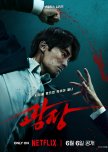
Mercy for None wasn’t an extraordinary drama but it did what it set out to do-show mercy for none. As far as Korean revenge entertainment goes it succeeded for the most part. For those familiar with the genre there were no real surprises, but they never let the plot or action slow down. During Nam Gi Jun's lengthy revenge rampage they kept the “hero’s” plot armor to a minimum until the last two episodes. If nothing else, it was good to see So Ji Sub in a drama once again.Normally, I’d give a mini-plot summary about now, but this was a revenge drama so despite the twists and turns it was quite simple. Retired gangster Nam Gi Jun is called back into action when his brother is murdered. Nam Gi Seok was slated to be the JuWoon successor so there were plenty of people with an ax to grind. And grind and slash numerous characters did with axes, knives, bats, iron bars, with plenty of old school action. Gi Jun discovers how deep the treachery runs as he pounds through the bodies with his mighty fists. He could have given One Punch Man a run for his money.
So Ji Sub didn’t have to give an emotionally nuanced performance. He did what he needed to do, look fierce and bloody as he fought gangs of men. Mercy for None was a who’s who of ahjussis and harabeojis. The old boys gave a master class in acting. Sadly, there were younger actors who lacked the gravitas and menace required for their roles. With the exception of a female lawyer with a couple of quick scenes there were no women in this world, no molls, no nurses, no mobster mothers, this was all testosterone all the time.
The fights were well choreographed, especially for a drama. They contained more gore than your average Kdrama so if you are squeamish be prepared. This drama was an 8.5 for me until the end of episode four and then the “twists” and “surprises” began to weigh it down. Gi Jun’s fearsome abilities tread over into the supernatural as the drama wore on which took away from it. Despite only being 7 episodes long, it could have been cut to 5 or 6 at the most.
I desperately wanted to hold a class for these career gangsters. Things Every Bad Guy Needs to Know: 1) Round-house kicks are pretty but useless in a fight. 2) Never bring just your fists to a machete/gun/bat fight. 3) Never leave your weapon behind---there will always be another fight. 4) When using a gun, never let your enemy get too close. 5) Never trust someone who works for the enemy no matter how much you used to like them. 6) Be nice to the hired help. It could save your life. 7) Never turn your back on your enemy. Never. Ever. Like ever.
If you are looking for character development or innovative storytelling this is not that drama. If you are wanting to get an action and revenge fix with an easy on the eyes protagonist, you might want to give this drama a try.
13 June 2025
Was this review helpful to you?
Could have been better and shorter
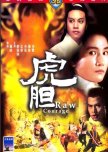
Raw Courage starred Cheng Pei Pei and Yueh Hua who were tasked with protecting the infant Crown Prince after the Ming Emperor was once again deposed. Director Lo Wei began the film with an army and ended it with a whimper.As the palace burns with the overthrow of Emperor Jian Wen, he entrusts his infant son to the Black Dragon leader. Rebel forces attack the Black Dragon and he is forced to send his daughter Hsiu Yi and surviving disciple Chin with the child to his brother the White Dragon far away. As they leave the duo are saved by Mo Wen Tien aka the Old Beggar. He gives them contacts to help on their journey. The first and most important is Fei Yun who ends up being their guide through the harrowing checkpoints. The little band is pursued by Yen Tsang and his army and the fearsome Old Monster.
I’m a huge fan of Cheng Pei Pei and love to watch her swing her sword while the stunt men go flying. This was not one of her stronger roles. Most of her dialogue centered on her asking Fei Yun, “what do you think we should do?” Wu Fung’s Chin was stuck with being the jealous older “brother.” Yueh Hua had the most fun as the easy going Beggar disciple guiding the two neophytes through treacherous territory. Tien Feng’s villain was poorly drawn and wasn’t that interesting. Lee Sau Kei’s blue-faced Monster had potential but not enough screen time.
The fights consisted of swinging swords. Aside from a trident and a weapon that looked like a garden weeder, there was nothing out of the ordinary. Poor Pei Pei fought with a baby on her back throughout the film. Three against an army over and over became wearisome as there was nothing to focus the eyes upon. Unlike 70’s films, there was no spewing blood or flying limbs. The bodies certainly stacked up, but most did so bloodlessly. I found myself watching the background characters during the fights. The extra fighters were at least given things to do beside hopping back and forth like some films. Though humorously one killed character pinned to a stone wall with a sword kept moving around during the fights. Poor guy had to be uncomfortable.
The film had the Shaw Brothers polish to it with quality sets and outdoor scenery. My biggest complaint with the film was the pacing and its length. Despite the chemistry of Pei Pei and Yueh Hua, the film dragged badly. The sense of urgency and danger dissipated due to the lack of stakes and repetition of conflicts. The intrepid trio inexplicably escaped overwhelming odds on numerous occasions to the point even for a martial arts movie that it made no sense. When I found myself focusing more on the stuntmen than Pei Pei, there was a problem. Having said all that there were entertaining moments so if you are a fan of any of the actors or enjoy martial arts films from this era it is one to try, just best to keep your expectations low. As always, graded on a kung fu curve.
7 August 2026
Trigger warning: Brief nudity, non-sexual.
Photo bomb note: I loved that during one scene while the trio paused on their horses, a dragonfly buzzed in front of the camera! No take 2!
Will someone please think of the children note! : The poor baby cried at all the inopportune moments during the early parts of the film and then went silent for the rest of the film. Probably because the poor thing was rarely fed or diaper changed. Proper care of a child was not a priority for the film, just an accessory for Pei Pei's back and something to alert the evil doers of the good guys' location.
Was this review helpful to you?
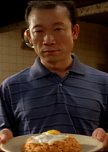
Walk away tall...
A Man Under the Influenza was a short film by July Jung. Set in a seedy restaurant, it was enough to make you lose your appetite. There’s a good reason for health inspectors.On a hot summer day, a young man wearing a heavy brown sweater and coughing walks into a dingy basement restaurant. The menu is small and he orders kimchi fried rice. Another patron is sneezing and blowing his nose in front of a fan. Two foreigners argue over who invented television. And the owner rails at anyone leaving food on their plate and not behaving up to his standards all while the cook kills flies with her ladle.
This is what a restaurant in Hell would look like to me. The man in the brown sweater at the center of attention sweats and feels compelled to eat the food in front of him, trying not to inspect the suspicious bits. The vignettes appeared unrelated. All I gleaned from the film was that we often feel social pressure to do things we know we should not. It’s okay to not eat. It’s okay to walk away. I kept hearing my father’s voice as this film played on, “If it doesn’t feel right, get the hell out of there.” Wise words to live by and I suspect the man in the brown sweater will wish he’d followed it.
4 August 2026
Trigger warnings: Fly killed.
Pre-Covid Note: It was wild seeing sick people coughing, sneezing, and eating in a small area.
Was this review helpful to you?


