

 135
135 431
431 16
16 2
2 6
6 3
3 8
8 10
10 3
3 13
13 1
1 1
1 1
1 1
1 2
2 6
6 8
8 5
5 9
9


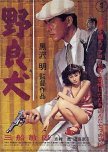
This review may contain spoilers
Misfortune makes or breaks you
Misfortune makes or breaks you, depending on the choices you make. Kurosawa takes on postwar Japan's class divide and poverty and the choices people have to make in the face of destitution. Mifune Toshiro and Shimura Takashi star in one of the first buddy cop movies of all time. Mifune as the beleaguered rookie and Shimura as the smooth mentor made a great partnership.The plot stems from rookie Murakami's service revolver being pickpocketed on a crowded bus. He feels responsible and despondent over its loss. His supervisor refuses to let him give into despair and ultimately teams him up with the experienced Sato. His gun is used in several crimes causing him greater grief as the crimes and violence intensify. This is no brainless, violent cops and robbers film. Kurosawa gives the faceless villain, Yusa, humanity even with the bad things he's done through the witness of other characters. The problems of rampant poverty and crime are highlighted as well as the problems soldiers coming home from the war faced. Murakami and Sato do old fashioned detective work, following the clues and often waiting and being persistent. Kurasawa even has the detectives track a Yakuza at a filled to capacity baseball game where they have to put the welfare of the crowd over their own goals.
I hesitate to write too much about the story after trying and ending up with three pages which hit my editing floor. This was a beautifully made film with amazing framing and compositions. Kurosawa wasn't afraid to linger over shots, especially when they were gloriously put together. Nakai Asakazu did a stunning job with the cinematography. The lighting was especially complex in many shots. There was masterful work going on with this film.
Tokyo was in the middle of not only a crime wave but also a heat wave and you could almost feel the sweat streaming down the characters' backs. As the film nears the culmination the clouds darken and the torrential rain that breaks through also symbolizes the unleashing of the greatest brutality the characters would face as they finally come upon their quarry.
At one point in the movie, Sato and Murakami have a deep conversation at Sato's house. Sato sees Yusa as simply a bad guy who must be caught. Murakami sees himself in Yusa. They both came home from the war only to have their knapsacks stolen on a train. Yusa chose to become bitter and turn to crime, Murakami chose to work on the problem by becoming a policeman. “They say there’s no such thing as a ‘bad man,’ only bad situations,” Murakami said. Sato reminds him of all the damaged sheep left in the wolf's path. A peek at Sato's children sleeping reminds the viewer that children represented the future of Japan, pure and vulnerable who would face their own choices. Would they give into materialism and crime or take the more honorable path?
A scene with Yusa's girlfriend, Harumi, and her mother showed the differences in the generations. Her mother dressed in the wartime austere clothes while Harumi dressed in a far more decorative dress. When the reason Yusa needed the gun to begin with comes to light it highlights the great gap between the classes and how a dress in a window could cause deep seated resentment.
Mifune Toshiro gave a performance that reached several octaves. Always a live wire, you could see his energy coiled and unleashed on occasions as he dealt with the anguish of his gun being used in crimes. He was the perfect Kurosawa hero, tortured and honorable. When he finally faces his alter ego with 3 bullets left in the chamber and a vicious fight takes place, leaving us to wonder who is who, we are reminded not only of their similarities but also the differences in the choices they made. Shimura Takashi was the levelheaded mentor who saw through people and picked up on clues while his pupil was wrapped up in his own head and feelings at times. He gave an incredibly cool performance as the mature detective who knew he could often get what he wanted with honey and smooth words.
The only drawback for me was a lengthy 8-minute part of the film when Murakami goes undercover in the black market for a few days trying to find someone to buy a gun from. Honda Ishiro (Godzilla) followed Mifune around with a hidden camera discreetly filming the homeless and people selling and trading in the market. At one time Tokyo had 60,000 black market vendors. Even during the war people had to use them to find food and clothes. Like a bamboo, people would sell layers of clothes and personal items to get what they needed. After the war people were starving, some to death. He also showed some of the burned-out buildings leftover from the bombings. Though people were dependent on the black market to survive it also bred the Yakuza with gangs having their own territories. Kurosawa apparently had a difficult time leaving much of this footage out, but it felt like it would have been more meaningful if he had culled it down. Japan's economic recovery wasn't far away so this was an historical time capsule of how the people had to live which I appreciated being able to see even if I wish he'd edited it more.
I could talk about his film at length but will leave you with this. The film discussed pertinent social dilemmas and existential questions. The acting was skillful and artfully balanced. The frames, lighting, sets, and composition were skillfully done. It could be slow in places, but Kurosawa also knew when to hit the accelerator and when to brake, when to ramp up the tension and when to take a breath. If you are prepared to be patient when the movie slows and lingers, I can easily recommend this gem.
10/7/22
Was this review helpful to you?
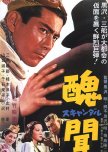
This review may contain spoilers
"If you don't let what's in your heart out, you'll choke on it"
Kurosawa calls upon his characters to stand up for what's right even if the odds are against them in Scandal. Honor, weakness, redemption, and a rebel painter on a motorcycle all figure into this film.A young, handsome Mifune Toshiro played the painter Aoye Ichiro who rebelliously road his motorcycle everywhere. When he offered a beautiful singer, Shirley Yamaguchi as Saijo, a ride back to her hotel in the mountains where he was also staying, the dominoes were stacked. The paparazzi had followed her to the hotel where she refused to have any pictures taken. In a genuinely chaste moment, the two were photographed together in what could have looked like an intimate scene. The tabloid wrote a salacious story about the two having a romantic getaway which went viral in a 1950's manner. When one of the photographers asked if it was okay to write a false story, the boss told him, "It doesn't matter if it's true. Once it's in print the public believes it." And therein lies one of Kurosawa's themes-the unscrupulous press who valued sales over truth and a gullible public who would believe it.
Ichiro decided to sue the magazine for the trouble brought down on himself and Saijo. Another theme-understanding the difference between right and wrong and standing up for what was right regardless of the consequences. In stumbled Hiruta Otokichi (Shimura Takashi) a lawyer begging for the job of representing him and the story became something else. Ichiro decided to hire Hiruta after meeting his tuberculosis bedridden daughter, a purity of love and light. The story now became focused on Hiruta's weakness. Weakness for money, betting, drinking, and in general doing all the things he considered loathsome...including selling out his client. Another theme-the disintegration of the ability to tell the difference between right and wrong in post war Japan. The film also began to center on Hiruta's weaknesses more than the court case and the gradual road to his redemption guided by his daughter and a motorcycle riding artist.
There were times in this film I thought I was watching a version of It's a Wonderful Life only with a down and dirty Clarence. It felt Capraesque in several places. For a Kurosawa film it was more sentimental and predictable than I would have thought. The shift from the story focusing on Mifune and Yamaguchi to Shimura's character was jarring. I normally enjoy Shimura's performances, but his hang dog, self-castigation went on too long for me. He would perfect this "poor me" performance for Ikiru. Fortunately, there were some lighter moments to break up all of his self-recriminations. As lovely as they were, Ichiro and Saijo came across rather one note and too perfect. Even with his habit of gunning his motorcycle and painting nudes, Ichiro practically squeaked when he walked, he was so clean and honorable.
The harsh commentary on the tabloids, moral disintegration, and the judicial system was not subtle. There was the obvious lament that while the fake news stories sold in the tens of thousands, Ichiro had trouble selling his actual works of art. Ultimately, the focus became about Hiruta's weaknesses without condemning them, simply exploring them and his reasons for them. Finally, watching as his lifeline was assembled, one that in the end might condemn him but set him free at the same time was worth rooting for. It takes a lot of courage to become a shining star reflected in a polluted pool of water.
I enjoyed this film, but not as much as I hoped I would. It was definitely worth watching for seeing Mifune Toshiro transporting a decorated Christmas tree on the back of his motorbike.
10/5/22
Was this review helpful to you?
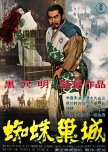
This review may contain spoilers
Oh, what a tangled web we weave...
The legendary team of Kurosawa Akira and Mifune Toshiro tackle Shakespeare's Macbeth in Throne of Blood. While hitting most of the bard's main beats, Kurosawa takes the murderous couple to feudal Japan in this highly stylized film.Mifune plays Washizu (Macbeth) caging the frenetic energy always just below this actor's surface. Washizu and his friend Miki are returning to their lord's keep, aptly named Spider Web Castle, after defeating an opposing lord's army in battle. Lost in the woods, they come across a ghostly forest spirit who foretells their future. Washizu will become the next lord of Spider Web Castle and Mizi's son will become it's future lord. Both men are incredulous as they make their way to the castle through the fog, even more incredulous when the prophetic events begin to come true.
Washizu becomes the leader of the North Garrison where he and his wife (the talented Yamada Isuzu) live a comfortable life. Lady Washizu is not content though and stirs up feelings of ambition and dread in her husband telling him that the lord may seek to kill him seeing him as a rival, especially if Miki tells of the prophecy. Washizu is not convinced but when the lord ominously drops into their hands, it doesn't take much convincing from his wife to perform the murderous deed. Miki throws in with him out of his own ambition or pragmatism. The prince and Noriyasu (Kurosawa regular-Shimura Takashi) flee to their old enemy and make a pact with him.
Lady Washizu unrelentingly keeps up the murderous whispers until man after man is slain in order to keep their new status. Even as they work to stay on top, the doubts and guilt begin to build until the subtle and not so subtle signs of madness begin to creep in. With each passing day his men's doubts grow as does the strength of their enemy.
There is all sorts of imagery in this film starting with Kurosawa's trademark wind and rain ushering in dark changes. Fog blinding the men as they try to find their way ushers in chaos and uncertainty. Washizu and Lady Washizu act almost as if they are wearing masks. She barely moves and when she does it usually means someone is about to die as the only sound you hear is the rustling of her silk dress as it slithers across the floor. At the end when the opposing army shows up, they are highlighted in sunlight while Washizu always seems to be in rain or fog or dim, claustrophobic lighting. The name Spider Web Castle reflects the deadly web the couple find themselves in, one they cannot extract themselves from.
The forest spirit tells Washizu and Miki,
"Human beings are so strange,
they are terrified to look into
the bottom of their hearts."
Washizu, his wife and Miki end up looking into their hearts and find more darkness than they were aware of. Paranoia drives Washizu to have his best friend murdered and see treachery all around him. The spirit's prophecy causes the chaos that sinks into a man's soul inciting greed and winning at any cost to take over. Was the spirit prophesying or setting events into motion with the prophecy? Did the men act of their own will or were they victims of predestination?
The sets were amazing. Always looking for that perfect shot, Kurosawa didn't like the initial castle set and had another imposing one built on Mt Fuji. In two different scenes, especially the final one, it didn't take much acting to show fear when arrows were being fired as they were really being shot at the actors.
Kurosawa wasn't afraid to use silence and time to create tension in scenes, something rarely used in today's films. The scene with the silent castle as the troops slowly approached not knowing if they would receive a welcome or death was particularly powerful.
Wind and fog come again at the end of the film along with the chorus, reminding the viewer that desire and fate are never changing. The castle of delusion is never far away when one gives into the baser ambitions at the bottom of their hearts. Throne of Blood uses no iambic pentameter, nor Shakespearean quotes, maybe it's the stronger for it.
9/29/22
Was this review helpful to you?
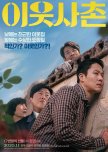
This review may contain spoilers
Sometimes you have to risk all to have a safer and better life
When you open up your mind, you never know where you will meet your Best Friend. Set in the tumultuous 1980's in Korea, this film was very loosely based on real events and presidential candidate and activist Kim Dae Jung.During a time of martial law, student protests, brutal interrogations and arrests, Lee Ui Sik finds himself and his family under house arrest for being in opposition to the ruling power. As the intelligence chief states, anyone not like himself is a "commie" and "commies" are detained, or deported, or killed. The chief calls upon Dae Kwon, a part-time patriotic helper, to move in next to the Presidential candidate, Lee Ui Sik and his family, who are serving under house imprisonment and surveil them. The goal is to prove Lee is a commie with ties to North Korea and finally rid themselves of him. Through a series of comic adventures, Dae Kwon and Lee meet, even ending up in a bathhouse with Lee's son. Though on opposite sides, both men are lonely and in need of friendship. The more Dae Kwon listens in on the upright Lee and the more he sees how the current government covers up its own dirty work, he slowly begins to change his mind and his ideas.
Like many Korean movies, Best Friend's mood changed on a dime and went from comedy to tragedy, back to comedy and a host of other emotions. Some of it worked and some of it didn't. It could be uneven and even jarring at times, but it was never boring. Veteran actor Kim Byung Chul as Dae Kwon's assistant was the catalyst for many of the laughs. Lee's family played it dramatically straight for much of the movie. Though a few scenes went fully into melodramatic territory, the final act revealed the dangers of attempting to change a corrupt regime.
Jung Woo gave a complex performance having to work both the comedy and melodramatic beats of the film. Dae Kwon not only dealt with spying on his neighbor, but he was also a husband and dad and not a very good one. Through his clandestine observations, Jung Woo shows Dae Kwon's epiphanies as old beliefs and habits make way for new ones. Scandal plagued Oh Dal Soo was fine as the beleaguered candidate having to make decisions even as he faced personal crises and death threats.
I have to give Korea points for being willing to look at difficult times in their history and work through them artistically. Though a fictional work, bordering on fantasy at times, Best Friend did push forth the idea that in order to change society even when it might come at great personal cost, it had to be done for the good of all and future generations.
With the themes of enemies to friendship, sacrifice for the greater good, and personal evolution, Best Friend, if not inspiring, could be funny, entertaining and even heartwarming. Not a perfect film, it was too erratic and sometimes heavy-handed, but one worth trying sometime. (7.75)
8/24/22
Was this review helpful to you?
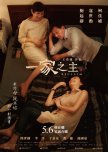
This review may contain spoilers
Nameless daughter in lost and found!
Reclaim is an uneven but interesting story about a 60-year-old woman who has lived her life for others. When she finds herself between a rock and a hard place with her extended family, her reaction to their needs is to look for a larger home.Ye Lan Xin's life has become one of many hats---mother, daughter, wife, friend, in-law, teacher, but none of them are truly her own. Her retired husband refuses to help around the house and uses her more like a servant. When she came home in the opening scene to find he had gone through her books telling her which ones to keep, he lost all sympathy with me. You don't mess with a person's books-that's sacred territory!
Her grown daughter soon moves back in after quitting her job and trying to start up her own company hoping for mommy's financial as well as emotional support. The daughter, too, doesn't see her mom as a person but more as an assistant and ATM. The grown son who had been educated on his parent's dime in the States, also expects her to do his bidding. When her mother who suffers from dementia once again wanders away from the nursing home, Lan Xin wants her to move into their apartment. Her husband's "antique" collection and teapot collection take up nearly a whole room but he refuses to part with anything. He even buys a champion pigeon and lets it roam freely through the house without cleaning up its mess.
Lan Xin decides to buy a larger house so everyone will have their own room. Out of all them, she has the least privacy, unable to even watch Richard Gere movies when she wants to.
Much of the movie involves Lan Xin walking up and downstairs, traveling in elevators and circling around reflecting the ups and downs in her life as she searches for an affordable home. There are a couple of fantasy scenes awkwardly imposed into the movie that don't really fit with the realistic mood and also make it difficult to know if some of the things that are shown really happened. Ultimately, what Lan Xin was looking for was herself and coming to terms with the young girl who wanted to go to Paris to study art and the older woman who had married instead and teaches art on the side. When someone asks her name she goes blank because it has been so long since anyone called her by it. The scenes of Lan Xin creating a dollhouse that resembles her home tells much of what she desires and also what she comes to learn. The movie is beautifully shot, particularly the trip she and her mother take to their home town. The music can be syrupy at times, but in this type of movie fit the mood well.
Nina Paw as Lan Xin gave a subtle performance yet quietly powerful as small clues showed through her almost imperceptible reactions. While his character could be grating with denigrating demands and opinions, Johnny Kou played the self-involved husband perfectly. The sets were all intricately designed, especially the main apartment, important since much of the action took place in the almost claustrophobic spaces as Lan Xin tried to carve out one tiny place for herself.
There are times when you will want to shake Lan Xin for letting herself be used by nearly everyone around her in her need for approval and other times you will want to cheer for her as she gains clarity. Far from a perfect movie, and too long for the subject matter Reclaim is still worth trying out to watch as one woman takes the slow journey to reclaiming her life.
"All of us are alone when we reach the end. There's nothing to be afraid of." -Lan Xin's mother
8/16/22
Was this review helpful to you?

This review may contain spoilers
The Monkey King 2 takes place 500 years after the Havoc in Heaven, a sequel to The Monkey King starring Donnie Yen. In this film Aaron Kwok plays the hairy hero to good effect. The Monkey King 2 boasts a strong cast with Feng Shao Feng as a righteous monk and Gong Li as a deadly and deadly alluring demon. The story didn't always serve them well but it was entertaining. When a bumbling monk accidentally unleashes the Monkey King, Sun Wu Kong is given the task by the goddess of accompanying the monk to a temple and retrieving some holy scriptures. If he accomplishes the task his binding golden crown will be removed. Standing in their way is the White Bone Demon played to perfection by the ethereal Gong Li. She has several creepy demons to help her and if you have a fear of snakes, best to avoid this movie or use the fast forward button in some scenes. Another triggering thing is the death of children and torturing of children, let the viewer beware.
This version of the Monkey King is the most understated I have seen, and to be honest a relief. Some actors take their monkey performance over the top. Maybe all those years trapped in the Five Elements Mountain gave Wu Kong time to reflect. I quite enjoyed Kwok's performance which was emotionally compelling even through the hair and makeup. Sheng's monk could be overly righteous at times but did bring up the ethics of killing even when it meant self-preservation.
The side-kicks weren't fully developed though Pigsy did give some comic relief. And the big blue guy, Sand Demon Sha Wujing got to show his stuff in a battle with a near endless supply of skeleton warriors. As I've stated previously Gong Li made the White Bone Demon a formidable and believably malevolent villainess.
Sammo Hung choreographed the fight scenes and the high flying fighting was right up his alley. This was wire-fu on steroids but also quite fun and visually interesting. When dealing with an array of demons and other supernatural characters in a fantasy film the super-powered fighting made sense.
The sets, costumes, and CGI were all top notch. The final battle was creative and something to behold. The drawbacks for me, were some lulls in the story and an ending scene that put the onus on the Monkey King to kill when throughout the entire movie, the righteous monk had berated him for killing even to save lives. I enjoyed this Monkey King more than most in this genre, even with its flaws it was an entertaining movie.
Was this review helpful to you?
This review may contain spoilers
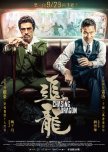
Chasing the Dragon depended on the star power of Andy Lau and Donnie Yen as the demonic duo of corrupt cop Lee Rock and triad leader Crippled Ho to carry it. While following the lives of the real-life criminal partners this film faltered by trying to portray them in a more noble light.The two characters meet when Ng Sik Ho and his crew are busted, and Lee Rock sees a use for them. During a particularly brutal gang fight filmed from above and on the ground, Ng is crippled saving Lee Rock's life, thus the nickname. The film shows the rise of the two in their fields and the deep comradery they developed. Eventually, suspicions and differing goals begin to chip away at their trust and friendship.
Ho and Rock are shown almost heroically at times. They are family men with deep loyalties to their people. Rock's system for organizing the gangs and doling out the money is praised for reducing gang wars. Crippled Ho shines with his loyalty to family and friends. The British were portrayed as OTP evil, with no redeeming qualities and the only reason corrupt cops and drug dealing triads existed. If there were no British there would be no need for corruption, triads, drugs and prostitution. What? Yes, the British rule was highly problematic, and I have no argument with them underlining those issues, but these two men were feeding on their own people dealing in heroin for Pete's sake. Ho and Rock were bad guys, not heroes. Lee Rock was known as the 500-million-dollar man for what he made off of the crime trade. Show their hatred for the British but also show the toll of their actions on their own people. Instead, director Wong Jing seemed to want us to empathize for them which I found incredulous.
Aside from portraying the leads as honorable without acknowledging their dark sides, the film lacked in character development for the side characters. When crew members are killed off, the camera lingers, the music swells, yet without a proper bonding with the characters those scenes left me unaffected. There are numerous deaths. While the movie isn't gory, the body count is high. Again, these are murderous drug dealers and very corrupt cops. Not going to feel sorry for any consequences they encounter.
Andy Lau plays the role he has done before, this time smooth and suave. Donnie Yen in a host of really bad wigs struggles more with a performance that should have been menacing yet didn't always come across that way. It didn't help for the first part of the movie he was playing a character much younger than himself. Kent Cheng showed up as Lau's sidekick without much to do. The women were briefly shown for window dressing.
The fights were well choreographed by Yuen Bun, Yan Hua, and Yu Kang. Though Yen is getting older he showed how to fend off several baddies with a coat! Many of the fights were gang against gang with constant action. The brawls tended to be more entertaining than the movie around them.
The draw of Yen and Lau is inexorable for their fans, of which I am one. The fights filled in the gaps between scenes, but much was missing from this tale of two charismatic criminals. Despite the fact these guys were corrupt, dealing in death and drugs nothing felt very ominous. Rendering them as almost folk heroes against the Brits felt disingenuous at best. Instead of Chasing the Dragon (looking for a heroine high) it felt more like Look at the Cute Lizards (can someone pass me a Tylenol?).
Was this review helpful to you?
This review may contain spoilers
The shadow shapes everything. The light illuminates it.
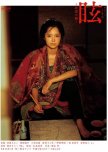
The current synopsis tells the entire story of the special on Katsushika Oi so I won’t go much into the story for this review. I wanted to write something to highlight this interesting special to draw attention to it.Oi and her famous father, Katsushika Hokusai, are at the center of this special. Though their relationship isn’t delved into very deeply it does show some of the conflict and comradery between them. Two artists obsessed with becoming better, letting everything else fall by the wayside. Along with their artistic disciplines there was a glimpse into their domestic habits. Neither cooked or cleaned, moving when the place became too cluttered.
The more Oi observed the world, the more interested she became in vibrant colors and the play of light and shadow. A fire could give her inspiration for creating new colors to work with. How much of Hokusai’s work she contributed to, especially after his stroke and/or palsy, may never be known, but her work can be seen in some of his. The ten surviving paintings directly attributed to her show a stunning use of color and shadow and also a different perspective than was often displayed at the time. This special attempts to understand her thinking as she worked through her own artistic beliefs and style.
The production values were quite good. The sets, costumes, and music all helped this viewer become emersed in the artists’ world. Miyazaki Aoi gave a wonderful performance as the daughter as consumed with painting as her famous father. Nagatsuka Kyozo’s portrayal of the wild haired artist and father was also quite good. Matsuda Ryuhei gave a nice turn in the supporting role of Keisai Eisen, an artist with whom Oi has a flirtatious friendship. It would have been more interesting for me if they could have gone deeper into what it would have been like for a single woman of advancing years staying unmarried and working as an artist with her father. All in all, as a brief look at Oi’s life and work, I found it educational and entertaining. I thought they did a good job of not making it about the more famous men in her life and giving her own artistic journey the proper attention. Even so, Oi may have been the focus of the film, her story couldn’t be told without her father. Until a light was illuminated on her own significant talent she worked in his shadow. Fortunately, a light did find the colorful storytelling in her own paintings.
Was this review helpful to you?
Don't start nothin', won't be nothin'!
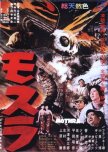
If Godzilla is King of the Kaiju, Mothra is the Queen. Lighter in tone than Godzilla (1954), yet still with a message of caring for the Earth and cooperation, Mothra carved out her own story.The synopsis tells most of the story. An unscrupulous relic plunderer kidnapped the Shobijin after an expedition to an island in a nuclear testing zone. The tiny twins had been befriended on their island by a reporter and a linguist who attempted to come to their aid in Tokyo. The Shobijin tried to warn them that Mothra would be coming for them and anyone in her way would be in great danger. Their pleading left the dastardly villain unaffected only causing him to double down on his efforts to keep the fairy priestesses to himself for his own profit.
Unlike Godzilla, who came to town obliterating buildings for seemingly no reason, Mothra was on a rescue mission. She arrived in her caterpillar form before transforming into her beautiful self. Tokyo and a major city in Rolisica (an amalgam of Russia and the US) took the brunt of her actions as she searched for her besties.
Mothra had one of the strongest casts in Kaiju filmdom. It's a good thing there was a strong cast as Mothra doesn't show up until over halfway through the movie. Koizumi Hiroshi who appeared in many Godzilla movies played the good-hearted linguist Dr. Chujo Shinichi. Kagawa Kyoko, from Tokyo Story, was the fearless photographer who worked with intrepid reporter, Bulldog, well played by Frankie Sakai. Hirata Akihiko from the original Godzilla made a welcome appearance. Shimura Takashi who starred in several Kurosawa movies, was the cranky news boss. Finally, the idols from their time, The Peanuts, twin sisters Emi and Yumi, brought the kind fairies to life. Their song "Mosura" woke their giant protector telepathically calling her to them.
Though there was destruction of buildings and cars, and the requisite helicopter blowing up, unlike in Godzilla, humans were not shown being killed. Mothra's story was gentler for a mass destruction movie as much of an oxymoron as that is. Song and dance numbers, a child looking to protect the Shobijin, and a big, beautiful monster made this movie more kid friendly, a direction Toho would continue to take the movies in, especially the Mothra movies as she evolved into a heroine.
The miniatures and Mothra were obvious toys, some more intricate and carefully created than others, but this was 1961 and viewers' imaginations played a big role in the success of these movies. I enjoyed Mosura, a somewhat slow-paced monster movie about a giant Moth stopping at nothing to save her friends.
21 February 2022
Was this review helpful to you?
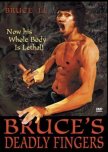
What drew me to the movie was the cast---Lo Lieh, Nora Miao, Michael Chan, a host of famous kung fu stuntmen, and Bolo even makes a guest appearance! Bruce Le was not playing Bruce Lee, his character's name was Bruce Wong, but he tried to duplicate some of THE Bruce Lee's mannerisms which came across as laughable.
Bruce Wong was trying to find Bruce Lee's secrety secret Kung Fu Finger Book which had been entrusted to his sifu. Lo Lieh, playing the Big Bad Lee Hung, was after it as well. There you go, that's the plot. Bruce Wong's sister and ex-girlfriend were kidnapped three times. Did they get their frequent kidnapping card punched each time? There was gratuitous nudity, one scene had a naked woman being threatened with a snake. Those scenes pandering to fifteen-year-old boys dropped my rating to a 1. I gave it a 1 point bump for Lo Lieh and Bolo.
The fight scenes were actually pretty good, especially the ones Bruce Le wasn't in. Wong's buddy and an Interpol agent spent a great deal of time fighting each other and the baddies as well. The strong bit part players lent to some good fights. The nunchuck work, however, like Le's Bruce Lee mannerisms should have been omitted.
The problem the director and writer had was they didn't know what to do in between fights or how to develop anything that resembled a coherent story. Let's kidnap and threaten the women again! Show some boobs! Let's have a shot of someone walking down the street or down a hallway! How about watching someone drive a car or play cards? How about two people watching television? Should we have them say anything that would be considered plot or character development? What's that?
This might have been a watchable movie if Bruce Le hadn't tried to look like and act like Bruce Lee. All he managed to do was remind me how charismatic the original was. Michael Chan seemed to be channeling his inner Bruce, too. It might have been a watchable movie if the women hadn't been there to be objectified and tormented. They didn't need the women as bait because the "good" guys were always looking for a fight anyway. This movie had a strong kung fu cast, with good fights, and a magic kung fu book, everything a kung fu movie needs. Too bad the filmmakers took the low road into exploitation.
Was this review helpful to you?
This review may contain spoilers
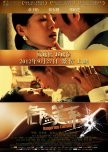
A remake of Dangerous Liaisons made with an international cast of Hong Kong, Taiwanese, Chinese, Korean, and American actors. If this is the first version of this story you've ever seen, you might be far more impressed than I was.What I liked about this movie: The cinematography was lush and the scenes were wrapped in golden light and settings. 1930's Shanghai came to life beautifully.
What didn't work for me: Mostly the acting and the reworked story. Cecilia Cheung played the Marquise de Merteuil/Madam Mo Jie Yu role. This is a key role, she was the independent, manipulative, devious mind pulling the strings in business, society, and the bedroom. She should have been the alluring lethal danger in this movie. Unfortunately, instead of displaying the cunning and cruelty at the heart of Jie Yu, Cecilia could only manage a fake smile and a grimace occasionally, bringing almost no nuance to this multi-layered character.
Jang Dong Gun in the Vicomte de Valmont /Xie Yi Fan role was pleasing enough but lacked the sexually sinister side needed as Valmont/Fan slept his way across Shanghai and ultimately tripped himself up by falling in love. Zhang Zi Yi portrayed the Madame de Tourvel/Madam Du Fen Yu role. Her performance was perhaps the most disappointing, and I'm a fan of hers. Somehow, they transformed her into a frumpy woman, a woman who moved and dressed like an elderly little old lady. A reserved character became almost lifeless in her hands, and it was hard to understand how Fan fell so hopelessly in love with her.
The secondary younger characters, integral to the story were given short shrift and much of their important action was done offstage.
Key parts of the original story were cut out or given to other characters. Sometimes a new vision works, this retelling of the tale did not for me. Again, if you've never seen other versions of this, this interpretation may be perfectly serviceable.
Most unsatisfactorily of all, they took the bite, rancor, revenge, and tragedy out of the ending. This cast lured me into watching yet another version of this story, bitterly disappointing me in the end. Jang Dong Gun's charisma did lift an otherwise limp version of this sexual and power games movie, but his performance wasn't enough to save it for me. Instead of Dangerous Liaisons it was more like Irksome Liaisons.
Was this review helpful to you?
Dumplings anyone?
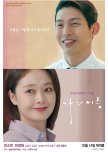
The Name is a heartwarming and bittersweet love story built on longings and lies.Ri Ae offers Cheol Woo a small fortune for him to create 20 paintings and let her sign her name to them for an art exhibit. Living in what amounts to an artistic coffin in the park, Cheol Woo ultimately, if not reluctantly, agrees to being a ghost painter. Of course, not all is what it seems with the two characters.
The Name's plot is quite simplistic, with well used tropes and twists that can be seen from a mile/km away. The characters have some growth, but little depth. Cheol Woo's supposedly ground breaking artistic style peaked quite awhile back in the real world, but I understand they needed art for the displays.
Romantic movies whether comedy or tragedy succeed or fail on the chemistry of the leads, something The Name succeeded with for the most part. Jeon So Min gave a nice but not overly wrought performance as a woman with a complicated relationship with her mother, who was dealing with her own health concerns, and living with unrealized dreams. Choi Jung Won gave a charming turn as the down on his luck but rarely down in his mood artist whose success was just always out of reach. The remaining cast give perfunctory if not inspired performances.
If you are looking for something new and innovative, this is not it, unless you haven't watched many dramas. If you are looking for a comfortable, familiar romance with two likable actors this is just the ticket.
Was this review helpful to you?
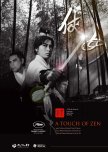
The movie opened with a spider spinning her web. Political intrigue and battle strategy were woven throughout, complex and yet fragile. This three hour movie was divided into three segments. The first focused on Ku Shen Chai, an underachieving scholar and painter and his relationship with his mother. She harangued him for his lack of ambition and single status almost constantly. Strangers began wandering into town, including Hsu Feng's Yang Hui Ching bringing with them danger and subterfuge. The second segment turned into a battle between a large troop of government troops against a small band of rebels. Ku's knowledge and battle trickery came into play as his character evolved. The third segment moved into the spiritual realm as the monks sought to have both the good guys and bad guys move beyond the temporary conflict to peace.
ATZ was unusual for a martial arts movie, the fights didn't begin until after the first hour. The movie wasn't structured around the fights, the fights were used to enhance the story being told. The cinematography, sets, scenery, and costumes were extraordinary for a 1971 Taiwan martial arts movie. Hsu Feng had helped fund the restoration of this film and for that we should all be grateful. Clear, vibrant, lush, it was a treat for the eyes. King Hu's camera direction caused the viewer to ever look upward as the film progressed, symbolic for the message being woven throughout. His fight set among the bamboo inspired later films such as House of Flying Daggers.
Hsu Feng's character was a woman who spoke few words, preferring to let her blades do the talking. Wanted by the current corrupt regime, she was aided by two disgraced generals. They had hoped to find peace far away from the palace only to have trouble and death follow them. Hsu gave a quiet, yet memorable performance. Pai Ying 's General Shih also moved through the world with little to say. Only Ku and his mother chattering about gave the film a verbal foundation to stand upon. I enjoyed all the performances with the possible exception of Shih Chun's Ku. He seemed out of place with the other actors but perhaps that was the point. His character certainly evolved the most and showed that even someone without kung fu skills could still be beneficial in times of need. Lastly, Roy Chiao's performance as a Buddhist monk still connected enough to worldly events to aid those fleeing evil and spiritual enough to care about the evil doers was quite good.
Though clocking in at three hours long, A Touch of Zen kept my attention throughout. I could easily recommend this beautifully shot movie to martial arts movie enthusiasts and those who can look past a few dated performances and special effects to see the hidden gem lying beneath.
Was this review helpful to you?
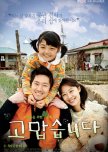
This review may contain spoilers
An old school drama that dealt with AIDS, dementia, redemption, and single parenthood in a thoughtful and compelling manner.I loved how this drama did not back away from confronting the stigma HIV/AIDS patients face, especially nearly two decades ago. Once the little girl's situation was brought out into the open, the drama used each episode as a teachable moment not just for the characters, but the audience as well. The scope of her disease was narrowed down for drama purposes but I'm glad they showed how people afflicted with AIDS need support and not ostracization.
Seo Shin Ae, as little Bom, won my heart with her performance. She moved from tears, to laughter, to precocious behavior seamlessly. She was a joy to watch.
Jang Hyuk gave a stellar performance as the closed off doctor who found redemption and peace on a small island. A family of misfits washed him as clean as the shore after the waves recede-a single mother, a daughter with AIDS, and a father with dementia in a remote community was not where this ill tempered doctor ever thought he would wind up. Throughout the drama Jang Hyuk allowed us to feel Min Ki Seo's contempt, his sorrow, his compassion, and his reluctant love developing.
The drawback for me was Gong Hyo Jin's performance. Most of the characters grew and changed, all except her Lee Young Shin. Hyo Jin excels at playing self-sacrificing doormats, but aside from a few smiles with Bom, her performance was rather one note. The writers were at fault as well, they never fully developed this matriarch of misfits. Up until the very end of this drama, I never understood her, never saw a glimmer of affection for the man they told us she was falling in love with. Her mumbling, stumbling, head down performance and frozen expression took away from the emotional depth of this drama. It was hard to hope for a relationship to develop between Min Ki Seo and this woman who could not crack her heart open long enough to share a part of herself with him.
I enjoyed this drama overall and would have loved it more if the writers and actress had let us watch Lee Young Shin grow and blossom, learn to stand up for herself and her daughter, and bask in the love of the imperfect but dedicated man who fought to stand beside her. As it was, I found Min's and Bom's First Guardian Angel and Angel friendship much more heartwarming and engaging.
Was this review helpful to you?
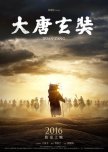
Xuan Zang set out for India, when it was forbidden to leave the country, in order to bring copies of more accurate Buddhist scriptures home. Reason, laws, and the threat of death could not deter him from his holy quest.
The cinematography was extraordinary and a treat for the eyes as Xuan traveled through both cities and desert wilderness, often alone. Varying from lush green to desolate sand and stone, and later snow capped mountains, the scenery was breath-taking. Ancient ruins, temples, and shrines are visited. Often the scenery showed him barely visible, a tiny monk making his way through a vast and sacred world. The music fit with the mood perfectly.
This is a slow, reflective film as Xuan's faith meets up against disappointment and hardship. Living in a time when I can find information with the push of a button, I'm in awe of someone who was willing to risk death, imprisonment, starvation, and thirst to increase his knowledge and faith and then the overwhelming desire to bring it back home again to share. His journey took between 16 and 19 years depending on the source and he covered over 25,000 km (15,534 miles). This film gives a glimpse of what he accomplished, the people he met, the effect he had on others, and the joy the scriptures brought to him. There are a couple of narrative hiccoughs when an inexplicable time and place jump occur, but that's a rarity, and a small quibble. The censor's heavy hand causes a few shadows as well. For the most part this is a film to soothe the eyes, ears, and soul. Every moment and person is treated as holy and a gift. It may be the idealized version of his life but it was a pleasure to sink into it and let the beauty of the colors and notes and love for all life wash over me.
Was this review helpful to you?


