

 135
135 431
431 16
16 2
2 6
6 3
3 8
8 10
10 3
3 13
13 1
1 1
1 1
1 1
1 2
2 6
6 8
8 5
5 9
9


Nothing goes to waist in this short film!
I started this short film trepidatiously due to the title---My Wife Got Fat. Too often fat shaming is condoned and can be cruel and demoralizing. Thankfully, there was no judging or taunting here.When a wife wakes up to find she’s gained 2.2 kg/ 5 lbs she becomes frustrated that she’s gotten “fat.” Her husband doesn’t say much but begins to observe her. What he discovers touches him and he makes a plan.
Jang Young Nam played the anxious and loving wife and mother. It was hard for me to think of this slender woman as “fat.” I kept hoping her husband and sons would tell her how beautiful she was and to not be discouraged. Kim Tae Hoon brought a tenderness and understanding to the husband. Kim Joon as the youngest son is one of the most adorable child actors around. Fortunately, Ahn Ji Ho’s teenager wasn’t awful like so many teens are shown as being and was also enlisted to help the mom out. Throw in a cute dog and this family was about as perfect as they get. The resolution made the husband even more endearing.
With all of the dysfunctional families in Kdramas it was a joy to see a loving, supportive family. Though not even in my dreams could I aspire to be as “fat” as this thin mother. The mom was beautiful, active, and cared for her family and never should have felt less than. Apparently, not only beauty, but fat is in the eyes of the beholder. Thankfully, the beholder in this film saw his wife through the eyes of love.
21 November 2024
Was this review helpful to you?
Homage to Jimmy Wang Yu's One-Armed Swordsman
Wu Xia aka Dragon was a nice homage to The One-Armed Swordsman, even casting Jimmy Wang Yu as the Big Bad. My review is based on the shorter international version which was thankfully subbed and not dubbed but was still almost 20 minutes shorter than the original version.Liu Ji Xi makes a living making paper and lives with his wife, stepson, and young son. Their lives are quiet and idyllic until one day two notorious criminals who have escaped custody break into a shop and brutalize the older couple who own it. Ji Xi clumsily stumbles in and intervenes. Afterward when the village is celebrating Ji Xi’s heroic acts, Detective Xu Bai Ju arrives. He believes that there may have been more than luck involved when the simple papermaker defeated too skilled killers. His suspicions are confirmed when the 72 Demons Gang attacks the town in search of Ji Xi.
Donnie Yen played the papermaker with a mysterious past giving the kind of performance you’d expect from him. He also choreographed the fights which meant they were entertaining to watch. Tang Wei played his wife, Ah Yu. Sadly, she didn’t have much to do in this film. Ji Xi’s bespectacled antagonist was the investigator played by Kaneshiro Takeshi who had his own murky past. I suspect some of the edits came at the cost of Kaneshiro’s character as there was more to him hinted at than what I saw. I would like to think Tang Wei’s time was also cut because in the 97-minute version she was criminally underused. Jimmy Wang Yu played the nefarious Master of the 72 Demons gang who was a formidable martial artist. I was never a fan of Jimmy’s old kung fu flicks, even blasphemously the original One-Armed Swordsman. To my relief, he gave a more nuanced, if menacing, performance here. Kara Hui (My Young Auntie!!) bounded in as one of the Demons and at 51 years of age held her own with Donnie in their choreographed fights.
Dragon had superb fights, two male leads with painful pasts trying to make the best of their lives, and a thriller element when the 72 Demons came to town with swords drawn. The film called into question whether there was room for empathy in enforcing the law. Dragon might not have broken any new ground, but it was stylishly filmed and well-acted. Not a bad way to spend an hour and a half.
7 November 2024
Trigger warnings: Body parts went flying in three different scenes as well as a tooth
Was this review helpful to you?

Special of the day!
Grand Maison Tokyo was a “grate” drama where the chefs “whipped” up “un-brie-lievable” dishes all while showing that cooking can be transformative. Broken friendships were “heel-ed” and new ones were created out of the “ingredients” of respect, forgiveness, and the mutual love of “egg-cellent” food. Oh, yeah, there will be puns, I’m on a “roll!”Obana Natsuki has been reviled as a terrorist for three years ever since his crew in Paris catered a dinner and a diplomat was accidentally given food contaminated with nuts and collapsed. Everyone involved took a hit, the restaurant and chefs, and the politician and magazine writer who extolled and recommended the restaurant. In the world of high-end food making a mistake was nearly a death sentence and some of those involved were looking for revenge.
Hayami Rinko is a fifty-year old chef who desperately wants to work at a Michelin starred restaurant. As luck would have it she and Obana bump into each other in Paris. The persona non grata talks Rinko into a partnership and financially backing a restaurant in Japan assuring her that he can not only gain her a Michelin star, but three. Obana contacts his former colleagues who are also working in Japan with measured success. Many people never want Obana to step foot in front of a stove again.
Obana’s people skills weren’t “berry” “gouda”, even at that he went about solving people’s problems like a “souper” cranky Mary Poppins. Instead of an umbrella, he carried a set of knives. Many of the characters struggled “pudding” up with him until they discovered his heart of gold. At the Grand Maison food and “thyme” mended the deep wounds of the past as those hurt or angered by the scandal found “peas.” While cooking for the chefs was a passion with the “beet” of a religious fervor, they found that they “cod” “yolk” around and find their smiles again. Love for two of the chefs was here today and gone “tomato” as the women in their lives did not like being put on the “back burner.”
It wouldn’t be a food drama without some cooking drama and competitions! Obana and Rinka, along with their team had to discover what ingredients made the perfect “matcha” and plate it in the most “a-peeling” manner. The competing owner of Gaku wasn’t afraid to play dirty and also had deeper pockets for expensive ingredients. Eto was just the “wurst.” He and another invested individual planted “im-pasta-rs” with Team GMT putting the Grand Maison in a “jam” at times. Lucky for Team GMT they had a “latte” “loaf” for creating perfect dishes and ability to forgive “pour" decision-making. They weren’t afraid to “whisk” everything in the search for the most delicious food they could create. When the chefs became discouraged there was always someone to give them a “Riesling” to believe.
Even better than the gorgeous meals the chefs created was their “stirring” loyalty to each other and their “perfect blend” of intriguing characters. Any way you “slice” it, Grand Maison Tokyo was a “mash” made in heaven of good performances, delicious looking food, and engaging characters. It was “shrimply” irresistible.
5 September 2024
Was this review helpful to you?
"Life itself has its own life"
If you watched Everything Everywhere All at Once and thought it was overly simplified and spoon-fed its audience, Leonor Will Never Die might be the reality tripping, mind bending movie you want as long as you don’t mind a bare bones budget. Director Martika Ramirez broke the fourth wall and the 5th dimension.Leonor worked in the movie industry until tragedy struck. Now ten years later, she and her son Rudy barely speak to each other and literally can’t keep the lights on in the house. She decides to dust off an old script and finish it hoping to help pay the bills. Before she can wrap the story up she’s hit in the head by a flying television and sent into a coma. She enters the world of her script and discovers the traumas she’s put her characters through.
The above paragraph sounds similar to other “entered a make-believe world” dramas and films we’ve all seen. Then Ramirez added a ghost that everyone could see, a pregnant man, and strange criss-crossings of realities. She even threw in a song and dance number. I’m not familiar with 1970’s-80’s Filipino action flicks but Leonor’s re-enacted film looked much like old Hong Kong films from the same time with the same chicka-bow-wow music.
I have no idea if Ramirez wrote this to speak about some deeper social commentary. Should we stop extolling violence to resolve problems, poor Ronwaldo was tortured by Leonora’s writing. Was the story a way for Leonor to work through her grief? I spent most of my time trying to figure out what was going on as the characters and story jumped from one reality to the next. At one point, when Leonora disappeared, the doctor told her son to not bother looking for her. She’d seen this kind of bizarre thing before when people needed to finish their stories. The doc looked at the distraught son as if to say, “Writers, am I right?” Martika Ramirez used comedy, violence, family, and supernatural occurrences to take a woman near the end of her life on a trip that could be described as a “dream within a dream*”--- especially if she’d had spicy food and cold medicine mixed with alcohol before bed.
24 August 2024
*Princess Bride quote and/or Edgar Allen Poe
Was this review helpful to you?

"I don't have time to get mad anymore"
Filipina director Mae Cruz Alviar and writer Enrico Santos put their own stamp on the relationship time travel trope. They didn’t break new ground but they did commit to their story and characters in a way that came across as authentic.Mary and John have been married for years and have a son together. Mary still deeply loves John and has built her world around helping him to fly while John has become selfish and angry. John never has time for her or their son, Austin, especially after Austin failed to make the football team. Austin tells his dad that Lodz has been talking with him and that everything is going to work out, his dad just has to figure out what he really wants. John asks who Lodz is and Austin shows him a picture of Jesus. When Mary dies the next day, John has his own meeting with Lodz who has a proposition for the guilt-ridden man.
John had a little over a day to put things right and save Mary. Not really long enough to have a complete personality change and to its credit the film showed John faltering at his first challenge. He was smacked upside his head with what was really of value in his life and how much time he’d wasted thinking only of work and himself. The people around him had suffered and been starved of his affection and attention. Mary was a skilled chef and she wanted to fly. Austin was a gifted pianist ready to fly if given the chance as well. John’s eyes were opened to the love and happiness he’d been shutting out for years and how badly he’d hurt his family.
Few people are given second chances and John learned about redemption, accountability, and regret in a crash course delivered by an electrician to help him see the light. Normally, this is the type of film I’d give a 7.5 to for being a good average movie, but I bumped it up for the commitment the filmmakers showed until the end to not take the easy way out.
11 August 2024
Was this review helpful to you?

"This is my prisoner"
If Sergio Leone had been a woman, Indonesian, and used motorcycles instead of horses, he might have made something like Marlina the Murderer in Four Acts. Thankfully, Mouly Surya is a woman and she created this beautifully shot, unflinching look at a woman alone who faced a gang of bandits in a desolate landscape with only her wits and courage. Contrary to the title, Marlina wasn’t a murderer except perhaps in the eyes of the men in the film.Widow Marlina lives in a remote area tending her livestock. Unwanted guests come in the form of 7 bandits intent on stealing her animals and raping her. Two of the bandits leave with the animals---they were the lucky ones. The next day Marlina sets out walking carrying the leader’s head in a bag with the intention of reporting the incident to the police. Nothing goes easily on the long journey into town and the return trip home, especially with the remaining two bandits searching for her.
When I researched this film in order to submit it to the MDL DB, the words revenge, redemption, and murderer were thrown around by reviewers and in the film’s description. After watching the film, I wanted to ask these people, “did we watch the same thing?” If a man knew he was about to be gang raped and murdered and defended himself would anyone be saying he was vengeful or a murderer? Would he need redemption and forgiveness? Not. A. Chance. I was so proud of Marlina when her friend asked if she wanted to go to church and confess her sins, Marlina replied, “I have no sins to confess.” No, girl. You did not. And her friend, Novi, would understand Marlina’s “sins” before the credits rolled. Marlina may have seen Markus’ headless body following her playing his musical instrument as she traveled to the police department, but it certainly wasn’t out of guilt and the tactic wasn’t used for very long. It actually came across humorously.
Despite a sexual assault, this was not a sexploitation film. And despite defending herself, Marlina was not a kung fu badass. She was a woman who used her wits to protect herself and also tried to do the right thing. When she attempted to report the crimes committed against her, she ran into officials who couldn’t have cared less and would have gone after her if they knew all that happened.
Director Mouly Surya and her cinematographer Yunus Pasolang provided incredible cinematography. The bare, endless rolling hills showed just how isolated Marlina was. This was not an action-packed, fast moving film. The story unfolded at a deliberate pace slow enough that the viewer traveled the long trails and experienced the excruciatingly suspenseful perils with Marlina. I also enjoyed the headings for each act. Setting the mood was a lovely blend of Ennio Morricone* inspired western score and Indonesian music.
Marsha Timothy gave Marlina a gravitas and vulnerability with few spoken words. Dea Panendra as the very pregnant Novi at first came across as a thoughtless airhead, but when thrown into the thick of things Dea displayed a greater acting range as her character faced dire circumstances. Which brings up another thing that women have no control over. With her baby long overdue, Novi’s husband and mother-in-law were convinced it was a sign she’d been unfaithful as the baby might be breech.
Marlina the Murder in Four Acts was a western with a decidedly feminine slant. It was also gorgeous to look at and listen to. Marlina might not have been a gun toting or sword-wielding superwoman, but how many people do you know who could not only protect themselves but wander through the countryside with their “prisoner” in a burlap sack?
6 August 2024
*Composer for such Sergio Leone movies as “The Good, The Bad, and The Ugly” and “For a Few Dollars More”
Was this review helpful to you?
Simply wonderful
Ann Hui took a subject that could have been melodramatic and maudlin and handled it with subtlety and quiet grace. A Simple Life gave a glimpse into Hong Kong nursing homes and the challenges of caring for and taking care of the elderly. Andy Lau and Deanie Ip had a beautiful chemistry as boss/surrogate son and maid/surrogate mom.Ah Tao has been serving the Leung family for 60 years going back to the Leung grandmother matriarch. She continues to work for Roger, the Leung son residing in Hong Kong-cooking, cleaning, and even nursing him after a heart attack. Roger is a film producer who often travels for his job yet he always knows an exquisite meal and sympathetic ear will be waiting for him when he returns home. On his latest trip Ah Tao has a stroke. Unwilling to be a burden she retires and decides to enter a nursing home. Roger checks the place out and tells her he will be visiting her. Unlike the sons of other residents, he keeps his word.
Ah Tao had always taken pride in serving Roger and his family. The role of being provided for was an unfamiliar and uncomfortable one. Though she often refused money, the sight of Roger visiting caused her eyes to light up. During the first scene of the film no words passed between them as Roger ate, now when he arrived, they ate together, laughed, and enjoyed each other’s company. Never ashamed of her, he called her his aunt when she accompanied him to a movie premiere.
The view into the nursing home was difficult. Ah Tao’s room was little more than a cubicle with a curtain for a door. She was around people in varying states from vegetative, with dementia, or still quite mobile. As people came and went, she knew one day she too would leave and not come back. Death was no stranger to the home. Ah Tao was feisty and generous, not letting anyone put her down. Even as her body deteriorated, her spirit soared. Though Roger doted on her, he never fussed over her, giving her the space and dignity she required. Deannie Ip gave a wonderfully complex performance as Ah Tao dealt with her health issues, adapted to life in the nursing home, and the change in her relationship with Roger. Lau’s Roger calmly accepted his role of caregiver without complaint as his character showed how much the older woman had come to mean to him.
Director Hui could have taken the easy path and attempted to manipulate the audience’s feelings. There was no hysterical crying or deep soul wrenching conversations. Instead, she portrayed Ah Tao’s health and future matter of factly. No evil nursing home personnel or family members tried to take advantage of her or come between her and Roger. Instead, the film focused on the universal challenges of growing older-facing deteriorating health, the financial and emotional costs, and how different families reacted to those challenges. In this slice of life, Ah Tao and Roger effortlessly displayed the ease of two people who loved and respected each other. At 2 hours the slow, character driven story might have been too long in someone else’s hands, but Ann Hui allowed her actors to shine as their characters showed the importance of loyalty and devotion especially in the difficult times in this touching film.
5 August 2024
Was this review helpful to you?

Invitation or Cancellation?
While researching films directed by women, I found this appealing short film by Jang Yi Je. I tried to discover more about the people involved with the making of this film, but this obscure short was lost in the vast space of Pluto titled films and shows. I suppose the numerous Pluto named entertainments could offer solace to the poor bullied planet that was kicked off the starting team of planets in our solar system. #justiceforpluto! But I digress…Yeon Woo is getting married soon, but has one person she needs to see first. She visits the best friend of her childhood, the person she can’t forget. Se Jeong has a pottery studio and is less than thrilled when the familiar face drops by after too many years apart.
Pluto teased a more complex story of familial and societal expectations and judgements. As happens so often in these stories, one person gracefully accepted who she was and the other bowed to the pressure to fit in and be “normal.” How far was Yeon Woo willing to go to please others? Small hints piqued my curiosity. Based on one comment I wondered how controlling was Yeon’s boyfriend. Se Jeong had hated the pottery studio as a child and now creates works of art. I would like to have known her backstory as well. My biggest complaint other than the blown-out photography was because it was a pottery studio, the film succumbed to the overly used Ghost trope.
These short films can be maddening when they seem to have enough material for a full-length film. In a mere twenty minutes, I began to feel invested in these two women and their stories. Was their love deep enough to forgive the past and courageous enough to walk hand-in-hand into the future?
1 August 2024
Was this review helpful to you?

"Don't come back!"
If you are curious about those insanely expensive grapes sold in Japan, The Grapes of Joy gives a tiny insight into how they are grown. I’ll admit the heartwarming part of the story was something that attracted me, but the hyperventilating, inept, female lead hired for her smile dragged it down for at least the first half of the movie. This type of overly-enthusiastic character is hugely popular so this is just my curmudgeonly response to her.Soma Haruna shows up late to her interview at Minamoto Kitchoan but the president of the company has mercy on her and lets her interview. Her sob story gets to him and she is hired despite everyone else’s reservations. Haruna is shuttled from department to department after making hilarious and kindhearted mistakes until the only place left for her is working in the vineyards where the grapes are grown for the company’s signature treat. There she meets the owner of the vineyard, Akiyoshi Shinsuke, who has no desire for her to work for him. Haruna doesn’t know the meaning of the word “no” and continues to show up every day.
Within the first 30 minutes, Haruna---fell dramatically twice, was late for her interview, lost her wallet, lost her phone, presented an error riddled resume, ruined two batches of candy, left the candy store and register unattended, got lost, ran a customer off with her pushy, unrestrained enthusiasm, nearly ruined expensive grapes, demonstrated no self-awareness or ability to follow simple instructions, and was unable to comprehend when people were making fun of her. I know I was supposed to be charmed by her, but I sympathized with her supervisors. I wouldn’t have hired her to water my houseplants while on vacation. At one point when she was relegated to making copies I wondered if she’d accidentally and hilariously burn the building down. Of course, Haruna discovered Akiyoshi’s secret pain and worked to save not only the grapes for the company but also heal the older man’s heartache.
I found the grape growing aspects of the film interesting though there wasn’t much to be learned. Haruna calmed down the longer she worked at the vineyard and began to think beyond her own desires around Akiyoshi, which helped my viewing experience. The Grapes of Joy worked hard to be heartwarming, maybe a little too hard and obviously.
15 July 2024
Was this review helpful to you?
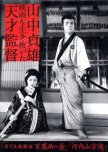
Sazen Tange and the Pot Worth a Million Ryo
5 people found this review helpful
Treasure map to a hidden gem of a film
I braced myself when I started Tange Sazen and the Pot Worth a Million Ryo. Having watched numerous films from the 1920’s and 30’s, I’m used to darker themes and sadness. To my relief and surprise, this 1935 film was a delightful, lighthearted romp with no undo suffering in sight.A miserly daimyo lord discovers that the old, dirty, monkey pot he’d gifted his brother turns out to hold a map for a million ryo hidden treasure. The brother, Genzaburo, is dominated by his beautiful wife and offended at the cheap gift. When the daimyo’s retainer generously offers to take the "worthless" pot off his hands, Genzaburo refuses. He’s excited when he finds out about the treasure map, but also thwarted when his wife tells him she sold it for a pittance. The missing pot actually gifts him with something better than money. In order to search for the pot, he’s able to leave the house unattended!
“Edo is huge. It might take 10 or even 20 years. It’s like going out for revenge.”
The pot ends up in the hands of an orphan who uses it as a goldfish bowl. Both pot and child are taken in by the one-eyed, one-armed ronin, Sazen Tange. Sazen is also henpecked, not by a wife but by the proprietress of the shop he guards. There are gifts for sale and men can come in to eat and drink and shoot arrows at targets, much like at an arcade. The fun begins as multiple people search for the pot in earnest and Genzaburo delays finding it so that he can have some fun.
I don’t always connect with the humor in nearly 100-year-old films, but I laughed out loud a couple of times with this one. Even when they bickered and verbally refused to do the right thing, the characters always ended up being generous, protective, and kind. There were a few, quick samurai fights and sparring, but nothing to ruin the gentle mood.
This Tange Sazen film was a beautiful hidden gem, highlighting some of the best of humanity in a humorous way. I wish more of director Yamanaka Sadao’s films had survived. I look forward to trying his other two extant films.
8 July 2024
Was this review helpful to you?
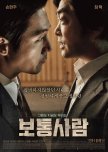
"It ends fast if you stay still"
What will an Ordinary Person do in the face of poverty and corruption? Will an Ordinary Person fight for the children’s future at the cost of his own? What would an Ordinary Person do for his child’s health and future? Set in Seoul during the turbulent 1980’s, two ordinary men would have to decide how much of themselves they could give away and whether they could do something extraordinary.Kang Sung Jin is a police detective barely making ends meet with a mute wife and a son who needs an operation on his leg. Providence seems to reach out and touch him when Choi Kyoo Nam of the Intelligence Agency gifts him an envelope containing evidence of a serial killer. The killer just happens to be in Sung Jin’s jail cell. It’s up to Sung and his partner to gather the witnesses and coerce a confession from Kim Tae Sung. It’s not long before his friend and reporter Chu Jae Jin, points out conflicting evidence putting Sung Jin in not only an ethical dilemma but both men in a life and death one.
The events in the movie lead up to the 1987 Defense of the Constitution and demonstrations. Torture and forced confessions were business as usual. Jang Hyuk’s Choi Kyoo Nam was ruthless and saw those beneath him as mere dogs which he could order to do his bidding. If they faltered, he would just make dog stew out of them. The Intelligence Agency had its tendrils everywhere.
Ordinary Man forced its characters to dig deep and make diligent and dangerous decisions. Like in an old Kaiju movie, the monster didn’t truly reveal himself until the forty-minute mark. The film could have used some trimming to narrow down the story and focus. It started out with a comedic chase, but anyone who has watched Korean movies knows better than to take that bait, it’s never long before the pain sets in.
Sung Jin found that once you did the devil’s bidding, there was no turning back. A new car, money to spend, an operation for his son all seemed like a dream come true until it became a nightmare of agonizing ethical choices. Choices had consequences, terrible irrevocable consequences. This was not an action movie, and only the framework had to do with the pervasive corruption in society. At its heart, the film asked what would an ordinary man do when faced with dire moral challenges never knowing if his choices would change anything for the better or if he’d be able to live with them.
"If I don't fall, no one can knock me down."
5 July 2024
Was this review helpful to you?
Creative writing with a twist!
I was looking for female directors and came across this tantalizing short film. At the age of 21, Go Min Si wrote, directed, and starred in Parallel Novel.This film reminded me of the SpongeBob episode when the pencil with magical powers came into his possession. I wish this film had been longer to develop the elements we were teased with in this fleeting story. In 3 minutes Go Min Si created two worlds, filmed beautifully. With no spoken dialogue the emotions were played out perfectly with body language and aided by the tense musical background. There was more suspense in 90 seconds than some movies accomplish in 2 hours.
What I loved the most about this concise and well paced film was that the female character stood up for herself against a terrible male writer who had subjected her to some of the worst tropes aimed at women. I only wished she had taught him a better lesson!
Go Min Si showed great promise with this short film. I'm disappointed that 8 years later she hasn't had any more screenwriting or directing credits. I'd really like to see what she could do with a bigger budget and full length format. If you have 3 minutes to spare, I could easily recommend Parallel Novel.
19 June 2024
Was this review helpful to you?
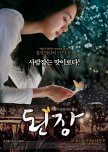
"You wait"
The Recipe began with a transformative bowl of stew and then worked its way backwards to the origin of the enthralling recipe. There were slow moments where the film tended to get lost in the weeds of the intricacies of making Doenjang Jjigae, but all was forgiven as the investigation finally revealed the truth.After his execution, Kim Jong Gu’s last request sets investigative reporter Choi Yoo Jin on his tireless quest to discover what kind of stew would be the murderer’s last thoughts. As Choi digs into the story he ascertains that the stew was so fragrant and delicious that Kim never felt the cuffs being put on. In fact, the officers were frozen at the tantalizing smell. In his efforts to track down the woman who made the doenjang, he meets one by one all the people who helped with the extensive steps she took to make the magic happen. Choi’s boss isn’t enraptured with the tale but that doesn’t stop the intrepid reporter until at last he learns how love and tears contributed to the story.
While I enjoy recipe detective work, the fine details of each step of the process often bogged the film down. If you are watching for Lee Dong Wook, you may be disappointed. He doesn’t show up until over an hour into the film. This was largely Ry Seung Ryong’s film as Choi Yoo Jin. The veteran actor showed Choi going from cynical to obsessed over the effects the stew had on people and the extraordinary details that went into it. Finally, his journey would lead him to the tragic love which inspired Jang Hye Jin’s recipe.
Anna Lee (Lee Suh Goon) directed and co-wrote this film. Her painstaking attention to food and ingredients and all the people whose hands touched the different elements was intriguing. In the same way Hye Jin had to wait on her soybean paste to ferment, this film will make you wait for the emotional payoff. Ultimately, the conclusion I came to was one any child or grandchild knows instinctively, food made with love and loving attention is the best.
17 June 2024
Was this review helpful to you?
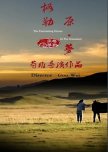
The Fascinating Dream in the Grassland
5 people found this review helpful
Dream vs Reality
Fascinating Dream in the Grassland was shot so realistically that it was difficult to tell whether it was a short film or documentary. At only 13 minutes long, the film told the story of Gele/Garus and her love of dance and her love for her family.Gele lives on the Tibetan grasslands with her family. They are the last generation of grazers and herders. There are sheep, yaks, horses, and cattle grazing on the vast grasses. When her father takes a herd to graze further away, Gele must help her mom with the animals left behind. As she works in the fields, Gele dances and dreams of going to the big city to learn more and perform. Gracefully and joyfully, she lifts her arms and moves her feet to the songs in her head. Her dream is compared to the familial needs as her grandfather and brother state her responsibilities to their family in their remote life with their herds.
Gele’s father will make the final decision whether she can leave and if they have the money for her to go. And Gele will have to decide what she truly wants. Whether performing in front of people is her dream or dancing on the grasses with the mountains in the background.
The cinematography was stunning with the grasslands and mountains as the backdrop for the story. The acting came across very naturally as if it was a documentary. For a short film, Fascinating Dream gave an intriguing glimpse into a young woman’s heart and a fading way of life.
27 May 2024
Was this review helpful to you?

"The more secrets you know, the sooner you will die"
Flying Swords of Dragon Gate Inn was a weirdly addictive drama despite uneven storytelling and even more uneven acting. If you are looking for a drama centered around the famous Dragon Gate Inn, look elsewhere. This inn might as well have been named the Flamingo Palm Tree Inn as little as the mythology of the inn played into the story. If, like me, you see where Nie Yuan is listed as a main character, prepare to be disappointed. His Zhao Huai An was a supporting character who occasionally lent emotional and martial arts support. This was primarily a palace drama and a case of missing royal twins who grew up to be the princess and crown prince. The only trouble was, only one person knew how to identify them and he wasn’t talking.There will be slight spoilers from the first few episodes in the next *two paragraphs* to follow because the synopsis is not what this drama is about, if you want to avoid them, please skip down to general comments:
*The emperor’s consort Lady Lan bears him twins while he is away. The jealous empress manages to steal the girl baby while Dr. Feng quickly takes the boy child and gives him to General Yu who hands the baby off to Zhao for safe keeping. The eunuch and close ally to the empress, Wan Yu Lou, accidentally kills Lady Lan. The emperor returns to find Lady Lan dead and only a deformed daughter that he orders to be killed. Wan and the empress work to cover up their vile deeds with Wan agreeing to secretly adopt the baby princess. The two are determined to find the missing crown prince as well.
*Twenty years later Hu Zhong Yu is one of Zhao’s disciples, though Zhao isn’t around much. Hu also vowed to protect the young master of the Ma clan, Ma Tian You. When the Wanma Hall is destroyed and the young master goes missing Hu goes in search of him. During this time, he rebuilds the Dragon Gate Inn with the help of the Xia princess Bu Lu Du and tomb raider Gu Shao Tang. Later, Hu sees Tian You entering the palace grounds and follows him. Dressed as a eunuch Hu ends up serving the Western Depot under You Jia and his second in command Yu Hua Tian, a no-nonsense warrior who unknowingly to You is one of the adopted daughters of the evil Eastern Depot commander, Wan Yu Lou. Hu and Yu find themselves going from adversaries to allies as they struggle to survive the dangerous politics of the palace driven by an incompetent emperor and a treacherous Eunuch Wan.
This drama focused on the relationship between Hu Zhong Yu and Yu Hua Tian. The two actors had a nice chemistry together and were fun to watch. The other dominant stories involved Wan and his “daughters” and how he used them to gain power and advantages over his enemies. Zhou Huai An and Jin Xian Gyu showed up to guide the patriotic rebels against Wan and to give sage advice. Two of the most annoying characters to ever set foot in Dramaland were the princess Bu Lu Du and tomb raider Gu Shao Tang. They bickered non-stop and fought over Zhong Yu for 38 ½ episodes. They were childish and downright dangerous to have as allies. With the exception of Yu and Jin as the drama progressed, most of the female characters were not shown in a positive light. Thankfully, Yu, for the most part, was a thoroughly competent warrior and character. She protected those she loved and was unafraid to stand up to evil. On a side note, I was happy to see old kung fu movie star, David Chiang, in the role of Dr. Feng.
While there were scenes at the Dragon Gate Inn, they were few and far between. Most of the action took place at the palace. The “Who’s your daddy?” storylines gave a slightly different angle to the usual fight for the throne trope. It also changed relationship dynamics when people thought they knew who the royal children were and caused heartache as well. The censors could be felt when characters awkwardly declared that love was only between a man and a woman. This sentiment was largely overshadowed as one of Wan’s daughters deeply loved Yu thinking Yu was a male eunuch. Hu fell in love with Yu thinking the same thing. Both still loved Yu when “he” was revealed to be a woman. Love was love regardless of gender which felt like a bold step for a Cdrama. Flying Swords of Dragon Gate Inn could be campy and fun, dark and emotional, with terribly uneven acting and annoying characters, but it was also hard to stop watching.
27 May 2024
Was this review helpful to you?


