

 135
135 431
431 16
16 2
2 6
6 3
3 8
8 10
10 3
3 13
13 1
1 1
1 1
1 1
1 2
2 6
6 8
8 5
5 9
9


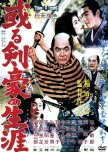
"Heihachiro of the nose is standing guard for lovers!"
Based on French playwright Edmond Rostand’s Cyrano de Bergerac, Samurai Saga may be the definitive film version of the story about a poetic swordsman who believes no woman could love him because of his large nose. Mifune Toshiro gave an emotionally compelling performance as the humorous and heartbreaking samurai who was willing to set aside his own feelings for the happiness of the woman he loved.Komaki Heihachiro is a gifted swordsman and poet, able to do both at the same time. He’s in love with his childhood friend, Lady Ochii, never letting on how he feels. She falls in love with the handsome Jurota believing him to have a noble mind. She begs Komaki to protect him which her friend reluctantly does. Turns out Jurota doesn’t have many creative thoughts which puts a damper on the romance. Komaki writes poetry for him to claim as his own which lures the lady back in. On a night before the two are called to battle, hidden under the moonlight, Komaki declares his love and yearnings through Jurota to Lady Ochii.
Samurai Saga was a full-blown romantic triangle featuring true love, poetry, humor, sword fights, bloody battles, and tragic revelations. Mifune Toshiro played Cyrano/Komaki. He managed the humor while dialing back the full manic he displayed in Seven Samurai and Rashomon. His scene under the moonlight and his final scene with the Lady Ochii were among some of his best work I’ve seen. Heartachingly vulnerable and brave at the same time. With Mifune it took little imagination to believe he could take on 25 attacking samurai and live to tell the boisterous tale, his romantic side was the revelation. Takarada Akira (Godzilla 1954) was the handsome and forthright samurai lacking the deep thoughts his lady so desperately craved. I was more familiar with Tsukasa Yoko’s work in Ozu films, but here she was convincing as the lady in love with the poetry and letters not written by the fair face she thought owned her heart.
Samurai Saga was a funny and sorrowful tale of poetic misunderstandings. Though theirs was a world of turmoil and shifting political powers, the three people ensconced in their romantic triumvirate saw only the face of their beloved. The mask of the undaunted and beautiful spirit would ultimately be revealed under the gentle fall of cherry blossoms in one of Mifune’s finer performances. If you enjoy older Japanese films or adaptations of Cyrano de Bergerac this would be one to try.
"Empty handed I journey to the moon, only taking my undaunted spirit."
16 March 2026
Was this review helpful to you?
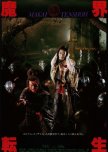
"The path of the sword is the path of hell"
Samurai Reincarnation was a campy, creepy samurai revenge film set after the annihilation of Christians during the Tokugawa Shogunate. Historical figures were tempted to reincarnate by naming their grudges or regrets.After 37,000 Christians are killed, Christian Amakusa Shiro renounces his god and makes a deal with the devil. He sets out and recruits the dead and the dying turning them into “devils”: Lady Hosokawa, Miyamoto Musashi, Iga no Kirimaru, and Hozoin Inshun. They immediately begin carving out their path of vengeful deaths and destruction. All that stands between them and burning Japan to the ground is the dying Yagyū Tajimanokami Munenori and his son Jubei.
The first forty minutes were a chore to get through as Shiro set about convincing different characters to join his devilish clan. Then Big Daddy Yagyu enters (53 minutes), played by "Lone Wolf and Cub" and "Zatoichi’s" Wakayama Tomisaburo, changing the balance and the stakes. Sonny Chiba’s Jubei finally fully joined the film after an hour. At that point, the story became more exciting and engaging with someone to stand against the devils. He certainly looked like a devilish manga character with his wild ponytail, blocky eyepatch, and shiny black costume. All he needed was a ghost killing sword---which sent him to another historical character. Sanada Hiroyuki’s ninja who maintained his humanity had a side story that like Star Trek’s famous hallway signs went nowhere and did nothing. I was really hoping for more from this character.
There were several nice fights, one was reminiscent of Mifune Toshiro’s beach battle in "Duel at Ganryu Island". Kirimaru’s attic fight was quick and exciting. But the most memorable took place in the burning palace between father and son, quite a spectacle for 1981.
Samurai Reincarnation was a bizarre vengeful horror film featuring historical figures led astray by their regrets and grudges. The rapist monk, seriously, this was a terrible time with sexploitation, was the vilest of all of the villains. Two of the recently deceased wanted to live again, even sign on with hell just for the chance to duel their rivals. They came across as terribly prideful and shallow. The one devil whose motivation I could understand was Shiro’s. He was determined to burn the Shogunate to the ground and bring on the chaos for the Christians killed and his anger at God and the nobility. Given the nobility’s corrupt and predatory practices aimed at the peasants, it was hard to root against him. But it’s always the peasants who pay whenever people in power decide it’s time to destroy whoever stands in their way. Did Jubei’s actions make life better for them? Maybe not, but he was entertaining.
14 March 2026
Triggers: Sexual assault, sexual situations, and nudity (mostly breasts and female derrieres). Heads split open. Numerous heads on spikes. Crucifixions.
Was this review helpful to you?
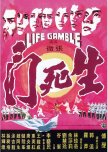
Four thieves rob an escort agency of a priceless green jade piece. Unwilling to spilt the proceeds in the future once the jade is sold, they decide to gamble for it at the infamous Golden Lion. Numerous interested parties descend on the area, all looking to either steal the jade or return it to the rightful owner. Drawn into this dangerous conflict is blacksmith Qiu Zi Yu who left the martial arts world and wants nothing to do with it.
Now as to why my faith has been shaken in Chang’s worldview. I have been annoyed on many occasions regarding the absence of female characters in his films as if half the population of the planet simply disappeared. Here there were FOUR women and just one of them was a prostitute. All were smart and capable, albeit only Xiao Hong wasn’t a criminal. There was the requisite blood bath, I stopped counting at 30 bodies, but none of the artery spewing #2 red finger paint he was famous for. And weirdly, except for Lo Meng of course, most of the men were fully dressed. Phillip Kwok had a laced-up vest but part of his ensemble was a wraparound weapon. The person who seemed more at home in a CC movie was a thief that was one pair of stiletto heels short of being a dominatrix. The muttonchop sideburns and heavy eyeshadow sported left at least part of my observations of his world intact.
The cast for this film was large meaning character development was out the window. Most characters were nefarious criminals which meant no one cared when they died. There was only a tiny handful of righteous folks trying to return the jade. Four of the Venoms made an appearance with Phillip Kwok leading the cast as the reformed blacksmith. Alexander Fu Sheng played against type as a killer for hire. Ku Feng was the constable father and Kara Hui was his investigative daughter who infiltrated the dangerous gambling den and might have found love at the same time. Most of the fighting was with weaponry both hidden and obvious.
Life Gamble involved numerous characters jockeying for allies, betraying allies, and murdering allies. No one was safe when a treasure was on the table. Few could envision a world where they would share wealth beyond their imagination. Every character went all in with their lives on the line with few living to walk away. I wish Chang Cheh would have gone all in with more capable women (not victims) in his films. In this instance he might have walked a way a winner in my view.
10 March 2026
Trigger warnings: Aside from the high body count and numerous projectile stabbings, weirdly nothing.
Venoms: The Five Venoms (1978): Phillip Kwok (Lizard), Lo Meng (Toad), Lu Feng (Centipede), and Chiang Sheng (Venom disciple). Not in this film, but part of the Venom Mob-Wai Pak (Snake) and Sun Chien (Scorpion). Not Venoms, but Johnny Wang, Ku Feng, Dick Wei, and Lam Fai Wong were also in both films.
Venom hairstyle complaint: Lo Meng's wig looked like horses had stampeded over it. Poor baby.
Random personal note: Many years ago, my friend was a flag girl for the high school marching band and I kept flashing back to their routines with the Big Bad's villainous flag bearers. They even had kicky black go-go boots ready for any halftime show!
Spoilerish note:
Lu Feng has an iron weaponized hand here and in The Crippled Avengers (1978)
Was this review helpful to you?
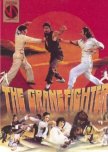
"If you had any character, you'd already be married"
Crane Fighter starring Chia Ling struggled to get out of its own way to make a coherent story, and I’m using that term loosely given the genre. Slapstick comedy juxtaposed with a high body count always takes away from the emotional stakes. Throw in some glaringly sexist language and this film was doomed to failure for me.Ping’er has been forbidden by her father from ever studying kung fu. So, she does what any dutiful daughter would do and studies behind his back. Her father was one of the few people to survive the Qing attack on the Shaolin Temple which means there are men hunting him. The imposing General Ko Chin Chung is determined to eradicate the remaining Shaolin members. Into this volatile situation struts in Blue Fan aka Busybody who is either helping Ping’er out or sparring with her after her secret is exposed. General Ko leaves no stone unturned in his effort to find Ping’er and her family and friends, something they make all too easy for him.
Admittedly, this Taiwanese film was already going to be a challenge as it was faded, the sound tinny, and the dialogue dubbed in English. Ray Lui directed, produced, starred in, and was also a martial arts director for this film. I feel comfortable laying most of the blame for the cringey sexist language at his feet as well as writer Chang Hsin Yi. Blue Fan was always dropping words of wisdom that often began with, “Women are just like children…” Minor spoiler alert, Ping’er believed her new husband would have to force her onto the marriage bed. Speaking of cringey, the comedy was the cringiest. I’m not a big fan of kung fu comedy, but the sentiment here was we need a laugh so throw the stooge into a vat of water, tofu or have the ML’s face be peed on. What was actually comic were the awful Bruce Lee wigs for the men with a pigtail tacked on.
I like Chia Ling and more often than not have enjoyed her films. She was quick and limber, capable of doing some of her own tumbling. She held up well against the larger than normal fu fighter, Chin Kang. Ray’s choreography was actually pretty good, but his filming techniques didn’t impress me on the bigger fights. The Big Bad’s weakness was ridiculous though I haven’t seen that particular weak spot before. And doubt I will again.
As much as I adore a hard-hitting woman taking down the bad guys, this film was a chore to get through. Chia Ling and her character deserved better than to be constantly belittled for being a woman, especially by the male lead. Rated on a curve.
9 March 2026
Was this review helpful to you?
The royal tutor has nefarious plans targeting the righteous Judge Bao and the emperor’s sister, Yung’an. His henchmen featuring the sinister Variegated Butterfly Hua Chong know no moral boundaries. On the other side of the spectrum is Chan Chao dubbed King Cat by the emperor for saving Yung’an. Chan tells Bao if he ever needs help to flash the Bat Signal, I mean red lantern and he’ll come flying in. Somewhere in the middle is the 5 Mice Clan. Brother 5, Pai Yu Tang the Brocaded Mouse, takes great offense to King Cat becoming the new national hero. No cat can top a mouse! The brothers plot to steal the princess’ jade incense burner unaware that Hua Chong is raping and murdering his way through the Princess’ maids which leaves Pai being blamed for the murders.
Most of the action was driven by the men in this film. Yet in walked Pat Ting Hung as Ting Yueh Hua and stole the spotlight in every scene she was in. Her swordswoman knew what she wanted and was capable of taking care of herself. The only other character who had any real sizzle was my fave, Lo Lieh, as the despicable Variegated Butterfly. Kiu Chong hammed it up as the Brocaded Mouse, but was still entertaining in his silver lamé trimmed outfits. Chang Yi, in only his third film, played the lackluster King Cat. There’s a reason he’s remembered for his villainous roles, and why he didn’t play a lot of these plain vanilla heroes. Ching Miao played the historical figure Bao Zheng in black face which was jarring to my western eyes. From what I read, the coloring meant the character was incorruptible.
Martial arts directors Tang Chia and Lau Kar Leung also worked on screen as the tutors’ minions (as well as brother Lau Kar Wing). This was not one of their better efforts. During one fight some participants were either standing still or swinging their sword at no one. There was quite a bit of primitive wire-fu as swordsmen flew up and over walls on a regular basis.
The only copy I could find was dubbed in Thai and had atrocious English subs, some of which made absolutely no sense. The dubbing wasn’t very good and actually quite funny in some scenes which could be distracting. ** I try not to let bad dubbing affect my rating but this film was a challenge. The Shaw Brothers knew how to world build with a limited budget. The sets and costumes were well crafted with beautiful dresses and hairstyles, stunning interiors and even a cave with bubbling mud pots.
King Cat had great fun with the cat and mouse antics between Chan and Pai with the adversaries having to set aside their differences to save the princess. And Pai’s brothers were obviously enjoying their mousey roles. The farcical antics and classic misunderstandings were a strange juxtaposition with the darker storyline of sexual assault and murder. While not all of the film worked for me, I did enjoy a heroine who could hold her own in battle, save herself, and make life choices that suited her as there were long stretches in the genre where that kind of feminine strength disappeared.
3 March 2026
Animal note: No actual cats or mice in the film
Trigger warnings: Sexual assault off screen. Attempted sexual assault on screen.
**Just to clarify, the Thai language was not distracting or funny, but the voice actors made some interesting choices for several voices and sound effects. I've run into similar things with English dubbing. One film had stereotypical accents such as a character with an American deep south accent, another had a British Cockney accent, and yet another sounded like he was from New York City. And I'm pretty sure the same guy did most of the voices except for the female characters. XD
Was this review helpful to you?
"You can't be a sentimental swordsman!"
The Sentimental Swordsman was a “whodunit” mystery regarding a terrifying assassin called the Plum Blossom Bandit. Despite dressing in a pink ninja costume and throwing poison darts in the shape of flowers, this baddie left a host of bodies in their wake. Based on a story by Gu Long, the film was packed with characters and red herrings.Little Flying Dagger Li is headed home with his faithful servant having been away for ten years. His sword brother, Long Xiao Yun, had saved his life during a battle with the Plum Blossom Bandit (PBB) so Li gave him his girl and his property as payment leaving afterwards. Now, the PBB has returned and Li is duty bound to bring him down. On the way he befriends a traveling swordsman, Ah Fei. Not long after returning to the area, fights break out over a golden vest that is impervious to PBB’s darts. Li is framed as the PBB with all the local clans coming after him. He stays to clear his name but his life is in constant danger from revenge seekers and the PBB.
The opening scenes and many other outdoor scenes were a stunning icy vista of snow and frozen lakes. The sound stage sets attempted to match the frosted world. Not to worry there were plenty of breakaway sets for bodies to jump or be thrown through! The pace rarely slowed down enough for the characters or audience to catch their breath.
Ti Lung was perfectly cast as the sentimental swordsman though I will argue with Li’s view that he could abandon his fiancé to another man and she’d be cool with it. Derek Yee appeared to be a stand in for the no longer available David Chiang given that his dress and character were similar to the ones Chiang played opposite Ti. Ching Li was the woman no man could deny and seeking vengeance on the PBB. Ku Feng was the blindly hypocritical clan leader who’d lost his son to the PBB. Norman Chu made an appearance as the Iron Flute whose little brother was murdered by the PBB and who also jumped to conclusions. And stiff upper lip Yueh Hua played the BFF Xiao Yun. Yuen Wah made a brief appearance as the love-struck swordsman Long Sheng.
The fight sequences were actually pretty good given that most of them were sword fights with a little hand to hand thrown in on occasion. With several acrobatic scenes you could see where the stunt doubles jumped in to lend an assist. As a Shaw Brothers movie, the characters were duty bound to use creative weaponry as well. The Poison Kid’s clan employed a variety of poisonous reptiles, big bugs, and amphibians, but they weren’t the only ones doling out poisonous treats. Thankfully, the bodies piled up without the spewing blood and flying limbs you’d see in a Chang Cheh flick.
The Sentimental Swordsman was overstuffed with characters and revenge plots, but they were easy to follow. Due to the casting, I knew immediately who the PBB was going to be. It took Li a little longer to read the writing on the wall. He could be very sentimental.
1 March 2026
Triggers: Snakes, frogs, giant centipede, big spider.
Was this review helpful to you?
The Human Condition II: Road to Eternity
5 people found this review helpful
"He who shouts the loudest isn't always the bravest"
The Human Condition II: Road to Eternity picked up not long after the end of the first installment with humanist thinker Kaji in basic training further away from his beloved Michiko. The frigid Manchukuo winter was the least dangerous enemy Kaji faced during the waning years of WWII.Now in basic training, Kaji tries to keep to himself, follow the rules, and lead an exemplary military career. He is on a “Red” blacklist and constantly surveilled. Shinjo is another free thinker who is always assigned guard duty as punishment and refused promotion. Enlisted with more time in, use any opportunity to beat the new recruits, with the humiliation and pain driving two soldiers to take drastic action. When Kaji’s squad is moved to the front, he runs into an old friend who tries to help him by putting him in charge of a rifle squad and new recruits. Kaji is able to run his barracks the way he envisions which means he chooses to suffer the blows the veterans would normally dish out to the new recruits. When the Russians invade, the soldiers find out how absurdly unprepared they are for the assault.
After attempting to help Chinese workers and POWs in the first film, Kaji concentrated his views of equality and humanity on his fellow recruits and later on the new recruits under him. Unlike other soldiers who believed Japan could not be beaten even after devastating losses in the Pacific and the Allies victory in Europe, Kaji saw the writing on the wall. Despite hating the army he was a disciplined soldier and an excellent marksman, but his ultimate goal was to survive and make it home to Michiko and for his men to see their mothers and loved ones.
Being a humanist in a savage military atmosphere tested Kaji regularly. I had read how drill instructors and higher ranking enlisted brutalized new recruits as the war went on, especially college kids. Fourteen years after the war, this film showed the civilian population a taste of the cruelty their young men experienced at the hands of their own people. In order to raise morale, Kaji attempted to inject a modicum of kindness and respect into the men he trained. By giving his recruits real reasons to live, he hoped to motivate them to train hard and survive. As the wartime situation deteriorated, rifles and ammunition fell into short supply. Adequate fire power was absent in the face of the Soviet Union’s tanks and cannons. The Japanese soldiers were all but using popguns and Roman candles against their enemy. Commanders needlessly sacrificed their men. “To die here, is to die a dog’s death.”
As this film was more a psychological study of Kaji and the violent, dehumanizing military culture, the battles were rarely shown. The final battle did involve tanks and their cannons, but even then the focus was largely on Kaji and the soldiers’ reactions in their foxholes. After the tanks left Kaji and two other survivors struggling in a charred landscape, Kaji was once again forced over an ethical invisible line within himself.
Kaji’s determination to treat all men as men and with respect was harshly challenged and he paid the price repeatedly. As in the first film, he made mistakes and used violence when he felt the situation called for it. Wins for Kaji were not measured by the tide of the war or on the battlefield, but in the small moments when his actions protected his men from the army and helped them live a more fully human life in the face of fear and death.
25 February 2026
Trigger warning: During the battle scene a person was blown up with body parts flying. Many brutal beatings. Suicide.
Was this review helpful to you?
"You are merchandise"
Mizoguchi Kenji’s Street of Shame was a chaotic stream of emotions. Women who worked as prostitutes for different reasons were faced with the loss of their profession when the government threatened to make it illegal.The Yoshiwara “shop” has been open for 300 years and is facing the end if the government makes prostitution illegal. The owners have loans to pay off and the women who work there are either living in poverty, providing money for family members, or are deeply in debt. With few good paying jobs for women available and sullied reputations, they are truly between a rock and a hard place. Yume is aging and wants to live with the son she has provided for since the death of her husband. Yorie has a boyfriend who makes clogs, but doesn’t know what she does for a living. Hanae has an infant son and ailing husband. Before her new job they had discussed family suicide as they couldn’t provide for their baby. Yasumi is the #1 Girl and uses her wiles to receive extra money from men. She ended up in the trade arranging bail for her father who went to jail for embezzlement. New girl Mickey, was a delinquent who acted out against her father and can’t stop herself from going into debt buying nice things. Shizuko’s family sent her to the house in order for her to send them money. The terrified girl has nowhere else to turn. No one really wants to be there but none of them have viable options.
The scaffolding of this film was the threat of making prostitution illegal thereby shutting down the “shops” and leaving the prostitutes debt ridden, homeless, and unemployed. The owner said he was running a social service by providing them with jobs. How magnanimous, especially with him taking the lion’s share of the women’s cut. The film briefly touched on the lack of employment opportunities for women and the dearth of social safety nets. As one prostitute found out, marriage wasn’t exactly a step up in some aspects.
The women were discussed as merchandise by others and themselves. When society offers women few alternatives, they can’t then demonize them for selling the only thing they have of value, even if it chips away at the fabric of their being. Mizoguchi didn’t shame the prostitutes, but that didn’t mean they didn’t suffer from it. “If I’m a whore, what does that make you?” When a woman is desperate enough to sell her only asset, the situation is usually dire. The shame is not on her, but on the society that created the untenable situation in most respects. The “shops” only increased the personal debt for most of the women as they became trapped in a vicious cycle.
The legislation threatening the women’s profession wasn’t the real problem, the real problem was far more difficult to fix, an underlying social framework that doomed these women to turn tricks to keep themselves and/or their families fed and sheltered. As much as I could appreciate what Mizoguchi was attempting to do, I found myself somewhat distanced from the women and their trials. I was not emotionally reeled in until near the end of the film when the bills came due, especially the final scene which was devastatingly poignant. Definitely worth a try if you enjoy old films or Mizoguchi in particular.
24 February 2026
Trigger warnings: Alludes to sexual encounters but nothing shown and no nudity. Attempted suicide and suicide alluded to.
Musical note: The music was odd to say the least. It sounded like music from an old UFO or sci fi film.
Was this review helpful to you?
"Sell your body, not your heart"
An Innocent Witch highlighted a problem that can arise when a prostitute works in a somewhat small city, especially when people are superstitious. In a place where everyone knows each other, townsfolk love to gossip and tear others down. Having lived in a small town during my childhood I can say it is the number one pastime. You don’t need social media or technology to destroy a person’s life.Due to a bad back, Ayako’s dad is unable to work as a fisherman. Not to worry, her mom has found Ayako employment in town…in a brothel. Ayako starts out as a maid and is later promoted when Kama-san, an older man who owns the lumberyard finds her and her virginity enticing. After a rough first sexual encounter, Ayako throws herself into her work and becomes the top girl. One night she pays it forward and helps a young man lose his virginity. Despite being warned to not lose her heart to a customer, Ayako and Kanjiro fall in love. Her life appears to be improving until fate jolts her like a cartoon anvil to the head. Ka-thwang!
Ayako was a fun and generous young woman who took pride in her work. She knew what people thought of her but keeping her parents fed overrode her embarrassment. Ayako fell in love not once, but twice. Every time hope was dangled in front of her, destiny cruelly yanked it from her hands.
The film didn’t spend a lot of time berating the women for their choices and lifestyles which was refreshing. Yet Ayako suffered from gossip and crushing loss. Shaming women in the sex trade to me is hypocritical. There are men in any economy who will seek out and find a way to pay for sex whether they are married or not. As one sailor told her, “I’d rather drop dead on you than get hit by a torpedo.” Given that women during this time period had few career options and starving to death was a drag, young women such as Ayako sold the only thing they somewhat owned---their bodies. Ayako was sending her money home to her parents who were somehow able to rationalize selling their daughter to a brothel to service men for money.
Yoshimura Jitsuko gave a splendid performance as Ayako. This character provided her with a wide range of emotions to play with as the young woman dealt with despair, passion, fear, and joy. The music was hauntingly beautiful. Director Gosho Heinosuke pulled together a bleak film with stunning shots and got the most out of his actors. Each scene was well framed and composed to elicit peak emotional responses.
I won’t spoil Ayako’s fate at the hands of a man, even though it was heavily foreshadowed in the opening scene. Poor, “cursed” Ayako tried to make the most of her caged life. Each moment of pleasure was harshly penalized when tragedy came knocking. If you needed to blame someone or something, the nearest women was usually the obvious and most pathetic answer.
18 February 2026
Trigger warnings: Implied rape. Suicide off screen. Tame sexual content.
Was this review helpful to you?

"A deep indigo blue...we're children of the sea"
The Naked Island was a 1960 black and white film with almost zero dialogue, save for a couple of “heave-ho’s.” Without the spoken word, Director Shindo Kaneto had to build his film frame by frame in such a way as to convey the meaning behind the characters’ actions. This slice of life centered on a small family living in poverty on an island without fresh water was compelling, if flawed.Senta's small family are the only inhabitants on a tiny island offshore. They are largely subsistence farmers and must travel to the larger island in order to obtain fresh water for themselves and irrigation. Several times a day, they row, refill their four buckets, and return to their island to water their plants. Their two small boys tend the home and animals, find firewood, fish, cook, whatever is needed.
The family didn’t talk or touch. On rare occasions, Toyo would allow a contented smile to escape. Mostly, they worked from waking until sleep. Lugging the heavy buckets up the narrow, rocky mountain path caused Toyo's legs and arms to quake, but she doggedly kept to her repetitive routine. Toyo and Senta exhibited unemotional stoicism most of the time. No gentle camaraderie and affectionate support slipped through regardless of circumstances except in one moment of joyful laughter. Only after the unthinkable happened did Toyo break, the grudging acceptance in her eyes turned to lifeless automaton. Despite living together, a bitter loneliness filled the quiet spaces.
Shindo did an excellent job of making a Groundhog Day scenario where every day was the same engrossing. The adult actors let their faces and body language tell the story. Otowa Nobuku conveyed a world of information in every flicker of her eyes and tired shrug of her shoulders. Even without dialogue--tension, urgency, desperation, joy, despair, heartbreak, and wounded resignation came across clearly. Hayashi Hikaru’s splendid score never overwhelmed the scenes, in fact, in the most dramatic scenes, Shindo often scored the moments in silence. One scene held my score back, I couldn't let it go. Senta had a violent response when Toyo made a mistake out of sheer exhaustion. I kept hoping she’d push him off the mountain, but she never did. There were also times it felt like they could have developed a few systems to make their daily grind a smidge less soullessly taxing.
Poverty can drive people to extremes in order to survive. Watching Toyo and Senta haul water up the mountain day after day with no end in sight reminded me of Sisyphus, only with knee buckling buckets instead of a huge stone. The weather, exhaustion, and a mind-numbing grind could not thwart their labor. Even when life felt like it shouldn’t go on, couldn't go on, the water must still be drawn and poured out on parched plants.
12 February 2026
Was this review helpful to you?

"Put a bar on your mouth"
Samurai Spy was stylishly shot and acted, but veered too often into style over substance territory. Set at the beginning of the Tokugawa Shogunate and based on the folklore hero Sarutobi Sasuke, director Shinoda Masahiro went for a noir mood to showcase the samurai and ninja spies crisscrossing the countryside.Sarutobi Sasuke belongs to the “neutral” Sanada clan. He travels gathering info on the Tokugawa and Toyotomi clans. He has no desire for war or classifying people as enemy or friend. There’s been peace since the Battle of Sekigahara, but hostilities under the surface are about to explode. Sasuke’s battle friend, Mitsuaki, who plays both side against the middle has a Tokugawa spy who wants to defect. Tatewaki Koriyama has decided to change sides, but his fellow Yagyu spy, Sakon Takatani is terrifyingly deadly and on their trail. Everyone wants Tatewaki and mistakenly believe Sasuke knows his whereabouts which leads to numerous deadly encounters.
For a samurai and ninja film, there was a surprising amount of talking in circles. Everyone was a spy or double agent. You know you need a score card and to pay attention when the first five minutes is exposition and character introductions. Most likely a translation issue, but it didn’t help when the characters were not consistent in what they called each other. I found parts of it needlessly confusing. There was a boy who carried around a dead crow who wandered in and out of important scenes but I’m not sure if he was supposed to symbolize anyone. A familiar character to Sasuke and to those familiar with the folklore appeared at the end of the film. So, if you are a fan of the characters there may be Easter eggs lurking about.
Takahashi Koji made for a striking Sasuke. Tanba Tetsuro as the deadly white ninja Sakon had fun chewing the scenery as he wielded a variety of weapons. Sasuke held his sword like a samurai but also utilized ninja weapons. The fights were highly stylized yet effective, using swords, chains, and throwing stars/darts. I would have loved for the characters to have been better defined but when dealing with spies, I suppose it was too tall an order to ask.
Samurai Spy was entertaining if lackluster at times. A working knowledge of the characters and history might enhance your viewing experience. I found Shinoda’s filming style often more compelling than the characters, which wasn’t a bad thing, it was interesting to look at. My biggest complaint was that during some of his super close-ups, I could see the wig netting on Sasuke. If the folklore or time period interest you, it’s one to try. Story 7.0, Style 8.0, final score 7.5
"War is created by man." "...war can be stopped by man."
12 February 2026
Trigger warnings: A few forehead impalement scenes, dismembered arms and legs.
Was this review helpful to you?
"...you're trying to catch the train of humanism before it's too late..."
The Human Condition 1: No Greater Love is the 3 ½ hour first installment of a 579 minute three part film. I will admit to being trepidatious at the running time. I may be The Butterfly, but I have the attention span of a gnat and 208 minutes for the first film was pushing it for me. Thankfully, Kobayashi Masaki and Nakadai Tatsuya did not disappoint in this anti-war film.During WWII, Kaji presents a report to his boss in Manchuria detailing how treating foreign labor humanely could result in a higher production for the company. His boss decides to either let him try or give him enough rope to hang himself. He’s also gifted an exemption from military service. The mine is in a remote section of Manchuria run by the Japanese but worked by the locals. Kaji marries his girlfriend and the two set off in the back of a truck on their honeymoon to the new destination. At the mining camp, Kaji discovers rampant abuse and corruption. Before he can actualize many changes, a feared Kenpeitai military officer delivers 600 Chinese POWs weakened by starvation and dehydration. Kaji’s only support against the vengeful pit bosses is a reluctant Okishima.
Nakadai was perfect casting for the idealistic and dangerously stubborn Kaji. While he attempted to implement better treatment of the workers and POWs, he was still required to do distasteful things, some of which were sanitized. One of those things was being in charge of the Chinese comfort women (I seriously hate that name), these sex slaves came across as cheerful brothel workers instead of the reality of being forced to service numerous men every day, Chinese and Japanese alike. The treatment of the POWs and laborers was rather gentle compared to what the history books imply. Despite my concerns regarding the kinder, cleaner treatment of the women and men forced to work at the mining camp, it was one of the few films I’ve seen where the Japanese acknowledged these humanitarian violations from the war.
While the film did touch on the conditions at the camp, it was Kaji’s external and internal struggles that were the highlight of the film. As anyone who has ever tried to enact a procedural change in an office can attest to resistance, this was similar only on a more violent scale. The Chinese were not seen as human so beating or killing them was not a concern for many of the pit bosses and slave handlers. The Japanese were also stealing the workers’ food rations and what they didn’t eat they sold for a profit. The Kenpeitai were of the mind that torture and execution were the most effective means of motivation flying in the face of Kaji’s more egalitarian beliefs. Kaji’s management style did result in higher production, but that was not enough to convince the pit bosses who preferred the whip. His marriage suffered as Michiko didn’t understand why he always came home late and frustrated. A gift of flour and sugar from the wife of a pit boss earned his ire as he knew that it was taking food out of the workers’ mouths. Ultimately, Kaji had to decide if his beliefs were worth his life.
Every shot was beautifully framed, designed to evoke the highest level of emotion. The film did dig into melodrama but watching Kaji fight to determine what his beliefs were worth even when he often failed was fascinating. Regardless of race, country, ideology, or religion, we all need reminders that everyone is human and deserves to be treated as human and humanely. Depriving others of life and dignity is not a reflection on their humanity, but the perpetrators’ instead. Once I’ve recovered from this draining film, I’ll move on to part 2. I have a bad feeling that part 1 was a just a warm-up for the pain to follow.
“You’ll either be revealed as a murderer wearing the mask of humanism or one worthy of the beautiful name…man”
5 February 2026
Was this review helpful to you?
"It will always be just the two of us"
Japanese Girls at the Harbor was one of Shimizu Hiroshi’s silent films. Two inseparable school girls find their friendship challenged when they both fall for the older bad boy on a motorcycle. He wasn’t worthy of either of them, but this was a male fantasy, not a female one.Dora and Sunako are two school girls and friends who love viewing the Yokohama harbor. As soon as Dora proclaims, “It will always be just the two of us,” Henry rides in on his motorcycle and off with Sunako. Now Henry and Sunako are inseparable…until Henry ghosts her for Yoko. Oh, poor Henry, never heard the song lyrics, “Don’t go around breaking young girls’ hearts.” Sunako makes an impulsive decision that changes everyone’s lives.
This is where I would normally rant about the patriarchy, but today, I’m going to take a different angle on this story of one man being loved by three women, two of which had their lives ruined. Both Sunako and Yoko claimed that God had not forgiven them and they were being punished. Both ended up in unsavory jobs. Now allow me to perform a thought exercise. If women are so emotionally unstable, unable to easily attain forgiveness from God and man, and immediately punished for transgressions, shouldn’t it be on men to be the responsible ones? Henry cheated on not one but three women! He ran around with hoodlums in the first part of the film and yet still found socially acceptable employment. He violated moral and social laws but suffered no punishment and was easily forgiven by God, society, and the women. In fact, despite his moral and social failings, all the women were still madly in love with him. Therefore, being on the untouchable moral high seat, and the one who destroyed two women’s lives and almost a third, he should have been the one to be punished and ostracized instead of rewarded. It was on him to not tamper with blatantly inferior creatures. Creatures who had only two paths in life-housewife or hooker. To shamelessly quote Spiderman’s Uncle Ben, “With great power comes great responsibility.” Therefore, God and society should have taken the superior, and older, Henry to task for playing with the undeveloped feelings and minds of such inferior young girls. Knowing he was the vastly superior creature it was on him to not tempt weak girls with his glorious manhood and unlimited forgiveness and opportunities. Because he handed out and withdrew his vaunted affection and presence, the poor women had no choice in the matter and could not process such extreme magnificence and loss. Such feeble and ignorant creatures should not have been held liable for their innate physical, emotional, and moral frailty, as they were not designed to know any better. He was. I rest my case Mr. Shimizu.
Despite my eye-rolling regarding the fawning over pretty, but lackluster Henry, the film was beautifully shot for the time and wasn’t plagued by the salt and pepper pock marking of so many other silent films. Shimizu used a ball of yarn to denote the relationships’ status throughout the film--marital bliss, marital discord, entanglements, and friendship. Though I’ve banged on about the rigid traditional roles, a male painter entered the picture willing to take on women’s work in a role reversal in order to be closer to Sunako. Whether a more egalitarian take or that’s the best the damaged Sunako could hope for was a man who didn’t have any male dignity, I don’t know. After a long loop, the friends have to decide if there is anything left to salvage, all in the shadow of Henry. Even with my misgivings, for people who enjoy these old films, Japanese Girls at the Harbor is one to check out.
2 February 2026
A piano accompaniment was added that actually fit quite well, matched and enhanced the mood without being distracting. Sometimes music that is added later doesn't always fit the emotion of the scenes and draws attention away from the story.
Housekeeping notes: I was saddened to learn that the actress who played Sunako died a few years later of TB. I have now seen all of Inoue Yukiko's short list of silent films.
Was this review helpful to you?
"I'm asking you because I know nothing"
Itchan and Satchan was a short film focusing on two adult sisters as they prepare their grandmother’s house for renovations. Boxing up a lifetime of belongings is time consuming, especially when rounds of “Red Light, Green Light” have to be played as childhood memories come to the fore.Single, pregnant Itchan and her married sister Satchan are faced with the task of boxing up their grandmother’s belongings. Though the reason is that renovations on the house will soon begin, they don’t believe their grandmother will ever return home. As the two sort out toys and dishware, memories are unearthed as well.
Sorting through a family member’s things is nearly always a daunting task. What to keep, pack, give away, or throw away? Each item is imbued with a past and the feelings associated with it. A toy starter gun, a flickering ball, a marble, and a hula hoop, all cause the packing to halt. For a while the sisters were transported back to their past when life seemed simpler and they were closer. Adulthood magnified their differences and the distance between them. Background noises echoed the sisters’ exchanges-children’s laughter, howling wind, and the scraping of a marble rolling along the uneven floor.
Itchan and Satchan was a tiny slice of life between two women largely avoiding the task at hand and unsure of how to bridge the gap between them. The sisters packed up belongings filled with warm memories and unpacked grievances that had been hidden, but not forgotten. Heavy on symbolism and silences, this film could have used a few more honest conversations or maybe I just wanted to learn more about their lives. Worth giving a try if you like slice of life.
30 January 2026
Was this review helpful to you?
"We're all just part of the drama..."
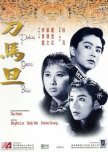
Peking Opera Blues is a classic 1980s Hong Kong film by Tsui Hark. Set around 1911, the film starred Brigette Lin, Sally Yeh, and Cherie Chung as three women with vastly different backgrounds who were thrown together by fate. I'm always happy when women take the main roles and aren't continually shown as helpless victims or sex objects. My kung fu movie loving heart was also happy to see Ku Feng and Wu Ma along with a secret document added to the mix.Itinerant singer Sheung Hung swipes a box of jewels when the local warlord runs afoul of his men. They’ve learned he can’t pay them because he lost everything gambling with another “general.” Bai Niu works for her father who runs a Chinese opera troupe. She desperately wants to act which enrages her father as women are forbidden from performing. Cho Wan is the daughter of General Cho and has returned from abroad wearing men’s clothes and a cropped men’s haircut saying the style grants her more freedom by keeping people guessing. The women end up working with a rebel who is after proof that General Cho and Yuan Shi Kai are working together in a plot for corrupt power and wealth.
I loved Brigitte Lin in her gender bender outfits. She carried the look off with chic elegance. Her character, Cho Wan, was a boss. Lin expertly showed Cho’s toughness, vulnerability, and also her conflict over betraying her father. Sally Yeh’s Bai Niu had less to do as the frustrated actress wannabe though her turn at Peking Opera was entertaining. Cherie Chung’s Cheung Hung was the weak link for me. I’m going to blame the writers as I enjoyed her performance in 1987’s An Autumn’s Tale. I’m just not a fan of bumbling, selfish, comedic characters. Mark Cheng as the rebel Ling Pak Hoi was handsome and capable in the fight scenes. Speaking of the fights, the martial arts and gun fights were well choreographed but often pushed the bounds of belief. Lastly, Ku Feng flexed his bad guy muscles as Commander Liu.
Behind the action comedy, Cho Wan and Bai Niu pushed gender roles for the early 20th century. It was gratifying to watch a film with three women going after what they wanted and weren't reduced to victims. Tsui Hark wasn’t afraid to tweak historical figures and events with some political satire. There was also the subtle emotional tug that Cho was the idealist and devoted to making China a better place through her actions and sacrifice though whether they amounted to anything remained to be seen.
This is one of those films that wildly mashed story tropes together to see what stuck to the wall--friendship, torture, comedy, action, politics, espionage, Chinese opera, familial love, betrayal, defying boundaries, and even hints of romance. Some of it worked for me, some of it didn’t (Sheung’s “comedic” scenes). I’m not a huge fan of Hong Kong comedy yet I will say one scene had me laughing so hard I almost cried and is the reason I bumped my score up a half point. If you like 1980s Hong Kong films or are a fan of Tsui Hark, this is a film worth giving a try, keeping in mind that the production looks dated. Prior to 1990 so I graded it on a curve.
21 November 2025
Trigger warning: a rather intense torture scene
7.75 could be a 7.5 or an 8.0 in my rating system. I've changed it twice now. lol
Was this review helpful to you?


