

 135
135 431
431 16
16 2
2 6
6 3
3 8
8 10
10 3
3 13
13 1
1 1
1 1
1 1
1 2
2 6
6 8
8 5
5 9
9


This review may contain spoilers
"Men will remain clueless unless we're more open about these things"
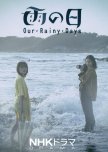
Our Rainy Days tackles a topic not only men are uncomfortable with, but many women as well---Menstruation. That monthly visitor most of the 51% of the population will deal with in some form or fashion in their lives is all part of being human for the female part of the species. Too often not medically studied or properly funded, because it's a "female problem", women have often suffered in silence. Period shame and period shaming will only end when people realize it is normal and healthy. This special takes a look at a photographer and a model both having to handle their symptoms on the job and in public.Kojima Hikari is a photographer on her fist big shoot and it's for a men's magazine. Aoi is a small time idol who wants to transition to acting and is following the path of a bikini shoot to get noticed. Hikari awoke to her alarm warning her it was PMS time, also that it was her first big shoot and to not screw it up. The day starts out raining as they travel by bus to the beach. Aoi's visitor pops in during the shoot causing problems that the men have no idea how to deal with.
This special discussed how not every woman can wear a tampon, much to the crew's chagrin. It also showed that despite their pain and other symptoms the two women were able to come up with creative solutions and do their work. As Hikari says, "Some crisis are opportunities, others leave you stuck." Menstruation is normal but it can also be challenging.
Our Rainy Days wasn't a be all end all in the discussion, but it did one thing that needs to happen more often-communication. By sharing our stories with each other we normalize something that is normal. What works for one may or may not work for another. There are lots of period paraphernalia options and medical ones for those who need it. Don't be afraid to talk with a medical professional or trusted female friend or family member. Most of all, be proud of being a woman and all that entails. And if you are a man, man up and learn about what the women in your life go through each lunar cycle and practice your empathy muscle. Sarcasm and shaming are no longer acceptable. And girls/women we have nothing to feel ashamed of, it's okay to be okay with our periods. So ends The Butterfly PSA addendum to this review. ^^
9/6/22
Was this review helpful to you?
This review may contain spoilers
Hard to Be Righteous, but Easy to Be Evil...
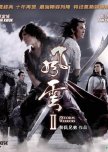
Ekin Cheng and Aaron Kwok returned as the characters they made famous a decade earlier in Storm Riders. Wind and Cloud were an unbeatable team who kept the bad guys at bay until The Evil Lord Godless and his son Heartless with their Japanese army kidnapped the emperor and searched for the treasure within the Dragon Tomb.I enjoyed The Storm Riders (1998). It was cheesy and the CGI was rudimentary, but the story was coherent and the action fun. The Storm Warriors (2009) took itself way too seriously and replaced storyline with endless slow-mo action scenes. Dialogue and character development were kept to a bare minimum. If you haven't watched the first one it may not matter because the atmospheric boys were hard to distinguish with the poor writing for them.
Simon Yam as The Evil Lord Godless seemed invincible and pretty soon it was just Wind and Cloud left to fight him and save China. They didn't have long for a super charged training montage so that they could take their revenge on the over-compensating dressed warlord. Wind went to Lord Wicked and took the, well, wicked route via an evil mud bath while Cloud went the righteous way and was trained by the wounded Nameless at the same time. Before you could say Buckets O' Blood, super slow motion, comic book style fighting with plenty of dismemberments and red goo flying through the air, took place and Cloud had to try and bring Wind back to the good side.
The story was frightfully thin and convoluted. Shu Qi knew what she was doing when she passed on the sequel and left her role to Tiffany Tang. The movie could have easily been 20 minutes shorter if the fights had been shot at regular speed. By the last twenty minutes I didn't really care about the consequences or who lived or died I just wanted it to end. A few of the fights were beautifully shot and the CGI was better than the first movie, but they dragged on at a glacial speed. When CGI replaces actual story and character development I lose interest quickly. During one of the overcooked fight scenes I really thought one of them might yell out, "Kamehameha!"
The Storm Warriors had a cast I was very excited about but they were criminally underused. Ekin and Aaron had grown as actors since the time Storm Riders was filmed but it was irrelevant as most of the time they were filming fight scenes in overly dramatic slow motion. They certainly didn't have to worry about learning many lines. Simon Yam was at least properly menacing as an undefeatable warlord, a nifty trick given how little time he had on screen. Nicholas Tse as Heartless had little to do except look pretty and scowl. Charlene Choi as Dream had little to do but look pretty and worried for her few scenes. Even for comic book characters the lot of them were mostly lifeless. Ultimately, I didn't care about any of them.
The OST was nice if melodramatic at times. As with many of the movies in this genre, the costume department used a lot of leather, gold lame, and metal looking armor. There was no shortage of wind machines as Ekin and Aaron had their long layered mom hairdos seemingly always flowing in the wind.
If you enjoyed The Storm Riders, don't get your hopes too high for this sequel. Several storylines were left dangling, completely forgotten. Maybe I am truly the Heartless one because I actually laughed during the last scene which I'm sure was so supposed to be emotional but came across as absurd to me. As one of my favorite TV baking judges would say, The Storm Warriors was style over substance. It might have looked good, but it didn't taste very well going down.
8/24/22
Was this review helpful to you?
This review may contain spoilers
Love means having to say hello and good-bye and hello and good-bye...
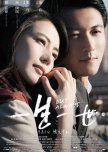
As young children Zhao Yongyuan (Nicholas Tse) and Anran (Gao Yuan Yuan) both suffered tragic events after an earthquake. They met as children and we in Dramaland know what this means: D-E-S-T-I-N-Y. Though they are torn apart again and again, pass just close enough to each other without seeing the other, suffer through lack of communication and noble sacrifices galore, we as the viewers know such obstacles are no match for Destiny. Or is the evil F-A-T-E in control?Spoilery opinions will follow so reader beware...
Yongyuan lived with his grandmother as a child, barely able to afford clothes. Anran's father provided well for her. Through one act of kindness the two children become inseparable with Yongyuan always following Anran, a heavy-handed foreshadowing. Fate tears them apart for the first time. They are offered a second chance in their twenties and yet again fate thrusts them apart. Along with broken hearts, misunderstandings and noble sacrifice the two suffer alone on different continents. Amran goes to the United States as a graduate student to Columbia (daddy must have made really good money). Yongyuan goes to jail where he learns impeccable English and how to become an international trading mogul in one year. (None of which you see.) Beijing prisons must be awesome! Anran, all alone in the US, suffers a horrible tragedy that is glossed over quickly.
They collide in the United States during their 30's where the tables have been turned. Yongyuan is outrageously wealthy and Anran can't get a job anywhere with her measly graduate medical degree from Columbia. Apparently, Daddy must have spent all his money on her Columbia degree leaving her no inheritance. Oops! Spoiler! Well, the writing was on the wall when she left for the US and he gave her his watch that stopped when her mother died. That's okay because his death is dealt with in one sentence. She washes dishes as well as being a "tour guide" for a living. Her job as tour guide entails escorting wealthy clients in clothes they provide for her and going to dinner and a show. I'll stop with the spoilery plot developments except to say through minimal conversation and no honesty between the lovers they get back together and through one of the worst tropes in Dramaland and are torn apart...again. And then again...
I'll start with what I enjoyed. The first two times they were together when they were young were quite entertaining, even moving. Nicholas Tse and Gao Yuan Yuan were lovely to look at as their young adult and adult selves and the child actors who portrayed the young lovers/friends were cute as well. Veteran actor Lam Suet made a brief appearance as YY's uncle.
What didn't work for me: The tragedy upon tragedy with no time to process them, lack of any adult communication and honesty, the heavy-handed foreshadowing for just about all the tragedies, no subtlety involved including the overwrought OST, many of the tragedies and heartache happened offscreen so there was no way for me to connect or feel any empathy with their unseen pain, Yongyuan's ridiculously fast rise to super wealth, and the fact that he waits for her and follows her for over twenty years (not including all the childhood years). It was hard to feel any sympathy for characters who kept their feelings and secrets locked down tight. The love triangle with a childish and unlikeable character was unnecessary. The writer mistook characters suffering tragedies, many of which were off-screen, as character development and reasons for the viewer to feel sorry for them.
The actual camera shots of them wandering around, alone and forlorn in China and the US would have been lovely if they hadn't blown them out to the point the film looked like it was a faded forty-year-old movie. I get they might have been going for a gauzy romantic feel, but it didn't work for me, it was one more blurry barrier to connecting with these two. When the final tragedy struck, which again was foreshadowed in the opening scene, I felt nothing but relief that the film was almost over except that I had to sit through a propaganda announcement at the end.
I need somewhat coherent and consistent plot and character development and relationship development, But Always gave me none of that. This felt more like two people who wandered into each other's lives, messed everything up when Fate wasn't hurling everything she could at them from dead parents to national disaster after national disaster (think Remember Me with Rob Pattinson, if you liked this movie, you should try that one out). All the pain and angst felt manipulative by the writer and director instead of organic to the story. They could have cut the tragedies in half, developed the characters and their dialogue, given them more realistic reactions to each other and their tragic lives and the tsunami of suffering (they missed using a tsunami!) and these gorgeous cardboard characters could have come to life. I know this is an unpopular opinion on MDL because this movie hit a lot of people in the feels, but it missed the mark with me.
Was this review helpful to you?
Dream Team vs Ghidorah the Three-Headed Monster!
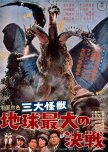
Earth is imperiled when a meteor drops a world ending monster in her lap. King Ghidorah threatens all life on Earth and only a reluctant team of Kaiju can stop him led by Godzilla.This movie is a fun monster ride. The writers threw everything at the screen in order to entertain the audience-a foreign princess with a death squad after her who is taken over by an alien presence (from Mars, Venus, or Jupiter depending on the version you watch), a police officer trying to protect her, an intrepid and annoying female reporter, various scientists, and a doctor who will look familiar to fans of Kurosawa movies.
The alien inhabited princess tries to warn the earthlings that danger in the form of the three-headed fire breathing Ghidorah is coming their way and that Rodan is waking up from inside a volcano. Everyone thinks she's a crackpot. Shimura Takashi as the doctor runs a number of tests on her to see what's going on inside her head even as the death squad appears with guns blazing. The Cosmos return to help out and warn that Rodan and Godzilla are headed back to town. Finally, people decided it's time to start running and screaming as the three giants make their presence known.
Ghidorah rains down destruction upon the people in town while Rodan and Godzilla fight each other in the countryside. Mothra, in her caterpillar form, arrives to try and convince them to fight together against a common foe to save humanity. And their response was, "what's humanity ever done for us?" When Ghidorah attacks the squabbling monsters, the story finally picks up and it is a royal rumble for the ages.
Ghidorah the Three-Headed Monster feels like a movie aimed more at children than adults, but there is enough for adults to enjoy, too. Even though the movie spends too much time leading up to the monster fights, the humans and human-alien were more entertaining than in Godzilla movies from this era. Ghidorah was nearly always a worthy opponent for Big G and it was fun to watch the Dream Team of Kaiju take him on. If you enjoy the Showa era movies, this is definitely not one to miss.
5 February 2022
Was this review helpful to you?
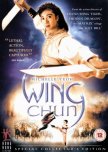
Michelle Yeoh was amazing as the young woman, Wing Chun, who had escaped a forced marriage and gone to study martial arts for years. Upon returning home and setting up a tofu shop she was often the wall between the townspeople and roving bandits. Michelle did nearly all of her own stunt work and truly shone brightly in this role.
Donnie Yen played Leung Pok To, Wing Chun’s childhood friend, who had returned after several years away to ask for her hand in marriage. He didn’t recognize her as she was dressed as a man and mistakenly thought the pretty young widow who worked in Wing’s tofu shop was her. Suitors competed for the women and there was some good-natured bed hopping. There was a love triangle, or maybe square, on second thought it might have been a love heptagon.
Donnie was as cute as a puppy in his role as Wing Chun’s would-be suitor. Leung was skilled in martial arts but not as accomplished as his childhood love. Norman Chu seemed to have a good time playing the Bandit King, he made a brash and comical villain. He couldn’t decide if he wanted to beat Wing Chun or marry her. The side characters were interesting and distinguishable--the money counting and intimidating sister who had eyes on a scholar, the scholar who was torn between Wing Chun and the young widow, the young widow who was in need of a man’s, uh, services, and a bandit who wanted the widow as his wife--all helped fill out the story in a meaningful way.
I liked this movie because unlike a lot of kung fu movies the romances weren’t tacked on and were relevant to the plot. These were all people trying to earn their happily ever afters in between kung fu fights, of course.
Yuen Woo Ping outdid himself with the creative fights, one particularly clever fight between Wing Chun, a hired fighter, and a plate of tofu was ingenious. There were no deaths or blood-soaked bodies, just lots of high wire, good old-fashioned fights with people who knew what they were doing. The action was fast, stunningly choreographed, and well-acted at the same time. Though some parts of the fights were unrealistic, who cares when they were so entertaining.
Importantly, they stuck the landing. I loved the final fight between Wing Chun and the Bandit King. I’ve never seen fight scenes quite like the ones shot for this film. The culmination of it was perfect. They also made me laugh. This film made me laugh several times and I rarely if ever laugh at “funny” kung fu movies. This was not a perfect film and some parts of it were dated. Regardless of its flaws, I enjoyed it.
Michelle and Donnie are two of my favorite actors and this film was a dream team for me complete with romance and spectacular fights. If you enjoy kung fu movies, this one is well worth seeking out.
Was this review helpful to you?
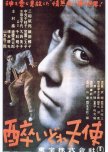
The angel of this movie, Dr. Sanada, is an ill-tempered alcoholic, as scruffy as he is cantankerous. Shimura Takashi gives a wonderful and unsympathetic performance as a doctor with little patience and even less tact. Though disheveled and always with a level of alcohol in his system he is a compassionate and skilled doctor. As he informs Matsunaga, the local gangster who comes to him for help, angels don’t look like beautiful dance hall girls, they look like him. Sanada not only tries to save Matsunaga’s life, but also his soul from being completely stamped out by the violent life he leads.
Matsunaga is torn between doing what must be done to live and the immorally squalid life where he is a big fish in a typhoid infested pond. Like Sanada, he has a terrible temper as well. Mifune Toshiro brings out all of the fear and frustration built up in this brutish character.
Unlike many yakuza or gangster movies, the criminals are not glamourized. Doctor Sanada speaks for those who live under the yakuza’s rule when he tells Matsunaga, the yakuza code of honor is a façade and merely self-serving. He compares it to the feudal system and declares it obsolete.
Sad guitar music often plays in the background setting the mood. Further setting the mood is the pool of filth where children play, foretelling their future in the crime ridden part of town.
The two damaged alpha males are fascinating to watch as they butt heads. A powder keg of fear and violence is set off when the deadly and treacherous Okada is let out of prison and has his sights set on Matsunaga’s job and girlfriend and Sanada’s female assistant.
This is a powerful movie about two opposing forces at work for the souls of the people, the hedonistic and violent yakuza on one side and the life ruled by reason and compassion on the doctor’s side of the disease infested swamp. It would take a “dirty, drunken angel” to reside in such a place and an angel tough enough to fight for the hard-won wins and suffer the heartbreaking losses. Drunken Angel is an emotional ride, but one worth seeking out and trying.
Was this review helpful to you?
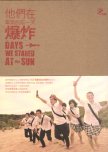
The production values of this older Taiwanese drama weren't terribly high yet it felt real and honest. If it had one flaw it's that it confronted too many social issues and was unable to spend enough time on each for the characters and the audience to fully digest their consequences.
Days We Stared at the Sun was gritty, raw, and devastating with glimmers of hope quietly woven through the unlikely friendships.
Was this review helpful to you?

Unless one is familiar with the book it's hard to get a handle on how this world works, because they simply did not spend the time needed to build it for us. The leads bonded together faster than Wolverine and Rogue with a similar relationship dynamic. The gruff, world weary, reluctant hero and the abandoned young woman with a power that frightens people.
It felt like the FL's one acting note she was given was to stand there and look pretty and forlorn. Not a lot of depth to the performance. The ML spent most of his time running and jumping which to his credit, he did well.
The CGI was very good and creative. The problem for me was that the story overly-relied on it and over-estimated how interesting it is without an emotional story to propel the characters through the monsters and labyrinths.
It's a shame they didn't spend a few more minutes developing these characters because there is an interesting story behind the wall of CGI.
Was this review helpful to you?
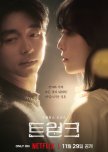
Flawed drama about flawed and broken people
The Trunk was filled with deeply flawed and wounded people. No one walked away looking like a hero by the time it was all over. There were many moments of frustration over truly idiotic decisions and the never welcome noble idiocy. Through it all Gong Yoo showed why he is a top actor regardless of country.Han Jeong Won cannot get over his ex-wife, Lee Seo Yeon, and takes the pills she supplies to sleep and get through the day. In order to maintain any contact with her he has to agree to a 1 year contract marriage to Noh In Ji. Lee married a younger man, Ji O, and uses him like a Boy Toy. Jeong Won and In Ji tie the knot by signing a contract which is stored in her designer trunk. The trunk and a dead body are later found with the police investigating this damaged group of people.
When a drama or movie bounces back and forth repeatedly in time, it’s usually a clue that the story isn’t that deep but the writers want to make it appear to be mysterious. Such was the case with this drama.
The story itself dragged most of the characters over the coals of desire and despair. Han made a terrible decision during a moment of anger and desperation. In Ji seemed to see what Han could not, yet made numerous idiotic decisions. Lee had a right to be angry even though she created a deadly situation, yet decided to punish Han into self-destruction. Not exactly the most likeable lot, yet Jeong Won and In Ji slowly dragged their way toward atonement. I was disappointed that a few of the familial elements were never cleared up.
The Trunk was stylishly shot and had a beautiful OST. Some of the acting was exemplary while some of it was perfunctory. The scattershot approach to storytelling was confusing at first but by the fourth episode was clearly laid out. Han’s mansion resembled a fun house with mirrored scenes and wild swirling circles and lines. The cold, severe decorating scheme would be enough to cause isolation issues. Shortcomings in stalking laws were brought up as well as a tyrannical view of bisexuality and terrible invasion of privacy and internet laws. For me, the only thing that held it together and made it worthwhile viewing was seeing Gong Yoo once again in a starring role even if his character was often shoved to the side. This was closer to a 7.5 drama but the cinematography, music, and GY’s acting bumped it up to an inflated 8 for me. Welcome back, Gong Yoo, don't stay away so long next time!
29 November 2024
Triggers: Sexual content and nudity. One gratuitous scene and other more “artistic” ones and two shower scenes that go lower than Kdramas.
Was this review helpful to you?
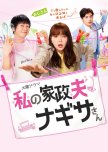
"Live life without a single regret!"
My Housekeeper Nagisa-san was a drama I could go along with for most of the episodes, and then I hit a wall. I’m not sure what the writers envisioned but they didn’t do a very good job of laying out the reasons for characters’ actions.Mei is her pharmaceutical company’s “Outstanding Employee,” which everyone is reminded of often. She is completely dedicated to her job, has little patience with people, and is extremely competitive. She is also secretly a huge slob and subsists on instant or fast food. Her mother wanted her daughters to work even after they married so that they wouldn’t be miserable like her. Mei’s sister, Yui, became pregnant in college and married upsetting her mother greatly. Yui works at a housekeeping service and hires Nagisa to clean Mei’s house and prepare her meals for a 4-day trial period. Mei hates the idea and calls him an “ugly old man.” An event occurs that causes Mei and her mother to accept Nagisa’s help. Mei finds that Nagisa gives good advice and it’s nice to have someone caring for her. A cute business rival who lives across the hall makes her life more complicated.
I liked that Mei was a team leader and her boss was a woman. Often women are all but invisible in business dramas. Of course, there had to be one female worker who had an emotional breakdown because she couldn’t handle the work, a stock trope in business and medical Jdramas. Apparently, Japanese women are very fragile and cannot handle the pressures of work, or so dramas would have us believe. Working long overtime and socializing afterwards was showcased. For Mei, it was embarrassing to have a housekeeper. Why? Men often have wives who take care of the house and all their needs. It wouldn’t be embarrassing for single men to have a housekeeper or mother to take care of them. One character was aghast that Mei would be alone with a MAN in her apartment. Well, clutch my pearls!
Having just turned 28, Mei was being pressured on all sides to marry. Her parents didn’t care who she married as long as he had a pulse. At the same time, her mother and sister hadn’t spoken for years because Yui had married in college. Damned if you, damned if you don’t. Two characters declared themselves and their intent to marry on first dates before the first course arrived! I spend more time and thought committing to what to order for dessert than these characters did deciding on a mate during a first date.
I enjoyed the developing friendship between Mei and Nagisa. People who have magical housekeeping powers always appeal to me. I did, however, have some concerns about the final romantic choice Mei made. Just a heads up, Netflix has 10 episodes listed. The last episode is mostly a recap and is listed separately on MDL as a special. I have spoilery thoughts listed below…
11 May 2025
SPOILERY THOUGHTS
The relationship between Mei and Nagisa was perplexing to me. The age gap was significant. I always wonder what people talk about from very different generations, but 20 years is doable. Despite her work successes, Mei seemed very young in attitude. She had no idea what decisions were involved with marriage. When she went on dates, she always wore a huge bow in her hair and practically pinafores like a child in the 1800’s.
If she and Nagisa had both come out as asexual it would have made more sense. They showed no sexual desire toward each other or anyone else. There was zero chemistry between the two, no longing looks, no tender touches or kisses. They had an odd mother-daughter dynamic. Even in the end, it seemed more like a business arrangement than romantic marriage. She needed to be taken care of and he needed to take care of someone. Everyone has their kink and if they were happy, that’s all the matters. The problem was, the drama tried to make it seem like it was something more than transactional and it failed on that part for me.
Was this review helpful to you?
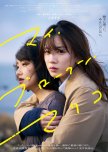
"The only thing you can do for a person who is gone is to live"
I’m always hesitant to write reviews on films based on mangas or books because people who have read them are often able to fill in the gaps with their reading experience. Having not read the manga my review will be based solely on my reaction to the film.Shiino works for a verbally abusive boss. He’s labeled “@sshole boss” on her phone. While eating lunch she is horrified to hear on the television that her best friend has died. She discovers Mariko has already been cremated and the ashes given to her father. With little thought she talks her way into his apartment and steals her friend’s ashes at knife point. After running barefoot through town and seemingly owning only one pair of shoes, Shiino decides it’s time to take a road trip to the beach with her friend. She digs out an old pair of dilapidated Doc Martens, fumigates them, and takes the first bus out of town with Mariko’s ashes in hand.
Through flashbacks we learn that Mariko and Shiino had been friends since childhood and also that Mariko’s father had been abusing her since then. Their friendship endured many of Mariko’s cries for help and ultimatums. On her journey to take Mariko’s ashes to the ocean, Shiino suffered set-back after set-back aided only by a man dressed like the Grim Reaper who appeared whenever she needed help. While ostensibly this was Shiino’s journey through agonizing grief at her friend leaving without saying good-bye, I was always distracted by Mariko’s ongoing abuse at the hands of the men in her life. Were there no child services called or available when she showed up to school bruised and broken from head to toe on a regular basis? Did Shiino repeatedly try to get her friend to see a therapist to deal with the traumas she’d suffered? Why didn’t they call the police when one of the men beat both of them and attempted to break into their apartment or when one of Mariko’s lovers broke her arm and robbed her? Was there ever a point when Shiino stopped enabling Mariko’s self-destructive behaviors and attempted to get her the help she desperately needed? Shiino had her own issues that could have used a professional helping hand as well.
Grief and its 1000 cuts by haunting memories filled My Broken Mariko. But it also left unanswered the most important question of how both women’s lives might have been changed if they’d stop accepting whatever abuse was heaped upon them and sought to gain some agency for their own lives.
3 August 2024
Was this review helpful to you?
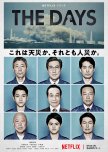
"What is the meaning of those days?"
The Days focused on the immediate aftermath of the March 11, 2011 earthquake and tsunami and their catastrophic effects on the Fukushima Daiichi Nuclear Power Station. The events were shown from the side of the workers and their heroic efforts and the political side which was hindered by personal stakes, ineptness, and evasion of responsibility. The performances were engaging and nuanced and by far the strength of this drama based on the tragic real-world calamity."Mistake or destiny?"
When the earthquake and tsunami devastated the electrical grid, the power plant was left without electricity relying on back-up generators to keep the safety measures going. Never dreaming that a tsunami would reach the heights it did, the generators were ruined by seawater. Men in the control room were in the dark both literally and in relation to what was going on in the deadly monsters they were in charge of. Maejima was assisted by veterans Furuya and Osugi as well as younger operators who sought to do what they could only aided by flashlights.
"Forlorn hope"
Manager Yoshida Masao set up headquarters in the Seismic Safe Room to assess the damage and brainstorm responses to the critical issues. Hampered by a loss of almost all communication after the tsunami and largely cut off from the rest of the world the plant operators had to use what they had to try and determine the status of the four units. They resorted to using car batteries to attempt to open vital valves. Things went from bad to worse with aftershocks and hydrogen explosions. Yoshida sought to protect his workers as best he could even while knowing they risked their lives as they attempted to gain information by traveling into the belly of the radioactive beasts and for the workers who fought to remove radioactive debris to bring the fire trucks and the hoses needed to supply water to cool and de-pressure the escalating situations. Eventually, he made the hard decision of who would stay as he ordered the evacuation of most of the workers, knowing that those who remained might die if the worst happened.
"Our company has lost its mind."
On the political side of things, Prime Minister Yan was not advised by nuclear power experts but often those who seemed to be political appointees-who needs an economist during a nuclear disaster? The management at TEPCO was completely unprepared for such a disaster and the manuals gave no guidelines. Both the political and business advisors seemed to be more concerned about giving unpleasant news or being held accountable. They also worried about looking bad to the public and never mentioned the nuclear meltdowns by name. Their ineffectual echo chamber could have led to even more devastation if Yoshida had listened to them. Yan at one point belittled the heroes' efforts. While the people safe from harm worried about plausible deniability, they failed to supply the plucky workers with the basic supplies they needed.
"We don't have a guide, we're in it to the end."
Yakusho Koji gave a powerful performance as Yoshida. Without histrionics he conveyed the calmness and strength of the man in charge of saving the nation with his decisions. Yakusho expressed grief, horror, resoluteness, and exasperation with his face and body movements and provided a stalwart character for the others to trust in and lean on. He showed Yoshida's defiance with deftness and even humor. It has been a long time since I have been so engaged by an actor's performance. Takenouchi Yutaka, Kobayashi Kaoru, and Musaka Naomasa played the operator warriors in the dark control room who braved the dangers so close to the deadly radiation. Though their faces were often covered by protective equipment and respirators the veteran actors' performance came through. These men portrayed, like Yoshida, knew their chances of surviving were slim to none and yet they did whatever was necessary for the greater good.
"I can no longer leave here alive."
The drama displayed the events and actions almost hour by gripping hour. I was always shocked by how much the operators had accomplished when the time clock was shown. Yoshida came across as the hero of this story and the faithful men who risked their lives to cool down and calm the radioactive beast that had the power to leave a third of Japan uninhabitable for decades. The actors who played the fearless Daiichi workers gave understated and formidable performances that were compelling and emotional. The Days was a cautionary tale of human hubris in the face of nature and yet how there are still heroes among us. It is a drama well worth the time for viewing.
9/7/23
Was this review helpful to you?

This review may contain spoilers
"Sis, daringly keep going ahead"
Red Sorghum was the film that launched Zhang Yi Mou's and Gong Li's careers. For his directorial debut, Zhang's movie won many awards including the Berlin IFF's Golden Bear Award for Best Picture. Saturated in deep colors and textures and accompanied by music that fit every scene perfectly, this 1987 film showed what the world was in for with his mesmerizing style of moviemaking.A radiant 22-year-old Gong Li played Jui/Grandma, a bride being carried along in a palanquin to be married to a 50-year-old man with leprosy. Jiang Wen as Yu/Grandpa was the expert carrier. The men sang a bawdy song of her fate as a young "ugly" bride marrying an old leper. As she bounced up and down in the small litter you could feel her nausea growing. When they reached the wild red sorghum fields a bandit attacks the group, but the men are not so meek as to let him take the bride into the fields. After the wedding she is allowed to return home with a donkey as a wedding gift/payment to her father. Along the way she is once again set upon, this time alone, and Jui runs frantically through the wind driven sorghum chased by her assailant. The masked man turns out to be Yu. He stomps the sorghum down into a verdant bed with all the gentleness of a wild beast. It was difficult to tell whether Jui initially gave her consent, I hope so, because afterwards, she fell in love with Yu. On her return to her legal husband, she's told he was murdered by an unknown killer. The workers prepare to leave but she convinces them to stay in a profit-sharing business. A drunken Yu shows up and she kicks him out. She's kidnapped for ransom by other bandits. After her return, Yu pees into the wine crocks as if marking his territory and carries her off like a sack of potatoes. Instead of ruining the drink, it is now transformed into an exquisite elixir and business booms.
Yu was often portrayed as a primitive male, dirty and brash, and Jui rarely called him on it. Thank goodness, Zhang displayed a more favorable view of women in future films. It was also a credit to Jiang's performance that Yu was considered even somewhat likeable. With the exception of her relationship with Yu, Jui came across as a competent and independent woman.
Jui gives birth to Yu's son and all seems well. It's a magical winery where anything can happen. Life is often lusty and humor filled. Then the movie switches from How I Met Your Mother to The Deer Hunter. The Japanese invade the peaceful village and one of the villagers is flayed. The film ends in a blood bath, as if everyone had gone swimming in a vat of the red sorghum drink under an eclipse. ***
I am a big fan of Zhang Yi Mou's style. His movies are luscious to drink in, the lighting, sets, costumes, and props are all feasts for the eyes and this one was no exception. I would really like to have a set of the drinking pottery, they were beautiful. Few people can capitalize on scenery as he does, color-soaked fields and skies were suitable for framing. A young Gong Li already exuded the power and sensuousness of a grown woman. Her character took over the winery, mothered a child, and called men to battle quite believably. With a running time under 90 minutes, the characters were not well developed, we know little about them except what we see on the screen. Gong Li's and Jiang Wen's exceptional performances helped me to overlook some narrative issues. The change in mood was abrupt and jarring when the shocking violence erupted, I suppose much like in real life when horror and tragedy hit out of the blue.
Red Sorghum showed the fierce tenacity of the rural people in northern China as they faced a variety of adversities and most times were able to create victory and song out of difficult situations. The film was imperfect, but very much worth the effort to experience the premiere stunning collaboration of Zhang Yi Mou and Gong Li, one of the best partnerships in filmdom.
6/30/23
*** A word of warning, there were disturbing scenes. Animals being butchered and skinned were shown up close as well as the human flaying which I could not watch. There were two urination scenes as well. And depending on how you interpret it, a possible rape.
Was this review helpful to you?
This review may contain spoilers
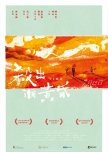
Time manages to weave together the disparate stories of a retired assassin team, the problems of the elderly, assisted suicide and team pregnancy. It brings together a cast of well-known older Hong Kong actors---PatrickTse, Bobo Fung, and Lam Suet and gives them a chance to shine. They did not fail to take advantage of the opportunity to show that they've still got it.Patrick Tse at 85 showed he could still be a menacing threat as the flying blade assassin who had been relegated to cutting noodles in his golden years. Bobo went from terrorizing her victims with her throwing weapons to singing in a small-time cabaret. Lam Suet, the getaway driver, now suffering from various illnesses and struggling to pay for and receive proper medical care spends his free time with a prostitute he's fallen in love with.
Without being morbid, Time shines a light on the plight of the elderly---illness, loneliness, ungrateful children, poverty, and the knowledge that more sand has run out of the hourglass than remains. The old team gets back together when they find the older population requesting their services and they earn extra spending money respectfully doling out assisted suicide. This works out fine until the blade man discovers his intended victim/client is a teenage girl.
Bobo did an amazing job as the mother with a child who believed because she gave birth to him, she was eternally responsible for him. The fact that he was a grown man who was married and a father and responsible for his own child escaped him. Lam Suet gave a heartwarming performance as the team member who kept them all together, finally getting his chance at a quality main role. The actress who plays the teenage girl was the weakest link in this movie. She was unable to keep up with the rest of the experienced cast. The youth story threatened to take over the narrative, but stopped just short, or maybe went slightly over the line. It did give Patrick's loner character a chance to connect with someone and discover a part of himself he didn't know existed.
There are many touching scenes in this movie and Time deals with its gray-haired characters and their problems with sensitivity and gentle humor. It shows that people of a certain age need love, time, attention, and care. And in the case of Time, it showed that actors who are no longer young still have stories left to tell.
Was this review helpful to you?

Also, I liked that the FL didn’t recoil from the ML’s kisses as if he was going to give her a root canal. They had a healthy tactile relationship. One of the few Kdramas I’ve seen where the couple was in a believable intimate relationship.
I found the acting solid all the way around.
Regarding the OST: I dinged it for the overuse of Stand By Your Man. They could have cut the use of that song by 80%. Bonus points though for Rachael Yamagata’s Something in the Rain. Already downloaded it.
I will rewatch all or at least parts of it when I’m having a bad day and need a smile and a warm feeling in my heart. I definitely recommend giving this drama a try.
Was this review helpful to you?


