

 135
135 431
431 16
16 2
2 6
6 3
3 8
8 10
10 3
3 13
13 1
1 1
1 1
1 1
1 2
2 6
6 8
8 5
5 9
9


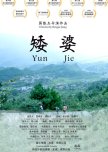
Yun Jie takes the news that her parents are leaving their small village to work far away in Guangzhou in stride, scarcely saying good-bye to them. She will remain in their village with her two younger sisters and grandmother. Along with going to school and doing her homework, she babysits, cooks the meals, cleans, helps an aunt garden, and aids her uncle when it’s time to harvest the rice crop. Jie is scolded for her grades dropping, but the tired child struggles to stay away during class and exams. Other grandparents and elders are having a difficult time raising their grandsons, the lack of fathers around causes the boys to act out and even put themselves in dangerous situations. Because teacher pay is extremely low, the turnover rate is high, with the kids receiving a subpar education. Yun Jie has much to do but little to look forward to in her life.
Most of the children in Jie’s village had no parents at home. Any child over 12 was weighing whether to quit school and go to work. The left behind children often felt left adrift. Jie may have spent time with others her age yet she never played and only once cracked a faint smile. Farming was not a sustainable model to feed a family yet still the villagers persisted. The time required to farm and the physical effort put a stress on the young girl already shouldering most of the household duties. Moving to the city didn’t guarantee success for those seeking a better life either. Factories were closing at an alarming rate, reducing job opportunities for the villagers. Lacking a solid education and other skills limited their employment opportunities. At one point, the family attempted to live together in the city. However, the sisters lacked the connections and proper thick red envelopes needed to go to school in Guangzhou. Yun Jie saw her life choices rapidly disappearing.
My heart broke for Yun Jie, the child forced to act like an adult. There were never any comforting cuddles or words and when it rained, she couldn’t even count on a dry bed. None of the grown-ups in her life were cruel, but neither were they a soft place to land when life got hard.
26 May 2025
Trigger warning: A dog being beaten to death, not graphically shown but implied
Was this review helpful to you?

Ajummas Assemble!
Could there be anything more fearsome than three ajummas uniting for vengeance? Maybe, but for the self-absorbed and abusive men that had run afoul of our lovely ladies and one teen boy, the Avengers Social Club would strike fear into their hearts before the drama was over.Through a series of events connected to the local school, Kim Jeong Hye collects two other women in need of vengeance along with herself. The women agree to not physically hurt anyone or do anything (too) illegal. Jeong Hye’s husband is determined to become his father’s heir and brings home his 19-year-old illegitimate son, Lee Su Gyeom, to sweeten the deal. After all, mere girls can’t be in line for running a company. Gyeom isn’t thrilled with the father and mother who abandoned him leaving him to be raised by grandparents. It’s not long before Gyeom joins the Avengers group. Hong Do Hui is at the mercy of a wealthy con artist who wants to shake her down for money when the annoying woman’s bully of a son is “injured” after Do Hui’s son hits him. Lee Mi Suk’s husband has become physically and verbally abusive. He is running for school superintendent and is in bed with Byeong Su and the perverted principal Hong Sang Man. The ladies and Gyeom may be up against an abuser, the school system, the class system, and two major corporations, but they are about to learn just how strong they are.
ASC was a fun wish fulfillment drama. If you live long enough, you’ll be gleefully screwed over by someone and oh how satisfying it would be to have vengeance. As much as I love a good revenge story, ASC was far more about how the women grew as individuals and as friends. All three needed to find their confidence and courage to be their best selves. They also found that three is better than two, and four is better than three. Just like a pack of lionesses (+1 cub) they discovered strength in numbers. The three actresses were all quite good, especially, Ra Mi Ran, as ASC’s resident Unnie.
“Why are they doing this to us?” Rarely has there ever been a group of men less self-aware and more self-absorbed. The women were seen as either property, tools, or impediments. They would learn that it’s very dangerous to underestimate women. Even when it looks like all they do is wear pretty clothes and drink tea.
The biggest drawback to the drama for me was the length of the episodes. Several episodes in the middle could have been shorter with the conflicts and resolutions integrated into one episode instead of two, and the last episode almost felt like a long epilogue due to numerous flashback recaps.
What I learned from ASC:
Don’t anger the woman who cooks your food.
Friends teach friends to cuss and give them a safe place to let loose
Shin kicks are vile but in certain circumstances are well deserved
Korea has children’s books about rabbits who poo on other animals
Do not call women Stodgy Extra Ajummas (especially if any of them are going to cook your food)
The writers could not do math, a 17-year age gap is not small
Mangas can be research material for revenge
Despite the enormous earrings, the drama was set in 2017, not 1985
Never underestimate a woman in a chicken fight!
Some families are made, not born
And most importantly--Sometimes you can feel stronger just knowing that you’re not alone.
24 April 2025
Was this review helpful to you?
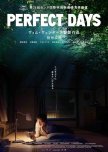
"Now is now"
Perfect Days was a beautiful meditation on life. Hirayama had more in common with the Buddhist monk he greeted than any of the other characters. Every day was thoughtfully prepared and acted out, most often with a gentle smile and nod of gratefulness.Hirayama faces each task of his day with a thorough meticulousness, whether it is caring for his plants, cleaning the toilets for his job, or bathing in the bath house. Every morning he greets the day with a smile of gratitude. Instead of chants, he listens to an outstanding soundtrack of bluesy hits from the 70s and 80s on his cassette tapes. He’s no hipster and thinks Spotify is a brick and mortar store. That’s not a knock, the people intrigued by his music have no idea how to load an audio cassette either. He rarely speaks as if he’d taken a vow of silence. Only when necessary does he converse. Every night he reads a few pages from a book before dreaming in black and white as his mind frames the day in light and shadow.
Yakusho Koji won Best Actor for his role in this film at the Cannes Film Festival in 2023. He is certainly one of the best actors in the world. He conveyed a wealth of emotions with few words as Hirayama practiced his contemplative life. Hirayama’s world wasn’t perfect. Different people bolted into it and jostled him about. Was he running from a past or simply finding a way to heal the wounds from it? Whatever the reasons for his solitude, he seemed at peace, refusing to give into anxiety. “Now is now.” Spoken like a zen master. When he scrubbed toilets he performed the task like a soulful meditation. He communed with the trees and called them friends, delighting in the leaves scattering the sunlight about. An old film camera helped him capture poetic moments.
If you are looking for a film with a beginning, middle, and end, this is not it. This was more like a Buddhist walking meditation with each step intentionally caressing the earth and each breath deeply felt. Every moment was a gift of wonder. Hirayama’s days may not have always been perfect but they were special.
“Birds flying high, you know how I feel
Sun in the sky, you know how I feel
Breeze driftin' on by, you know how I feel
It's a new dawn
It's a new day
It's a new life for me, yeah”
-Nina Simone
22 April 2025
Trigger warning: Bare old man butts in a bath house.
Was this review helpful to you?

"I may be the last friend you'll make in this life"
Director Park Hoon Jung’s The Childe played out like a live action version of a Looney Tune’s chase scene, albeit with more realistic gore and blood. Some place buried under the bodies might have been a cautionary tale about the haves and have nots, but you’d have to dig pretty deep.Marco fights in illegal boxing matches in the Philippines. His Filipino mother is sick and needs an expensive operation leading Marco to hunt for his Korean father. One of many children abandoned after their Korean fathers went home, Marco’s search has done nothing but cost him money he doesn’t have. One day out of the blue, a Korean lawyer appears with all the papers Marco will need to travel to Korea. His wealthy father is ill and he must go there now. Dear papa has been searching for him! Yeah, because life is just that fair. On the flight over, a strange man offers his friendship and warns him that all is not as it seems. Oh, if only Marco knew the half of it. The young boxer is traded off from one killer to the next until a final battle that will sort out the intricacies of the dysfunctional family and killers.
The Childe was entertaining but hardly suspenseful. The story and character development were painfully thin propped up by numerous car chases on empty highways and streets and foot chases that led to nowhere. Marco seemed to have a homing beacon that caused him to run straight into the arms or car of the enemy. In a country with strict gun laws, everyone seemed to have one, including a school child. There was the overt gore showing that chaebols can get away with literally murder and killers can walk down the street armed with no one noticing. Most of the humor came at Kim Seon Ho’s Nobleman’s expense. A proud “professional”, he suffered numerous humiliations at the hand of the man he’d named a “friend”.
The Childe was superficially entertaining in a maladjusted world with a family no sane person would want to be a member of and a professional killer that didn’t seem quite sane. Marco found that a nebulous brotherhood might be more valuable to him than being a wealthy half-brother.
20 April 2025
Was this review helpful to you?

"Early worms get eaten first"
How to Make Millions Before Grandma Dies showed how the vultures come out when an older relative is near the end of their lifespan. For the most part the writers made the distasteful somewhat palatable and at least one character had a change of heart.M’s friend/cousin Mui makes her living off of becoming the #1 of dying patients, when she’s not hosting her Only Fans site. When M discovers his grandmother has terminal cancer he decides to become her #1 and begins to take care of her. Other family members also have their eyes on the old woman’s house, the only thing of value she owns.
Taew Usha Seamkhum as the grandmother gave a wonderfully nuanced performance as the woman who accepted life and people as they were. Grandmother was aware that when people visited, it was because they wanted something. She also saw the potential in her ne’er do well grandson and had pity on her deadbeat son. Even though she knew M's motivation for being with her, she could at least take pleasure in having someone to eat and play cards with and go to chemo with. Some of the supporting actors were stronger than others.
I’ve been around long enough to see the relatives crawl out of the woodwork in order to try and get what they can from a dying person. In real life, they rarely learn any meaningful lessons from a beloved elder, their eyes only on the financial prize. For most of the film the only people I felt any sympathy toward were Grandmother and Sew, her daughter. It was, however, disappointing that Grandmother failed to learn the lesson she suffered from as a daughter when her parents died.
While this film had a patented redemption arc, and I love a redemption story more than any other kind, it didn’t move me as much as I would have hoped. Perhaps, it was a more realistic portrayal of the selfish children and grandson but I spent much of the film being irritated with their myopic vision. It is the nature of children to be involved in their own lives and neglect older members of the family, but when the clock was ticking down on the matriarch’s life, I found their behavior inexcusable. The elderly may not want visitors who “are counting the minutes” before they can leave, but they also crave those precious minutes with beloved children and grandchildren when their own minutes are slipping away.
13 April 2025
Was this review helpful to you?

"I'm only interested in finding what I've lost and restoring it"
Memory is a hidden gem of a drama. Perhaps the subject matter or age of the cast doesn’t appeal to younger viewers but it’s a shame. This was a well-made drama with a brilliant performance by Lee Sung Min. While there was a murder mystery and the oft used systemic corruption, this was a drama focusing on reconciliation, restoring justice, and healing the searing pain of grief and guilt.“Life’s misfortunes come suddenly” as do “heaven’s gifts”.
After the death of his young son, lawyer Park Tae Suk went to work for the prestigious law firm Taesun. He remarried and had two children with his new wife, Young Joo. At Taesun, Park was not afraid to get his hands dirty for his clients and earned a ruthless reputation. The firm hires Jung Jin, a young idealistic lawyer who is taken aback by Park’s methods. Coinciding with Jung's arrival, Park discovers he has early onset Alzheimer’s. Interlocking cases and buried memories break to the surface. The ghosts of the past lead Park back to where he started in order to discover the truth behind the lies of his life.
“My heart remembers the stuff I want to forget.”
Lee Sung Min gave the performance of a lifetime as Park Tae Suk. He played every key on the piano of emotions knowing when to hit them with subtlety or a great crescendo. Park was a complex character with a complicated past. He and his ex-wife, Na Eun Sun, dealt with their grief in different manners which drove them apart. They had to discover the courage to face their pain and when to let go of it. Jun Ho played the young lawyer Jung Jin who came to be a loyal ally when he wasn’t flirting with the equally loyal, Bong Sun Hwa.
Park had contentious relationships with numerous characters, but what I enjoyed was that his family was a safe place. Both for him and for me as the viewer. There was no yelling and berating as in many family dramas. They may have been overly simplistic but I found their support and unconditional love a relief. There were eardrum piercing characters elsewhere.
It was 2016 so there were a few dated elements. The dreaded wrist grabs made multiple appearances, something I never found remotely romantic. Awful lip fillers were also on display. Two of the more frustrating rules of the script seemed to be, Trust No One and Tell No One, which led to multiple problems.
I cannot stress how remarkable Lee Sung Min’s performance was and for it alone the drama is worth watching. Park’s disease brought people together and propelled him to right the wrongs of the past. As he said, “Every minute is like ten years for me.” Admittedly, this type of story is my jam. I love reconciliation and redemption stories and this drama delivered on both. While it was heartwarming, best to have a box of tissues nearby as well.
“I’m only interested in finding what I’ve lost and restoring it.”
7 April 2025
Was this review helpful to you?
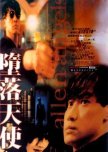
"The night is full of weirdos"
Fallen Angels was the film negative of Chungking Express. Both films dealt with lonely, disaffected people but Fallen Angels didn’t even pretend the characters had a shot at true love. Instead of police officers there were murderers and a slightly mad entrepreneur. Wong Kar Wai brought back the devastating canned pineapple and expiration dates, only this time the expiration dates were for relationships and lifespans.“I’m a lazy person, I like for people to arrange things for me.”
Wong Chi Ming is a hired killer. He calls himself lazy and enjoys having someone else tell him where to be and what to do. After finishing a job, he grabs a bus just like any other salary worker. When an old classmate on the bus asks about his life, he drags out pics and a story created for just such encounters. His partner, whom he never interacts with, cleans his apartment and gives him his assignments. She fancies herself in love with him and he, her. Wong runs into an old lover he doesn’t recognize, hooking up with her for a time. He Qi Wu lost his voice as a child after eating expired canned pineapples. His father is the caretaker of the Chungking Mansions Hotel where the secretive partner lives as well. At night Qi Wu breaks into businesses and runs them for himself. Too often he forces his services on customers who end up paying him to leave them alone. Qi Wu becomes involved with a woman whose boyfriend dumped her to marry another woman. Too soon he discovers that pineapples aren’t the only things with expiration dates.
“There are some things you can’t escape.”
Wong Kar Wai utilized his iconic green, yellow, and red palette once again. The characters and backgrounds flew frenetically about, always in motion as if they were trying to outrun their fates. The characters’ sun was the moon as they lived in a world constantly at night, lit by streetlamps and neon lights echoed on damp pavements. Obsession and desire replaced anything resembling true love as they grasped at any form of connection to break their loneliness and isolation no matter how temporary. Chungking had one blonde in a wig, the Hong Kong of Fallen Angels was overpopulated with women and men named Blondie. These blondes didn’t have more fun, they were always on the precipice of loss or brawls.
“We rub elbows with a lot of people every day. Some of them might become your friends or confidants.”
The acting was superb whether in action scenes, comedic situations, or characters sorrowfully scouring bars and streets for a glance at love. There was little to no plot, this was Wong Kar Wai. Style and mood ruled over narrative. The characters weren’t highly developed more like notes in a song too sad for words, played out in garish, muted tones. There are times with WKW that I’m not sure if his work is bold or self-indulgent like a video collage of dark emotions set on fire. I enjoyed Fallen Angels more than Chungking Express though I did miss Tony Leung’s presence. This film’s mood hit with me, swaying the balance to a bold, creative effort.
“The road wasn’t that long and I knew I’d be getting off soon. But at that moment I felt such warmth.”
9 December 2024
Trigger warnings: Self-pleasuring scenes and bathroom humor. For vegans, butcher scenes.
Was this review helpful to you?
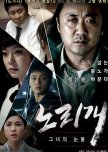
"Only mold grows in the shade"
The Secret Scandal was infuriating and discouraging. Loosely based on actress Jang Ja Yeon’s maltreatment and suicide, it caused this film to be even more painful because behind this sordid fictional story of abuse of power was a real woman who was let down by everyone. If you have triggers, please read the tags carefully.“Why is one actress so important to you?”
Lee Jang Ho has become an internet reporter after being fired from his television job. He’s diligently covering the trial of men accused of “coercion” and “abetting coercion” for an incident that happened in a club one night. Actress Jung Ji Hee committed suicide after being repeatedly coerced into sexual acts by her manager for himself and other men in power. Bound by a punitive contract, she was unable to get out of it unless she repaid 30 TIMES what the agency had spent on her. A new prosecutor’s mettle is tested when the good old boys draw ranks in order to thwart justice.
“Why would I remember your name?
Ma Dong Seok played Lee Jang Ho in a role where the only thing he fought was injustice. The famous ahjussi hitter did a good job as the reporter fighting to find and reveal the truth, one of the only positive male roles in the film. Lee Seung Yeon felt out of place as the tenacious prosecutor with a baby voice. I would have preferred an actress with a more dynamic screen presence. The film’s execution wasn’t as taut as it could have been. Jumping from character to character and also with numerous flashbacks, it had a tendency to feel disjointed which reduced its emotional punch.
“She’s just a girl”
The Secret Scandal’s story is an important one because 11 years later, the #MeToo movement has petered out against the solid wall erected by authoritative men. A 2010 report claimed that 62.8% of Korean actresses had been asked to perform sexual favors. Since this film came out there's been the Burning Sun scandal and now female acquaintances, co-workers, even family members are being turned into AI porn with few consequences. Men’s reputations and careers are too often valued over the careers and well-being of women’s as this film painfully pointed out. One particularly disturbing scene reminded me of a real-life rape that occurred on camera during the filming of Fatal Vacation (1990). Maybe when there are more women lawmakers, judges, film directors and producers, etc. something will change. It’s just taking too damn long. RIP Jang Ja Yeon, your suffering and life are still inspiring people to fight for the right to be safe and not be treated as a sexual commodity.
12 September 2024
Was this review helpful to you?
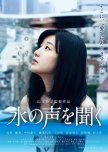
"Life is strange"
The Voice of Water showed the progression of Min Jung's career from scam fortune-teller to priestess of the God’s Water cult complete with its own marketing team. Creating a cult was just another business start-up. When her deadbeat dad entered the picture, danger lurked beneath the murky water of greed.Min Jung’s grandparents emigrated from Jeju Island to Osaka during the island’s turbulent era. Because Min Jung’s grandmother had been a shimbang, her friend Mina talks her into starting a fortune telling gig in order to earn money. When it becomes successful, the young women find themselves with a business plan and marketing team. Min Jung begins to tire of being a priestess as her conscience comes to life. Mina tells her that it doesn’t matter if she’s a sham because if people believe they are being helped, then they are. Min Jung’s father makes an unwanted appearance when he runs afoul of the local yakuza boss. Her estranged father brings trouble as well as an unstable disciple who’d like to take her place.
There was an interesting and cynical premise at the heart of this film, that religion is all about having the power to make people believe and is just another business venture. Whether the cult leaders believed what they were selling was irrelevant. Most importantly, the devotees did and eagerly handed over their hard-earned money. When Min Jung returned from a retreat as a true believer, wanting to save the world, she upset not only the business model but her business team as well.
The film did present an angle I’ve not seen used much by showcasing the Korean-Japanese community in Japan. Min Jung reconnected with her family’s past when she learned about the tragic history of Jeju Island and her grandmother’s life as a shimbang there. Archival photos from this terrible time when 30,000 people were killed and 70% of villages were burned during the clashes before, during, and right after the Korean War with the red scare were shown. Early images of Korea Town in Osaka were shown as well.
The Voice of Water wasn’t all religious scams, Min Jung’s father and his connection to the yakuza brought a malevolent touch. Fair warning, there was a rape scene and talk of sexual assaults if this is a trigger for you. The yakuza story was the least interesting part of the film for me and felt out of place unless it was to say that the crime syndicate also had its tentacles in religious cults as well. I’m sure director Yamamoto showed the reasoning behind the violent climax to the film, but whatever meaning there was attached to it eluded me.
One of the problems this film had was a rather large cast with ill-defined characters. I found it impossible to care about most of them. On her retreat into the woods, Min Jung listened to a tree and was suddenly ready to save the world. Despite her epiphany her character still came across as vague. This was due more to the writing than the acting. Hyunri gave a strong performance as the priestess with a serene façade and party girl afterwards drinking with her friends. I liked that Min Jung and her friend Mina were loyal to each other, but even this important friendship wasn’t given enough details
Fans of director Yamamoto’s other films will want to try this one. For me, there were some engaging elements teased but never fully fleshed out. Ultimately, I found Min Jung’s journey to be long and underwhelming. Water could bring rebirth and death, though enlightenment was difficult to find in the nebulous pool of business.
29 June 2024
Was this review helpful to you?

"Like a velvet chair in a dusty saloon...square peg, round hole, a runaway with nowhere to go"
Every once in a while, you come across a hidden gem. Yellow Rose was just such a gem, a little independent film directed by Diane Paragas and starring theater actress Eva Noblezada. This film was a story of coming of age, social commentary, young love, heartache, familial love, and resiliency all rolled up in a song. Noblezada’s acting and singing were a revelation.Rose Garcia and her mom live in the rundown Texas motel where her mom works. Rose’s room is dedicated to the worship of country music right down to her Dolly Parton candle. Strumming her deceased dad’s guitar she creates and sings songs, a vital inner sanctuary where she can pour out her feelings. What Rose doesn’t know is that her mom has not been able to resolve their legal status and they are on ICE’s radar (Immigration & Customs Enforcement). After going to a Texas dancehall with a friend to hear aged country singer Dale Watson perform, Rose returns home, only to be devastated as she watches her mother being arrested by ICE. Her friend Elliott helps her flee which sets Rose on the path to seeking a safe place to stay.
Yellow Rose alternated between heartbreaking scenes and uplifting heartfelt scenes. Noblezada had true screen presence. I found her performance captivating as she displayed Rose’s vulnerability and resiliency. She sang several poignant songs with a clear and ethereal voice. Dale Watson played himself as a hard drinking faded singer who still had a fire in his soul for music---even if it was at a chicken bingo event. Filipina actress Princess Punzalan had the integral role of Rose’s mother, Priscilla. Lea Salonga who starred in Miss Saigon and was the singing voice for at least two Disney princesses played Rose’s Aunt Gail who had made painful compromises on her road to assimilation.
Rose was dubbed Yellow Rose at a school talent show by the other kids when she sang a country song. The name was a play on the state song of Texas and undoubtedly with racist undertones. This seventeen-year-old braved loving a music genre often associated with whiteness. People of color are not always welcomed into the club even though their contributions have been around for decades. (Thank you, Beyoncé, for helping to also set the record straight!) Despite the struggles she and her mother dealt with and a possible future without her mother by her side, Texas was the only home she knew. Rose was willing to stay and fight for her dream regardless of having to walk the path alone.
This film didn’t only focus on immigration concerns, though Priscilla’s time in detention was dehumanizing. Dale helped Rose to trust herself and use her experiences to energize her creativity. There was also the push-pull of Rose seeking more independence from her conservative mother. Little did she know she’d be thrown into the deep end of the pool when her mother was arrested.
Paragas found a way to balance Rose’s love of country music and the dangers of living as an undocumented worker. While she showed the heartache of a family being split up, she never chose to go full melodrama. In the same way that the people living without citizenship in the country were humanized, so were the citizens who sheltered Rose. The latter must have been difficult to write as dangerous as the rhetoric is and the political climate in some areas for illegal immigrants. Paragas managed to avoid the white savior trope as well. Even with assistance from newly made friends, Rose’s persistence, talent, and capableness were what propelled her to keep moving forward whatever the future might hold. The writing for Yellow Rose may have been oversimplified in places, but what this film wasn't lacking was heart.
“I won’t go quietly into the night,
And I’ll sing till the light of day”
27 July 2024
Was this review helpful to you?
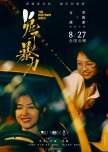
"Life is so hard"
The Old Town Girls was a film that wasn’t sure what it wanted to be or maybe it wasn’t what I wanted it to be. The film was inspired by a true story, though I don’t know which of the unsavory real events made it to the screen. Three girls with absentee parents, living in a dying town, had their lives turned upside-down when Shui Qing’s mother came back into her life after seventeen years. Darkness lurked beneath the shining yellow façade Qu Ting hid behind which would affect everyone adversely.Shu Qing’s dad spends much of his time working at the local factory. Her stepmom resents her presence which leaves Shu Qing alone much of the time. One day Qu Ting returns to Shu Qing’s life in a flash, driving a yellow car, wearing yellow clothes, and bright red lipstick in contrast to the drab world her daughter inhabits. Shu Qing is so desperate for a parent’s love and attention that she quickly forges a bond between them, willing to do anything her mother asks. Shu Qing’s friend Jin Xi is well to do, but lives alone most of the time while her parents travel for work. The third friend, Ma YueYue, has lived with a wealthy couple for years while her father worked elsewhere. When he returns, he dominates her life and physically abuses her. Qu Ting brings a great deal of energy and controversy to the friends as well as death when her past catches up with her.
Director Shen Wu started the film at the end and then went back a few days to show the actions leading up to the tragic consequences. I wish she hadn’t as it took much of the suspense out of the ripped from the headlines events. The criminal part of the story felt heavy-handed and clumsy. The strength of the story centered around the three girls desperate for attention and love. I would like to have seen their backgrounds more fully developed, including the mother’s. The economy had a direct effect on the parental absences which created insecurities in the teenagers. All three girls felt trapped in their unhappy homes. The flamboyant mother’s arrival shook them up and took a toll on the friendships. This could have been an engaging coming of age and friendship film, but it disintegrated into a tragic crime committed by a desperate daughter compelled to save her mother and keep her in her life. The mother’s life was the sum total of her repeated mistakes and bad decisions which came to define her daughter’s life as well. The Girls of Old Town was an entertaining watch although the ending felt out of touch with the rest of the film. If you are in the mood for a dark, melancholy film designed to make you feel uneasy, this might be the ticket.
18 June 2024
Was this review helpful to you?
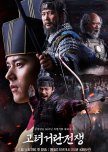
"Goryeo is more resilient than we thought"
I had been looking forward to watching the historical Korea-Khitan War as it wasn’t a fantasy or focused on the romantic involvements of the king or other characters. I ended up having mixed reactions to the varied approaches to history and the different levels of acting abilities.Goryeo was dealing with its larger and more aggressive neighbor, the Liao Empire run by the Khitans. There had already been one invasion by the Khitans which had been repelled but led to concessions on both sides. After a coup, Gang Jo has the teenager Hyun Jong coronated king. The Khitans use the coup as justification for another invasion and for the people of Goryeo and their new king it won’t be the last.
When the drama focused on the historical events of the invasions, I found it quite compelling. This small country stood its ground and used every trick and resource it could to repel the invaders. I became deeply invested in characters like Kang Kam Chan, Yang Kyu, Kim Sook Heung, Ji Chae Mun, and even the Khitan general Xiao Pai Ya. Goryeo not only dealt with the enemy across the border but the enemy within, as traitors opened their gates to the invaders or planned to cooperate with the Khitans. After the Khitans were successfully repelled the second time, the drama lapsed into internal conflicts for around 14 episodes that apparently were not based in historical evidence which I found disappointing. When they once again faced the Khitans, more prepared for their familiar enemy, the drama picked back up for me.
The battle scenes required an understanding that with a limited budget, armies of over 100,000 troops were going to be represented by two dozen people. Battle fields that should have been hip deep in bodies and blood were suddenly washed clean with no one there. For the most part when they showed the fighting up close and the stakes involved it was easier to buy in. The battle at Heunghwajin was done quite well. I was hoping to see the damming of the river battle in the third invasion, but that was likely beyond their budget.
Some of the acting was quite good. Choi Soo Jong as the rigid and canny Kang Kam Chan gave a brilliant performance. Ji Seung Hyun as Yang Kyu was quite believable as the determined warrior who could adapt and improvise on the battlefield. The deep voiced Kim Tae Han as Xiao Pai Ya provided the perfect foil for Kang Kam Chan. There were some limited performances by many other characters that often pulled me out of the moment. The drama focused much of its attention on the saintly, emotional king, but I found him to be one of the least interesting characters and performances. The amateurish camera pans of obvious reaction shots of people being wide-eyed, open-mouthed shocked in the court were overused. The villains, Emperor Shengzong of Liao and Park Jin of Chungju, were overacted and did everything but twirl their mustaches to let you know how evil they were.
When Korea-Khitan War focused on the war, it was engrossing to see how the Goryeo army was going to outfox and outfight the larger armies of the Khitans. When it lapsed into endless political jockeying and arguments, focusing on less compelling characters and actors, it lost some steam and historical integrity.
20 May 2024
Was this review helpful to you?
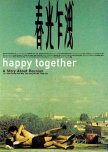
"I had no regrets until I met you"
Happy Together was a haunting, gut-wrenching look at love and loneliness with stellar performances by the main cast. Tony Leung Chiu Wai and Leslie Cheung played an on again, off again couple who were often lonelier when they were together than when they were apart.Ho Po Wing and Lai Yiu Fai have traveled from Hong Kong to Argentina. On a trip to see the Iguazu Falls they become hopelessly lost and Ho breaks up with Lai and not for the first time. Lai finds work as a club doorman while Ho starts turning tricks to make a living. As Lai watches Ho with other men, a deep sorrow and homesickness overtakes him. He doesn’t want to inevitably “start over” as they usually do, he wants to go home to Hong Kong. He needs to make enough money first. When Ho is beaten by one of his clients, Lai lets him in and takes care of him, but refuses to sleep with him. At a new job, Lai makes friends with Chang, a young man from Taipei, which causes friction between the two lovers.
Ho and Lai were in a “can’t live with him, can’t live without him” dynamic. Ho had a reckless streak that Lai tried to tame, but would cause Ho to chafe at the constraints. Every scene was filled with raw emotions-longing, agony, passion, and despair. While Leslie Cheung gave a wonderful performance as the erratic Ho, it was Tony Leung who captivated me with his. I’ve seen Tony in numerous films, but this was the best performance of his I’ve seen so far. He has never had a problem with the too cool for school vibe, but in this film, he tore through emotions left and right without going over the top. It was impossible to not empathize with Lai when the heartache and misery were visibly eating away at him. In a scene where Ho taught him how to dance, the desire not just for this man, but also a longing for something more, something unattainable was quite moving.
A young Chang Chen as Chang Wan brought a breath of soothing air into Lai’s life. The friendship was easy and a reminder of home. Chang had a tender scene as he tucked a sorrowful, intoxicated Lai into bed. Their friendship was a lifeline for the floundering Lai. When Chang left Buenos Aires, Lai was truly adrift and found that “lonely people are all the same.” Lai became more convinced he did not want to ever “start again” with Ho, regardless of his deep feelings for him. Ho was like the prodigal son who had to occasionally self-destruct knowing that Lai would always be there for him in some capacity.
This film had Wong Kar Wai’s trademark palette of greens, yellows, and reds along with scenes in black and white. There is no denying his aesthetic gift, but sometimes I don’t connect with the story he’s telling. Happy Together connected everything for me. The plot was thin, almost non-existent, as these men struggled to make a living and struggled to alleviate their desire to return home and to somehow survive their complex disparities. I thoroughly enjoyed the varied music, which ranged from Tango Apasionado to fittingly enough, Happy Together originally by The Turtles. The songs flowed naturally through the film as stark emotions ebbed and rose.
Happy Together’s unflinching exploration of a tempestuous relationship was hard to watch at times, but impossible to look away from. Tony Leung peeled back his stunning façade and poured out an impressive array of emotions both nuanced and heartbreakingly real. Much like the Iguazu Falls, Ho and Lai’s bond was powerful, chaotic, captivating, murky, and completely unforgettable.
8 May 2024
Was this review helpful to you?

"There are times when the right choice is not always the moral choice"
Tokyo Vice Season 2 started off where S1 ended with characters’ lives in jeopardy or completely snuffed out. With Tozawa in the wind, the drama took the time to explore other crimes in Tokyo and the private lives of the journalists. When the Dark Lord of the Underworld returned with a diabolical strategy to own Japan, the heroes would be put to the test. While not as taut as the previous season, S2 was still engaging.Due to serious threats against them, Jake and Katagiri are forced to lie low. Ishida draws Sato closer into his confidence after the attacks from S1 even as he makes a returning yakuza his second in command. When Sato’s brother is courted by the new Oyabun it leads a reluctant Sato on the path he had never wanted but cannot seem to escape. Samantha mourns the loss of her friend as she opens her new club. Having the yakuza for a business partner begins to take its toll. Things at the newspaper are going smoothly until Tozawa returns and our intrepid gang of journalists and police officers discover that neither the newspaper nor the police department are willing to take on the Dark Lord of the Underworld. When all seems lost an unexpected ally arises to bring help when they need it. The good guys will have to dirty their hands and cross lines that can’t be uncrossed if they want to bring Tozawa down.
The first few episodes took some readjustments in expectations after the powerful ending of S1. Having been credibly threatened by Tozawa, both Jake and Katagiri had to keep their investigations under the radar and focus on pursuing other stories and cases. The drama became more episodic procedural until Tozawa returned and upended everyone’s lives. The private lives of the journalists were explored which will be hit or miss determined by your interest in that angle. Even though little time had passed Jake was less titchy and agitated yet still arrogant enough to believe he was always right. His position at the paper seemed well established. Sam’s behavior was more empathetic for a girl on the hustle. Unchanged, Katagiri was a rock and the guy you wanted in your corner and not as your enemy. After the break in trust from the last season, Jake earned it back, with Katagiri stepping into a sensei or surrogate father role to the brash journalist. The two adrenaline junkies were dogged in their desire to expose Tozawa’s sinister plot. Emi came into her full power as she defied her supervisor in pursuing the risky stories. Her love life seemed to suspiciously follow Sarah's from Love Actually. Most of the sexism and racism from the first season were gone in the second. The rigid system of invisible rules and alliances stayed in place. Katagiri, Jake, and Emi would all make decisions to bring about justice that would have consequences.
Like Jake and Katagiri, I was impatient for Tozawa’s return. The malevolent yakuza drove the action in season 1 and in season 2 as well. When he was off-screen the characters were treading water unaware that the great white shark was biding his time, lulling them into a false sense of security before striking again. I enjoyed the growth in different characters as they were all propelled toward the culmination of deeds and revenge. There were lapses in continuity and logic when the heroes were in deep water swimming with the sharks. Despite those lapses, Tokyo Vice served up a deliciously satisfying ending.
4 April 2024
Was this review helpful to you?

"There's always a cause that results in consequence"
An Ancient Love Song may have been a low budget, shorter Cdrama, but longer, more expensive Cdramas could learn a lesson or two from it. The story was written well and the writers believed in the old adage, “Give them what they need, not what they want.”Shen Bu Yan is on a book tour touting his most recent title which covers the Demon Queen during the Nine Kingdom era. After an argument with his editor, he encounters an old woman selling trinkets to tie to an ancient wishing tree. He spots a broken jade pendant he’d seen in a dream the night before. Back at home his editor tells him he’s required to write a trilogy despite not having any more research for such books. A drop of blood touches the pendant from a nosebleed and he finds himself at the Great Sheng Palace in ye olden times. The Demon Queen is expecting him and the game is on.
I don’t know how this drama passed the censors and the “no time travel” edict, maybe Shen Bu Yan’s jade pendant dazzled them or there was enough standard warfare propaganda to appease them. Whatever the reason, I’m grateful. I’ve never seen Zhang Ya Qin in a lead role before and thought she played Lu Yuan well regardless of the character’s age. She brought Lu Yuan's patient love for Shen Bu Yan to life as well as Lu's determination to do the right thing. And a definite plus, she was no shrinking violet in a fight. Guo Jia Nan as Shen went from hapless fish out of water to strategist just as believably. The two had a nice chemistry despite the characters’ brief interludes throughout the story as each was traveling in different directions. I admire the writers for bringing the drama to a logical end, as logical as time travel dramas can be. Although no one seemed to be concerned about the Butterfly Effect.
Though not a big budget drama An Ancient Love Song was impossible for me to stop watching once I started. It took only the first episode to realize, one’s life and heart was set in “drive” and the other’s was in “reverse”. Forever in each other’s minds yet never quite together, it was a heart wrenching ride as they attempted to save each other and the kingdom, always hoping the next glimpse of the other would be forever.
3 April 2024
Was this review helpful to you?


