

 135
135 431
431 16
16 2
2 6
6 3
3 8
8 10
10 3
3 13
13 1
1 1
1 1
1 1
1 2
2 6
6 8
8 5
5 9
9


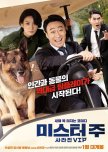
"If you don't respect animals, you'll be punished"
Mr Zoo: The Missing VIP was a cute cross between Dr. Doolittle and Pets starring a gorgeous German Shepherd named Ali and the dependable human ahjussi Lee Sung Min.Agent Joo Tae Joo leads a regimented life with a touch of OCD. He’s up for promotion and determined to get the position. When the Chinese envoy for the 25th Anniversary of the Korean-Chinese Diplomatic Relations turns out to be a panda named Ming Ming he doesn’t hesitate to volunteer for the assignment in hopes it will seal the deal for his promotion-despite his anathema for animals. His life takes a strange twist when he abuses a stray cat named GOD and later sustains a head injury trying to thwart a pandanapping. He ends up being able to understand what animals are saying and can communicate with them. The agency isn’t thrilled with his new “abilities” and benches Joo during the search for Ming Ming. Fortune smiles on him when a military dog named Ali steps in to help him find the culprits.
I found the first 40 minutes or so terribly uneven and uninteresting. Lee Sung Min gave his all as he always does so his performance was not the problem. Kim Seo Hyung made the most of this lighter role, showing she could do comedy as well. The problem was that this type of story has been done numerous times and execution is critical. The editing and scene setups came across amateurish and unpolished. There was the required estranged child who desperately needed the father who had no idea how to talk with her. And the competitive colleague licking his chops at the chance to leap frog over Joo.
Mr. Zoo had a beautiful German Shepherd, Ali, who was truly a good boy. Ming Ming, the star of the anniversary celebration knew her worth and tried to hog the spotlight whenever possible. An array of other creatures with legs and for those triggered-without them-were the highlight of the film. Not a great film, but entertaining for what it was. Fair warning, while this was a family film aimed at children there were disturbing scenes of violence against animals albeit with the requisite disclaimers.
27 June 2026
Trigger warning: A snake shown in different scenes. Dancing rats.
Kung Fu Panda Note: The animal costumes were actually pretty good.
Was this review helpful to you?
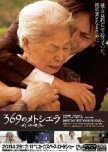
"What exactly have I been waiting on"
The Neighbor was an odd story of orphans, loss, and found family. A four-hundred-year-old missing treasure complicates the lives of Takeda and Setsu, but never overshadows the bonds being created.Government worker Takeda Shunsuke lives in a “don’t ask, don’t tell” existence he has created. Orphaned at a young age, he refuses to create any new relationships. He asks no questions about others and expects the same courtesy in return. Though he tries to keep people at a distance he takes in a “gay, suicidal, drug addict.” Initially complaining about his octogenarian neighbor’s late-night singing, he eventually befriends Isumi/Sanada Setsu who believes she has waited 400 years for him to marry her. Takeda also forms a bond with a mute orphan who has created problems for the orphanage he’s been assigned to. For a guy who doesn’t want anyone close to him, he manages to take in all the strays in his vicinity.
A historian believed that Setsu was the missing “princess” from his uncle’s mountain village and knew where a four-hundred-year-old treasure of gold was hidden. He planned to take custody of her so that the remaining villagers and their heirs would receive the treasure after her passing. When Takeda worked to make Setsu’s vision come true he ran into a mountain of bureaucracy trying to “protect” Setsu though they’d never done a thing to help the older women in her 60 years of isolation.
Takeda’s life changed as he reached out to the people around him. In the process he and Setsu began healing their traumas and pain. The “treasure” was unimportant to Takeda and Setsu, yet each unearthed gifts worth far more than gold as they stopped waiting and started living.
24 June 2026
Trigger warning: Suicide
Genre/tag notes: This was not a Mystery or Investigation in the typical way. Takeda did some research to better understand Setsu to help her, but nothing like a treasure hunt or criminal investigation or mystery. This was a story of healing old wounds and creating meaningful relationships.
Acting note: Ogaki Tomoya played Takeda Shunsuke. I only say three cast listings for him.
Minor spoilery thought below:
The “treasure” ended up being reminiscent to the treasure discovered in the old folk song “One Tin Soldier.”
Was this review helpful to you?
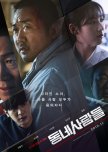
"Everything is fine, right?"
Ordinary People aka The Villagers had Ma Dong Seok playing the new gym teacher at a rural school in a town full of corruption and deadly secrets. The late Kim Sae Ron, in a role reminiscent of the one in Nowhere Man, was a high school student desperately searching for her missing best friend.Yuk Ki Chul takes a teaching job in a rural area after losing his boxing coach position. It’s not long before he realizes the people are on edge. The school staff and police are more concerned about protecting the governor who also chairs the school and is up for re-election than a missing high school girl. Senior Kang Yu Jin refuses to give up on her friend despite every adult she asks for help not only rejecting her but shaming her as well. When Ki Chul rescues her from a dangerous situation a glimmer of hope builds within her that she has found an adult to trust.
Let’s just get my bias out of the way. I will watch almost anything the best ahjussi hitter is in. MDS may not be the greatest actor but I find his screen presence comforting and it usually hits my groove. This film was a by the numbers story of powerful men abusing women and young girls and thinking they could get away with murder. Dang. It really hits hard with what is going on in the world right now. Kim Sae Ron’s Yu Jin made for a dogged sidekick to Yuk’s man with a conscience. The bad guys’ team was weakly drawn, but managed to give Yuk reasons to punch them in the face and kidneys or break through their doors with his fists. Given that nearly everyone in the film was on the take or prejudiced against girls, I was ready to bust some heads.
Ordinary People played to Ma Dong Seok’s strengths and went no further yet still kept me entertained. It was sad seeing the talented Kim Sae Ron who we lost too soon. If you aren’t super picky about your corrupt small-town mysteries, it might be one to give a try. Small ratings bump for MDS.
19 June 2026
Trigger warnings: Girls in jeopardy, but no sexual assaults. The few fights weren’t graphic compared to the Roundup series.
School note: For a rural area they had a huge high school.
Was this review helpful to you?
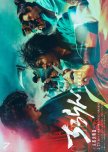
Song of the Samurai: Fateful Showdown in Kyoto
5 people found this review helpful
"I smell violence on you"
Song of the Samurai: Fateful Showdown in Kyoto was a raucous sword swinging, foot stomping, unhinged samurai drama based on a manga that was based on real world people and events during the waning days of the Shogunate. The names and places were familiar even if the purple hairstyles were not.In 1912, an old man recounts the tales of Hijikata Toshizo to a curious young woman. The viewer is transported back to 1859 when the reckless, "thorny brat" Toshi, joins the poverty stricken Shieikan dojo. Kondo Isami is the leader and protects his disciples like a mother hen. Most of the young men are kind and view each other as family. They hope to find a patron lord or government job during the tumultuous era when the Shogunate was headed for the exit door as the Imperial Court was ascending. The even more reckless and unhinged ronin, Serizawa Kamo, enters the picture with his two minions. With spies and assassins lurking in the shadows or in narrow crawl spaces, life becomes precarious for the Shieikan crew.
Toshi’s main goal was to become the strongest man in Japan. He wasn’t terribly bright and was always ready to fight, inwardly rejoicing when he jumped impulsively in over his head. The only time he truly felt alive was when he was brandishing his sword against a stronger opponent. The flipside of the coin was the flamboyant Serizawa who reveled in women and booze, but his “blood boiled” only when meeting a worthy adversary. Props to Ayano Go for uttering his lines and fighting with a cigarette constantly dangling out of his mouth! Neither Toshi nor Serizawa were concerned with politics or the standard samurai life. Though the apolitical Serizawa could see where the life of the samurai was headed.
The majority of Kondo’s group weren’t highlighted much. The charismatic Saito Hajime had his moments to shine, strategist Yamanami Keisuke played a vital role, and the young Okita Soji had a nice fight. The others came to the forefront as needed for reaction shots or in a crisis. The Grim Reaper didn’t darken the screen until the next to last episode. Kondo was regaled as an uncommonly fierce fighter yet he never really had a chance to prove his metal. The flashiest fights were nearly all Toshi’s. So, if you are a Yamada Yuki fan, you will be in for a real treat.
The challenges were full body, gravity defying fights. Ronin flipped, spun, rolled, kicked, and punched as much as they sliced and diced. Shout out to the amazing stuntmen who sold the action in the battle scenes. Since it was based on a Manga there were ridiculous weapons involved on occasion. And even more ridiculous characters. There was no shortage of “cuckoo for Cocoa Puffs” people on the Shogunate and Imperial sides. This was also a world where women did not exist, except for the geisha Oume. I’m still not completely convinced that the young woman in the intro wasn’t a figment of the old man’s imagination.
Song of the Samurai was bloody, fast paced, and took historical liberties for entertainment purposes. The characters and weapons were campy, often over the top. I couldn’t help but root for Kondo’s Kids as they were brave and loyal to each other (for the most part) and ready to take on any challenge regardless of the odds. “Certainty of death, small chance of success…what are we waiting for?”* My biggest complaint was the ending. After paying for an enormous cast of handsome faces, the finale felt like they ran out of film and just had to stop. Hopefully, there will be another season to wrap things up. Overall, it was a fun romp, never slowing down long enough to get boring.
“To bloom in battle and fall in battle. Samurai are flowers that bloom in full splendor, unafraid to fall. The Shinsengumi were the last flowers to bloom in the dying twilight of the Bakumatsu Era”
18 June 2026
*Gimli, LOTR Return of the King
Trigger Warnings: Dismemberments. Spewing blood. Smoking. Some really dreadful hairstyles
Easter Egg: Watch for the 47 Ronin throwaway comment that was not a great foreshadowing for our motley crew
~~~Slightly spoilery comment below:
**If there was a prequel, maybe there will be another season to wrap up what will be a devastating ending for our spunky group of swordsmen. Was really hoping they would show the clash with Serizawa and just epilogue the rest of it. History is history and was not kind to the feisty group which will be heartbreaking.
Was this review helpful to you?
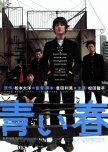
"People who know what they want scare me"
Blue Spring was a slice of life in a violent boys’ school filled with disaffected youth and indifferent teachers. Backed by a blaring rock score, the film was as much mood as it was message.Seniors Kujo and Aoki take part in the Clapping Game on the school roof in order to see who will lead their gang. The boys stand on the ledge, let go and clap before saving themselves by grabbing the railing. Whoever claps the most times in a row, wins. With either nerves of steel or complete detachment, Kujo easily triumphs. Aoki is geared up to rule the school with an iron bat by his friend’s side, but finds Kujo disinterested in but not above the violence. The students are facing a black hole that is dragging them toward a future none of them is prepared for. Their days in the graffiti covered high school are filled with violence, monotony, even death, and yet the crumbling building still seems a better place than what awaits them.
None of the boys had much of a plan. One student bet his future on his arm, playing baseball. One wrong pitch and he believed his chances had evaporated. Every day the boys treaded water hoping to not drown or be dragged under. Outside the fence, the yakuza lurked, waiting for boys with a penchant for violence to succumb to them. Old dreams of becoming Ultraman or a pilot sank into the murky depths of despair. With nothing to look forward to, there were only thin safeguards between the teens and death. Most teachers were scarcely staying afloat themselves, writing rote memory notes on the blackboard, unconcerned about the students wandering in and out of the classroom. A teacher who tended the gardens attempted to throw a lifeline to the disillusioned youth. Few were willing to grab it.
Unlike Kdramas where the bullying took place in classrooms, the bullies in Blue Spring operated in the hallways and stairwells. The brutality escalated, becoming uglier and deadlier as frustrations and crushing disappointment grew. Empty lives searching for meaning and a sense of control without any guidance were doomed to pain. Yet even under the dirt and cigarette butts, there were flowers hoping to bloom. Not an easy watch, more experiential than plot driven, but worth a try if you are interested in the darker side of education and how some teens view their lack of opportunities in a world that feels out of reach to them.
"Even if my body is broken
and all my tears and sweat dry up
My dreams remain
The Nationals
No regrets for my youth
Loser."
20 May 2026
Trigger warnings: Violence though often more implied than graphically shown. One backside naked scene. What amounted to suicide in one scene.
Was this review helpful to you?
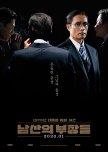
"You have my full support. Do as you please."
The Man Standing Next told the story of the KCIA director who assassinated RoK President Park in 1979. Forty days of intrigue, murder, and betrayals led to the fateful event. This particular snapshot in time is always hard for me because there were no good guys, just men willing to do what was necessary to maintain or gain power.President Park is furious that the ex-director of the Korean Central Intelligence Agency, Park Yong Gak, has been called before the American Congress to testify regarding bribes and gifts given to lawmakers to win their support for his government. To make matters worse, PYG has written a memoir titled Traitor of the Revolution. Current KCIA director Kim Kyu Pyung is tasked with convincing his old friend to turn the manuscript over. PYG tells Kim to watch himself as the president has been siphoning money off into Swiss bank accounts and unknown to the KCIA developed his own secret spy agency. The president’s bodyguard, Kwak Sang Cheon, has been currying favor with the president angling to become his successor. Between PYG airing Park’s dirty laundry and riots breaking out in Busan, Kim finds himself in a precarious position.
The film attempted to show Kim in a sympathetic manner. This angle didn’t work for me. For 18 years Kim had unwaveringly supported the dictator and done his dirty work. The KCIA was hardly a Boy Scout troop and known for torturing people. He seemed to have no qualms about ordering a hit on a friend. Suddenly he’s willing to sacrifice all for democracy? What was his rationale? Did he want to be president? If his plan had been a coup, he did a terrible job of securing support and planning. Was it to save his own life? Or did Kwak telling the president that murdering 2-3 million people was justifiable in order to maintain power the final straw? How did he come to make his decision and how did he convince his few agents to go along with him? Kim Kyu Pyung’s motivation and loyalty bounced all over the place. Park Yong Gak admitted to being a bad guy so I was not vested in his outcome. President Park was a heartless dictator and Kwak was utterly ruthless. Kim’s actions allowed another villain to take over who was waiting in the wings for his shot (the man standing next). A usurper who was much better at consolidating support. Power loves a vacuum and it’s usually the most vicious who rise to the top.
Lee Byung Hun and Lee Sung Min gave strong performances. Lee’s Kim Kyu Pyung required a great deal of nuance as the KCIA director dealt with humiliations, betrayals, and loss. Kim slowly unraveled before our eyes. The rest of the large cast gave adequate performances, some better than others. Kwak was an integral character yet very thinly drawn to the point of being a caricature. Aside from the issues I had with Kim, the film spent too much time on Park Yong Gak. His story could have been expedited. Kim Young Sam’s expulsion was the stimulus for political unrest and violent riots and the characters mentioned him often but the film never gave him so much as a cameo. It also felt like they looked at the cast and realized they didn’t have even one female in the story and added Kim So Jin as the broker for PYG. She did what she could with it, but there wasn’t much to work with. Hers was another role that could have been far more compelling with better writing.
If you enjoy historical films, especially during this tumultuous time in Korea, The Man Standing Next had some positive things going for it. The film was beautifully shot. The two mains gave engaging performances and the history lesson was interesting. However, it wasn’t always absorbing. I found myself checking my watch numerous times because the film failed to reel me in emotionally. Despite limiting the time frame to 40 days, there was no sense of urgency, no tension. I don’t need someone to root for in a political “thriller,” but it really helps if I understand why the main character makes a dramatic life altering decision instead of it coming across as, “This guy is really pissing me off.” It works in kung fu flicks, but with the fate of a nation hanging in the balance, it came across as impulsive which didn’t seem to be what the writers were going for.
18 May 2026
"Sequel" Note: If you haven't watched 12:12 The Day and might be interested in it, this would be a good film to watch beforehand as the other film begins where this film ends. I don't believe they are related otherwise.
Was this review helpful to you?
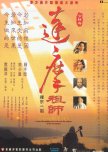
"All you see is an illusion"
Master of Zen must have been a deeply personal project for Brandy Yuen. He was the director, writer, martial arts director and producer for this film. Based on the legends of Bodhi Dharma who is believed to have brought Chan (Zen) Buddhism to China and even given the Shaolin monks the basis of their kung fu. I do not practice Buddhism and do not have much knowledge of the history of this story so my review will be based on my opinion of the artistic merit of the film.A third prince in India has a vision of himself as an old man when he’s out in the woods. Later, a Buddhist monk gives him this message, “Before my birth who was I to be? After I was born who became me?” Despite being the crown prince, he leaves the palace and goes to study Buddhism. He is renamed Bodhi Dharma. Sixty years later he makes the arduous three-year journey to south China. His message is often rejected as he travels among the populace as he is for being a foreigner. When he finds a cave at the backend of the Shaolin temple property, he begins his nine-year meditation without food or water that will change the perception about him. Elsewhere in China, a young monk is attempting to overcome his guilt over his bloody past. His journey will eventually bring him to Bodhi Dharma’s cave.
The presentation of the film was perplexing. It often came across as a documentary re-enactment, but then strayed into very magical wire-fu. The editing was painfully off-kilter. The most distracting aspect was Derek Yee’s makeup, from his early very dark brown makeup which lightened with each passing year. But most awful was his old man makeup. According to the film, he would had to have been at least in his 80’s. His aging prosthetics were abysmal. He looked much better when he hit 150 years old and lost the badly puckered brow ridge.
If you are looking for the miracles, many of them were in the film. There were also plenty of inspirational conversations and visits to temples. I just stumbled over the acting, and awkward stitching together of the stories. The scenery alternated between epic mountains and desert vistas to lower budget sets. If you are familiar with the stories and wish to see them on film, this may be a film to try. If not, the drawbacks may outweigh the more entertaining parts.
15 May 2026
Was this review helpful to you?
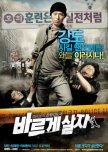
"I warned that you might regret this"
I wasn’t sure what I was getting into when I started Going by the Book. The old synopsis said a traffic cop went undercover in a robbery gang and that was far removed from the story in this film. The actual premise might have been far-fetched but it did provide for both tense moments and hilarious ones.Officer Jung Do Man had been a detective until a failed investigation resulted in his demotion to traffic cop. Upright and by the book he is a thorn in his colleagues’ sides. When the new police chief, Lee Seung Woo arrives, he discovers that there have been a number of unsolved bank robberies. After watching a military exercise, Lee decides to hold a police exercise to strengthen police response time to robberies and coordination with the banks. He secretly chooses Do Man to play the robber, a move the officer warns against. Lee learns the hard way that Jung Do Man takes his job very seriously when the simulation becomes more complicated and more public than Lee had planned.
The film started out slow, and I worried that it was not for me. Once the simulation began, that’s when the fun and tension ramped up. Do Man had done his homework and his way of handling the “hostages” was stressful and funny. Despite not wanting to upset the people in the bank, he was willing to see the simulation through to the end. And return his rented videos on time! Jung Jae Young was suited to a tee as Do Man. He portrayed a good cop who didn’t see the nuance in relationships yet could zero in on illegal patterns. Son Byung Ho brought out Chief Lee’s conflicted emotions as Jung had done exactly what he asked but to a degree he never dreamed.
Going by the Book was an interesting case study in hostage situations even if or perhaps because it was fake. People complained, freaked out, and cooperated. Pride pushed the chief to continue on long after he should have called the simulation off. Thankfully, the humor was not slapstick or bathroom oriented. It evolved organically from the claustrophobic and absurd experiment. I laughed out loud numerous times which is a rarity for me. Silly, serious, ridiculous---yet ended up being quite enjoyable.
12 May 2026
Favorite quote (roughly remembered): “In a fight, which one wins, wushu or boxing?” “The one who has a gun.”
Was this review helpful to you?
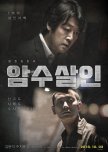
Trust but verify
Dark Figure of Crime was based on the true story of a serial killer in the RoK who played a dangerous game of “where are the bodies?” with a narcotics detective. The killer was aware of how to manipulate the judicial system which made the detective’s job all the more challenging.Detective Kim Hyung Min receives a tip from an informants to meet up with a source who knows where a body has been buried. The source, Kang Tae Oh, is arrested for the murder of his girlfriend before Kim can follow-up on the tip. Kang contacts Kim from prison and promises tantalizing information about other people he has killed. He’s willing to parse out information for contraband and commissary money. Kang is hardly forthcoming with explicit information putting Kim’s job and reputation in jeopardy.
This film paced itself with the speed of a police investigation. The cops were not inept, though the original officers hardly dug very deeply into the missing persons reports they processed. Kim Yoon Seok perfectly encapsulated a dogged detective who was more concerned for the victims and their families than he was about promotions. Good thing, because at every turn someone in the department attempted to discourage Kim from researching the cold cases. His best ally was Detective Jo played by the reliable Jin Sun Kyu. Jo believed in what they were doing even though their cases began to drag him down professionally. Ju Ji Hoon gnawed through the furniture to capture Kang’s malevolent behavior giving much needed energy to the film.
While I enjoyed the thorough nature of the investigation, the ongoing minutiae wasn’t exactly riveting viewing. My biggest problem was that I found the characters, despite their determination, to be coldly detached from the events around them which lessened my connection to their struggles and triumphs. One particularly frustrating hole in the real-life judicial system was filled a year after this film came out. Murder no longer had a statute of limitations meaning criminals like Kang could be held responsible for the full measure of their crimes regardless of how much time had passed. If you enjoy police procedurals, this might be one to try as it had strong acting and followed the relentless work of a detective who refused to give up.
11 May 2026
Was this review helpful to you?
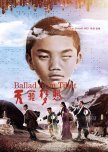
"They are not looking for sympathy, just for a chance"
Ballad from Tibet was exactly what I needed today. A feel good film based on a real life event, that showed the power of determination, dreams, and friendship. Oh, and the element that made it butterfly nip for me, it was a courageous road trip.Thupten is a ten-year-old boy living in Tibet who only has the use of one eye. He has promised three of his blind friends-Sonam, Droma, and Kelsang-that he will guide them to the Lhasa airport. Thupten is in dire need of a surgery to save his one working eye, but his promise comes first. The trio have talked their way into an audition to be on a televised talent show in Shenzhen over 1000 miles away. The show has provided airplane tickets but they must make it to the airport first, a tricky proposition since they have to sneak out of town without the adults knowing. When their teacher comes looking for them, the four are forced to take a circuitous route to Lhasa, a daunting task as they wind up on foot and Thupten’s eye begins to rapidly deteriorate.
Despite the struggles the children faced on their trip, kind and generous people appeared to give them aid or advice. “A single cow must not leave its herd.” When disagreements blew up into arguments they rallied to stick together on their quest. One of my favorite elements was a biker gang who crossed paths with the adventurers. Another was the bag of “gifts/payments” the boys procured to hand out as they met people.
The acting was natural and minimal as the film used children with visual impairments. Most of the adult actors with the exception of a couple of them appeared to be either locals or lesser-known performers. My most major disappointment was that the song the children sang was muted for whatever reason. The end credits showed the actual children who made the trip with the sound so I’m not sure who opposed the song in the body of the film. The writing and editing were a bit choppy though the cinematography helped take my mind off those detriments. The message and poignancy of the children’s indefatigable spirits covered over most of the weaknesses as well.
The children weren’t perfect, they squabbled at times. For the most part, they stood by each other and faced the unknown darkness on the road to their dreams by overcoming their fears. Most were resigned to the jobs they would be offered after school-weavers and masseurs. Their main mission wasn’t to perform, it was to show the world that they had far more capabilities than people believed. Beautiful children with a song in their heart able to see more clearly than some of the people around them…mission accomplished.
30 April 2026
Note: I hadn't realized the problems of cataracts in Tibet. Perhaps this film brought that important concern to light with increased awareness and medical services.
Update: YouTube does have full sound with the children singing the song separately. Please check the link Anusaya provided below.
Was this review helpful to you?
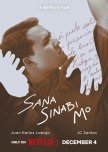
"If you see him, tell him I'm sorry"
A son has to come to terms with his father’s secret life and his own religion in I Wish You Had Told Me. This film was a touching story of a young man having his eyes opened to the idea that love is love.At his father’s funeral, Seph’s loving tribute to his dad is interrupted by a woman who lets everyone know that Otep had been gay. The pastor refuses to bless Otep damning him to an eternity in hell. Seph tries to appeal to the pastor and congregation reminding them of the kind and selfless man his father had been. No one budges. Seph discovers a suitcase with a cache of love letters his father had written to a pen pal in Spain. The woman who made a scene at the funeral tells Seph about the man his father had loved many years ago, and the final unmailed letter. Seph determines to deliver the letter in person, but the trip won’t be easy.
Seph’s trip to Europe began as a proselytizing mission with his church. His partner, Marlon, had his own issues with their pastor. Both men had to rethink their beliefs and what they had been taught from the church that maintained power over all aspects of their lives. This aspect of the film may be triggering for people in a variety of ways.
Seph maintained a connection to his father through his phone and was shown brief flashbacks of his father’s life. If anyone has ever lost a loved one and called their phone to hear the familiar voice on the outgoing message or texted just to send their love, you’ll understand Seph’s actions. The only difference was that he actually received messages back and visits that were heartwarming and poignant.
The church that caused numerous people so much pain, threw Seph’s existence into disarray, also chained his father to a sorrowful life. Despite ecclesiastical disruptions, father and son still maintained their faith, their belief in love simply expanded. Seph’s search was painful, awkward, and ultimately rewarding and not just for himself. It turns out he wasn’t the only one who needed closure and a reminder of the love that had been given.
6 April 2026
Trigger warning: Sexual assault alluded to
The oft quoted scripture Otep and Seph used:
Love is patient, love is kind. It does not envy, it does not boast, it is not proud. It does not dishonor others, it is not self-seeking, it is not easily angered, it keeps no record of wrongs. Love does not delight in evil but rejoices with the truth. It always protects, always trusts, always hopes, always perseveres.
I Corinthians 13. 4-7
Was this review helpful to you?
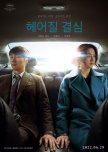
"Killing is like smoking...only the first time is hard"
Decision to Leave was another provocative Park Chan Wook film combining murder and obsession. At times it felt like he was being provocative for provocative’s sake, but it was a hauntingly beautiful, if disturbing film to watch.Detective Jang Hae Jun and his partner are investigating what appears to be an accidental death of a mountain climber. But they become immediately suspicious of his gorgeous Chinese wife because she’s not grief stricken enough. A chronic insomniac, Hae Jun stakes out the widow Song Seo Rae’s apartment and place of work. To his surprise, he sleeps on the stakeouts. And he also begins to question whether Seo Rae is guilty. As he falls deeper into her spell, she becomes not only the cure for his insomnia but its cause as well.
This never seemed like a murder mystery to me. It was not, “Did she?” or “Didn’t she?” More like, “Does she?” or “Doesn’t she”? Hae Jun appeared to be happily married to his weekend wife in Ipo, yet Seo Rae spoke to a deeper place inside. The song “Mist” was played often and Ipo’s fog was mentioned repeatedly. Just as the fog of war can obscure thinking and action so can the fog of lust. The mist of miscommunication (mistcommunication?) clouded conversations as Seo Rae’s Korean wasn’t strong. Translation apps and mistranslations of words hampered understanding in an already twisted and stressful environment.
If you have more problems with infidelity than bug covered dead bodies, this will be a film to skip. Aside from a scene with Hae Jun and his wife, the most intimate moments involved lip balm and hand lotion which were quite sensual. Much was made of the mountains and the sea, at times touching but never truly together. The film started on a mountain and ended at the sea, both beautiful and deadly. I had a few issues with the film, but like Hae Jun, I was willing to suffer to watch Tang Wei.
28 March 2026
Trigger warning: Bugs, dead bodies, creepy bugs. Mostly emotional infidelity. Suicide
Was this review helpful to you?
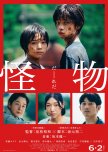
"Who's the monster?"
Having just finished Monster, I feel like a tsunami of emotions has washed through me. Some were easier to face and process than others.The film is an enactment of the Rashomon effect, a series of the same events told from primarily three different viewpoints. Despite the genre and tag for this film being thriller and psychological thriller, that was not my experience. More like social commentary with high stakes. Several things happened that concerned two boys, Minato and Yori, and their teacher, Mr. Hori. When Saori, Minato’s mother, believes Mr. Hori and possibly others have bullied her son, she goes to the school in a take no prisoner’s mode. The teachers (all male) and the principal (female) placate her with insincere apologies, writing her off as a neurotic single mother. Refusing to back down, she is relentless in her pursuit of justice for her child. But all may not be as it seems…
It truly is best to go into this film with no preconceived notions or knowledge. I found the first 2/3’s of the film shown through the adults’ eyes rather bland on occasion. Adults thinking they had all the answers jumped to conclusions, failed to properly communicate, and set rigid societal and familial boundaries. Single mothers were vilified and treated with condescending attitudes. The school faculty and administration cared only about protecting themselves and the school. And for one little boy who was viciously abused by his alcoholic father, the school, the law, and society in general offered zero protection. The school, with all of its "caring" teachers just presented another venue to cause the innocent pain.
Repeatedly through the film, questions were asked. “What is normal?” “What is a monster?” “What does it mean to be a man?” For me, with bullying being so pervasive, why did the teachers leave little monsters alone to terrorize the weak? This film will break your heart and make you angry. Above all, children need protection and acceptance at home, in school, and in society. And in their own home they need love and affection as well. How I wanted to hug these little boys and tell them that they were perfect the way they were. Too often it’s the people advocating a “normal” life who are the monsters inflicting the most fear and harm. An easy recommendation, but not an easy watch.
26 March 2026
Trigger warnings: Child abuse.
Was this review helpful to you?
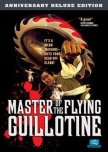
Honey, these guys don't use doors! *
Master of the Flying Guillotine aka One-armed Boxer vs the Flying Guillotine aka One-Armed Boxer 2, (that’s a mouthful!), was a sequel to One-Armed Boxer (1972). After the one-armed boxer killed two of Fung Sheng Wu Chi’s disciples in the previous film, the blind Master of the Flying Guillotine was out for revenge!Yu Tien Lung, the one-armed boxer, has opened a school to teach kung fu secretly. The Qing government wants to be rid of these martial artists they deem a rebellion risk. The Eagle Claw school is holding a tournament and Yu is invited. He declines to fight as he does not want to draw attention to himself or his school. What he doesn’t know is that Fung Sheng Wu Chi, the blind master of two men he killed in the past, is hunting him with his guillotine and killing every one-armed man he comes across. Fung gains the help of several foreign fighters who have entered the tournament.
Full disclosure, because I’m sure it does color my review even if I try to not let it. I’m not a Jimmy Wang Yu fan on screen or off. I don’t care for his wooden acting or his slow, awkward “fight” style. Putting that aside, he was not in much of the beginning and middle of the film when the story focused on Fung and the tournament. The tournament was fun because it showcased numerous stuntmen using different weapons and styles. Lau Kar Leung and Lau Kar Wing were the choreographers so there was no doubt the tourney fights would be on the money, brutal and entertaining. Doris Lung’s fight depended heavily on Wang Tai Lang’s Monkey style doing all the heavy lifting. Doris was beautiful but very slow. Similar to Yu’s fights, his opponents and his stunt double provided much of the excitement in the fights near the end of the film. With some low grade special effects, Jimmy walks on the ceiling like Spider Man. Speaking of superheroes, Yu was One Punch Man before the famous anime only with really bad form...painfully bad form.
This film had nothing to do with the original from Shaw Brothers The Flying Guillotine (1975), other than "borrowing" the titular weapon. Master of the Guillotine had some entertaining moments, despite lacking in the narrative department. The tournament offered numerous quick and lethal fights, including one with Lau Kar Wing wielding a 3-section staff. The foreigners, as so often happened during this time frame, came across in a racist manner. The Indian fighter whose arms could elongate was hilariously bad. And of course, flames and heat didn’t bother Yu while it cooked his opponent. Chin Kang tried to bring life to his hairy character through eyebrow acting. I can see why some people find this film iconic but for me it was average from 1976. I was laughing and cringing too much during the final fights to give it a better rating. As always, graded on a kung fu curve.
25 March 2026
Trigger warning: Hopefully, whatever they threw at Wang Yu was not the Indian’s owl.
*Quote from The Mummy 2
Characters rarely used doors, rather flying through windows or over walls or through the ceiling.
Was this review helpful to you?
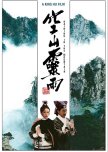
"Its true value lies in its meaning"
Raining in the Mountain was another gorgeous King Hu film starring Hsu Feng. I didn’t find it as compelling as Touch of Zen, but you would be hard pressed to find a lovelier cinematic experience from the 1970s than this film.Merchant Wen An is traveling to a remote temple with his concubine and servant. The abbot is in ill health and ready to name a successor. He has asked Wen, General Wang Chi (accompanied by the vile Lt. Chang Cheng) and the illustrious Buddhist scholar Master Wu Wai (accompanied by numerous beautiful women) to the temple to help him make his decision. Unknown to the abbot, Wen and Wang Chi are there to steal the Mahayana Sutra written by Tripitaka himself. Wen’s “concubine” is actually the notorious thief, “White Fox”, along with her cohort, “Gold Lock.” Aside from the thieves lurking behind every corner, at least two monks are vying for the top position by throwing their lot in with the powerful men. Into this volatile mix enters a thief who was falsely accused and sentenced to the military. Chiu Ming has the potential to upend everyone’s plans.
First, it’s important to acknowledge the true star of the show, the 8th century Bulguksa Buddhist temple in South Korea that has been designated a UNESCO World Heritage Site. The temple sits on a mountain, surrounded by forest, and was architecturally a thing to behold. Most of the scenes were shot on site. The film had also been restored which I am always grateful for.
While ostensibly a martial arts film, there weren’t many fights, the longest occurred near the end of the film. Much of the film involved people lurking around corners, running to hide, and generally slinking about searching for the sacred scroll and attempting to avoid detection. If people weren’t skulking in the shadows, they were making deals to be chosen abbot or deals that involved access to the scroll. The irony was not lost that these devout Buddhists coveted the scroll and were willing to lie, commit theft, and/or murder to obtain it. As the abbot said regarding the tattered paper, “Its true value lies in its meaning.” The monks competing for the abbot position were more interested in power than enlightenment. After complaining about the food, the monks were told they’d have to start farming and working harder at alms. Wait, we don’t actually want to work! The new abbot was going to have his hands full if he could manage to stay alive!
King Hu’s cinematography was stunning. I have watched many films from this era and it would be difficult to find one more aesthetically pleasing. The music perfectly enhanced the story and scenery. The actors all gave fine performances though some performances were more captivating. Other than the long length of the film and repetitive prowling scenes, I enjoyed Raining in the Mountain. The final fight and flight scenes were actually quite humorous, even as characters died. I’m not sure King intended them to, but they were reminiscent of a Looney Tunes cartoon. Raining in the Mountain contained no rain and was more philosophical than physical, at least until the epic game of keep away. If you enjoy 1970s historicals that are light on kung fu and heavier on Buddhist ideology, shot on an amazing location, this might be one to try.
22 March 2026
Was this review helpful to you?


