

 135
135 431
431 16
16 2
2 6
6 3
3 8
8 10
10 3
3 13
13 1
1 1
1 1
1 1
1 2
2 6
6 8
8 5
5 9
9


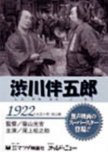
Bangoro saves a country couple from being killed by drunk samurai. Later, he fights a wrestler who cheated in a sumo match and uses his father’s Yawara Jutsu which gets him disinherited when the dastardly Tenzen tattles on him. Later he travels to the mountains to fight the Spider Demon not knowing that Tenzen and another cruel samurai have attacked his family.
This film was composed of several chapters which thankfully come full circle by the ending. Onoe Matsunosuke played the “young master” at the age of 47. He would die three years later after having played in 1000 films! Sadly, just six remnants of his films have survived. I have only seen him in Jiraiya the Hero (1921) which was a lot of fun to watch despite the film being badly damaged. The intro to SB was a reminder that only a tiny percentage of early films are with us today. It’s estimated that over 90% are lost worldwide, mainly due to the nitrate film that was used which was highly flammable and if not stored properly crumbled into dust. Couple that with WWII and a terrible 1923 earthquake in Japan and even fewer of their films have made it to the present so each one we can still watch is a treat.
SB was much like a Kabuki play only on studio sets and in natural settings as much of the action took place in the mountains and next to a river. The Benshi narration wasn’t original to the film as there would have been someone in the theater narrating the film during its run. Men played the women’s roles and everyone was in heavy theatrical makeup and wigs. There were numerous fights involving swords, the aforementioned martial arts, sumo wrestling, and brawling with fists and poles. As with the makeup the fights were more theatrical and dance style moves than actual fighting. The best fight, of course, was with the long-haired Spider Demon as she transformed back and forth from two-legged to eight, and spewed white webbing everywhere long before Silly String was invented.
Shibukawa Bangoro may have been heavily dated, but that was part of its charm. Bangoro was a virtuous hero, the villains were a real threat, and despite the ravages of time, the film had a proper ending. It might have been a Shaw Brothers abrupt ending, but still brought the story to a close. And did I mention there was a giant muppet spider?
12 November 2025
I gave it a small ratings bump due to its age
Trigger: Attempted sexual assault
Was this review helpful to you?
This review may contain spoilers
This hopper fell flat on its face
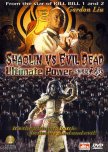
Shaolin vs Evil Dead: Ultimate Power was bound to receive a low score from me for the egregious error of not actually being a sequel to the first film Shaolin vs Evil Dead. Did I mention the first film ended on a cliffhanger? The makers of these films decided to give us a prequel-sequel that went in a completely different direction to the previous film. To quote a vampire, “Bite me.”Dragon and his wife Phoenix White are called upon to save a small village from a gang of roving bandits. While completing their task they end up poisoned. Phoenix’s unborn child also suffers from poisoning. She begs their elder to save her child against his better judgement as the child would be born with an evil poison in his heart. Years later the leadership of the clan is given to Chiu Yu instead of Innocent, sending him into a murderous rage like a good nepo baby. Chiu Yu must study to gain the skills to purge the evil from Innocent’s heart. (note of clarification Chiu Yu was Gordon Liu’s character from the first film who was named Pak, Innocent was Louis Fan’s character from the first film whose name was Hak/Black. Moon and Sun were also renamed with their roles reduced, Fire was completely missing)
First off, this film committed a cardinal sin in a jiangshi/hopping vampire movie---it was boring. The first hour dragged horribly. Being a prequel with melodrama doesn’t mean I will care about any of the characters. They could have summed up this material in 10 minutes. Gordon Liu didn’t arrive until after the hour mark which was too little too late. Fan’s Black and Shannon Yiu’s Moon were scammers in the first film but not completely malevolent. The character changes here were jarring. Unlike the humor in the first film, Ultimate Power went dark. Much of it made little sense.
The martial arts choreography was abysmal. The wire-work was awful, seriously, kung fu flicks from the 80s had better leaping and flying. Characters flipped and twirled near their opponents without connecting. When they did connect, the kicks and fists were more like gentle pushes. The moves were criminally slow for 2006. The first film had some CGI, the sequel was dominated by it. If filmmakers are going to use this much CGI, it better be good. And it was laughably bad.
Shaolin vs Evil Dead ended on an unresolved cliffhanger, this film’s ending wasn’t as awful, but it wasn’t great either. I actually laughed it was so dreadful and out of left field, or in this case--outer space. The acting, editing, writing, and continuity drove my score down, a painful thing because I like Gordon Liu and hopping vampires. Basically, this hopper sucked.
5 November 2025
Was this review helpful to you?
"Everything's fine
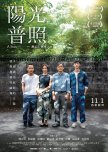
A Sun spanned several years in the lives of a dysfunctional family. One son shown like the sun, radiant and beaming. The other son lingered in the shadows, swallowed in darkness. Each would be envious of the other, unable to claim what they needed, both would suffer dire consequences for their unspoken desires.A Ho gets caught up in a violent event initiated by his buddy Radish and is sent away to a juvenile detention center. The criminal act is the last straw for his father who washes his hands of him. The father does, however, dote on his seemingly perfect oldest son, A Hao, who is testing for the second time to be accepted into medical school. The mother struggles to keep the family together and in the process the family is expanded when Ho’s girlfriend shows up with a surprise. When Ho is released, he works to take care of his family and put his past behind him. The darkness in his life, however, is not so easily eradicated.
The film hammered home that the two sons were a dichotomy of light and dark, good and evil, night and day, the sun and moon. Yet one yearned for the respite of the shadows, scorched to his soul by ever being the family’s light. Always giving himself away to others, with little leftover to nourish himself. The other son longed for the warmth of affection and acceptance from his family. Frozen from the darkness, afraid he’d never measure up, never feel the sun on his face.
The caretakers of the circus of light and darkness were the parents. Mother Chen fought tirelessly for her family. She tried to pierce the iron shield her idiot husband covered himself in regarding A Ho. With an open heart and open door, she accepted Ho’s girlfriend into their family and also trained her as a hairdresser. She even devised a better work situation for the two of them. Meanwhile, Papa Chen dug into his long-held prejudice against his youngest son. Prickly and recalcitrant, he distanced himself from everyone exasperating the situation. He was too often an impotent passenger at work and at home.
Along with the growth for the main three characters, the cinematography was gorgeous. This film was beautifully shot, including the all-important lighting in a film built on the metaphor. I also enjoyed the OST, especially a mournful instrumental that played during one scene. My biggest peeves were that in a 2 ½ hour film, Ho’s girlfriend was given almost nothing to do or say. Ho had very little interaction with her over the years. While she had a couple of key scenes, the character was badly underdeveloped. With all the time jumps and flash backs, I would have liked to have seen what caused A Ho to go down the criminal path he chose.
I may be a Butterfly but I have the attention span of a gnat and yet I was never bored with this film despite its length and slow burn. Most of the characters were deeply flawed and yet continued to move forward, refusing to give up when it appeared the easiest thing to do. There were moments of pain, humor, anger, and a gut level resiliency. If ever there was a film to express that “Everything’s fine” means exactly the opposite, it’s this one. Well-acted, well-written, painstakingly shot, A Sun shone brightly.
4 November 2025
Trigger warnings: Suicide. Dismembered body part early in the film. A short violent scene near the end.
Was this review helpful to you?
"Love is the strongest weapon of all"
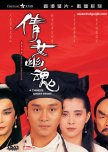
Love is a twisted path when one person is a fraidy cat scholar and the other is a tantalizing ghost. 1987’s A Chinese Ghost Story set the bar for Hong Kong haunted offerings that would follow.Newly anointed tax collector, Ling Choi San, travels in tattered shoes with no money for food or shelter. The town he enters refuses to put him up for the night and sends him to the Orchid Temple. What Ling doesn’t know is that the monks there are no longer living and other creepy creatures have set up housekeeping, along with a virtuous Taoist swordsman. At the temple he meets a beautiful young woman who hides a deadly darkness.
Leslie Cheung made a great bumbling scholar who inadvertently saved himself and others through his clumsiness. The schtick only caused me to want his character to be eaten a couple of times with the rest of his screen time resulting in a more endearing response. Joey Wong’s ethereal Lip Siu Sin was believable as both the seductive and vulnerable ghost. Wu Ma stole the show with his bearded ghost hunting swordsman. Always confident and under control he looked out for the good-hearted, if not very bright, tax collector.
Tony Ching Siu Tung both directed the film and worked as one of the martial arts directors (there were five). Much of the martial arts was sword work (often magical) and/or wire-fu with Wu Ma carrying the load on the fights.
A Chinese Ghost Story offered ghosts, zombies, a powerful life-sucking tree demon, and the lord of the Black Mountain with his underworld army. Nothing an old swordsman, an inept hero, and a lovely ghost couldn’t handle. The special effects and storytelling may have been dated but the film certainly had its charms. As always, I rate older films in these niche genres on a curve.
4 October 2025
Trigger warnings: Snake, a tree with an enormous tongue, implied wolf killings, zombies, decapitations, and a brief sexual encounter.
Was this review helpful to you?
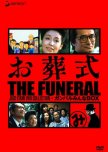
"The day will turn into night"
The Funeral was Itami Juzo’s directorial debut in 1984. In this instance, the film is exactly as described in the title. For three days a family gathers to mourn the death of the father, bringing together a peculiar yet largely relatable group of people.When Amamiya Shinkichi dies suddenly of a heart attack his son-in-law, Wabisuke Inoue is put in charge of the funeral. His mother-in-law, Kikue, wants the funeral to be held at the house near the Kamome Hot Springs. Inoue and his wife Chizuko know nothing about funerals and make a mad scramble to find help in figuring out all the customs and procedures. Everyone has an opinion on the various rituals, including which way the head should be facing and which way is north!
Itami showed many of the common funeral experiences regardless of customs--children unfamiliar with death playing in the background, laughter and tears as people process their complicated emotions, telling stories, arguing over procedures, and the financial costs. Then there were customs I was unfamiliar with—watching the loved one be cremated, salt being thrown on those returning from the crematorium, and the various Buddhist rituals. It was delightfully human that the relatives unused to kneeling for so long had cramping feet and knees. The funniest bit to me was when funeral novices Inoue and Chizuko consulted a video which might as well have been titled “Funeral Etiquette for Dummies.”
This appeared to be the first main film role for Miyamoto Nobuko, Itami’s wife. I found her face lovely and expressive. Ozu favorite, Ryu Chishu, played the ever-chanting priest with a fine eye for cars and expensive tile. Where the film lagged for me was a main married character dealing with his crazy mistress in the woods which included a fairly graphic sex scene. And she was cray-cray. The deceased was a serial philanderer that everyone accepted matter-of-factly.
The Funeral was a slow story with mostly gentle humor, showing both the reverence and irreverence that accompanies death and mourning. A far more pragmatic than sentimental experience-- because even at a wake, people need to know when to leave, how much money to donate, and how to tell a mistress to pull her weeping self off the casket.
27 September 2025
Triggers: Partial nudity and sex scene.
Was this review helpful to you?
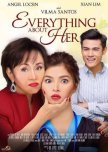
Real estate mogul Vivian Rabaya grew up poor and now is merciless in business. Her ex-husband and son moved to the USA years ago and she hasn’t seen her son, Albert, since he was 17. After being diagnosed with bone cancer, she hires Jaica Domingo as her full-time nurse. At the insistence of Vivian’s right-hand man, Jaica calls Viv’s son, Albert, and tells him his mom has an architectural job for him. When that doesn’t work, she tells him she has cancer. Albert comes for the job but his anger toward his mother runs deep. Jaica believes he’s the best medicine for her boss and works to have them reconcile. Her mission is complicated by her attraction to the handsome architect.
I would have liked this film better if director Joyce Bernal had picked a genre and stuck with it. The romance was clumsy with cringey and obvious tropes. The comedy felt forced most of the time. It was better when it came from an organic place. What worked for me, was the enemies to friends relationship between Vivian and Jaica. It’s been done many times before this and better, but it was still entertaining to watch the two women work through their familial issues by leaning on each other. Vivian also realized she didn’t have much time to fulfill her bucket list spurring her to accentuate her altruistic endeavors. The son’s emotions were all over the place making Albert difficult to feel compassion for.
Everything About Her was at its best when the film focused on Vivian coming to grips with her new situation and Jaica helping her as she faced the medical fallout of treatments. Despite dealing with the side effects of the medications, Vivian was the usual healthy looking and energetic cancer patient often shown in movies. I always wonder if the writers have actually ever been close to someone who has suffered through chemotherapy and end stage cancer. Be that as it may, I would have preferred less comedy schtick and more authentic scenes between the characters as that was where the compelling moments came from for me.
19 September 2025
Triggers: Several vomiting scenes. F*cking cancer.
Was this review helpful to you?
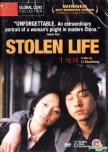
"If I understood him I’d lose him”
Stolen Life starring Zhao Xun showed how being brought up without real affection and acceptance can lead a young woman to settle for whatever crumbs she can glean from a man who is the very definition of a red flag. People can perform all sorts of mental gymnastics to avoid facing the truth and in this tale, Yan Ni paid a heavy price for ignoring the glaring warning signs.Wu Yan Ni lives with her grandmother and aunt in Beijing. Her mother was an “intellectual” sent to the countryside where she met Yan Ni’s father. Quiet Yan Ni rarely sees her mother and meets her father for the first time when she’s fourteen. The women think she should learn a trade and marry. Her father declares she should go to college (university) so that her future would hold more opportunities than theirs. On her first day at the university, she meets a handsome delivery driver named Mu Yu. He showers her with attention and small gifts which causes Yan Ni to lose her heart…and her common sense.
This film highlighted the problems that can arise from not communicating. Yan Ni’s mom never told her why she was living with her grandmother leaving Yan Ni to believe she’d been abandoned. For fourteen years her father never made contact. Yan Ni was so afraid of being alone that she never asked Mu Yu any personal questions for fear of the answers or upsetting him. She knew instinctively and empirically when he was lying to her yet chose to ignore the facts in order to stay with him. It was like watching a person continually swerve into oncoming traffic and expecting to not get hit. The costs to her physical and mental health continued to grow.
Stolen Life was frustrating to watch, especially with most of Yan Ni’s feelings being explained by a voiceover, not shown through her actions and reactions. Whatever the artistic reason for the scene-by-scene narration, it cost the story emotional integrity and distanced this viewer from the characters due to the near constant interruptions. It really was a shame because the film discussed a couple of issues not normally seen in Chinese films and the actors were more than capable of handling the sensitive subjects. Aside from the lessons in communication and self-worth, the film also emphasized the old saying, “It takes a mighty good man to be better than no man at all.”*
15 September 2025
*Dixie Carter
Spoilery comments below:
Can a baby’s father and grandmother determine a baby will be put up for adoption without the birth mother’s consent in China?
Female students forced to leave school for being pregnant is ridiculous. It’s not catching! Plus, the mother will need the better opportunities higher education will give her in the job market to help her raise the baby.
Mu Yu was playing a ridiculously long con on the women he scammed. His doormat detector was honed to perfection. He could spot a woman desperately alone and without any self-esteem. This is why women without supportive families desperately need good girlfriends.
Was this review helpful to you?
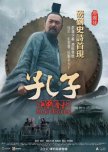
"Helping others is a measure of bravery"
Director Hu Mei attempted to tell around two decades of the life of Confucius. My knowledge of the great sage is extremely limited so I won’t be the person to determine if this depiction is historically correct. As a work of art, it let me down. I’m no stranger to documentaries, but even documentaries often pick a specific lens to view historical times and people through. Hu Mei tried to cram as many people and events as she could into two hours which gave little time or attention to each, especially the titular character.Confucius is called upon by the ruler of Lu to become a minister. Three aristocratic families hold much of the power and Confucius is asked to unite the land and decrease their power. Eventually, he is encouraged to leave. Confucius and his disciples wander through the neighboring countries, often driven out, until he’s finally invited back home.
I once read a book that continually added characters as the main characters went on their quest. It came across as “and then, and then and then…” which is how this story felt. Deaths and setbacks evoked no emotion because I rarely remembered who they were. Confucius’ wife and daughter made very brief appearances. As if to make sure the world had at least one woman in it, Zhou Xun was thrown in for a few minutes as a Wei concubine reviled for having too much power. Darn women!
These are the hardest reviews for me to write. Confucius wasn’t bad, but it wasn’t good either. I had truly looked forward to this film and was prepared for it to be slow. Slow I can handle, boring and crammed with mostly nameless characters is another matter. There were a few very quick battle scenes with terrible CGI, making the sage for the ages more of a military mastermind. Perhaps if the story’s focus had been narrowed, Confucius’ life and contributions could have been enhanced instead of watching him continually run from pillar to post.
15 September 2025
Triggers: Cockfighting. I really hope no horses were harmed in an early sacrificial funeral scene.
Was this review helpful to you?
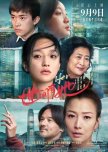
(1) Shen Yue and her family live in Wuhan. Her recently widowed mother-in-law moved in and clings to her son and grandson, while always finding fault with Yue. When Yue develops a fever she follows the Covid guidelines and goes to the hospital suited up from headed to toe in protective gear. Turned away due to overcrowding she is sent home where her MIL decides she must quarantine elsewhere so as not to make the men in the family sick. The city goes on lockdown trapping the women together. Their difficult relationship serves to highlight the sense of isolation each of them feels.
(2) Xiao Lu has returned to Beijing in order to share an uncomfortable birthday with her family. Her boyfriend of 4 years and their cat stayed behind in Wuhan. The two lovers intend to marry, yet Xiao Lu hasn’t been courageous enough to tell her parents, who keep trying to set her up with someone else. Zhao Hua falls sick just as the lockdown is initiated. Desperate to be with him, Xiao Lu is devastated to be separated with no means of seeing him other than by phone. Zhao is isolated, dealing with his illness alone. Despite being circled by friends and family, Xiao Lu feels the pain of every minute away from Zhao.
(3) Chelsea works as a photographer for a Hong Kong newspaper while estranged husband Darren is a photojournalist. She records the problems of empty shelves, businesses closing, and people suffering in isolation. Darren is nearly always too busy to visit the children, a constant thorn in Chelsea’s side. When their child becomes sick the interminable wait for test results stokes the lingering resentments between the parents.
All three stories dealt with the difficulties from lockdowns and food/medical supply shortages. The cruelest isolation was saved for patients in the hospital who were cut off from loved ones, only able to communicate via their cellphone. For me that was one of the worst pandemic memories, people dying without their loved ones around them. The first story was melodramatic and had a rushed resolution. I have to admit I still found it satisfying. The second story was more polished and reminded us that Covid didn’t show mercy for any age group. Because the relationship was shown a la distance, I wasn’t as connected to the characters as much as I would have liked. The third story I found to be more irritating. Chelsea had a Filipino housekeeper who was loyal and kind. Chelsea’s mother declared that Filipino maids couldn’t be trusted and Luanna's days off should be curtailed. Aside from being blatantly racist the practice proposed dangled pretty close to slave labor. The third story’s emphasis on traditional female responsibilities irked me quite a lot. Xiao Lu’s segment was the singular story to not have either a mama’s boy or one that seemed to want a mother taking care of everything.
Each story in Hero had something interesting to offer as the women had to deal with the pandemic’s double whammy of illness and logistical problems in addition to navigating the difficult relationships in their lives. 7.25 On a coin flip, I bumped it down to 7.0. Though flawed I don’t regret watching it.
7 September 2025
Was this review helpful to you?
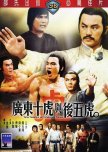
"Don't blame me if I don't fight fair"
Ten Tigers from Kwangtung is a kung fu cult classic. It boasted an all-star cast, had non-stop kung fu action from the beginning to the end and…meh. Maybe I was in the wrong mood, but I need a little story to break up the continuous fists and kicks.Five young Tiger apprentices are being hunted by two Qings bent on revenge. The Ten Tigers of Kwangtung had killed a general so his son and an official are looking to even the score. Though the five young men had nothing to do with with the death, if you can’t kill the one you want, then kill the one you’re with (a rif on the Stephen Stills song from 1970). The story rewinds to show how the Ten Tigers formed their rebellious band.
This cast was loaded. Ti Lung played the leader of the Ten. Alexander Fu Sheng was the annoying Tam Ming who tested the members’ skills and patience. All six Venoms eventually joined the Ten. Johnny Wang played the Qing general in an understated performance for him. Ku Feng was the rebel leader being protected by the numerical crew. Wong Lik shone as the menacing Qing official in the present who had a variety of lethal weapons hidden on his person and wasn’t afraid to fight dirty. “Don’t blame me for not fighting fair.” The always maligned Qings lost their head when confronted with the Venoms and learned that a spear will go through two as easy as one.
Fair warning, this was a Chang Cheh film which meant the blood spewed freely and forcefully. Many of the fighters were stuck in bad Bruce Lee wigs with pigtails awkwardly tacked on. The dubbing was atrocious, lips and dialogue didn’t always match up. That often happened when scripts were written on the fly and the actual dialogue was dubbed in later, but seemed rather egregious in this bigger budget flick. I recognized several of the sets which hadn’t been demolished in previous CC movies serving as murder scenes in this one.
The martial arts choreography was okay and standard for the time in the flashbacks, though some of the action bordered on kung fu posing. Fortunately, Phillip Kwok and Lu Feng could be counted on to bring the acrobatic charm. Ti Lung and Johnny Wang had a battle with a weapon I’d never seen before—a mermaid cudgel. During the present, the youngsters’ fights against Wong Lik and Chen Shu Chi in the final 30 minutes were the fastest and most creative.
Ten Tigers from Kwangtung would have benefited from some white space on the page to give the viewers a mental breather from the constant kung fu. Despite my complaints, it was fun to see this festival of favorites in one film. And it gave several smaller players with skills who were often relegated to bit roles time to shine. I wasn’t as crazy about this film as kung fu film aficionados tend to be, but if you enjoy these old films, it’s one to try. As always, I grade kung fu flicks on a curve.
22 August 2025
Trigger Warnings: Dismemberments and lots of spewing blood.
Was this review helpful to you?
What I liked:
The production values were high. The cinematography and music were all slick.
The acting was quite good, there were the occasional clunkers, but for the most part, the characters were convincing.
Unlike a lot of dramas who won’t go there, the stakes were high for both swindlers and victims.
What didn’t work for me:
(Vague, but slightly spoilery)
This has been done before. Many times. I kept waiting for Takumi to show that he had been stinging Harrison, but alas he just wasn’t that bright. The twist was evident from the beginning because, it is a tired old trope that needs to be retired instead of retread.
The sinning nun made no sense to me. Sell the temple and go get her freak on whenever she wanted. Were there bodies buried there?
Harrison’s business model wasn’t sustainable. Word was bound to get out. Should have already been common knowledge.
None of the characters were likeable, especially Takumi. He might have a boyish face, be able to hang in there like a stallion, and been the victim at one time, but he kept the cycle of devastation, death, and revenge rotating. Hardly a sympathetic cause. For 5 years he had access to all sorts of information, yet he failed at the one thing he was supposed to be searching for which others found overnight. Harrison may have been right.
To sum up (no spoilers):
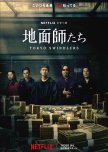
Tokyo Swindlers examined how far people will go to possess land and how far swindlers will go to make them think they are acquiring it. Too often victims are left financially ruined with little to no recourse. Even if the crooks are caught and spend a few years in jail, they still have access to the ill-gotten gains in secret offshore accounts making the risks worth it. In this drama, the police were hardly a threat, it was the “no honor among thieves” that held a knife or a piano wire to the throats of the swindlers. A short, cynical, at times gory watch.
18 August 2025
IF YOU HAVE TRIGGERS be forewarned:
Sexual Content, Gory Death scenes, Vomiting, and Drug Use
My personal pet peeve: The black character was the only uneducated, poorly dressed grifter :/
Was this review helpful to you?
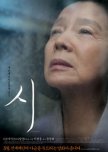
"It's important to see everything around us well"
I have to say, I have not been a great fan of Lee Chang Dong’s work. That changed with Poetry. Despite the difficult subjects, a shred of humanity and dignity survived.Though barely making ends meet while taking care of her sullen grandson, Yang Mi Ja dresses well and is always composed. She works as a caregiver for an older man who has had a stroke. Passing by a notice she sees there is a poetry class being offered. For over 50 years she has harbored a secret desire to write poetry and begins the class. The students are challenged to really look at the world around them, to dive below the surface and discover the beauty hidden in plain sight. Mija’s world is rocked when she is diagnosed with Alzheimer’s. But worse than that she’s informed her grandson has a connection to a young girl’s suicide.
Yoon Jeong Hee was mesmerizing as Mija. Always polite and soft spoken, hiding her true emotions, until they spill over in the rain. Mija sees and empathizes with a grieving mother and joins her by grieving the loss of an innocent child, brutalized by cruel boys. The other parents and the school heartlessly only care for burying the truth with the body, for boys’ live and futures must be protected no matter how reprehensible and inhumane their actions. Mija faces the painful reality in her family with a higher vision. A more poignant game of badminton you are likely to never see. Knowing her independent time was on a countdown, Mija looked for what was beautiful, what was true and gave witness to it. In doing that she gave Agnes a voice, recognizing her life, her love, and her loss.
14 August 2025
“Agnes’ Song”
How is it over there?
How lonely is it?
Is it still glowing red at sunset?
Are the birds still singing on the way to the forest?
Can you receive the letter I dared not send?
Can I convey the confession I dared not make?
Will time pass and roses fade?
Now it’s time to say goodbye
Like the wind that lingers and then goes, just like the shadows
To promises that never came
To the love sealed till the end
To the grass kissing my weary ankles
and to the tiny footsteps following me
It’s time to say goodbye
Now as darkness falls
Will a candle be lit again?
Here I pray
Nobody shall cry and for you to know
how deeply I loved you
The long wait in the middle of a hot summer day
An old path resembling my father’s face
Even the lonesome wildflower shyly turning away
How deeply I loved
How my heart fluttered at hearing your faint song
I bless you
Before crossing the black river,
with my soul’s last breath
I am beginning to dream
A bright sunny morning
Again I wake, blinded by the light
and meet you standing by me.
Was this review helpful to you?
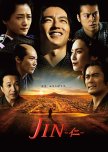
"The patterns you see may be different but the beads inside never change"
Jin is a 2009 time travel drama that has held up surprisingly well. The acting, sets, and music do not seem out of step fifteen years later. Set during the end of the Tokugawa Shogunate there was plenty of political turmoil roiling around the main characters as Jin sought to train medical students and tend to patients while trying not to obliterate the timeline.Dr. Minakata Jin has been treading water as a surgeon ever since his failed surgery on his fiancé ended with her languishing in a coma. After performing an emergency surgery on a patient with a brain tumor, he removes the tumor that has the appearance of a fetus. Later, the patient steals a medical bag and the tumor, attempting to run away. In his efforts to stop him, Jin falls down the stairs and into 1862 Edo. He becomes involved with the family of a young samurai who saves his life. From there he makes the acquaintance of Sakamoto Ryoma and later the famous courtesan Nokaze. Gradually, he sees more patients and becomes more involved with the people and politics of the time. He’s determined to expand Japan’s medical field hoping it will save Miki in the future and that he can return to his time period and her.
Despite the political upheaval and Jin pretty much dropping from the sky, nearly everyone was accepting of him. It helped when the doctor had seemingly godlike powers compared to their current medicine. Jin’s fish out of water concerns were largely minimized and enemies often became friends rather quickly. Much of the conflict dwelled on Jin worrying that his actions would change history detrimentally, especially for Miki. Young Saki hero worshipped Jin and determined to be a doctor herself, much to her mother’s chagrin. Another woman fell for Jin, but the doctor only had eyes for his fading Miki and improving the medical procedures and medications for the day.
Season 1 was largely a feel-good drama with Jin saving people who were usually neglected. The comradery continued to build with other doctors and leaders as well as the reckless Ryoma (with actor Uchino Seiyou channeling his best Mifune Toshiro impression). The biggest complaint I had was that the drama had trouble nailing down their time travel rules and Jin’s motivation. Other than that, I found it to be quite enjoyable.
27 July 2025
8.25 rounded down to an 8.0
Trigger warning: Graphic surgery scenes if you are sensitive. They also faced a cholera outbreak which meant diarrhea and vomiting scenes.
Funny note: the characters run a lot. I found myself going, “Run, Sensei, run!” as the drama progressed.
Was this review helpful to you?

"True love often conflicts with reason"
When I hit play on Naruse Mikio’s coming of age film, Spring Awakens, I was not expecting a 1947 version of a sex education class but that’s what I got. There was nothing graphic, it was 1947 Japan after all, but I was surprised at the frank talk about questions raised by the six young adolescents.Kumiko and her friends Hanae and Kyoko discover the reason Kumiko’s maid has been fired is because she’s “in love”. Hanae introduces the girls to her brother’s buddies-Koji and Noshiro. Gossip around the maid brings up numerous questions to parents centering around, “Is love wrong?” The girls’ school physical which involves measuring their breasts (seriously, why?) leads to laughter about different sizes and shapes. Crushes between the six members of the friends’ gang also cause the teens to develop funny feelings in their hearts and bodies. Another question repeatedly asked by the girls is “where do babies come from?” Some of the parents are better equipped at answering the uncomfortable questions while others stick their heads in the sand.
Kuga Yoshiko at 16 and starring in only her second film, did a superb job playing the emotional rollercoaster of adolescence. Yumiko’s mother was very strict and her rules about boys could be summed up as, “Don’t look at them, don’t be around them, and for Pete’s sake don’t touch one!” Most importantly, “Don’t ask me where babies come from!” On the flipside, Koji’s father played by the always reliable Shimura Takashi, doled out helpful, loving advice to his son and those who came to him needing guidance. Other parents were also more “lenient.”
The film showed how important sex education can be. When girls don’t know where babies come from, they are liable to end up carrying one or fear they have become pregnant from a kiss. The old adage brought up in this film that it’s better to keep girls in the dark or else they might act on their newly found knowledge was as useless then as now. Teenagers’ hormone fueled curiosity and new appreciation for the opposite sex and their own changing bodies can only benefit from correct information and adults they know they can talk with about anything. The film discussed menstruation without the girls understanding what role the monthly cycle played in their sexual health. When adults told them that married love or the gods conjured up babies, I guess that knowledge was beside the point. Given that the girls were lectured about the “right kind of love” and “not making any mistakes before marriage”, crucial data was being withheld from them. Despite one of the school girls stating that girls and boys were equal, it was clear in the film that they were still rigidly defined by social traditions and the patriarchy. I’ll step down from my soapbox…
Kumiko and Kyoko read “lewd” romantic poetry including “Im Wundershoenen Monat Mai” by German writer Heinrich Heine (1797-1856). I love when Naruse walked the wild subversive side. The author he chose had to leave Germany to live in France because his works were considered obscene, often banned, and he held radical ideas about democracy. Another unexpected scene was when a pregnant teenager’s mother was advised to support and love her child instead of shunning her. Also, who else besides Naruse would have girls drawing boobies on a school chalkboard in 1947?
Spring Awakens was actually a delightful coming of age/slice of life film with gentle humor and sweet first loves. The teen friendships and crushes were realistic as well as their burgeoning desire to know more about their feelings and bodies and those of the opposite sex. The film occasionally drifted into Afterschool Special lectures but overcame the bouts of preachiness with charming characters and performances. Children began to stretch their boundaries and parents learned the best they could hope to be were supportive guardrails.
“’Twas in the glorious month of May,
When all the buds were blowing
I felt, ah me, how sweet it was!
Love in my heart a-growing.
‘Twas in the glorious month of May.”
-Heinrich Heine
26 June 2025
Was this review helpful to you?
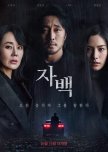
"Salvation is never painless"
I had great hopes for Confession as it starred So Ji Sub and Kim Yoon Jin (Lost’s Sun!). Instead of a sexy or cerebral thriller, I was treated to one of villainy’s lower wattage killers. While it had a nice little twist, it came so late in the film that I’d already emotionally checked out.Yoo Min Ho is under investigation for the murder of his mistress, Kim Se Hui. It was a locked room killing, with only Yoo and the deceased Kim in the room. When Yoo meets with his new lawyer, Yang Sin Ae, at his remote cabin near a lake in the snowy woods, the stories of what really happened are slowly revealed.
Very slowly revealed. The story had potential, but the unraveling of the lies and the truth came across too clinically and illogically. By the time the denouement arrived, it was too little too late for me. I don’t want to spoil anything for potential viewers who have never watched a suspense drama like this and will quite probably have a better experience. In the end, for me, Confession ticked off all the requisite suspense boxes while stretching logic and police procedures to the breaking point.
21 May 2025
Was this review helpful to you?


