

 135
135 431
431 16
16 2
2 6
6 3
3 8
8 10
10 3
3 13
13 1
1 1
1 1
1 1
1 2
2 6
6 8
8 5
5 9
9



Grade schooler Jin and her little sister Bin are dropped off at their paternal aunt’s house when their mother goes in search of their missing deadbeat father. As the mother leaves, she hands Jin a red piggy bank and tells her when it is full of coins they earn for doing chores for their aunt, she’ll return. Their aunt who doesn’t work and drinks too much soju does the bare minimum for them and sometimes not even that. The girls often find themselves alone and fending for themselves or asking a neighbor for food. Jin, who was a good student, is no longer enrolled in school. Despite their circumstances the girls stick together and look for ways to earn money to fill their piggybank.
This film eschewed dramatic music for natural sounds or the girls singing. The young actresses gave beautifully genuine, unpretentious performances. They carried the weight of the movie on their tiny shoulders as the story was seen through their eyes. It was agonizing watching Jin slowly piece together the reality of her life after the harsh realization of their situation hit her. Each emotional blow would rock her and she would slowly absorb the new information and try again. Kim Hee Yeon’s eyes told the depth of Jin’s pain. Though the girls were shuttled about, they stayed together and never gave into despair, always making the best of their lives.
Treeless Mountain demonstrated how vulnerable children are and how resilient they can be when they shouldn’t have to be. There were moments that were genuinely heartbreaking as Jin came to realize that adults lie and had let her down repeatedly and others that were filled with hope when she offered all she had to someone in need. This film will cause you to want to show great kindness to any children in your life-to cuddle them and fill their bellies with warm food and shelter them from all danger. Not every child has that security, some sisters live on a treeless mountain with only each other to truly depend on. While this slow meditation on the perils of childhood may not be for everyone, I found it to be deeply moving.
21 May 2024
Was this review helpful to you?
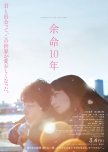
"A decade, is that a long time or no time at all?"
Going into The Last 10 Years there was no denying what type of movie I would be watching-a story about a young woman with a terminal illness based on a true story. But as with any genre, it’s how the story is implemented as to whether it touches you or not. The moment the director cues the violins and tries to manipulate my feelings, I tend to dig in and become resentful. This film was quite the opposite. While the music was emotional and lovely, the story slowly unfolded allowing the characters to make their way through decisions about life, death, relationships, and whatever the future means.When Matsuri is in the hospital she is given a camcorder by a dying mother and admonished to, “Live every minute to the fullest.” That advice is hard to follow after she returns home and boredom overtakes her. Diagnosed with Pulmonary Arterial Hypertension her list of restrictions and medications is quite long. She goes to a middle school class reunion where no one knows about her illness and reconnects with old friends. The standard questions arise about marriage, children, and work. Kazuto, a boy she doesn’t remember, attempts to reach out to her. Kazuto has his own issues with life and death and before long, he, his friend Takeru, Matsuri and her editor friend, Sanae, begin to hang out. In the dark about her illness, Kazuto is clearly smitten but Matsuri has her daily grind with avoiding death to deal with as well as her loving but concerned family.
Matsuri and Kazuto both had their issues with life’s disappointments and whether death would be a tragedy or a gift. As they grew closer, both began to embrace life more. For Kazuto, the future held promise and an unknown amount of time. For Matsuri, tomorrow was always in question knowing her time was imminently finite. No one gets out of this life alive, but for Matsuri, that harsh reality faced her every day. I was happy there was no countdown clock as if the 10 years prognosis was ironclad. The median life expectancy for someone with PAH is 5 years. Each crisis she faced could have been her last. The film didn’t throw roadblocks into her relationship with Kazuto just for the standard effect. Matsuri not only had to take Kazuto’s feelings into consideration but her own as well. She did what she needed to do to be strong enough to face death.
Komatsu Nana gave a beautifully nuanced performance as Matsuri. Layers of emotions peeled forward and back as she portrayed Matsuri dealing with her day-to-day struggles with Death hanging over her shoulder. Ever aware of her parents’ pain, she put a mask on for them most of the time and for her friends. When the dam finally broke and her fears and disappointments rolled over her, Komatsu’s performance was raw and real. Ever cautious with Kazuto so as not to get too close, but staying close enough to bask in his warmth, you could feel the walls she kept carefully erected. And finally, as Matsuri’s body began to collapse, the slow acknowledgement of a clock ticking down.
Far from being maudlin, The Last 10 Years was an exercise in living well and making the most of life regardless of circumstances. Whatever Matsuri gained-a relationship, a job, a friendship, she was always aware how close she was to losing them. Yet she still found the strength to try. She was searching for meaning and just the simple experiences of living. I was here. I lived. I loved. And in her strength, she gave Kazuto a love for life as well.
“My life might look like just another boring existence but you’ll always be with me.”
16 May 2024
Was this review helpful to you?
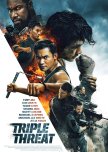
"This is personal" Well, of course it is...
Triple Threat had an embarrassment of martial artists riches and also embarrassingly bad dialogue, even for an action movie. The martial arts were also short shrifted in lieu of guns and things that go boom far too often.Payu and Long Fei have been hired to help with a “humanitarian” mission that turns out to be anything but. Local security for the site, Jaka, loses his wife in the deadly firefight that erupts when the mercenaries enter the village to release Collins, a notorious terrorist. Payu, Long Fei, and Jaka develop a tenuous partnership to bring down the mercs and end up protecting a Chinese heiress/local philanthropist along the way.
The firefights were often over the top as the bad guys mowed down people throughout the small country of Maha Jaya. Things were always more interesting when the guns were down and the fists and kicks were up. Tony Jaa, Iko Uwais, and Tiger Chen all have experience with fighting on screen and choreography. The weakest of the three was Tiger as his fights often looked slow and uninspired. Tony and Iko were far more entertaining as they defied gravity with their flexibility, quickness, and strength. Bad guy, Scott Adkins, was able to keep up with the kicks as was Michael Jai White. Jeeja Yanin had what amounted to a glorified guest role and didn’t have many chances to show her skills.
The action came fast and furious with the fighters and heiress on the run. Unfortunately, some of the acting and much of the dialogue was painfully cringeworthy. Not much effort was made to create a cohesive story either. As a check your brain at the door, let’s watch Tony Jaa fly and flip, it was rudimentary martial arts action entertainment.
15 May 2024
Was this review helpful to you?
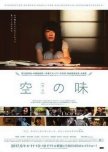
"Do you think monsters are afraid of themselves?"
Seventeen-year-old Satoko struggles with an eating disorder and sense of alienation from her family and friends as she deals with her hidden eating habits alone in Taste of Emptiness. Director Tsukada Marina drew from her own experiences in the making of this independent film. Both heartbreaking and hopeful, Taste of Emptiness didn’t shy away from Satoko’s daily confrontations with her obsessive behaviors and the desire to overcome them.Satoko and her friends, Yuko and Kanae, belong to the dance club and are preparing for a competition. The talk in the dressing room often revolves around weight and boys. At home, Satoko goes to the frig, hungry, but concerned about the calories in the food. When she does succumb to pudding she exercises afterwards. Her anxiety and OCD behaviors gradually grow worse as she begins to binge and purge. Her father notices she’s not eating but her mother chalks it up to a small appetite and the changing seasons despite Satoko’s weight loss. When her older brother realizes she's purging, the men organize an intervention at dinner against the mother’s wishes. After words held tightly for too long coming spewing out, Satoko leaves to stay with Kanae. Her problems only escalate in the new environment and soon she’s not going to school and drops out of dance. When she runs out of money, she returns home and begins therapy. While waiting on the doctor, she meets Maki, an “evening office worker.” The two become friends and spend time together. Satoko begins to understand Maki’s problems run deeper than they appeared at first glance, yet the unorthodox woman’s acceptance of her as she is bolsters her confidence.
Taste of Emptiness used an array of symbolism for Satoko’s emotions such as being underwater and wearing a Noh mask to hide her inner feelings. When she confronted her family at the intervention you could see her withdrawing into herself, the pain palpable and intensifying. Confused and scared of people discovering how confused she was, she vacillated between being angry at her family and angry at herself. “When I’m invisible, I can relax.” Satoko’s mom had to fight through her own denial about her daughter’s condition. Eventually, both mother and child worked to find a better place between them.
Reasons for eating disorders are as complicated and varied as the means for healing them and this film didn’t take any shortcuts or give any easy answers. Satoko worked with a doctor, medications, her family, and her friends. Maki’s influence on her also came as a double-edged sword though it did seem to jumpstart her healing. Taste of Emptiness was a slow paced jarringly realistic film about one teen’s search for healing and meaning as she dealt with the “thin ideal” and coming to accept she was okay even when she didn’t feel okay.
“I hope you can be who you want to be.”
“Even if I’m crazy?”
“You have to start somewhere.”
7 May 2024
Was this review helpful to you?
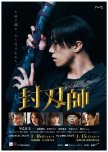
"Impossibilities are what make this world interesting"
The Sealer was a short drama involving a secret organization that seals blades filled with “filth” such as malice and hatred and causes the humans wielding them to disappear. A reporter who can see the evil black haze emitted from the demons and swords becomes involved with the group and aids in needed research to help one of their own.The premise of the story was interesting if dark. Anyone dealing with anger or other strong emotions could become a victim of the sword and then be turned into mindless killers, even good people. The Sealers absorbed the “filth” from Blades of Filth until they could no longer contain that “filth”, then they were eliminated lest they become demonic as well. Not a great retirement plan or selling point for new candidates. Over the centuries, no one figured out how to resolve some of the more problematic issues. Karen, the maker of the scabbards that sealed the evil blades, believed that scabbards could be made that would save the humans attached to the blades and grant them the ability to atone for their deeds instead of disappearing. The blades were similar to Mordor blades, wounds caused by them would never heal.
Most of the characters were flatly drawn and acted. The characters wore basically the same clothes throughout the episodes. Sanjo, the overly earnest reporter, needed a pair of trainers as many times as she fell down and couldn’t get back up. In fact, characters falling down and being unable to stand afterwards was a common theme. I counted at least nine times it happened, as if they were all part turtle with no way to get up once down.
The Sealer was entertaining for a short drama, but being so short often left the characters underdeveloped as well as the story. There were times characters just stood around and watched what was happening with little to do. Many of the action scenes felt redundant, yet the stakes were high. For the most part The Sealer kept my attention except when I wasn’t wondering what evil spell caused people to freeze on the floor instead of attempting to escape a sword wielding demon.
6 May 2024
Was this review helpful to you?
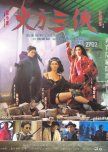
"Your life is more meaningful when you are willing to face yourself'
The Heroic Trio was a weirdly, wildly, stylized superhero movie starring three of the most beautiful women in Hong Kong films at the time. Michelle Yeoh, Maggie Cheung, and Anita Mui were caught up in an evil eunuch’s plan to steal babies and install one of them as the new emperor of China. This film had a Saturday morning superhero television show quality to it, if that show had cannibalism, decapitations, and dead babies and children.Tung is married to Inspector Lau. Little does her husband know that she is the much admired hero, Wonder Woman. When babies are being kidnapped with no ransom notes the duo springs into action in their own ways. Chat, The Thief Catcher, rolls in on her motorcycle armed with a pump shotgun and dynamite and saves the day when she rescues hostages at a chemical warehouse. A superhero for hire, she gives her card to the police chief whose new baby has been targeted. Ching, The Invisible Woman, works for the merciless and powerful eunuch who lives in an enormous fortress in the sewers. The eunuch believes that, “China cannot be without an emperor.” And by that he means an emperor he controls so that he would be the de facto ruler. By day Ching lives with The Professor who invented the Invisible cloak so that when it is perfected, she can steal it and kill him. She may not get the chance as the invisibility process is deadly toxic. The three women warriors collide as the kidnappings become more complicated and deadly. The eunuch’s superpowered minion, Kau, brings danger and loss of body parts whenever he appears.
This movie was off the rails bonkers and not for the faint of heart. In Western films, killing and torturing children is right up there with killing pets, it’s rarely done, or at least not done onscreen so the cruelty toward children was quite disturbing for me. The Flying Guillotine survived the ages from the 1975 movie and made a cameo here. There were also a variety of throwing weapons, explosives, razor bladed chains, and poison darts used. The women’s most powerful weapons were the humanity and sisterhood that had almost been trained out of them. Only through their combined powers could they take down the maniacal eunuch. Many of the actions scenes were filmed in low lighting as the characters climbed, leapt, and fell repeatedly. Despite the darkness, the wires showed at times, at other times the train broke through the fourth wall. While exploring the superhero genre, the film kept its feet firmly flying in Hong Kong wuxia history as well.
What was the draw to this absurd superhero movie? The cast! Michelle Yeoh was gorgeous with her flowing hair and impeccable timing, completely believable as the conflicted anti-hero. Ching had the most painful character growth spurred by her inconvenient love for the professor. It would take Chat and Tung to give her a reason to live and break free from the eunuch’s hold. Maggie Cheung went from cocky bounty hunter to the vulnerable middle child caught between two sisters she loved. Anita Mui alternated as the devoted wife and ferocious heroine who was the moral compass of the trio. The three women each had tortuous pasts that they had to come to terms with in order to move forward.
The Heroic Trio was not a great movie but it was entertaining. At times it veered into so bad it was good, especially near the end with an unhinged final fight. Regardless of the movie's shortcomings, it's always refreshing to have competent women warriors and superheroes even if the movie didn’t always serve them well. For fans of these actresses, if you can keep your expectations low, it’s definitely one to give a try.
10 April 2024
Was this review helpful to you?
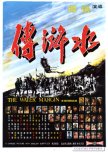
When Brother Chao is killed by The Golden Spear, the Liangshan gang of righteous outlaws vows revenge. The only problem, Shi Wen Gong is too tough for any of their fighters to confidently defeat. Timely Rain decides they should call upon the Jade Unicorn and The Prodigy to take him down. Two of the members attempt to trick Lu Chun I into helping them but he sees through them with the aid of Yen Ching. Before he can send the two outlaws home, his adulterous wife and her lover set him up with the corrupt Grand Secretary Liang. While everyone escapes, Lu is captured. The Heroes of Liangshan won’t abandon an honorable man who is suffering because of them and the race is on to save his life before he is executed.
This synopsis sounds interesting and it was once the story got rolling, but it was a tediously slow start. The movie spent 12 minutes briefly introducing characters-27 of them! But that’s not all! The introductions kept going. I counted 46 actors introduced as important characters. It could make the mind reel, especially since most of the heroes don’t show up again until briefly at the end for the final fight. Despite the number of characters, the primary focus was on Lu and Yen Ching. Welcome/Timely Rain, Clever Star, Black Whirlwind, and the Fearless One were also integral to the story. Leopard Man/Lin Chong had fights at the beginning and end of the movie.
David Chiang as The Prodigy was an interesting choice. He has legions of fans, I have just never warmed up to him much in these old films. His fights were underwhelming. Yen Ching’s ability meant he barely touched men and they flipped through the air which seemed odd coming from such a slight actor. The stuntmen earned their money twirling and flopping from what looked like imaginary contact at times. Tamba Tetsuro was far more intimidating as the Jade Unicorn. Ku Feng as Timely Rain was truly welcome for me, he’s one of my favorites. Wang Chung threw himself into the energetic role of Fearless. The final fight pitted five of the heroes and their different styles against five of Shi Wen Gong’s men. The two Japanese actors, Tamba Tetsuro and Kurosawa Toshio also had their chance to face off. For 1972, the fights weren’t bad. Some were clearly better than others and more realistically gory.
Shaw Brothers opened up their check book for this film. The cast of stars may have been large but the cast of extras involved was huge. There were three directors and two assistants (John Woo and Godfrey Ho) along with four fight choreographers.
The sets were massive and the costumes were unique for the different characters although poor Ti Lung had a laughably bad outfit and wig. The biggest drawback for me was the soundtrack. It was wildly anachronistic, synthetic music sounding like it came off of a 1970’s US cop show with hints of Shaft and Clint Eastwood westerns thrown in. Somehow if didn’t match up to this ancient story. And story is what this movie had going for it once it actually started. Unlike the hundreds of thinly plotted kung fu films churned out by Shaw Brothers and Golden Harvest, Water Margin had layers of story within it. There were times it could be repetitive, the Jade Unicorn was rescued and captured several times and the Heroes of Liangshan weren’t always well coordinated in their efforts which nearly led to tragic events. It also seemed pointless to spend so much time introducing the heroes when most of them were never seen again or only briefly at the end of the movie.
If you go into The Water Margin with the understanding that most of the characters in the lengthy introduction will have little to no screen time, it will help. The focus was on Lu being wrongfully charged with a crime and the efforts to clear or rescue him with the revenge against Shi served up for dessert. Though this was epic for a Shaw Brothers production, it will still only be of interest to fans of old martial arts movies or maybe those fans of the novel.
28 March 2024
Was this review helpful to you?
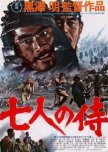
"When you think you're safe is precisely when you're most vulnerable"
Seven Samurai is not just a movie about fighting samurai, this film calls out the injustices prevailed on the common people by the warring ruling classes and class delineations. Kurosawa’s 3 ½ hour film would appear to be too long, and truthfully on previous viewings, I felt that way. But this time having learned to be comfortable with his world and character building, I settled in and watched as he wove a complex story out of a simple one. Kurosawa is a master at teaching and rewarding patience.“You all make great scarecrows. Problem is, the enemy isn’t a bunch of sparrows and crows.”
A small village of peasants whose crops are routinely plundered by the local bandits make a desperate all-in decision. Rather than risk starving and losing their women to the thieves they determine to find samurai hungry enough to protect them for food but not so strong as to be a more dangerous alternative than the bandits. Kambei is recruited first after he rescues a small child from a thief. From there Kambei puts together a team of six willing samurai. A seventh “samurai” refuses to be dismissed and follows them anyway. Kikuchiyo will prove vitally important as a link to the farmers. Kambei develops a plan to protect the village from 40 bandits on horses and armed with muskets with only seven warriors and untrained villagers with bamboo spears. Though the odds are not in their favor this new team of uneasy allies does not back down.
“In life, one finds friends in the strangest places”
The story occurred in one of Kurosawa’s favorite settings, the Sengoku period during the 16th century. While the classes were separated, there was still miniscule room for movement. At the same time, there was a belief that poverty and suffering was the fate for peasants and many of the samurai interviewed refused to help them. There was no reward, no chance for glory or increased rank, no lord to serve. Only those who enjoyed battle or were hungry or had sympathy for the peasants were willing to join.
“Who turned the farmers into such monsters?”
Civil wars had been devastating for the peasants who always have the smallest of safety nets in any time period. For these farmers, the samurai were not much different than the bandits. In a key scene, brilliantly played by Mifune Toshiro, Kikuchiyo upbraided the six when they were horrified to discover armor the farmers had stolen or killed fleeing samurai for. He quickly put things in perspective. Samurai murdered, pillaged, raped, and burned just as the bandits did only under the guise of “honorable” warfare, the end was the same for the farmers. Inviting samurai into their village could be the same result as bringing a tiger to the front door to chase wolves out the back. Someone always coveted the valuable rice and barley the farmers grew. Powerless farmers were left with little to barter with except their women and their lives keeping them in a perpetual state of fear.
“By protecting others, you save yourself”
Samurai Heihachi designed a flag displaying the growing cooperation between the disparate groups. Kambei and Kikuchiyo along with the other samurai and lead peasants forged a transformation of societal boundaries. The two sides slowly learned to trust each other building something new and important. But would it last?
“There’s nothing heroic about selfishly grabbing for glory”
Kurosawa regular Shimura Takashi played Kambei Shimada, the leader of the samurai. This is by far my favorite role of his despite loving Ikiru. Shimura was calm, wise, wily, and also had a sense of humor. He owned every scene he was in and it was quite believable that he instilled confidence and commanded respect from both samurai and villager. His performance was brilliant as the leader who eschewed the need for glory and demanded complete selflessness. Another Kurosawa regular, Mifune Toshiro, and one of my favorite actors, played the slightly and sometimes not so slightly, unhinged Kikuchiyo. It was a role similar to the one he played in Rashomon. Overflowing with kinetic energy and emotion, he never stepped out of character, never reverted to the ultra-cool samurai he was capable of playing. Kimuro Isao as the youngest samurai, Katsushiro, displayed the awe of the men around him and the fear of first battle and first love. The other samurai were capably played and carefully developed as individual characters instead of bland backdrops. Even several peasants were highlighted.
“I defended my post”
Using his three-camera technique for the first time, Kurosawa blended the action to convey the tension of death and battle. His customary blowing dust skittered across the scenes as moods changed. While there was emotional music, his most successful background sounds for me were the beating drums of war approaching even as songbirds sang and flowers bloomed. As the rain fell during the final battle, it was hard to distinguish samurai from peasant. Side by side they fought viciously and heroically regardless of the consequences, regardless of rank, regardless of whether they or their alliance survived. Seven Samurai fought not only bandits but distrust and social injustice with only one side in the triangle of power capable of winning. If you can let Kurosawa slowly envelope you in this world he created with good and evil and every shade of gray in between you’ll be rewarded with a captivating film superbly made.
27 March 2024
Was this review helpful to you?
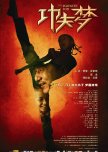
"The best fights are the ones we avoid"
How you feel about The Karate Kid remake may largely depend on how old you were when you first watched it and how old you were when you watched the original. Despite the title, in the remake they practiced kung fu, not karate, and Xiao Dre was quite a bit younger than Daniel-san had been. Other than those elements and the Chinese travelogue inserted, the basic storyline was the same.Twelve-year-old Dre has to leave everything behind when his mom is transferred to Beijing, China. While his mom looks at it as an opportunity, Dre feels left adrift. On his first day in his new home, he runs afoul of the local kung fu bullies and is beaten. He also meets sweet Mei Ying who is a classmate and violinist. After the maintenance man saves him during a vicious beating, the story is set up for Mr. Han to train Dre in kung fu.
Jaden Smith’s size made him a perfect target for bullies and it was easy to see why Dre would be afraid of Cheng and the pack he ran with. The Kick Them in the Dragon Balls School of Kung Fu mantra of “No Weakness! No Pain! No Mercy!” didn’t leave a lot of room for negotiation, especially with its abusive and sadistic master. Taraji P. Henson was gorgeous and tenacious as the over-protective mom. Jackie Chan gave a subdued performance as the mentor, Mr. Han. He only had one fight and it was with the prepubescent bullies. The kids who played Cheng and Mei Ying were adequate.
The cinematography and scenery were beautiful. There were trips to the Forbidden City, a kung fu monastery on a mountaintop, and training on the Great Wall of China. I suspect the last one is a big no-no in real life. The strange new home upped the ante on the fish out of water trope, especially when Dre didn’t speak any Mandarin. The travelogue elements while stunning, also hampered the movie as the pace was already doggedly slow. No kung fu movie needs to be 2 ½ hours long. There was also the change to the kids’ ages that I found troubling. In the original, Daniel, Ali, and Johnny, were on the verge of becoming adults. They were high schoolers where the romance seemed more natural and the fighting more acceptable. In the 2010 Karate Kid, these were 12-year-olds beating each other senseless. No wonder Mei Ying’s parents didn’t want her seeing Dre.
The original film wasn’t great but it was a touchstone for kids during that simpler time period just as this one may have been for its generation. Both Karate Kids showed that there are jerks and good people everywhere. Xiao Dre learned to show respect for his mom, his sifu, his new home, and himself. He also discovered that success required focus and dedication. The 2010 film was a fine addition to the Karate Kid family, if only they’d changed the name to correctly reflect the skill being taught. RIP Mr. Miyagi. No one can take your place in my heart.
8 March 2024
Was this review helpful to you?
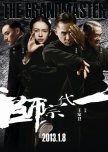
Horizontal or Vertical?
I watched The Grandmaster years ago and while I thought it was visually stunning, the story left me wanting. After watching several Wong Kar Wai films recently, I decided to revisit it and see if my perspective changed.In 1936 Foshan, China, Grandmaster Gong Yu Tian is coming to town to pass the torch to a new Grandmaster. The consensus is that Ip Man would be a good choice but he will have to face Yu Tian. Yu Tian’s daughter, Gong Er and Ip Man eventually spar and a connection is made despite the fact that Ip Man is married and has children. Who is Grandmaster and who is horny for whom becomes irrelevant as the Japanese invade the country. Ip Man loses his home and his fortune as he and his family face poverty and starvation with much of the rest of the people. Because he belonged to the wrong political party after the war, he moves to Hong Kong around 1950. He will once again run into Gong Er, but her life has taken a drastic change.
As with the first time I saw this film, the cinematography was gorgeous and lush. Beautiful people in beautiful costumes filled the screen. Smoke from cigarettes or trains wafted and circled about as if alive. Snow and steam formed the perfect backdrop for a cataclysmic fight. As did rain and puddles when Ip Man fought a dozen men at the beginning of the film. Music as much as the standard Wong Kar Wai dark palette of green, yellow, and shocks of red set the mood.
The fights were entertaining, but more stylistic than realistic. Forced close-ups and slow motion made the fights more dance than danger, even when people were thrown through windows. Many times I wished they could move the camera back to show more of the full body motions, but with actors who are not martial artists that likely wasn’t possible. I was happy to see old school kung fu actors like Lo Meng and Lau Kar Yung make brief appearances. And I could have used much more of The Razor played by Chang Chen.
Tony Leung Chiu Wai was an elegant Ip Man, but it was hard to connect to the character with the uneven storytelling. He was also a man with a wife and children longing for another woman. Song Hye Kyo as Ip Man’s wife was mostly an afterthought. She had scarcely any lines. The romance was focused on Gong Er as was much of the film. Zhang Zi Yi gave a good performance as the daughter who vowed to return the family’s honor even if it meant her death. Another issue I had were the relentless voiceovers and intertitles, they completely broke the rhythm and mood for me, distancing me from the characters.
The Grandmaster was a striking film to look at but not as much fun to watch as the story often stumbled. And aside from the fight at the train station, much of it will fade from memory as it did the first time because there was little substance to cling to.
6 March 2024
Was this review helpful to you?
"Dying is easy, surviving is hard" Getting through this movie was harder
Fist of Legend (2019) aka Legend of Chenzhen aka Fist of Legend/II was a prequel of sorts to Jet Li’s Fist of Legend from 1994. This was a cheaply and poorly made movie that would have looked out of place in 1994.Chen Zhen is in Japan as a student to learn about the enemy so that he can go home and help protect China. He falls for Mitsuko whose uncle is the virtuous president of the Black Dragon Society. Also interested in Mitsuko is the vile Black Dragon VP Chiyo Shinobu. Chiyo is in cahoots with evil military Col. Fujita. They are looking to bring down the Black Mask who has made fools of their samurai on the streets and they think it is Chen Zhen. Chen Zhen has been ordered to keep his head low which he accomplishes until Chiyo goes too far.
This movie lacked any spirit to it and was filled with problems. Chen Zhen was given zero personality. Huang Wei Ting as Mitsuko tried to double up her energy level to replace his. One of the problems with non-Japanese playing Japanese is that they don’t know how to walk in kimonos and as someone who has watched my share of Japanese movies, it comes across as awkward. Xu Shao Hang was a handsome if heartless Chiyo. There were “Americans” who looked anything but. The military uniforms appeared to be more Russian or German than US. You know a movie is desperate when it contains not one, but two sexual assaults and a repeat of one of those. The dubbing was awful, the green screens obvious, and the music played loudly over the dialogue on several occasions.
It’s a kung fu film, so maybe the fights were good. Unfortunately, most of the fights were awful and relied on quite a bit of wire work. The trained samurai were nice enough to come at Chen Zhen one at a time and not know how to swing their swords while samurai in the background just waved theirs around in the air. The fight choreography was abysmal for a 2019 production. It’s too bad because Tiger Xu moved well enough to handle better fight scenes. And story-wise, why would Chen Zhen wait until what appeared to be midday to rescue his girl after he knew she’d been kidnapped that night? Good job there hero.
Fist of Legend was populated with pretty people but lacked in everything that would make a film interesting. Even at 77 minutes it felt overly long. Plus, it might cause eye strain for all the times you'll feel like rolling your eyes at the ridiculous scenarios and terrible fight scenes. This film is just watchable, especially if you aren’t familiar with martial arts movies or have a need to watch all the movies about the fictional character Chen Zhen. There are better movies about the Black Masked warrior out there.
2 March 2024
Was this review helpful to you?
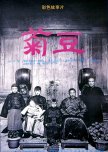
"The worst is behind us"
Ju Dou was a disturbing story set in 1920’s China based on the novel Fuxi, Fuxi. This was the third collaboration for Zhang Yi Mou and Gong Li. The film was banned until 1992, for what reason I never did figure out. Too risqué? Infidelity? Rage against the patriarchy and sexism? Political allegory? Whatever the reason, it was still nominated for Best Foreign Language Film at the 1991 Academy Awards. Though aesthetically stunning, the story could be difficult to watch.Tian Qing arrives at his adopted uncle’s cloth dyeing operation as the only other employee is quitting. The employee basically tells Tian Qing, “You’ll be sorry!” The uncle is cheap, abusive, and has tortured two wives to death and is working on his third. The new wife, Ju Dou, was a bought and paid for laborer and potential baby maker. Her major obstacle to becoming pregnant is that her husband is not only a vicious tyrant, but infertile as well. Tian Qing has a peep hole in the barn where he watches Ju Dou bathe at night, but it turns from sexual to bitterly realistic one night when he sees her bruise covered body. Fearing she’ll be murdered soon, Ju Dou seduces Tian Qing while her husband is away. She seems to be saved when she becomes pregnant, but there is no way a story set in 1920’s China is going to allow her and Tian Qing to walk away unscathed.
As usual, Zhang Yi Mou brought out his palette and soaked the screen in vibrant hues. Dark lonely nights were bathed in indigo. Sexual arousal was accompanied by flowing bolts of crimson silk unloosed as well as the hammering of the machine. The mountains, fields and trees provided bucolic backdrops. Flames of desire, murderous heat, and the destructive combustion of inevitability licked and leapt throughout the film. Aside from the scenery and sets, Gong Li had a beauty all her own. She superbly conveyed the fear and determination of a cornered woman trying to survive and find a modicum of joy in her life. Li Bao Tian as Tian Qing was given the difficult job of bringing the slow, cowardly nephew to life. Different children played Tian Bai as he aged. Tian Bai rarely spoke, but this menacing child will send chills up your spine.
Ju Dou demonstrated the plight of a poor woman in this time frame. Ju Dou was trapped in a marriage to a merciless man and also forced to work as unpaid labor. Despite all the talk of the Yang family reputation, no one stopped Jin Shan from marrying a third wife after killing the previous two. Tian Qing was trapped working for his miserly uncle and impotent to help Ju Dou both financially and emotionally. Widows weren’t allowed to remarry and even without a blood tie, an aunt couldn’t marry a nephew. Tradition had a stranglehold on Ju Dou with almost no way for her to extricate herself.
Revenge, fatal passion, toxic patriarchy, loneliness, and a kid straight from a horror movie---Ju Dou was an intense and unrelenting film. Oh, and people dyed-more than just a pun! Yet even with Zhang Yi Mou’s technicolor designs and Gong Li’s presence there was something missing. For me, part of the problem was Tian Qing’s passiveness and also the ending took a burn it all down approach. Ju Dou was good enough that I’ve watched it twice. Whether I have the tint-rest to do it in the future remains to be seen.
"Here we are at the village Wang
So many dogs…here they come
They attack us but we can’t run, so we go home"
29 February 2024
Was this review helpful to you?
"You'll see me in your dreams tonight"
Days of Being Wild showed what lengths broken people would go to in order to find the object of their desire. Time, whether it hastened by too quickly or dragged like a cement block, tethered the characters to their obsessions. Everyone had a myopic gaze of life and much of it revolved around a self-obsessed rebel.Yuddy had a habit of seducing women and then breaking their hearts. Raised by a sex worker, he desperately wanted to know who his biological mother was. Rebecca had told him his mother was a Filipino noblewoman who had paid her to raise him. Mom really put a lot of thought into that one, didn’t she? Yuddy seduced Su Li Zhen who ran a snack stand and box office by having her look at his watch for a minute. One minute before 3:00 was to be burned in their minds on that date. Their relationship flared and flamed out when Li Zhen realized he would never marry her. Before he could change the sheets on his bed, he’d seduced exotic dancer Mimi.
Women were obsessed with Yuddy---Li Zhen, Mimi, and even his adoptive mother Rebecca. And I never could figure out why. He thought only about himself and constantly told them what they could and couldn’t say. He must have been one hell of a lover to make them lose their dignity and hearts over him. Young love is often messy and impulsive with heavy doses of heartache and drama but it was hard to understand why these women found him so irresistible. How desperate for love, sex, and/or companionship they must have been. Loneliness can be a harsh mistress.
Yuddy often compared himself to a bird with no legs who had to keep flying when in reality the bird had been dead all along. The story lost steam when he left Hong Kong to find his mother in the Philippines. Without the women he seemed even more like a loser with no job, no family, and on a headlong journey to disaster.
Much of the background noise was the chiming and ticking of clocks. “I used to think a minute could pass so quickly, but actually, it can take forever,” Li Zhen told the young policeman named Tide. Later Yuddy would tell Tide, “Life really isn’t that long.” For the heartbroken, the nights took forever to pass. For a young man who made a reckless decision, it passed all too quickly and that minute would be seared in his memory.
The cast was stellar. Leslie Cheung gave Yuddy a primal movement that even the corny pickup line of, “You’ll see me in your dreams tonight” made women thirsty for him. Maggie was gorgeous but other than standing or walking around looking anguished with her hair in her eyes had little to do. Carina Lau as Mimi chewed up the scenery as the brash cabaret dancer in love with Yuddy. Andy Lau, like Maggie, was underused until the final chapter. The dark, subdued lighting and greens and golds were reminiscent of In the Mood for Love, as well as the final character revealed.
Perhaps because the actors seemed too old to be so foolhardy, I found the characters difficult to connect with and care about. The despondent mood was as dreary as the rain soaked streets the characters wandered through. Days of Being Wild was beautifully shot, lit, and composed and while mesmerizing to look at, it left me feeling empty afterward.
28 February 2024
Was this review helpful to you?
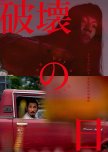
"Now is the time to rage. If not now, when?"
In 2020 director Toyoda was angry. Very angry. Angry about the pandemic. Angry about the wealthy and politicians. Angry about the Olympics. And especially angry about apathy toward the hell many people were living in. The Day of Destruction fiercely and poetically screamed that rage out.“Draw your sword now. If not it ain’t rock ‘n' roll.”
Seven years ago, a pulsating globular monster appeared deep in a mine. Since then, a plague of some sort had spread. In 2020 after the epidemic took the life of Kenichi’s sister, he attempted to self-mummify at the Mountain Resurrection-Wolf temple (the same one used in Wolf's Calling) believing his sacrifice would quell the epidemic.
“What defines a human. Prove it now.”
An earthquake set loose Kenichi’s inner rage which turned him into a demon.
“Humans possessed by demons are exorcised by humans, but maybe the exorcists themselves are demons”
Priest Jiro believed that destroying the monster was a fool’s task. Nature gave them the epidemic so the monster must be led onto the right path. Kenichi must be guided onto the right path as well.
“Price tags on lives fluttering in the wind”
The wealthy and elite hid in their fortresses, safe from human misery all while planning on how to make money during the event of the year-the 2020 Olympics.
“Give me your anger. I’ll respect it.” “We have a voice. Your own voice. SHOUT!”
The people cried out their pain and fears. A bloody, red Kenichi fell down on his knees in traffic screaming his grief and outrage.
“Everyone on Earth is a central prayer…We’re all in the same boat called Generation.”
Humans are the problem. Humans are the solution. The division after division after division must be faced. Would prayer or self-sacrifice cause others to change or would the first step be the hardest? Changing oneself. Eradicating the monster might not be possible---healing, and coexisting might be.
“Would self-restraint for 100 years be enough?”
Shot on a small budget in eight days, Toyoda got the most out of the beautiful mountain scenery and the actors. I have to wonder if he received permission for the shots in the streets as ordinary masked passersbys walked around Kenichi as if a man in bloody red clothes shrieking and kneeling in the crosswalk was completely normal. The music and sound effects were not always pleasing but they were fascinating and told much of the story as there was little dialogue.
“Hey, Siri. How much longer do I have to put up with this?”
If we live in hell with demons and people acting like demons, maybe the screaming is necessary to wake ourselves up. Shake off the apathy and change. The Day of Destruction with its loud music and release of pent up fury might have been what we all needed, especially during the first year of the pandemic with people struggling in so many ways and losing people to an invisible monster. This film won’t be for everyone to be sure. It's abstract with lots of religious symbolism and can be confusing at times. For the most part, I enjoyed its poetic and manic response to a nightmare much of the world shared.
23 February 2024
Was this review helpful to you?

"Do you want to stay in the darkness forever?"
Huang Bo wrote, directed, and starred in The Island. A hapless worker sets off on a business retreat that goes terribly wrong when a meteor hurtles toward Earth on the same day his luck with the lottery changes.Ma Jin and his cousin, Xiao Xing join the rest of the office and their boss on a water bus cruise for a team building exercise. Ma Jin has a crush on the beautiful and elusive Shan Shan who is also on the trip. Fate brought together a meteor and a winning lottery ticket, both of which will not only change Ma Jin’s life, but everyone on the bus as well. After plunging through a ginormous wave that hurls them far from home, the bus lands on a deserted island. The group discovers themselves cut off from the “real” world and completely dependent on each other for survival. A new social hierarchy takes place when they vote on a leader.
I was afraid The Island would be another version of Lord of the Flies. While it did show how society breaks down when people are desperate for food and shelter, it didn’t devolve into a murderous melee. Four different people wore the crown at different times and all four succumbed to the allure of leadership. The first dictator led through intimidation and punishment with his mighty shushing stick. The 2nd claimed to be a leader of thinking and bartering but was a liar and cruel capitalist. The 3rd brought two factions together and gave the group hope, but also slid down the slippery slope of popularity and success which led him to lose track of his moral compass. The 4th leader was a man who finally had power after too long being invisible and it broke him.
“Since all the past is gone, life can start over again.”
Ma Jin held to his lottery ticket like a life line, willing to do anything to stay alive and return home and collect his money. A divine coincidence occurred that caused him to be reborn at the time of his deepest despair. The stranded group had to come to terms with what was Real. Real living? Real hope? And Real land? Money became irrelevant in their society. Believing the world to be mostly underwater, they had to eventually rise above their selfishness and work together for survival and harmonious living. Characters learned to trust and love in their microcosm. Ma Jin even found his confidence that had long been missing.
Huang Bo gave a solid performance as Ma Jin, a character who evolved throughout the film. The gorgeous Shu Qi as Shan Shan was not given enough to do other than look beautiful amongst the bedraggled shipwreck survivors. Lay Zhang as the friend and often perplexed Xiao Xing showed his character’s loss of himself quite well.
The Island remained compelling though it did drag in places. The dark comedy took its characters to the ledge of cruelty and madness but decided to err on the side of hope and love. What it did well was to show how the castaways reacted to the stresses of survival and what it revealed in themselves and how a community can thrive when the people set aside their greed and need to dominate if only for short periods of time. Most importantly, it proved that even on a desolate island, there’s always time for a choreographed dance sequence.
12 February 2024
Was this review helpful to you?


