

 135
135 431
431 16
16 2
2 6
6 3
3 8
8 10
10 3
3 13
13 1
1 1
1 1
1 1
1 2
2 6
6 8
8 5
5 9
9


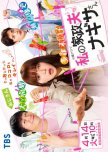
Mainly a recap of the drama
When I watched My Housekeeper Nagisa-san on Netflix it showed 10 episodes, so I watched 10, or at least tried to. The events in episode 10 began not long after the events in episode nine. It was only when I came to MDL to add the drama to my Watched List that I discovered the 10th episode was a solo affair.
If you don't want to watch My Housekeeper Nagisa-san or you are short on time you could just watch this recap of the drama to get the gist. Most of the highlights of the nine-episode drama were shown. After a negative introduction to the special, the recaps began in earnest. There were a few new mini-scenes that were interspersed. Unless you are a diehard fan that wants to relive the drama, or catch a glimpse into the future for some of the characters, it is definitely skippable. Or fast-forwardable. Or skippable.
11 May 2025
Was this review helpful to you?
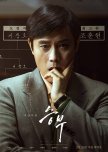
"Go is a fight against yourself"
The Match starring Lee Byung Hun and Yoo Ah In was based on South Korea’s great Go player Cho Hun Hyeon and the student he trained who eventually surpassed his master, Lee Chang Ho. The pacing of this film was similar to a slice of life. The conflicts weren’t insurmountable and there were no villains. Everyone loved the game, hated losing and saw their opponents across the table as the enemy. But those enemies weren’t afraid to be a friend away from the stones.In 1982 Cho Hun Hyeon became a national hero when he won the 1st Ing Cup, an international Go competition where Cho was the only invited Korean participant. Two years later through an acquaintance, he is introduced to the young Lee Chang Ho, an arrogant and self-trained Go player who takes on all comers, even Cho. When Cho observes his raw talent, he takes him on as a student and invites him to live in Seoul with Cho and his family. Lee gradually develops his own Go strategy which is at odds with Cho’s. The two gifted players travel along a competitive trajectory which will test their relationship.
Despite being devoted to the game of Go and hating to lose, Cho believed in a detached attitude which fit Lee Chang Ho's personality as well. Both were also capable of arrogance. Their approaches to the game were complete opposites. Cho quickly attacked, Lee methodically defended. Cho may initially have had a mental set-back as his student surpassed him, but both men refused to allow bitterness to enter their relationship. Thankfully, the film didn’t try to overexaggerate the growing pains the two faced.
Lee Byung Hun as Cho gave a restrained performance as would be expected of this composed Go player. If Byung Hun had to reel in his emotions, Yoo Ah In, had to swallow them in order to convey the slow growth of “The Stone Buddha.” The legendary Go competitors were in safe hands with these two actors. Jo Woo Jin gave a lovely performance as the defeated competitor of both, and also someone who offered the student and teacher the encouraging words needed at just the right times.
The Match’s soundtrack wonderfully matched the events taking place with the final epic battle perfectly told through the music. Go was played with black and white stones, yet the game displayed a wide range of battle plans, just as the relationships weren’t black and white, showing a range of nuance.
“Go is about trying to find answers when there are no answers.”
8 May 2025
Was this review helpful to you?
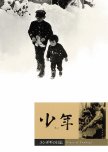
"When it rains, I want to see you even more"
Yunbogi’s Diary was released in 1965, the year relations between South Korea and Japan were normalized. This boy’s diary was also, if not the first, one of the first Korean books published in Japan after the normalization. Though officially things had been worked out there were still unresolved feelings and issues between the two countries. Yubogi’s story was not only his own, but represented the stories of thousands of impoverished Korean children at the time.Yunbogi is a ten-year-old boy taking care of three younger siblings. After his mother left them with their ailing father, it fell upon this child to earn enough money to feed them. His sister, Sun, also worked selling gum on the streets with him. Yunbogi goes on to work various jobs---goat herding, shoe shining, anything to bring in money. Yet still the tiny family is starving.
Director Oshima Nagisa used stills of Korean children set to music with voice overs by children and himself. He took the pictures while doing research for the short film. Ostensibly he hoped to coax guilt from the Japanese regarding their destructive occupation and the long-term consequences for the people. He also hoped to evoke compassion for the Korean people most adversely affected…the children. Japanese policies had gutted the country leaving the citizens in a deadly precarious position after WWII and then exasperated by the Korean War. Japan’s economy had turned for the better by 1960, but South Korea was still struggling. Oshima controversially highlighted the disparity by showing images of children and conveying the damning words of a 10-year-old boy desperately working to keep his siblings alive. Yunbogi’s spirit was strong, condensing into a powerful resiliency as he was knocked down again and again. Despite that resiliency, he was also a child who was willing to starve to death if it meant his mother would return home.
“Chili peppers when boiled down become even hotter. Barley dies and sprouts anew.”
4 May 2025
Was this review helpful to you?
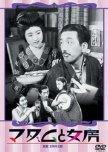
"The Pig and the Pearl"
The Neighbor’s Wife and Mine was one of Gosho Heinosuke’s earliest films. The title of the play for which the main character was writing was called “The Pig and the Pearl.” Pretty much summed up the married couple in this story.Shinsaku is walking on a country road and comes across a man painting a landscape. Because the area is quiet, he thinks it would be a great place to live and write. The “famous” writer asks repeated questions of the painter who becomes perturbed at the interruptions, and down right angry when Shinsaku disparages his artwork. The two end up in a childish fight broken up by a pretty woman from the village. Shinsaku rents a house for himself and his young family soon thereafter. To his chagrin, he finds that even quaint towns can be noisy at times.
Immature Shinsaku called his wife, a very young Tanaka Kinuyo, an “idiot” several times, berating her for not being quiet enough or the children not being quiet enough. When he asked, “Why did you have to have a baby?” I loved her reply, “You were responsible, too!” From there Shinsaku scolds her for backtalking him. He was malleable when people flattered him, but unable to use kind language with his wife. Kinuyo constantly nagged him to write so that they could pay their bills instead of him playing mahjong with the boys or hanging out with the neighbors. When he finally attempted to write, annoying sounds sent him into a tizzy. Perhaps all this was supposed to be a marital comedy, but I just found him ever grating and not remotely funny.
As this was Gosho’s first “talkie” he must have felt liberated being able to use sound. Scenes were filled with long minutes of people singing or playing in a band. An airplane was heard and shown which much like the music did little to move the story along. The movie felt less like a cohesive story and more like an experiment with songs and running gags. One song called, “Speed up!” at least gave Shinsaku a modicum of writer’s inspiration. It was also the mantra I repeated as the minutes dragged by.
21 April 2025
Was this review helpful to you?
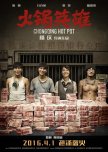
"Got backup?"
Chongqing Hot Pot was a strange amalgamation of buddies flick and thriller where most of the turning points relied heavily on coincidence and luck. Clocking in around 90 minutes, it felt much longer.Three childhood buddies, Four-Eyes, Xu Dong, and Liu Bo are trying to peddle their failed hot pot restaurant that lies underground in an abandoned bomb shelter. Gambler Liu Bo owes a huge sum of money to the loan shark Seven. He’s hoping the sale of the restaurant will help him pay off the ruthless businessman. A buyer is willing to put some money down on the hot pot spot if they expand it. In the process of expansion, they accidentally knock a hole in the building above which coincidentally happens to be a vault in a bank. To steal or not to steal? And how to repair the floor so that no one notices it? They gain help from an old school friend who coincidentally works in the bank and is unhappy with her co-workers and had a crush on Liu Bo in middle school. Their efforts are thwarted when coincidentally a crew of deadly thieves picks that bank to rob on the day their plan is to go down.
Despite all the beatings Chen Kun’s Liu Bo took at the hands of the loan shark gang and the robbers, I found my mind wandering during much of the film. Aside from Liu Bo, the other friends were underdeveloped and not very compelling. It didn’t help that the buddies were supposed to be in their mid-twenties and the men’s ages IRL ran from 35-40. The story depended heavily on fate stepping in over and over again which detracted from the urgency and real threat to the characters.
Chongqing Hot Pot had an interesting premise as the down on their luck friends had to decide if they wanted to continue to be losers or become hunted criminals. Turns out the three didn’t have to undergo any character development as fateful coincidence lent them a hand in their decision and future.
21 April 2025
Was this review helpful to you?
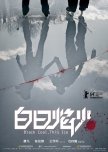
"You think anyone ever wins at life?"
Black Coal, Thin Ice is one of those films I find hard to rate. Technically it was beautifully shot, with a dark, bleak, noir mood. Character-wise, I disliked nearly everyone, especially the male lead. The characters were either amoral, murderous, or stupid. I can’t say that I enjoyed the film, but it was artistically made.When an arm shows up in a coal processing plant, with other pieces scattered about, you know someone is up to no good. Fear not, for Detective Zhang is on the case! Unfortunately, the case goes hay-wire because the police know nothing about proper police procedure. Fast forward five years and Zhang is a drunk working as a security guard. As fate would have it, he stumbles across his old partner and a case that closely resembles the one that sent Zhang down a bad path. Zhang is determined to not let the culprit escape this time.
I’ll get my peeves out of the way first. #1-Zhang attempted to rape his ex-wife at a train station in the early minutes of the film. Strike 3, he’s out and I’m hoping his body parts end up at the coal mine. He uses his position of authority to compel another woman to have sex later in the movie, so yeah, I don’t care if he saved the country, he’s an animal. Peeve #2, the police were inept at best. Not once, but twice, disasters happened because they didn’t understand how to properly detain a perp. The cops turned over possible evidence to a suspect and then asked for it back. They also had to rely on an ex-cop to solve their case. Peeve #3-the femme fatale was uninspired and underwhelming. Her primary purpose was to be groped by awful men.
The atmosphere and cinematography were stunning. In a land nearly always shrouded in nightfall and covered in ice, you could almost feel the cold and desolation seep through the screen. Where Wong Kar Wai’s shadows enhanced with green, yellow, and red provided for an erotic and melancholy atmosphere, Diao Yi Nan’s colors evoked death, violence, and criminal intent.
While I really wanted to like this film, I loathed the dogged detective, found the femme fatale banal, and the police deadly incompetent. The film was artistically pleasing to look at and if you don’t mind an entire cast of unlikeable characters, you might find this more entertaining than I did. For me the “hero” had a heart that was Black Coal and the story skated on Thin Ice.
18 April 2025
Trigger warnings: At least one attempted rape. Dismembered body parts. Bare male butts in a bath scene.
Was this review helpful to you?

"That person doesn't exist who is as foolish and misunderstood as myself"
Eight student Cleaners have their stories told in a surreal manner that straddled reality and animation as if in a memory round robin. What is dirty? What is clean? And does it really matter?I. Intro
II. Nutrition Month
Stephanie, who has OCD, comes face to face with her worst dirty nightmare. It will either cure her OCD or traumatize her for life.
III. National Language Month
Angeli, the class president, is stuck with three skateboard slackers (Eman, Arnold, & Lester) for a folk-dance contest. Can the three “dirty” boys find a way to clean up and make the dance work?
IV. Prom
The class “dirty” girl, Britney, is slapped down by the patriarchal view of chastity for girls but not for boys. Francis takes drastic measures for his dirty hooded problem.
V. Youth Council
Junjun’s dad, who is the mayor, has political ambitions for his son that go beyond the student council. The parents are willing to get their hands filthy to help him win. JJ finds that dirty politics can be like a bridge to nowhere.
VI. Last Day
The cleaners cleanse themselves in a primal song of rage.
Cleaners played out like a darker Breakfast Club. The film style looked like staticky memories in a year book come to life and decorated with bright highlighters. Most of the stories had a ring of truth to them even if at least three scenes were gross to observe. Life is messy and these kids found ways to enjoy themselves even if they got dirty doing it.
17 April 2025
Trigger warnings: Long poop sequence, self-mutilation, vomiting, penis scene and penis "art"
Was this review helpful to you?
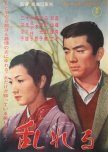
"My hobby is making you upset"
Naruse Mikio wasn’t afraid to have his female leads shun societal norms. He also wasn’t afraid to bring the tears and the pain. With a title like, Yearning, I’ll let you decide which category this film fell into.Reiko has single-handedly saved and restored her late husband’s family story. Even though he died during the war six months after they were married and the original shack was destroyed in an air raid, Reiko felt the responsibility to build the store up. Her mother-in-law and two vipers for sisters-in law were happy to let her do all the work while they benefited from it. Her brother-in-law, Koji, 11 years her junior also benefited from her hard work by going to college and then becoming a slacker who spent his time and the store’s money on booze, women, and gambling. The little shop and others like it are being threatened by a new super market that can sell items cheaper than they can. The Morita sisters-in-law are planning on cutting Reiko out of the family store as the profits dwindle and new plan is hatched to save the business. More threatening to the family is when Koji declares his love for Reiko.
Takamine Hideko gave a beautifully complex performance as Reiko. Her wonderfully expressive face conveyed emotions Reiko would not allow herself to speak. Kayama Yuzo made a stunning Koji, handsome, with a primal maleness. There was no doubt why Reiko would be swayed by his desperate declarations. Koji also fiercely defended Reiko’s place in the family and in the store. The music, longing looks, and awkwardness all conveyed the terrible yearning of Reiko and Koji. While it was perfectly acceptable for ancient old men to wed teenage girls, a relationship between a woman a decade older than a man was unthinkable. Koji might have been willing to face society’s scorn but traditional, reserved, Reiko was not so open to the idea.
Yearning tackled the changing economic landscape, family dynamics, and a forbidden love. Naruse, as always, crafted an aesthetic film and multifaceted female lead. Takamine and Kayama gave heartbreaking performances as two people so close and yet so very far away. Along with, When a Woman Ascends the Stairs, this Naruse film has now become one of my favorites of his.
"I wanted to stay here because you are here."
15 April 2025
Was this review helpful to you?
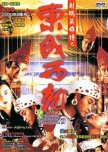
"I'm invincible now!!...what a way to go"
When Wong Kar Wai’s Ashes of Time was running over budget, the rumor is that he produced a quickie comedy starring his Ashes actors in order to make a fast buck on Lunar New Year. If you are looking for anything to make sense, you won’t find it here. Hong Kong slapstick fans will be in hog heaven. While parts of the film worked for me it dragged on way too long.Normally, I’d give a brief synopsis of the film here, but there really wasn’t enough of a coherent story to do that. Tony Leung Chiu Wai played the main bad guy who was beaten, poisoned, and stabbed along the way. He spent much of the film with swollen lips and ears. Tony Leung Ka Fei played an Indian prince looking for his one true love so that he could obtain immortality. The object of his desire was less than thrilled. Jacky Cheung played the Beggar King who was in love with Joey Wong’s Su Qiu who was in love with Leslie Cheung’s Yao Shi who was in love with Brigitte Lin’s “Third Princess.” Carina Lau was dressed as the man Chou Po Tang/Zhou Bo Tong, a disciple of Kenny Bee’s late Wang Chon Yang, believing that the princess killed him. There were cross dressing and gender bending relationships, some played for laughs and others not. Talking monsters including a gorilla, a dinosaur, and a large “sparrow” joined the strange menagerie also populated by giant centipedes.
I found some of the bits funny but others went on and on and on and on and on… There were several lengthy song and dance numbers. The martial arts fights were done for a laugh. Most were furiously over-cranked or slowed down to almost a standstill. The fights featured a great deal of wire work, smoke, and explosions.
The Eagle Shooting Horses looked low budget and hastily made with a great deal of improv. If you are a fan of slapstick this is the ticket. And I have to say it was the first time I ever saw anyone play soccer with a floating head.
21 March 2025
Was this review helpful to you?
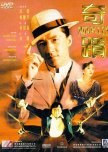
A rose for luck!
Mr. Canton and Lady Rose aka Miracles aka Miracles: The Canton Godfather was Jackie Chan’s attempt at directing a film not entirely dependent on kung fu. This film was based on Frank Capra’s movies-“Lady for a Day” and “Pocketful of Miracles.” It’s about as good-hearted a Triad film as you are likely to find.Kuo Chen Wah comes to Hong Kong to find work and is promptly fleeced by a conman. Almost penniless he ends up buying a rose from a street seller and his luck promptly changes. He precipitously and inexplicably becomes the head of a triad assisted by the canny Uncle Hoi. Rival gangster Tiger Lo wants half of the hotel the gang owns creating tension between the two criminal crews. Before Kuo knows it, he is turning his hotel into a club to showcase beautiful singer Yang Lu Ming. Believing the roses bring him luck he continues to buy Ms. Kao’s roses until one day he can’t find her. Turns out, the daughter she supports who lives abroad is coming to town with her fiancé and future father-in-law and they will be expecting the mother to be the fancy lady she’s described herself as in letters. Kuo and Yang decide to help the rose seller and hijinks soon occur.
This film was loaded. There was no doubt that there would be good fights regardless of the storyline as nearly every stuntman in Hong Kong was on the cast list. The fights were fewer than one would expect in a Jackie Chan film, but the ones shot were spectacular. Jackie showed that anything can be used as a weapon, even a Durian! The final fight proved that ropes and ladders worked better than chutes and ladders. Billy Chow led the baddies against Chan in the high swinging and falling stunts.
The cast was a who’s who among kung fu flicks. Lo Lieh played a bad guy even among the bad guys. Wu Ma was the shrewd #1 to Kuo’s Big Brother. This was one of his better roles. Anita Mui was gorgeous as Kuo’s love interest. Richard Ng played the morally gray police inspector and thankfully he made it through the entire film without showing his bare derriere. Mars, Fung Hak On, Billy Chow, Alan Chan Kwok Kuen, Ken Lo, and a host of other well-known fighters and stuntmen made appearances. Even prolific Shaw Brothers writer Ni Kuang made a cameo!
The biggest problem I had with the film was that it was too long. Many of the comedic moments began to feel repetitious. It could have been trimmed by 20 minutes and still maintained its narrative integrity. The film looked good and for the most part the pacing worked. The ending was very Capraesque, something unexpected but appreciated. Mr. Canton and Lady Rose doesn’t have the following that many of Chan’s films do, but for a 1989 kung fu film based on a 1933 Frank Capra film, I thought it was entertaining.
11 March 2025
Was this review helpful to you?
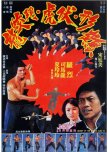
"Remember, I did try to be polite"
Secret of Chinese Kung Fu was highly “influenced” by Bruce Lee’s The Big Boss. The only problem with that was The Big Boss was a terrible story saved only by the best kung fu fighter to ever grace the silver screen. I watched this film because I’m a fan of Lo Lieh, but he was asking a lot of me to sit through this one. Definitely not the worst I’ve ever seen but completely forgettable.Sisters Wai Wai and Yee Yee save Chang Chi who is unconscious on a piece of driftwood near the shore. They nurse him back to health and even find him a job at the local cannery. Kang Ho returns to town now wealthy and a nefarious criminal. He has his sights set on Yee Yee who has her sights set on her houseguest who frequently practices his kung fu shirtless at home. Kang is determined to own the cannery and recruits fighters from Thailand and Japan. A mysterious stranger shows up in town and helps Kang’s henchmen earning him a job with the suave gangster. It will be up to Chang Chi to protect the sisters and workers from Kang and his thugs.
Szema Lung played the hero. He was pretty to look at and had more than adequate martial arts skills, but he was deadly dull in this role. Lung Fei, without his trademark mustache, made an appearance as a karate expert from Japan. Blacky Ko and Jack Long filled in for the Thai fighters. Lo Lieh was, of course, the Big Bad. Even after leaving Shaw Brothers and going to make movies in Taiwan he was still stuck as the baddie. As always, he could be counted on to give an interesting performance.
The fights were average for a kung fu flick. Lung Fei choreographed fights that may have been repetitive, but were reasonably fast for 1977. The “Thai” fighters showed off high kicks instead of the more often used elbows and knees in Muay Thai. Unless it was to represent that Kang was an international drug smuggler, I have no idea why they tried to pass off Japanese and Thai fighters.
Secret of Chinese Kung Fu wasn’t terrible for a 1970’s low budget kung fu movie, but it wasn’t good either. Only for fans of the genre.
7 March 2025
Warning---The only copy I could find was dubbed in English and cropped on the sides
Was this review helpful to you?
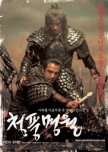
"Nothing changes. Nothing."
Sword in the Moon was a 2003 Korean attempt at a wuxia complete with running on rooftops. Because even in a wig and sword drama there has to be a childhood connection, the two main characters were blood brothers who trained at the same school but ended up on different sides of a coup.Yun Gyu Yeop has the nickname “The Butcher” and serves at the pleasure of the king. This king stole the throne during a bloody rebellion. Ministers involved with the coup begin being brutally murdered. It doesn’t take long before Yun realizes that the two people involved were his friends from another life. Choi Ji Hwan and Shi Yeong have nothing left to live for except their revenge after the king’s men and Yun killed everyone they cared about.
Sword in the Moon had the basis for an entertaining wuxia. The filming and editing let me down greatly. The director overused the shaky and nausea inducing camera style as well as too many blurry slow-mo fights. The film jumped back and forth in time, introducing characters briefly and rapidly and killing many of them off just as quickly. New players entered the game and then disappeared. This film might have benefited from telling its story more linearly. The main characters were not well developed and relied on the old friends/brothers to enemies trope. At one point it seemed Shi and Yun might have had romantic feelings for each other, yet it was with Choi that Yun road horseback in the moonlight through the tall grasses as grand romantic music played in the background. It honestly felt like Director Kim was told to cut 30 minutes off of the film and he stitched together an odd patchwork with a chisel hoping no one would notice the characters that came and went without reason.
If you are squeamish, it’s important to note that there were numerous beheadings and dismemberments. There were a few fights that weren’t ruined by the shaky, slow-mo camera. As the characters were given little emotional depth, except for Yun, it was hard to care what happened to any of them. Even the traitorous ministers and king lacked any menace or interesting details personally or historically. Sword in the Moon wasn’t terrible, but I would have better enjoyed watching an old Hwang Jang Lee kung fu movie instead.
16 January 2025
Trigger warnings: beheadings and dismemberments
A scene with NUMEROUS snakes
Was this review helpful to you?
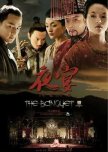
The rest is silence
You know to brace yourself for the pain when Feng Xiao Gang took on Shakespeare’s most famous tragedy in The Banquet. Vengeance, desire, madness, and treachery were never far away in this opulent film inspired by Hamlet.In a tale as old as time, a king is murdered by his brother who then steals his throne and empress. The Crown Prince lives in a bamboo forest with a theater group pining for his lost love who married his father. When the news arrives that his father is dead, killed by a “scorpion sting,” CP Wu Luan heads for the capital. Empress Wan loves Wu but also enjoys the perks and power of being an empress and is disappointed that Wu seems to have little interest in ruling the country. When Emperor Li declares a banquet, everyone in attendance is looking to murder someone else. Family gatherings can be a bear.
The role of Empress Wan was originally to go to Gong Li but due to scheduling conflicts was taken over by Zhang Zi Yi. In the book, the queen was Hamlet’s mother, but here, the young empress had been his lover. I would love to have seen what Gong Li would have brought to the role but ZZY availed herself well as the conflicted, scheming empress. Ge You brought out the fratricidal emperor’s lethal and sexy sides. Daniel Wu’s crown prince varied from brooding to whiny. That’s not a slam, Hamlet was one of the first emo “heroes.” Zhao Xun made the most of this version of Ophelia though Qing never went completely mad. Despite a strong cast, the writing let them down. By the end of the film, I wasn’t heavily invested in any of the characters. Ironically, Ge You’s acting pulled me in more than any of the other performances. It also didn’t help that I knew what the final course of the meal would be.
The story only thinly related to Hamlet and was told at a glacial pace. In order to spice things up there were some of the most erotic scenes I’ve observed in Chinese films. ZZY had a body double for the full backside scenes, something else you rarely see. The final scene strayed from the book in a puzzling manner which left a bad taste in my mouth. The dependable Yuen clan choreographed the few fight scenes which were elegant and bloody. One clandestine fight was more dance fu and foreplay than fists and kicks.
The Banquet excelled in its stunning cinematography, luxurious costumes, and beautiful score. This film was truly a treat for the eyes and ears. By utilizing blank masks and theater, the film gave us a story within a story. Everyone wore a mask in one form or another. The Banquet was a sumptuous feast for the eyes, but some of the dishes were a little bland.
12/12/24
AKA LEGEND OF THE BLACK SCORPION
Trigger warnings: A "romantic" rape. :(
Also, backside nudity and a few gratuitous breast shots that didn't show everything.
Was this review helpful to you?
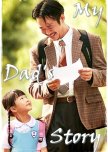
"He lies"
When watching Thai short films/commercials made by life insurance companies you can usually be assured of having your heartstrings tugged. A Dad’s Story was no exception. These companies know exactly how to hone in on your tear ducts.A young daughter and her father are walking as he reads a report she wrote for school. She describes how handsome, kind, generous, and sweet her dad is. He is Superman to her. And then like a punch to the gut he reads the next words, “…but he lies.” In the next minute she narrates how little eyes see everything. Love, sorrow, sacrifice, all rain down in her words.
MetLife didn’t give any answers to life’s hardships and unfairness, simply encouraged people to not give up because children’s futures are worth it. The three minutes of this commercial are also worth watching.
11 December 2024
Was this review helpful to you?
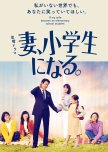
If My Wife Becomes an Elementary School Student.
5 people found this review helpful
"Isn't life too long to live that way?"
If My Wife Becomes an Elementary Student was actually an off-putting title for me as I’ve had some odd experiences with Jdramas. One, I worried that this would be one of those age gap VERY inappropriate dramas or if it wasn’t illegally weird the child actor would be awful. Neither of those concerns were fulfilled. There was one little segment that was uncomfortable but mostly this was a very wholesome drama about healing after suffering from devastating grief. I know what it’s like to wonder if the sky will ever be blue again after the loss of a loved one. For the most part this drama handled it well. And most importantly, the young actress playing the elementary school child was amazing.Keisuke and his 20-year-old daughter Mai have become zombies after the death of his wife ten years prior. The are alive but not living. One day 10-year-old Marika arrives at their house and claims she is Takae reincarnated. At first neither believes her but before long the two fully accept her as their beloved wife/mother. Slowly but surely, the sunny, responsible Takae begins to work her magic on everyone involved. The only question, is she here to stay?
With the exception of the initial encounters with Marika and Keisuke acting like an idiot, the drama portrayed the healing powers of love and reconciliation in a meaningful way. Takae helped the people around her reconnect to life by showing them how to plug back in. Maida Nono played adult Takae quite believably and also 10-year-old Marika. The entire drama hinged on her performance and she carried the weight beautifully on her tiny shoulders.
The nagging drawbacks to me were the substantial age differences for characters and actors. I’ve no problem with most age gaps, but at the time 58-year-old Tsutsumi Shinichi and 26-year-old Morita Misato (32 year gap) was a bit of a stretch. They couldn’t have found a more age-appropriate actress? The potential romantic partner was barely older than the actress playing his daughter! Keisuke was described as kind, innocent, and clueless, but at his age some of his responses were over the top ridiculous, even for a man whose wife returned in the body of an elementary school child. Marika’s mother was no prize but the loss of her child was never dealt with in a consequential manner.
Overall, I enjoyed this drama quite a bit. Second chances in life are rare, impossibly rare when a loved one has passed. And when that loved one is the center of a family’s world and the sunshine in their lives, it can feel like life has ended when their life ended. Even as wish fulfillment, it was beautiful to see these wounded people granted the chance to heal and have their rear-ends kicked when needed in order to remember they were alive and needed to live to the fullest in order to honor that precious gift.
26 November 2024
Was this review helpful to you?


