

 135
135 431
431 16
16 2
2 6
6 3
3 8
8 10
10 3
3 13
13 1
1 1
1 1
1 1
1 2
2 6
6 8
8 5
5 9
9



Cho’s descent begins in a subway restroom practicing his sales pitch for instant glue with men lined up at the urinals behind him. When luck turns against him, he makes fateful choices in order to eat. Joined by a woman as desperate as he is they feed off each other as their robbery spree escalates.
I wondered what the title Influenza meant and I’m still not sure, but as you watch this film, you’ll see people assaulting each other behind Cho. Like Kurosawa’s layered filming technique, there were layers of lawbreaking and cruelty from the forefront to the back. It was as if a violent, criminal virus was spreading. Even Cho’s one act of altruism likely aided another criminal. It was not all gloom and doom, there were humorous bits. Ahjummas do not give up their money so easily!
Bong’s use of CCTV as the only means of storytelling with a smidge of sound was an interesting one. The ever-vigilant surveillance never slowed the crime pandemic seeping over the city. Only when the nefarious couple took their brutal bender too far did civilization step in and draw a line. Once again in a Bong Joon Ho film, society failed both the victims and people driven to perpetrate their crimes, this time silently witnessed by Big Brother’s omnipresent eye.
28 July 2026
Ratings note: I was torn deciding on the ratings and gave it a slight bump for creativity.
Indelicate note: There were numerous men at urinals if that is upsetting.
Was this review helpful to you?
Adopt, don't shop!
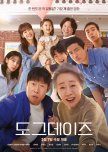
Dog Days was a sweet, heartwarming-if predictable-tail of people being made more human by the love of a dog. The sight of four-legged sunshine aka a Golden Retriever, was enough to help me stick with this film through a ruff intro. (I promise to keep the puns to a minimum.)Landlord Min Sang hates dogs, dog poo, and the veterinary clinic renting space in his building. When he’s not threatening to kick Jin Yeong out, he works at a company attempting to land the bid for a new resort going up. Retired architect Min Seo lives alone, her only company her dog Wanda. A delivery boy becomes entwined in her life when she has a health issue. Jeong Ah and Seon Yong have recently adopted a little girl named Ji Yoo. They are concerned with how to make their new family work as Ji Yoo keeps to herself. A band has lost their lead singer and Hyeon his girlfriend when she left for a job in Africa. All Hyeon has left is her Golden Retriever named Sting and her ex-boyfriend Daniel who has visitation rights.
Ostensibly this film highlights the roles dogs play in our lives and the value of adopting them. But surprisingly, they also showed the joy of adopting a human child, something rarely talked about in Korean entertainment (at least positively) as adoption isn’t common for a variety of reasons. Child actress Yoon Chae Na once again convinced me that Korean child actors are the gold standard. She gave a heart tugging performance. Kim Yoon Jin was believable as the mother seeking to connect to the little angel that had come into their lives.
Aside from the adoption story I really enjoyed the aging architect played by Youn Yuh Jung and her relationship with the delivery boy Jin Woo as portrayed by Tang Jun Sang. It was a tropey mentor bit, but well executed. I judged the character Hyeon rather harshly early on when he only grudgingly took the Golden in and made numerous mistakes. Fortunately, they quickly rectified those issues. It’s always a delight to see Kim Seo Hyung in a lighter role and she was sublime as the veterinarian with a heart of gold and questionable hygiene habits.
While the film dipped its paws into doggy melodrama it managed to avoid pandering for a tear fest. There were forced resolutions and too quick personality turnarounds. The best moments were the ones that were organic to the story and felt natural. The humor was generally gentle and the dog poop jokes were kept to a minimum. They did showcase the desperate need for adoption to save dogs lives advocating to adopt not shop. And of course, they also presented how rewarding adopting a child can be. Though I struggled with the first part of the film, I found it to be entertaining overall. Some stories were stronger than others. Could I recommend this film to a dog lover? Pawsitively.
24 July 2026
Trigger warnings: For sensitive dog lovers-Three dog in danger scenes-one illness, one lost pup running down a crowded street, and a euthanasia scene. Unlike another dog film I’ve watched, thankfully no physical abuse of the animals.
Rating note: This would normally be a 7.5 on my rating scale as the beginning was slow, but Sting/Floyd and Wanda won me over, bumping the score up by .5
Was this review helpful to you?
"You don't let go of anyone's hand now"
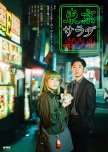
Tokyo Salad Bowl tackled immigration in Japan and the accompanying racism and discrimination that often arose from it. The heart of the drama was a green haired police officer who used food to connect with people and open doors, paving the way for healing and friendship.Koda Mari has recently transferred to the International Investigation Division where officers deal with crimes involving immigrants. There is a stable of interpreters including Arikino Ryo who can speak Chinese. Neither Ryo nor her new colleagues know what to make of her bright green hair, obsession with discovering new foods, and sunshine personality. They say she picks up the crumbs, small cases that they can’t be bothered with. But the crumbs she gathers often turn into discovering a bakery of wrongdoing. Mari takes a liking to quiet, pessimistic Ryo and cajoles him into helping her with cases, feeding him on a regular basis. As the two work together, Mari comes closer to discovering what drove Ryo from the police force and why he is so withdrawn.
I went into this drama hesitantly as it was based on a manga. Too often I’ve found manga heroines too effervescent with too little brain power. To my surprise, despite her garish green hair and terrible fashion sense, Mari had good cop instincts though she was in desperate need of a self-defense class. She believed that Tokyo was a salad bowl of ethnicities and that everyone deserved to be treated humanely. I was worried when she was chowing down on scorpions and ox penises in the first episode but the dishes became more palatable to me as the drama progressed. And like most female leads in Asian dramas that weigh 90 pounds/40 kg soaking weight she ate her body weight in food daily.
Japan’s dwindling population required a steady influx of foreign workers. Most ended up in low paying or manual labor jobs. Just as the country walked a fine line of wanting and not wanting immigrants, the drama sought to plea for better treatment of foreign workers and also subtly excused racism. It’s not racism---people just don’t trust foreigners, are quick to judge and blame, make snide comments about race, different cultures, customs, and are sometimes abusive towards them. Yeah, that’s racism. It was also telling that the Chinese often had scruffy wild hair and dowdy clothes. Baby steps. Most of the immigrants were shown as hard working and trying to make a better life for themselves and their families. As Mari worked in the police department they also dealt with foreigners who ran afoul of the law. (Important note-as in my country, immigrants commit fewer crimes than native citizens.)
The drama brought to attention the challenges of interpreting and how difficult it can be to translate specifically and for meaning. The language barrier when living in a different country can be daunting and absolutely terrifying if a person ends up in legal difficulty. Trafficking of vulnerable populations was explored though not in depth. Most of the cases were more about community building and understanding people’s needs rather than the actual crimes themselves. The main villain was weakly written and didn’t seem capable of running an international crime ring at such a young age.
Tokyo Salad Bowl was a good analogy for different cultures coming together in one dish. Different peoples bring their unique cuisines giving people strong reasons to bond over food. The drama tweaked the strong desire for conformity with foreign workers, a competent female police officer with shocking green hair, and a gay character. Aside from her ability to seek out the best sustenance in town, Mari’s super power was the ability to really listen and not let go of a hurting person’s hand. Anyone who knows how to care for a suffering person with an offer of Pajamas and tea knows the value of food and friendship. A gentle and entertaining drama about healing, treating people as valuable human beings, and finding the truth.
14 July 2026
Trigger warnings: Smoking. Drinking.
Continuity notes: Mari’s hair changed in intensity from scene to scene as well as her exposed roots. Girl could have used a good wig. I know it’s based on a manga, but when Mari was undercover, I just kept hearing a line from My Cousin Vinny, “Oh yeah, you blend.”
It could go from daylight to nighttime during the course of breakfast.
Was this review helpful to you?
"You don't have the slightest notion of what war is like!"
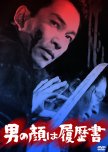
By a Man’s Face Shall You Know Him tried hard to be a film about the futility of violence yet could only accomplish that task through buckets of blood and a high body count. Set in postwar Japan, instead of the Crips vs The Bloods, it was the Korean gangsters vs…a doctor.Dr. Amamiya recognizes a traffic victim who is rolled into his small clinic. The man’s face causes him to remember a difficult, desperate time from the past. After he returned from the war, Amamiya wanted nothing to do with killing or violence. The only problem being, a Korean gang was determined to take over the street market of which he was the owner. The gang took what they wanted, killed who they wanted, with no consequences from the police or government. Amamiya could be the only thing standing between the people being threatened and the gangsters determined to eliminate them.
The film had flashbacks and flashbacks within flashbacks. Dr. Amamiya had become disillusioned with the government and people in general after realizing he’d been lied to during the war, made worse by the lives he’d taken. He wanted the cycle of violence and death to end even as he was faced with it every day. When his brother came to town on a break from university, the stakes went way up as the way out narrowed.
This film had the look of a lower budget film with the performances hit or miss. There was a great deal of exaggerated acting which could be taxing to watch. Ando Noboru gave a convincing performance as the doctor with a very particular skill set unrelated to the medical field. Coincidentally, in real life, Ando had been a gang leader before he entered the entertainment field. Amamiya’s love interest, Maki, was always covered in sweat and screaming, obsessively clinging to him. Not exactly the epitome of a cool-headed nurse. Of course, the good doctor didn’t mind having a nooner in the clinic which wasn’t particularly professional.
For a film with gangsters, it incorporated more issues with post war societal and political upheaval than I would have expected. What interested me, despite the overt racism toward the Japanese Koreans, was the Korean gang. Japanese Koreans were not often the focus of many Japanese films. The Japanese looked down on the Koreans and the Koreans felt like their time of being dominated was over. Payback was coming. There was no lack of criticism for the war and the repercussions from it. Amamiya was criticized by multiple people for not choosing violence while his brother was considered a hero for confronting the large gang despite his spectacular failure. The yakuza were even too afraid to take on the Korean gang. The film used one of my least favorite tropes with a hero that refused to fight until the body count forced him to. Another issue was that women were not shown in the most flattering light. Maki was a basket case. The writers had the Korean woman Gye do something that lowered my score. For all time, no sane woman asks a man to rape her.
By a Man’s Face Shall You Know Him started out slow paced for a gangster film yet was also deeper than most. I didn’t appreciate the sexploitation and old school machismo acting. However, the bloody ultimate showdown did not disappoint. Though it is flawed, if you enjoy old school gangster flicks, this might be one to try.
26 June 2026
Trigger warnings: Sexual Assault. Sexual situations. Bloody, violent fight using guns and katanas.
Was this review helpful to you?
"You were used by others for most of your life, haven't you had enough?"
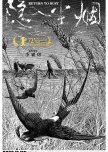
Return to Dust was a story about Fate bringing two unloved and unwanted middle-aged people together in a poor rural community. Resigned to their lonely and meager existence, an act born out of callousness opened up a new world they’d never dreamed of.Ma You Tie aka Fourth Brother aka Iron Ma is coerced into marrying Cao Gui Ying. Both are past the normal age of marrying. Iron is largely an unpaid worker for his older brother. Gui Ying lives in a shed behind her brother’s house and is regularly beaten. She suffers from a physical disability, infertility, and incontinence which has taken her off the marriage market. The two quietly wed and move into an abandoned house. Together they farm the land and gently take care of each other. Tiny acts of kindness and generosity cause the newlyweds to slowly come out of their shells. They begin to lean on each other, surprised that they could experience companionship and contentment so late in life.
While Iron and Gui Ying showed compassion to people, animals, even plants, such was not the case for the people surrounding them. Their families were neglectful and cruel. The local businessman exploited the old peasants working the land refusing to pay them the money he owed, shorting them when their crops came in, always offering one excuse after another. When it turned out Iron shared the same rare “Panda” blood type of the capitalist patriarch, the farmer was called upon to give the wealthy man regular transfusions. As more villagers abandoned farming and moved to the cities it created vacant homes. The government implemented a new beautification policy offering money for the destruction of those houses. City dwellers returned to grab the cash regardless of who had set up housekeeping in the houses, be it people or swallows. The caring couple had to move ahead of the bulldozers twice, finally resolving to build their own mud brick home. Having spent a lifetime being taken advantage of and never having anything handed to them, Iron and Gui Ying simply took the slights in stride.
Oh, but Butterfly, what was the plot? None really. It was an exquisitely shot and scored slice of life about two outcasts diligently working the land and becoming utterly devoted to each other along the way. The villagers even commented on how Iron doted on his “peculiar” wife. It felt and looked very Zhang Yi Mou’ish. And just like ZYM, the director and film landed in trouble, too. *
Return to Dust was a tender, lowkey love story with two social outcasts that felt deeper and more authentic in comparison to grand passionate romances. Iron and Gui Ying may not have had children but they adored their bell wearing donkey (so did I!) and dutifully looked after their little chicks. No debt was left unpaid. For Iron, “The soil doesn’t despise us,” unfortunately, people weren’t always as reliable.
25 June 2026
Trigger warning: Suicide
*Those darned censors notes:
The film was yanked from being shown in China for reasons unknown. It was later released with an alternate ending. What was so offensive? The peasants were hard working, resourceful, and living a simple life without complaint. Perhaps it was the government’s house destruction policy that ended up harming the most vulnerable. Also, the most impoverished were offered low rent apartment housing. Iron wondered where he would keep his livestock. Illiterate and older, how was he supposed to support himself and eat without access to the land? I learned about the film being pulled when I went looking for answers regarding the ending. The last line of dialogue was contrary to the rest of the film and the previous scenes. Apparently, the original ending was replaced with a more acceptable ending to the censors even though it made no sense.
Was this review helpful to you?
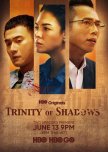
"Hatred is a creature with sharp teeth that bites when you least expect it"
Trinity of Shadows is a misnomer. This drama was more shadow than light, with far more sides than three. Nearly everyone was walking around with their personal pain bubble eating away at them. Not your typical serial killer story, but not always coherently laid out either.Hsu Tzu Wei is a no-nonsense squad captain with a dark past. She unleashes hell on any man that dares to bully or harm a woman. Chen Chia Hao has been on the force for three years, he harbors dark secrets that motivate him to investigate. Yang Chi Hsiao is a city councilor running for re-election. Despite his constant battle against corruption, he too, hides a painful secret. A closed case links the three with a dangerous presence who has plans for all of them.
This drama had plenty of twists and turns, slowly unfolded to keep the audience in the dark. All the major characters who graced the screen were in desperate need of therapy. There was no soft place for any of them to land, and instead of seeking out healthy relationships they were drawn to each other like a magnet to steel. Impulse control was in short supply to be sure. The bad guy pulling all the strings desperately wanted someone to blame but never looked inward to see his own role in his self-destruction.
I don’t want to go into the story or even my praise or concerns too much so as not to spoil anything. By the tenth episode it did feel like the script was running off the rails. The scenarios became more convoluted. Not that I’m against that, as the melodrama and pain levels were ramped up to impossible levels by the last shot. I would have preferred a few more questions answered and the ending to be clearer so that I didn’t have to go back and watch it twice. I don’t think I’ve ever watched a drama filled with so many overtly traumatized characters suffering from deeply festering hatred. Just like dead bodies-that hatred was bound to come to the surface just when they thought it was dead and buried.
22 June 2026
Trigger Warnings:
Sexual situations. A rather graphically implied sexual assault that was disturbing. Again, heavily suggested by word and camera angles--hacked up bodies. Smoking. Suicide. Torture. Drug use. Sex workers.
Major Spoiler Comments Below:
* * * * * *
Seriously, major spoilers below
* * * * * *
Abandon all hope if you have not watched this drama
* * * * * *
Finally warning----
Through the whole drama I really worried that Hsu would end up being the killer from 23 years ago. But even after the final scenes, Yang seemed convinced her mom did it. Hsu was willing to turn herself in for Dong’s death (why????? He was a murderer, stalker, and was threatening them) and have her mom turn herself in for the murder 23 years ago. The mom left after the murder instead of staying with Hsu or taking her to Hong Kong with her which would have seemed more logical if Hsu had been the killer.
Hsu and Yang had to move into the godforsaken house because the body was buried in the yard. Talk about eternal torment. I also wondered if her mom was underground as well, but guess she got an Uber out of the house before the cops arrived, or more likely Dong’s car. Whose pink purse did Hsu throw away? I didn’t see anyone carry it in the present or past. Who wants to bet that Hsu and Yang either end up a double suicide or a murder-suicide? Or she’s institutionalized because it looked like she C-r-a-c-k-e-d. Yang kept yammering on like nothing was wrong. These people were very good at burying bodies and feelings.
And finally, not sure Chen Chia Hao should have been listed as a main character since he was off-screen after episode 10. Talk about burying feelings and bodies! Liu Kuan Ting is only 2 years younger than Sandrine Pinna, why did she keep referring to him as a kid instead of just rookie? Everyone has their kink---Chen hooked up with sex workers, Hsu and Yang always seemed to do the deed in front of windows.
This was one dark, demented drama with several killers. Who could ever look at a suitcase the same way?
Was this review helpful to you?
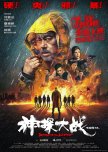
"The devil loves to play the angel"
Detective vs Sleuths aka Demon Hunter was a frenetic carnival ride strewn with dead bodies, mental illness, and revenge. It proved the old adage to be true, “Just because you’re paranoid, doesn’t mean they aren’t out to get you.”Lee Jun is a disgraced ex-detective who sees and hears things that other people do not. His motto is, “Whoever battles monsters should ensure that he does not become one.”* A dead man reveals a sinister plot to Jun. With each death comes a clue pointing to the next one-all cases of Jun’s that lacked the evidence to prove guilt. A very pregnant inspector, Chan Yee, becomes caught up in Jun’s madness all while her department is convinced he is actually mad and may be the criminal perpetrator.
Jun was considered a Chosen Sleuth before he broke down. But in this film, the question of who was the sleuth and who was the psychopath, became deeply entwined. A team of murderous avengers calling themselves The Chosen Sleuths hunted down the suspects in Jun’s notes, meting out their own form of justice. The Hong Kong police were often shown as ineffectual and quick to jump to conclusions leading to tragic results. Jun’s manic episodes and connections to the cases eroded any confidence in his abilities and innocence.
DvS moved fast and erratically with a large cast. When cops were killed and everyone cried, I had no idea who they were talking about. The bad guys had at least three huge vans of deadly avengers. The camera bounced around as much as the cast did. A few breathers for the audience to process the information being rapidly dumped minute-to-minute would have been nice. Most annoyingly, the Cantonese dubbing was terrible for several characters.
Lau Ching Wan was excellent as the brilliant, if very unstable, Lee Jun. Once I learned how to keep my balance on this topsy-turvy rollercoaster, it became more bearable and thrilling. The grand finale was a grossly over the top explosion that threw everything it could at the screen to be memorable. In some ways it succeeded, while still not managing to feel convincing. A wild, hallucinogenic, and violent film with numerous red herrings, Detective vs Sleuths dizzily stumbled about as it sought to discover who was the sleuth and who was the psychopath. Sometimes, both things can be true.
16 June 2026
*Quote Note: "He who fights with monsters should look to it that he himself does not become a monster. And if you gaze long into an abyss, the abyss also gazes into you." Friedrich Nietzsche’s “Beyond Good and Evil”.
Trigger Warnings: Countless deaths by knives, guns, and fire. The bodies really stacked up in this one. One torture scene.
Slightly spoilery maternity note: Perhaps Chan Yee’s baby was the real demon. No umbilical chord? Yeah, that’s creepy.
Was this review helpful to you?
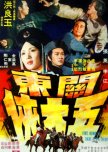
Three rebels-a Mongolian fighter who wears an enormous hoop earring (Chin Kang), a Muslim tracker who keeps his ear to the ground (Li Chung Chien), and a monk who carries a golden Buddha on his back (Phillip Ko Fei) attempt to kill the local official who is making a deal with the Russians for guns and cannons. Unbeknownst to them, two other rebels are undercover in the official’s mansion (Mang Fei/bodyguard and Yu Tien Lung/interpreter) with eyes on their mission and the official’s comely daughter. Two lower ranking officials are planning on making a deal with the Russians to secure higher positions for themselves. A combustible finale cannot be escaped.
Two of the three inept rebels were played by Chin Kang and Phillip Ko Fei who were often relegated to villain roles. Mang Fei and Yu Tien Lung played the gossipy rebels in the palace. Yu also choreographed the fights with mixed results. Yueh Hua was the captured rebel who had very little face time in the film. Bryan “Beardy” Leung was the menacing Captain Koo while poor Lo Lieh was stuck in a grandma wig as the treacherous Cher.
The plot was all over the place with the three inept rebels constantly trying to kill the official without any luck. When they weren’t fighting Qing guards, they were usually fighting each other. The fight choreography was often sped up which provided for several unintentionally humorous scenes. There were also a lot of wide misses with kicks and fists. The wire work was limited to jumping over security walls which the three did when their plans repeatedly went awry. I’d put the fights on the lower side of average, at least they weren’t kung fu posing or dancing.
Five Kung Fu Daredevil Heroes was neither horrible nor memorable. Although the explosive ending included a scene I don’t ever remember seeing before so there was that. Only for hard core old school martial arts fans who are completionists or fans of the actors. As always, rated on a curve.
16 May 2026
Trigger warnings: One scene had numerous severed body parts.
The film is cropped on the sides. It was also faded which was not helped by the typical low budget Taiwanese films of this time period that did a lot of filming at night or in the woods.
Was this review helpful to you?
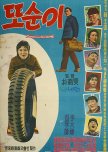
"He is good for nothing. I've made a mistake."
Birth of Happiness aka A Happy Businesswoman was incredibly close to being a great film for me. 1963 RoK (and most anywhere) wasn’t exactly a feminist utopia and the film's attitudes towards women reflected that. Yet Tosun had a strong desire for independence and used her wits to defy her parents and make money on her own. Of course, a handsome guy showed up and ruined everything, I mean, fell in love with Tosun.Tosun’s father owns a bus and refuses to pay her for work she does for him. Around the same time, Shim Jae Gu comes to town looking for a bus driver job, part or full-time. Tosun’s dad kicks Jae Gu out believing him to be unworthy. Tosun has pity on penniless Jae Gu and buys him cigarettes and loans him enough money for a hotel. When her father finds out, they have a terrible row and Tosun moves out to make a living on her own much to her mother’s chagrin. She and Jae Gu hatch a plan to go into business together if they can earn enough money for a car. A developing love makes their goal more complicated.
First of all, Tosun was an amazing female lead for the most part. She was optimistic, inventive, resourceful, and bounced back when life knocked her down. She could outcon a conman and was always searching for the next best way to realistically make money. Though she was tight with her cash, she also helped people when needed. Jae Gu, on the other hand, was easily discouraged, emotionally weak, and easily duped. When the going got rough, he went drinking, gambling, and seeking intimate entertainment from the local bar hostess. Worst of all, he blamed Tosun for his failures. As so often happens, the heart wants what the heart wants and Tosun loved Jae Gu.
The film also focused on Tosun’s relationship with her mother. Tosun’s mom ran interference for both of her daughters with the dad as he was a difficult and stubborn man to deal with. When Tosun moved out, her mother was devastated. Aside from the loneliness she would face without her daughter, girls could not leave home before marriage or else their “innocence” would be questioned. Tosun refused to let that belief limit her.
I liked Tosun’s drive and cheery disposition though people did not want to get on her bad side. She could defend herself and reputation with words and fists. The romance dragged this film down as I could never see what Tosun saw in Jae Gu. Worth a watch for Tosun or if you are in need of inspiration to try, try again in life.
13 May 2026
B & W note: The film was quite dark in places and smudged looking in a few others. Mildly distracting but I’ve seen much worse.
AKA Tosuni: Birth of Happiness
Was this review helpful to you?
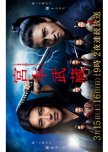
"For what purpose are you walking the path of the sword?"
Miyamoto Musashi was a crash course in the legendary figure starring Kimura Takuya. Despite it being twelve years old as of this writing, I thought the cinematography and quality of the drama were well done. And then there was Kimura whom I have a soft spot for, especially with a wig and sword. Battle on!Takezo is involved on the wrong side of the Battle of Sekigahara. More brawn than brains, often operating on instinct, he has the raw skills of a swordsman but not the patience or techniques required. After being captured attempting to leave a message for his friend’s mother, the monk Takuan imprisons him in order to teach him discipline. After his release the newly named Miyamoto Musashi heads out to make a name for himself with his sword hoping to find a job with the Tokugawa shogunate. Along the way he fights, finds love, new advisors, and personal growth.
I enjoyed Kimura in this role. He brought the wildness needed for Miyamoto’s youth, the bloodthirsty determination that followed, and ultimately the calmer swordsman attempting to balance life and death on the edge of his sword. Maki Yoko had the thankless role of Otsu who could be cloying. Nakatani Miki appeared as a geisha styled quite similarly as her role in Jin. Sawamura Ikki played Miyamoto’s rival and what could have been a beautiful bromance if swordsman pride did not come into play. Honestly, I don’t understand the need to be the best when the only way to prove it is, 'one of us will be the best and one of us will be dead'.
The fights were entertaining if straining believability. At least Mifune Toshiro used the terrain to his benefit in his film while Kimura had to take on 70 samurai at one time on flat, dry ground. There was quite a bit of wuxia wire work as Miyamoto leaped great heights or dropped from heights designed to kill other men. He also had super healing abilities because this story didn’t have time for such things as sword wounds. To quote one of the Yoshioka, “How come he won’t die?!”
I burned through both episodes which were around 2 hours each as this mini-series was fast paced, never slowing down much to bother with historical exposition or character development of supporting cast. It helped that I enjoyed watching Kimura devour this role even when the pacing could stumble and the narrative could be heavy handed. For three and a half hours characters berated Miyamoto for killing people even when his life was being threatened and then at the end, his use of the sword was deigned by the cosmos to bring greater purpose and potential to all people. Uh, say what again? Overall, I enjoyed this mini-series though I’d only recommend to people who are fans of Kimura, like martial arts flicks, and have a rudimentary knowledge of Miyamoto.
11 May 2026
Trigger Warnings: Though there was a LOT of sword action, no heads, arms, or legs went flying. Sexual encounters were implied with some groping but nothing bared or overt.
Was this review helpful to you?
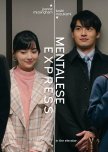
Cute romcom to lift your spirit
Mentalese Express was one of the cutest short or full length romcom films I’ve seen in a long time. Filmed mostly in an authentic elevator recreation, the actors had to make the most of voice overs and tiny facial give aways.Ssu Tsen Li notices a handsome Japanese salaryman in the elevator she takes, a man she calls #27 for his office floor. Shinji Hayashi also notices the woman with a mole on her neck like his and pleasant-smelling hair. Terrified he’ll be deported from Taiwan for being a stalker or pervert for sniffing her hair, he begins to fear their morning elevator ride as much as he anticipates it.
This short film ran the gamut of relationship stages without either character speaking more than a word to each other. Two awkward puppies overthinking every aspect of their actions and non-actions placed both introverts into romantic hell as they desperately tried to find a way to approach the other person. They had an inadvertent helper in Cologne Man who realized early on that the two were attracted to each other. Oblivious Co-Worker provided a proper female foil and source of jealousy. A rich romantic microcosm existed within the confines of a metal box. Would definitely recommend this short film for anyone who enjoys romantic encounters of the introverted kind.
9 May 2026
Was this review helpful to you?
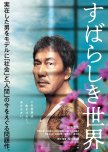
"The world must be a difficult place for a guy like you"
Yakusho Koji gave another brilliant performance in Under the Open Sky as an aging ex-con and former yakuza member. Known as the Brawler from Kobe, recently released Mikami Masao, had much to learn about the world outside of the crime families.At 60 years old, Mikami Masao is released after spending fourteen years in prison. He is determined to be through with his criminal ties and never go back to jail. With the help of a sympathetic lawyer, he is set up with a place to live and a modicum of government assistance. He suffers from severe hypertension limiting the few employment opportunities available to him. A television station wants to share his story, especially if they can reunite him with his mother on air. Mikami has lived much of his life on a set schedule with emotional and physical guardrails. Now he must learn to deal with the casual cruelty in the “civilized” general pop he is surrounded by without resorting to violence.
Unlike so many actors who have limited means of conveying expression, Yakusho Koji put on a master class of nuanced acting showing Koji’s every thought and response without the viewer catching him acting. You could feel Mikami’s frustration with the system that treated him like a pariah, coping with the disrespect he was often shown, realization that the world had moved on without him, and joy when he used his particular skill set on a pair of thugs. Mikami was forced to learn patience and self-control around people who were experts at eliciting angry responses. His own body forced him to his knees with debilitating hypertension. And Koji glided through every emotional speed bump and ditch expertly. I loved that Nishikawa didn’t make Mikami perfect. Though generally kind and generous at heart, Mikami had a temper and had no compunction against resolving problems or slights with his fists. Or a ladder.
Director Nishikawa Miwa based her script on the novel Mibuncho. She deftly exposed polite society’s ability to ostracize those who did not fit into a perfect mold. Unhappy people who followed the rules felt entitled to mock those who had strayed or were different. The yakuza was not glamorized and for the most part Mikami accepted responsibility for his troubles. The film also showed how difficult it is for ex-convicts to turn their lives around. Aside from personally changing their ways of handling conflict, they are faced with limited employment opportunities. Most businesses are reluctant to hire anyone who has been incarcerated. It’s not surprising that 50% of released prisoners end up back in jail within 5 years. It’s the same in my country. Once they’ve paid their debt to society, they still need to eat, have shelter, and a way to make a living and going back to the safety of what they are familiar with can be tempting. For Mikami, the crime families never looked down on him and made him feel small whereas he faced rejection constantly in society. Unlike many released convicts, he had a support system of people outside the crime world who came to care about him.
Having spent nearly half his life in prisons, Mikami Masao just wanted to be an ordinary person. What he found was a whole new set of rules. “Let it slide…Don’t get involved…Look out for yourself.” The weak and other were still bullied and preyed upon by “good” citizens, but in acceptable manners. He not only had to learn to trust and love again, but also to look the other way. I enjoyed this bittersweet story of Mikami’s resiliency and determination to change his life no matter the challenges and to seek out the beauty hidden under the open sky.
“You have to be patient out here. Patient with few rewards. But at least you can live under the open sky.”
8 May 2026
Trigger warnings: Bare bottoms and breasts but not in a gratuitous manner
Was this review helpful to you?
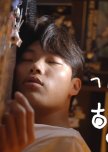
A young man is asleep at his desk with pieces of an action figure he is working on scattered around him. The film doesn’t say for sure what the young man’s issue is, whether it’s agoraphobia or another anxiety disorder, but it’s clear he’s highly uncomfortable being outside of his cluttered apartment. The only organized space is his bookcase of neatly ordered action figures he has assembled. When a delivery man haphazardly slides a package toward his door but not near it, our introvert is in a conundrum. In his endeavor to stay partially within his safe space and still retrieve his precious box, he accidentally locks himself outside. Thus begins his awkward and strangely pleasurable journey to the locksmith.
I found this short film soothing and refreshing. This young man was thrown into his worst fear and while there were negative experiences he was also shown kindness and had the chance to show kindness to another. Definitely worth ten minutes of your time. I only wish it had been longer, I would like to have seen if his forced adventure had any long-term healing on his life.
5 May 2026
Was this review helpful to you?
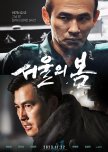
"Fail and it's treason. Succeed and it's revolution."
12.12: The Day has been lingering in my PTW for some time now. Knowing what the film covered was going to be distressing, I needed to wait until I had the proper frame of mind to tackle it. I’m not sure there’s ever a great time to grapple with the gut-wrenching betrayals, knowing the blood and tears shed following the coup, but I did my best to comprehend the dark events that occurred on 12-12-1979.After President/Dictator Park’s assassination, unease flows through the government and military as people within jockey for prestigious positions. Three key figures rise to the top, at least momentarily. Jeong Sang Ho is the new Martial Law Commandant. Chun (Jeon)Doo Gwang leads the Defense Security Command and also the shadowy Hanahoe. No one moves or says anything that he doesn’t know about due to his intricate network of spies and phone taps. Last, but not least, is the reluctant new commander of the Capital Garrison Command. Lee Tae Shin is loyal to his oath and his country with no political aspirations. When Jeong assigns influential Hanahoe generals and colonels to far flung places to reduce their influence, Chun decides to act. He gathers the leaders from Hanahoe to consolidate his military might and seize control by arresting Jeong and using the troops to take over. In order to repel the rebels, the virtuous Lee must outwit the Hanahoe who has infiltrated nearly every level of the military and firmly planted corrupt politicians in their pockets.
Watching a film like this was painful as I already knew how the day was going to end. Greed and the desire for power and unquestioned authority are always attractive to wannabe tyrants and the cronies hoping to cash in on an authoritarian regime. Successful dictators tend to be good at branding and Chun was no exception. “Only if we fail is it called treason. If we succeed it’s called a revolution.” Or a “grand revolution.” Nowhere in the film did any of the traitorous team members express a dream for peace and prosperity for all the people of the RoK. Not when it would be so much fun to be in charge and torture whoever got in their way.
Korea’s Hydra organization was the Hanahoe. General Lee simply could not compete with soldiers more loyal to Hanahoe’s leadership and organization than the country. Chun was also aided by the rigid hierarchies in the society including age, regional favoritism, and seniority. Different commanders gave conflicting orders leaving much of the rank and file confused and with no choice but to follow the truck or soldier in front of them. And then there were the cowardly and/or greedy politicians who gave up before the battle had even begun.
Hwang Jung Min’s Chun bordered on maniacal. He splendidly portrayed Chun’s bone chilling menace that both terrified and enthralled the military officers in his circle. His intensity bordered on scenery chewing a time or two, but he accomplished his dramatic mission—to make us loathe Chun. In contrast, was Jung Woo Sung’s calm and ethical Lee. This general wasn’t afraid of making the hard decisions even in the face of overwhelming odds. He also wasn’t afraid to parse words. My favorite quote that I wish had come true, “All of you stay right there. I’ll bring the tanks myself and crush your f*cking skulls.”
The RoK would go through one of its hardest self-inflicted painful periods in history. The disappearances, torture mill, and Gwangju Uprising were about to kick in because of ineffectual leadership, a sinister network, and a nefarious general willing to risk everything to rule the country like a despotic king. 12.12: The Day was tightly written and superbly acted for a day no one wants to remember but must in order to protect it from happening again.
1 May 2026
Notes: Due to libel laws or some such reason, the names of historical figures were changed.
Was this review helpful to you?
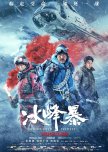
"The slower you go, the further you can reach"
Wings Over Everest felt like a patchwork of other mountain climbing films going back to the Eiger Sanction (1975) or the Archer Sanction (2015) for that matter. It might have worked if they had grounded the mountain climbing in some measure of realism. Not even Yakusho Koji could save it.What I liked:
There were beautiful shots of the mountains. Score one for Mother Nature!
Yakusho Koji-I would watch him in anything and this film is exhibit A of that dedication.
Austin Lin made for a cute Cowboy helicopter pilot. Zhang Jing Chu as Xiao Dai Zi portrayed a feisty heroine who did what was needed to be done to save herself and her team.
The cast was an interesting international crew: China, Japan, Canada, and Taiwan though with some questionable dubbing at times.
What didn’t work as well:
The bad guys were obvious and their motivation was weak.
The opening scene let the audience know to check their brain at the door regarding mountaineering and rescue. Dai Zi may have been a great climber but she had a terrible habit of falling off of cliffs. I stopped counting at 4 times. Perhaps due to unacknowledged oxygen deprivation or hypothermia, she also had strange hallucinations.
Oxygen schmoxygen. Who needs it? Or protective goggles? Or any gear to protect from the frostbiting wind and cold, not to mention (literally) blinding sun.
I know the final mountain scene was supposed to be touching yet was so ridiculous it reminded me of a scene from Ice Age: Collision Course (2016). Why couldn’t there have been a dinosaur or UFO? Go all in on throwing logic off the mountain! That might have bumped my score up!
There were times when I turned my brain off that the film had its moments, but they were few and far between. Stupid logic and stupid laws of physics interfering with movie magic. To “summit” up and not to “be-lay” the point but Wings Over Everest was an okay movie if you like the actors and/or scenery but it likely won’t “rock” your world.
27 April 2026
Was this review helpful to you?


