

 135
135 431
431 16
16 2
2 6
6 3
3 8
8 10
10 3
3 13
13 1
1 1
1 1
1 1
1 2
2 6
6 8
8 5
5 9
9


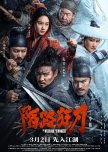
"If I can't save a city, I will save those close to me"
When I saw that Zhang Jin was in The Wild Blade of Strangers I was sold. The story and editing had a few hiccoughs but the action was solid for the most part, the main reason for watching a film like this.Tian An Ye and his older friend, Zhao Qian Sun make and sell charcoal. When they head to the walled city to sell their product, they end up saving a wounded woman and her baby. The palace had recently gone through a change of management, accomplished with deceit and at the end of a sword. Nie and her baby found themselves on the expendables list and in desperate need of a hero. Tian had no intention of stepping in until old Zhao convinced him to provide the two vulnerable people protection with his very special skill set.
The plot was thin and obvious which wasn’t super important once Zhang Jin jumped into action. A real martial artist, his moves were believable. How well you’ll like this film may depend on whether you enjoy his screen presence. I did and could have bumped this up to an 8 if the story and editing didn’t have a few issues including one very politically incorrect character that would have been out of place 20 years ago with the terrible depiction. Another actual martial artist, Jiang Lu Xia, as the mysterious Qi, held her own with the choreography. Her character reminded me of one Brigitte Lin might have played back in the day.
You didn’t have to wait long for action scenes. The film had several fights that utilized a variety of weapons and traps. The choreography veered into martial arts dancing on occasion. In this case I was willing to overlook it when Tian spun around because the moves didn’t have a thousand slow-mo pore counting close-up edits. The only disappointing fight was the first one between Tian An Ye and the formidable Zhang Xu Qing. The wire work was extremely awkward and conspicuous, reminiscent of 1970s kung fu flicks. Their rematch was thankfully much smoother and faster. As with many heroes, Tian’s superior fighting skills waned when the script called for it.
The Wild Blade of Strangers made good use of stock wuxia characters and political infighting. The film was at its best when Tian was wielding a sword, lethal bamboo, flaming cloth, or guandao (I think). When it relied on the narrative, the plot holes revealed themselves along with the shallow character development. Overall, I enjoyed this film and could recommend it to people who like their sword fighting with a small serving of political intrigue thrown in for good measure.
25 April 2026
Trigger warnings: People lost their heads, but without spewing blood or rolling noggins. The only scene that bothered me was a torture scene though it did yield a spikey weapon for Tian to employ as a weapon.
Was this review helpful to you?
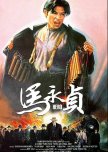
"If you lose yourself, you'll be digging your own grave"
Hero (1997) is a remake of Chang Cheh’s 1972 The Boxer from Shantung. Shaw Brothers was on the downhill slide when they had Corey Yuen helm this bloody blast from the past starring Kaneshiro Takeshi.Ma Wing Ching and his brother Tai Cheung flee the drought-stricken Shandong Province to start over in Shanghai at the beginning of the 20th century. Their new home is filled with people looking for work and people looking to take advantage of them. Ma makes a strong impression on benevolent crime lord Tam See who was also from Shandong. Tam befriends the hothead as Ma makes his presence known in town. Malevolent crime lord, Yang Shuang, is determined to eliminate Tam and Ma for good.
The storyline was thin, with most of the characters being the same depth of cardboard. Despite Kaneshiro’s screen presence, Ma Wing Ching was hard to root for as he was overly proud and easy to anger. Plus, everyone was involved in crime, including the police. Yuen Biao played the “good” crime boss and Yuen Tak chewed the scenery as the “bad” crime boss. Yuen Wah and Corey Yuen provided comedy relief on occasion as did Jessica Hester. Jessica had little to do as the romantic interest. Valerie Chow was featured more prominently as the femme fatale.
Corey Yuen and Yuen Tak were the martial arts directors which meant the fights were wild featuring kung fu, hatchets, flaming hatchets, swords, chains, bamboo spikes, pistols, automatic weapons, hidden knives, a canon, and even holy Looney Toons---an anvil! There were two intricately choreographed fights centered around a horse. The credits stated that no animals were harmed or killed and I really hope they were telling the truth. My biggest disappointment was that badass Yuen Wah wasn’t showcased during the fights being relegated more to emotional support or humorous moments.
During the first half of the film, it was a challenge to invest in the story as Ma picked fights, staked out his territory, and arrogantly ignored the advice of people with his best interests at heart. As stunning as Kaneshiro was during his brutal encounters, I found his character difficult to like. Ma’s redemption arch required copious amounts of blood and limbs. My score is based largely on the creativity and fierceness of the fights. It was also fun to watch Yuen Biao and Yuen Tak take each other on in a ferocious kung fu battle. They did not disappoint. The final free for all was ridiculously over the top, hilariously so at times, yet entertaining. Graded on a mild kung fu curve.
23 April 2026
Trigger warnings: Sexual assault. A fight that littered the street with limbs. Gruesome impalements. Almost continuous smoking. Sometimes it was hard to see the characters' faces due to the clouds of white. Yuen Wah's dreadful haircut.
Connection note: The Yuens in this film all attended Yu Jim Yuen’s China Drama School.
Slightly spoilery observation below:
Characters survived catastrophic injuries, recovering quickly from wounds that should have killed them, left giant holes in the characters, and/or would have caused deathly infections. Never underestimate kung fu plot armor!
Was this review helpful to you?
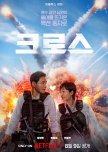
Mission Obvious
Mission Cross had a strong cast saddled with flatly drawn characters and action. It lacked what a sexy thriller that blatantly copied some Mr. and Mrs. Smith moments requires, at least a modicum of chemistry between the leads. I like both actors but it was hard to understand how they ever ended up--or stayed--married.Detective Kang Mi Seon, aka The Crocodile, is less than thrilled with her school bus driver and house husband, Park Gang Mu. They’ve been married for a few years and her kindest compliment is that she could have done worse. She leads a team tracking down drug dealers and a missing CEO, and stumbles upon a secret government cover-up. Park Gang Mu works hard to make Kang’s day easier any way he can in the new life he has chosen. He is contacted by an old spy friend whose husband has gone missing. Though Park had given up his undercover life he is willing to come out of retirement to help old friends. The spouses unknowingly begin working on the same investigation from different angles.
The first hour of the film dragged for me as Kang’s team thought that her “wifey” was having an affair. Park’s instincts had definitely rusted as he never realized he and Jang Hui Ju were being followed and photographed by the bumbling detectives. He also never questioned anything. I kept hoping he and another spy were playing a con on the Big Bad, but nope. They were the ones being played by a patently obvious fake out. Made me lose all respect for them. The writing was painfully bland with no surprises. At least Kang was a competent police officer which was a nice change of pace.
The film didn’t become more engaging until the last 30 minutes and even then, the fights were badly staged. The Big Bad overacted. The fire fights weren’t shot very well. The cinematography and direction lacked a professional, polished look to them. Basically, given the cast, I was disappointed. This paint by numbers script had no depth or originality, no spark. Hwang Jung Min and Yeom Jung Ah deserved better.
19 April 2026
Was this review helpful to you?
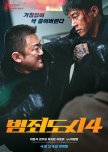
"Do you know what the rich want?...To get richer"
If you watched the first three Roundup films then you know what to expect from The Roundup: Punishment. Our wrecking ball ahjussi hitter takes on cyber crime this time around with his team and comic relief criminal sidekick.Detective Ma makes a promise to a grieving mother that he will find the criminals responsible for her son’s death. The investigation takes him and his team into the world of cyber gambling and sundry crimes. What he’s not initially aware of is he’s dealing with The I.T. Genius and his vicious, knife-wielding enforcer. Ma will have to call in help from the police department’s own I. T. crowd and also the shady Jang I Su.
There is something about Ma Dong Seok I find compelling to watch, even if he’s just throwing hands at bad guys and little else. I thought Ma “no cartilage” Dong Seok moved smoother in this film which was probably due to better choreography and shorter scenes. His punches and ducking were swifter and of course with a little movie magic, always highly effective. The bad guys, led by Kim Mu Yeol’s Baek Chang Gi used knives which I’m not a huge fan of and didn’t think the knife fight choreography was particularly creative. I was only invested when Ma and his meaty fists entered the room.
The film which bounced between the Philippines and RoK lost focus a few times, which may have been more to translation issues. Ultimately, when the big hearted, pounding hitter wasn’t on screen, the story’s momentum faltered. I enjoyed Roundup Punishment for what it was, and in that I wasn’t disappointed. If you’ve watched the other entries in this franchise this is one to give a try. The Big Guy with No Cartilage rarely disappoints.
10 April 2026
Ma has quipped that he has “no cartilage” in interviews before. Glad he’s still able to make the movies he wants for now!
Was this review helpful to you?
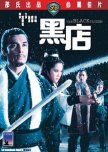
"A cozy place to stay"
There is no denying Black Tavern’s similarity to King Hu’s Dragon Inn (1967), but there were enough differences for Shaw Brothers’ inn at the end of civilization to carve out a bloody spot of its own.A wandering monk sings a tale of an official carrying a trunk filled with treasure cultivated from a lifetime of bribes. Ears perk up in the tavern with everyone making a hasty exit to find said official. Eventually, the criminal element condenses upon the remote Black Tavern on a snowy night, coming in waves. The first to arrive is Zheng Shou Shan aka The Whipmaster and his disciples. A “hero” named Zha Xiao Yu who saved Zheng and his crew on the road asks to be cut in on the deal for the price of his sword. Soon the swords and whips are flying as the thieves descend upon the tavern. Official Hai with his trunk of treasures seeks shelter from the storm at the inn on his way to retirement which only increases the feeding frenzy among the murderous lot. A mysterious swordswoman appears who could change the balance of life and death.
Ku Feng dominated this film with his lethal whip, a surprising star turn for the hard-working actor. He's one of my favorite supporting actors, but here he stole the show. Tung Li was the dashing swordsman who always seemed to materialize when needed. I squealed a little bit when I realized that Shih Szu was the swordswoman with a connection to The Lady Hermit. This time Wang Hsieh was already dead when she arrived on scene. Her screen time was rather limited but she was in the final fight. Dean Shek sang many of his lines as the annoying, I mean wandering monk. He had a rather important part to play in the final outcome. Numerous familiar faces popped up trying to steal the treasure and then were as quickly dispatched. Wu Ma and his Five Ghosts of Xiang Xi, which included Yuen Wah, pretended to be hopping vampires. Was hoping for the real thing, that would have made this film perfect! Jackie Chan was briefly on screen as Official Hai’s servant who was killed just before the hour mark if you are trying to spot him. Stuntmen Mars and Little Unicorn also had time on screen.
Simon Chui and Chui Chung Hok designed brutal fights with a variety of weapons. Nearly every inch of the inn and courtyard were decimated as the fighters used whatever was around them to fight with or defend themselves with. Nothing felt repetitive as the different groups of villains remorselessly attacked. The big finale was vicious and creative. Ku Feng was relentless with his whip and physical onslaught. Did I mention, I really enjoyed his performance?
No evil eunuch or army threatened anyone. This time it was just wave after wave of crooks attempting to make their fortune off someone else’s misfortune. I must say that Official Hai was nonplussed at having to walk around the bodies to enter the inn. With every passing moment they stacked higher, disappeared and more bodies hit the ground to take their place. The atmosphere wasn’t as claustrophobic as Dragon Inn, but the fights were exciting and nearly nonstop. I’ve learned from watching these films that it’s important to avoid inns on the edge of nowhere. And if you must eat there, always order the vegetarian platter. I graded on a curve as I do with all of these old martial arts films.
23 March 2026
Trigger warnings: Several decapitations, disarming scenes, severed body parts, eyes pulled out, cannibalism.
Was this review helpful to you?
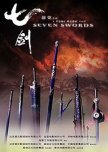
When the Qing Emperor outlaws martial arts and martial artists a bounty is set on the practitioners. General Fire Wind and his villainous crew hunt down martial artists and their families killing every man, woman, and child. The last bastion of fighters and source of wealth for them is Martial Village. While Fire Wind negotiates his price for eradicating the village, Fu Qing Zhu and two young people from the village travel to Mt Heaven to meet with Master Shadow Glow. The Master wakes up four swordsmen and gives the two villagers swords as well. Now there are seven swordspeople to save the village. Hooray!
I’m not sure what the original plan was, Leon Lai appeared to have top billing, but his character didn’t have much to do. Of the swordsmen, Lau Kar Leung and Donnie Yen had the most development and interesting storylines. Charlie Yeung’s novice swordswoman had the most growth going from crybaby to gaining a sword that nearly killed her to a willingness to take on the bad guys while badly outnumbered. Too bad they tried to insert her into a romance with Lai’s loner who wanted to be alone character. It was sad to me that more time was spent building sympathy for a horse than most of the human characters. Without proper character building, there were only three characters I vaguely cared about living. But given the genre, I didn’t expect many if any to walk away/ride away. Then there were characters who seemed important, even finding a 1000-year-old sword that was important, but who appeared and disappeared within minutes. Poof! Two of the 7 had very little coverage except when fighting as a group. There simply wasn’t time to build rapport and interest as much as the story moved around.
Aside from narrative issues I had with the film, one of my primary concerns was the visual. Shot in the golden-brown pallet of LOTR, only dusty like a western, the lack of clarity and the camera jumping around from character to character as if the dollies got loose, made it difficult keeping up with the large cast and trying to emotionally bond with any of them. Tsui Hark seemed to be reaching for grandiose storytelling with the essential shots of mountains and horse riders galloping toward sunrises, yet the giant villain sets couldn’t elevate themselves above Styrofoam molded pillars and buildings. I grew up watching shows with these kinds of sets, so that’s not a knock, just an observation.
Lau Kar Leung is my favorite old school martial arts director which made it a treat to see him in front of the camera as well. At 69 he still had solid choreography and moves left to share. One fight between two walls has been done before but was still skillfully accomplished. There was a segment of kung fu fandom that maligned Donnie, but I’ve always enjoyed watching his moves. Along with Lau, old schoolers Jason Pai and Chi Kuan Chun were along for the ride as prominent villagers.
Seven Swords had its entertaining moments, but it was obvious bits and pieces were missing. The villains were wildly over the top like they’d all been to a KISS fan club in the 1970s, minus the platform shoes. Yes, that was an outrageously dated pop culture reference, but look ‘em up. Lol. Seven Swords is worth a look if you are a fan of the actors or genre, if you keep your expectations low.
12 March 2026
Uncredited star sighting-an updated version of 1975’s Guillotine!
Trigger warnings: Sexual assault. Attempted sexual assault. Lots of beheadings, and arms and legs lopped off. Various and sundry gruesome deaths.
SPOILERY COMMENT BELOW:
The heroes spent so much time rescuing each other that they abandoned the village which had been the point of their mission which I found disappointing.
Was this review helpful to you?
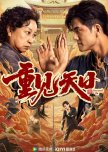
A pregnant Lao Liang ended up serving 30 years in prison for killing her husband’s killer when he came to the funeral to mock the deceased. Her son was sent to an orphanage and Liang lost all contact with him. Upon her release, her only goal was to find him. Before Liang's release, criminal Gui was moving up in the same triad responsible for Liang’s troubles. When Gui was ambushed and blinded, it gave the criminal element a way into Liang’s house and past her more than formidable defenses by disguising him as her long-lost son.
Age is a funny thing in films. First, we have to accept that Liang was in her mid-40s when she became pregnant and went to prison as the actress was 74 at the time the film was made. Secondly, Gui may have lost his sight but Liang hadn’t and Phillip Ng looked every bit like a nearly 50-year-old man and not 30. I’m pretty good at aging and de-aging characters but the filmmakers were pushing the limits of my abilities with this casting.
Gui was a lethal killer rubbing his hands together with glee at the thought of Liang's demise and before you could say mommy-son day out, he was her defender and then he wasn’t and then he was. The addition of a melodramatic plot twist weighted an already heavy movie down, despite the comedy imbedded in the bloody fights. It was too serious of an issue to be given short shrift at the end, cheapening the whole plot element. And how did Gui not have any problems with losing his sight? How did he recover from his injuries, learn how to deal with his loss of sight and learn Braille all in one month? Light body abilities in a kung fu film? No problem. A 75-year-old woman kicking butt and taking names in a kung fu flick? No problem. But bring in real world concerns like Liang’s illness or Gui’s injury…there’s a problem. Perhaps people in Unknown Country have magical abilities.
I enjoyed Yuen Qiu’s performance and have a soft spot for her. The fights were all of the high flying, powerful qi, superhero style. I couldn’t help but cheer for her as she stalked her hunters. The relationship between her and Gui just felt forced to me and I would really have liked for that aspect to have been explored better. She’s a mother who suffered bitterly for a moment’s action and knows her child did as well. Now that she was free, fate smacked her down again. But when you have to make sure and get the comedy quota in, those moments must be sacrificed for the laugh or the body count. Whichever comes first. Second Life had some really nice moments and could have been so much more.
11 March 2026
Was this review helpful to you?
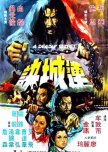
Ti Yuen is thrown into the depths of the jail on trumped up charges. His cellmate appears to be a deranged wild man. Every month, Ting Dien is dragged out to the magistrate and viciously tortured. All he needs to do in order to be freed is to tell Ling Tui Si what the Deadly Secret is. Ti Yuen’s sifu is hoping that Ting will break down and tell Ti the big secret if he stays there long enough. Ti can’t figure out why Ting doesn’t break out with his superior kung fu skills and why he cares about the flowers on the window sill they can just see through the bars on their window.
This film had potential but a few puzzling issues dragged it down. The Deadly Secret was both a kung fu secret and the location of the lost treasure of Emperor Liang Wu. Now in order for either of those things to be helpful the person who passed the information to Ting Dien must have done the Vulcan MindMeld on him because the transfer of information was nigh on instantaneous. Everyone assumed that the dying man must have told Ting the info despite Ting being a stranger. Jumping to conclusions was a major pastime for the people of Jingzhou. Soon poor Ting was being hunted by every greedy highborn and lowlife around. The only person not after The Secret was the magistrate’s beautiful daughter, Ling Seung Wa. The two lovers were eventually betrayed by her father whose only desire was for the treasure and he was willing to sacrifice his daughter if that would bring him closer to The Secret. Also, numerous people failed to grasp that actually killing Ting would make it impossible for him to relay The Secret.
Another problem I had with the film was that much of it was filmed in the dark or low lighting. It was hard to follow the action while straining to see. The one fight filmed in daylight ended up being hilarious as a corpse was used in a giant game of “keep away.” The final fight seemed pointless. Chan Dik Hak and Hsu Hsia’s choreography was far from inspired.
Jason Pai and Shih Szu made for a sweet couple when they were shown together. Ng Yuen Jun wasn’t terribly compelling as the naïve Ti and this movie needed all the acting ammo they could wring out with the weak script. There was a story worth exploring buried under a pile of soiled hay and wild hairdos. Greed was shown as the great equalizer between the poor and the rich, for the greedy there was never enough, no life was worth more, and the price was never too high. I bumped my score up just for the karmic payback of the finale. A Deadly Secret wasn’t terrible but it could be deadly dull in places. As always, rated on a curve.
10 March 2026
Trigger warning: A rather gruesome torture scene early in the film. Attempted suicide.
Was this review helpful to you?
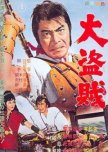
Where is my fly swatter?!
Mifune Toshiro dipped his toe into the Toho fantasy world in Samurai Pirate aka The Lost World of Sinbad. Not exactly adventures on the high seas, more like rescue a princess and retrieve lost jewels in a strange land.Sukezaemon Ruson (or Naya or Luzon or Sinbad depending on which version you watch) is betrayed on trumped up charges and sentenced to be burned in a box. His men bribe a local official helping Sukezaemon to escape on his ship. Since he’s been labeled a pirate, a pirate he will be. He already has a treasure chest full of jewels and gold. His pirating career doesn’t last long as a storm hits and destroys his ship. A real pirate gains his treasure, leaving Sukezaemon in the water. He washes ashore, rescued by a strange hermit/wizard with magical powers. The kingdom is run by a cruel leader who takes women in lieu of taxes. When Sukezaemon sees the princess wearing jewels from his treasure chest he determines to retrieve his property even if he has to develop the world’s first hang glider to do it!
I desperately wanted to like this film as I’m a Mifune Toshiro fan and have watched my share of Toho films. The writing was uneven at best. Mifune’s character made a 180 from, “I want to be rich!” to “Justice for the people and rescue the princess!” rather rapidly. The fantasy here was limited to the lecherous hermit who lost his powers whenever he licked his lips while ogling women’s breasts. That wore thin fast. There was also a witch who could turn people to stone like Medusa with her glowing eyes. The witch had a mirror, mirror on the wall that revealed where the threats were to her and the Chancellor who secretly ran the country. Not that it did the bad guys much good. Despite a sizeable Imperial Guard, Sukezaemon wandered in and out of the castle at will. Tsuburaya Eiji and his crew did a good job with the special effects and miniatures given it was 1963, well before CGI.
Poor Mifune suffered from terrible costumes. He first had to wander the island in his tattered samurai clothes. After being captured he ended up in a crop top and shorts/sarong which was hilarious. Though even at 43 he wasn’t afraid to show off his bod. Clothes in the foreign land looked influenced by Hollywood’s idea of Aladdin with plenty of cleavage, bare midriffs, and turbans. The princess’ dresses were more European medieval as was the castle. She was also dripping in jewelry. Honestly, the story had a hint of the Princess Bride—there was even a giant!
Samurai Pirate had fun moments and I never tire of watching Mifune, even when he looks like he’s not sure what his motivation is. Is he in love with the princess or not? Is he a selfish bandit or a selfless hero? When in doubt, yell at people and strut. This film was probably a silly and needed break after High and Low and also his only directorial effort- Gojuman-nin no isan. If you are a Mifune Toshiro fan or enjoy campy 60s fantasy films, this might be one to try.
6 March 2026
Clarification note: There were pirates in the film but Sukezaemon was neither pirate nor samurai. Ronin bandit maybe, but he wasn’t really a bandit either!
Trigger warnings: Attempted sexual assault. Breasts and cleavage shots to arouse the pervy hermit who became a full body phallic example of Peyronie’s Disease. PETA line 1! : A frog’s leg was torn off and a chicken was impaled.
Was this review helpful to you?
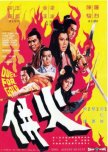
"There's no relationship worth 50,000 taels of gold"
Duel for Gold starred Ivy Ling Po and her husband Chin Han. Ivy’s films can be hard to find so I was excited to stumble across this bloody story of betrayal and gold lust.Two acrobats put on a street show in a town known for silver (and gold) and beautiful women. These sisters, Yen and Ying, are looking to rob the bank that is filled to the brim with hundreds of thousands of taels of gold and silver. A swordsman without equal heads the security department repelling any thieves. When their plan is discovered, the sisters escape. Also looking to make a score is Teng Qi Ying, The Invisible Loner. Even if it means death, the gold is simply too tempting for the thieves that begin to infiltrate the town.
The film begins at the end, lamenting how people kill for gold, then rewinding to the beginning of the sad tale. As the story went along, 6 people became connected to the gold. Not quite Ocean’s Eleven or The Sting because no one was safe from the dragon’s gold fever that infected every single person. Love, family, friendship--no relationship was worth sharing the shiny bars within their grasp. Watching them all lose their humanity as they betrayed each other was difficult to watch at times.
My two favorite performances were Ivy’s as the duplicitous and not too bright when it came to men Yu Yen and Lo Lieh’s. Lo’s master of disguise thief brought a modicum of levity to an otherwise chilling tale of betrayal. Chang Yi was initially hired to play the bank’s swordsman Wen Li Hsien but it sounds like there was a change of actor and perhaps director. I didn’t find Richard Chen Chun very compelling in the role. The swordfight choreography reflected the style from 1971 which to modern eyes could be more stilted. What they lacked in speed they made up for in quantity. The fights were surprisingly bloody with more than one limb flying and bodies being impaled. I knew when I saw the Shaw Brothers pagoda in the opening shot that my favorite set piece was going to be featured in the final fight.
Duel for Gold plumbed the darkest depths of human nature, showing the lengths people would go to possess a fortune in gold. It started out slow, but gained momentum as the characters were revealed as well as their abilities to justify their loathsome actions. No good guys in this one folks, so if you need at least one hero in your old kung fu flicks, you might want to skip this one. As always, rated on a curve.
“I’m not ruthless. It’s just that the gold is too tempting.”
4 March 2026
Trigger warnings: Dismembered limbs, one was graphic but also a little funny. Gruesome impalements. And a little brain goo. The #2 red finger paint blood helps keep everything from looking too realistic though.
Was this review helpful to you?
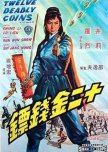
Melodramatic tale of love, honor, and betrayal
Twelve Deadly Coins was a melodramatic tale of honor, duty, betrayal, and love at first sight. A fairly typical 1960s wuxia with the exception of more buckets of rain-soaked melodrama than blood.Chief Yu runs a successful escort service and is the famous Twelve Deadly Coins Master. His son, Yu Hua, is an overly entitled idiot who is often helped behind the scenes by poor born Chiao Mao. When Chief Yu gives Hua the job of escorting 200,000 taels of silver for the military, Chiao begs the Chief to let him help. Hua takes it as an insult and orders him not to show his face. Chiao follows to make sure the drive goes well, but the notorious one-eyed bandit Yuan Cheng Lieh and his band of thieves’ attack, leaving few alive and absconding with the loot. Chiao follows the bad guys to try and recover the silver, unaware that Hua is spreading the news that Chiao is a spy and caused the theft that ruined the family. No good deed goes unpunished…
This was one of Lo Lieh’s early films when he played the hero before being relegated to villain roles. Chiao Mao was overly earnest and duty bound, completely accepting of his low status. He and the adopted daughter of the Iron Thorns fell hopelessly in love during a heated moment in battle. Lo always gave a strong performance even when it bordered on treacle. Ching Li as Yuan Rung was the gorgeous swordswoman who fell in love with Chiao at a glance. The two young people suffered for their love and their clans’ hatred of each other.
Fang Mien and Tien Feng played the two warring masters with expert aplomb. Poor Fang had the worst and yet funniest prosthetic eye I’ve ever seen. A young Wu Ma played Red Hair Bear wearing a horrendous crimson wig. The martial arts directors got in on the fun as well. Tang Chia played one of the bandits and Lau Kar Leung was a quickly killed off Coin escort. The fight choreography was solid and typical of the late 60s. There was copious use of low-tech wires and trampolines. Aside from the airborne coins and iron thorns, most of the fighting involved swords and other pointy weapons.
Twelve Deadly Coins was entertaining despite the ham-fisted melodrama and deadly misunderstandings. Pretty sure it had one of the longest death speeches I’ve ever heard. Are we sure he’s dying? The sets and scenery helped sell the story though the minute I saw the long set of stairs I wondered who would be tumbling down them. The noble honor idiocy was laid on as thick as a mason’s mortar which lowered my score. Though I almost bumped it back up when one character that was annoyingly wearisome received his due. I was actually pleased about the hero who literally walked off into the sunset. Only for fans of old martial arts films and as always, I rate them on a curve.
2 March 2026
Trigger warnings: One person was un-handed. The body count was high with people dying from a wide variety of bloody wounds though no Chang Cheh blood spewing wounds. Attempted sexual assault.
Was this review helpful to you?
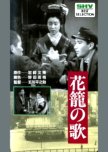
"Forgive the past...or not"
Song of Flower Basket aka Hanakago no Uta was a 1937 love square starring a young Tanaka Kinuyo as the side doing all the heavy support of this geometric melodramatic comedy.Keizo’s tonkatsu restaurant does a brisk business due largely to his comely daughter who attracts the foot traffic and cook Lee’s extraordinary fried pork cutlets. Lee doesn’t only love frying up tonkatsu, he also loves Keizo’s daughter Yoko. Two university students frequent the place---Hotta Nenkai who is destined to become a Buddhist priest and Ono Susumu who is a poor student with few options. Hotta is Ono’s wingman and helps Ono and Yoko (also called Oyo and Ojo) spend time together. Because her mother died over a decade ago, Yoko’s aunt takes charge of matchmaking and sets up a potential husband who is a doctor. Complicating matters, the waitress is desperately in love with Lee. Are we up to a pentagon now?
This story was flimsily held together by miscommunications and misunderstandings. My comprehension might also have been impaired by the aged film’s blurriness. It was often hard to tell people apart in numerous scenes. I was pleasantly surprised to hear Ryu Chishu’s voice and sure enough he played Hotta. Having finished all of Ozu’s films, I rarely see him anymore. Tanaka Kinuyo was in charge of making Yoko not seem like the dullest knife in the drawer. Yoko was 23, on the cusp of spinsterhood, but she still acted very young and naïve. Ono was more experienced, having frequented hostess clubs prior to Yoko, and yet he also wasn’t very sharp. Never really in the running, the doctor visited the restaurant a few times to scout out his potential fiancée. Personally, I would have enjoyed spending time at the bar with Hotta who seemed to be the most engaging of all the young men, and the only one without a love interest. A brief note, thirteen-year-old Takamine Hideko played Yoko’s younger sister. She breezed in and out of two scenes, barely enough to acknowledge her existence.
What was actually interesting to me was the reversal of purity shaming. Yoko was devastated by Ono’s past and called him on it. Usually, it’s the female characters who have to be concerned about having had any other relationships. Of course, men being men in the 1930s, they all drew ranks and covered for each other. I did like that the father allowed Yoko to choose her own mate, even if he caught some backlash from her about it when she began to doubt that choice. He also stood his ground to his sister and stated, “This shop does not sell Oyo.” Though in practice she was what brought people in so that the food could seal the deal.
Clocking in at 69 minutes, Song of Flower Basket might not have been an in depth look at relationships but there was love and heartache aplenty. It also made me hungry for tonkatsu. If you enjoy old, really old, Japanese films and can tolerate the blurriness it might be one to try.
16 February 2026
Was this review helpful to you?
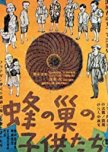
On the road again!
Children of the Beehive was a post WWII film about orphans, both children and adults with no home and no family. Director Shimizu didn’t shy away from the hardships the Japanese faced, especially the most vulnerable, yet he also bathed those hardships in kindness and generosity.Several orphans hang out at the train station finding ways to make money, fleecing people for a one-legged man they call the Old Man. They run into a repatriated Soldier who opts to not get on the train. He shares some food with them and they also meet a Young Woman. When the police arrive to arrest vagrants, the boys and the Old Man scatter. The Soldier and boys meet up on the road with the boys deciding to tag along with him. He insists they find jobs that don’t involve the black market or stealing. Along the way, they pick up more boys as they stop and do jobs for food or money. The Soldier is guiding them to the orphanage/reform school he attended, “Introspection Tower,” so that they will have a safe home and schooling. He seeks to teach them kindness, generosity, respect, and hard work as they travel together. A found family slowly develops strengthening them, which helps them when death and other adversities strike.
This film was a loose sequel to Shimizu’s Introspection Tower. I didn’t care much for the original, which smacked too much of wartime propaganda for me. This time it was the US censors that had a hand in this film, which was also problematic. Much as in the first film, the boys worked at dangerous adult jobs. What I really liked about this film was the found family element, showing that in a world on the brink and slowly rebuilding, it really was safer to stick together rather than go it alone. Especially when you’re only 10-years-old. While they may have dealt with hard labor and having no parents, the boys still showed they were kids, finding ways to play and even approaching a little league team.
Beehive acknowledged the dark side of post war Japan-poverty, hunger, lack of shelter, prostitution, homeless orphans, and exploitation. Shimizu softened the edges of those harsh realities as the boys had enough food and were generous with their food. They never truly suffered from being exposed to the elements in tattered clothing. Work also appeared to be plentiful as The Soldier refused to take illegal jobs, despite the precariousness of his own situation and the boys’. The rousting of vagrants and need for “papers” was often mentioned but never enforced. No one questioned a man with 8 boys hanging around him. The Young Woman came into play off and on and was the only true feminine presence. No orphan girls were ever seen, once again showing how filmdom’s demographic skews heavily male.
Children of the Beehive was populated with inexperienced actors which lent the film a natural feel. The film itself was quite aesthetic accompanied by a pleasing score. A scene near the end was one of the strongest and heartbreaking scenes in any film. It would be difficult to find a film with a more poignant moment, reinforcing the love and loyalty these children felt for each other. Everyone was capable of redemption and being brought into the family. Kindness overrode cruelty and selfishness was transformed into generosity. The children were tremendously resilient. Given the bleak setting (there was even a side trip to Hiroshima) the film culminated in hope and acceptance. Though it might not have been terribly realistic, I quite enjoyed this positive road trip emphasizing the need children, and adults for that matter, have for safety, a home, and love.
9 February 2026
Was this review helpful to you?
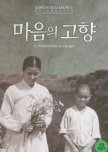
Twelve-year-old Do Sung has lived at the Buddhist temple since he was three-years-old. He works from morning until night for the monks. Lonely and sad, he watches as the other boys play in the woods and collect birds. He’s never been allowed to play with them or visit the village in the valley. He desperately longs for his mother, praying she will come for him. The priest never directs any kind words his way. One day a widow who has recently lost her son comes for a memorial. She takes an instant liking to Do Sung and asks the priest if she can adopt him. The priest is concerned that due to the sins of his mother that Do Sung carries, he could be a danger out in the world.
This film was nicely shot for a 1949 film with a lovely mountain setting and strong performances. Except for a few blurry scenes it was obvious that it had been restored. Made before the breakout of the Korean War, it’s a gift that it survived and was taken care of.
I recently watched a film where my religion was displayed as punishing “sinful” women so I have to admit it was nice for another religion to take it on the chin for being unforgiving and judgmental of “sinful” women. Not only was Do Sung’s mom judged harshly but Do Sung also carried her sins. It was very frustrating to watch and at least it felt like an indictment on the priest and not Do Sung, or at least I hope that was the message. The poor boy was warmhearted and desperately wanted his mother or a mother, someone who would speak kind words to him and give him encouragement and affection, something his life was completely devoid of. When Do Sung committed a Buddhist transgression in order to make a gift for the mother he hoped to see one day, you’d have thought he’d slaughtered a village. After everything that happened, the film did end on a hopeful, if not terribly satisfying note.
As much as I disliked the heavy-handed priest, I liked Do Sung’s interactions with the widow and a generous, tearful moment between two women who loved this child. If you enjoy old films, this is one to try.
4 February 2026
Was this review helpful to you?
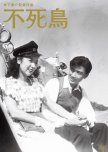
"I hate telling lies"
Kinoshita Keisuke’s Phoenix showed how a young war widow rose from the ashes of her life much as the country she lived in was attempting to do. Tanaka Kinuyo gave a touching performance of a woman reflecting back on the love of her life as her son reaches his fourth birthday.Aihara Sayoko busies herself as the Yasaka household joyfully prepares for her son’s birthday. Her brother-in-law takes her aside to see if she will be comfortable when he marries soon. He fears seeing a blissful newlywed couple might cause her pain. She assures him that she is happy and his happiness will only bring her more. Sayoko then reflects on her relationship with his brother and the trials they met in order to get married.
Honestly, not much happened in this film of lost love. But what did happen was expertly done. The film revealed how Sayoko and Shinichi’s relationship developed in flashback. Kinoshita brought the lovers to life with a deft hand. There was some melodrama but it was not overwrought. Though she was 38 at the time Tanaka played a young woman maturing even as her love did for Yasaka Shinichi. This film hinged on her delicate performance as Sayoko filled most frames. Sada Keiji, as the handsome Shinichi, was ever loyal to her and his country. Shinichi bucked the family tradition of the parents picking his bride, angering his father, all for love of Sayoko.
Shinichi’s enlistment and deployment loomed like a deadly shadow over the couple. The very real concern that Sayoko could become a young widow and “ruin” her life was palpable. For Sayoko, Shinichi’s love and adoration was her past, her present, and her uncertain future, worth any risk and capable of sustaining her for a lifetime. This brief love story was a breath of fresh air among many maudlin films from this time period. Well-acted, engaging, and beautifully shot, worth a try if you enjoy old films.
2 February 2026
Note: There were places with damaged audio and the film had some streaking to it.
Was this review helpful to you?


