

 135
135 431
431 16
16 2
2 6
6 3
3 8
8 10
10 3
3 13
13 1
1 1
1 1
1 1
1 2
2 6
6 8
8 5
5 9
9


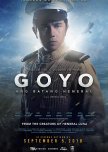
"Why do we always look up and glorify without questions?"
Goyo: The Boy General picked up soon after General Luna was assassinated in the prior film “Heneral Luna”. General Gregorio del Pilar and President Aguinaldo faced another colonizer when the Spanish ceded The Philippines to the Americans. Much of the story took place in Pangasinan during the five months in 1899 when Goyo was stationed there until the fateful battle in the Tirad Pass. I’m always leery of writing a review about another country’s history and revered leaders so this will only be my opinion on the artistic merits of the film.“And what did the Republic do during those five months when its doom was being plotted?”
Over an hour of the film took place when the American forces were quiet and Goyo and his men were hanging out in Pangasinan. Instead of strategizing or training, Goyo spent most of his time trying to romance the lovely and distant Remedios. It scarcely felt like war was looming as there were parades, plays, feasting, and dancing going on much of the time. The people hailed Goyo as a hero due to his past successes against the Spanish. Not everyone loved him for there were those who blamed him and Emilio Aguinaldo for the death of General Luna. Other generals resented his arrogant attitude and Aguinaldo’s favoritism.
“Why are we blindly dependent on heroes?”
The movie didn’t set up any hero worship of Goyo. Using artistic interpretation, The Eagle as he was also known, occasionally had bloody visions from the past and blood-soaked fears for the future along with trembling hands. His military abilities were also sorely tested against the new foe. In one short skirmish with the Americans, sharpshooters picked off his men at an alarming rate causing him to retreat. He was shown on two separate occasions not recognizing gun or cannon fire leaving his people vulnerable. And much of the movie focused on his womanizing. The half of the movie with skinny dipping, women fighting over him, and hero worshipping began to wear thin.
“We don’t need heroes, we need soldiers”
The narration from historical letters showed how ill-prepared they were for war. Most of the soldiers were farmers or laborers. When the Americans advanced, they did so speedily, catching Goyo flat-footed. Lacking in supplies the military and Aguinaldo’s family traveled with little to eat or drink with the Americans hot on their trail. At Tirad Pass, Goyo and his men held the high ground but were unable to capitalize on it for long. Vastly outmanned and outgunned they were quickly overrun yet still able to give President Aguinaldo and the rest of the army time to escape.
The cinematography captured the time and beauty of the country even during the midst of war. The soundtrack elevated the emotional mood of each scene. Actors varied in strength and ability. One thing that stood out was for both countries, many of the soldiers were quite young. The sound could fade in certain scenes making dialogue garbled. But overall, the production values were quite high. The battle at Tirad Pass was especially well shot and choreographed. It’s one of the better Filipino films I’ve watched.
“Self-preservation is the law of God”
The message of the film could be blurred. Much of the film was devoted to Goyo attempting to romance the reluctant Remedio even when his ex-lover strolled into town. It didn’t help his cause that his briefcase was filled with love letters from pining women he’d abandoned. Was it a tragic romance or simply a criticism of the young general? Though the people loved their country and wanted autonomy, the military and Goyo were rarely shown in a positive light. There was no shortage of criticism for del Pilar, Aguinaldo, divisive generals, soldiers who ran away in fear, villagers who refused to help, and those who profited off the Americans. Aguinaldo was especially the target of much ire. Numerous bloody visions hinted that Goyo might not have been emotionally stable. Guilt or simply PTSD for a young man who had seen too much and carried a great burden on his shoulders?
“I’m beginning to believe they are right to call us children”
The narration frequently mentioned that the Filipinos were like children. Lack of solidarity and supplies, military leaders unskilled in strategic thinking, and political self-interest doomed the revolutionaries from the start. Their fight for independence soon became a fight for dignity. Despite the often negative portrayal of the military leaders, many courageous revolutionaries were prepared to die fighting for love of their country and did. It would take another 45 years for their dreams and sacrifices to blossom.
23 January 2024
Was this review helpful to you?
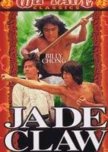
"Tired? Too bad!"
Billy Chong teamed up with Simon Yuen in a thinly disguised Drunken Master/Snake in the Eagle's Shadow copy though lacking the drinking. This time the chosen styles were Shadow Eagle's Claw vs the Double Phoenix Eyes! No secret books or lists, just good old-fashioned revenge for a father's murder.His name was Ah Wen, they killed his father, and they would have several years to prepare to die! Ah Wen knew no kung fu and agreed to work at a dubious kung fu school in exchange for being taught. This male Cinderella never had time to learn kung fu because he was relegated to the never-ending chores in the kitchen. Luckily for him, Chang King Sang, the cook, was secretly a kung fu master who was in hiding from a gang of bad guys. After many “hilarious” encounters, Chang agrees to train Ah Wen. Ah Wen is confronted by the baddies, beaten and questioned, and let loose so that there could be another training montage.
Crystal Fist aka Jade Claw had a paper and worn thin plot. The humor was just as gaunt despite repeated tries to emulate Jackie Chan’s early movies. The strength of the film lie in the training montages and the fights. Three Yuens-Corey, Brandy, and Shun Yi along with Chin Yuet Sang choreographed the fights. The comic relief baddies played by Addy Sung and Brandy Yuen had a cool trick move when they teamed up. Some of the fights and training montages were better than others. The finale when Billy brought his fists to a sword fight was creative. Billy Chong only made around ten kung fu movies in the Golden Age but I always enjoy watching him fight. He was quick and agile and never kept his shirt on for long. Where the movie faltered was in the villain department. Chu Tit Wo was not a formidable or memorable bad guy. Chan’s movies in the same vein had charismatic and high kicking Hwang Jang Lee to bring a proper menace for the good guy to be pitted against. Simon Yuen wore the same scruffy wig and basically played the same character as he did in the other two movies. The wig helped camouflage the stuntman for the more complex and acrobatic moves. I don’t usually compare movies, but when moviemakers go out of their way to copy someone else, it’s going to happen.
Billy Chong brought his mischievous smile and quick moves to play against Simon Yuen’s wise, playful, gray wigged master. Even if his character was a retread from other films, I’m happy after 300+ movies of often being relegated to playing bit parts that the Yuen patriarch finally had a signature role to call his own before his untimely passing one year after this movie came out. Crystal Fist wasn’t a great or even classic kung fu flick but it did have entertaining moments.
2 Jan 2024
Was this review helpful to you?
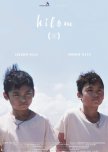
This review may contain spoilers
Emotionally effecting
Still was a quietly melodic short film following the lives of twin brothers, Andres and Gael. It showed how children can find joy, peace, and comfort in the smallest of gestures and activities even when confronted with unkindness.Andres and Gael are twin brothers who are tactile and nearly inseparable as they explore the world around them. I could see the constant push-pull in these boys. Separate identities yet close and nearly always together. Despite cruel words from a father and friend, the boys bond remained unbroken. The brothers’ love for each other was great enough to let each one be who they truly were without judgement.
Hilom/Still was short on dialogue and time yet still packed an emotional punch of childhood nostalgia, tenderness, and brotherly resiliency in the loss of trust in those around them.
28 Dec 2023
Was this review helpful to you?
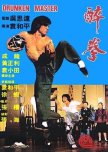
This review may contain spoilers
Drunken style vs Thunderleg!
Drunken Master reunited Jackie Chan with much of the cast and crew from Snake in the Eagle’s Shadow from March of the same year. This time Chan played a mischievous Wong Fei Hung who much against his will was forced to be the student of Drunken Master Beggar So/Sam Seed. He was finally motivated to improve his skills and become serious with his training when confronted by Hwang Jang Lee’s Thunderleg!Wong Fei Hung seems to make or find trouble wherever he goes. His exasperated father calls upon Uncle So to train or break the young man before he causes trouble he and the family cannot get out of. At first WFH doesn’t take the training too seriously until he is humiliated by the deadly Thunderleg who considers him unworthy of killing. The requisite training scenes follow along with a couple of test fights before he’s finally able to face Thunderleg in the grand finale.
The beginning of the film dragged with Uncle So only showing up around the 45-minute mark. That’s not to say there weren’t entertaining fights in that time. Chan had a memorable fight with Tino Wong in the market place and then later against his toady in the Wong school. The real highlight was when Wong put the moves on a girl in town and her mom schooled him in kung fu and manners. Linda Lin Ying was a delight to watch sparring with Chan. There were a couple of “comic” scenes and fight scenes that didn’t serve much of a purpose though. The story kicked into gear when Uncle So arrived and showed Wong his weaknesses. A 66-year-old Simon Yuen really found his hallmark role with the drunken master. Still nimble and energetic he held his own against the kung fu clown. Hwang Jang Lee’s Thunderleg was properly menacing and he showed why he was the most feared kicker in Hong Kong. At least he didn’t accidentally kick out one of Chan’s teeth like he did in the previous film!
The best part about movies like this was that there was almost no wire-fu. Utilizing wide angles and long takes you could watch people who actually knew how to do the moves and weren’t faking it with lots of editing and closeups. There was also no kung fu posing. The moves were relatively fast and fluid with each fight showcasing different skills. Yuen Woo Ping and Hsu Hsia provided the fight choreography. Hsu made an appearance as the King of Sticks fighting both Yuen and Chan with, what else, a long stick.
This was not a movie with much plot, not even a secret book or list and nary a rebel to be found. Most people, including myself, don’t worry about the plot much as long as the fights were entertaining and Drunken Master succeeded in that goal. They were well choreographed and shot. Although it had comedic moments it wasn’t over the top slapstick as some kung fu comedies could be. I liked this movie quite a bit better than Snake in the Eagle’s Shadow. While Wong Fei Hung could be cocky and annoying at times, he also faced consequences for his actions propelling him slowly but surely into being a better fighter and human being. Drunken Master ran a little long but the inventive fight sequences by compelling characters more than made up for it.
11/20/23
Was this review helpful to you?

This review may contain spoilers
Here there be monsters!
Monster Hunter was not a great movie, but it was a fun popcorn movie. For the ‘based on a video game’ genre it gave no more than the bare minimum---thin plot, adequate acting, lots of action and dangerous monsters. If a movie is going to scrimp on the script, it had better bring good CGI action and that is the one thing this movie got right.The Hunter (Tony Jaa!) fell off his desert ship when it was attacked by a Diablos. Meanwhile in another world Capt. Artemis and her security team for the U. N. are in the desert searching for a missing team. An enormous sandstorm complete with powerful lightning transports them to the Hunter’s world where they are almost immediately attacked by a Diablos and later giant spiders. Now we know where Shelob came from! Artemis and The Hunter come to blows and then to a détente as they seek to make their way past all of the dangerous creatures, each wanting to return to their own home. When they finally make it to an oasis, The Admiral catches up with them, and after a misunderstanding, he takes Artemis into his confidence. The ship was headed toward the Sky Tower where an advanced ancient civilization once lived. The portal to her home is there with only one, well mostly one, problem. It’s guarded by a Rathalos, a giant fire-breathing dragon with a nasty temper.
Mila Jovovich of the Resident Evil series is no stranger to action and she made for a believable kick-ass heroine. Tony Jaa wasn’t able to show off his martial arts as much as I would have liked, but he had plenty of opportunities to fight and be heroic. I’ve been a fan of Ron Perlman’s since Beauty and the Beast. He’s made a career off of tough talking, rough fighting roles (Hellboy anyone?) and showed he could still face down a dragon at his age. After adding in Palico, a pirate cat, there was no denying the main characters were an odd lot.
This movie had little plot. Soldiers from one world land in a world where there be monsters. The sole surviving soldier befriends a warrior from the different world where they must work together to survive and destroy the gruesome monsters lurking about. What made the film work, in its own very limited way, more than the actors, were the exceptional CGI creatures. The Diablos, multitude of spiders, and Rathalos were terrifying and convincing.
If you are looking for a cohesive, multi-layered story and character development, better look elsewhere. If you have time to kill and enjoy a badass female lead taking on ginormous creepy critters, you could do worse than Monster Hunter.
10/6/23
Was this review helpful to you?
This review may contain spoilers
"As if the Earth has been turned upside down"
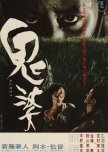
In Shindo Kaneto's Onibaba, the viewer is left wondering who is the demon? In a time of war between two emperors, the poorly armed peasants pressed into military service suffered as well as the women, children, and elderly left to face violence and starvation at home. During this time a mother-in-law and daughter-in-law took drastic measures in order to survive.As the women were not given names, I'll address them as MIL and DIL. Isolated near a swampy pond surrounded by tall grasses the women have made the terrible decision to murder lost or injured samurai and sell their armor and weaponry for food. They dump the bodies in a deep dry well within the sea of grass. One evening a neighbor returns after deserting the second army he was forced into. He claims that he escaped when farmers killed MIL's son. He was given a name, Hachi, but since the women have no names I'll identify him by HD (Horny Dude). HD has fallen as badly as the women for he showed up in the clothes he'd killed a priest for. HD desires DIL and slowly she gives into her sexual appetite and begins meeting him at night after MIL falls asleep. MIL tells him to stay away from DIL until they are able to harvest a crop. She can't murder samurai by herself and without DIL, she'll starve. HD tells her that he will just stay "friends" with DIL until then. When DIL is at HD's hut having a friendly mingling, a lost samurai general appears at the women's hut and orders MIL to guide him out of the grasses. He wears a demonic mask which he says is to protect his handsome face from being marred in battle. MIL tricks him into falling into the death hole and then climbs down to retrieve his gear and the mask. The mask, however, is adhered to his face and when she finally pries it off, she sees his grossly disfigured countenance. MIL tells DIL stories at night about hell and demons and the punishment for unmarried people who give into their lust. Wearing the mask, she terrifies DIL in the tall grass as the young woman is sneaking to HD's hut at night. After wearing the mask during a rain storm MIL discovers the gruesome curse for herself.
Onibaba wasn't a horror movie in the classic sense. It felt more like an episode of the Twilight Zone where karma played a trick on someone daring to taunt forces beyond their control. The tall grass acted as a fourth main character, waving and creaking haunting howls in the wind. Like predators slinking through them, the women pounced on the unaware unseen. HD and DIL had sexual trysts hiding in the reedy arms as well. Fair warning there was nudity in numerous scenes.
Onibaba explored how society and morality breakdown in the face of starvation and death. Murder and stealing no longer seemed wrong. Hunger for food and sex became overriding desires. While MIL had almost masklike features of exaggerated eyebrows, extreme makeup and Bride of Frankenstein hair coloring all before wearing the mask, the other characters behaved as immorally. Lust was the least of their sins. Ironically, the women never seemed to grasp that the man they had hoped to come home had fallen prey to civilians just like themselves trying to survive. Prolonged war leaves a society and its rules in tatters, making demons of many without the need to physically transform. But weren't the greater demons the ones who started the wars in their insatiable need for more power and voracious greed for more wealth?
10/2/23
Was this review helpful to you?
This review may contain spoilers
"It takes time to get used to things"
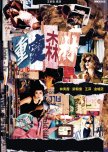
Chungking Express is more a mood than a story, more style than substance but an entertaining and colorful watch. Lonely and heartbroken people brush up to the edge of madness as they look for love or try to reclaim it. Lives touch briefly with unexpected outcomes.In the first short story, Officer #223 is attempting to win back his girlfriend May, unable to move on. Most evenings he hangs out at the snack bar using the pay phone to try and get in touch with her through relatives and friends. Each day he purchases a can of pineapple with the expiration date of May 1, coincidentally his birthday, and vows after eating thirty of them if she hasn't come back, he will move on. His love lines cross paths with Brigitte Lin's Blonde Wig Woman who is a drug dealer and smuggler who has been double-crossed by the trafficking mules she has prepared.
The whole May 1 expiration date bit was too on the nose, feeling more and more contrived as the bit went along. Brigitte Lin in sunglasses, a trench coat and armed with a gun was at least interesting. It took a while to care about a guy who couldn't get over being dumped. Brigitte Lin's drug dealer, who was never given a name, was more compelling. I eventually began to vibe with this strange emotional bump in the night. At least it got #223 to stop talking about pineapples. "Do you like pineapples?" Yeah, that's a player move. I honestly would have loved to see this relationship play out with both people on opposite sides of the law.
My interest perked up with the second story when Tony Leung looking sexy in a police officer uniform entered the scene. Officer #663 was also nursing a broken heart after his flight attendant girlfriend soared away for new sexual adventures. Faye, the new worker at the snack bar took an instant liking to him. When his girlfriend's letter with the apartment keys ends up in her hands, the movie nosedived for me. Using the keys from the envelope, Faye began breaking in to #663's apartment every day-cleaning, buying new bedding and decorations, restocking items, and generally making herself at home. #663 with his keen observation skills carefully honed by his years as a cop never noticed the differences. He had a habit of psychoanalyzing his soap and dish towel and thought the soap was just getting fat because it couldn't move on from his ex.
Maybe it's a male fantasy that an invisible woman will clean, decorate, and restock their apartment like little cookie elves but if the roles were reversed instead of quirky, we'd find it creepy. A male character hanging out all day uninvited sniffing a woman's things and making himself at home would be stalkerish and not romantic. I quickly lost interest in this story. And as much as I love the Mamas and the Papas' "California Dreamin'"after hearing it for nearly 45 minutes, I'm not going to want to hear it for another decade.
The frozen action overlaid with sped up action, swirly camera action and stop motion running was a director's creativity on overload especially when dazzling colorful lights joined the artistic fray. As I said, this was all about the mood. Different people will see this film through their own expectations. Character development and story resolution were beside the point. How did it make you feel watching the lonely people connecting amid the kaleidoscope of lights?
Rather than being romantic, the stories showed just how desperate some people are for companionship and will latch onto the first person who pays any attention to them. With the exception of maybe the drug dealer, the rest of the characters seemed to being hanging onto their sanity by a thread. Were they lonely because their behavior ran people off or were they behaving strangely because they were lonely? Chungking Express was visually impressive, the narrative-not so much.
9/29/23
Was this review helpful to you?
This review may contain spoilers
A menagerie of kung fu styles!
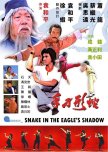
Snake in the Eagle's Shadow was Jackie Chan's first hit and first hint at the comedic kung fu movie style he would go on to perfect. A 65-year-old Simon Yuen meshed perfectly with Chan and the old kung fu artist showed he was still spritely for a man his age.Chien Fu is an orphan who works as a janitor and tackling dummy for a martial arts school. When he "saves" a beggar from being abused by another school he inadvertently meets his new kung fu teacher. Pai Chang Tien is a Snake Fist master in disguise and on the run from the Eagle Claw clan who are seeking to eliminate all those who practice the reptilian style. After an arduous training montage, Chien Fu learns the Snake style just in time to face the Big Bad. But in order to defeat him he will have to add another style to succeed in the life or death battle.
Simon Yuen was a delight as the crafty old master who could defeat opponents with chopsticks and a rice bowl. He may have had stuntman help but there were many scenes where he was still showing he had the moves that had kept him employed for thirty years at the time. His son, Yuen Woo Ping, alongside Hsu Hsia created the entertaining fights. While acrobatic and comic, the fights could be slow as Jackie Chan went through his elaborate moves. The movie did show why there need to be animal rights activists when Chien Fu learned Cat's Claw technique from watching a house cat fight a cobra. PETA line 1! Tino Wong made an appearance as an offended fighter who roughed up some of the school's fighters and in the end had to be taught a lesson by Chien Fu. In the final fight with Hwang Jang Lee, aka Thunderleg, the legendary kicker accidentally knocked out one of Jackie's teeth which was quite apparent. The screeching cat sounds were hilarious when Chien Fu used the Cat's Claw technique.
Snake in the Eagle's Shadow started out slow, but once Simon brought Jackie up to speed on his fighting skill, the movie also picked up speed. Aside from the initial slapstick scenes, the comedy also became better integrated into the story as it went on and wasn't so over the top. This was a fun kung fu flick that showed off a variety of styles which I always find interesting. The chemistry between Chan and Yuen made up for story plot holes and lapses. For fans of Jackie Chan, it's one to check out to see where his comedic style really began to take root.
9/28/23
Was this review helpful to you?
This review may contain spoilers
"Who doesn't treasure life?"
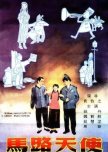
Street Angel followed a group of low-income workers who forged bonds of love and friendship as they dealt with the hardships thrust upon them in an uncaring city of have and have-nots. Music, magic tricks, humor, and true love lightened the mood of a melodramatic story.Xiao Hong and her sister Xiao Yun fled the Japanese and ended up in Shanghai working in a tea house. Xiao Hong sings for the customers while the owner put her older sister to work as a prostitute. Hong flirts with the trumpet player, Xiao Chen, who lives across the street with his friends. Their flirtation turns to love and all seems well until Hong discovers her new guardians intend to sell her to a wealthy street gangster. Chen and his friend Wang, visit a lawyer with an office high in a skyscraper only to discover that justice is out reach for the poor. C buddies The buddies spirit Hong away and the two lovers marry. Yun finds her sister and for a time it looks like the sisters may have a happy life. Sadly, the melodramatic aspect of this film could not be outrun as the economy worsens and rent prices increase, even worse, the tea house owner and the gangster are hot on their trail.
Music dominated much of the film. Zhou Xuan sang several lovely songs and enthusiastic trumpet music also livened the story's setting. Chen entertained Hong and his friends with numerous magic tricks to keep everyone's spirits up when money was tight. Zhou Xuan and Zhao Dan played their roles exuberantly and earnestly as the lovers went from frolicking to despair.
The quality of the filming was difficult to tell as the film I watched in the public domain had not been restored and could be quite blurry at times. Even at that, I could tell it was well framed and shot. This was one of the earliest Chinese films to use sound and they made the most of it with the background music and musical numbers.
Street Angel worked in humor that bordered on slapstick without going overboard. The love story felt authentic, even the second love story felt earned. The bright loving, parade-like atmosphere crashed into reality by the end of the film when the characters faced the harsh truth of their lives and limits of their power. Those who lived high above them had access to justice and medical care while they struggled to keep a roof over their heads and a smile on their faces. "Who doesn't treasure life?" Treasure life they might, but the poor toiled in a system that would swallow them whole if they weren't lucky. This plucky group of friends were a delight to watch as they held each other up and held on tight, even when it seemed their luck had ran out.
8/29/23
Was this review helpful to you?
This review may contain spoilers
"Without a dictionary, how will you be the king of children?'
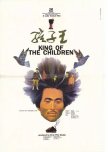
King of the Children was a heartwarming slice of life film set in rural China during the Cultural Revolution. The story rolled along languidly with gentle humor as Lao Gan learned he had been assigned to be a teacher to a small poverty-stricken middle school. Without preaching, the film addressed some of the problems the school and children faced during the chaotic political time.Lao Gan who had not trained to be a teacher found out one day that he would take over a middle school class in a rural district. The children's poverty largely reflected his own. He was flummoxed that he had the only government approved manual and the children had no books. The principal had stacks of old teaching material in his building saying they were best used as toilet paper at the present time. The students had learned in the past by the teacher writing from the manual on the roughly hewn board in chalk. Poor Lao Gan was covered in chalk dust by the end of the day using this method. He also discovered that most of the children failed to recognize Chinese characters that they should have learned in elementary school. Top student Wang Fu called Lao Gan out saying he had no idea what he was doing but the effervescent teacher was quick to learn on the job. Realizing he needed to find a way to engage the children better, Lao stopped using the manual and started using personal essays to teach the children how to better comprehend the words they were learning in class. The teacher in the next hut complained that the students must not be learning because they laughed too much. It wasn't long before the principal knew he was not sticking to the manual, a problem regardless of the positive results. The Cultural Revolution was not open to a teacher who rocked the boat so Lao Gan's teaching career was short lived.
Xie Yuan was the heart and soul of this film with his genuine smile and wild, unruly hair. Lao Gan courageously and joyfully broke the rules in his attempt to open the children's minds to better understanding of what they were learning. Rote memorization and the copying of texts had not yielded successful results. By making the lessons personal, the students began to grasp the meanings and importance of the words and characters they were studying. But as many authoritarian leaders know, words and books have power which is why they try to control them.
The cinematography and scenery were gorgeous. Though the subject matter was realistic, the color filters were not, lending an almost fairytale ambiance to the poverty-stricken community and the special teacher who brought learning magic to the children. Red, blue and yellow filters, along with dense fog often conveyed mood better than words.
The film didn't directly confront the Down to the Countryside Movement. The children never spoke of being transferred from urban areas to the countryside to learn farming and animal husbandry instead of taking paths to higher education. Burned out tree stumps and a cleansing fire at the end of the film might have alluded to the 17 million youth of the Lost Generation. The words from the song in the background did give voice to it---
"I came from the eastern mountains
They don't let me go back
I came from the East
I want to go back."
I was a little surprised this movie was allowed to be made with its not-so-subtle criticism of the Cultural Revolution and perspective on poverty, but I'm glad it was. Lao Gan with his compassionate heart and riotous hair brought joy to the students and to this viewer. If you enjoy gentle slice of life stories about teachers attempting to break the education mold for the benefit of children, this might be one to try.
8/22/23
Was this review helpful to you?
This review may contain spoilers
Until death do us part...
This drama special had the potential to be a satisfying romance and murder mystery. There wasn't just one secret, there were several. A construction worker paid for a wife from Vietnam, but his own insecurities created problems that turned deadly.Mail order bride stories tend to be problematic in real life. They are often rife with scams and human trafficking issues. In this story, a rough construction worker buys a Vietnamese wife. He has little trust in her and hides her foreign registration card and passport. She diligently works taking care of his shoddy home, assisting his invalid mother, learning Korean, and eventually finding jobs to help support their little family. He drinks at night, falls asleep, and goes to work, leaving little time for conversation. Eventually, they have a child together. Despite her loyalty he refuses to help her gain Korean citizenship, fearing that she will leave. She patiently hopes that one day he will see the love she has for him. The special opens with her being interrogated by the police for his brutal murder, so spoiler alert, there's not a happy ending for this couple.
This drama special had great potential but the writers decided to sabotage the relationship, not with a secret but with physical abuse. On separate occasions he hit her in public repeatedly. If she killed him, I was ready to be a witness for the defense. She constantly displayed saintly long suffering with his silences, distrust, jealousy, and physical abuse. Nothing she did seemed to penetrate his insecurities. He may have shown kindness towards her a few times, but I can't get past him hitting her and leaving her vulnerable without her foreign registration card. At first, he may have been cautious with a stranger in his house but some of his actions could be perceived as him treating her as less than because she was foreign or even worse because she was a commodity he had paid for. Because he refused to communicate with her and treat her as a real wife, he set up the dominoes to be knocked over leading to his death and financial ruin. Secret had many secrets but the biggest was why the writers thought an abusive male lead was ever going to be seen as sympathetic.
8/21/23
Was this review helpful to you?
This review may contain spoilers
"We know it's wrong, but preaching won't help"
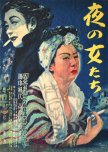
Women of the Night was a brutal look at women without a support system who were left to fend for themselves on the streets during post WWII Japan. Sisters Fusako and Natsuko took different roads, but both ended up at the same destination—prostituting themselves to survive. Once again, Mizoguchi showed the devastating affects of war and poverty on women, this time taking on topics that were often taboo.Mizoguchi spared no one in this melodramatic look at the plight of women in the chaotic years after the war. A husband died, two children died, parents died, dying of malnutrition was a real fear, two sisters slept with the same man, opium was on the scene, STDs were dealt with, two characters were raped, gangs preyed on the weak, abortion was discussed, and pregnancy affected a main character. While life on the streets could be rough and deadly, Mizoguchi veered from informative into an area that felt exploitive.
Aside from desperation, the film was filled with anger, deep seething anger. Rage-filled Fusako hoped to infect as many men as she could. Natsuko only saw men as a way to make money, even willing to betray her sister to find a patron. The prostitution gangs fiercely guarded their territory, viciously attacking any woman who wandered their way or sought to turn straight. Men patrolled the streets looking for easy marks to rob and rape, further exasperating the predicament of young women on their own. Once "defiled" the girls often felt they had nowhere to turn but to prostitution.
Fusako had resisted turning to prostitution until the betrayal, which felt like an insincere reason for abandoning hope, and immediately diving into the world of street walking. By the end of the film, she made a 180 in the shadow of the Madonna in a bombed-out church that looked like a cemetery. It brought to mind the old Madonna (virgin) or whore definitions for women. She decided that she would work on behalf of all women for a world where their virtue could be protected. After being shown the dire straits women without family or fortune faced it felt insincere and an excuse for a hopeful ending. When the Purity Association had preached chastity at a women's clinic, the prostitutes jeered that they weren't turning tricks for fun and who would feed them if they quit? Would jobs suddenly be available and polite society accept them? Would men no longer take advantage of them? At one point there were 70,000 officially recognized prostitutes, not counting those who worked the streets. Mizoguchi repeatedly heaped humiliating trials and tribulations upon the female characters in this film and seemed to leave them with the false hope that simply walking away would provide them with food and shelter and a society that might come to accept them and be a safe place for women. After all the fury, degradation, and sorrow, the film's ending felt trite and unearned.
8/21/23
Was this review helpful to you?
This review may contain spoilers
"If you keep disturbing me, you'll get me angry"
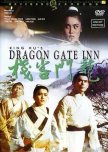
King Hu's Dragon Inn was one of the bar setting martial arts films in the 1960's. Set in Taiwan, King made full use of the stunning scenery, capturing it lovingly on film. Polly Shang Kuan Ling Feng, Shih Chun, Miao Tian, Tsao Chien and Hsieh Han shone as the primary participants in the battle at the inn on the edge of civilization.It was the time in martial arts lore when the ruthless Eunuch Tsao Shao Chin was massing wealth and power and crushing his enemies. He had loyal and ethical defense minister Yu beheaded and exiled his family to the outpost at Dragon Gate Inn. And because he was the bad guy he sent members from the East Agency to murder the children. The first attempt failed because Hsieh Han, in a rare good guy role, stepped in with his sword and protected the small entourage. Tsao sent Pi Shao Tung (Miao Tian) and nearly 30 men to intercept the surviving Yu family at the Inn.
The Inn is where the action truly begins and rarely slows down. Shih Chun's Hsiao Shao Tzu arrives after Pi and his men settled into the inn. Ostensibly he was there to see his old friend Wu Ning, the owner of the Inn and General Yu's former lieutenant. Pi's men attempt to take Hsiao out which results in several dead agents and a tenuous détente. Hsieh Han and Polly make their way to the crowded Inn forcefully insisting on accommodations. They also have to demonstrate that they are not to be trifled with. When finally the Yu children appear the sword-fights begin in earnest and the arrows start flying. Not to be left out, the deadly Eunuch Tsao makes a grand entrance with more men.
Dragon Inn kept the story straightforward, no secret lists, no secret kung fu books, or double-double crosses, just the goal of wiping out a good man's family and the loyal subjects who stood up for what was right. King would make the iconic A Touch of Zen in 1971 which had a richer story, Dragon Inn let its swords do the talking for the most part. Swordsman Hsiao injected humor into the lethal fights with Tsao, mercilessly taunting a man who was not used to being disrespected. Due to the large cast and near constant action, character growth was given short shrift.
Polly often played a hot-headed swordswoman, this time she was the cooler, faster blade and her brother played by Hsieh Han was the volatile stab first ask questions later swordsman. With a dancer's agility she moved quickly and gracefully. Shih Chun came across rather stilted to me, though he performed well in the fights. Miao Tian was a charismatic and daunting bad guy, I really enjoyed his performance in this film. As evil eunuchs often were, Pai Ying's Tsao was over the top---an asthmatic, blond-haired master of kung fu and sword fighting he made for quite the spectacle. Hsu Feng, who would later star in A Touch of Zen played the bit part of the young daughter on the run in this film.
The fights were more operatic than realistic, but not of the poorly done swipe and die choreography used in some films. Han Ying Chieh was the martial arts director and an imposing Lieutenant for the East Agency. There was judicious use of trampolines and wire work and on a couple of occasions sped up camera work. The fight at the inn introducing Hsiao made creative use of every day items. Instead of being relegated to the background, Polly was allowed to fiercely fight Tsao, Pi, and Ying Chieh's Lt. The final gruesome fight was well coordinated and showed how determined and unafraid of death each combatant was. Unlike some of the cheaper Taiwanese martial arts films that were grainy and shot amongst the trees, King made grand use of the scenery as backdrops for the bloody clashes. The desolate, rocky desert and lush forested mountains often stole the scenes as the battles played out in nature.
Dragon Inn was a child of the 60's and reflected the acting and fight choreography of the era. When comparing it to other martial arts films of the time it displayed a greater elegance and cohesiveness. Not a perfect film, but for old martial arts movie fans, certainly an entertaining one.
8/16/23
Was this review helpful to you?
This review may contain spoilers
"Success always comes with a price in suffering"
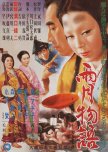
In Uegetsu, Mizoguchi wove a strange tale of hubris out of fantasy and realism loosely based on Ueda Akinari's stories. The acting and story telling were well done as Mizoguchi explored militarism and the price women paid for it. At least I hope that was the message.Spoilers Below:
The story opens with two couples-Genjuro and Miyagi and Tobei and Ohama. Genjuro decides to take his pottery to a larger town to sell with war on their doorstep, hoping to make a tidy profit. Tobei has dreams of grandeur as a samurai even though he doesn’t have enough money for a weapon or armor and heads to town with Genjuro. After Genjuro succeeds, he decides to make more pottery for a grander profit against Miyagi's advice. She wants them to be together happily and with soldiers headed their way they need to be prepared to flee. Genjuro ignores her and with Tobei, who was rejected by the samurais, works feverishly to fill his kiln. The soldiers arrive pillaging and enslaving, but the four manage to escape. Afterwards they rescue the pottery and take it to sell. Tobei uses his share to outfit himself and join the army. Genjuro is seduced by Lady Wakasa who says she will help him to make more money if he will marry her. He falls under her spell and forgets all about his wife and son. Ohama is captured by soldiers on the way home and gang raped. Miyagi is killed by ravaging soldiers for the meager amount of food she is carrying for her son. The husbands go about their lives enthralled with their circumstances, scarcely giving a thought to their wives caught up in the chaos of war.
Despite the negative ramifications shown of militarism and the effects it had on women, throughout the film I found the husbands reprehensible. Driven by ambition, lust, or a need for power, they hardly suffered. Yes, there was humor interspersed but the wives were not given the chance to laugh. After finally coming to their senses, Genjuro and Tobei both learned that home is where peace lies, coming full circle from the start.
Ohama's story was resolved too neatly for a woman who had been repeatedly "dishonored," not suffering the fate of so many comfort women from the previous war. I've read that Mizoguchi wanted a different ending, more in line with real life where she would have been shunned and Tobei would have stepped over her to grow his military power. Even with this "happy ending", had she been a real woman and not a man's version of a woman, she most likely would have suffered greatly from her painful and humiliating experiences and not immediately bounced back.
Death could not dim Miyagi's loyalty to her family. She who had been utterly abandoned by her husband continued to be caring toward him, looking out for him and her child by reuniting them. Miyagi who was forever separated from her child and husband due to his ambitious and lustful needs was never allowed to share the peaceful home fires she so lovingly stoked. Finally, Lady Wakasa could not be seen as a villain. She had been murdered along with her family by men bent on more power, and was only seeking the love she never lived to have.
The fantasy elements were well done and the film was well crafted. All of the performers conveyed their characters perfectly. The various soldiers and armies were routinely shown as out of control and often dishonorable---a scathing rebuke of militarism. This is one of those films that is considered a classic and one of Mizoguchi's best. While skillfully woven together, I could not get past the price of the husbands' hubris being paid by the women and why the dutiful wives were the ones who were destined to suffer for the men's misdeeds. How long Genjuro might have been haunted remained to be seen.
So even though the story taught a lesson to the husbands about ambition, and ultimately brought about the fulfillment of peace and harmony for those who remained, it came at a cost, a cost the women paid with their blood. Their selfish husbands finally did what was right for those who survived, but only after blowing everything up to begin with. Whether or not this was what Mizoguchi envisioned, as a woman it was a bitter pill to swallow.
8/15/23
Was this review helpful to you?
This review may contain spoilers
Character driven with a melancholy atmosphere
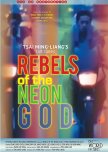
Step back to a place in time with video arcades, skating rinks, phone booths, pagers, and no cell phones. Teens have been rebelling since the dawn of time and these teens were trapped in the cement jungle of Taipei with only the detached neon god spreading harsh artificial light over the packed, dreary streets. Welcome to the Rebels of the Neon God.The film follows the lives primarily of Hsiao and Ah Tze. Hsiao is a teenager failing at his college cram school and completely disinterested in studying. He lives with his parents in a small, but comfortable apartment. His mom is convinced that he is the reincarnation of the god Nezha, explaining the emotional distance between father and son. Tze is a petty crook who with his buddy, Ping, steals change from phone booths and vending machines to use at the arcade. Hsiao's father is a taxi driver whose side-view mirror is broken when Tze smashes it in an act of rebellious aggression, an act that will come back to haunt him in more than one way.
Tze lives with his brother in a filthy apartment with a backed-up kitchen drain that constantly floods the place. He sleeps on a cot above the moat, flicking cigarette butts into the swill. He begins a relationship with Kuei, his older brother's one night stand. She works in a skating rink and for the phone "dating" service but is as aimless as Tze and Ping. When Hsiao withdraws from the college prep class and pockets the money, fate brings him across the path of Tze. He stalks Tze with the adeptness of a serial killer, watching as he and Ping steal the motherboards from the arcade's games. Hsiao's father locks him out of the house for taking the refund money and disappearing. With nowhere else to go, Hsiao returns to the hotel to rent a room where Tze and Kuei are spending the night. Obscured by the falling rain he takes the opportunity to have a little revenge for the road rage incident by vandalizing Tze's motorbike and spray painting that Nezha was there next to it. For nearly the entire movie Hsiao is emotionless and speaks no more than 10 words, but when he sees Tze's frustration over his destroyed bike he literally dances with joy. When the mother board deal goes south, the petty crooks end up escaping in the cab with Hsiao's dad which triggers reactions in both Tze and the father with feelings of guilt for both men.
None of the youth had anything to look forward to and sought to find pleasure in the moment, whether it was games, smoking, sex, or impaling a cockroach on a desk. Hsiao was an isolated boy with anger seething below his benign face, unable to measure up to what his parents wanted from him. Whether he went home again or remained on the streets was never answered, although his father left the door cracked open for him. Hsiao's parents worshipped the old gods, he and the others answered to the cold god of the streets. Tze was always restless whether pulling small jobs, hanging out with his friends, or smoking like an inmate marking time in his apartment. Ping and Kuei were largely side characters, the loyal buddy and the girl Tze had sex with, but struggled to commit to. Despite their gritty exteriors, Tze and Ping weren't hardened criminals, they simply had nowhere to go and no better tomorrow to look forward to.
The area of Taipei where the movie was filmed came across as dirty and deteriorating though there were signs of new construction. Rain fell almost constantly, making the urban setting more claustrophobic. Aside from Tze's dilapidated apartment, two seedy hotels were used as sets, complete with porn on the small televisions. The streets, school room, and arcades were packed with people, people who were side by side but not communicating. Phone "dating" was shown several times, so even the normal act of meeting someone was difficult to do.
These young people were alienated from the general society, living somewhere on the edge without a safety net below them, desperately searching for belonging. Despite the oppressive atmosphere, there was a glimmer of hope. Each person who watches the film will likely come away with a different interpretation based on age and walk of life. I saw young people who felt trapped, rebelling against the suffocating box they'd been put into. They were all longing for love and acceptance and something that would help propel them to a brighter future but with no idea how to get there.
8/9/23
Was this review helpful to you?


