

 135
135 431
431 16
16 2
2 6
6 3
3 8
8 10
10 3
3 13
13 1
1 1
1 1
1 1
1 2
2 6
6 8
8 5
5 9
9


This review may contain spoilers
Monstrously bad
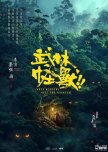
Kung Fu Monster is an uneven comedy that fails with the comedy more often than not. It also fails to live up to its title with very little monster or kung fu.The beginning of the film is all over the place narrative wise, making it very hard to keep up with who is who, especially when some of the faces will never be seen again. To top it off, it's not told chronologically so you just have to go with it until later on when flashbacks explain what happened and to whom, although those events aren't in order either. They leave it to the viewer to figure out what happened. Basically, a group of bandits and rebels gather together to steal the reward for the capture of the Imperial Secret Policeman Si Hai (Louis Koo) who released a furry monster with big eyes that looks a lot like a gremlin from a secret jail because he couldn't train it to be a killer as the evil Eunuch Yehe wanted. He also sprang Bing Bing, the beautiful incarcerated daughter of an executed man. Basically, in for a penny, in for a pound. He's ultimately caught and encased in a coffin to be sent back to the eunuch. Meanwhile, the group of miscreants plan to steal what they think is silver in the coffin by staging a trap at an abandoned inn. All but Bing Bing are furious when it turns out there's no silver, only the wanted policeman. Not a problem, there's a bounty on his head and they are prepared to turn him in. When the furby shows up, I mean monster, now they can collect 30,000 more for it. This being a movie short on logic, of course they change their minds and decide to help, especially when there isn't another choice as the eunuch closes in on them.
There's almost no kung fu, there's a little magic fu, but not much fighting at all. Near the end of the movie there's finally a little monster kung fu, but that's a generous interpretation. So, if you are looking for some good fights, this isn't the movie. They even rip-off the Hulk's funniest scene with Loki from The Avengers movie.
The only thing that actually made me laugh was an officer named Detective White-browed Fei whose white brows were removable. Even when being used as a practice dummy for the gang's knives he was insisting on martial arts decorum. How funny you think the movie is depends on how well you like slapstick and apparently I have a very low tolerance for it. I also have a low tolerance for lots of random events happening just to have something moving the story along.
I found the movie to be too frenetic, jumping from mood to mood. One minute a monster is recklessly charging through the inn, the next there's a romantic dance scene, then death is on the line. There wasn't remotely enough time to develop any of the characters. Most of the actors did the best with what they could for their thinly drawn characters. Zhou Dong Yu gave the most complex performance even though her character was initially very annoying. Louis Koo looked as if he was thinking, "What has happened to my career?" The CGI monster was not the greatest even though it was supposed to be adorable given that it cooed whenever it was onscreen. A "cute" monster doesn’t draw me in unless they give me a reason for it to. It would have also been nice if they'd explained the presence of monsters in the late Ming Dynasty. World building matters.
Kung fu and monsters are two movie genres I enjoy, but this movie was the dumbest and most chaotic movie I've seen in a while. Honestly, the outtakes were better than the movie. Kung Fu Monster should have been fun, but I found myself sympathizing with Louis Koo---someone get me out of here!
3/7/23
Was this review helpful to you?
This review may contain spoilers
"You live, I'll live. You die, I'll die."
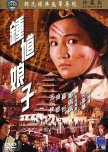
The Lady Hermit is a rarity in the kung fu world. Its two main characters are both female fighters. In this movie, Cheng Pei Pei, much like she did in "Crouching Tiger, Hidden Dragon", has to train a headstrong younger female. And also a rarity, even though Lo Lieh was a good guy and training with the two women, it was the women who faced down the Big Bad in the finale instead of leaving it to a man to handle. The main character throughout is actually the one in the title.This is a dream casting for me. I loved the chemistry between Cheng Pei Pei and Lo Lieh in 1968's Golden Sparrow. They still had a good chemistry in this one. Leng Yu Shuang, aka The Lady Hermit, has been recuperating in hiding after nearly dying from the wounds inflicted by The Black Demon (Wang Hsieh) three years earlier. She and Chang Chun have a friendly relationship but he clearly wants something more from the maid at the escort service. Along comes a hot-headed martial artist with a whip, Cui Ping (Shih Szu) who's looking to make a name for herself and also wants the legendary Lady Hermit to train her. The Lady Hermit has to rescue Cui when she ends up surrounded by a sea of sword carrying bad guys. The Black Demon likely had to put a help wanted sign out after Leng finished with them. Cui's actions lead to Leng's whereabouts being known and the two women go on the run. Leng relents and trains Cui and later Chang when he shows up. When Cui sees a close moment between Leng and Chang she storms off in a jealous fit to take on the Black Demon herself. Fortunately for her, Leng and Chang follow her as there are enough baddies for everyone to take on, in the race to reach the Black Demon's lair and the evil martial artist with the ugliest of rodent fingernails.
The Lady Hermit took its time developing the relationships between the three main characters. And though it's said there was a love triangle Chang only had eyes for Leng. Cheng Pei Pei had an intense and graceful charisma as the noble warrior for justice. Her expressive face draws you into her story and makes you believe her. At the ripe old age of twenty-five, Pei Pei was near the end of her tenure with Shaw Brothers, Shih Szu at eighteen was just rising in the ranks. Shih's performance depended on a lot of pouting which could wear thin at times. Lo Lieh was striking in one of his good guy roles before being relegated to villains. It wasn't often he played the romantic lead and was able to utter lines like, "You live, I'll live. You die, I'll die." Wang Hsieh as the Big Bad had little to do until the end when he had to wag his nasty fingernails and battle his fierce feminine rivals.
Though most of the fights were sword-fights or with a whip, people died in a variety of gruesome ways. When Lady Hermit said she wanted an arm, a leg, and a head, she was being literal. Objects like plates and chopsticks became imbedded in people's heads. You'll think about bamboo skewers differently after watching this as well. For 1971, the fights were decently fluid and dynamic.
The sets were top quality for SB, both on the sound stage and outdoor sets. Some SB movies had what were obviously disposable sets suitable for throwing opponents through, these sets were more substantial. A rope bridge was a nice touch especially when you knew someone was going to cut it. The dummies falling into the river below though obvious added depth to the scene. If the falling dummies added depth, a tall temple that had to be climbed added height. Some costumes were better than others. No gold or silver lamé, but the upper tier minions wore badly ornate gold headbands.
The Lady Hermit took the time to develop the three main characters enough for you to care about them and though there was a love interest, it wasn't the focal point of this movie. Like her male counterparts, The Lady Hermit was a lone warrior who liked to be alone. If you are a fan of old martial arts films this is definitely one to try. I enjoyed this film, as much for the chemistry between the characters as for the fighting and in these old films that is almost as rare as a female warrior who is able to fight her own battles and doesn't die a bitter death at the end for breaking with tradition.
3/7/23
Was this review helpful to you?
This review may contain spoilers
"I guess you're smarter than you look"
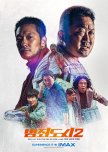
Big hitter ahjussie, Ma Dong Seok, returned as Detective Ma in this old school smash mouth action film. This time he took on a Big Bad who had been kidnapping and murdering Koreans overseas. Strap into your seat and brace yourself because with Ma at the lever it was going to be one wild ride!The story begins in 2008 after the turmoil of The Outlaws. Detective Ma and his boss, Jeon Ill Man, travel to Vietnam to pick up a Korean crook to bring back home to repatriate. Ma's not buying guilt as his reason to want to return home and before you can throw a 1-2 punch Ma and Jeon end up neck deep in bodies. The blood-soaked path quickly leads to the murderous Kang Hae Sang as the Big Bad in charge. Before long good guys and bad guys are headed back to Korea with the action never slowing down.
Though there are some blood spurtingly, bone crunching, gorey battles, especially when Kang Hae Sang is around, Ma's brand of humor always lightens the mood to keep the movie from becoming too dark. The story is well paced, never allowing your attention to stray. A few familiar faces from the last film return to help Ma out in this one and provide a punching bag when needed.
There are plot holes and some parts of it are ridiculous. Despite that I literally laughed out loud on numerous occasions. It could also be gruesome, I had to close my eyes during one of the more vicious fight scenes as well. Ma Dong Seok is so charismatic that he owns every scene he is in. He is pure joy to watch saunter and put the beat down on baddies. When asked if he wants to split some stolen loot down the middle, without making it sound cringey, he replies, "The middle of who?" Son Seok Koo made for a properly ruthless baddie who never met a person he didn't want to stab. At times he seemed as unstoppable as a T-1000, until he was confronted by a Ma-10,000.
The Roundup might have been predictable, but so is a rollercoaster. I don't mind knowing where it is taking me as long as it gives me some thrills, laughs, and excitement along the way. In this, The Roundup did not disappoint.
2/16/23
Was this review helpful to you?
This review may contain spoilers
"Everyone wants to be with family"
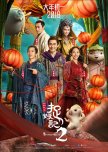
If I thought the original Monster Hunt was a fevered sugar dream, Monster Hunt 2 said, "hold my soda." The first Monster Hunt movie had plenty of death and some monster gore. MH2 replaced the darker elements with more cuteness and bodily function jokes. MH1 threw as many movie themes as they could at the screen to see if something would stick. MH2 decided to not develop or continue most of the mysteries from the first movie and just went with "Ohana means family" to quote Lilo and Stitch.MH2 begins after new couple Song and Huo left baby squid monster Wuba in the Monster Realm for his own good. In their gender reversal of roles, Huo continues to berate Song as the woman ever since he was pregnant with the radish monster. Song, despite his use of his father's sword in the previous film, is still pretty useless in battle and suffering from postpartum depression. Song and Huo have some second thoughts about leaving Wuba, especially after watching a mother monster and her child after their capture by the Monster Hunter Bureau. Even in captivity the family is happy to be together.
Taiwanese actor Tony Yang plays the helpful head of the Monster Hunter Bureau. He confirms that Song's father disappeared 10 years ago and that wraps up everything about that mystery for this movie. I guess they are saving the discovery of the father for the next one. Song and Huo decide to find Wuba using the mystical method of the MHB. Fortunately, the little fanged tooth monster prince is nearby.
They lucked out because after they left the little radish in the monster realm, the monsters had a rousing Bollywood number crashed by bad monsters after Wuba. The little guy ended up on the run and back in the human realm.
You know there's not enough story when the majority of it is spent on veteran actor Tony Leung Chiu Wai instead of the main characters and dangling plot points from the first film. Despite his film pedigree he fully committed to his role as gambling scam artist Tu who uses monsters to help him cheat, often while he wears outlandish disguises. Aside from a long list of creditors and scam victims, he was also troubled by a love interest he owed money to as well. As movie coincidence would have it, a hunted Wuba is saved by BenBen, Tu's monster partner in crime. There were numerous scams and colorful chases through the businesses and towns, leading the story nowhere. At first Tu is only interested in using Wuba to pay off his debts but even a child could see the redemption story coming from a mile away.
Song and Huo are finally reunited with Wuba, Tu seemingly abandons them, and the real villains reveal themselves which will not be a surprise to anyone. Another story that gains no traction in this film is Wubo's royal blood and how he is supposed to unite the human and monster realms. He also doesn't drink blood in this one as he did in the previous film.
The theme that is repeated ad nauseam is that sometimes parents have to go away to better provide or protect their children but that they always miss them. "There's no greater pain than being separated from family." "Everyone wants to be with family." Perhaps it's because some parents have to leave their children to go elsewhere to work to provide for them, but whatever the source, the film makes sure everyone gets the emotional thrust of the writing.
The costumes and sets were well done, looking almost steam punk in design. The CGI was much improved, the strange monsters combined perfectly with the live action and the green screen use was seamless. All the money thrown at this one after the first film raked it in definitely showed up on the screen. The monster realm's lavender covered tall rock formations were beautiful. Also, both Tonys gave a bit of acting gravitas to the film.
MH2 was an extremely colorful, fast paced, bouncing, spinning, spitting, place holder until the 3rd film inevitably comes out and hopefully answers the questions asked in the first film. Aside from reuniting the little human/monster family and possibly adding a couple of new characters, nothing really happened to forward the story. Though gentler in nature that its predecessor, it lacked the sort of impact that would make it memorable. MH2 was a frothy lesson in style over substance and a sinfully sweet exercise in treading cotton candy until the real story shows up.
2/13/23
Was this review helpful to you?
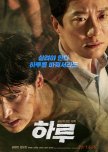
This review may contain spoilers
What a difference a day makes
A Day takes the tired trope of the repeated day and gives it a karmic twist. Part taut thriller, part redemption story bordering on melodrama more than once, it managed to make all the parts work together to pull off a satisfying story.Kim Joon Yeong is a famous surgeon who travels the world and is on magazine covers and hounded for autographs. At home, his daughter is less than enthralled with his career because he misses important days and times with her like her birthday. Lee Min Chul is an EMT who argues with his wife when she asks about having a baby. Both men are tied up in their own lives and careers and can't see the negative impact they are making on the females in their lives. When both the daughter and the wife are killed over and over and over regardless of how cleverly the men act, they find that there is someone else caught up in their endless day of agony, someone they have also impacted negatively.
Karma comes calling as they find themselves in hell. Because the victims are innocent it's impossible to not root for the men to break the curse and find a way out for their loved ones. Despite their herculean and sometimes murderous efforts the day seems to never end. Kim Joon Yeong finally realizes his part in the bloody drama and what needs to be done to stop the deaths and who actually needs to be saved.
As well made as the film was, the thriller dragged during some of the unremitting days and the bloody streets began to feel repetitious losing some of their emotional intensity. The overwrought score had a tendency to overwhelm the scenes instead of enhancing them. As well as all the actors portrayed their parts, there are only so many tears that remain effective scene after scene. There were one too many scenes played for overly dramatic effect for my tastes. Finally, Kim needs to spend more time with his daughter and tell her about stranger danger and to pay attention to traffic and not ignore her father's desperate requests.
Yet for the drawbacks, I did find much of the story and acting compelling. Redemption tales are catnip to me. There's a reason the film is also named Haru. For though something was taken, something was also given. Where life was lost, life was also created. A Day managed to weave together a story of revenge, grief, rage, and forgiveness culminating into a beautiful ending.
2/9/23
Was this review helpful to you?
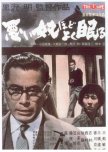
This review may contain spoilers
It is a terrifying system that will never yield
Director Kurosawa takes aim at greed and malevolent corporate and bureaucratic power in The Bad Sleep Well. He sends one man tilting at that explosive windmill in an effort to enact revenge and seek justice. Inspired by Hamlet, dare we even hope Mifune Toshiro can topple the unseen forces driving the action in this film?If the opening scene seems familiar, it’s because Francis Ford Coppola raved about it and the opening scene for the Godfather was inspired by it. A wedding reception for a young couple is overshadowed by the corporate cronies and executives preening for Iwabuchi, the Vice President of the company whose daughter Yoshiko married his male secretary, Nishi. A cake in the shape of the building where a man jumped (or was pushed) to his death five years before is wheeled in with a rose protruding from the deadly seventh floor window. As the reporters in the background share their cynical and fairly accurate take on the people involved, they give us the exposition we need to catch up with who we should be wary of- the "clean-up crew" of graft and why the cake is an omen.
It takes nearly 35 minutes for Mifune Toshiro to have his first lines and tell us what we are already suspect. He is the son of the murdered man and is orchestrating a complex revenge plan against the men responsible, even going to the lengths of marrying his enemy's daughter.
Like the mob looking for bribes, the Public Corporation for Land Development has been taking money and kick-backs from companies, most recently a deal with Dairyu. And like the mob, those at the top are untouchable, their subordinates completely loyal, and those who fail or question are expendable.
Nishi is willing to sacrifice everything, even his own sense of morality, to bring down the men who murdered his father. "It's not easy hating evil. You have to stoke your own fury until you become evil yourself." He's aware many of the things he's doing are illegal he’s and more than willing to go to prison if he can succeed with his plan. His fatal flaw is underestimating not only the murderous intent and moral bankruptcy of his adversary, but also the sheer size of the invisible evil that looms just out of sight. When everything looks like it's going Nishi's way, that justice will prevail, one crack threatens destruction.
Though Nishi has no issue ruining Public Corp's pawns-Wada, Shirai, and Moriyama, he does have lines he will not cross. The Vice President and the master he answers to, have no such compunctions. Nishi lacks the hate his enemies have. He doesn't realize that what he thinks is a monolith of power is connected to others and there is no way out without being crushed by their cruel intentions. Unlike Ikiru who broke through the bureaucratic wall, Nishi broke his body against it. It was not like he wasn't warned. "It is a terrifying system that will never yield," Wada warned him. This corporate ronin replied, "Everyone feels that way and gives up. That's how they get away with it."
Another flaw for the main character is that Nishi fell in love with his wife. Yoshiko is so innocent and useless that it is hard to feel sorry for her and easy to feel rage when she becomes the linchpin of doom.
I have no complaints with the hopeless tale of revenge. It takes more than a son's vengeful anger to bring down city hall or in this case government and corporate entities. My issue is that what could have been the most poignant event in the movie happened off camera, taking all the emotional punch out of it. This was one of those times when we should have been shown not told.
Kurosawa gave us a brutally unforgiving film about one man standing up to the corrupt machine. He was unflinching in showing how such power can crush those who oppose it and innocent bystanders along the way. Despite the flawed issue I mentioned, overall, I found the film tragic, well written, well-acted, and captivating. The film is even more meaningful because those bastions of power and avarice have only grown stronger and larger since Kurosawa's day. As he said, "I made this film too soon."
1/31/23
Was this review helpful to you?
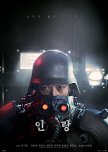
This review may contain spoilers
Grandma what big teeth you have!
The Wolf Brigade could have been an interesting movie about a rocky reunification between North and South Korea with politicians and civilians pulling in different directions. What we were given was a mess of a story that could never quite figure out what it wanted to be.The Wolf Brigade is a high powered, deadly force of men whose job it is to crush the sect opposing reunification. It’s not their job to care if the people are innocent or should have a voice in their country’s future. But there’s always one guy whose conscience can’t be stomped out and Lim is that soldier. This story ends up being his story of independence and redemption.
If the movie hadn’t started out with nearly an hour of what turned out to be largely confusing and at times boring exposition, I would have rated it higher. Instead it didn’t get any traction until an hour into the movie. A movie shouldn’t take an hour to figure out who was going to be the focus of the film.
After the exposition was out of the way it became a straight action film with almost zero character development or explanation yet I did become caught up in the typically unrealistic gun fights and car chases. Some of the fights did drag on too long. There was a lot of carnage.
The cinematography, sets, and costumes were all high quality and the acting was on point for this type of film.
I feel like my score is just for the second half of the movie and I should have rated it lower given the convoluted plot and lack of character development.
One character said, “We aren’t humans in wolves’ clothing, we are wolves in human clothing.” I’d have to disagree as he was giving wolves a bad name. Humans need to own their own deadly and bad behavior. And the writers needed to own their responsibility for a story that could have been much better.
12/8/22
Was this review helpful to you?
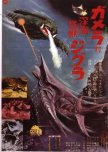
This review may contain spoilers
"It pays to try" Next time try harder!
A little girl in this movie says, "It pays to try." The makers of this movie should have tried harder. For a movie about a giant tusked turtle battling a giant alien fish it was sardine-ally bad.Aliens once again come to Earth, this time a giant talking fish looking to take over the oceans because his kind had polluted the oceans on his planet. Using a striking Japanese woman under his control he kidnaps two children and their marine scientist fathers. From there the story never really jells. The kids outsmart the "spacewoman" and get them home. But she comes after them with a long chase scene through Sea World. So many things were convoluted, even for Kaiju science that I found my eyes almost getting stuck from rolling.
Suffice to say the Kaiju fights were bad and repetitive. The kids were annoying. The adults were annoying. The one dad kept saying, "That's impossible!" when the proof was right before his eyes. I wanted for someone to tell this Japanese Vizzini (The Princess Bride), "I do not think this word means what you think it means."
As much as I wanted to like this movie, Gamera deserved better. I'm not too so-fish-ticated to enjoy a ridiculous story or children's Kaiju film, it's just cod this one, was o-fish-ally a poorly made movie re-cod-less of genre, and they missed a great oppor-tuna-ty. They simply couldn't fin-ish what they started. On a scale of 1-10, this one was carp. Salmon had to say it. If this review is too punny just let minnow.
10/26/22
Was this review helpful to you?
This review may contain spoilers
In order to exorcise ghosts, you have to redeem yourself first
What is real or unreal? Supernatural or natural? Normal or abnormal? All of these things get blended up in a pseudo-psychology and poured down the rabbit hole.If you are looking for a ghoulish horror drama--look elsewhere, this is more like the Ghost Whisperer as far as the ghosts are concerned. If you are looking for accurate therapy procedures--run for your life. It's mentioned several times that the Taiwanese don't have much use for psychologists and therapy and this drama would make any psychologist or pysch student roll their eyes. If you can get on board with this particular world building, it was an oddly entertaining romantic drama with horror elements.
Sung Yen is a psychiatrist who had been working in the US, but returned to set up shop in Taiwan where his girlfriend of seven years lives. She's ready to push ahead with marriage but he's dragging his feet. There were several stories that I found interesting, especially the one where a woman is possessed by a dead man. The actress, Ying Shiuan Hsieh, gave a compelling performance as a male gangster and a gentle woman. After Sung Yen's confrontations with the possessed woman, strange ghosts begin haunting his office. Instead of doing the normal thing and vacating the premises, he decides to counsel them and help them move on. Not all is what it seems with the good doctor though as he discovers. In helping others, he helps himself.
The drama could wander around a little too much in the middle and then found itself racing to the ending. The storylines were tied up in a satisfactory way if not believably. The romance was the weakest element of the drama for me even if it was the string that tied everything together. At just 6 episodes this drama kept my attention and I enjoyed the ghost therapies. If you are sensitive to certain triggers please read the tags carefully as there are several. I can't give Green Door a green light, but I could say if you run across this drama on Netflix, I'd give it a yellow light and advise to proceed cautiously to see if it's something you might like.
10/19/22
Was this review helpful to you?
This review may contain spoilers
"Everyone has something that's been ingrained"
Director Ozu once again took on a strained marriage with a shrewish wife and docile husband, this time succeeding for me over "What Did the Lady Forget?" which had a similar theme. He'd wanted to film this during the war, but the censors shot him down and he had to wait 15 years to bring it to the screen. I'm glad he held steadfast.Taeko and Mokichi were an arranged marriage and have been together for several years. Taeko comes from a higher social class and calls her husband "Bonehead" to her girlfriends. His casual social manners and delights grate on her nerves. She has a cook and housekeeper making her a woman with nothing to do except gossip and hang out with her friends. All she wishes is for him to go away never realizing how good she has it. Mokichi is a diligent worker and respected at the office, but he doesn't live there. He's kind to others and to Taeko no matter how rude she is.
The match that lit Taeko's powder keg turned out to be her niece. Her sister had arranged a marriage for Setsuko with the son of a prominent family. Modern Setsuko steadfastly refused to participate in the "primitive" arrangement causing consternation for Taeko, especially when it looked like Mokichi was taking the 21-year old's side. At that point it was war and she refused to speak to her husband unless it was to berate him for pouring his miso soup on his rice to eat "like a dog". With the dissatisfaction she felt in her own marriage, the possibility of Setsuko being forced into an arranged marriage only magnified her pain.
Everything turned around when Mokichi had to take a short notice business trip to Uruguay and Taeko refused to show up at the airport to see him off. In a time when this was an event, all of their friends did show up to send her husband off. As she came home to the empty house, the silence and his absence sank into her. She'd gotten her wish but her body language showed it might not have been what her heart really wanted.
Mokichi returned that night due to plane trouble. She asked what he wanted to eat and he requested Ochazuke, green tea over rice. Ozu created an oddly intimate and endearing scene as the couple go to the kitchen together and step by step put the dish together, neither familiar with the kitchen. Each addition and discovery in the kitchen as they prepare the dish becomes a revelatory experience for the two as husband and wife. Taeko who has been fueled by bitterness and rage has softened. Mokichi's gentle presence no longer a blight but a balm. His kindness and acceptance of her seems to finally sink in and soothe her, his reliability and constancy finally acknowledged for what it is---love.
As I stated, this story was one that Ozu held onto for over a decade. It's also interesting to note that one of his favorite meals was green tea over rice. In the film the two young people eat ramen and wax poetic about it, another favorite of his. The sets and composition of the frames were classic Ozu, intricate care given to every prop and shot. As he did, much of it was filmed from the mat so to say, with only one annoying thing for me-often the characters would look directly into the camera to speak when they were having conversations, and I found it highly distracting. Instead of playful, heated or intimate discussions, suddenly they reminded me it was a film by looking at me to speak.
Kogure Michiyo had the perfect face for this Japanese Kate (Taming of the Shrew). She overflowed with anger and resentment with only her husband to blame, unable to look anywhere else until it was so quiet she finally turned inwards. She also had help from a girlfriend, the kind every girl needs, who called her on her brutish behavior. Kogure went from raging 4 alarm fire to beautiful golden ember. Saburi Shin gave the warm performance of a man who took life and his wife as they came, always seeking comfort from the common.
The Flavor of Green Tea Over Rice had comedic and even exasperating moments. Ozu definitely made the married couple earn their happily ever after and I believe they finally found a way to relate to each other with kindness and understanding. As a viewer who became exasperated with Taeko at times, Ozu caused me to earn the enjoyment I finally received from this comfort food of a film.
"I've finally understood a sense of ease that brings greater comfort, without reservation or appearance." (Taeko) The husband and wife is the flavor of green tea over rice. (Mokichi)
10/12/22
Was this review helpful to you?
This review may contain spoilers
"If I see Wang, I'll be sure to tell him"
Director Zhang Yi Mou ventured onto the wild side when he remade the Coen Brothers debut 1984 noir film, Simple Blood. Instead of 1980's Texas, Zhang took the story to the Gobi Desert in ye olden times. Instead of a black comedy, A Woman, a Gun, and a Noodle Shop (WGNS) bounced from slapstick comedy with bucktoothed and cross-eyed characters to multiple murders. At times the film was entertaining and at others confusing with only the saturated colors and beautiful shots of the desert reminding the viewer of the amazing director at the helm.At Wang's Noodle Shop in the middle of the desert, Wang's wife, unlike the other characters was given no name, buys a gun from a flamboyant Persian salesman. She was sold as a wife to the miserly and sadistic owner 10 years earlier and she's carrying on an affair of sorts with Li, the bartender. The two goofy noodle cooks haven't been paid in months even though the dastardly Wang sits in his room counting his money.
As evil as Wang is he meets his match with Zhang, a police patrol officer, who sells him the news about his wife's affair. Wang offers him more money to murder the adulterous couple. From then on the film becomes entertaining as double crosses, triple crosses and riders crisscrossing the desert with bodies cause great upheaval in the small shop.
I'm not here to compare this with the Coens' film as I have only read about it, but knowing the Coen films, I suspect it was much darker and more gruesome than this farcical murder story. If perchance I watch Simple Blood, I will amend this review. As a film in its own right WGNS had some laugh out loud moments. Because most of the characters were deeply flawed and caricatures, it could be hard to care about their outcomes.
The costumes were outlandishly loud with the exception of Wang's costume. Zhang's electric indigo and black uniform was one of the most subdued. It felt like Zhang Yi Mou also overcooked some of the scenery shots-the skies glowed bright blue- they came across as almost comic strip in style. There were some gorgeous shots of the striped desert, but there were also some shots that looked like he used a fisheye lens as they were rounded on the sides or stretched too far. If all of these things were to remind us that this was just make-believe he succeeded rather well.
Yan Ni had the tough job of selling the shrill adulterous wife. I couldn't find Wang's wife loathsome though, she was a woman stuck in the middle of nowhere perversely tortured by her husband with the scars to prove it. That she was in need of comfort and hoping to divorce him seemed reasonable in her situation. She came across more nuanced than either her dim-bulb lover or her repulsive older husband. The two cooks were there strictly for comedy relief. A rather acrobatic noodle making session between them was fun though. Sun Hong Lei as the greedy and murderous Zhang had almost no lines, but conveyed his observations and reactions all through slight facial and body movements.
Having watched my share of Chinese films, I could find the humor in the story and realize that slapstick is all part of it. More people fell down in this movie than a female lead in a romantic Kdrama. Watching it free from prejudice regarding the original and judging it on its own merit, WGNS had some entertaining moments. It was a strange and nihilistic morality tale of greed and lust, told in vibrant colors despite its dark underbelly. As a fan of Zhang Yi Mou's films I do have to admit it was a bit disappointing. I expect better from this director. I guess everyone has to try something out of their comfort zone at times-A Woman, a Gun, and a Noodle Shop was probably out of his and mine.
9/23/22
Was this review helpful to you?
This review may contain spoilers
"Getting what we want and happiness aren't always related"
Ostensibly The Four 2 is a wuxia film, and if talking a person to death qualified as a martial art then this movie would fill the bill. The first half was composed of dull dialogue and drawn out exposition, most of which led nowhere. There was a murder "mystery" that didn't do anything to liven up the story. Thankfully, the second half did the heavy lifting and upped the action and emotional conflicts.The Four 2 sort of picked up where The Four left off, leaving a couple of key plot points unanswered and glossed over.
When a movie is titled, The Four, it would seem like it should focus on The Four, but with the large cast and erratic story, the team never seemed to be a team and much time was focused on other characters. They were more like the four acquaintances who occasionally bump into either other or argue with each other over whose turn it was to pick the restaurant. The Big Bad didn't seem particularly menacing. He may have caused problems with the team but nothing impossible to overcome.
Once the second half begins, the action starts which is good. Because even after 3 hours at this point the character development was sorely lacking. The romance between Cold Blood and Emotionless was pretty emotionless and cold. The fights were dramatic and the CGI wasn't horrible. The action at least involved most of the characters and if the story wasn't moving forward very fast at least the characters were moving. Some sets were better than others, a few looking rather low budget with the CGI filling in the gaps as people fled and fought. As the fights rolled on and secrets were revealed, the movie finally became interesting. Then it simply ended after a revelation.
The people were pretty and the production values were fine. I actually enjoyed the OST, something I rarely even notice. What let me down was the less than stellar dialogue, uninteresting characters because they often weren't doing anything important, and the long dragged out first half.
I love wuxia films. Bring out the swords and poison darts, the super leaping and qi power. But one thing a wuxia cannot be is boring. Even a rapier wit would have been welcome in the first half of this movie. Being the middle child is never easy in a movie trilogy but oftentimes the second film is the deeper, darker, more emotionally involved story because the characters are established and the stakes heightened. The Four 2 failed on all accounts for me.
9/19/22
Was this review helpful to you?
This review may contain spoilers
Know the rules of The Road
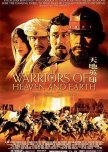
Warriors of Heaven and Earth is an unconventional action and buddy film. Filmed in the Gobi desert with a haunting OST and good performances, this film had almost everything needed to be epic. Almost.Unlike many films with numerous plots and turns, Warriors of Heaven and Earth was more like the Silk Road going through the desert. A rough path with even rougher people traversing it, but fairly straightforward. The film starts with Lai Xi, a Japanese man, who came to China 15 years before to study war craft. All he wants to do now is go home and see his mother. The emperor, whom he is loyal to, has resisted letting him leave. The Tang emperor tasks him with eliminating fugitives in the Western region. Once he fulfills this task, he can finally return home to Japan. Lai's final obstacle is hunting down "Butcher" Li, a general charged with mutiny because he refused to slaughter captive women and children.
Lieutenant Li has been wandering the desert making a living when he is caught up in a sandstorm and nearly dies. He is rescued by the sole military survivor of a caravan carrying Buddhist texts and a precious artifact. One young monk protecting the artifact survived the storm as well. Li takes control of the caravan and promises to lead it to the capital. Along the way he ends up picking up a fighter who had seen too many winters, Old Diehard, and a young man who had seen too few, Salamander, as well as some of his old cohorts. Lai Xi also finds him and after a fight that ends in a draw agrees to allow Li to finish the caravan mission before killing him. For some reason, Lai is escorting the daughter of a killed general to the capital and she becomes part of the caravan as well.
No movie focusing on the Silk Road would be complete without gangs of bandits. This film focuses on Master An, the leader of a gang determined to steal the artifact. Another group, followers of a Khan, also want the artifact. They are relentless and seemingly willing to sacrifice anything to get their hands on the item in the monk's care.
Li and Lai have an almost comfortable relationship as two men who see each other as equals, and honorable, though they know at least one of them will not reach the capital. The small band of men, almost akin to The Seven Samurai, must use every bit of their wits and experience to fight through the bandits in inhospitable territory. Outnumbered and bearing the heavy burden of traveling with numerous camels and cargo, the fugitives are determined to carry out their mission. Once the artifact is revealed, the film ventures into Indiana Jones territory (think Buddhist Ark of the Covenant) which in one scene is intriguing and in another eye-rolling.
The fights and battles are all quite brutal and well choreographed. There is some wire-fu and CGI enhancement, but most of it is bone crunching and bloody hacking between seasoned soldiers and fighters.
What I enjoyed the most about the film was the beautiful desert scenery, shot with a loving eye. Desert towns looked authentic and the overhead geometric shots were fascinating. One scene where large jars of oil were used to create an impressive ringed fire at night was a great shot. The OST was unobtrusive and seductively wove the scenes and emotions together.
The cast was older than many recent movies which gave gravitas to the battle hardened men facing each other over swords or bonding together as brothers. Nikai Kiichi and Jiang Wen both played quiet heroes, yet still found ways to make their characters interesting beyond their ability to swing a sword. This is the first Chinese film I've seen where a Japanese character was shown as honorable and a skilled warrior, all in a positive light. Li and Lai made for a decent adversarial bromance. Vicki Zhao, was stuck in a token female role with little to do. Wang Xue Qi as the vile but intelligent Master An was acceptable as the bandit leader only going over the top on occasion.
What didn't work as well, was the very slow build-up to the story and the magical ending. I honestly was going to score this an 8 before the final scenes.
Warriors of Heaven and Earth was a surprisingly enjoyable film. Though a familiar sword fighting action narrative, it trod slightly different ground. It was strongest when focusing on the two men who each just wanted to be able to go home, thwarted by the emperor. When it veered from a more realistic survival epic into supernatural territory, it lost its way. I could still recommend this film with caveats. 7.75 for me.
9/13/22
Was this review helpful to you?
Zhong Kui: Snow Girl and the Dark Crystal
4 people found this review helpful
This review may contain spoilers
"I am part of that power which eternally wills evil and eternally works good." 'Faust'-Goethe
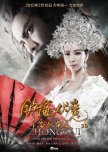
To watch Snow Girl and the Dark Crystal it would help to have a working knowledge of the Chinese legend of Zhong Kui. Which I didn't. And this movie tended to enter facts not in evidence which could make a confusing viewing for a novice. In the end it didn't matter too much because the storyline was thin. Very thin.First off, I'll drop two things on the table about me and this movie. First, I am a Chen Kun fan and watched this mainly for him. Second, the CGI in this movie was terrible, slow, shoddy, cheap video game quality for the most part. And there was a lot of it, overwhelming any story the writers might have wanted to tell. As much as I love Chen Kun, even he couldn't save this movie from the weight of the CGI department.
Every thousand years demons can reincarnate into a human, god, or back to a demon depending on their moral checklist hidden within the Dark Crystal, which can also hold the 7 spirits of people. Chen as Zhong Kui steals the Dark Crystal for Zhang Daoxian (Winston Chao), a low level god tasked with keeping the realms from erupting into chaos. With his magic bat fan Zhong can turn into an enormous demon with the power to vanquish other demons. After the theft of the Dark Crystal, several female demons come calling to try and steal it back. Low and behold one of the them is Snow Girl (the gorgeous Li Bing Bing), Zhong's old lover. This causes a crisis for both of them which is further complicated when Zhong learns more of his origin story. Something I've learned from watching Cdramas, not all demons are bad and not everyone from the heavenly realm is good. The social hierarchy and ambitions therein exist in all the realms.
This could have been a beautiful, tragic love story. Unlike many Chinese movies, this one had the steamiest scenes I've seen, which could be attributed more to the chemistry between Chen and Li than any skinship. The filmmakers instead over-relied on flashbacks and their CGI creations to carry the movie which resulted in an emotionless, colorful mess. Chen, Li, and Chao did their best with the limitations constricting them. Most of the secondary characters were largely forgettable.
Even with the bad CGI, if the filmmakers had trusted their stars and developed their characters better this could have been a far more entertaining and moving film.
9/3/22
Was this review helpful to you?
This review may contain spoilers
Don't hasten your death!
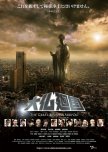
The Great Buddha Arrival is an homage/reboot of the 1934 Edamasa Yoshiro film by the same name. Part mockumentary, part documentary, part Tokusatsu, and a whole lot of strange fantasy---The Great Buddha Arrival is hard to define.In 1934 Edamasa Yoshiro created a film about the 18 meter/60 feet tall Shurakuen Buddha statue coming to life and walking to Tokyo. Destroyed during WWII, all that remains of the film are a few photos from a magazine. One of the first Tokusatsus and creative inspiration for those who would follow, fans and filmmakers decided to honor it by giving it a reboot. The movie is less than an hour long and largely crowd sourced. Blasts from the past showed up to be "interviewed" for the TV show being developed on the statue's past. Godzilla and Gamera stars of old made appearances and also Edamasa's grandson.
In the 2018 film the three photos are thought to be from a real event and a young writer is tasked with creating a tv show around them. Later he finds that they are from Edamasa's film but it was based on a real experience the director had with the walking statue. Very meta. It was thought the Buddha appeared because of the serial suicides of the 1930's, whether as a warning or a sign of hope was unknown. In a twist of fate, the statue comes to life life once again in the present and begins its walk to Tokyo. This time people aren't running and screaming and Tokyo Tower seems safe. The ghost of Edamasa appears to the writer as he follows the statue, "Don't hasten your death!" When a dead director and a walking 60 foot statue appear, I'd play heads up.
Recreated scenes imagined from the 1934 movie were done using the old school techniques from the 1930's showing the statue walking through town to match up with the photos. Some of the interviews for the tv show were fun for Kaiju geeks. The little boy from the original Gamera tells of how the walking Buddha saved him, repeating the scene from Gamera only without the giant tusked turtle, although a turtle is shown in his living room. 1954 Godzilla's Takarada Akira warns that science comes with both positive and negative consequences and the Kaiju movies of yore were cautionary tales. The one big oops was an "American" religious expert who mentioned other statues with supernatural events such as Mary Magdalene, I'm not Catholic, but I think she meant the Virgin Mary, Jesus' mother. Mary Magdalene's statues aren't usually as famous and FYI, she wasn't a prostitute. But she did bring up what would be important later in the movie-that not all statues were harbingers of doom, but could also be seen as messengers of hope.
The movie bounces back and forth with grainy black and white scenes from the 1934 film (ones recreated for this film), old (created) news reels, shots of people committing suicide in 1934, news stories that were not translated, and the current time with various people and "witnesses" being interviewed. News anchors and talking heads tried to understand what was causing the statue to walk, up to and including "dark energy" supplied by aliens. The acting throughout the scenes sufficed but not much more.
The cinematography wasn't very good and the lighting was downright bad in some scenes. The sets were about as rudimentary as you can get. Most of the money must have been saved up for the last quarter of the movie and the walking statue. I tried to cut this film some slack as it was an indie film and a fan service to honor Edamasa's lost influential work. It was very strange but also interesting.
The film's ending was stark yet offered a glimmer of hope. It took a long, pinball bouncing way to get there and I often didn't know what was real and what wasn't, but in it's own weird little way this bizarrely patched together movie had heart. The Great Buddha Arrival is probably only for hardcore Takusatsu/Kaiju fans as it does commemorate the origins of the film genre and has cameos by several actors from Tokusatsu films going back to Gojira's 1954 debut. The casual viewer will wonder why a turtle in a tank is featured during one interview, some of us will go, "that's the annoying kid from Gamera!" Never thought I'd be happy to see him again. The walking Buddha even healed those wounds.
9/1/22
Was this review helpful to you?


