

 135
135 431
431 16
16 2
2 6
6 3
3 8
8 10
10 3
3 13
13 1
1 1
1 1
1 1
1 2
2 6
6 8
8 5
5 9
9


This review may contain spoilers
I was born to be cruel you fool!
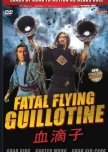
Carter Wong gives mama’s boys a good name when he takes on Chen Sing’s flying guillotine wielding baddie. Decapitations and amputations come steadily at the hands of kung fu’s most bizarre weapon.The plot is thin and has numerous confusing plot developments, many never explained. The basic structure of the story is that Carter must go to the Shaolin monks to borrow a mystical healing handbook to save his ill mother's life. In order to gain access to it he has to fight his way through three levels of shaolin fighters. When he ultimately succeeds, he and the monks are betrayed. In order to retrieve their special book stolen by the 4th Prince who has grand ambitions they are set on a collision course with the master of the guillotines.
The guillotines and other secret weapons as well as hand to hand combat are employed to deadly ends. Some fight scenes are better than others, many including a healthy dose of wire-fu. Carter Wong wasn’t as stiff in this movie as he has been in some. Chen Sing always makes for a compelling bad guy, even in a bedraggled gray wig and beard.
The Fatal Flying Guillotines looked like it had been mostly remastered. Even at that there were scenes which went from clear and wide screen to grainy full screen images. The cinematography was pretty decent for the budget and era. Much of the fighting took place outside in some very nice scenery.
Guillotines kept the action going almost non-stop with double and triple crosses all in the name of gaining the knowledge of the spinning weapons. Many kung fu films suffer from an abrupt ending, and The Fatal Flying Guillotines was no exception, but not as bad as some. Overall, it was an entertaining 1970’s kung fu film, though maybe not the strongest of the guillotine movies.
(March 25, 2026-bumped my score down .5, mainly due to filming issues and the narrative problems. I'd rank it fourth in the 1970's four Guillotine films, right after Jimmy Wang Yu's Master of the Flying Guillotine).
Trigger Warnings: Decapitations and severed limbs, eye gouging. Also, snakes.
Was this review helpful to you?
This review may contain spoilers
Since I cannot marry someone I love, anyone will do
A Woman’s Sorrows sounds like a tragic film but instead it’s a movie about one woman’s self-discovery. Set in 1937 before WW II, some nascent progressive ideals about women’s place in the world and marriage were explored.Hiroko was a shop girl who came from a poor family. Described repeatedly as “conservative and indecisive” she found herself unable to marry the cousin she loved and decided any man her mother chose would be acceptable to marry. She ended up married to a man from a wealthy family but soon discovered she was little more than an unpaid servant and one who worked longer hours than the employed maid. When any task needed to be done “Hiroko” was the first word on the family’s lips. Her husband viewed her as a pretty doll to take out and look at occasionally when he wasn’t partying with his friends after work.
Her sister-in-law, Yoko, married for love, but her husband could not provide for her in the way she was accustomed, and she came home to her family. He refused to give up on Yoko creating conflict by using Hiroko as a messenger.
Both Hiroko and Yoko had to come to terms with what they wanted out of their lives and marriage. Both were bound by the patriarchal system and well-defined roles they were expected to follow even if some of the rules appeared to be bending. For instance, Hiroko’s conservatism was viewed as a mark against her when looking for a match. Her new family loved her submissiveness but did not respect her for it. Yoko, though refusing to become submissive like Hiroko, could not free herself from her perception of what marriage should be and was also trapped.
Hiroko slowly began to understand she was more independent than even she knew herself to be. I have never wanted to stand up and cheer for a Japanese film as I did for this one when Hiroko stood up for herself and her beliefs rejecting the emotionally unfulfilling life she had entered into. I found A Woman’s Sorrows to be surprisingly progressive for a 1937’s film on marriage bolstered by a satisfying ending. For anyone not put off by such an old film I could easily recommend it.
Was this review helpful to you?
This review may contain spoilers
My first inclination if you've found this movie page and are wondering whether to watch this movie is to say, "Run for your life!" or "Do not stop, do not pass go, put this directly into your NI list". But I will try to be slightly more objective than that because someone other than me may want to sit through this because they are a Shu Qi fan. Or perhaps a Vincent Zhao fan. Or you don't care how bad the acting and story are if you can watch some martial arts. Let's start with the story. Vincent Zhao's character is banished to the fictional country of Lavernia (right next to Shirleenia) for saving a plane full of passengers from a high jacker. Ostensibly it's because he didn't follow orders, but I think it's because he emptied an entire magazine into the bad guy and still didn't kill him. Lavernia is a former part of the Soviet Union and there are people sent in chanting they want to return to the USSR. A Japanese cult leader is in town blowing things up and killing people left and right in his desire for a new world order. There's a boat load of Chinese refugees offshore that are starving to death. Oh, and the Minister of Defense is on the take and a gun runner and also in cahoots with the deadly cult leader. Throw into this mix, Shu Qi's character who fled China after being a witness to the violence and carnage in and around Tiananmen Square and is also Zhao's ex-girlfriend and you have one convoluted piece of work.
The propaganda is heavy handed in this film. Shu Qi's character is berated by Zhou's character and just about everybody else throughout the movie for leaving the homeland after witnessing people wounded and dying when the protesters were crushed.
Zhou is a good kicker, but his acting felt bland to me. Even at that it was much better than the rest of the male cast. Shu Qi didn't have much to do but play the pretty damsel in distress. Andrew Lin made the most of his crazed messianic villain. His character seemed especially impervious to bullets, especially after his initial capture when his rescuers sprayed the area with bullets attempting to take out his guards.
There were places in the movie so bad I was laughing but it was hard to keep it up as the ridiculousness of the scenes dragged on. Some of the fights were good, others relied heavily on wire-fu and defying the laws of gravity. I don't mind a little wire-fu outside of fantasy movies, but in a more reality-based story it seemed badly out of place.
The movie ended with an over-wrought climax that had me begging for the final credits. The most positive thing I can say is that the movie is mercifully only 90 minutes long.
Was this review helpful to you?
This review may contain spoilers
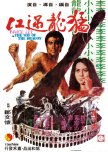
Bruce Lee wrote, directed and starred in Way of the Dragon, taking the crew to Rome to film among the Coliseum ruins. Way of the Dragon begins as more of a comedic story with Bruce as the fish out of water in Rome trying to help with a family business. Nora Miao's restaurant is under attack from a developer who wants her to sell. Bruce's character plays the unstoppable force who can take on an entire army of bad guys. Ultimately, the Big Bad calls in Chuck Norris to rid him of the troublesome new guy.
I found the first half of the movie less than enthralling. Much of it was supposed to be funny but I didn't get the humor, especially a long running gag with Bruce having gastrointestinal distress.
The second half of the movie is pure martial arts magic. Some versions cut out a scene with Bruce taking on a group of thugs with not one set of, but two sets of nunchucks. It also shows why amateurs should not try those tricks at home, which was really funny. The climax of the movie with Bruce fighting Chuck Norris is a classic. Chuck was a legitimate and respected karate champion. Bruce wanted someone who could keep up with him and the fight was highly entertaining. Bruce asked Chuck to gain some weight to make him look more formidable and it would seem to not shave his back hair (chest hair was considered sexy in the 1970's). A cat watching the events played out some of the emotions of the two fighters and the audience.
Bruce Lee was artistry to watch, when he slowed down enough for us to catch even a fraction of his moves. Despite my disappointment with some elements of this film, no actor had a better "I'm through playing around now" look than Bruce had. His intensity was smoldering. The fights in the second half of the movie ran the gamut from fun to tense, to enthralling. If you enjoy martial arts movies, and haven't seen this one, you need to put it on your list. The classic fights in it are not to be missed.
Was this review helpful to you?
This review may contain spoilers
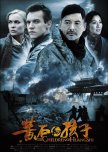
In a small city on the Mongolian border in China stands a statue of an Englishman. Unlike so many white savior stories, The Children of Huang Chi is based on the real life of George A. Hogg, an Oxford graduate in economics who ended up leading 60 war orphans safely to Shanshan 700 miles/1000km from where they started in Huang Chi. Writer James MacManus visited the town and interviewed survivors making the basis for this film.George Hogg was played by Jonathan Rhys Meyers with more or less success. For me, he is an acquired taste. Hogg was a reporter stuck in Shanghai away from the action. He managed to make it into Nanjing masquerading as a Red Cross driver. He got there in time for the massacre and ended up nearly being killed for taking pictures of the atrocities. He was rescued by a communist guerrilla, Chen Han Sheng, played by the charismatic Chow Yun Fat. West Point educated in engineering, Chen was very good at blowing things up. When Hogg is injured, an American nurse, Lee Pearson, played by Radha Mitchell, suggested Chen send him to Huang Chi to recover, learn some Chinese and take charge of 60 orphans hiding out there.
What Hogg found when he arrived in Huang Chi were 60 boys, malnourished, suffering from various diseases, and barely sheltered. Devastated from the loss of their families, they did not welcome Hogg with open arms. He was just another foreigner. Hogg wasn't thrilled to be there either. With some encouragement from Lee and few other prospects available, Hogg began slowly improving conditions at the estate and winning the boys' trust. As the boys healed, they were faced with one of two eventualities-the Japanese who were nearing the estate would practice their scorched earth policy on them of Kill All, Burn All and Loot All which the boys had already survived once. Or, one of the Chinese armies would conscript the young boys to fight. At this point Hogg knew he needed to take the boys as far north as he could. With the help of Lee and Chen they began the boys' long journey through dangerous territory to the Gobi Desert.
As a co-production of China, all the characters were on equal footing. This wasn't a story about a heroic white guy who saved China. It was the human story of a man who saw the needs of 60 boys and stepped up and did what was necessary, what was right, as did the other characters trying to help them and survive the invading Japanese armies. More meaningful than even the movie, were the interviews during the credits with the real-life boys, now old men, Hogg helped.
The scenery and cinematography were beautiful. The stunning shots of the mountains, lakes, and desert were suitable for framing. Though understated the score fit the scenes perfectly.
Even though the film touches on the atrocities committed on the Chinese civilians, this is not an action movie or thriller. It's a story of courage and love, of building relationships and family. It's a story of love for the children who had suffered and seen more than anyone should have to. It's a story of how people stepped up and put their lives on the line for those children. At its heart, The Children of Huang Chi, like the statue erected in his honor, was a love story to George Hogg and the devotion he had for children not his own.
Was this review helpful to you?
This review may contain spoilers
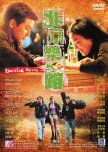
Beijing Rocks follows the lives of what amount to be poor, itinerant musicians hoping for their big break as long as they don't have to change who they are. Daniel Wu played Michael, a wealthy Hong Kong musician, whose money came more from his father than any money he made in the Hong Kong Music industry. Awaiting trial on an assault charge he traveled to Beijing to learn Mandarin and finish a song he was working on. He quickly fell in with an underground rock band led by Road (Geng Le) and his free-spirited girlfriend Yang Ying (Shu Qi).
Beijing Rocks see-sawed between shots of vibrant, loud night scenes and ordinary daytime markets. The rockers went on a road trip or hole hopping where they traveled and then put up a tent to bring on the noise. Road was a character who could be hard to like. He was talented but sabotaged every shot the band got, cheated on his girlfriend and ran away at the sign of trouble. Shu Qi brought the thankless role of the devoted girlfriend to life and the movie lacked spark when she was not on the screen. At first glance she appeared to be a party girl, but Yang Ying's effervescence belied her darker thoughts. Michael, a fairly bland character, acted much like our window into the world Road and Yang Ying navigated that was on the thin boundary of poverty and fell into violence occasionally. The tipping point for Road and where his path slipped into melodrama was when he realized the record companies wanted obedient rockers who only acted rebellious, not actual independent minded rockers.
For me, the rock music, especially at the beginning was high school garage band at best. Near the end I actually enjoyed the song Good Night Beijing. Or maybe I had finally fallen into the rhythm of this quirky film.
Whether you think this movie rock and or rolls may be determined by how much you fall in love with Shu Qi and this flowing narrative of rebellious rockers.
Was this review helpful to you?
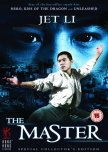
The Master was a failure on multiple fronts. The acting both from the Asian cast and the American cast was atrocious. Yuen's performance was at least interesting. Jet Li's try at comedy fell flat and I'll never understand why they kept that Timmy Turner baseball hat glued to his head during his fights. The American cast was at a high school play level at best.
The production values were bottom of the barrel. You could even see the mats in one shot where they were supposed to fall. Tsui Hark, the director, probably wishes he could take this one back.
The side characters were a mixed bag. There was a possible romance with a banker, Crystal Kwok, but she seemed way more into Jet Li's character than he was into hers. Three Latino gangsters became his unwanted disciples. And Yuen Wah had a blonde gymnast as one of his few remaining students. Most of these characters were around for comic relief and I use that term lightly.
The fights were okay, but not terribly inspired. Jet Li injured his wrist in filming which meant they had to work around it for the final fight scenes. Jerry Trimble and Jet Li made good sparring partners and at least there was some effort near the end to make the fights more exciting even if the sets were basic. Yuen Wah had some fun moments near the climax as well.
I hate to write disparaging comments about this movie because I had looked forward to watching Jet li and Yuen Wah in a movie together. With a heavy heart I have to write that it was painful to get through with only a few brief, entertaining moments. There is a reason this 1989 movie set on the shelf until 1992 after the release and success of Jet Li's and Tsui Hark's Once Upon a Time in China. If you are a fan of Jet Li it might be worth watching this earlier, pre-fame movie where the wirework was minimal. Just keep your expectations low.
Was this review helpful to you?
This review may contain spoilers
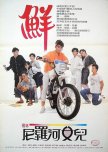
Hou Hsiao Hsien takes a look at a 1980's family living on the edge of Taipei's neon nights. At turns, frustrating, sympathetic, maddening, and understandable this fractured family is largely held together by the eldest daughter, Lin Hsiao Yang.Lin Hsiao Yang (Yang Lin) has a short temper, works at Kentucky Fried Chicken during the day and takes classes at night school. When she's not busy making money and trying to better her life, she hangs out with her friends and tries to steer her older brother and younger sister away from stealing. Their father pops in and out, usually when he needs help. A lottery playing grandpa drops by occasionally to deliver food from a squawky daughter-in-law and quirky bon mots.
Lin Hsiao Fang (Jack Kao), the only surviving brother, and his gang try to carve out their own territory by opening a shady restaurant. Unfortunately, one of his crew draws the wrong kind of attention from violent and vengeful men.
Daughter of the Nile's characters are never fully delved into with the possible exception of Hsiao Yang. The cast is large and at times unwieldy. Hou plops the audience down in a strange slice of life drama without explaining or showing us much of what the characters are feeling or thinking. Even when tragedy hits, it's kept at a distance, as are the characters' responses.
I can see and understand the craft that went into the making of Daughter of the Nile, but in the end, I found it largely impersonal and the performances flat. Yang Lin's portrayal of our only dim window into this world came across as shallow when it felt like there should have been more depth to this character caught in almost unswimmable currents. She dutifully empties her bank account to any man in need, without a thought to her own precarious situation. Most characters have few, if any lines, wandering in front of the camera to give some movement to a stagnant and untenable lifestyle.
Daughter of the Nile is an interesting social commentary of the plight of those living on the fringe in the mid-1980's. I only wish Hou had let us into his characters' motivations and feelings so that a real emotional connection could be made to help us understand their lives better.
Was this review helpful to you?
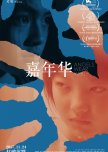
This review may contain spoilers
Writer/Director Vivian Qu delivers a caustic commentary of the treatment of women and young girls in China. Shown primarily from a female perspective she lays bare the inequality of the sexes by a society still focused on a girl's virginity as a primary virtue. And also casts a dark lens on the men who exploit that limited virtue for themselves.Two twelve-year-old girls are lured to a hotel by a powerful middle-aged man and raped. Mia, a young runaway working at the motel sees him break into the girls' room. Director Qu takes a risk in not having one protagonist, but two. One of the twelve-year-olds, Wen, was already suffering at school as a child of divorced parents. Qu largely focused on her experience as well as Mia's quandary of not wanting to help for fear of losing her job. Mia comes across as self-serving and hyper focused on her own survival, always one step away from homelessness. Wen must not only deal with her own experience but also her mother's response and the adults who should be protecting her but don't. The only two people seeking justice are Wen's father and her lawyer.
Warning! What follows may have spoilers...
The performances are spare but powerful. There are no histrionics, no sobbing uncontrollably and screaming. The girls and the lawyer know they are fighting a battle that will likely not be won, but keep moving forward, keep enduring, keep fighting.
Set against the backdrop of an ocean vacation town, with a giant statue of Marilyn Monroe, the seedy happenings were not done in the dark corners but in plain sight making it even more disturbing. It feels like Qu was able to shine a light without the censors cracking down because she might have been alluding to the Western influences of the objectification of women in the statue and possibly in all of the brides dressed in Western wedding gowns having their pictures taken on the beach as a source of the problems. But Western influences did not cause a powerful middle-aged man to rape two children. Or cause the corrupted police force and medical community to cover it up. Or cause a mother to blame her daughter for what happened. Or cause other parents to profit off of their daughter. Or leave a runaway without a safety net. Or cause an older girl to risk her health, fertility, and life to have a fake hymen implanted. Or cause a teacher to treat Wen as less than because her parents were divorced. These are societal failures for women and girls and Qu did not shy away from showing the toll they take.
Angels Wear White is a difficult movie to watch with no easy answers. It may cause despair and anger on the part of the viewer. But perhaps in giving an unflinching and unsentimental view it knocks down one more brick in the wall separating women and children (regardless of gender) from justice, justice lacking not just in China, but worldwide.
Was this review helpful to you?
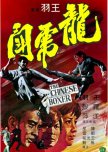
Jimmy Wang Yu played the top student at a kung fu school. A disgruntled former student returned after learning judo and roughed up a bunch of students and then was promptly dispatched when the master showed up. The master explained that while kung fu was used for sport and self defense, karate was used for killing. Later, the former student showed back up with a crew of Japanese karate experts led by Lo Lieh in a bad wig. The karate experts went on a killing and eye gouging rampage in the school only leaving a few wounded alive, including Jimmy's Lei Ming. The karate thugs seized the opportunity to take over the town and made it into an illicit gambling den.
The familiar plot ensued. After Lei Ming recovered, he secretly learned the Iron Fist technique and light body skills. Then it was his turn to to on a bloody rampage. The fights were okay, Jimmy wasn't a martial artist and it showed. Blood spurted a plenty and the movie sported a high body count. Lei Ming taking on a bunch of katana wielding samurais in the the tall grass was entertaining. Too many of the fights were chop and block and not terribly fast. Lo Lieh, as always, had great screen charisma even if he wasn't on screen much and was required to do some screaming that seemed out of place.
The sets were all very nice and most were nicely destroyed with fists, kicks, and bodies thrown through them. Fake snow and real snow abounded. It's one of the few final fight scenes I've seen where there was snow and ice on the ground which seemed hazardous for the actors and crew. You could tell where they cleared a few areas off down to the dirt to provide a better place to spar.
It was fun to see these actors when they were very young, aside from Wang Yu and Lo Lieh, Chen Sing, Yuen Woo Ping, and Chen Kuan Tai, among many well known martial artist bit players were in the background.
There was an unnecessary rape scene that took away from the movie for me. Also several birds were killed which left a bad taste as well.
Jimmy's acting wasn't as stiff in this movie as in others I've seen him in and his directing was quite good. As a first entry into the "modern" kung fu era it was a respectable entry and worth watching for the historical implications at the very least.
Was this review helpful to you?

The basic plot is the evil eunuch desires a magic red pill created to heal the emperor and grant him immortality. In the process of stealing it and securing his position he secretly pits the Wu Dang clan against the Lunar clan. The white-haired witch belongs to one clan and the impetuous fighter who falls for her in the other. A few misunderstandings and an astonishingly high body count later and you've got the gist of the story.
The acting was fine for what was required of the actors. Most weren't on screen long enough to form any real bond or hatred of. The actual running time was probably closer to an hour, making it shorter than some drama episodes which means there was a dearth of character development. At one point I wasn't really sure who belonged to which clan because there hadn't been enough of an introduction for me to identify the characters in even the most vague way. Not to give too much away, but by the time I figured out who belonged to which team it was pretty much irrelevant anyway.
The CGI was good for a film that felt low budget and the fights were entertaining. I'm always happy to see a strong female protagonist who can wield a sword and long, lethal hair. There were some creative fight elements and magical weapons and abilities which kept the fights interesting.
I wouldn't put this movie high on a kung fu watchlist but it was an entertaining hour of CGI fights, betrayals, and a little romance thrown in for good measure.
Was this review helpful to you?

Amanda/Fream and TJ/Fuffy are the perfect married couple, just without the sex, living together, and marriage license part. They are tactile and completely supportive of each other. The film follows the romantic rollercoasters in their respective lives, especially Amanda's. At the beginning of the movie TJ says he will write her 1001 letters and his narration of them throughout the movie hint he may have had deeper feelings for her, something that is left up to the audience to decide.
Both Amanda and TJ have ups and down in their romantic relationships but the constant source of love and support is their friendship and almost constant banter. Fuffy was handsome, strong, with an unknown source of income, and always there for Fream, he would have tempted any other female lead into succumbing but time and again they stated there was no physical attraction between them, much to the chagrin of Amanda's grandmother.
Secondary characters were barely more than out of focus movement in the background. Fream and Fuffy were the nucleus, without the actors' powerful performances, this movie would have floundered. De Rossi could be manic and comedic in one moment and tearful and vulnerable the next, her performance was the heart of this movie. If she was the energy, Piolo Pascual was the sturdy foundation, given the more difficult role of appearing to be the 2ML in his own movie.
The Philippines setting felt like a character in and of itself. The film used many lush and beautiful locales for the friends' conversations and interactions.
My Amanda isn't a perfect film, and at times it was hard to be sympathetic with Amanda's poor life decisions. Though the story dragged in places the journey to the end was worthwhile. It's a film which doesn't seem to go anywhere, and maybe that was the goal, to show the anchor of love between two friends when storms and change raged around them and whether the anchor could hold and whether it should hold.
Was this review helpful to you?
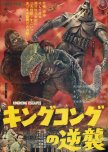
The best part of this movie for me were the villains, especially the dastardly Dr. Hu and his plot to use Kong to dig Element X from under the North Pole. Given that in the dubbed version I watched the voice actor was Paul Frees who voiced many characters in Rankin Bass Christmas stop action movies (the Berger Meister Meister Berger!) I fully expected to see Santa's castle in the mythical land. Dr. Hu with his great teased white hairdo, magnificent cape and malevolent voice was easily the most entertaining part of the movie. His cohort in crime, Madame Piranha/Madame X, played by Mie Hama, a bond girl in You Only Live Twice, played a great femme fatale.
The Good Guys were a bland and mostly ineffectual lot, although I enjoyed seeing Takarada Akira who performed in several Toho productions going back to the original Godzilla. The object of Kong's affection/friendship in this movie, played by Linda Miller, isn't afraid of Kong and tries to help him out of trouble as I guess Kong speaks English or Japanese depending on the version you watched. Maybe he's multilingual?
MechaKong definitely looked cooler than King Kong although lacking in weaponry like MechaGodzilla. Kong's fights with Gorosaurus and MechaKong were okay. The fight with MK was far too short. The doll he carried around at times which was supposed to be the blonde female had red hair which was funny.
This is silly escapism that requires checking your adult brain at the door because little of it makes sense. Depending on how well you can do that will determine how much you might want to escape with Kong from this movie.
Was this review helpful to you?
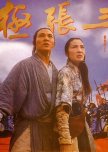
When two young Shaolin monks are kicked out of the temple and have to find their way in the world, one chooses evil and one chooses good. The friends' choices, of course, put them on a collision path to betrayal and destruction.
Jet Li handles the fights scenes just as you would expect him to-marvelously. He's fast and believable even in some over-the-top wire scenes. Michelle Yeoh is agile and elegant whether wielding a sword or in a flying table fight. Their characters help each other out in their darkest moments without resorting to a forced romance. It was refreshing to see a friendship built on mutual respect for each other and each other's abilities.
Chin Siu Ho, who plays the friend who chooses the wrong path, does an admirable job of falling down the well into power and greed. The supporting cast of characters were fleshed out enough that I cared about what happened to them.
My only quibble is the comedy/madness portion of the movie which goes on too long even if it results in Jet Li's character developing his new skill set. This isn't a true spoiler for kung fu movie enthusiasts, it's the common formula. Good guy gets beaten, goes off to develop a new kind of kung fu, goes back and confronts the bad guy. In a movie with a high body count, those supposedly funny moments dragged on too long for me.
The cinematography is good but not great. The focus is on the fights and Yuen Woo Ping excels as always in coming up with creative ways to stage fights--even a giant game of kung fu Jenga!
The movie may be dated, but Jet Li and Michelle Yeoh make up for any story deficiencies. Tai Chi Master has spectacular fights throughout the movie featuring two of the greats of the genre, definitely worth the price of admission.
Was this review helpful to you?
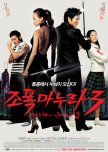
When Aryoung has to lay low in Korea with a bunch of goofball gangsters, the gangster farce begins. I actually enjoyed most of the comedy, especially the translator's liberal and less than literal translations. The five disparate characters bonded quickly into their own familial gang.
Shu Qi's deadly, fearless, and taciturn character played well off the three stooges of crime. I'm always pleased when the female lead isn't a damsel in distress. In this case, she played the rescuing or avenging hero more often than not and she was glorious when she was fighting.
This is one of those strange mash-ups of straightforward crime story and ridiculous crime comedy. For the most part it worked for me. Shu Qi can conjure up chemistry with just about anyone but I never bought the romance between her and the mullet-headed and not too bright leader of the Stooges, and would have been happy if they had not introduced a romance between them. Other than the forced romance and some of the over the top slap stick comedy I enjoyed this strange amalgam of Hong Kong and Korean movie.
Was this review helpful to you?


