

 135
135 431
431 16
16 2
2 6
6 3
3 8
8 10
10 3
3 13
13 1
1 1
1 1
1 1
1 2
2 6
6 8
8 5
5 9
9


This review may contain spoilers
I'll have the house salad, hold the radish please
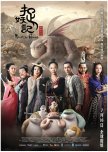
Monster Hunt was a messy quilt made of a variety of genres hurriedly sewn into one piece. Though childish in nature, it had enough disturbing scenes, one should think carefully before letting small children watch it.The lack of clear and consistent narrative troubled me about the movie. A bad monster takes over the monster world and is hunting down the good monsters. When the pregnant ex-queen and her attendants escape, the hunt is on. Monsters are hunting monsters. Humans hunt monsters. It's rough being a squishy tentacled being in this movie.
Jing Bo Ran is Song Tian Yu, the de facto mayor of a backwater town, left in charge when his monster hunting father disappears. In a reversal of gender roles, Tian Yu is meek, a seamstress, and cook. His senile aggressive grandmother scarcely remembers who is and when she does is disappointed in what she sees. Along comes the pregnant hunted queen and her two attendants in human suits. Following them is Bai Bai He as Huo Xiao Lan, a low level monster hunter. When Tian Yu becomes pregnant, hilarity ensues. Eventually, the two humans are left with the baby monster king and have to decide what to do with the little bloodsucker all the while being chased by humans and monsters.
The movie is energetic, bordering on frenetic. Some of the martial arts fights, especially with CGI monsters are creative and captivating. Creatures break into song on occasion. A romance comes out of nowhere. Monsters eat humans and humans eat monsters, it's a dog eat dog world. There are bad monsters and bad humans. While I liked the moral complexity, too often it felt like someone throwing spaghetti at the wall and seeing what sticks. The baby monster, which I did not find adorable, seemed to be used to try to manipulate the audience emotionally into caring about it and it's human caretakers. I don't mind cutesy cartoon characters, but this one bordered on nauseatingly saccharine. And aside from him being the true heir, we're never really told much about the baby king's importance or place in the world. Like Chekhov's gun on the mantle, a rusty sword foreshadows the limping, docile hero will overtake the heroic female warrior protecting him. I cannot overstate how tired I am of this trope.
I enjoyed parts of this movie. Jing Bo Ran and Bai Bai He were affable and had a nice chemistry together. They were believable when dealing with green screen images something not all actors can do. Jiang Wu as a conflicted bounty hunter was fun to watch as he battled monster and human alike. I was particularly happy seeing Elaine Jin/Kam, Sandra Ng, and Tang Wei make appearances. The theme of seeing creatures and humans for who they are and not what they look like always appeals to me even when I had to sort through a lot of other themes in the movie to latch onto this one.
A brain burrowing bug and open air exotic meat markets may not be for everyone. The movie doesn't shy away from death and oddity.
For those who like lots of random action and a plethora of strange creatures, this will be right up their alley. As much as I enjoy CGI children's movies, this one felt too much like a fever dream hopped up on sugar for me. I left it staggering from the sweetness and weirdness overload.
8/6/22
Was this review helpful to you?
This review may contain spoilers
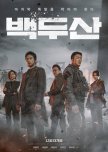
The Korean peninsula hangs in the balance when a volcano on the Chinese border threatens to blow everything sky high! Luckily, for both Koreas, Ha Jung Woo and Lee Byung Hun are on the job!Ashfall is an entertaining disaster and spy thriller flick that doesn't try to take itself too seriously. It has all the characters one would expect in a catastrophic volcano movie. Ha Jung Woo plays The Hero who is supposed to be retiring from his EOD squad (Explosive Ordnance Disposal), instead he's leading a group into North Korea to steal a nuclear bomb to stop the volcano from making rubble out of Korea. Along the way, he has to pick up a North Korean agent/double agent/triple agent?, the always cagey Lee Byung Hun, as The Anti-Hero, who has been jailed in a NK prison. Easy peasy, right? Back home giving them support is, Ma Dong Seok, going against type as The Scientist Who Warned Them All and Jeon Hye Jin as the Politico Who Gets It. Bae Suzy also throws in with the scientist as The Hero's Resourceful Pregnant Wife.
Ashfall actually feels more like a spy thriller film with a cranky volcano in the background. Our plucky band has to deal with betrayals and comes under fire from various political powers that don't want them getting their hands on a nuclear bomb for ANY reason and disturbing the power balances regardless of the fact that both North and South Korea are about to be wiped off the map.
The action is non-stop, almost from the first frame and never lets up whether it's fire from the sky or fire fights. As with most disaster movies, you have to let go of reality and just enjoy the ride as nearly everything that happens is implausible.
The heart of the movie is the bromance that develops between The Hero and The Anti-Hero. Lee Byung Hun's character development and the friendship he grudgingly develops with Ha Jung Woo's character brings out the humanity this movie needed as everyone is moving at breakneck speed.
If you are expecting a rational approach to a cataclysmic tragedy in the making, not only for the Korean Peninsula but having an effect worldwide with scientists and world leaders joining hands and acting altruistically and quickly, you're going to be disappointed. If you are expecting vehicles, people, and the starring volcano to obey the rules of nature, you might want to skip this. This is an entertaining, if at times ridiculous, thriller disaster movie set on high drive with a little bit of heart to make it not instantly forgettable.
Was this review helpful to you?
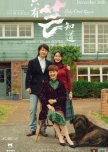
The story begins with a man who had lost his wife revisiting places she loved with her ashes. Throughout the movie as he met people, he told them about different parts of their relationship in sweeping flashback. There was nothing extraordinary about this devoted couple, but it was their devotion to each other through the years that made it meaningful.
Both characters, originally from Beijing, met in New Zealand and worked to find their way in their new country. They assimilated fairly easily, making good friends and starting their own business. However, Luo Yun, the wife, quietly struggled with their idyllic life in a remote town where they ran a small restaurant. Sui Dong Feng, the husband, was the practical sort who found the best in whatever situation he was in. Yang Cai Yu and Huang Xuan had a gentle chemistry that made something magical out of their characters' ordinary existence.
New Zealand should have been listed as a character as there were many shots of its gorgeous scenery, whether green bucolic fields, panoramic mountains, the Southern Lights or oceanic whale watching shots.
The OST was also saccharinely emotional, but fit the mood perfectly. The cinematography bestowed lush, warm shots, nestling us into the embrace of Yun and Dong Feng's life. I could almost feel the director pushing me toward tears, something I usually fight off. Instead of rolling my eyes, I found myself reaching for a tissue at several key moments. If the story was predictable, it also felt sincere in the lavish telling of this couple's love story.
Though dealing with the death of a loved one, Only Cloud Knows avoided melodrama and became a celebration of life and love instead.
Was this review helpful to you?
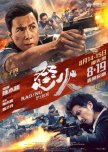
The story is really nothing new, though it does try to show the difficulties Hong Kong's police face with pressure from varying groups. It also asks the question, what does it take to push a good cop over the edge? I was able to call out the major plot points and turning points without reading the synopsis in that it strays very little from stories done before. What Raging Fire has going for it is over the top, frenetic action sequences. Whether with fists, knives, guns, or cars, the action choreography is graphic and breath-taking.
Raging Fire's other strength is its two stars. Donnie Yen as Bong, the tough, honest cop gives a captivating performance as a man struggling to survive in a system that does not reward integrity and sacrifice. Nicholas Tse's Ngo chewed up the scenery and his opponents in a mesmerizing performance of a wronged cop out for revenge. One of the strongest scenes is a quiet, tense conversation between the two men who used to be friends, taut with anger as they play cat and mouse, not knowing for sure who the predator is. Yen and Tse have amazing chemistry.
The rest of the cast, including Qin Lan, who plays Bong's wife, have very little time or moments to stand out. The good cop team and the bad cop team characters are not very memorable.
Raging Fire's explosive action sequences propelled by its two stars' energy tumbles headlong to the climax everyone will know is coming, providing enough entertainment to make this a movie worth watching. Hold on for the ride because the action is non-stop.
Was this review helpful to you?
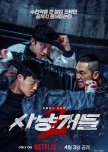
"The only way to grab a beast is to become a scarier beast"
That I am a Woo Do Hwan fan is not a closely guarded secret, but I will say I came into Bloodhounds Season 2 trepidatiously. The pacing and unevenness of season 1 was shored up, but replaced with a lather, rinse, repeat cycle. It was 7 rounds of good vs evil. Someone ring the bell—ding! ding!Kim Geon Woo and Hong Woo Jin are living the dream life in the suburbs with Kim’s mom. They train in the mornings and work for the mom afterwards, happy and content. Kim wins the World Title match and even makes friends with his nasty competitor. Now firmly in the spotlight, he draws the wrong kind of attention. An illegal fight and gambling den (on-line on the dark web of course, this is 2026 after all) boss determines that he needs Kim to be his next fight in order to gain financing and expand his lucrative enterprise. Our Kim may have lethal fists, but he is sweet and pure of heart. “Dirty money always comes with a price,” his mom warns. When evil Baek Jeong is involved, everything comes with a price.
The first thing that has to be said, is that Kim and Hong were the sweetest of puppies, and just about as bright. They had tons of unearned confidence from last season and believed they could handle Baek and his syndicate on their own. It didn’t take long for them to realize that they were going to have to put at least part of the band back together if their loved ones were to survive. These gentle souls cried every episode and required daily pep talks and numerous group hugs. That’s not to say there weren’t deaths and injuries. The stakes for Kim’s Scooby gang were high as several members found out.
The bad guys were completely evil, no vacillating there, especially Rain’s Baek Jeong. He was also the most penny pinching, cheap villain I ever remember seeing. A few of the good guys crossed the line making their moral compass spin. There were faces from last season that joined the fight and some new faces with nebulous motivations. There was a never-ending cycle of threat, rally, retaliate, trying to kidnap mom, threat, rally, retaliate, trying to kidnap mom…which began to get old, along with the episodic weeping pep talks.
I haven’t been able to locate the fight coordinator, but I thought the fights were well done. Fast, vicious, uncompromising, and at times a thing of beauty as bodies danced around the ring. If you are squeamish you will need to look away for a few of the more brutal scenes. Having said that, much like superheroes, their powers came and went depending on the scenario.
I enjoyed Bloodhounds S2 more than the first season mainly because it was consistent, where the cast change last time was jarring (RIP KSR). The boys may not have been strategic geniuses, but they were devoted to each other and their oddly made family. They cared more about each other than hitting people, which was saying something. S2 ended with a couple of scenes to leave the door open for S3. It’s Netflix so you never know.
3 April 2026
Trigger warnings: All sorts of horrific deaths and one ear torn off. Knives, and other pointy weapons used.
Was this review helpful to you?
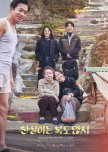
"Nothing happens"
Lucky Chan Sil was a charming “nothing happens” slice of mid-life crisis. Directed by Kim Cho Hee, there were times it felt a little like an inside baseball film as Chan Sil was the producer for an indie auteur much as Kim had been the producer for director Hong Sang Soo in real life between 2008-2015.Lee Chan Sil’s life is turned upside-down when the indie director she has worked for as a producer for years dies suddenly of a heart attack. The people who had praised her work now want nothing to do with her, belittling her as unimportant to the work of the genius Ji. She moves into a room in a small home owned by an older illiterate landlady. Her flaky actress friend Sophia hires her to be a housekeeper which is where Chan Sil meets Sophia’s French tutor, Kim Young. Young happens to be a short film director who tutors to pay the bills. As Chan Sil spends time with Young, she begins to wonder if she is falling in love or merely lonely. Leslie Cheung’s ghost visits wearing his Days of Being Wild underwear offering snippets of advice.
Several times the movie talked about films where “nothing happens” and that often when it looked like nothing was happening there was actually something profound quietly at work. I cheered when Chan Sil said that Ozu Yasujiro was her favorite director, another creator of “nothing happens” films. When Young minimalized Ozu’s work, preferring Christopher Nolan, I echoed her reaction!
So, what did happen in this film? Chan Sil was forced to look at her life and determine her priorities. She had spent her youth dedicated to making films and had lost out on love and family. Yet she had also been surrounded by people who enjoyed films as she did. With a little help from the ghost of Leslie Cheung, Chan Sil turned inward, digging into who she really was and what would make her fulfilled and happy. Old friendships were rekindled and new ones began. I loved the ending and thought it fit perfectly with the mood of the film. If you enjoy films that appear to be lower budget where “nothing happens”, this might be one to try.
“Flowers return with the seasons,
If only we could, too”
3 August 2026
Things that make you go hmmm….Notes: Several of the tags for this film would suggest that Chan Sil was a basket case, which was not the case. She was having to regroup after she lost her job but it was hardly a mental health crisis. Currently, the genres are Romance and Melodrama of which this film was neither. And Leslie was either Supernatural or CS was indeed seeing things. I prefer the former explanation which definitely added some whimsy to the otherwise realistic story.
Was this review helpful to you?
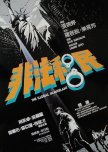
"A wanderer meets a wanderer"
The Illegal Immigrant was Mabel Cheung’s directorial debut, in fact, it was her graduate project at New York University Graduate Institute of Film and Television. Comprised of fellow students and borrowed equipment, with a little assist from Mona Fong, Mabel put together a solid bit of filmmaking on a small budget.Cheung Kwan Chow swam to Hong Kong from the Mainland and then paid a smuggler for a boat ride to the United States. He’s sharing an apartment with Fatty Yuen in New York City. After being picked up by Immigration, Cheung has to find a way to get his green card and he’s running out of options. He ends up paying a young friend’s older sister, Cindy Li, to marry him on the condition they divorce in two years and keep their marriage secret. Like true love, the course of fake marriages doesn’t run smoothly.
The acting in this film was serviceable especially considering they were mostly friends of Mabel Cheung and Alex Law at school. The dubbing was fairly atrocious though with several characters. You could see Mabel trying out different filming techniques and while her efforts were commendable, they also looked cobbled together at times. Much of the action took place in Chinatown off of Canal Street with rundown apartments and buildings covered in graffiti. The music ran from quite well done to awkwardly obvious.
This was an interesting ground view of being an illegal immigrant in NYC during the 1980s. Smugglers demanding money. Immigration Officers dropping in and burdening immigrants with high fines and bureaucratic paperwork in an unfamiliar language. Black market green cards and scam marriages being tossed about. I would like to have known more about Cheung. He was said to be well educated and had performed in numerous kung fu films. He had no legal status in Hong Kong, but his mom lived there. What drove him to the US? Despite the presence of gangs, financial and legal difficulties, Mabel Cheung kept the mood light for the most part. The romance developed rather quickly yet not unexpectedly.
Director Cheung was the Hong Kong Film Awards winner for Best Director in 1986. I’m always pleased when women are given the chance to direct and succeed. And this film also showed women helping women as Shaw Brothers’ Mona Fong contributed $150,000 towards the film. Mabel would go on to direct An Autumn’s Tale in 1987 which I quite liked. The Illegal Immigrant was rough around the edges and had a typical 80s Hong Kong ending but it also felt authentic without preaching or being overly melodramatic. It was a nice show of restraint from a new filmmaker. I gave it a slight ratings bump for being pre-1990 and also being largely a school project.
2 August 2026
Was this review helpful to you?
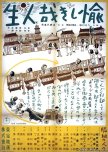
"Go forward with a clear heart like the blue sky"
This Happy Life was a propaganda film that felt like it drew from the much later films Mary Poppins (1964) and Chocolat (2000). Naruse Mikio wove a magical tale of a family who moved into a small community and spread their creative brand of happiness.During WWII a small town’s citizens grumble about everyday annoyances. The barrel maker’s hammering gets on people’s nerves. The clock repairman’s clocks won't synchronize. Spouses argue and snipe at each other and nearly everyone is generally cranky. The Soma family moves in and the consensus is that the newcomers are weird. As Soma and his daughters spread their optimism, kindness, and lessons in frugality, a warm change begins to creep over the prickly residents.
This film was a lesson in I-M-A-G-I-N-A-T-I-O-N. And reframing events to put a positive spin on them. Don’t throw those potato peels away—when fried they are a German delicacy. An egg was the embodiment of chicken breasts and filling. Water puddles became a scene of anthropomorphized dancing raindrops. Anything was possible if you put your mind to it. Even the annoying drumming of the barrel maker became the rhythm for an uplifting song.
Given that the film was released in 1944 the writing was on the wall for the Japanese military. This film encouraged people to keep their spirits up, let nothing go to waste, and do what they could to help their country and community. It wasn't overtly patriotic and militaristic, much of the film’s message would have been apropos to the Great Depression or any time of hardship. Except the part about having children to support the population dwindling due to the war.
I enjoy films where an outsider comes to town and gives the people a new perspective on life and helps to heal old wounds and attitudes. (See Chocolat above). While Naruse could be heavy handed at times the film succeeded in encouraging the townsfolk to find the joy around them using a large dose of imagination and gentle humor.
15 July 2026
Was this review helpful to you?
What we have here, is a failure to communicate*
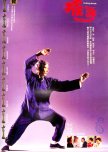
Pushing Hands was director Ang Lee’s first full length film. It was also the first in what critics have affectionately termed the “Father Knows Best” trilogy. Lee’s first three films (unrelated) focused on conflicts between modern children and their traditional fathers, all three films starred Lung Sihung as a father in the middle of familial tension. While entertaining, I found this film to be the weakest of the three.The Chu family household has been set on edge ever since Alex’s seventy-year-old father moved into their home a month prior. Chu senior speaks no English and Alex’s wife, Martha, speaks no Mandarin. The young grandson, Jeremy, has been taking Chinese lessons after school and understands some of what his grandfather says. The wife and father-in-law are basically in a cold war. Mr Chu’s very presence disturbs Martha so much that she has developed writer’s block and has been unable to progress on her second book. One need not speak English to understand her irritated body language and hostile words. Alex ends up listening to both of their complaints at the dinner table, often at the same time, with English in one ear and Mandarin in the other. Mr. Chu is a tai chi master and teaches a class at the local continuing education facility while his grandson takes his Chinese class and Alex plays basketball. One evening, the Chinese cooking teacher, Mrs. Chen, purposefully moves her class into his large room in order to meet the older gentleman. Both discover that they are living in difficult family situations that are heading to a boil.
I struggled with the core conflict of this film with the open hostility Martha showed Mr. Chu. She mentioned that Alex barely spoke of his father for seven years and then “Boom! One month ago, this shows up on our doorstep.” Alex told his father it was his plan all along for him to come live with them. It sounds like he never brought that up with Martha. This is the type of conversation that needed to happen as the father’s arrival would have required some planning and cooperation. Martha’s work space could have been modified for more privacy and she could have taken evening classes with her son to better be able to speak with her FIL. Alex bringing his father over and hoping for the best left his father feeling alienated and his wife feeling resentful.
The film focused on a variety of gaps-language, cultural, generational, and modern vs traditional values. Mr. Chu might have been home and with family but it did not feel like home. Alex had videotaped Taiwanese movies for his father to watch, most of which he was uninterested in. Only the Chinese Opera appealed to him which decidedly did nothing for Martha’s frayed nerves. Mrs. Chen gave Mr. Chu someone he could relate to which both exasperated children used to try and manipulate to their advantage. The older people felt useless and isolated, unwanted in their children’s homes. In a land of material wealth, there was no room for them. As with his other father films, Ang Lee managed to salvage relationships even if they were still damaged. Parents and children grudgingly learned to adapt and find a way to balance their expectations and bonds. And there were those who learned the hard way to not mess with a seventy-year-old tai chi master. Not one of Ang Lee’s strongest films but still quite watchable.
4 June 2026
*Headline note: Quote from Cool Hand Luke
Golden note: 1991 Golden Horse Best Actor Award for Lung Sihung and Best Actress Award for Lai Wang. The acting for these two was significantly stronger than much of the rest of the cast.
Paternal Note: The three Ang Lee “Father Knows Best” films: Pushing Hands, The Wedding Banquet, and Eat Drink Man Woman.
Was this review helpful to you?
The Men Scolded the Woman Who Bothered Me
3 people found this review helpful
Samsung Commercial
The title “The Men Scolded the Woman Who Bothered Me” is both a spoiler and complete summary of this short web film/Samsung commercial. I would say “men” and “woman” was stretching things as most behaved like high school students instead of employees at a major company.Ji Hie’s first day at work doesn’t go well when she returns a wallet to a stranger on the street. The stranger accuses her of stealing the 50,000 won that had been in the wallet. Joo Hyun tells her off and then goes to work and gossips with the other members of his team, including Joo Mi who used to bully Ji Hie mercilessly in high school. Sure enough, Ji Hie walks in and is introduced as the newest member of the team. Joo Mi thinks she can pick up where she left off torturing Ji Hie, but will everyone buy her victim performance?
The film contained a long product placement for Samsung in the middle of the short film. The end credits were also all about their Galaxy products. I’m not against companies making short films that feature their products, the Philippines’ Jollibee famously makes very touching short film commercials. This commercial, on the other hand, was completely graceless. The acting was below average and the bullying storyline was clumsily handled. At one point, in order to highlight a Galaxy product and resolve a conflict, they stepped into absurdity. Everyone was pretty to look at and Samsung was the focal point so it probably succeeded in its goals despite appearing very amateurish. However, I just found myself rolling my eyes at the denouement, completely uninspired to purchase their high-tech equipment. Better luck next time Samsung, maybe get Jollibee on the phone and see who they use to make their commercials.
28 May 2026
Was this review helpful to you?
"I'm still too young to give up"
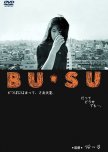
Director Ichikawa Jun’s inaugural film Bu Su (1987), reminded me of Blue Spring (2001) only without the violence. Set around disillusioned high school students with no great prospects for the future it relied as much on mood as it did plot.Morishita Mugiko travels to Tokyo by train alone to start a new life as a maiko while also attending high school. Her aunt runs the house and renames her Suzume. At school, Mugiko silently slides into her class, observing instead of interacting. She walks through the new town filled with unusual people and places. She is demoted to running after the rickshaws when her aunt finds her inability to look up frustrating. During the planning for the school’s 100th anniversary talent show, Mugiko is manipulated into presenting a geisha dance by the class queen bee who has grown jealous of the handsome boy’s attention toward the new sullen girl.
To be called Bu Su was a derogatory name meaning physically or emotionally ugly. Tomita Yasuko was definitely not ugly so it could only be a description of Mugiko’s withdrawn personality. Head down, hair over her face, Mugiko rarely interacted with anyone until one day she stood up for another bu su. Ichikawa captured the isolation a teen could feel when thrust into a room of strangers, knowing teenagers were judgmental and cliquey. Like an alien with three heads and purple skin, Mugiko, attempted to blend into the background as much as possible. We’re told she’d had a rough time in her small hometown, but never learn the source of her difficulties with her mother, school, and father’s death. She slowly made friends with students who were considered odd. What she found was that others were also scared and lonely. She didn’t have a market on insecurity. Her new friends were also seeking meaning in their lives. Was this all there was to life? Despite the social advertising for them, the teens had seen that marriage and jobs weren’t necessarily the answers to happiness.
Ichikawa relied heavily on Tomita’s expressive eyes to sell Mugiko’s emotions. There were times his extreme closeups could be disorienting. Yet this first-time film director also had a flare for beautifully framing his compositions. Tokyo was explored, the parts that tourists see and the parts people avoid. If you like Japanese pop music you might enjoy the “modern” score for the time. I’d be remiss if I didn’t mention Okusu Michiyo as the geisha madame/aunt. She gave a lovely performance as the woman who offered Mugiko/Suzume a chance and also watched as her own daughter chose a life outside their world.
Mugiko chose to perform a scene from the kabuki about Yaoya Oshichi who started a fire (or sounded a false alarm for one) for a chance to see the boy she loved. To master the puppet dance Mugiko had to learn from and rely on others. And she had to learn to look up. Unlike a Hollywood picture, everything didn’t end in cheers and medals for Mugiko and her friends. But even in their failures they gained insight into themselves. Sometimes the past has to be burned down in order to smile at the future. Bu Su wasn’t a perfect film and my score was around a 7.75 which I rounded up to 8.0. I found it flawed and yet also entertaining.
22 May 2026
Explanatory note: Suzume was the FLs maiko name. Much of the film took place with her school friends so to keep things simple in this review I used the name they addressed her by which was Mugiko.
Was this review helpful to you?
"I can't see with my eyes but I can see with my heart"
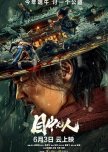
Eye for an Eye was a short, low budget revenge film that punched and kicked above its weight. Another variation on a gifted blind swordsman (Zatoichi!), this wuxia version held its own even if it didn’t break new ground, just bones for the most part.Blind swordsman Cheng Xia Zi is a successful “ghost killer” during the troubled days of the Tang Dynasty. He captures criminals with bounties on their heads, preferring to not pass lethal judgment on them. That changes when a friendly wine maker preparing for her wedding offers him a drink if he comes to the nuptials. Not long after, villains crash the party leaving family members dead and Ni Yan in disarray. Cheng had no desire to get involved but when the local magistrate betrays Ni Yan, he steps in and into a far deadlier and more complicated mess than he had expected.
Clocking in around 70 minutes, there wasn’t much room for character development. The women were particularly underdeveloped and mainly used as hostages or targets, often making stupid decisions. Cheng’s defining characteristic was his unwavering confidence in his ability to take on thirty-armed men. Initially he was happy to rely on his simple bone-crunching abilities that left fighters somewhat disabled. When the bad guys stepped over the line, the demon in Cheng awoke unleashing a powerhouse unafraid of facing down an army. Xie Miao did an excellent job of selling the action. The fights were exciting, increasingly merciless, and well-choreographed. If you don’t care for wire work or one man against many, this film won’t be for you. It for certain stretched the limits of believability, but going into a film about a blind swordsman is probably the first clue that reality is going to be on vacation.
Eye for an Eye had its narrative problems yet managed to still be entertaining largely due to swift moves that actually connected and incapacitated the enemy. As previously mentioned, once the demon was released, opponents stopped hobbling off. The snowy finale was reminiscent of an old children’s joke, “What’s black and white and red all over*” with a decidedly different punchline. Worth an hour of your time if you enjoy martial arts films and keep your expectations low.
14 May 2026
Trigger warnings: Sexual assault that was more graphic than what usually occurs in Chinese films, but no nudity. There was a fair bit of slicing and dicing and decapitations. No graphically spewing blood.
*Answer to the joke---A newspaper (red/read). Only “old” people will know what those are, ask your mom or grandmother. lol
Was this review helpful to you?
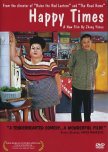
Middle-aged Zhao is determined to marry. Since skinny women aren’t interested in him, he’s turned his sights on plump women in hopes that he will find someone to keep him warm and satisfied. “Big Mom” agrees to marry him though she wants a 50,000 yuan/$7400 wedding to which Zhao agrees. The problem being he is stone cold broke. Friends he has borrowed money from previously are sympathetic, even though this is his 18th attempt at marriage, but don’t have the cash to loan. Big Mom has a blind stepdaughter she treats as a servant and asks Zhao to put her to work at his Happy Times Hotel. The hotel is actually an abandoned bus he and a friend cleaned up in the park to rent out to couples needing privacy. When that financial venture goes awry, he’s forced to manufacture a job for Wu Ying to keep up the illusion he has money so that he can marry her stepmother.
The first thirty minutes were a bit of a slog for me, but picked up when Zhao and Wu Ying ended up forced together. I was afraid they’d go for an inappropriate geezer romance. Thankfully, the duo took on more of a wholesome father-daughter vibe. Though someone needed to buy that girl a robe. Zhao was a good man at heart who bent the truth often in order to try and get ahead. His friends who were also financially challenged and a little peculiar accepted him as he was. The group of lovable losers came to like Wu Ying and did what they could to help her knowing their scam setup would be short lived at best. Big Mama, an expert in consumption, and her overly entitled son, were the annoying villains in this farce. Her selfishness and greed only highlighted Zhao’s desperation for a companion.
This odd, offbeat comedy had its humorous moments and others that fell flat. What was revealed as the story progressed were people capable of genuine kindness and friendship. Zhao and Wu Ying desired the best for each other even if they knew that their lives would be filled with hardship. Happy Times came all too briefly and usually occurred in the presence of loving friends, the gift that requires no wealth. Not one of Zhang Yi Mou’s stronger films, but still enjoyable.
9 May 2026
Housekeeping Note: My 1400th film
Was this review helpful to you?
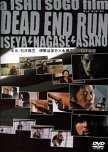
"Meeting someone is never a coincidence"
Dead End Run was a bizarre art house film. Disturbing, with dizzying shaky camera work, and yet also intriguing. Three different protagonists in three different stories, running for their lives, find themselves in curious dead ends.Last Song
This was the strangest and my least favorite as it lapsed into a “zombie” song and dance. Surreal. 6.5
Shadows
Two hit men find themselves at a dead end and what appeared to be an existential crisis for both. Unhinged bordering on comical. 7.0
Fly
A criminal is cornered on a rooftop holding a silent girl hostage. Both are at different kinds of dead ends. 8.0
I was not a fan of the nausea inducing shaky cam, especially when it was sped up and combined with other special effects. I could appreciate it, but did not enjoy it. The music also sounded like it came straight out of the 1970s. Much like the camera work, you’ll either love it or hate it.
The moon and mist played a strong role in the first two fantastical stories while the sun made an appearance in the third one. Pay attention to the jewelry shown in the initial hallucinogenic run with psychedelic effects and colors flowing like a kaleidoscope on a bad mushroom trip. They show up later. Honestly, much of the film had the look of someone who had partaken of something that led to a distortion of time and space. The runners were in amazing shape. One ran through the night, day, and night again. I’m sure it had some higher meaning my literal brain could not discern. All three couples ended up in similar positions for different reasons.
Dead End Run is one those films where the beauty/meaning is in the eye of the beholder. It’s not a film I could say I truly liked, but I did find it interesting and worth a watch just to once again experience director Ishii Gakuryu’s creativity and imagination.
6 May 2026
Was this review helpful to you?
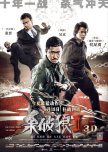
Officer Chan Chi Kit has gone undercover and become hooked on drugs in the process. When a kidnapping he’s supposed to be conducting goes awry, he ends up being the kidnapped party. Held in a Thai prison, Kit is at the mercy of the crooked warden, Ko Chun. His uncle, Detective Chan Kwok Wah, will stop at nothing to rescue his nephew, even defying the police department to do so. Working at the Thai prison as a guard is Chai. Paid to look the other way at some of the unsavory dealings, he stays there to pay for his daughter’s cancer treatment as he searches for a bone marrow donor for her. The Big Bad, Hung Mun Gong, also has health concerns. He is in desperate need of a heart transplant with the only donor available to him…his brother. What to do? What to do?
The story for the film was straightforward yet the director/writers decided to make it a nausea inducing tilt-o-whirl of flashbacks with no warning. The past events weren’t that complex that they needed parsing out to make the film more suspenseful. Nor were the events over a significant span of time. Aside from the flashbacks they added coincidence upon coincidence upon coincidence. Given the human organ trafficking, there was a vague, brief conversation over which lives were more valued. Chai had to decide the line of sacrifice he could not cross for his daughter. Chan had to weigh his boss’ orders against the life of his nephew. And Hung was far less conflicted over his brother’s heart.
The acting was sufficient for the story line. Simon Yam and Wu Jing were both resurrected from SPL 1, though not the actual characters. Zhang Jin was largely called upon to look menacing with his cheekbones sharp enough to cut diamonds. Tony Jaa is usually a stronger fighter than actor, but he managed to pull off the concerned and conflicted father role. At nearly 60 years of age, old-time kung fu fighter Ken Lo, was a nice partner for Tony to work with.
Now for the fights, the main reason to watch this film. The first fight between Wu and Jaa was disappointing as the two threw numerous windmill punches. As the film progressed, the fights improved. When the final battle took place, the long-awaited fast fists, flying kicks and knees, of Wu, Zhang, and Jaa arrived full force. Though Tony’s normally bone crunching elbows and knees felt a little subdued. In his films he usually hits his opponents to incapacitate them, where here, they often bounced back up. Wu Jing is delightfully fast, yet it wasn’t until much later in the film when Kit finally got his bitch on and remembered he could fight. The concluding scene was absolutely ridiculous, hilariously so, but also weirdly fun in a sadistic way. If you are a fan of any or all three martial artists, SPL 2 is worth giving a try.
28 April 2026
Trigger warnings: There were a few slicey scenes with body parts cut off.
Was this review helpful to you?


