

 135
135 431
431 16
16 2
2 6
6 3
3 8
8 10
10 3
3 13
13 1
1 1
1 1
1 1
1 2
2 6
6 8
8 5
5 9
9


"Everyone is a jerk!"
What’s Up Connection was a bizarre film by Yamamoto Masashi that felt like it was made up as they went along. Set primarily in Hong Kong with a side trip to Tokyo, the film focused on a family of grifters and con artists attempting to save their homes from developers.Chi Gau Shin wins a trip for two to Japan. Coincidentally, his mother wins a trip to Bali and his dad a trip to Thailand. No one thinks anything is suspicious about this. Gau Shin’s lover refuses to go with him because he’d rather go to Disneyland than shopping. Upon arriving in Japan, he discovers that his guide is new, speaks only broken Cantonese, and works for a cut rate company. Very cut rate. After a disappointing trip, culminating in being robbed, Gau Shin finally makes it home, with his tour guide and robber in tow. Once home, he discovers that a big corporation is buying everyone out and his girlfriend is now sleeping with one of the developers. His family has to decide whether to take the deals offered or fight.
What’s Up Connection showed a view of Japan rarely seen. Yamamoto filmed real homeless encampments and people. In Hong Kong, the problem of real estate development on low-income people was attested to. Relations between Hong Kong and Japan were also mentioned. The rest of the film was a migraine of a mess. There was an abundance of random action, noises, and bright colors. Characters were ill-defined and for the most part not terribly likeable. It was a world with an 8-year-old hacker, a mother who became angry when her kids went to school, pirate costumes, a UFO, blow up sex dolls, and one character who was played by two different actors.
This type of chaotic film with random nonsense bolting across the screen for two hours was not something I could enjoy. It had some entertaining moments and the family’s solution to its problem was interesting but not enough for me to recommend unless Yamamoto’s creative outlook on the world is your jam. There are plenty of people who love his unconventional style, so if you are one, this film might be one to check out.
17 July 2025
Triggers: Bare butt and a masturbation scene.
Was this review helpful to you?
Needed more proofing
Croissant had a sweet premise for a web movie, but the production values and acting failed to rise to the occasion. Oh yeah, there will be baking puns.Sang Eun is a whisk taker. Abandoning her job and her law degree she attended pastry school and opened a bakery with her crumby boyfriend. A born loafer he rarely works and often gives away their profits buttering up his private yoga instructor. Gong Hee Jun spends most of his time studying for the civil service exam. He’s afraid he’ll grow mold, never having been able to hold down a job. After helping Sang Eun when she was injured, he applies for a job at her bakery. For Hee Jun it was love at first bite after tasting her croissants. He worries that his reputation as the “Assistant for Shutting Down” businesses will jinx her shop and burn her reputation.
Even in a shorter film, the dots knead to be connected. Hints were dropped, making it difficult to pin down relationships and sub-plots. The editing and production values often fell flat. Nam Bo Ra proved herself with her performance. Hyuk on the other hand mumbled through the entire film, with Hee Jun coming across as flavorless. I wasn’t sure if that was supposed to be a character trait or was a natural speech affectation.
Perhaps with more dough and in better hands the plot could have been smoothed out. I might not have loafed everything about this film but I donut want to say there was nothing to like about it. It had a nice message about persistence and going against the grain to bake your dreams crumb true!
14 July 2025
Was this review helpful to you?
Breaking and flashbacking
Breaking and Re-entering was a frothy heist flick starring a group of likeable actors. The plot attempted to take a fresh twist on the genre with limited success.Chang Po Chun (the strategist), Uncle Bin (master of disguise), Kao (the hacker), and Wen Hao (the hitter) rob a bank only to find they’ve endangered an old friend and must somehow put the money back. The only problem is that the person who hired them to steal the loot wants them dead and the money in his personal vault.
The cast was the strength of this film making the found family believable. Chen Bo Lin, Frederick Lee, Kent Tsai, and JC Lin had a nice, brotherly chemistry, even when at each other’s throats. Christ Wu Kang Ren, who is currently listed incorrectly as a guest star, played the villainous scumbag, a role he’s played more and more of lately. Cecilia Choi did a fine job as the love interest who had no problems with Po Chun being a criminal and knew exactly where to hit to bring a man down.
Despite the strong cast, the film looked more like a drama episode with writing to match. Perhaps I’ve watched too many heist films, but I’ve grown weary of the, “let us show you how we really pulled off the heist flashbacks” after making it appear they’d failed routine. There were also numerous flashbacks for the boys and for the derailed romance. Plot "twists" weren't very surprising, I was calling them out long before they materialized. I also wasn’t a fan of jokes that smacked of homophobia.
Overall, B & R was diverting entertainment if not riveting. The cast was fun to watch even if the script was riddled with onion pancake size holes in it. 7.25 rounded up to 7.5
11 July 2025
Was this review helpful to you?
Rebel without a Cause only with boats
Nakahira Ko’s sexually provocative film Crazed Fruit was the brother of all love triangles. Back in the days when Hollywood’s Desi and Lucy had to be shown sleeping in separate beds, Natsuhisa, Eri, and Haruji broke through societal norms and carried on torrid affairs with each other in the same bed, boat or on the sandy beaches.The Sun Tribe led by Natsuhisa and Frank was a group of bored well-to-do young people always looking for fun or trouble, whichever one they ran into first. They aimlessly killed time while railing against the establishment and rigid societal traditions. Natsuhisa’s little brother Haruji was more strait laced and gentler in temperament. Haru bumps into a beautiful girl in the train station and falls instantly in love. After they meet again by accident, his heart is sealed. Trouble arises when Natsuhisa discovers Eri’s secret and blackmails her into sleeping with him.
Though tame by modern standards there was no doubt that this film pushed the envelope for 1956. No bare bits were shown but the camera lingered suggestively over areas often considered off-limits. Characters discussed their sexual escapades as the men rated women. Post-coital moments left little to the imagination. And I’ve never seen a Japanese film with so many scenes with characters in swimsuits either.
I had no issue with the sexual content. My concerns were more about character development or the lack thereof. The brothers were close and one would have been labeled ‘the good one’ with the other one labeled ‘troubled’. That shorthand was about all that was given. Both men were obsessed with one woman and dangerously jealous. Eri, the femme fatale juggling three men, was the most thinly drawn. She supposedly loved Haru, was sexually attracted to Natsuhisa, and for some reason at the age of 20 was married to a man twice or three times her age. The volatile mix led to a suspenseful and violent conclusion.
Women may have been more sexually liberal but it was still a film written by a man which lent itself to certain biases. Consent was the male interpretation that “no” meant “yes” which was troubling. The Sun Tribe spent much time rating women and figuring out ways to meet new flesh. They may have rebelled against tradition but that didn’t mean they were any more evolved.
The cinematography was a mixed bag. Some of the shots were beautiful and thrilling. The characters spent a great deal of time either in cars, boats, or on water skis. The backgrounds for all three were laughably bad. Hawaii and Hawaii themed films were popular during the mid-1950s through the 1960s which Crazed Fruit reflected. While not set in Hawaii, the gang routinely wore Hawaiian shirts and played the ukelele. There were numerous scenes of the characters skiing which also seemed to be a popular theme from this time period.
Crazed Fruit explored the lives of (wealthy) children who had been born during WWII, lived through the bombings, and rebelled against the status quo as the country sought to find its own footing. While I could appreciate what the director was seeking to accomplish, I didn’t consider any of the characters particularly appealing. Natsuhisa was reprehensible, Haru was a blank page defined primarily by his desire for Eri, and Eri was only a vessel for the men in her life. The biggest lesson I took away from this film was to watch out for the quiet ones, still waters may run deep, but so does jealousy.
28 June 2025
Was this review helpful to you?
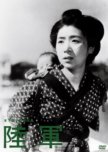
"It's not important if your son lived or died"
Army was a 1944 propaganda film by Kinoshita Keisuke. As a foreigner it was a bitter pill to swallow watching 3 generations of boys being taught that their main duty and goal in life was to die for their country and emperor. Ask no questions, entertain no doubts, have not so much as a frisson of fear for dying would be honor and glory to the country and family.At the beginning of the Meiji Era, the Takagi family is hastily packing up their belongings to flee the oncoming army. A wounded samurai bequeaths Lord Mitsukuni’s History of Japan to the family before he runs back to the battle that is already lost so that he can die for his lord. Thirty years later the grown son Tomonojo tells his son Tomohiko that “Whether you live or die, winning a war is a joy for the nation.” Furious at hearing that Russia is pressuring Japan to return the Liaodong Peninsula to China after the Sino-Japanese war, Tomonojo races to Tokyo to confront an old friend about it. *Okay, a brief interjection, this line of reasoning reminded me of The Princess Bride. Paraphrasing, “they are trying to take what we have rightfully stolen!”* While in Tokyo he suffers a heart attack. Tomohiko goes to Tokyo and is berated by his father for coming to the hospital and not honoring the emperor first. Tomonojo’s only desire is for his son to become a great soldier. Tomohiko’s health prevents him from fighting during the next war which distresses him to no end. He makes it his goal for his son to be a soldier in the next war, whenever and wherever it might be. Much to his father’s disappointment, Shintaro turns out to be a gentle, sensitive boy.
This movie was tough to get through. There was nothing subtle about it. The characters repeatedly mentioned the Emperor’s Five Principles. Sons were raised by their mothers but returned to the emperor so that they could die for him. Parents were not to be concerned about their children once deployed. “It’s not important if your son lived or died.”
Japan’s inevitable victories could have no nuance for Tomohiko. When someone suggested that Japan would have been a Mongol colony if the Divine Wind aka a tsunami hadn’t saved them, that was sacrilege! “If you were a true Japanese man, you’d be too ashamed to say Japan would have lost.” His over-the-top patriotism came across as self-indulgent, especially when those around him often had a more open-minded view of history. His ramblings sounded unbalanced which made me think Tomohiko being portrayed as a sore loser, terrible businessman, too sickly to fight, and a hothead was what caused Kinoshita to be banned from making movies until after the war. That was until the final minutes of the film. Unlike other propaganda films I’ve seen, the ending was what caused a real life general to call Kinoshita a traitor. The gripping scenes were beautifully shot and heartbreaking to watch. Tanaka Kinuyo gave one of her better performances without saying a word. Finally, genuine parental emotions were allowed to break through the stringent propaganda.
Army was heavy-handed in its message that young men’s lives were only meaningful in their deaths for the country and emperor. Two scenes with authentic parental concerns made the film and message more bearable, even if Kinoshita paid for the honesty. Will most likely only appeal to fans of the director or history buffs.
11 June 2025
Was this review helpful to you?
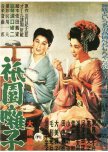
"A geisha's lie is not a real lie"
Mizoguchi Kenji once again explored the plight of women, especially those who served men in A Geisha. Ideally, well trained geishas entertained their male customers with their musical skills and genteel company, however, a barely concealed underbelly of prostitution bore out a more unsavory livelihood for many of the “Intangible Cultural Assets.”Eiko winds her way through the streets of the Gion to find her deceased mother’s best friend, Miyoharu. Unwanted by her father and wanted too much by her uncle, Eiko has no place else to turn. She begs Miyoharu to help her become a geisha. Miyoharu gives in and pays for Eiko’s extensive training. When it’s time for Eiko’s debut Miyoharu is forced to borrow a substantial amount of money from the teahouse madame not knowing who is financing Eiko behind the scenes. The two women who have thus far refused to accept patrons may not have a choice when their circumstances turn dire.
This topic was used in a variety of films featuring geishas and bar hostesses. Women who accepted patrons or who turned tricks on the side seemed to get ahead in the night world of Japan. Women were interchangeable depending on whether a man wanted a newer or older model. One young geisha had a 62-year-old patron her mother had arranged. These men were not used to being told no and often took what they wanted. Eiko mentioned a new law that protected geishas, but everyone knew it was in principle only. The “living works of art” were simply told to “close your eyes.”
Kogure Michiyo gave a moving performance as the veteran geisha. One scene as Miyoharu slowly removed her kimono in order to do what she dreaded was silently heartrending. Wakao Ayako’s Eiko went from a naïve and exuberant maiko to a young woman who saw the shining beauty of the geisha world pulled back to reveal the money and depravity underneath. Regardless of what the clients did, the women were expected to be compliant.
Mizoguchi created an aesthetically graceful film of floating geishas that also showed the crass and contractual side of humanity. While the central subject of a woman’s plight and criminal lack of options had been covered before, often by Mizoguchi himself, A Geisha stood out with the bond between Miyoharu and Eiko. The loyal and protective relationship the women forged together as they faced horrendous obstacles was well worth watching this film.
10 June 2025
Trigger warning: Attempted sexual assault
Was this review helpful to you?
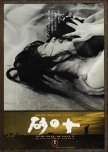
"Are you shoveling sand to live, or living to shovel sand?"
Woman in the Dunes is a classic Japanese film that I’ve put off watching for a few years. Not for any particular reason, I just was easily distracted by other films. And the two-and-a-half hours running time tended to drop it down the list as this Butterfly can have the attention span of a gnat. But today I dusted off my courage and hit play.Note: We are not told the Entomologist’s name until the last frames so I will just call him E, because any term ending in ologist I usually screw up and trip over. The FL was never given a name so I’ll refer to her as The Woman, much like a character in Sherlock Holmes.
E is searching remote sand dunes hoping to discover a new variety of beetle that would be named after him. He misses the last bus out of town and a helpful villager tells him he can spend the night with a local. The Woman’s hut lies at the bottom of a sand dune pit and requires climbing down a rope ladder. She is very hospitable and strangely spends the night shoveling sand which the villagers haul up in buckets. The next morning when he attempts to leave, the ladder is missing and the unnatural sand cliffs are impossible to climb. He ascertains that he has fallen into a sand trap and is expected to shovel sand for his food and water with no possibility of parole.
The most beautiful and compelling character in this film was the sand. Director Teshigahara Hiroshi filmed grains of sand at the microscopic level and far above showing the mesmerizing rivulets across wide dunes. It was also unrelentingly invasive as it sought to take over the house and bury it minute by minute. Only for a minutes after a weekly bath were the characters bodies not covered in the tiresome fragments. They often appeared as if cursed by Medusa and turned to stone. The unearthly and unnerving music highlighted the strange shifting world the characters inhabited.
“Are you shoveling sand to live or living to shovel sand?”
Failure to shovel sand meant no food or water. The Woman was as much of a slave as E. How long had she been there? Was it a generational enslaved caste? She seemed to think of it as necessary for the village, but she never climbed the ladder and joined the villagers. It would never occur to her to leave. E struggled to escape several times before seeming to succumb to his plight. Was shoveling sand a parable/allegory about work? Especially salaryman work? Meaningless, repetitious, and almost impossible to quit. Other than enriching the union, it didn’t benefit society as a whole because anything made out of the cement it went into would be substandard and possibly deadly. There were other slaves we heard about but didn’t meet.
The characters lived on the bottom of the survival pyramid. Through a continuous grind of backbreaking tedious work, they received strictly rationed and controlled food and water. The sand continuously threatened to consume their shelter and their lives. They participated in raw, carnal sex. But eww, sandy sex brings on a whole host of indelicate problems. The pit provided no entertainment, no variety, and no real choices. The only true autonomy they had was to live (obey) or die (disobey). The woman desired a radio. Why? The outside news would only mock their isolation and enslavement. E’s curiosity ebbed until he accidentally made a discovery that excited him. Given his mental enslavement the revelation served to trap him more tightly.
The film reminded me of the original Star Trek’s pilot called The Cage. Warning! 60 year-old spoiler! Beings with telepathic powers needed humans to provide physical labor for them. They set a trap and used a beautiful woman as bait and reward. They also perversely enjoyed watching and punishing the humans. The villagers in The Woman in the Dunes were both perverse (they liked to watch) and cruel. Perhaps I’ve belabored the point attempting to understand this film and the story was simply karmic payback for the Entomologist trapping bugs in glass tubes and then pinning them to boards. In that case, he probably deserved what he got. Ƹ̵̡Ӝ̵̨̄Ʒ
9 June 2025
Trigger warnings: There were a couple of nude scenes, but sexual encounters were done “tastefully” and implied more than showing body parts. There were bugs but not the ooey, gooey, or eight-legged kinds.
Was this review helpful to you?
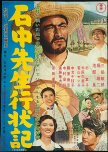
"My ear works better than your nose"
Conduct Report on Professor Ishinaka was not what I expected. The titular Ishinaka showed up in all three independent love stories to give his own brand of wisdom to characters in need.Buried Gasoline
Kawai mentions that late in the war he was part of a group that buried over 400 drums of gasoline on the property of orchard owner Yamazaki. Writer Ishinaka, villager Nakamura, and Kawai dig with permission on Yamazaki’s land dreaming of what they will do with their new found wealth. It doesn’t take long before the men realize Kawai is far more interested in Yamazaki’s daughter than he is the buried gas.
An Argument
Mariko and Shuichi are embarrassed when they find out their fathers have gone to a burlesque show. They decide to shame them and maybe get some new clothes out of the deal as well. The tables turn when each child takes their father’s side in the argument tearing the lovebirds apart.
A Carriage of Hay
Yoshiko makes the long walk to town to visit her sister in the hospital. At the hospital a fortune teller says she’ll meet her future husband within the next day. After a long visit Yoshiko begins the walk home. A neighbor lets her hitch a ride in his hay wagon. They stop for a quick break and food. When it’s time to leave Yoshiko accidentally climbs up on the wrong hay wagon and falls fast asleep. It’s dark when she wakes up in a strange place. Shy farmer Teisaku and his family take her in for the night.
Each story featured gentle humor and young romance. Kawai used subterfuge in order to see pretty Moyoko. Mariko and Shuichi’s relationship and love were tested as they picked sides in their fathers’ fight. Yoshiko found the nearly mute Teisaku endearing as they spent an evening together.
The story was not Naruse’s but men were still shown falling back on their baser natures, especially in the second story where all the respectable men in town were eager to see the naked women dance even as they derided the show. During the third story, Teisaku’s mother summoned a constable to write up a letter stating that the mother had protected Yoshiko’s virginity and that she left intact. I suppose anyone seeing that sexy beast Mifune Toshiro would be given cause to wonder. Yet it was still a distasteful leftover of a rigid patriarchal system. Ishinaka appeared in each story to give the lovers’ romances a little push in the right direction, like a middle-aged Cupid. Happily, this movie was in very good shape, so many of Naruse’s older ones have been degraded with time. Elements of the stories were heavily dated, but overall the stories were charming and uncharacteristically romantic.
6 June 2025
Little note: Shimura Takashi made a tiny cameo as one of the high ranking burlesque show customers
Was this review helpful to you?
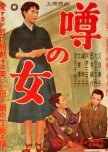
"When will there be no more need for girls like us?"
Once again Mizoguchi Kenji showed the plight of “geishas” in The Woman in the Rumor. It starred Tanaka Kinuyo as the owner of a relatively high-end, low-end brothel and the mother of a daughter who resented the family business.Hatsuko has brought her daughter, Yukiko, home from Tokyo. After her boyfriend broke ties with her due to her mother’s business, Yukiko attempted suicide. At first Yukiko was hostile and cold toward her mother, the women, and the doctor who looked over the "geishas.” She came to fully realize how the money her mother spent on her education and living expenses was earned. The geishas weren’t morally bankrupt, rather girls from poverty-stricken farm families with few career opportunities. What Yukiko didn’t know was that the same doctor who had taken a romantic interest in her had also been romantically involved with her mother for some time.
Other than the problem with the doctor being an opportunistic jerk, a female character once again found herself in the unenviable position of being older than the man she was involved with. Tanaka was 11 years older than Nakamura Jakuemon IV (aka Otani Tomoemon) who was 11 years older than Kuga Yoshiko. Of course, the latter pairing was not the horrific societal hurdle that the former was. While Hatsuko had the audacity to fall in love with a younger man, her business was also not honorable enough for a penniless and ethically challenged doctor. Mizoguchi liked to show women suffering and poor Hatsuko’s ego took a merciless beating.
The geishas in the house were shown caring for each other even as they bemoaned their pitiful pay. Mizoguchi didn’t delve into the darker side of prostitution and the toll it took on a woman’s mind and body. He did, however, have a character lament the sad cycle of young girls entering the profession as others aged out, all for the pleasure of men. It also showed how few opportunities there were for a girl or woman to provide for herself and/or her family. This film primarily focused on Hatsuko and her relationship with her daughter. The rift between them could only be healed with Yukiko coming to understand her widowed mother’s position and feelings.
The Woman in the Rumor was the last film Tanaka would make with Mizoguchi, in part because he died a few later and in greater part because he tried to thwart her from becoming a director. This film ultimately worked for me as mother and daughter learned the valuable lesson, 'sisters before misters' or 'mothers and daughters before calculating doctors with wandering eyes and hands syndrome.'
"...most men hold questionable views."
1 June 2025
This film is also known as The Woman of Rumour
Was this review helpful to you?
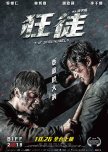
Is it ever too late to become a good man?
The Scoundrels was director Hung Tzu Hsuan feature film debut. Starring Wu Kang Ren (formerly Chris Wu) and JC Lin it was a decent first film, though nothing groundbreaking and leaning more toward Korean crime films than Hong Kong.Rui (translated as Ray in the version I watched) tickets cars and clandestinely stashes GPS trackers on luxury vehicles to be stolen later for the gang he works for. His life took a wrong turn when he was a professional basketball player and attacked a fan during a game leaving the man in the hospital. Racked with debt from the incident and labeled a criminal he turned toward the unsavory way of making a living. While ticketing a car late at night he is kidnapped by the “Raincoat Robber” which leads to a deeper involvement with the dangerously enigmatic crook.
The Scoundrels wasn’t very deep though it did try to make a comment about society treating petty criminals and murderers the same, which kept people from reforming and starting over. Rui wasn’t a very sympathetic character nor was his background or personality expanded upon. Hot-headed, always spoiling for a fight, impulsive, and quick to place the blame on others for his actions, it was no surprise he ended up on the wrong side of the law. He was unable to envision or accept consequences which didn’t help people give him the benefit of the doubt. Wu Shun Wei aka The Raincoat Robber also lacked character depth but Wu Kang Ren managed to grant the baddie much needed charisma and an underlying menace. Rui and Wu had a ‘don’t turn your back on your bro’ bromance. The two female characters were blank canvases never filled in. Jack Kao played a veteran cop who had Rui tried, convicted, and executed in his mind before ever gathering all the evidence.
Hung made use of dim, cramped alleys and dilapidated stairwells for much of the settings. There were numerous brawls between Rui and the gang and Rui and Wu against the gang and finally the no holds barred fight between Rui and Wu foreshadowed in the first scene of the film. A few of the fights had dark humor in them though the fights became more brutal as the film went on. There was an element of Wylie Coyote as characters survived steep falls and bloody blows to the head. Double-crosses led to more double-crosses and more fights.
The Scoundrels was fast-paced which helped the viewer not have time to puzzle over plot holes and lack of character development. Overall, it was entertaining even if it needed narrative help.
30 May 2025
Was this review helpful to you?
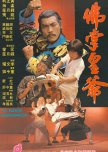
Here is where I usually give a snippet of the plot. Even though the prolific Ni Kuang helped write the script, it lacked coherency. There were the usual Ming rebels, though Mang’s clueless Hsiao Hai didn’t seem to be in on their plotting. The rebels were pretty much forgotten at one point and the conflict then centered around two competing fighting styles. The Sleeping Lo Han style and the Buddha’s Fist were both taught by the same master, but the school split in two with the Lo Han students joining the Qings and the Buddha’s Fist crowd following the Mings. The Prince wants to wipe out all of the BF’s practitioners including his old classmate crazy monk San Lu.
The story was slow and boring for most of the film. The fights and training sequences weren’t great either. Finally, with about 30 minutes left in the film, the action, if not the story, picked up. Lung Fei and Hou Po Wei had a nice spear fight against the unarmed Mang Hoi. The Martial Arts Director of the film, Chin Yuet Sang, played the crazy monk. He had his own fight with Hwang Jang Lee before Mang Hoi tagged in. Mang was affable enough but didn’t have much screen presence. One of the more acrobatic fighters, Mang’s high flying was rather limited. I’m not sure why they would hire one of the best kickers, if not the best kicker, Hwang Jang Lee, and then not let him cut loose. The final fight was highly choreographed dance steps, faster than some others from the era, but still rather stilted. All in all, it was pretty disappointing.
The movie used many of the sets from Hell’s Windstaff. There was also a running gag about Hsiao eating any puppy or dog he ran across. The shaolin monks were petty and mean. Hsiao wasn’t very bright. Aside from Hwang Jang Lee’s sinister presence as the Big Bad, the film didn’t offer much. Only for fans of the actors, not the worst old kung fu movie by a long shot, but definitely forgettable.
25 May 2025
Was this review helpful to you?
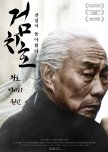
Casanova Wong returns!
Tiger’s Trigger was a low budget, no actually low budget would be too high budget for this flick, spare change in the couch film. I knew within 30 seconds it was not going to be a great movie, but it starred Casanova Wong aka Wang Ho and that was enough for me to watch.A nameless teenage girl takes care of her dying mother in the hospital. Her phone’s alarm is set to go off when she needs to roll her mother over. Sharing the same room is an older man taking care of his wife suffering from dementia. The two rarely interact and the older man rarely speaks, that is until fate brings a gun into the girl’s hands. The Korean mafia is on the hunt for the gun and the diamonds hidden in it. As fate would have it, Viper, the one-eyed villain, turns out to be the nemesis of the elderly man nicknamed Sabretooth. And Sabretooth has no intention of letting the dirty cops and gangsters harm his underaged roommate.
Casanova Wong aka The Human Tornado worked in many old Hong Kong kung fu flicks. With his long gray ponytail he looked like he stepped out of one of those 1970s movies. He left acting in the 1990s with this film marking his first return in front of the camera. He acquitted himself well, especially with his fight against old kung fu film actor Won Jin. Wong was nearly 70 at the time of this film and Won around 60. The two old dudes showed they still had something left in the tank.
While I may have been cheerleading for the aged kung fu fighters, the story was a let down as well as the direction. This looked like a high school student might have filmed it on his cell phone. The hospital was completely empty except for the main characters. Though Casanova still had a nice screen presence, the bad guys overacted and the teenager wasn’t one of the stronger young Korean actors around.
Tiger’s Trigger was far from a great movie but it was great to see an old kung fu artist have the chance to grace the screen again and show he still had a few high flying kicks left. And he was totally rocking that silver ponytail.
21 May 2025
Trigger warning: CGI spewing blood, dismemberment, and close range gun shots
Was this review helpful to you?
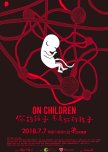
"Do you love me?"
On Children was an omnibus of 5 long episodes or television movies, each self-contained with their own story and characters. Like creepy episodes of the Twilight Zone-fantasy or science fiction was involved in every story about children and their domineering mothers. There were different themes, but a predominant one was, “Be careful what you wish for.”Episode 1-“Mother’s remote” aka “I won’t disappoint Mom.”
Pei Wei is a better artist than student though he does try hard. His efforts and lack of perfection are not acceptable to his mother. He is about to learn the dark side of “Groundhog Day.”
Episode 2-“Child of the Cat” aka “You only want me to become what you wish to see.”
Guo Yan’s parents argue often over his inadequate test scores and beat him with the stick of discipline just as often. A box of cats and a violent girl at school open up a new dimension for improving said test scores, but of course, the trick comes with a price.
Episode 3: “The Last Day of Molly” aka “Who’s looking? Why do you care so much about them?”
Molly wants to be a writer, but her mother is focused on Molly becoming a doctor. When Molly commits suicide, her mother is introduced to a machine that can help her see Molly’s memories. This mother comes to realize she didn’t know her daughter at all.
Episode 4: “Peacock” aka “Giving birth to children is like an investment.”
Qiao Yi goes to an exclusive school populated by the super-rich. Her parents work numerous jobs to pay for her tuition. One day while eating lunch, the school’s caged peacock makes her an offer she can’t refuse.
Episode 5: “ADHD Is Necessary” aka “A person’s value shouldn’t be determined by a single test.”
In the future, women are inseminated with genetically engineered embryos. Yang is a superstar mom whose last child had been a gold medal student. Her current child, Ruo Wa, is struggling scholastically. In this world scholastic failure is met with permanent consequences.
In every episode, the mothers used emotional and physical punishment for children failing to live up to their standards. The primary goals for the children were to be obedient and to excel in school. The children were suffocated and their dreams crushed under their mothers’ heels. The cults of education and motherhood demanded perfection. Their children were their hope and their investments like stock market commodities. The mothers used their children as ladders and tools to enhance their reputations and/or lifestyles. The children were compared to others, called “useless”, with their class rankings determining their worth. They were often driven to desperate and irrevocable decisions. While the mothers were shown as unflinchingly driven and in some cases heartless, the fathers were often a softer place to land, with the exception of Guo Yan’s abusive father.
On Children was a tough watch. Watching kids barely given room to breathe much less have fun, controlled by selfish draconian mothers made me wonder if there would be more matricide attempts. But these kids often turned their anger and despair onto themselves. A common question was, “Do you love me?” A simple question that rarely had the answer that they or we would want to hear. On Children was well made, with overly long episodes, and quality acting for the most part. But not an easy binge. I did learn a valuable lesson though, if a talking peacock tries to make a deal with you, walk away, or maybe run.
15 May 2025
Trigger warnings: Suicides and suicide attempts, self-harm, and animal abuse.
Was this review helpful to you?

"Widows grow flowers"
The Widow aka Yamome is a short film that has won several film festival awards. The poster and the awards intrigued me. I thought there would be a cruel or vengeful twist to the short. Instead, I was left wondering if I'd missed something.Oohara Tokio plays Tanai Tomoko, a forty-year-old widow. She believes that widows can't be alone and need a man so she joins a dating site. The woman might want to find a hobby, make friends, or join a club. Instead, she meets Higuchi Satoshi who is 15 years her junior. He's handsome, charming, and has no problem letting her pay for their meals. Because Tanai is a bad drunk, she refrains from drinking on their dates. She buys him gifts and he suggests they move in together. Things take a downward turn from there.
Again, based on the poster, I was ready for the knives to come out. Instead I found the ending tepid at best. The short films it was up against, must not have been very strong. To quote Tanai, I wasn't angry or sad, just disappointed.
13 May 2025
Spoilery comments below---
The following comments are spoilery, if you are spoiler sensitive, please skip---
This short film was perplexing to me because Tanai never smiled and remained rigid through her dates. You would never know that she was serious enough to buy an apartment for them. Or gullible enough to hand over her various forms of identification to a man she'd only known for a few months. Higuchi spent their dinners talking about himself and taking phone calls---red flag warning signs. When Tanai realized she'd been had, she didn't get angry or sad. She wouldn't sue Higuchi because she didn't want him to hate her, after all, "Men will be men." For the love of Pete, that attitude was ridiculous and horribly outdated. She was 40, not 104. In the end, this came across as a Public Service Announcement warning widows about "commercial daters". I can only hope during the final scene when she did drink it meant she was going to give as well as she got to the next man and really cut loose.
Was this review helpful to you?
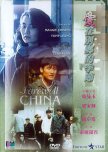
"Don't come home"
Farewell China was a 1990 film directed by Clara Law and filmed primarily in New York. The film showed the difficulty many illegal immigrants without a safety net of family or community suffer, especially when emigrating to one of the most expensive cities in the world.After years of trying, Li Hong receives her visa and travels to New York City ostensibly in order to study. Her husband, Nan Sheng stays in China with their baby son, Sansan. At first, Nan Sheng receives seven letters from Hong a month. The letters stop coming after she begs him to come home and he tells her tough it out and stay. Eventually Nan Sheng takes the dangerous illegal route to the states to find Hong. It doesn’t take long for him to discover the squalor and danger she lived in and the despair that riddled her life. With the help of Jane, a teenage Chinese American prostitute, Hong begins the arduous search for his wife.
The story of cultural identity and the dangers illegal immigrants faced, especially in 1990s New York City and the boroughs, was compelling. Arriving in a foreign land, with limited English skills, no money, and no connections was a recipe for disaster. However, Law lost me in the implementation of the elements. The over-the-top 15-year-old prostitute with a heart of gold who helped Nan Sheng did not hit as authentic. It was also disturbing when he worked as her pimp, “Chinese little girl. 15-years-old. Beautiful, clean, and sexy.” Nan Sheng stumbling across live sex shows and utter filth and overwhelming crime felt like a bad stereotype of the city. Although admittedly, 1990 was a peak year for crime. And people illegally in the country don’t go to the police for fear of deportation. The ending also let me down as it felt contrived and out of left field.
Aside from reservations I had about the storytelling, the acting was quite good. Tony Leung Ka Fai conveyed Nan Sheng’s longing, perseverance, and breaking points. The story of Maggie Cheung’s Li Hong was told primarily through flashbacks. Her character went from hopeful for a better life to the threshold of utter despair taking its toll on her sanity. Nan Sheng would come to understand how traumatic the words, “Don’t come home,” could be.
As much as I enjoyed Autumn Moon by Clara Law, I was unable to connect to Farewell China the same way. The very real horrors and sense of isolation and loss immigrants can feel was diminished by the melodramatic approach.
9 May 2025
Trigger warnings: Insects. Sexual content and full nudity, especially at a live sex show. Sex with an underage girl.
Was this review helpful to you?


