

 135
135 431
431 16
16 2
2 6
6 3
3 8
8 10
10 3
3 13
13 1
1 1
1 1
1 1
1 2
2 6
6 8
8 5
5 9
9


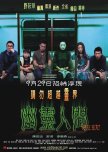
Fifteen years ago, a man fell under a tram and lost his head. The old death haunts the present as the ghost possesses various people to exact his revenge. June (Wong Siu Kam) is able to see the dead out of her left eye. She and Peter (Wong Choi) hook up one night and become engulfed in the vengeful apparition’s plans.
Shu Qi was luminescent in the role of the young woman who could see the dead. Eason’s character was all over the place, never sure if June was supporting him or part of the malevolent ghost’s plans. Sam Lee was Eason’s best bud Simon who tried to keep Peter employed. Kara Hui played a mother possessed by not one, but two ghosts and gave a thrilling performance.
Visible Secret wasn’t a scary film in the classic horror style. It ended up being a story where the living and the dead inhabited the same spaces with little in the way of telling them apart. People were often possessed, sometimes for nefarious purposes and sometimes because they wanted to see old friends. The film’s vengeful headless debt collector didn’t quite match up even with Washington Irving’s tame Sleepy Hollow. The titular secret was highly visible and not so secret. Unfortunately, the unevenness of the story encumbered what could have been an interesting tale of entwined spooky, if not scary, lives lost and filled with regret.
29 October 2025
Was this review helpful to you?

Bee Minus movie
Killer Bee Invasion was a low budget creature feature lacking any creativity and weighed down by dreadful dialogue. It’s only redeeming quality was the near constant action mostly dominated by Dobermans on steroids.A “rescue” squad is dispatched to the Island of Death after a distress call from the scientists working there. The mercenaries are heavily armed with automatic weapons and grenades. One woman wields a bow. Aside from the snarling creatures lurking in the jungle, swarms of killer bees with deadly poison threaten the squad. The rescuers find four scientists alive but are far more concerned with laying their hands on a chunk of amber with an ancient bee inside called N17. The bee’s DNA holds the possibility for extending life expectancy. The island is not keen on them taking the treasure, and sends its security team of hellhounds and bees after them.
The characters were poorly and thinly drawn. Their motivations were even sketchier. The voiceover work just muddled up the story. The dialogue was painfully bad as were the stock character reactions. Bad editing created more confusion by bouncing back and forth. I’ve watched my share of cheap creature films, but this one really began to annoy me. Last but not least, whenever a character died, overly dramatic music cued up like we were supposed to care they died. I didn’t even know most of the names until people started screaming their names repeatedly as they died. “Jaaaaaaaaason!” Jason was a self-serving jerk, let him go.
I don’t usually write such negative reviews because I know everyone has different tastes and this movie might be bee-utiful for someone else. This film just aggravated me with its cardboard characters saying cardboard words with cardboard acting with overly dramatic music wailing with each death. The bad CGI bees also played second fiddle to the CGI enhanced hellhounds. I will say something positive, the action was prolific and the running time was thankfully short.
26 October 2025
Was this review helpful to you?
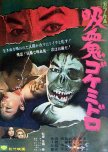
"The universe is filled with things of which mankind knows nothing"
Goke, Body Snatcher from Hell is a misleading title, the Gokemidoro were not from hell, but rather outer space. To be fair, the surreal orange and blood red sky they conjured did resemble a hellscape.A plane carrying passengers to Osaka appears to be cursed. Birds splatter against the passenger windows (how fast and high were those birds flying?). An assassin AND a suicide bomber are on the plane. A corrupt politician is being wooed with bribery by a defense contractor in the form of money and his wife’s services. A grieving American widow is on route to claim her husband’s remains. Rounding out the passengers are a space biology professor and a psychiatrist. When a glowing ball of light passes over the plane the instruments stop working and the plane crashes on a remote island. The only crew that survives are the co-pilot and a flight attendant. The assassin/hijacker takes the flight attendant hostage, leaves the plane and gets more than he bargained for when they stumble across the spaceship.
This film reminded me of the equally bizarre Matango (1963), except Matango’s stranded passengers kept their veneer of civilization longer than this cabin of miscreants. Immediately upon crashing the passengers began to turn on each other. Only the crew, Sugisaka and Asakura, were worth rooting for and even then Asakura was constantly fainting or screaming.
The space creatures and the special effects for them were on par with similar B movies. The pulsing mercury Blobs that inhabited the humans through a slit on the foreheads they created turned the bodies into mindless, blood sucking creatures. Similar to the phallic shaped mushroom creatures in Matango, Goke’s inhabited humans had giant female genitalia shaped creases on their foreheads. More frightening than the aliens were the way the humans betrayed each other.
Unusual for a creature feature from the mid-1960s, was the oft mentioned Vietnam war and war atrocity images highlighted in bright orange-red. There was a strong anti-war sentiment. Man’s senseless wars against each other was why the aliens were able to invade. Instead of working together against a possible invasion, people preferred to kill each other off themselves. I was reminded of the T2 quote: “We’re not going to make it are we?” “It’s in your nature to destroy yourselves.” Wars, political corruption, terrorism, assassinations, and utter selfishness coupled with a lack of compassion were real fears about the state of the world and humanity’s lack of humanity. This film was around a 6.50 for me, but director Sato Hajime’s disturbing ending driven by the hopelessness and despair permeating the previous 80 minutes followed through with the theme, so I bumped it up. Only for fans of the genre and the era, it’s effects and acting are dated.
22 October 2025
Triggers: for the squeamish-the alien possession was a little gross, but tame by today’s standards. The vampires drew no visible blood if you are concerned about that.
Was this review helpful to you?
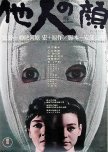
"The face is the door to the soul. When the face is closed off, so too it the soul"
The Face of Another explored the masks that we wear and how some of them lead to social isolation. And whether it’s more personally efficacious to be seen or to engage in banal invisibility.Okuyama suffered a disfiguring accident at the factory where he worked leaving his face unrecognizable. His wife attempts to lift his spirits but he accuses her of patronizing him. When she spurns an awkward advance, he becomes enraged. He visits Dr. Hori, a psychiatrist and scientist, who is capable of making natural looking human masks. Hori develops a mask for Okuyama but warns the new face could cause his personality to change.
Nakadai Tatsuya gave a subtly nuanced performance as the deeply scarred man. At times he wore the burned skin or had his head completely swaddled in bandages. At other times his face was buried beneath Hori’s concoctions which had to be claustrophobic. And ultimately, he had a mish-mash of the different masks he wore. In all these iterations he was unable to use his expressive eyes and yet still gave a compelling performance. Kyo Machiko as Okuyama’s nameless wife hit all the right notes as a woman who strove to help her husband and was also deeply hurt from his emotional taunts. Hira Mikijiro as Dr. Hori was the epitome of a mad scientist, constantly pushing Okuyama’s emotional buttons, seeing how far the mask would transform his patient’s personality.
The film’s dialogue was heavy handed in describing the masks we wear. Masks that help us fit in, masks that set us apart, masks that enslave us and masks that set us free. Dr. Hori kept telling Okuyama that the mask was changing him. I’m not so sure about that. Okuyama was an unlikeable and manipulative character before the mask. The mask just emboldened him to act on his baser impulses. I didn’t comprehend Hiro’s declaration that if everyone wore one of his masks that there would be true freedom with no crime and there would be no need for trust or betrayal. No one would have a home so there would be no home to escape from. There was also a secondary story that never overlapped with Okuyama’s. A beautiful (nameless) young woman who suffered with scars on the side of her face due to the bombing in Nagasaki appeared periodically. Like Okuyama, she received unwanted negative attention for being different. She worked at a mental hospital populated by WWII soldiers. Desperately afraid that another war would hit the country, she seemed to represent the traumatic scars marring the beauty of Japan. Or she was a random character. This film had a lot of symbolism.
Director Teshigahara Hiroshi created a surreal world complete with a German beer garden and a hallucination inducing mad scientist laboratory. His use of different effects bordered on the gimmicky but I quite enjoyed his style. The acting was exemplary and the darkly lilting music perfectly enhanced the story. The story, however, was difficult for me as it wallowed in hopelessness and despair. Despite everyone wearing different masks, there were some that were unacceptable. Disfigurement meant exile, the crushing pain of rejection, or invisibility. Okuyama and the scarred young woman faced the price of a society unable to see past their scars, both physical and psychological. Death or madness was all that awaited them. Fair warning, The Face of Another was unrelentingly dark. Pass the popcorn and the Tylenol.
12 October 2025
Trigger warning: brief nudity and a brief incestuous situation
Was this review helpful to you?
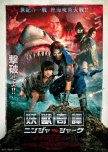
"Pearls have hidden powers"
With a title like Ninja vs Shark, there was no way I was not going to watch this bloody camp fest. It was more creepy ninjas and horrid townspeople than malevolent sharks, but there were a few key scenes with some really bad CGI sharks and a shark ninja (sorta).After female pearl divers have repeatedly been found chewed up and handsome male villagers have disappeared, the villagers blame beautiful “cursed” Sayo. Only Shinsuke who loves her stands up for her. In reality, the village chief knows that their problems are caused by the Crimson Devil Clan. He goes to a sword for hire, Kotaro, to have the lone swordsman protect the village for a price. Kotaro saves Sayo from a shark, and she in return saves him from a vengeful female ninja. Lurking in a nearby cave lives the Crimson Devil Clan whose leader has special, gruesome powers given to him by magic and pearls.
This is one of those movies that’s so bad it’s almost good. Almost. Introducing the village savior or at least Sayo’s in the aftermath of him having raped a woman was not a great start. Then brutally murdering the woman’s husband was the rotting cherry on top. After that Kotaro was a ninja pussycat. The villager, Shinsuke, adored Sayo in a second lead clingy sort of manner. Poor “cursed” Sayo is what happens when someone breaks society’s rigid norms and is used as a scapegoat for everything that goes wrong and loses all protection. She was nearly gang raped twice and close to being murdered at least twice more.
The crazy elements of this film made it interesting. The jealous, unhinged female ninja, Kikuma, had magical powers and the ability to command corpses. The leader of the Crimson Devil Clan could change form and had a shark mouth when he needed it. He also had a special chant that called in a shark to sic on the villagers when they ventured into the water. And in the last 15 minutes he summoned the big daddy megalodon that had supernatural abilities. The CGI was abysmal for the shark and the nearly continual spraying of blood. Heads and body parts flew everywhere with people living long enough afterwards to talk. Lol
I would have rated Ninja vs Shark slightly higher if they had refrained from the sexual assaults. No matter how good-looking Kotaro was and how much he sacrificed for Sayo, he was forever tainted by his actions in the opening minutes. Too bad, because this was a ridiculous ride that got sillier by the minute without trying to be funny. There were just too many ick factors that they could have avoided.
6 October 2025
Trigger warnings: Numerous spewing beheadings, arms, legs flying about, chewed up body parts, spewing blood, vomiting, and one post sexual assault and at least two other attempted sexual assaults.
Was this review helpful to you?
"The crazy one is here!"
Evil Cat was one of those bonkers Hong Kong horror flicks from the 1980s. It never took itself too seriously while also taking the horror elements completely seriously, even when a cat demon was involved.Master Cheung is dying of liver cancer and residing in an assisted living home. When an excavation crew digs too deeply and ignores the blue glowing light and lightning bolts spewing from a heavy coffin sealed with a talisman, all hell is about to break out. Knowing what has been set loose, Cheung sets out to destroy a cat demon for the final time. His family of Taoists have fought the demon for 8 generations. Now it is his turn. The only problem is that his clock is ticking down and he has no male heir to pass the Mao Shan magic onto. Into his life stumbles Long who is a chauffeur for the rich Fan. When Fan becomes possessed by the cat demon and targets Long, Cheung takes the driver as a disciple to carry on the family tradition.
Lau Kar Leung, one of my favorite old school martial arts directors played the dying Master Cheung. He was also the MAD for this film. Mark Cheng was the erratic Long who waffled back and forth over whether to take on the job of being responsible for killing the demon if Cheung died. Joann Tang played Cheung’s reporter daughter Siu Chuen who thought her dad’s magic was an eccentric hobby. And Wong Jing rounded out the main cast as the lecherous and annoying Inspector "Handsome" Wu.
The movie was actually better than I thought it would be. I feared it would devolve into slapstick comedy. While there were humorous moments, the cat demon ripped its way through human bodies, tearing off arms, heads, and just about anything else it could get its claws or fangs on. Director Dennis Yu must have ordered vats of red KY jelly from Buckets O’ Blood, as the crimson liquid flowed freely and often. The stakes ended up being all too real, even when the special effects made the experience rather campy. The cat demon possessed humans giving them super strength and durability, so if you are looking for a real feline it would be a disappointment.
What I learned from Evil Cat: If you dig up a coffin with blue glowing lights and a talisman attached---DON’T OPEN IT! If you see blue lights in a dark office building---run the other way! If you have the shot to kill a creature that is about to become invincible and immortal, you take it even if the demon is inhabiting a beautiful woman. Do not let the doubting daughter tag along when she doesn’t understand what is at stake. Finally, never a tie a woman, even an annoying prostitute to a pole and leave her out in the middle of nowhere.
If you watch a lot of old kung fu films, this one would be about average. I rate these films on a curve per usual. This was a 7.25 but got bumped down due to the writer (Wong Jing) not following the rules set out and ending the film on the tropiest trope from the 80s and 90s.
5 October 2025
Trigger warnings: Numerous decapitations and dismemberments, hands through chests, lots and lots of blood, sexual scenes though no bits and pieces were showing. Gratuitous underwear shot. A really bad cat outfit.
Was this review helpful to you?
Wu Yuet travels aboard a crowded boat sailing from Vietnam, where death had been a constant companion. He arrives in Hong Kong as a refugee hoping to find his pen pal, Lee Lap Quan. Vietnamese agents kill several refugees, including one of Wu’s friends. When they come for him, the ex-soldier is prepared. Now he will need Lee’s help to escape Hong Kong quickly. The human smugglers aka snakeheads designate him as Japanese. While attempting to learn a few key phrases he meets another woman on a fake passport leaving when he does. They bond over their similar situations and begin a relationship. Both are hopeful about going to America to live out their dreams. On a layover in Manila, the smugglers have different plans for Shum Ching. She is trafficked to a brothel with other women. Wu injures a cop chasing after her and ends up having to work for the crime lord in Chinatown to earn enough money to buy her back.
Wu Yuet ran into violence all along his travels. Wherever he turned, death and hardships awaited. He began to fear every Chinatown would be the same for him. An older assassin working for crime lord Chung Yee portends a possible future for Wu. A future with nothing but booze, despair and blood. Chung Yee, with his connections and knife wielding son manipulated the various players with no concern for them.
Chow Yun Fat was stunning in this film. It was hard to glance away from him for even a second. Lo Lieh was perfect as the aging assassin with his last shred of humanity dangling by a thread. Cora Miao as the devoted pen pal had little to do after the first few scenes. Cherie Chung’s main job was to look beautiful and vulnerable which she did admirably.
The Story of Woo Viet was a fairly accomplished film for 1981. Many of the films from this time were not especially polished, this film included. While not as deep or well done as her Boat People (1982), Ann Hui still shed a light on the vulnerability of refugees who were only seeking whatever everyone wanted-a home, safety, enough food to eat, and a purpose. Wu and Shum had dreams of a simple life, free of violence and fear. Sadly, too often even meager dreams were shattered in the back alleys of Chinatown.
22 September 2025
I did give this a little pre-1990 ratings bump based on a curve.
Triggers: Child murder, violence, bare breasts. Little people were also shown as cheap entertainment.
Was this review helpful to you?
"I'm a public hand grenade"
Honest Candidate gave Ra Mi Ran a chance to shine as a lying politician suddenly cursed with the inability to tell a lie during the final days of a campaign.Ju Sang Suk appears to be an honest politician who honors her dead philanthropic grandmother at every turn. All is not as it seems in her familial paradise. Ju is intwined with corrupt officials who are all making a killing from her time in office. After a special prayer is offered up for her, Ju finds the truth spilling from her lips in every situation she is in, threatening not only her political career but also her freedom.
Honest Candidate was based on a Brazilian film which was itself adapted from the 1997 film Liar, Liar starring Jim Carrey. Instead of a lawyer, HC revolved around the occupation with the one of the highest percentages of liars---politicians. Ra Mi Ran gave a charming and comedic performance as Ju Sang Suk’s truths at first entertain the voters, coming across as a breath of fresh air. As Ju’s skeletons or lack of a skeleton were revealed, Ju found herself painted into a corner. Ra dialed up the emotional nuance as the curse forced Ju to face how far she’d fallen and whether or not she could salvage her career. Kim Mu Yeol made for a loyal Man Friday who believed in Ju’s abilities and career even more than she did. And always reliable halmeoni Na Moon Hee could once again be counted on to not phone her performance in. Ok Hee was the heart of a story filled with money hungry, unethical people. She also had a savage “bird.” It was disappointing that Ju’s husband and son weren’t particularly likeable or invested in her returning to her earlier ethical ways.
Honest Candidate was entertaining and had many funny moments but didn’t draw me in as much as I would have liked it to. Perhaps it was too close to Liar, Liar’s gimmick or maybe it was because Ju’s actions in the earlier part of the film were blatantly corrupt and selfish. I do love a redemption story and while I’m not sure she earned it, I will nearly always root for a person to acknowledge their mistakes and work to overcome them. One thing for sure, regardless of who she is praying to, a loving grandmother’s prayer is a force to be reckoned with---don’t make yours mad!
10 September 2025
Was this review helpful to you?
Chen runs what appears to be a one-man escort service. He’s hired by Lung to transport an expensive jade horse. When he arrives with the sealed box at the destination, the horse is missing. He has to sell everything he owns to pay back Lung. Meanwhile two con artists are running scams on people at a casino until Meg Lam throws them out. Chen goes mad from losing his business and picks fights with nearly everyone. When the con artists hear Chen’s story they tell him he has been scammed. Realizing this Lung fellow is a wealthy crook they determine to hunt him down and steal his loot using Chen as their kung fu muscle.
This movie was a major disappointment. Casanova Wong had fast kicks, but his acting as the mad Chen was awful. The two con artists were played by Meng Yuen Man and Tony Ching Siu Tung. These two were not known for being main characters. Ching Siu Tung worked as a martial arts director far more than as an actor. Meng only performed in around 20 films, usually in small roles. Yen Shi Kwan as the Big Bad, was the more talented of the actors and a strong kung fu artist but didn’t have much to do. Eddy Ko showed up in his “mom hair” wig to fight a few times. Max Lee in a Drunken Master bad gray wig had a small part as Beggar So to train the con artists in “Leap Frog” style.
The fight choreography by Ching Siu Tung was creative enough when it wasn’t over cranked, there just wasn’t enough of it. The fists and kicks obviously missed by a mile/km. Casanova, Meng, and Ching were all acrobatic flipping and bouncing around which was entertaining. Normally, the grand finale fight runs around 20 minutes. This finale lasted barely 10. There are some kung fu flicks where the fights make up for the lack of story or acting ability. Such was not the case for The Master Strikes. I’m not a huge fan of kung fu comedies, and usually try not to ding my scores for them too much, but this one was painfully bad, boring, and lacking in enough exciting fights. Sorry, Kao Pao Shu, you know I support you girl as the only (kung fu) female director at the time TMS was made, this one just didn’t make the grade.
3 September 2025
Was this review helpful to you?
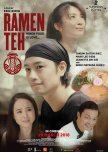
Food that heals
Ramen Teh aka Ramen Shop was a sweet, nostalgic look at the romance of a young Japanese man’s parents when they lived in Singapore. Masato set off in search for familial answers and a recipe that was inexorably tied to his mother. If you enjoy films with food, Ramen Teh may leave you hungry as Masato cooked his way through his mother’s recipes and visited the Singaporean food scene.Masato works at his father’s popular ramen shop in Takasaki. Ever since his mother’s death when he was ten, he and his father have not been close. When his father suddenly dies Masato discovers his mother’s journal amongst his father’s belongings. Written in Mandarin, he’s unable to read it. Feeling a gaping hole in his heart, Masato heads to Singapore to find his mother’s brother who owns a small restaurant. Not only does he want help translating the journal, but he dearly longs for his mother’s Bak Kut Teh, a pork rib soup he’s never been able to duplicate. Miki, an on-line friend and Japanese food blogger living in Singapore, meets up with him and translates the journal. The journal includes not only his mom’s thoughts, but also her recipes. Masato finds his uncle who is overjoyed that his nephew has returned, but his grandmother will have nothing to do with him. Masato will test whether food can heal a broken heart and a broken relationship.
This film was very simple and predictable, but that doesn’t mean it wasn’t heartwarming. The story often flashbacked to his parents’ romance and their early married days when Masato was a child. Food figured prominently both in the past and present. It was also a nice travelogue as Masato visited the places from his parents’ photographs in Singapore. After discovering the reason for his grandmother’s hatred of the Japanese, Masato visited a museum that had a display detailing the atrocities committed by the Japanese during WWII. Shaken after learning the disturbing details from the war, he realized winning over his grandmother might not be possible. But Masato had secret weapons on his side--being a grandchild and developing a special ramen recipe to weaken her resolve.
Food, especially beloved family recipes, evoke strong emotions, it is a connection to family and friends, binding relationships through taste and life-giving sustenance. Even the familiar smell of a simple meal can transport a person to a happier place and awaken faded memories. Masato traveled in search of family, a recipe, and that which was thought lost, creating something very special along the way. While Ramen Teh had a tendency to meander, the final course was the pièce de resistance and enormously satisfying.
18 August 2025
Was this review helpful to you?
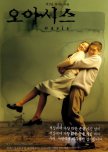
Hong Jong Du is freed from prison and heads to his brother’s apartment. Unbeknownst to him his family has moved with no forwarding address. Fortunately, a trip to the police department after a dash and dine situation reunites him with his reluctant family. He decides to take a fruit basket to the adult children of his vehicular manslaughter victim. There he briefly meets Han Gong Ju who suffers from cerebral palsy. Her family lives in a nice apartment complex for the handicapped ostensibly for her, while they stow her in a rundown apartment with only the neighbors bringing her food. The two “misfits” end up becoming friends and scandalizing “normal” people whenever they go out.
I enjoyed most of this film and felt it had an important message. Everyone had a lot to say about Jong Du and Gong Ju, but rarely listened to a word they said even when it was inherently important. Most people assumed Gong Ju couldn’t speak or was lacking in intelligence. Both beliefs were false. “Normal” people felt uncomfortable around those who were “different” and sought to drive the two away wherever they went. Moon So Ri gave a brilliant and what must have been an exhausting performance as Gong Ju. Sul Kyung Gu as expected gave a great performance as the complicated and at times despicable Jong Du.
Now why I cannot rate this film higher---When a great love affair begins without consent and with the words, “Be a good girl,” “Don’t struggle,” and “Stay still bitch,” the director has told me his underlying belief about women. Rape is NOT foreplay. Rape is NOT romantic. And while I’m on a roll, even when sex is consensual, ‘brace yourself darlin’ is not foreplay either. Without that vile and reprehensible beginning, I would have rated this complex film higher. Calling out ableism while not so quietly advocating violence against women is not a great tradeoff.
13 August 2025
Trigger warnings: partial nudity, sex scene, sexual assault
Was this review helpful to you?
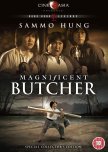
Terrible story, great kung fu
The Magnificent Butcher starring Sammo Hung was a mixed bag for me. I didn’t like most of the comedy surrounding Sammo’s character, in fact, I found his character grating at the beginning of the movie. Around the 60 minute mark the fights picked up in quantity and quality. With both Yuen Woo Ping and Sammo choreographing the fights, there was no doubt they would be fast and destructive.Butcher Wing goes to the Wong Fei Hung school and is always causing problems. When WFH goes out of town on vacation he gives Wing the strict order to not cause any trouble. Unbeknownst to Wing, his brother and sister-in-law are in town searching for him. They run afoul of the smarmy and treacherous Ko Tai Hoi who kidnaps Lam Sai Kwong’s wife. The Beggar King comes to town when the brothers who are still unknown to each other end up on opposite sides due to Ko’s nefarious actions. The kung fu drunkard stumbles around and helps them sort things out. Ko is not done with any of them and has murder in his eye.
Like many of these kung fu comedies made famous by Jackie Chan, there was plenty of death to go along with the slapstick antics. A violent attempted sexual assault was disturbing and led to other prominent deaths. And those deaths led to more deaths as each side sought revenge.
Sammo was 27 and acrobatic. Neither villains nor stuntmen wanted to connect with his meaty fists. Fan Mei Sheng played Wing’s drunken mentor. He was not a kung fu artist though he could mimic moves. The big floppy hat, hair and beard allowed for the stunt double to take over when the real fighting began. He is also famous for being actor Louis Fan’s father. Kwan Tak Hing was 74 and still limber and spry. Famous for playing Wong Fei Hung at least 77 times, he acquitted himself well in his calligraphy brush action scene as did his stunt double for the more strenuous moves. Poor Fung Hak On was an accomplished martial artist who acted in over 200 films though usually as an extra, “thug”, or criminal of some sort. Here he played the vile Ko Tai Ho. Lee Hoi Sang was the rival school master Ko Ba Tin and in the grand finale fight with Sammo which was a thing of beauty.
I truly disliked the first hour of the Magnificent Butcher, the comedy and sexual assault did not set well with me. If you love early Sammo humor, I’m sure you’ll like this film more than I did. Once the more entertaining fights began (fans, elbow knives, poles, and cat style-hiss!) the film drew me in. There was no denying that Sammo and Woo Ping knew how to choreograph exciting fights. As always, I grade these old kung fu films on a curve.
11 August 2025
Was this review helpful to you?
"I can't close my eyes because of your beauty"
Miss Yeon is a short film of love, loss, and heart wrenching regret. At a mere 15 minutes director Choi Ji Won told the broken love story of two high school girls in flashback at Miss Yeon’s funeral.Woo Jeong blows off her boyfriend much to his anger and leaves to attend her friend Su Yeon’s funeral. Only a few friends are in attendance in addition to the grieving mother. Jeong is overwhelmed with memories of the sweet young love she shared with Yeon. And also the hurtful words their friends had to say about people who had same sex relationships. Filled with the anxiety of being caught and shunned, Jeong began dating a boy to “protect” her relationship with Yeon, an unfaithful act Yeon could not accept.
This short film highlighted the scorn and repudiation lesbian relationships faced and the pressure it put on the young couple. While Yeon accepted herself, Jeong struggled to fully accept herself and Yeon and desperately wanted to fit in with their gossipy friends. A confrontation at the funeral would grant Jeong a chance to vent her guilt and unbearable grief.
9 August 2025
Was this review helpful to you?
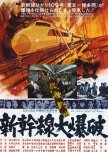
Life in the fast lane!
Life for 1970s movie characters was dangerous. The water wasn’t safe (The Poseidon Adventure, Jaws), buildings weren’t safe (The Towering Inferno), and the sky wasn’t safe (Airport). In Japan, the railways became a thing of danger when a down on his luck businessman decided the government and economic society had left too many people behind and planted a bomb on The Bullet Train.Passengers board Hikari 109 only concerned with their own lives and problems. After the train begins its journey, the railway receives a call stating that a bomb has been planted on the train. If its speed dips to 80km per hour, the bomb will detonate killing the 1500 passengers on board. The RR company, police department and government quickly assemble a task force to identify the bomber and determine the best course of action.
The 1994 American film Speed was based on The Bullet Train. Aside from the speed and ransom elements, the two films diverge significantly. In TBT, the chief bomber, Okita Tetsuo, is the focal point. His schemes and unfortunate background dominated the story. Takakura Ken was more than up to the challenging role even imbuing his character with empathy. While Sonny Chiba is listed as a main, his part as the train operator was fairly small. The Street Fighter was in a constant sweat fighting panic every moment. There was no loose cannon cop who didn’t play by the rules. Though there were plenty of officers trying to do their job and failing spectacularly on several occasions. Utsui Ken as the level headed and compassionate Kuramochi was the star on the side of good. He struggled to find a way to save the passengers and showed why learning how to do story problems in math saves lives. Seventy-year-old Shimura Takashi had a small role as the railroad president. The hysterical, self-centered passengers had me wishing for a good old zombie apocalypse in a mirror image Train from Tokyo instead of Busan. The crew had no idea how to handle desperate salarymen more concerned about their deals than their lives. I suspect in the film’s world they had a post disaster meeting to install locks on the car doors and cabin.
My biggest complaint would be the music which was dreadful even by 1970’s “bow-chicka-bow” style tunes. Also with a large cast, it took quite a bit of time for me to nail down who was in charge of what. The police continually waffled between wanting to surveil, arrest, or kill the suspects which put the passengers’ lives at risk.
At 2 ½ hours, the film ran long though most of the time was put to good use with few scenes dragging down the action. The economic divide drove the bombing team who were looking to kick the government in the side. It was hard to be too sympathetic with Okita as he did threaten innocent, if annoying, people’s lives. Perhaps these passengers who could afford the expensive bullet train tickets appeared complicit with the struggles so many people in Japan were facing. As the world’s first high speed train, it made for a shiny target of revenge. The people in charge callously weighed the passengers’ lives against their reputations, with Kuramochi caught in the middle only caring about the 1500’s safety.
For a 1975 disaster film, The Bullet Train acquitted itself well. The ending was a small emotional letdown, but also what made it distinctly Japanese. The primary antagonist and protagonist weren’t in a life-or-death guns drawn brawl, but rather in an existential and ethical battle that held people’s lives in the balance.
8 August 2025
7.75 rounded up to an 8.0
Was this review helpful to you?
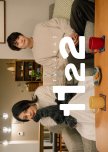
"Just how did we get here?
1122: For a Happy Marriage was an interesting look into unhappy marriages. I’ve vacillated in my rating because I can’t say that I liked any of the characters nor was I satisfied with the ending.Ichiko and Otoyan have been married for seven years, seemingly happy to all of their friends. What no one knows is that they haven’t had sex in two years and Otoyan has a lover that Ichiko approves of. Being a rational person, Ichiko set up guidelines, mainly don’t bring his affair into the house. Everything seemed to be working until Otoyan violently rejected her sexual advances one night. Suddenly thrown into an existential crisis, Ichiko contemplates acquiring her own lover which shakes Otoyan up. Otoyan’s lover is having her own problems. She’s caring for an autistic child with no help from her husband and keeping her affair on the down low.
Ichiko was a tough nut to crack, she viewed herself as a calm ocean. Calm or horribly repressed, I’m not sure which. She often had a blank look on her face when others talked with her as if she was barely present. The child of an abusive father and needy mother she valued order over emotions. She often heard only what she wanted to hear. People have different sex drives to be sure, but Otoyan seemed like the kind of guy who didn’t even wrinkle the sheets, so it made me wonder if Ichiko had ever actually had an orgasm. One night with the handsome Rei seemed to answer that question, though she wasn’t hot to repeat the experience which I found confusing.
Otoyan took the path of least resistance in his life which unfortunately doesn’t always take you where you want to go. Extremely helpful and kind hearted he enjoyed taking care of others. He blissfully didn’t realize the pain he caused by bringing home the flowers from the ikebana class he took with his lover, smiling all the time from being in love, and taking phone calls from his lover at home. He also didn’t seem to be of this world, especially when he glossed over being violently attacked one night, later easily forgiving his attacker. However, he seemed to draw the line with Ichiko stepping outside of their marriage for sexual fulfillment. And while he refused to touch his wife out of loyalty to his lover, Mizuki was still having sex with her husband. His repression abilities rated right up there with Ichiko’s. Their lack of communicating about important topics often landed them in marital hot water, though with this couple it was always luke warm.
What ultimately caused my issues with this drama was that I didn’t find either Ichiko or Otoyan particularly interesting. Watching two people go through the motions with conversations scripted out of a therapy textbook wasn’t exactly riveting. Even Ichiko’s friendship with the passionate Rei had all the life sucked out of it as she barely acknowledged his existence. I didn’t mind that the drama explored different couples handling the doldrums and challenges marriage can offer in unconventional manners, but with all the sex going on, no one was very satisfied. I honestly wasn’t surprised the way the drama ended, it was as monotonous as Ichicko and Otoyan’s relationship.
31 July 2025 7.25 rated down to a 7.0
Trigger warning: One sexual encounter though no bits and pieces were shown.
Was this review helpful to you?


