

 135
135 431
431 16
16 2
2 6
6 3
3 8
8 10
10 3
3 13
13 1
1 1
1 1
1 1
1 2
2 6
6 8
8 5
5 9
9


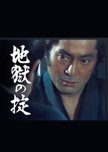
"They carry hell in their hearts"
The Law of Hell (1982) was a television remake of the 1971 film Inn of Evil which also starred Nakadai Tatsuya. This time he played the calm innkeeper/restaurateur Ikuzo instead of the emotionally volatile Sadashichi. There weren’t any real good guys in this film, to quote Ikuzo, “There are as many corrupt officials as there are corrupt merchants.”On a little island surrounded by reedy swamp, stands the restaurant, The Anrakutei, run by world weary Ikuzo and his lovely daughter, Omitsu. Strangers are not welcome at the smuggling hub. Regulars---Sadashichi, Yohei, Masaji, Genzo, Senkichi, and Yoshiko---are barely civilized but devoted to Ikuzo. One night, a stranger insists on drinking in the bar, keeping to his sake and table for most of the film. Another stranger, Tomi, collapses and is cared for by Omitsu. Aside from their rough and deadly reputations, officials tend to steer clear of the island as the smugglers actually supply powerful daimyos. When Tomi wakes up his story will stir the latent humanity in each of the men which could lead them into danger…or salvation.
The production values for this film were not the highest. Most of the action took place in or around the restaurant. Nakadai can always be counted on for a strong performance and his Ikuzo was restrained with nary a twitch from the actor’s expressive eyes. Ryu Daisuke gave a strong performance as Sadashichi, the troubled swordsman with a dark past. An almost unrecognizable Yakusho Koji played the TB ridden smuggler Genzo.
Perhaps because of the relatively short running time, it felt like parts of the story were consolidated. The smugglers enjoyed relative security and then were suddenly thrust on a precipice with no way out. To be sure, the smugglers were no Boy Scouts. They relied on illegal activities and murder to get by. The officials were shown to be just as deadly and corrupt. The Law of Hell would have sunk into the murky waters if not for Nakadai’s screen presence whether as a concerned father or a ruthless leader. If you enjoy this type of old movie/tv special or are a Nakadai Tatsuya fan, it might be worth checking out.
12 March 2025
Was this review helpful to you?
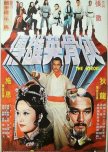
"Even the sun sets at the end of the day"
The Heroes starred Ti Lung, Michael Chan, and Dorian “Flashlegs” Tan. The Shaolin Temple had once again been burned to the ground with Marshal Gao rounding up the kung fu practicing monks and throwing them in prison. All seemed lost yet everything was not as it seemed.Marshal Gao under the orders of the emperor and Governor Pei Le arrests his former Shaolin brothers and burns the temple. He convinces Pei to let him “torture” the monks so that he can turn them to working for the Qing army. Pei’s henchmen don’t trust him and are always looking for ways to test him.
Ti Lung played the conflicted Gao who worked tirelessly to protect his former brothers and strengthen their training by “torturing” them. The only problem for him was that the Shaolin monks didn’t know what he was up to and loathed him. Ti did a good job of showing Gao's pain at hurting the people he cared about when he wasn’t gloating in public at their humiliation. This was definitely his movie and he carried it well. Michael Chan was always a good foil for Ti. Their fight was the highlight of the film. Despite often being chained, Dorian Tan was able to show off his fancy kicks in several fights. Director Wu Ma played the emotionally volatile Shaolin cook, Wu Shun. Tsai Hung had one of the bigger roles I’ve seen him in as the frequent target among the captured disciples. Shih Szu had a few nice scenes with Ti, as the person who saw through his bravado to the pain beneath. The Heroes had more story to it and emotional depth than the standard low budget Taiwanese flick which was a pleasant surprise.
The fights varied in quality. Robert Tai’s choreography bordered on kung fu posing, but was upgraded to kung fu dancing for the most part. Dorian flashed his kicks when given the opportunity. This time his handsome face was covered in dirt and straggling hair. Ti Lung and Michael Chan always had an entertaining fight chemistry, even when it wasn’t lightning fast.
Though filmed in Taiwan, The Heroes looked like it had a higher budget than usual. Many Taiwanese kung fu flicks were filmed in the woods and on other low budget sets. This film had proper sets though not of the Shaw Brothers quality. The story was a familiar retread of the fate of the Shaolin monks from the temple and the rebels during this time period. The film veered off from the familiar though by focusing on the imprisoned monks and Gao’s secret heroic acts. The question frequently asked was, “What is a hero?” Sometimes the only one who knew was the last person people would think it was. Though deeper than other martial arts films from this era, it would still only be for fans of the genre. Rated on a curve as usual.
4 March 2025
Was this review helpful to you?
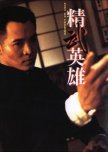
"The simplest attack is the most effective"
Jet Li starred in Fist of Legend, a remake of Bruce Lee’s 1972 Fist of Fury. While no one could top Bruce’s lightning-fast moves or charisma, I quite enjoyed this film. Jet Li, Kurata Yasuaki, Chin Siu Ho, and Billy Chow were accomplished fighters in their own styles adding a level of realism to their battles aided by Yuen Woo Ping’s compelling fight choreography.In 1937, Chen Zhen is studying engineering in Japan when he hears his sifu died during a duel. He leaves his Japanese girlfriend, Mitsuko, behind and catches the first ship out of town. After visiting his master’s memorial, he heads straight to the killer’s dojo and challenges him to a duel, after he defeats all of the students first, of course. He quickly determines that Akutagawa could never have beaten Master Hua Yuen Jia. In the process of clearing his master’s reputation, he runs afoul of General Fujita, a ruthless killing machine that has no use for the Chinese.
I almost rated this a 10 right off the bat for one reason, when Chen Zhen lived in Japan and was confronted during class by students from a nearby dojo, he dispatched them quickly and efficiently. No hitting someone 10 times with them barely feeling it. Chen Zhen went after their weak spots-shoulders, elbow joints, and knees. I cannot tell you how many martial arts films I’ve watched frustrated that the hero never hits his opponents in key anatomical places, but instead hits people dozens of times with ineffectual strikes. What also improved this scene was Kurata Yasuaki who played the students’ master, Fumio. He scolded them and told them to be thankful for the mercy their beater showed.
Yuen Woo Ping along with a couple of other Yuens choreographed the fights. The story may have been thin, but it provided plenty of opportunities for fists and kicks. There wasn’t a weak fight in the lot. Whether fighting a dojo full of offended students or one-on-one, the fights were fast, targeted, and entertaining to watch. A match between Chen Zhen and Fumio in an open field showcased different styles and a desire for understanding. The inevitable deadly brawl with Fujita was brutal and inventive. Jet Li was an accomplished fighter as were David Kurata and Billy Chow (Fujita). There was very little wire work and these guys put on a show. Nowadays, anyone can look like a fighter with wires, close-ups, editing, CGI, and slo-mo. This film was filled with people who knew what they were doing, adding authenticity with their speed and agility. The intricate choreography had me wondering how many hours were required to rehearse the complicated fights.
This story versus the original showed a more even-handed approach to both groups of people. As in Fist of Fury there was no sugar coating of the Japanese presence in China. Fujita was thoroughly evil as most Japanese characters were portrayed in these films. Instead of all of the Japanese being prejudiced and violent against the Chinese, there was Fumio who disapproved of Japan’s militaristic actions. Just a quick note to say, I loved that Kurata who was often relegated to villain roles was allowed to play a wise, old master here. Chen’s love interest was Japanese and though she was a good person she was rejected by both the Chinese and the Japanese. Master Huo had been betrayed by Chinese characters showing the universal flawed nature of people. The Japanese were absolutely demonstrated as being in the wrong for occupying Shanghai, but this time the approach had more nuance.
Fist of Legend was a thrilling martial arts film and packed with quality fights. For a 1994 kung fu film, the production values were high and the acting was not a letdown. Watching Jet Li in his prime without the overuse of wires was a treat. It’s been a long time since I’ve enjoyed a martial arts film this much. If you like these old films, you definitely should seek this one out to give a try. (As a reminder, my rating is based on comparisons to other martial arts films, not major studio productions.)
1 March 2025
Was this review helpful to you?
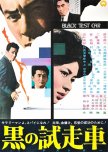
"You can't get hung up on morals, you'll just feel remorse"
Corporate espionage handled with all the finesse of the yakuza took place in The Black Test Car. Not lovers, families, or morals were more important than the mission to bring the Pioneer sports car into production and beat the competition. “It’s all about winning.”Onoda leads the team to get the Pioneer sports car produced and keep its identity a secret. Much time and money has been invested in it, but he discovers that their larger rival, Yamato, may have placed a spy in their midst. His trusty sidekick, Asahina, is equally ambitious and loyal to the company. Their nemesis is Mawatari, an ex-spy who worked for the Imperial Army in Manchuria. Both companies employ dirty methods to steal information-bribery, blackmail, intimidation, prostitution, and outright theft. Nothing seems to be too low or too devious in their efforts to come out on top.
Rank capitalism and devotion to duty brought out the worst in all of the characters. Onoda made it clear from the beginning, that he would sacrifice anything or anyone for the Pioneer. Asahina started out much like his boss, even pressuring his girlfriend to prostitute herself to glean information from the duplicitous Mawatari. Takamatsu Hideo glided Onoda easily between devilishly charming and ruthlessly frightening. Tamiya Jiro’s Asahina walked the fine line between being blindly selfish to conflicted as he realized the harm he’d done to someone he loved. Asahina’s girlfriend, Masako, was poorly written. She was there for Asahina’s character growth and as a sexual object rather than a woman with any consistent actions.
Director Masumura Yasuzo made a stylish film with aggressive music reminiscent of Godzilla’s Ifukube Akira. The acting was stellar. My problem was that I had no one to root for. Both teams were reprehensible in their espionage and sabotage efforts. Asahina took steps to distance himself from the gangster methods that ruined and ended lives, yet I disliked him the most for his efforts to manipulate and pimp out the woman he claimed to love. The competition between the industrial spies may have been all about winning, but in the end, they were all losers to me.
"It's a rock, but it has more warmth than you."
25 February 2025
Trigger warnings: Sexual scenes, though no overt nudity, and one bordering on assault
Was this review helpful to you?
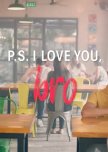
"Really, Raffy? He's straighter than a flagpole!"
P.S. I Love You, Bro was a short film in the #MakeYourMove series in the Philippines. It was a sweet meet-cute in a tea shop between a self-conscious young man and another man concerned about social pressures.Raffy is intrigued by the handsome man who often sits at the table next to him in a popular tea chop. Plagued with doubt about the stranger, yet also intrigued, Raffy makes some awkward attempts to lower the barriers between them, not knowing if his interest is being returned.
Nothing ventured, nothing gained, is not as easy in “non-traditional” relationships. The relationship might be legal, but protections from discrimination might not be. The short film/advertisement didn’t dwell on the negatives, instead focusing on the butterflies from liking someone new and the embarrassing moments that have flustered many a person when wanting to find a way to see if that romantic curiosity is returned. I may not like sugar in my tea, but P.S. I Love You, Bro was just the right amount of sweet to give me a smile in less than three minutes.
20 February 2025
Was this review helpful to you?
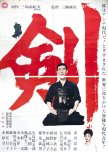
"Something shattered"
Misumi Kenji’s Ken aka Sword was a hotbed of emotions that played out in a kendo dojo. Desire, jealousy, hate, rivalry, and the need to be #1 came to a head when puritanical Kokubu and hedonistic Kagawa butt heads while training for the national kendo championship.Kokubu Jiro is named captain of the university kendo team. His job is to train the team for the All Japan Student Kendo Championship. Jiro takes his job seriously, of course he takes everything seriously. Too seriously. No one truly understands the enigmatic kendo star. He lives a highly ascetic lifestyle, eschewing music, tv, girls, anything that would take his attention and drive away from kendo. Kagawa is the opposite. He smokes, sleeps around, and finds pleasure wherever he can. His only desire is to defeat Jiro, and to do that he tempts him with worldly pleasures. As Kokubu drives the students for the perfection he seeks, Kagawa sews seeds of doubt about Kokubu into them. Only Mibu is devoted to Jiro. When the team travels to a temple for summer training, the private match of wills for the hearts and minds of the students will have dire consequences.
I’m not sure if Kokubu Jiro’s rigid and obsessive behavior was held up as an example to be followed or a cautionary tale. Determined to instill the same rigorous mindset in the new recruits, Jiro never let his foot off them. He constantly drove them harder and harder. The younger competitors needed breathing room and time to relax and have fun, something the tightly wound character could not comprehend. Jiro had no vision for the future, only the present which he focused all of his energy on maximizing. Kokubu failed to realize his students required at least a modicum of praise for their dedication. As Kagawa’s influence over the kendokas strengthened, Jiro’s unrelenting sense of perfectionism took its toll on him.
Misumi constructed a highly pleasant film aesthetic. Though filmed in black and white, the movie was stunning and edited well. Whether this story was about the clash of traditional ideals and modern morality or about what truly makes a man, I have no idea, maybe a little of both. I also don’t know if Jiro’s tunnel vision for purity of spirit and sport was being idealized. The dojo fairly pulsed with repressed emotions, extreme competitiveness, and in two cases a strong homoerotic atmosphere. In Kobuku Jiro’s mind he left no room for imperfection or failure. Without the strength to accept fallibility in himself and others, Kobuku set himself up for a pain worse than defeat in a kendo competition.
15 January 2025
Trigger spoiler alert below:
*
*
*
*
*
*
*
*
2 suicides
Was this review helpful to you?
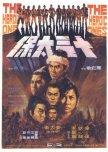
"There's no joking in the army"
The “Iron Triangle” of Chang Cheh, Ti Lung, and David Chiang brought the pain in The Heroic Ones. This Shaw Brothers film was about as epic as they got for a 1970 martial arts film. Walled towns, plenty of outdoor scenery, treachery upon treachery, and pretty much every stuntman on the SB payroll made this movie a step up from so many of the throw away films from this era. It was also beautifully restored.Near the end of the Tang Dynasty the emperor asked King Jin and his 13 General sons to rid him of the bandit usurper Huang Chao. Warlord Zhu Wen was also concerned about the bandit who had conquered Chang’an. King Jin sends nine of his sons to spy on Huang and assassinate him if possible. The 9 Generals are led by the youngest, Li Tsun Hsiao, which causes jealousy among two of the older brothers. Cracks in the brothers’ solidarity soon threatens them all.
The Heroic Ones was different from other Shaw Brothers productions in several ways. One of which was that it was not the Mings and Qings fighting but rather set much earlier in the Tang Dynasty. While there were two military antagonists, the primary drama, like a good old-fashioned Shakespeare or Greek tragedy, took place within the family. As this was a Chang Cheh film, there was no doubt going into it that there would be buckets of blood spilled and few, if any, of the brothers left standing. The man had a sadistic streak running through him. He outdid himself with one of the most gruesome deaths I've seen from this era. For another character’s death, someone said, “Your belly is open.” (Was disemboweled) I truly wanted the dying man who continued to fight to reply, “Do you honestly think I don’t already know that?” or “It’s just a flesh wound.”
I watched this movie for Ti Lung. But during this era when he and David Chiang made over 20 films together, in order to have Ti, I had to have the other. Chiang was enormously popular at the time, I just never saw the allure. I loved watching Ti Lung’s fierce fighting style, even when he was relegated to a supporting role. I’m always happy to see Ku Feng, although his character could be dimwitted at times as could Chiang’s. Eldest brother Chin Han also made questionable decisions that resulted in brothers being killed. The lone woman in the cast, Lily Li, had a brief appearance when the brothers needed a place to hideout.
The fights were well choreographed for 1970. There were a lot of swipe and flip, or swipe with stuntmen jumping off walls or into the water. Martial Arts Directors Tang Chia, Lau Kar Leung, and Lau Kar Wing staged large creative fights with no lack of blood though not as spurt happy as Chang’s later films would be.
The sets were enormous and well built. I’m not sure why the antagonists guarded their gates so heavily. The brothers tended to scale the fortress walls quite easily. Upon its introduction, there was no doubt that the Bridge of Peace would need to be renamed, The Bridge of Pieces. I cannot imagine how many costumes had to be made for the extras or dug up from other films. As a Shaw Brothers film there was no shortage of bare chests and furry vests and capes. Sadly, no silver lamé. Surprisingly, a young, thin Chan Sing was almost unrecognizable in his fancy costume which he didn’t remove for the entirety of the movie! There were also numerous spears wielded by both sides. One character was so committed to destroying King Jin that he burned down his own town! Whether a miniature or a set, the fire was realistic.
Most martial arts films from this time ran around 90 minutes. The Heroic Ones clocked in at 2 hours, too long for this kind of film. In all fairness, Chang Cheh and writer Ni Kuang kept the action and treachery cranked up enough to keep my attention, though I could have done with fewer banquet and dancing girls scenes. In nearly every way*, this old martial arts flick was slightly above average for the genre and time. Still only for fans of these old movies and graded on a curve.
13 January 2025
*Never go into these films expecting Bruce Lee level of fighting, he was the one and only or modern CGI and camera aided fighting scenes that anyone can do. There were numerous martial arts trained and acrobatic stuntmen to sell the action in these more balletic bloody battles.
Was this review helpful to you?
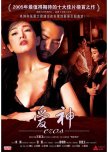
"Do you remember my hand?"
The film Eros contained three short films, the first of which was, The Hand by Wong Kar Wai. Wong Kar Wai is one of those mood directors like Zhang Yi Mou. I don’t always connect emotionally with Wong’s films while still appreciating his unique style. I’m always happy when one clicks with me, and this short erotic film starring Gong Li and Chang Chen did just that.Xiao Zhang is a tailor apprentice whose first customer is the beautiful prostitute, Miss Hua. He hears her at work while he waits in the sitting room. Miss Hua recognizes that he’s never touched a woman before. Much as the title implies, she touches him, launching his career and an obsession. He begins to take her measurements by hand, literally, memorizing every line of her body. Zhang creates beautiful works of art for her to wear even as her source of income begins to wane.
WKW used many of his techniques-dim lighting, rain, reflections, and close-ups of his gorgeous actors. Gong Li as always was mesmerizing to watch. Chang Chen as the tailor in love with a woman he could never have was stunning. It was a WKW film so I was already braced for a heartbreaking story of unrequited love. And he didn’t fail to bring the angst and the pain. He also brought the erotica without showing much skin. Gong Li and Chang Chen turned up the heat to scorching merely being in proximity to each other.
The Hand was a feast for the eyes and senses. Short, with a shot straight to the heart, wrapped in WKW’s usual style, dripping with barely concealed longing and desire. If you are a fan of WKW’s work and don’t mind erotica, this is definitely a film to try.
11 January 2025
Trigger warnings: The introduction by sexual act with a hand, is the most graphic scene, though not overly so. There is a bare bottom. Sex was often alluded to, with sound effects for those who are sensitive to such things.
Was this review helpful to you?
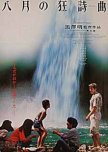
"Water, water..."
Rhapsody in August was a bittersweet viewing for me. I’ve now watched all of Kurosawa Akira’s films where he was the writer and director. I have immensely enjoyed many of his films, this wasn’t one of them. While it was watchable, it lacked the bite and depth of previous films. Perhaps it was his age, perhaps it was writing without a partner. Whatever the reason, as he worked through the focal traumatic point of his generation, it came across historically evasive and heavy-handed.Kane is the grandmother of four grandchildren. Her son and daughter have traveled to Hawaii to meet with her older brother. The children are staying with her while their parents are away. Kane has no desire to travel to Hawaii as she has no memory of the brother who immigrated in 1920 and made a fortune with pineapples. The grandchildren desperately want to go to Hawaii and are disappointed to be stuck with their grandmother in a house with no television. Kane is always looking backward to the bombing of Nagasaki where she lost her husband. She tells stories to the children who are both intrigued and frightened by them. With her husband’s memorial approaching she has no intention of leaving the country which causes the children to rethink their approach.
Women and children rarely figured prominently in Kurosawa’s films, here they took center stage. Some things never changed, the boys’ names were oft repeated while the girls’ names were scarcely mentioned. Much like the wife in Madadayo who never had a name even though the cat had one. The film fell upon the shoulders of the child actors with limited success. They went from acting like typical children upset to be without television to spouting adult social platitudes. The oldest girl, Tami according to the cast list, read off pages of exposition at the Nagasaki memorials from the Eastern bloc countries and at the school where the grandfather died. She opined how younger people had no memories of the fateful day’s event and no one bothered to learn even as crowds visited the memorials and school. Her opinions and history lessons seemed far beyond her years and felt completely out of place. Thrown into this mix was Richard Gere as the son of the wealthy brother who visited Kane and the children. Sympathetic to their suffering and acknowledging the tragic loss of the grandfather, he came and then left, awkwardly shoehorned in.
The ghost of the bombing was ever present in this film, especially for Kane who envisioned it as a great eye. For her the war never truly ended. The irony of the lost family living in Hawaii was never brought up when Kane blamed “war” for the bombing. In Kurosawa’s older films, the main character had to suffer and deal with painful challenges in order to grow and transform. Here, Kane is old and near the end of her life, ever reminiscing. Each generation had a different response to the bombing. Rather than a source of familial conflict the gap between the generations was easily bridged. The children who were largely unfamiliar with the bombing listened to Kane’s stories and visited the places she mentioned. Their parents who had known poverty as children and lived in the shadow of the bombing, were ever on the hunt to make a buck. All too eager to use the new wealthy relatives to improve their station.
Unlike his earlier films, Kurosawa fell into the tell don’t show trap where much of the action either occurred in the past or off screen such as a death and a family reunion. The bombing in this story happened in a historical vacuum, lacking any context and complexity. Perhaps because Kurosawa was near the end of his life and feeling more contemplative, so were his characters. Kane’s mind started running in reverse, driving her back to the day of the bombing. Steadily determined against the wind and rain to reach her destination and maybe this time change the ending. But only memories can run backward, time moves ever forward, with any luck carrying the lessons hard learned.
3 January 2025
Was this review helpful to you?

"Everything will be okay"
Parangal (Award) was the sequel to Jollibee’s Date from 2017. This was a nice continuation to the original short film/commercial about a boy having a Valentine’s date with his mother.Joey addresses the audience at his high school graduation, a day of awards for him. It is also a day he has been looking forward to so that he could pay tribute to his mother, the person who sacrificed to get him to this point. In Date, he followed his deceased father’s instructions to give his mother a nice Valentine’s Day. And while Joey was committed to stepping up to help his mother, his mother, as single mothers do, took on the role of mother and father to make sure her son graduated.
Parangal may have only been a creative commercial for Jollibee but it was also a reminder to remember the cost of parenthood when things get tough. Joey’s biggest gift was not an award, but the love of a mother dedicated to giving him a chance to succeed in the world. The mother was awarded a hard working son who also knew how to express gratitude. Gifts far greater than the price of a bucket of chicken.
22 December 2024
Was this review helpful to you?

Nine minutes of film sunshine
Hand Sign: I’ll Be Your Ears aka Boku ga Kimi no Mimi ni Naru was based on a true story which made this sweet short film all the more poignant. In many ways it was a music video as there were very few words spoken out loud by the characters. Set at a university, two students met and despite their differences found they had something in common.A new deaf female student hands out fliers trying to find someone to help her take notes during class but has no takers. One day a male student in her class sees her frustration at attempting to read the professor’s lips and steps up to help her. As the two spend more time together, Rika wants to learn more about the joy of music and Wataru wants to learn more about sign language.
I don’t know the name of the band playing but I loved that they signed the lyrics and of course this played into the budding love story. Rika and Wataru did a fine job portraying the steps in the relationship, from tentative greeting to eagerly wanting to know more about each other.
While the story was sweet it avoided being saccharine, especially knowing it was based on the experiences of two real life university students. Those little extra efforts at communication people often avoid can lead to friendship and even love. How many interesting relationships do we miss out on by not stepping out of our comfort zones? The real people who inspired this hopeful and sunny film discovered the rewards and were generous enough to share them with the rest of us.
20 December 2024
Was this review helpful to you?
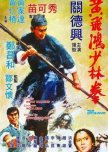
Wong Fei Hung and his disciple Fei Fei are in Thailand to visit his friend Mr. Chu and also Fei Fei’s sister Yu Ying who owns a restaurant. On the way to Chu’s house, they meet Leo who has run afoul of the local martial arts school. Leo joins WFH on his travels. Mr. Chu has his own problems with Ku, a local Chinese businessman who is striving to take over the docks with his drug smuggling and human trafficking. Along for the ride is an evil kung fu master and his disciples who allied themselves with Ku.
What this film had going for it was the cast. Kwan was nearly 70 but still did many of his own fight moves. Sammo was at the beginning of his career and the guy who was the punchee as much as the puncher. He showed his stuntman skills by flipping and twirling when the receiver of fists and kicks. As the martial arts director, the choreography reflected his style-smash mouth, basher, hard hitting fists, and bodies hitting the ground even harder. The action kept the movie moving forward in a way the story wasn’t able to. Nora Miao had a high billing but very little to do except stand around occasionally and wring her hands.
The story wasn’t very original and had one of my least favorite tropes-the noble kung fu master who refuses to fight. WFH kept telling Sammo and Carter to be patient and tongue lashed them when they fought. Even when they were defending Fei Fei’s sister from being raped. Pretty sure WFH would have defended himself if the bad guys tried to sexually assault him. The popular master only allowed the good guys to fight after the bodies of friends and family started dropping.
Overall, The Skyhawk had its entertaining moments and several quality fights. It was fun to watch Kwan Tak Hing near the end of his career and Carter Wong and Sammo Hung at the beginning of theirs. Only for fans of old kung fu films and as usual rated on a curve.
18 December 2024
Was this review helpful to you?

Home is where the heart is?
Home is a short Thai film about a daughter who visits her family. The guideline says it’s about finding your true happiness, but I think the director may have overestimated my ability to discern that message out of this inscrutable short.A university student draws money out of an ATM and makes her way home. Her father is working in the forest where he grows much of their food. She asks if he needs help but he declines. Her mother is elated to see her and makes her favorite dishes which the daughter leaves untouched. Her parents become worried at her withdrawal but the daughter refuses to talk with them.
There are some films that are enigmatic and leave the viewer to draw their own conclusion. Others are simply a slice of life that leave more questions than answers. This short film did both. I could try and make up a profound meaning to the happenings in this film, but I don’t think it was that deep. It felt like a film about that time in life when a young person is seeking the answers to questions they aren’t sure how to ask just yet. And too wound up in their own feelings to understand how their silence can cause pain for caring parents. Or not. Whether Home is where the young woman's heart was, remained to be seen.
16 December 2024
Was this review helpful to you?
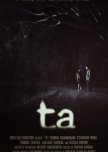
"If your mind is strong, no ghost can harm you"
Ta aka Grandfather is a Thai short film based on a supposedly true story. The film tells the story of a mother and her experiences with her daughter who can see ghosts and her father who could also see them when he was alive.Prae struggles to sleep by herself telling her mom that she sees a ghost under her bed. The mom checks but doesn’t see anything. Prae is insistent and her mother lets her sleep with her. When the situation repeats, Nim tells her daughter that there is nothing to fear from ghosts and relates a story from her own childhood. Nim’s father was a shaman of sorts who people called upon when they needed him to expel ghosts. One night he took Nim with him when he was asked to exorcise a ghost who had possessed a young girl. The experience changed Nim’s view on spirits forever.
Ta was an entertaining short ghost story with a twist at the end. Some Thai ghost stories are quite scary, this one had a moment or two but ended up being more about Nim, her father, and her daughter and their role in the village. I enjoyed this short spooky familial film, mainly because it focused on the family and wasn't horrifying.
16 December 2024
Was this review helpful to you?

A college student has a crush on a girl in school, but she is in love with someone else. Can he win her over with her favorite Jollibee burger?
What felt contrived to me was that he seemed to pull the burgers out of his, uh, pocket. He always seemed to have one at just the right time. The burgers had to be ice cold by the time she found them. Also, I kept wondering if she’d already eaten or was thinking, cold burgers, again? Am I being stalked?
Crush was entertaining for a short film/commercial, but didn’t wow me like their other commercials/short films I have seen. But it was good enough for a quick drive through meal.
16 December 2024
Was this review helpful to you?


